


Most collectors eventually end up using both storage and display.
The two serve different purposes, and treating them as alternatives can make the decision harder than it needs to be.
Storage is mainly about capacity, organisation and keeping larger parts of a collection protected and accessible. Display is about visibility and choosing which cards deserve a place out in the room.
Understanding that difference makes it much easier to decide which cards should stay stored and which ones make sense to put on display.
What Is a Trading Card Storage Case?
A storage case is designed primarily around organisation and protection.
Collectors commonly use storage products for:
- Bulk collections.
- Complete sets.
- Trade inventory.
- Duplicate cards.
- Long-term organisation.
Storage solutions usually prioritise capacity and efficiency rather than how the cards look when viewed from across the room.
The goal is to keep a larger number of cards protected, organised and easy to access when needed.
Advantages of Storage Cases
Large Capacity
Many storage solutions can hold hundreds or even thousands of cards in a relatively compact space.
Organisation
Collectors can sort cards by:
- Set.
- Rarity.
- Player.
- Pokémon.
- Team.
- Collection type.
Efficient Use of Space
Storage products are designed to hold a large number of cards without taking up more room than necessary.
For bigger collections, some form of storage is usually essential.
What Is a Trading Card Display Frame?
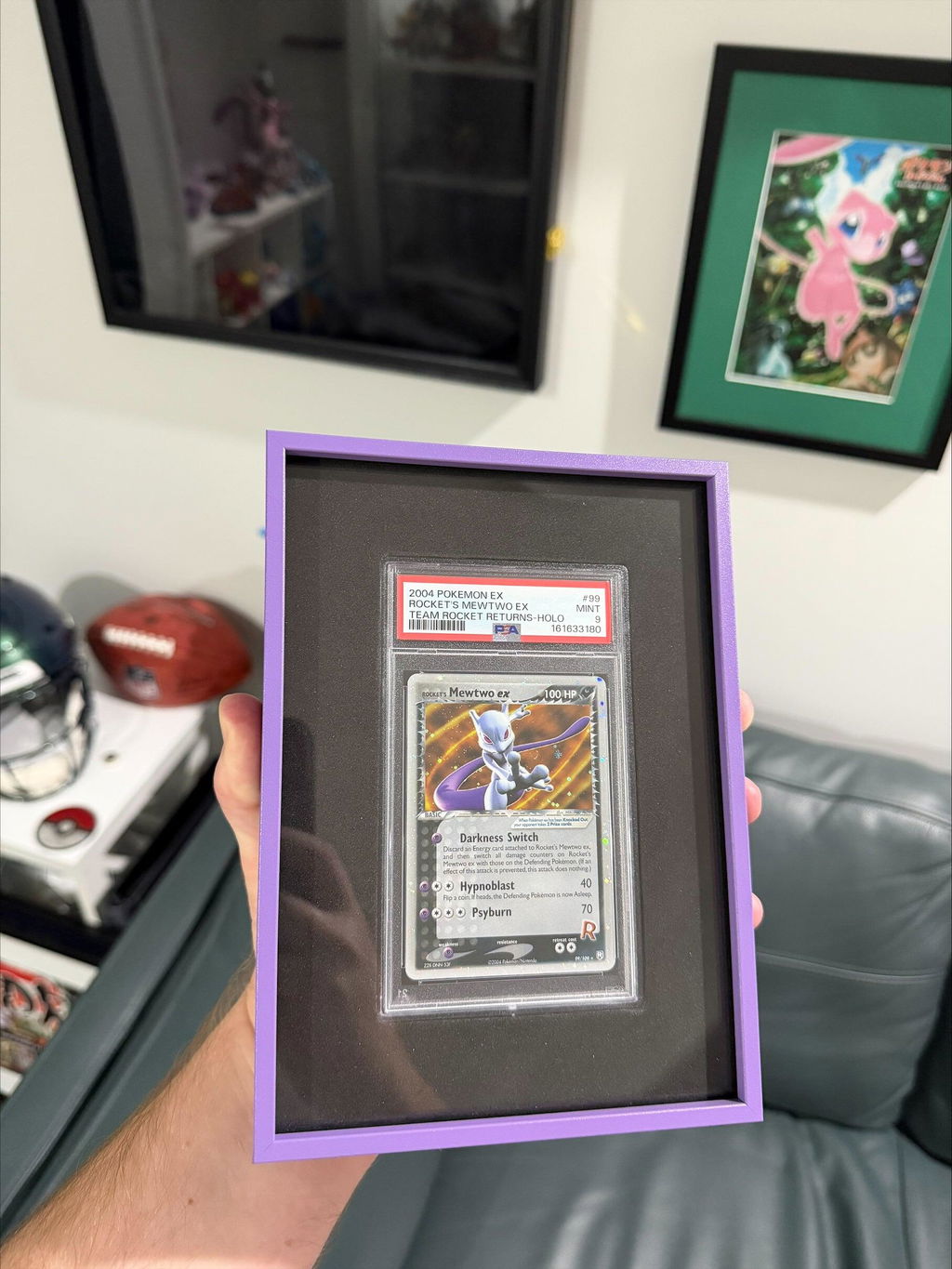
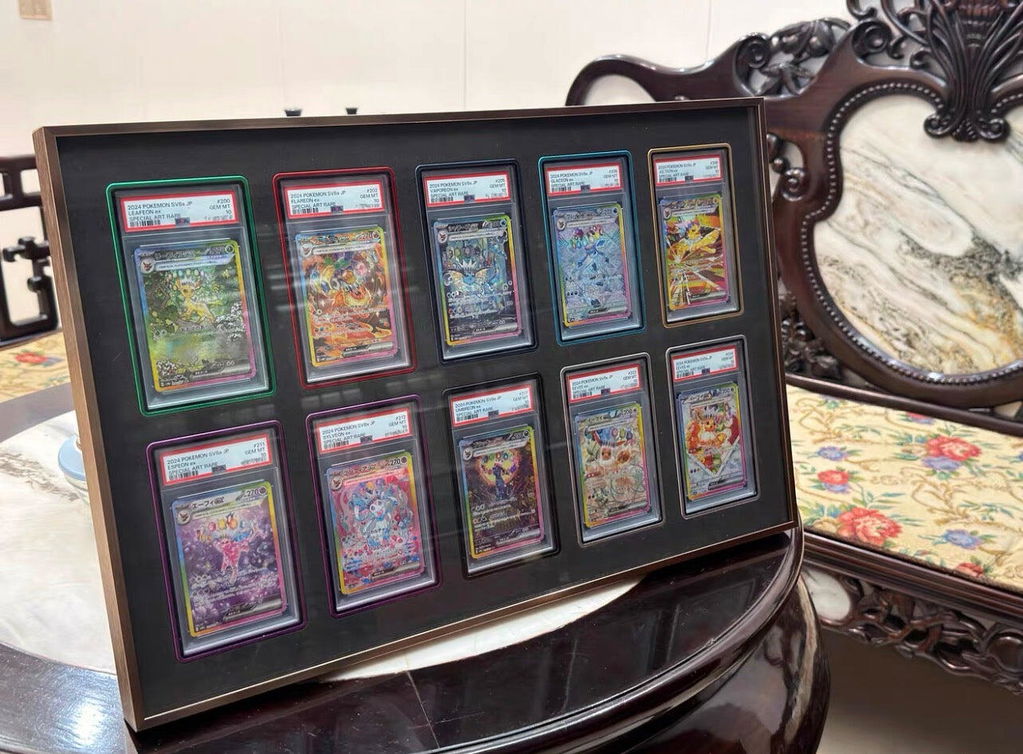
A display frame is designed around presentation rather than capacity.
Instead of holding as many cards as possible, it gives selected cards a clear place within a structured layout.
Collectors commonly use display frames for:
- Favourite cards.
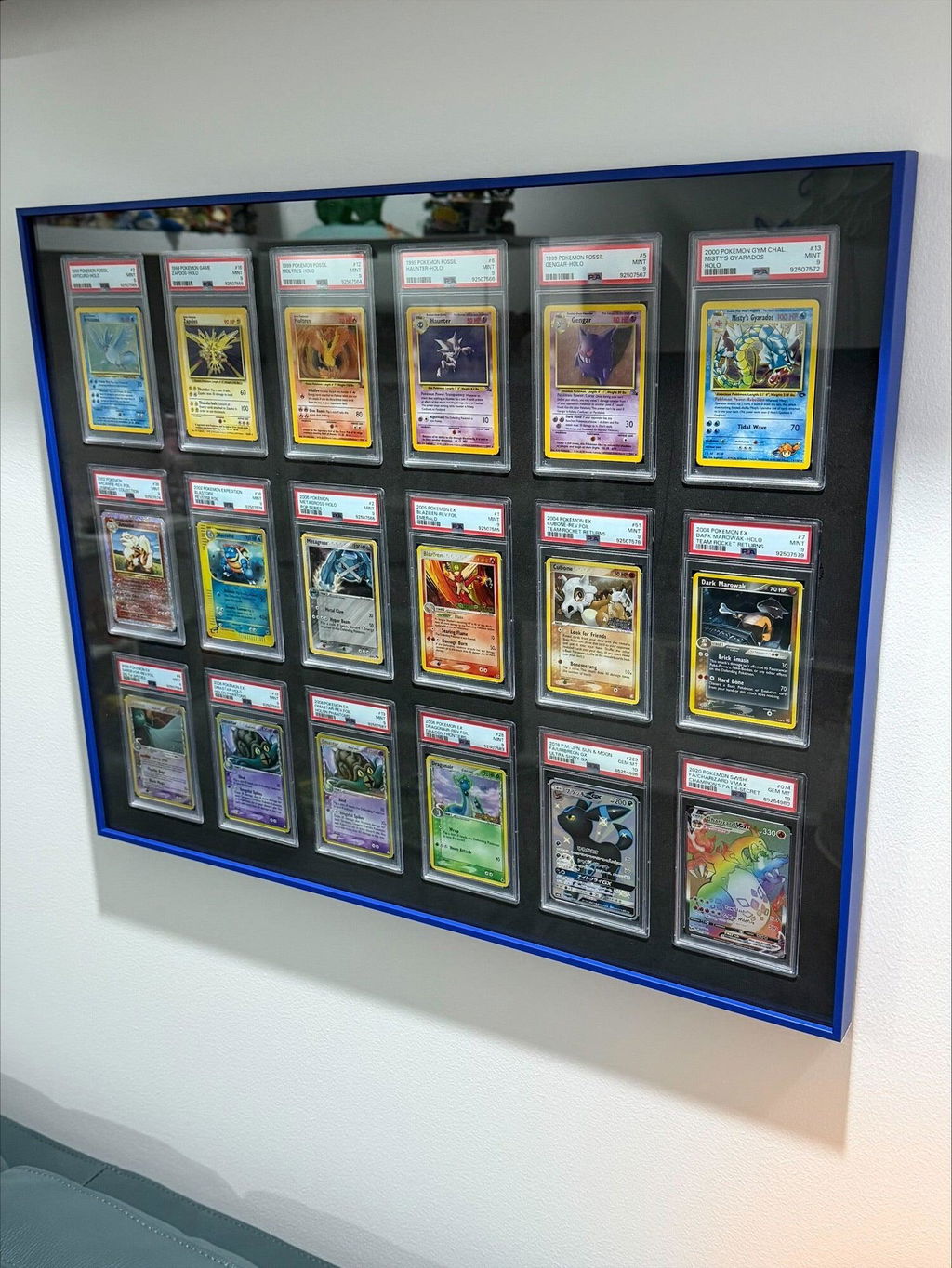
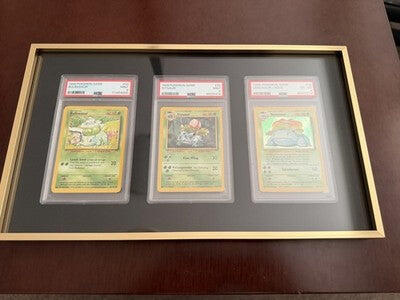
- Graded slabs.
- One Touch holders.
- Small themed collections.
- Signed memorabilia.
- Collection highlights.
The emphasis is on visibility and presentation rather than storage volume.
Advantages of Display Frames
Keeping Favourite Cards Visible
The main advantage of displaying cards is simple: you can actually see them.
Instead of remaining inside a box or binder, selected cards become part of the room.
Using Wall Space
Display frames make use of wall space rather than taking up additional shelves, drawers or cabinets.
This can be particularly useful when a collection is already using a lot of storage furniture.
Highlighting Important Cards
Most collections contain a smaller group of cards that stand out from the rest.
They may be valuable, visually interesting, difficult to replace or simply personal favourites.
A display frame gives those cards a clear place without requiring the whole collection to come out of storage.
Displaying Different Card Formats
Modern trading card displays can be built around several different holder formats, including:
- Raw cards.
- Toploaders.
- One Touch holders.
- PSA slabs.
- BGS slabs.
- CGC slabs.
- SGC slabs.
The right display depends on the format of the cards as well as how many you want to show together.
Why Many Collectors Use Both
In practice, most collectors do not need to choose between storage and display.
They use each for a different part of the collection.
For example:
- Bulk cards remain stored.
- Complete sets stay organised in binders or cases.
- Favourite cards are displayed.
- Graded highlights are placed on the wall.
This keeps the collection manageable without leaving everything hidden away.
When Storage Makes More Sense
Storage is usually the better option when:
- Managing a large collection.
- Organising inventory.
- Keeping duplicate cards.
- Protecting cards that are not currently being displayed.
Trying to display everything usually creates more problems than it solves, especially once the collection becomes large.
When Display Makes More Sense
Display becomes more useful when:
- You want to keep favourite cards visible.
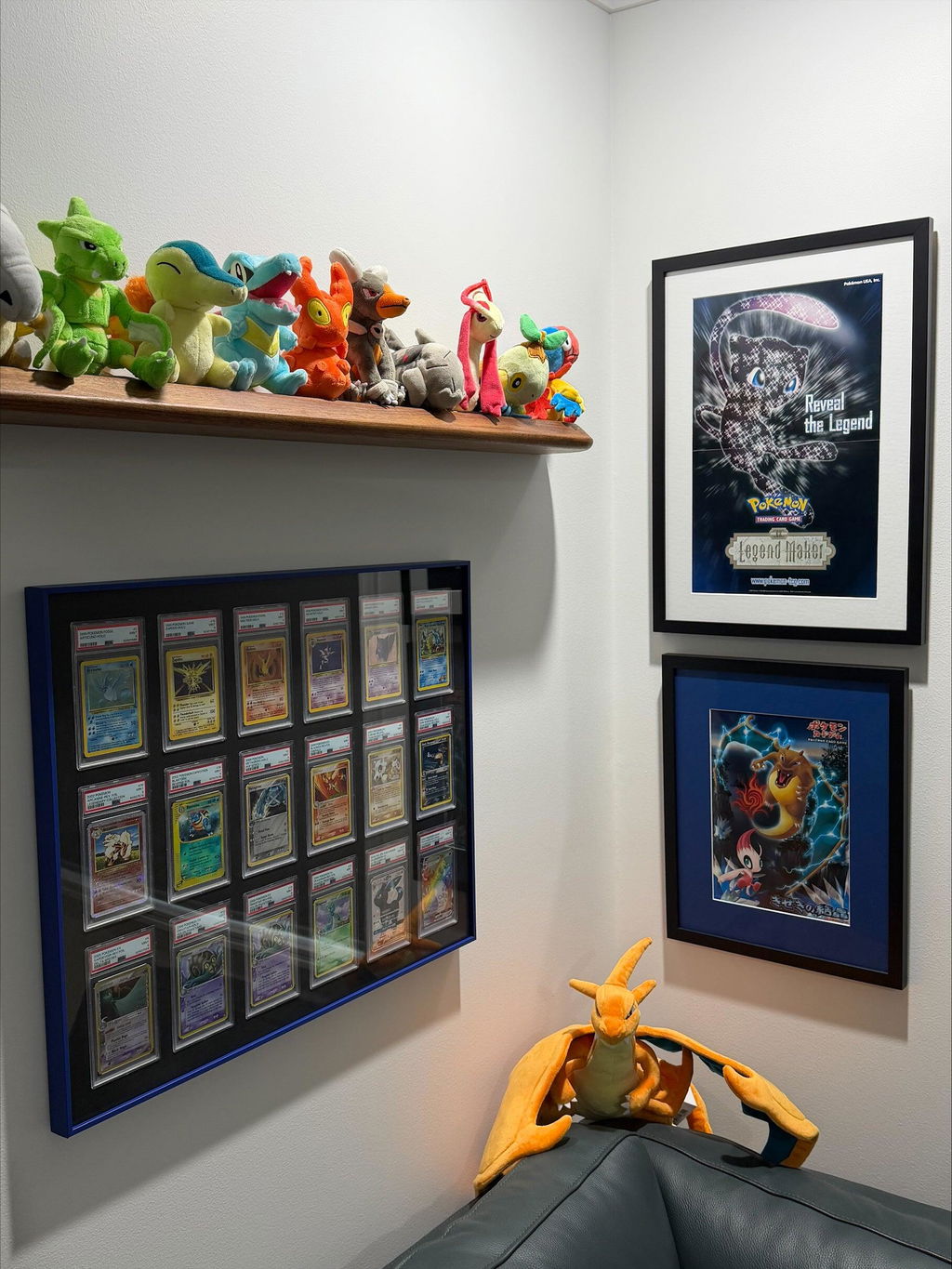
- You are building a collector room.
- You want to group graded cards together.
- You are displaying sports memorabilia.
- You are creating a larger wall display.
The main advantage is that selected parts of the collection can be enjoyed without changing how the rest of it is stored.
Creating the Right Balance
The best balance usually comes from being selective.
Not every card needs to be displayed, and not every card needs to stay hidden away.
A practical approach is to keep the bulk of the collection organised in storage and use display space for the cards or groups you actually want to see regularly.
This also makes it easier to rotate the display over time without changing the entire collection setup.
Final Thoughts
Display frames and storage cases are not really competing solutions.
Storage is better suited to capacity and organisation, while display is better suited to visibility and presentation.
For most collectors, using both is the most practical approach.
Keep the larger collection organised, choose the cards you genuinely want to see, and let each type of product do the job it is best at.
Continue Exploring
If you enjoyed this guide, you may also find these collector resources helpful.
📚 Collector Guides
-
The Ultimate Trading Card Display Guide: Ideas, Frames, Shelves & Display Solutions for Every Collector
Explore display ideas, wall layouts, shelving, cabinets, lighting, budgets and display solutions for every major trading card game. -
Why Premium Aluminium Trading Card Display Frames Are Worth It: The Complete Collector Guide
Discover why handmade aluminium display frames have become a premium choice for displaying PSA, CGC, BGS and One Touch trading card collections.
🛒 Shop Display Collections
-
Aluminium Trading Card Wall Display Frames
Premium handmade aluminium wall display frames for Pokémon, MTG, Yu-Gi-Oh!, One Piece and Sports Cards. -
PSA, CGC & BGS Graded Slab Wall Display Frames
Purpose-built wall display frames designed specifically for graded trading card collections. -
One Touch Wall Display Frames
Premium wall display frames designed for One Touch magnetic trading card holders in a range of grid sizes.

0 comments