


PSA slabs are particularly well suited to wall displays because every card already has a consistent outer holder and label format.
That makes it possible to organise a collection into clean rows, smaller themed groups or much larger grids without needing to handle the trading cards themselves.
The best PSA display frame depends on how many slabs you want to show, the amount of wall space available and whether you are displaying one favourite card or a much larger collection.
Here are the main things worth considering before choosing a PSA trading card display frame.
Start With the PSA Cards You Actually Want to Display
You do not need to put every graded card you own on the wall.
A PSA display usually works best when the slabs have a clear reason to sit together.
That might be:
- A favourite Pokémon.
- One sports player.
- Rookie cards.
- A particular set or era.
- Vintage cards.
- Modern chase cards.
- A group of personal favourites.
Once you know which slabs belong in the display, choosing the right frame size becomes much easier.
Why PSA Slabs Work So Well in Grid Displays
One of the biggest advantages of displaying PSA cards is consistency.
The slab shape repeats across the collection, and the PSA label creates another visual line above each trading card.
When several slabs are aligned together, the display naturally forms a strong grid without needing much decoration around it.
This makes PSA particularly well suited to:
- 3-card and 4-card displays.
- 3 × 3 grids.
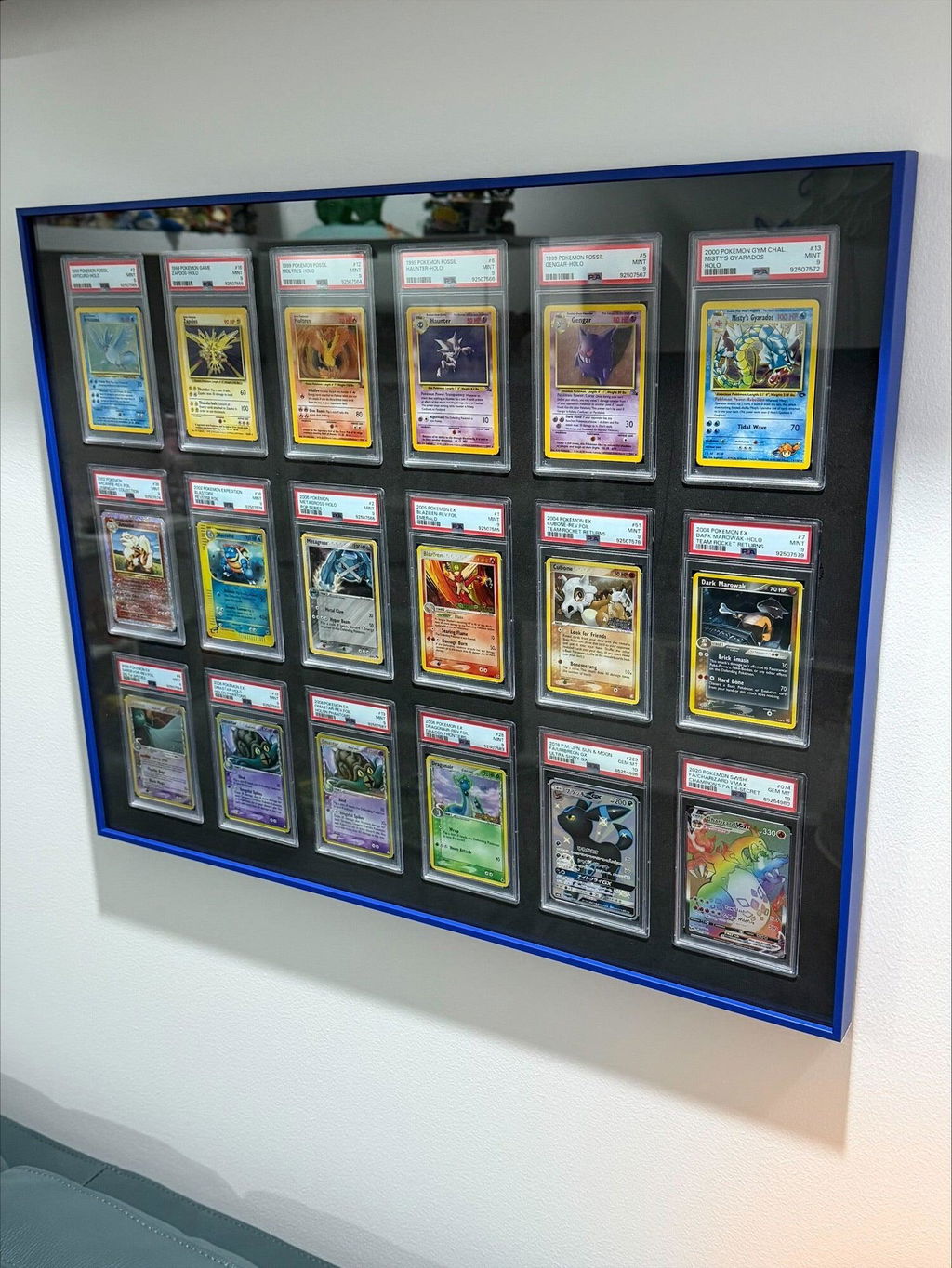
- 18-card collections.
- Large multi-row graded card walls.
- Character, player and set-based collections.
Choose a Frame Designed Around PSA Slabs
Not every picture frame or graded-card holder is designed around the same slab format.
A purpose-built PSA display should account for the actual slab shape, thickness and weight rather than simply creating a generic opening for a graded card.
Things worth looking for include:
- Consistent slab alignment.
- Openings designed around PSA holders.
- Enough frame depth for the slab and internal materials.
- Backing that remains flat across the display.
- Secure wall mounting.
- A design that allows the slabs to be removed later.
The larger the display becomes, the more important those details are.
Small PSA Displays
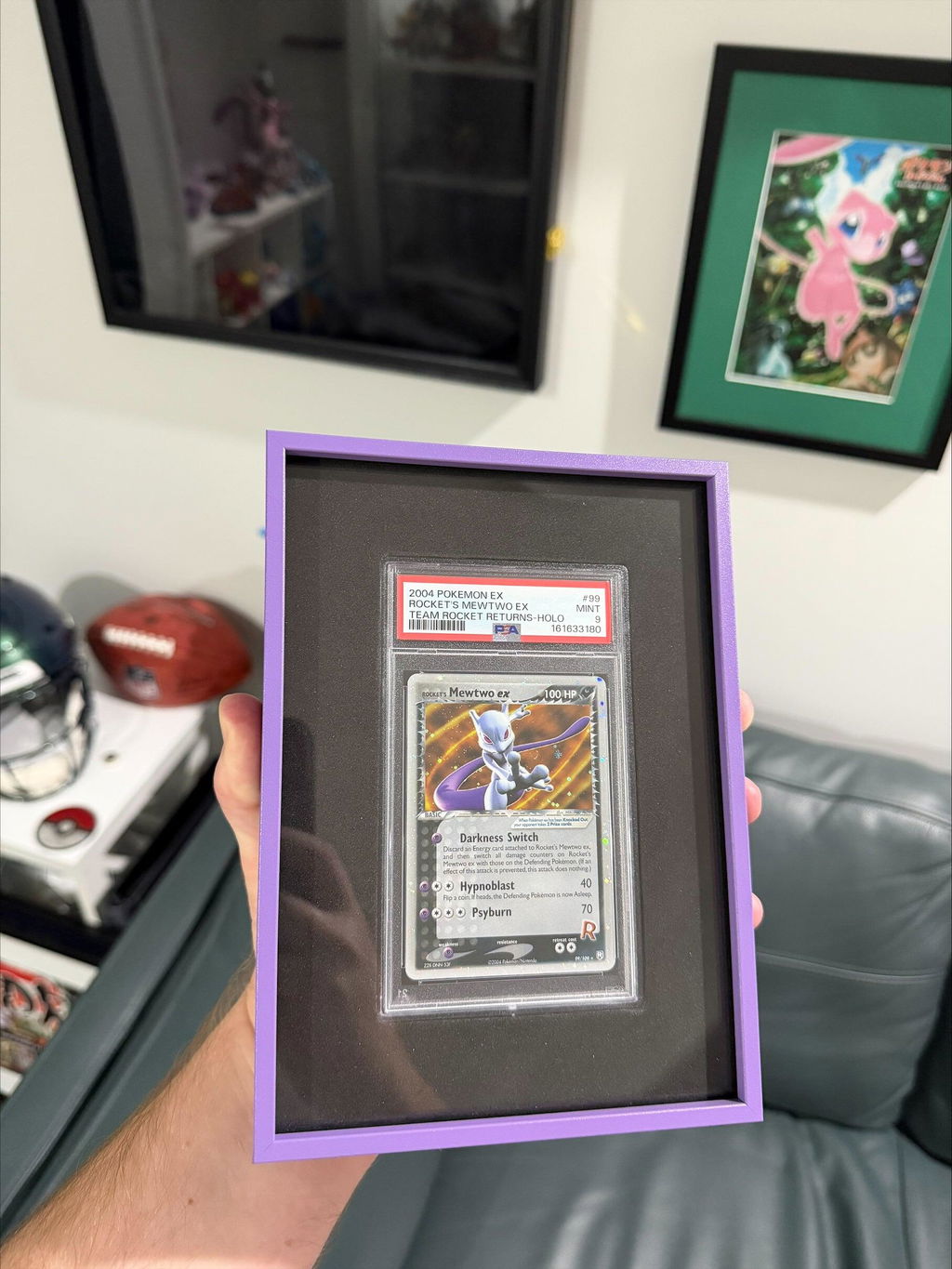
Small frames work particularly well when you want one card or a very focused group to have its own space.
Good small-display ideas include:
- A single favourite PSA card.
- Two matching cards.
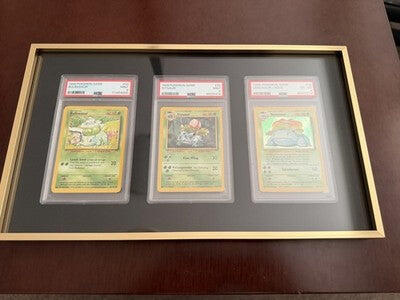
- A three-card Pokémon evolution line.
- Three rookie cards from one player.
- Four cards from one set or era.
These sizes are also easier to place above a desk, cabinet or smaller section of wall.
Nine-Card PSA Displays
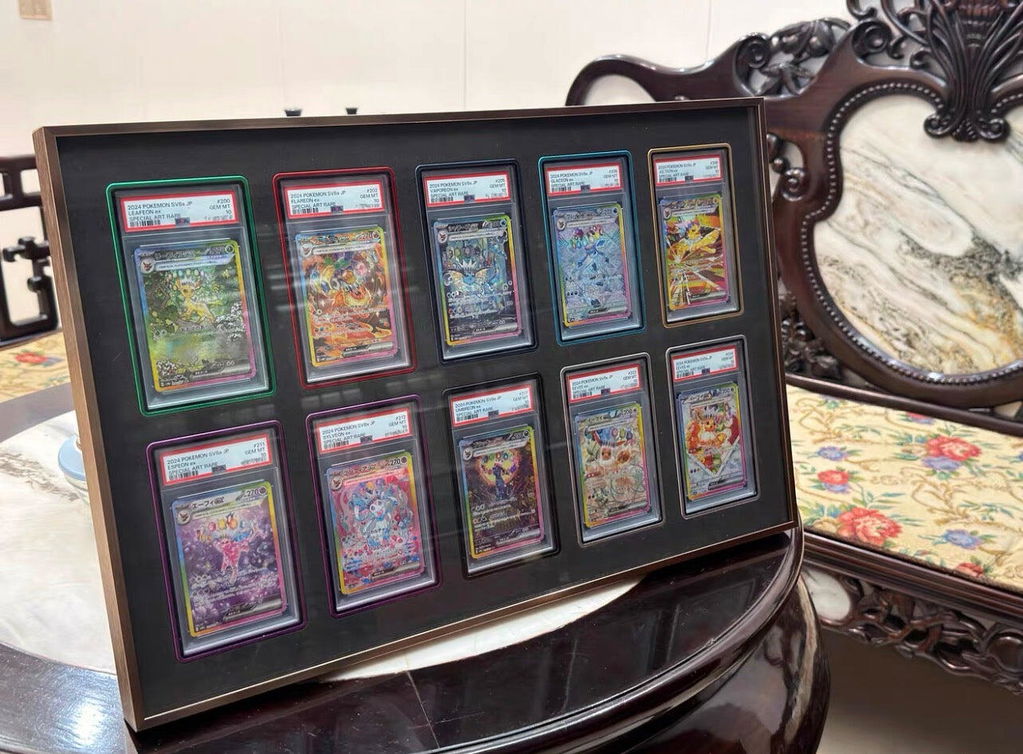
Nine slabs naturally suit a 3 × 3 grid, which makes this one of the easiest PSA layouts to organise visually.
It is large enough to feel like a proper collection but still compact enough to fit comfortably in many rooms.
Nine-card displays work particularly well for:
- Eeveelution collections.
- Pokémon character groups.
- Sports player collections.
- Set highlights.
- Nine personal favourites.
The repeated PSA labels also give a 3 × 3 grid a very clean upper alignment.
Large PSA Display Frames
Once you move into 18, 24, 36 or more slabs, the frame becomes a much more substantial wall display.
At that size, you need to think about more than just how the cards look.
Important considerations include:
- Total finished weight.
- Frame rigidity.
- Glazing weight.
- Backing strength.
- Wall construction.
- Mounting hardware.
- How the frame will be lifted into position.
A larger PSA wall can look extremely clean because the slab shape repeats so well, but the physical construction of the frame becomes increasingly important as the grid grows.
Choosing the Right Frame Material
The best frame material depends heavily on the size of the display.
Timber Frames
Timber works well for smaller and more traditional graded-card displays.
It is widely available, easy to finish in different styles and can provide enough depth for PSA slabs when the frame profile is chosen appropriately.
Aluminium Frames
Aluminium is a more premium option and becomes particularly useful as PSA displays get larger.
It can provide good rigidity while maintaining a relatively slim outer profile, which helps stop a large grid of slabs from feeling excessively bulky on the wall.
For larger graded collections, that combination of structure and a cleaner outer edge can be particularly useful.
The right material should suit the number of slabs, finished weight and overall scale of the display rather than simply being chosen on appearance alone.
Acrylic or Glass for PSA Displays?
Glass and acrylic can both work well in graded-card frames.
Glass is hard and scratch resistant, which makes it useful for smaller displays.
Acrylic is considerably lighter and more impact resistant, which becomes increasingly useful once the frame contains a large number of PSA slabs.
The slabs themselves already contribute significant weight, so reducing the weight of the front glazing can make larger frames easier to handle and mount.
UV-resistant acrylic or specialist glazing can add another layer of protection, but graded cards should still be kept away from prolonged direct sunlight where possible.
Think About the Material Around the Slabs
The material surrounding the PSA holders affects both the fit and the finished appearance.
EVA foam works particularly well with rigid graded holders because it can support each slab inside a defined opening.
Darker inserts tend to make the clear edges of the slab disappear visually, while lighter inserts make the holder shape more obvious.
The insert should support the collection without becoming the most noticeable part of the display.
Frame Colour Matters More on Larger Walls
The larger the PSA display becomes, the more visible the outer frame is within the room.
Common finishes include:
- Matte black.
- Silver.
- Titanium or darker metallic finishes.
- Gold.
- Natural timber.
Black is easy to use because it works with a wide range of card artwork and room colours. Silver can make a larger frame feel lighter, while gold gives the outer frame more presence.
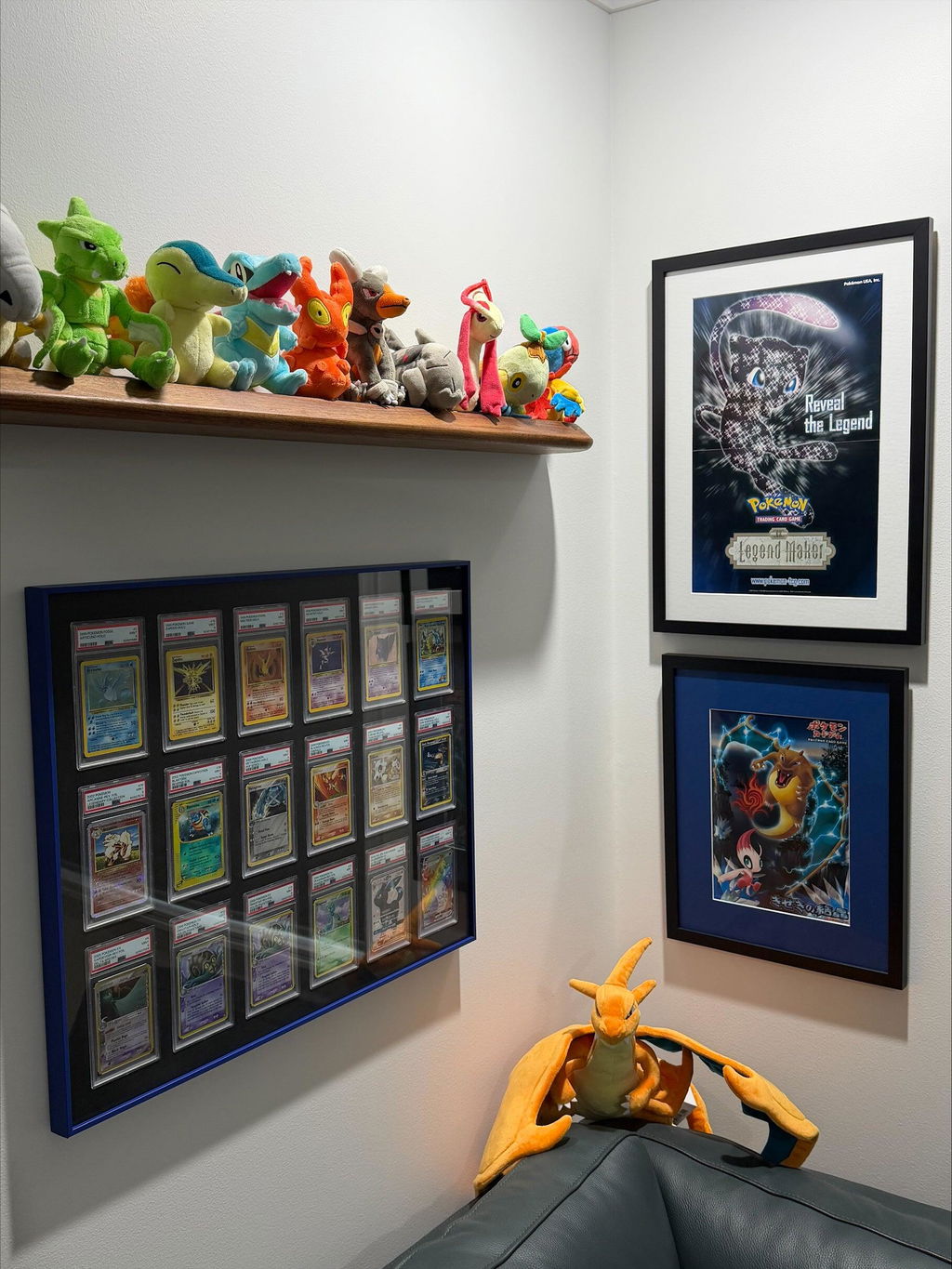
If you plan to use several PSA frames together, repeating the same finish across the wall can keep everything visually connected.
Keep the Spacing Consistent
PSA slabs have strong straight edges and repeated labels, so inconsistent spacing is particularly noticeable.
You do not need large gaps between the holders, but the gaps should remain visually consistent across the frame.
The same applies to the outside margins of the grid.
A well-balanced slab layout usually looks cleaner than one where cards have been pushed tightly together simply to maximise the number that fit inside the frame.
Choose the Card Count Around the Collection
Do not choose a large PSA frame first and then start looking for enough slabs to fill it.
Start with the cards that actually belong together.
A three-card display might suit an evolution line. Nine cards might create a complete character group. Eighteen cards may make sense for a larger PSA collection.
The frame should follow the collection rather than forcing the collection into an arbitrary grid.
If you are unsure what size makes sense, our guide to how many trading cards to display in a frame explores different card counts in more detail.
PSA Pokémon Displays
Pokémon cards work particularly well in PSA frames because character collections naturally create repeated themes.
A PSA Pokémon wall might focus on:
- Charizard.
- Pikachu.
- Umbreon.
- Gengar.
- Mew or Mewtwo.
- Eeveelutions.
- Vintage holos.
- Modern Illustration Rares and Special Illustration Rares.
Mixing vintage and modern PSA cards can also work well when they share the same Pokémon or another clear connection.
PSA Sports Card Displays
Sports collectors can build PSA displays around players, teams, seasons or particular types of card.
Common approaches include:
- Rookie card collections.
- One player's career.
- Team collections.
- Championship seasons.
- Hall of Fame players.
- Cards from one sport or era.
A PSA frame can also sit alongside framed jerseys or signed memorabilia when the wall has enough space.
Consider the PSA Label as Part of the Display
The grading label is not just functional once the cards are on the wall. It becomes part of the visual layout.
Across a larger PSA grid, the repeated labels form a clear horizontal structure above the card artwork.
This is one of the reasons PSA-only displays often feel particularly consistent compared with mixed-slab walls.
Lighting PSA Cards
Graded slabs already have a reflective plastic surface, and a framed display may add another layer of acrylic or glass in front.
That means poorly positioned lighting can create reflections on more than one surface.
Soft room lighting, ceiling lights or LEDs positioned above or at an angle are generally easier to work with than strong light facing directly into the display.
Foil Pokémon cards and chrome sports cards can be especially reflective, so test the display from the normal viewing position before installing dedicated lighting permanently.
Keep PSA Cards Away From Prolonged Direct Sunlight
The slab provides physical protection, but room placement still matters.
UV-resistant acrylic or specialist glazing can add another layer of protection, but valuable PSA cards should still be kept away from prolonged direct sunlight where possible.
If one wall receives considerably less direct sunlight than another, it will usually be the easier place to build the display around.
Plan for the PSA Collection to Grow
Graded collections rarely stay fixed.
You may submit more cards, upgrade an existing grade or add another card to a character or player collection.
Rather than buying a much larger frame simply because you might need it one day, it can be cleaner to leave space for another matching frame later.
Repeatable grid sizes and consistent frame finishes make that approach much easier.
Several PSA Frames Can Be Better Than One Enormous Frame
A very large PSA collection does not have to live inside one frame.
Several coordinated displays can make the wall easier to organise and allow different parts of the collection to have their own focus.
For example:
- One frame for vintage Pokémon.
- One for modern Pokémon.
- One for one sports player.
- One for a particular set.
If the frame finish and spacing remain consistent, the separate frames can still read as one larger graded collection.
Should You Make Your Own PSA Display Frame?
A small DIY PSA frame is possible if you are comfortable working with frame materials, inserts, glazing and wall mounting.
As the card count increases, the project becomes more involved because slab fit, frame depth, insert material, acrylic, backing strength, finished weight and mounting all need to work together.
If you are considering making your own, our guide to making a graded trading card wall display covers those materials and decisions in much more detail.
Final Thoughts
The best PSA display frame is the one that fits the number of slabs you actually want on the wall.
Start with the cards, choose a grid that suits the collection and then think about frame material, glazing, insert colour, wall space and mounting.
A single PSA card can work perfectly well on its own, while a 36-card or larger slab wall can look extremely clean when the collection genuinely supports the size.
The frame should organise the slabs and make them easier to view without becoming more complicated than the collection itself.
Continue Exploring
If you enjoyed this guide, you may also find these collector resources helpful.
📚 Collector Guides
-
The Ultimate Trading Card Display Guide: Ideas, Frames, Shelves & Display Solutions for Every Collector
Explore display ideas, wall layouts, shelving, cabinets, lighting, budgets and display solutions for every major trading card game. -
How to Make a Graded Trading Card Wall Display
Explore DIY graded card displays, slab formats, frame materials, EVA foam, acrylic, layouts and mounting considerations. -
How to Make a Trading Card Wall Display: Complete DIY Guide
Learn how to plan a DIY trading card display, including frame materials, holders, acrylic, EVA foam, layouts and wall mounting. -
Why Premium Aluminium Trading Card Display Frames Are Worth It: The Complete Collector Guide
Explore aluminium trading card display frames, their materials and why they work particularly well for larger graded and One Touch collections.
🛒 Shop Display Collections
-
Aluminium Trading Card Wall Display Frames
Premium aluminium trading card display frames available in a wide range of grid sizes, frame colours and holder formats. -
PSA, CGC & BGS Graded Slab Wall Display Frames
Purpose-built graded trading card display frames for Pokémon, MTG, Yu-Gi-Oh!, One Piece, Sports Cards, Disney Lorcana and other collections. -
One Touch Wall Display Frames
Premium aluminium wall display frames designed for One Touch magnetic trading card holders.

0 comments