


PSA, BGS and CGC slabs all solve the same basic problem, but they do not look or fit exactly the same once you start displaying them together.
The holder shape, thickness, label design and overall proportions vary between grading companies, which means the best display setup depends on the slabs you actually own rather than simply choosing a generic graded-card frame.
If your collection uses only one grading company, creating a clean grid is relatively straightforward. Mixed PSA, BGS and CGC collections need a little more planning because the differences become much more obvious once the slabs sit next to each other.
Here are the main things worth considering when displaying PSA, BGS and CGC trading cards.
PSA, BGS and CGC Slabs Are Visually Different
The most obvious difference between the three grading companies is the holder itself.
Each slab has its own proportions, thickness and label format, and those details become part of the wall display once several cards are arranged together.
This affects:
- How closely slabs can sit together.
- How deep the frame needs to be.
- How the grading labels line up.
- Whether one insert can suit several slab formats.
- How consistent a mixed collection looks across a larger grid.
That does not mean mixed slabs look bad. It simply means the differences should be treated as part of the layout rather than ignored.
Displaying PSA Slabs
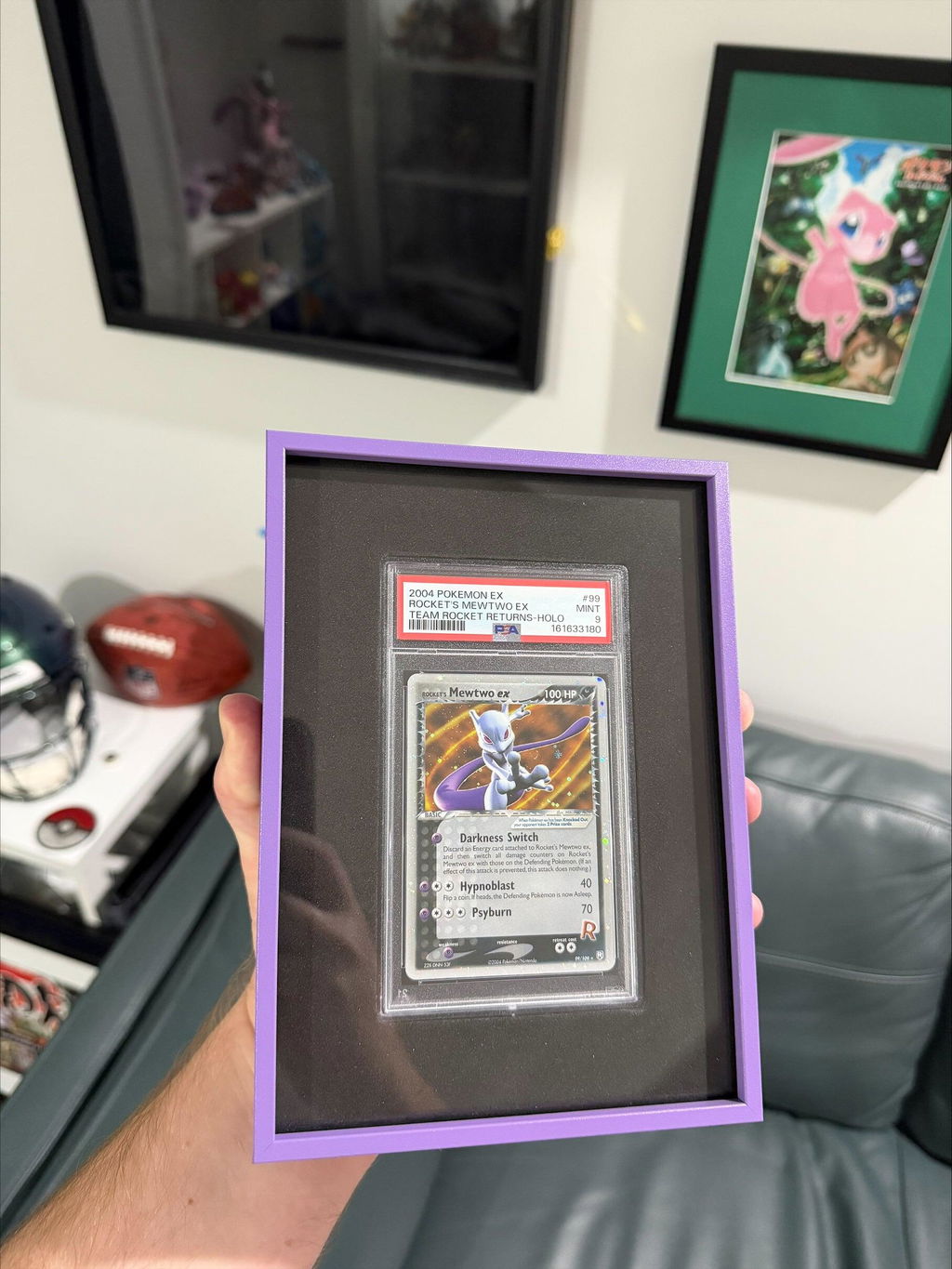
PSA slabs are extremely common across Pokémon, sports cards, Yu-Gi-Oh! and other trading card categories.
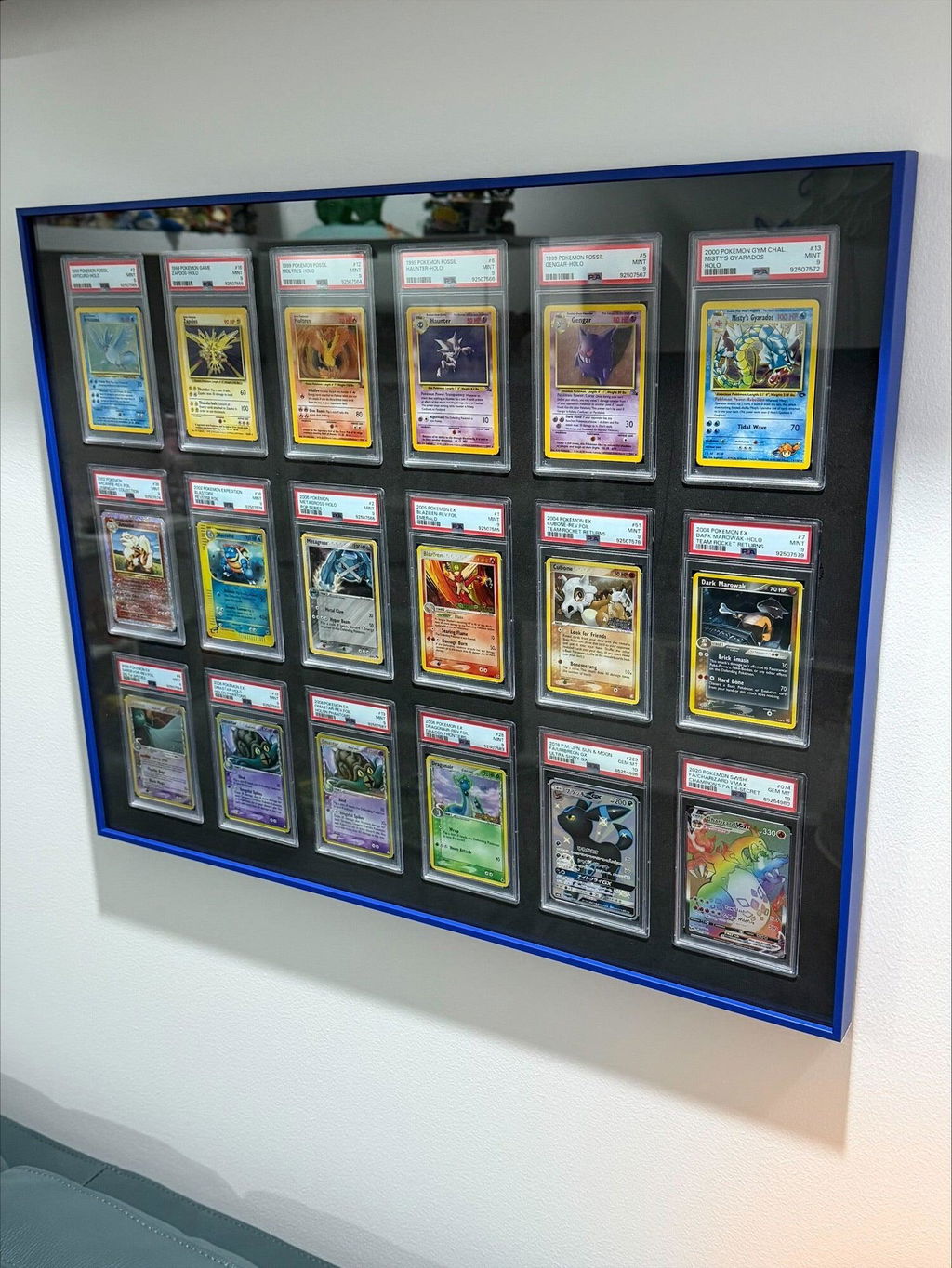
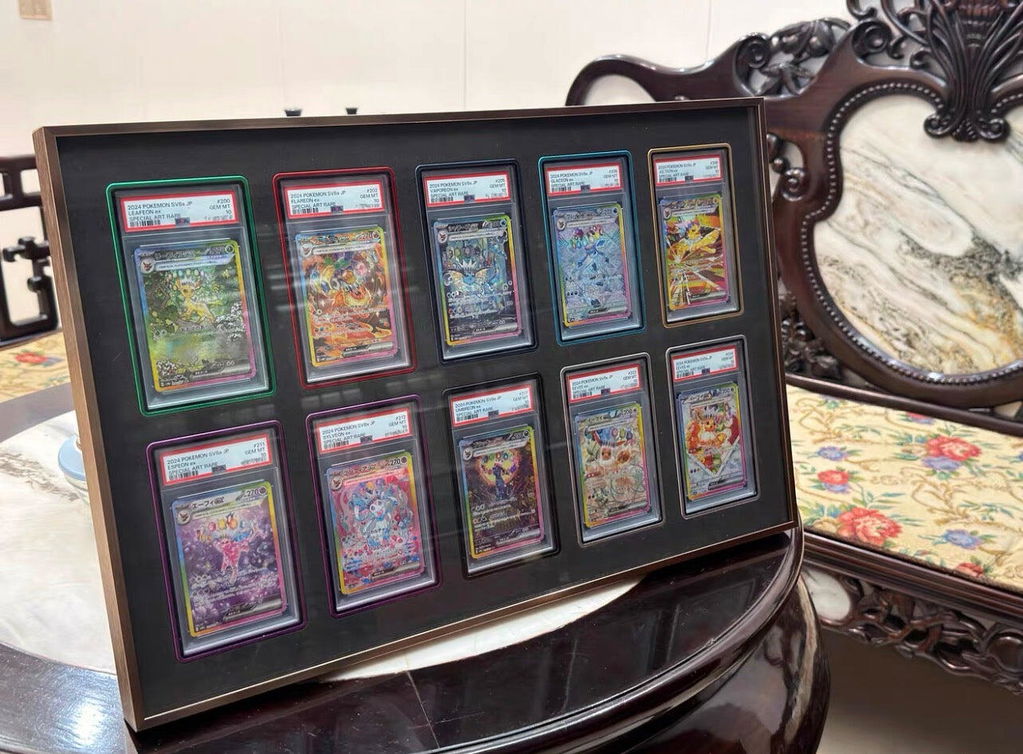
They work particularly well in repeated wall grids because the holder shape and label format remain visually consistent from card to card.
A PSA-only display can therefore look very organised even when the card artwork varies heavily.
PSA displays work well for:
- Pokémon character collections.
- Sports player collections.
- Rookie cards.
- Vintage sets.
- Modern graded-card groups.
- Larger repeated wall layouts.
Displaying BGS Slabs
BGS slabs have a thicker and more substantial profile than some other graded holders.
That changes both the visual weight of the display and the amount of depth required inside the frame.
The BGS label also has a very different appearance from PSA or CGC, so a full BGS grid tends to feel distinct even before you look at the cards themselves.
BGS remains especially common with:
- Sports cards.
- Autographs.
- High-end trading cards.
- Cards where subgrades are part of the appeal.
If you are building a BGS-specific display, the frame should be planned around the actual holder rather than assuming it will fit a PSA-oriented layout.
Displaying CGC Slabs
CGC slabs are widely used for Pokémon and other trading card games and have their own holder and label proportions.
They can work extremely well in repeated grids when the collection uses CGC consistently.
As with PSA and BGS, the label becomes part of the display. Across several rows, the repeated CGC labels create a visual structure above the card artwork.
Collectors commonly use CGC displays for:
- Pokémon collections.
- Modern TCG cards.
- Character collections.
- Japanese cards.
- Mixed vintage and modern displays.
Should You Mix PSA, BGS and CGC in One Frame?
You can, but it usually works better when the layout has been planned for mixed slabs from the start.
The main issue is not the grading company itself. It is the difference in slab size, thickness and label height.
When those differences repeat across a large frame, they can make the display feel uneven if the openings and spacing were designed around only one holder type.
If you own a mixed collection, there are several ways to approach it:
- Use separate frames for PSA, BGS and CGC.
- Group matching slabs together inside one larger wall layout.
- Use different sections of the wall for each grading company.
- Choose a display specifically designed around mixed slab formats.
Separating the slab types often creates the cleanest result, especially when the collection is already large enough to justify several frames.
The Label Matters More Than You Might Expect
Grading labels create strong repeated lines across a wall display.
In a PSA-only frame, every label sits in a similar visual position. The same applies to a BGS-only or CGC-only display.
When grading companies are mixed, those label heights and designs change from card to card.
This is not necessarily a problem, but it does make the overall collection look less uniform.
If visual consistency is important to you, keeping grading companies together is usually the easier route.
Frame Depth Changes Between Slab Formats
The depth of the holder is another practical difference between grading companies.
A frame built comfortably around one slab format may not automatically suit another.
That becomes particularly important with BGS, where the holder profile can feel noticeably more substantial.
Before choosing or making a graded-card display, check the actual slabs you plan to use rather than relying on a generic “graded card” description.
Spacing Should Follow the Holder, Not Just the Card
The trading card itself is only part of the finished display. The slab is the object being fitted into the frame.
That means spacing should account for:
- The full slab width.
- The full slab height.
- The label area.
- The visual gap between neighbouring holders.
- The outside margins of the complete grid.
Small differences become much more noticeable once the same gap repeats across several rows and columns.
Choosing the Right Insert Material
Rigid graded holders work particularly well with insert materials that can support the slab inside a defined opening.
EVA foam is one option because it can hold the outside shape of the slab while keeping the front of the card visible.
Darker inserts tend to make the clear slab edges disappear visually, while lighter inserts make the holder outline more obvious.
The most important thing is that the insert suits the actual slab format rather than treating PSA, BGS and CGC as identical.
Choosing the Right Frame Material
Small graded-card displays can work well in timber or other conventional picture-frame materials.
As the slab count grows, the display becomes heavier and the frame needs more rigidity.
Aluminium is a premium option for larger graded-card displays because it can maintain a relatively slim outer profile while providing good structural rigidity.
This becomes increasingly useful with larger PSA, BGS or CGC grids where the slabs themselves already contribute a significant amount of weight.
Acrylic or Glass?
Both acrylic and glass can work in graded-card displays.
Glass is hard and scratch resistant, which makes it practical for smaller frames.
Acrylic is lighter and more impact resistant, which can make it more practical for larger slab displays.
The larger the collection becomes, the more useful that weight reduction can be.
UV-resistant acrylic or specialist glazing can add another layer of protection, but graded cards should still be kept away from prolonged direct sunlight where possible.
How Many Slabs Should You Display Together?
The right card count depends on the collection rather than the grading company.
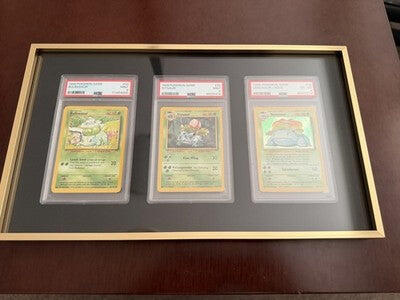
Small 3-card, 4-card and 9-card displays work well when you have a focused group.
Larger 18-card, 24-card or 36-card layouts make more sense when the collection genuinely supports that size.
The larger the frame gets, the more important wall space, finished weight and mounting become.
If you are unsure what size makes sense, our guide to how many trading cards to display in a frame covers different collection sizes in more detail.
PSA vs BGS vs CGC for Pokémon Displays
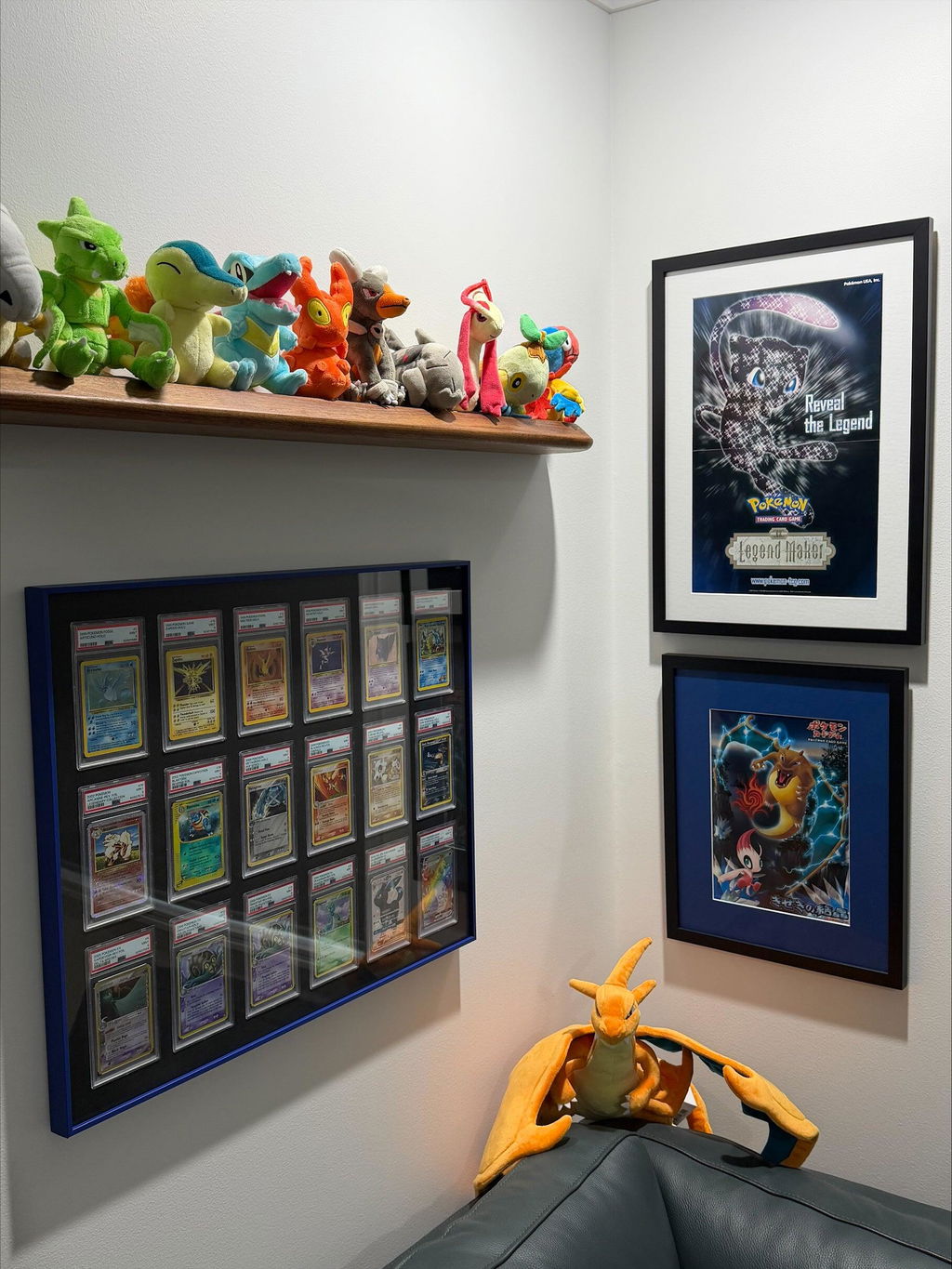
Pokémon collections can work well with all three grading companies.
A PSA-only display tends to feel very consistent because of the repeated label and holder format. CGC-only displays can create a similarly organised grid with a different visual style.
BGS slabs bring more physical depth and visual weight, which can suit smaller premium groups particularly well.
If your Pokémon collection already uses several grading companies, separating them into matching groups can make the wall easier to organise.
PSA vs BGS vs CGC for Sports Cards
Sports collectors often have more variation in slab type because different grading companies have historically been popular for different parts of the hobby.
PSA works well for repeated rookie or player grids. BGS can suit smaller groups of premium or autograph cards. CGC can also be incorporated where it is already part of the collection.
The same basic rule applies: the display should follow the slabs you actually own rather than forcing several holder types into one layout simply for the sake of uniformity.
Lighting Mixed Slab Displays
Different slab designs can reflect light slightly differently, especially when combined with acrylic or glass in front of the frame.
Soft room lighting or light positioned above or at an angle is generally easier to work with than a strong source facing directly into the display.
Foil Pokémon cards, chrome sports cards and other reflective surfaces can exaggerate glare, so test the display from the normal viewing position before fixing lighting permanently.
Plan for Future Grading Submissions
A graded collection often changes as new cards are submitted, grades are upgraded or collecting priorities shift.
If you mainly use one grading company, adding another matching frame later can be easier than buying an oversized frame now and leaving empty openings.
If you already know the collection will stay mixed, grouping the grading companies deliberately from the beginning can save a lot of rearranging later.
Should You Make Your Own Graded Card Display?
A small graded-card display can be made at home if you are comfortable working with frame materials, inserts, glazing and mounting hardware.
Mixed grading companies make the project more complicated because the slab dimensions and thicknesses are not identical.
If you are considering the DIY route, our guide to making a graded trading card wall display covers slab formats, materials, inserts, acrylic and larger layout planning in more detail.
Final Thoughts
PSA, BGS and CGC can all look excellent on a wall, but they should not be treated as identical display formats.
The slab dimensions, thickness and labels all influence how the finished grid looks and how the frame needs to be planned.
If you collect mainly one grading company, a dedicated display usually gives you the cleanest repeated layout. If your collection is mixed, grouping similar slabs together or using separate matching frames can make the wall easier to organise.
The grading company matters less than choosing a display that genuinely fits the slabs you own.
Continue Exploring
If you enjoyed this guide, you may also find these collector resources helpful.
📚 Collector Guides
-
The Ultimate Trading Card Display Guide: Ideas, Frames, Shelves & Display Solutions for Every Collector
Explore display ideas, wall layouts, shelving, cabinets, lighting, budgets and display solutions for every major trading card game. -
How to Make a Graded Trading Card Wall Display
Explore DIY graded card displays, slab formats, frame materials, EVA foam, acrylic, layouts and mounting considerations. -
How Many Trading Cards Should You Display in a Frame?
Compare single-card displays, smaller grids and larger trading card layouts to find a size that suits your collection. -
Why Premium Aluminium Trading Card Display Frames Are Worth It: The Complete Collector Guide
Explore aluminium trading card display frames, their materials and why they work particularly well for larger graded and One Touch collections.
🛒 Shop Display Collections
-
Aluminium Trading Card Wall Display Frames
Premium aluminium trading card display frames available in a wide range of grid sizes, frame colours and holder formats. -
PSA, CGC & BGS Graded Slab Wall Display Frames
Purpose-built graded trading card display frames for Pokémon, MTG, Yu-Gi-Oh!, One Piece, Sports Cards, Disney Lorcana and other collections. -
One Touch Wall Display Frames
Premium aluminium wall display frames designed for One Touch magnetic trading card holders.

0 comments