


Yu-Gi-Oh! cards are particularly well suited to display because collections often form naturally around monsters, archetypes, eras, rarities and specific card artworks.
A display might focus on one iconic monster, a full archetype, vintage cards from the early years of the game or a smaller group of modern collector pieces.
The best frame depends on how the cards are stored, how many you want to display and whether you are working with raw cards, graded slabs or One Touch magnetic holders.
Here are the main things worth considering when choosing a Yu-Gi-Oh! trading card display frame.
Start With the Part of the Collection You Actually Want to Display
You do not need to put the whole collection on the wall.
Yu-Gi-Oh! collections usually look more organised when the cards have a clear connection.
That could be:
- An iconic monster.
- A favourite archetype.
- Vintage cards.
- Ghost Rares.
- Starlight Rares.
- Quarter Century Secret Rares.
- Japanese or Korean releases.
- Cards from one era or set.
Once that group is clear, the frame size and layout become much easier to choose.
Yu-Gi-Oh! Cards Are Smaller Than Many Other TCG Cards
Yu-Gi-Oh! cards use a smaller format than Pokémon and Magic: The Gathering cards, which matters when planning a display.
A generic trading card frame may leave more empty space around Yu-Gi-Oh! cards or make the layout feel less precise.
This becomes even more noticeable in larger raw-card grids where small spacing differences repeat across the whole display.
For a cleaner result, it makes sense to plan the frame around the actual Yu-Gi-Oh! card or holder format rather than assuming every TCG uses the same dimensions.
Raw and Sleeved Yu-Gi-Oh! Cards
Raw and sleeved Yu-Gi-Oh! cards work well for larger grids because the cards are small and lightweight.
Penny sleeves, perfect-fit sleeves and premium sleeves can all work depending on how much protection and structure you want inside the frame.
This format is particularly useful for:
- Archetype collections.
- Favourite monster groups.
- Vintage card displays.
- Rarity collections.
- Artwork-focused displays.
If the cards are valuable, keeping them sleeved rather than completely raw also gives them another removable layer of protection inside the display.
Graded Yu-Gi-Oh! Cards
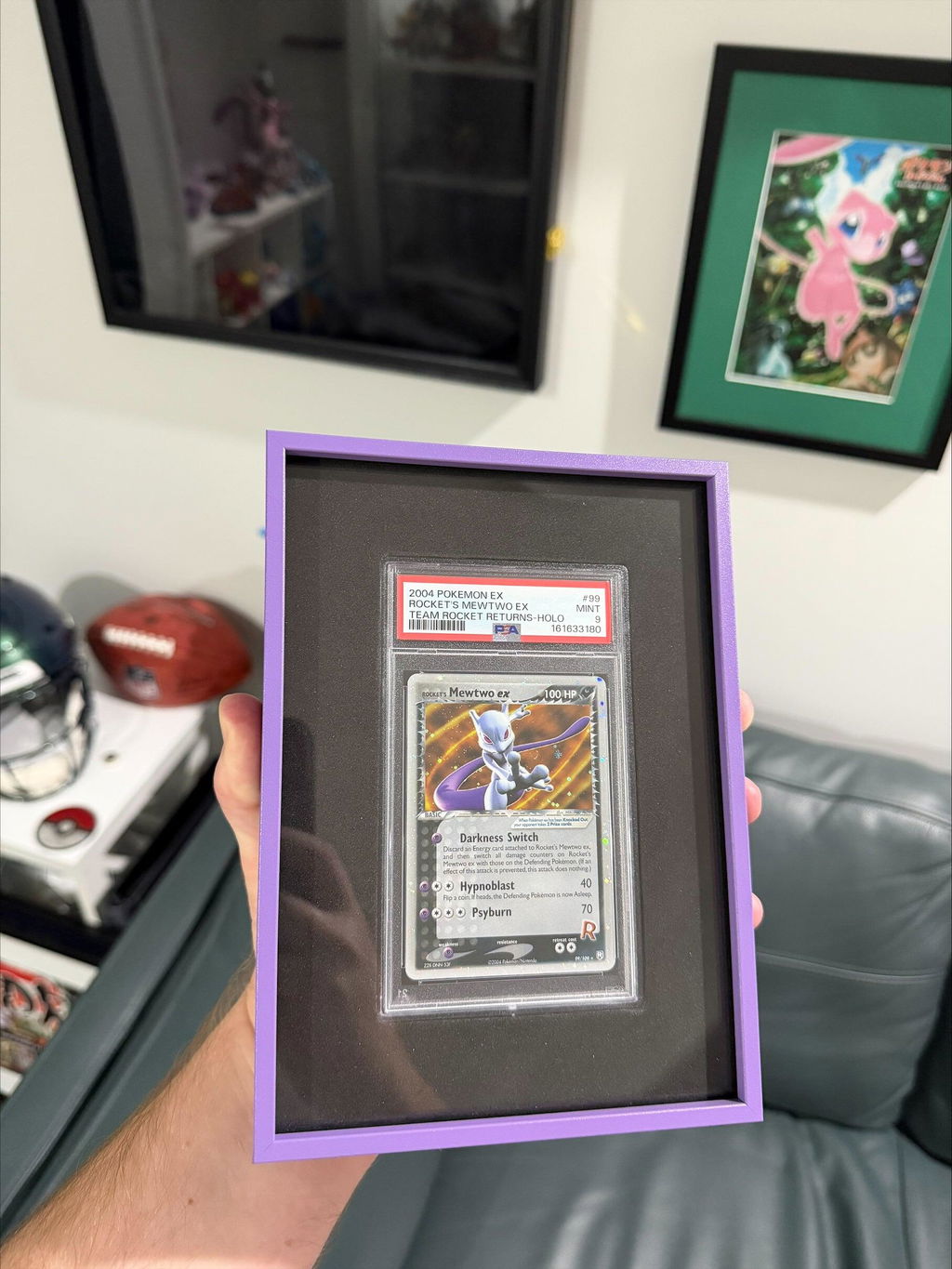
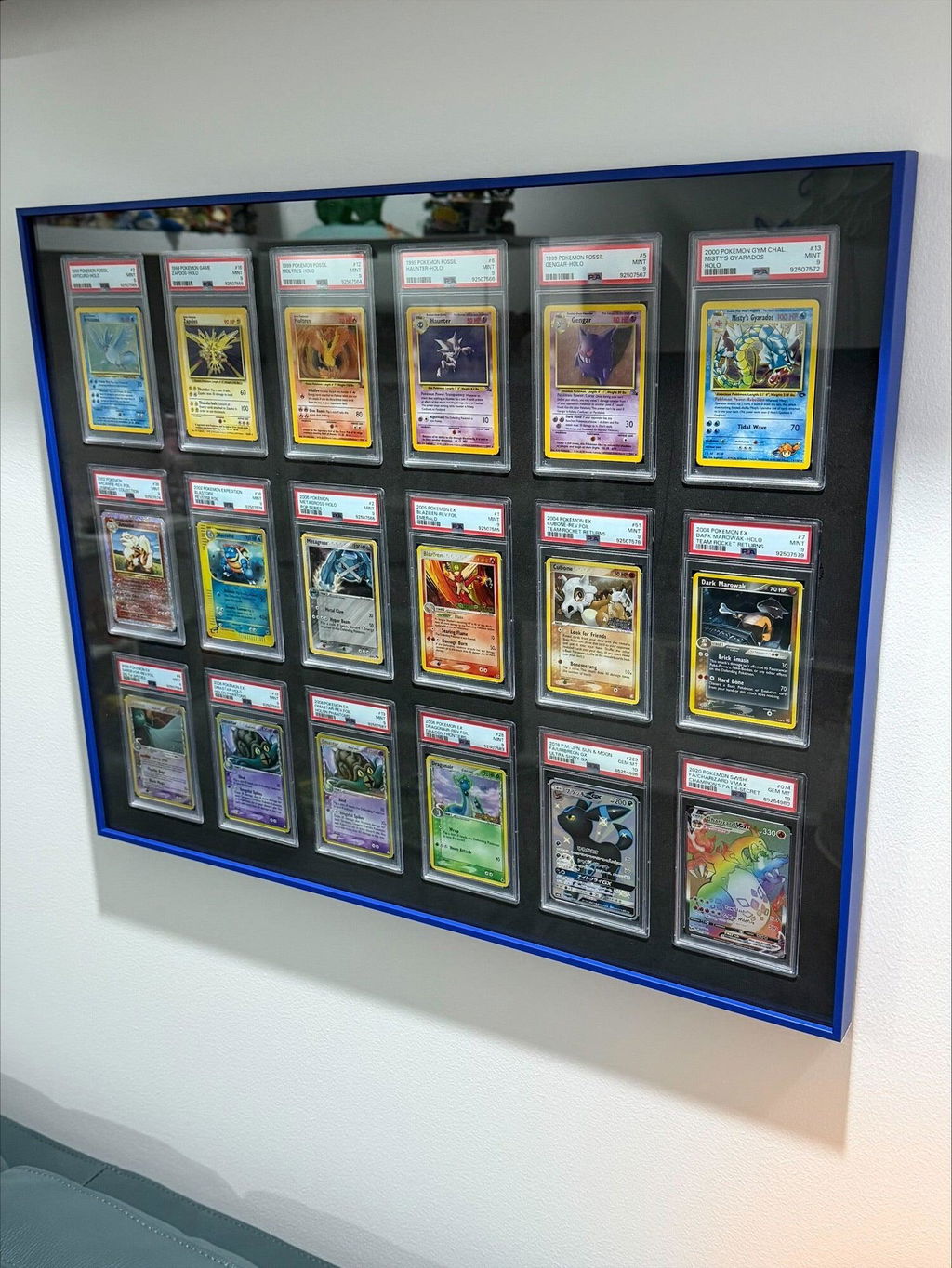
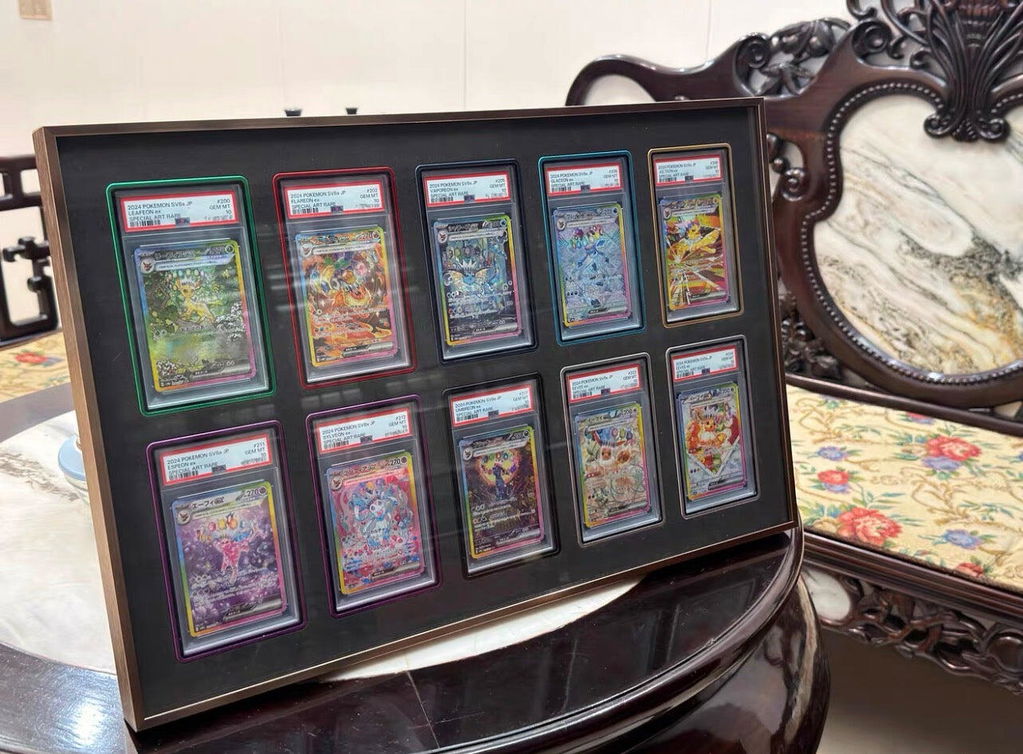
Graded Yu-Gi-Oh! cards work especially well in repeated wall layouts because the slab creates a consistent outer shape around the smaller card format.
PSA, CGC and BGS slabs can all be displayed, but the holder dimensions and thicknesses are not identical.
A frame designed around one slab format will usually give a cleaner fit than treating all graded holders as interchangeable.
Graded Yu-Gi-Oh! displays can work well for:
- Vintage first-edition cards.
- Blue-Eyes White Dragon collections.
- Dark Magician collections.
- Ghost Rares.
- High-grade tournament or promotional cards.
- Cards from one era or set.
One Touch Magnetic Holders
One Touch holders are useful when you want a rigid clear case around an ungraded Yu-Gi-Oh! card.
They give the card more physical presence than a sleeve or toploader without adding a grading label above the artwork.
This can work particularly well for favourite modern cards, premium rarities and cards you want to keep removable from the display.
As with any rigid holder, the frame should be planned around the actual One Touch dimensions rather than the raw card alone.
Build Around an Archetype
Yu-Gi-Oh! is one of the easiest trading card games to organise by archetype because many collections already revolve around connected monsters, spells and traps.
A display might focus on:
- Blue-Eyes.
- Dark Magician.
- Red-Eyes.
- Elemental HERO.
- Cyber Dragon.
- Blackwing.
- Sky Striker.
- Branded or Despia.
An archetype display can use only monster cards or include key spell and trap cards where they add to the overall theme.
Vintage Yu-Gi-Oh! Displays
Older Yu-Gi-Oh! cards often work best with a simple frame and restrained background because the artwork, borders and early card design already create a strong visual identity.
A vintage display might focus on:
- Legend of Blue Eyes White Dragon.
- Metal Raiders.
- Spell Ruler.
- Pharaoh's Servant.
- Early promotional cards.
- First-edition holos.
Mixing older cards with modern reprints can also work when the display is built around one monster or artwork.
Display Different Rarities Together
Yu-Gi-Oh! has a wide range of rarity treatments, which gives collectors another natural way to build a display.
You might group:
- Ghost Rares.
- Starlight Rares.
- Ultimate Rares.
- Collector's Rares.
- Quarter Century Secret Rares.
- Older Secret Rares.
Because these cards can be highly reflective, lighting becomes especially important.
Choose the Right Layout
The best layout depends on the collection rather than the biggest frame available.
Common options include:
- Single-card displays.
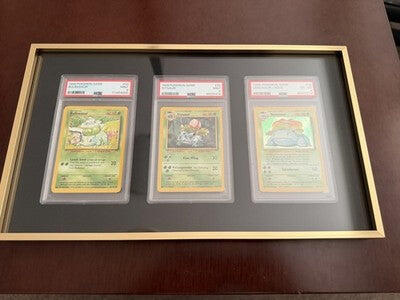
- Three-card groups.
- 2 × 2 layouts.
- 3 × 3 grids.
- Larger archetype collections.
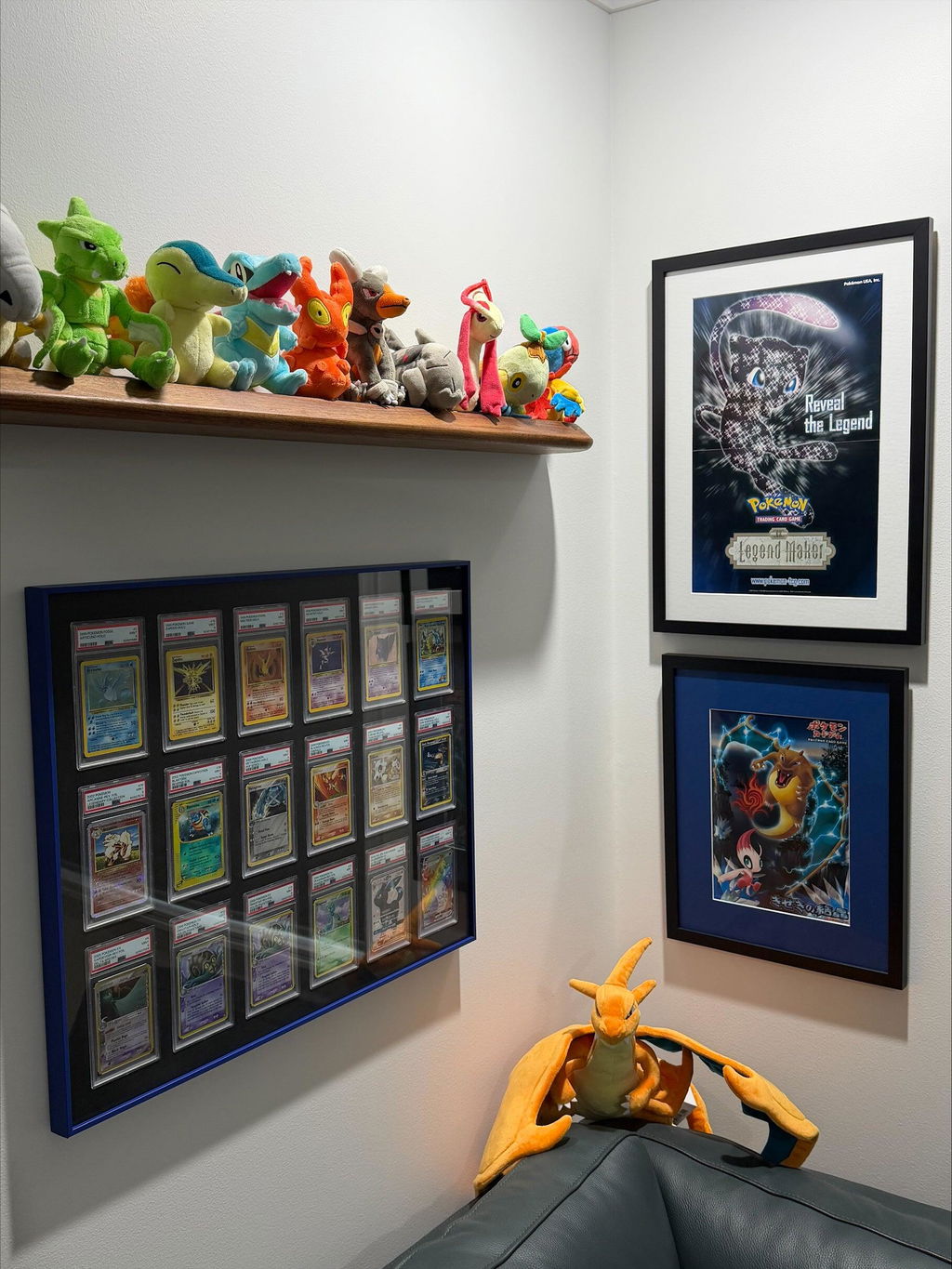
- Several matching frames across one wall.
A smaller display can work well for one iconic monster, while a larger grid makes more sense for an archetype or rarity collection.
The important part is that the card count comes from the collection rather than forcing unrelated cards into empty positions.
Dense Layouts Can Work Particularly Well With Yu-Gi-Oh!
Because Yu-Gi-Oh! cards are physically smaller than many other trading card formats, larger raw-card grids can remain relatively compact.
This makes the game particularly well suited to dense displays where several related cards sit together without the frame becoming enormous.
That said, consistent spacing still matters. A dense layout should feel deliberate rather than crowded.
Choosing the Right Frame Material
Small raw-card displays can work perfectly well in conventional timber or picture frames.
As the collection moves into larger grids or heavier graded slabs, stronger frame construction becomes more useful.
Aluminium is a premium option for larger Yu-Gi-Oh! displays because it can provide good rigidity while keeping the outer frame relatively slim.
This is particularly useful with large graded-card layouts where the slabs, backing and glazing already contribute significant weight.
Acrylic or Glass?
Glass works well for smaller displays because it is hard and scratch resistant.
Acrylic is lighter and more impact resistant, which can make it more practical for larger frames.
Once a display contains a substantial number of graded slabs or magnetic holders, reducing the weight of the front panel can make handling and wall mounting easier.
UV-resistant acrylic or specialist glazing can add another layer of protection, but valuable Yu-Gi-Oh! cards should still be kept away from prolonged direct sunlight where possible.
Frame Colour and Background
Yu-Gi-Oh! cards already use strong border colours and detailed artwork, so the surrounding frame usually works best when it stays relatively simple.
Common finishes include:
- Matte black.
- Silver.
- Titanium or darker metallic finishes.
- Gold.
- Natural timber.
Black tends to work particularly well with darker archetypes and graded slabs, while silver can make a larger wall feel lighter.
The background around the cards should support the collection rather than compete with it.
Lighting Yu-Gi-Oh! Cards
Yu-Gi-Oh! rarities can be highly reflective, so poor lighting can hide the very effects you are trying to display.
Ghost Rares, Starlight Rares, Ultimate Rares and foil cards can look completely different depending on the angle of the light.
Soft room lighting or LEDs positioned above or at an angle are usually easier to work with than bright light facing directly into acrylic, glass or slabs.
Test the display from the position where you normally view it before installing dedicated lighting permanently.
Japanese, Korean and English Yu-Gi-Oh! Cards
Language can also become part of the display theme.
You might display English, Japanese and Korean versions of the same monster together or build separate groups around different regional releases.
This works particularly well for iconic cards where the artwork stays recognisable even when the printed language changes.
Leave Room for the Collection to Change
Yu-Gi-Oh! collections evolve quickly as new archetypes, rarities and reprints are released.
A frame that can be reopened makes it easier to swap cards as the collection changes.
For larger collections, several matching frames can also be more practical than one enormous display because each archetype or era can be updated independently.
Several Frames Can Work Better Than One Large Display
A large Yu-Gi-Oh! collection does not need to be forced into one frame.
Several coordinated displays can make the wall easier to organise.
For example:
- One frame for Blue-Eyes.
- One for Dark Magician.
- One for vintage cards.
- One for modern rarities.
If the outer frame finish and wall spacing remain consistent, the separate displays can still look like one larger collection.
Should You Make Your Own Yu-Gi-Oh! Display?
A small raw-card display can be relatively straightforward to make using a conventional picture frame, matboard and suitable glazing.
Larger displays and rigid holders such as graded slabs or One Touch cases require more planning around holder fit, frame depth, backing strength, acrylic and wall mounting.
If you are considering the DIY route, our guide to making a Yu-Gi-Oh! trading card wall display covers the materials, holder formats and layout decisions in much more detail.
Final Thoughts
The best Yu-Gi-Oh! display frame is the one that fits the part of the collection you actually want on the wall.
Start with the monster, archetype, rarity or era you want to display, then choose the holder format, frame size and layout around those cards.
A small three-card display can work just as well as a large graded wall when the cards have a clear reason to sit together.
Keeping the frame simple, the spacing consistent and the collection clearly organised usually produces a stronger result than trying to fit as many unrelated cards as possible into one display.
Continue Exploring
If you enjoyed this guide, you may also find these collector resources helpful.
📚 Collector Guides
-
The Ultimate Trading Card Display Guide: Ideas, Frames, Shelves & Display Solutions for Every Collector
Explore display ideas, wall layouts, shelving, cabinets, lighting, budgets and display solutions for every major trading card game. -
How to Make a Yu-Gi-Oh! Trading Card Wall Display
Explore DIY Yu-Gi-Oh! trading card displays, raw cards, graded slabs, materials, acrylic, layouts and mounting. -
How to Make a Trading Card Wall Display: Complete DIY Guide
Learn how to plan a DIY trading card display, including frame materials, holders, acrylic, EVA foam, layouts and wall mounting. -
Why Premium Aluminium Trading Card Display Frames Are Worth It: The Complete Collector Guide
Explore aluminium trading card display frames, their materials and why they work particularly well for larger graded and One Touch collections.
🛒 Shop Display Collections
-
Aluminium Trading Card Wall Display Frames
Premium aluminium trading card display frames available in a wide range of grid sizes, frame colours and holder formats. -
PSA, CGC & BGS Graded Slab Wall Display Frames
Purpose-built graded trading card display frames for Pokémon, MTG, Yu-Gi-Oh!, One Piece, Sports Cards, Disney Lorcana and other collections. -
One Touch Wall Display Frames
Premium aluminium wall display frames designed for One Touch magnetic trading card holders.

0 comments