


Pokémon cards are particularly well suited to display because the artwork, characters, sets and rarities already give collectors plenty of natural ways to organise a wall.
You might build a display around one Pokémon, a favourite expansion, a group of graded cards or a small set of modern chase cards. The best approach depends on the cards you actually own and how much wall or shelf space you want to use.
There is no need to display the entire collection. In most cases, choosing a smaller group of cards with a clear connection creates a much cleaner result.
Here are some practical Pokémon card display ideas for raw cards, graded slabs, One Touch holders and larger collections.
Start With One Clear Display Theme
The easiest way to make a Pokémon display feel organised is to give the cards a reason to sit together.
That could be:
- One favourite Pokémon.
- An evolution line.
- A particular set.
- Illustration Rares or Special Illustration Rares.
- Vintage holos.
- Japanese cards.
- Promo cards.
- A graded card collection.
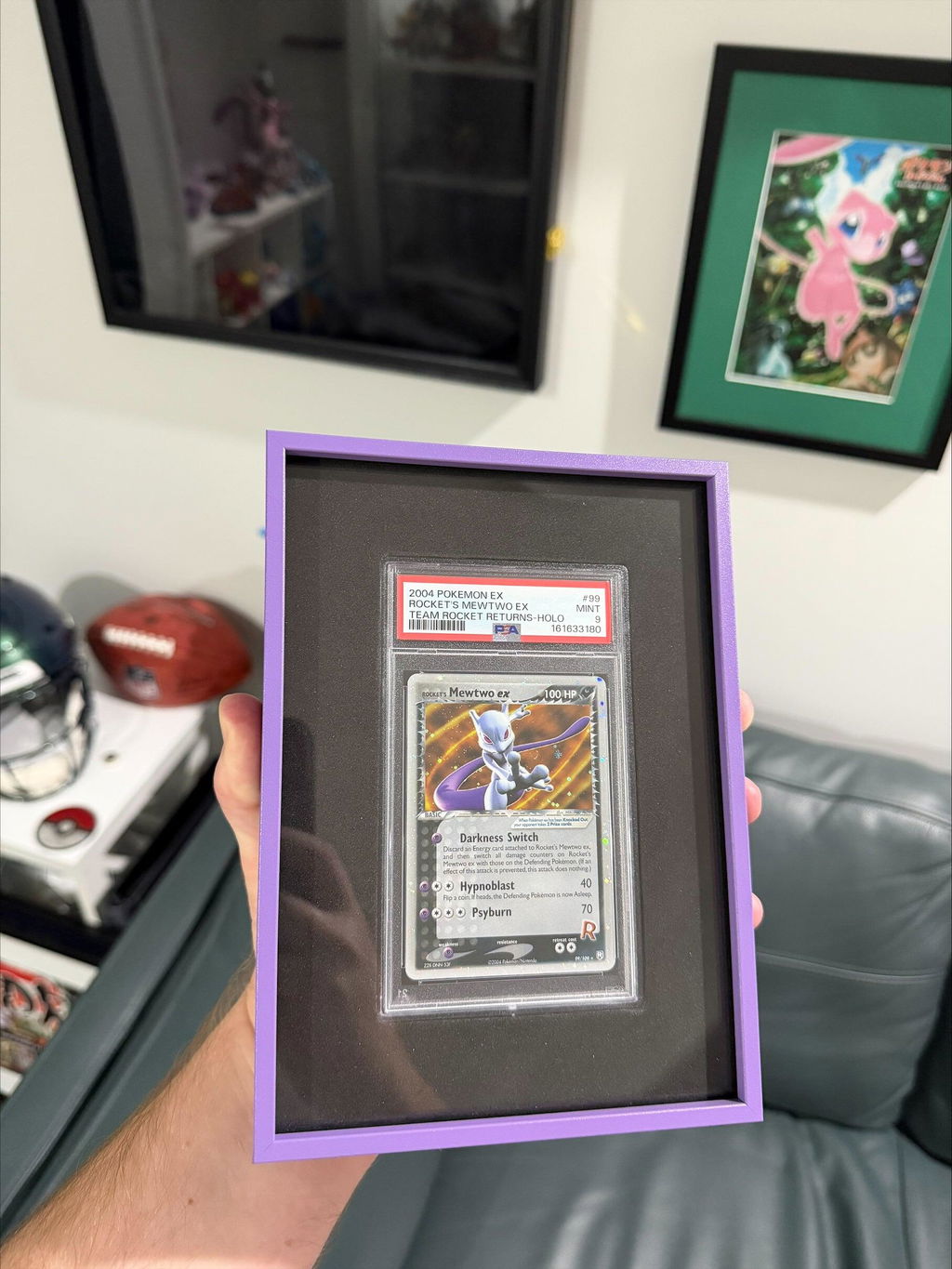
Once the theme is clear, the frame size, layout and holder format become much easier to work out.
1. Build a Display Around One Pokémon
Character-based displays are one of the easiest Pokémon display ideas to build because the same Pokémon can appear across decades of sets, languages and artwork styles.
Popular examples include:
- Charizard.
- Pikachu.
- Umbreon.
- Gengar.
- Mew.
- Mewtwo.
- Rayquaza.
A character wall can mix vintage and modern cards while still feeling connected because the subject stays consistent.
You can also separate the cards by era, artwork style, rarity or grading company if the collection becomes large.
2. Display an Evolution Line
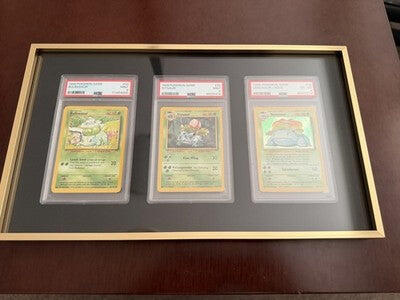
Evolution lines naturally suit smaller multi-card frames.
A three-card display can work particularly well for:
- Bulbasaur, Ivysaur and Venusaur.
- Charmander, Charmeleon and Charizard.
- Squirtle, Wartortle and Blastoise.
- Gastly, Haunter and Gengar.
You can keep the cards from the same set or deliberately mix different eras if you want to show how the artwork has changed over time.
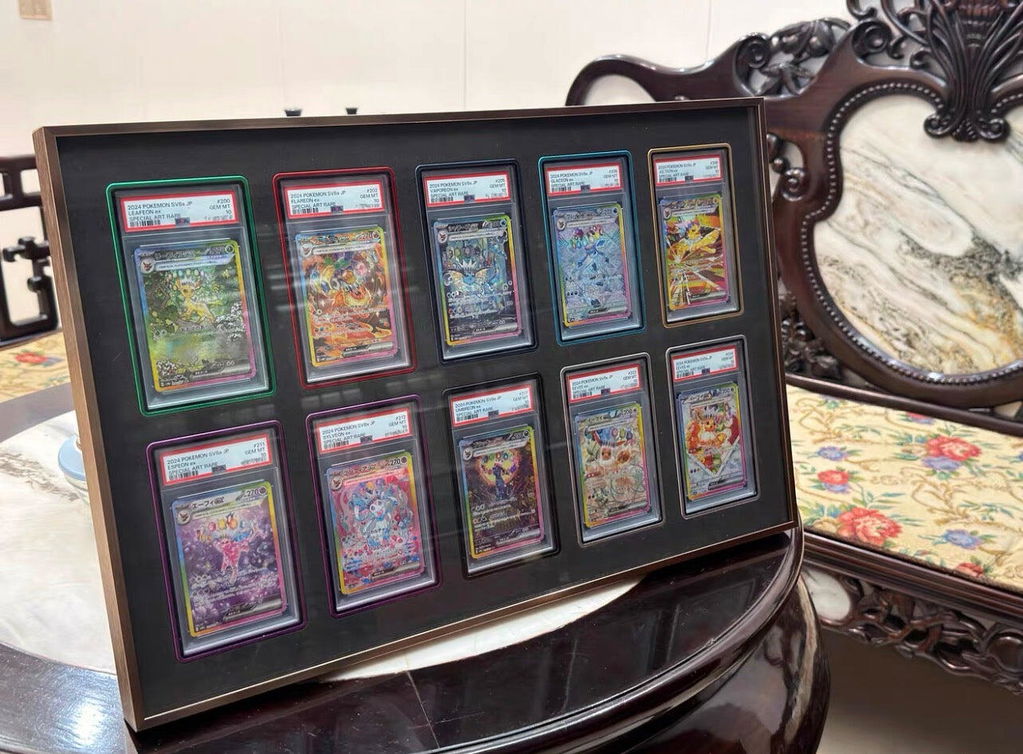
3. Create an Eeveelution Display
Eeveelutions work particularly well in larger grids because the collection already has a built-in group of related characters.
You might use one favourite card for each evolution, build around one specific set, or create separate frames as the collection grows.
Because Eeveelution cards often contain a lot of colour, relatively simple black, silver or neutral framing can help keep the wall from becoming too busy.
4. Build a Display Around One Pokémon Set
Set-based displays are useful when you like the visual style of one expansion but do not necessarily want to frame every card from it.
You can choose:
- The main chase cards.
- Your favourite Illustration Rares.
- Trainer cards.
- A smaller character group.
- Japanese and English versions.
This works particularly well with sets that have a strong visual identity, because the artwork already helps tie the display together.
5. Mix Vintage and Modern Pokémon Cards
A Pokémon display does not need to come from one era.
One interesting approach is displaying an older card beside newer versions of the same Pokémon.
For example, a vintage holo can sit beside a modern Illustration Rare or Special Illustration Rare, showing how the artwork and card design have changed.
This works especially well for long-running characters such as Charizard, Pikachu, Mewtwo and Gengar.
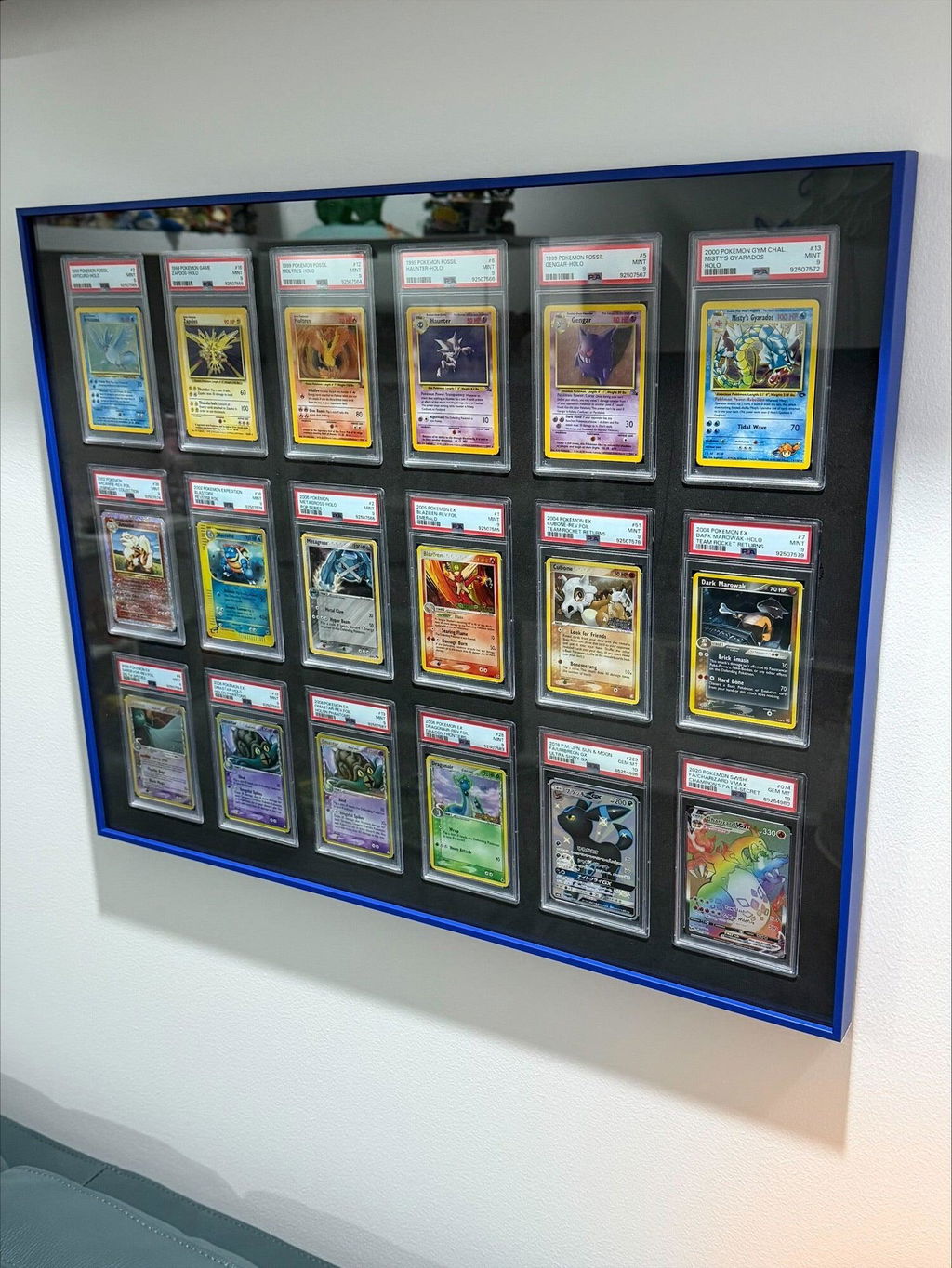
6. Display Graded Pokémon Cards in a Grid
PSA, CGC and BGS slabs naturally suit repeated grids because every holder has a defined outer shape.
A graded Pokémon display can be organised by:
- Character.
- Set.
- Era.
- Grade.
- Language.
- Artwork type.
If most of the cards use the same grading company, the repeated slab and label design can make the wall look particularly organised.
Mixed grading companies can also work, although differences in slab size and label design become more obvious when they sit beside each other.
7. Use One Touch Holders for Favourite Ungraded Cards
Not every high-end Pokémon card needs to be graded before it can be displayed.
One Touch magnetic holders give raw cards a rigid outer case while keeping them easy to remove.
This can work well for:
- Modern chase cards.
- Alternate artwork.
- Illustration Rares.
- Promotional cards.
- Cards you prefer to keep ungraded.
A repeated One Touch grid can create a similar overall structure to a slab wall without adding grading labels to the presentation.
8. Display Raw or Sleeved Pokémon Cards
Raw and sleeved Pokémon cards are useful when you want to display more cards in a smaller area.
Penny sleeves, perfect-fit sleeves and premium sleeves all keep the overall profile thin compared with slabs or magnetic holders.
This makes them particularly useful for:
- Set highlights.
- Character collections.
- Trainer collections.
- Artwork-focused displays.
- Large raw-card grids.
If the cards are valuable, keeping them sleeved rather than completely raw also gives them another removable layer of protection inside the frame.
9. Create a Japanese and English Pairing
If you collect the same Pokémon cards in multiple languages, pairing them together can create a simple but effective display.
You might display the Japanese and English release of the same artwork side by side or build a larger wall around several matching pairs.
This gives the collection an obvious structure without needing every card to come from the same set.
10. Build a Vintage Pokémon Display
Vintage cards often work best when the display stays visually simple.
Base Set, Jungle, Fossil, Team Rocket, Gym-era and Neo-era cards already have distinctive artwork and borders, so the surrounding frame does not need much decoration.
A vintage display might focus on:
- Original holos.
- Favourite starter Pokémon.
- One vintage set.
- First appearances.
- Japanese vintage cards.
Keeping the outer frame and background restrained usually gives older cards enough room to stand out.
11. Display Modern Illustration Rares
Modern Pokémon cards increasingly use full-card artwork, which makes them particularly suited to wall displays.
Illustration Rares and Special Illustration Rares can be grouped by:
- Pokémon.
- Set.
- Artist.
- Colour palette.
- Evolution line.
Because these cards already contain so much visual detail, simple framing and consistent spacing usually work better than adding too many decorative elements around them.
12. Use Several Smaller Frames Instead of One Huge Display
A large Pokémon collection does not need to sit inside one enormous frame.
Several coordinated displays can make the wall easier to organise and allow each section of the collection to have its own theme.
For example:
- One frame for Charizard cards.
- One for Eeveelutions.
- One for vintage holos.
- One for modern graded cards.
If the frame finishes and spacing stay consistent, the separate displays can still look like one larger collection.
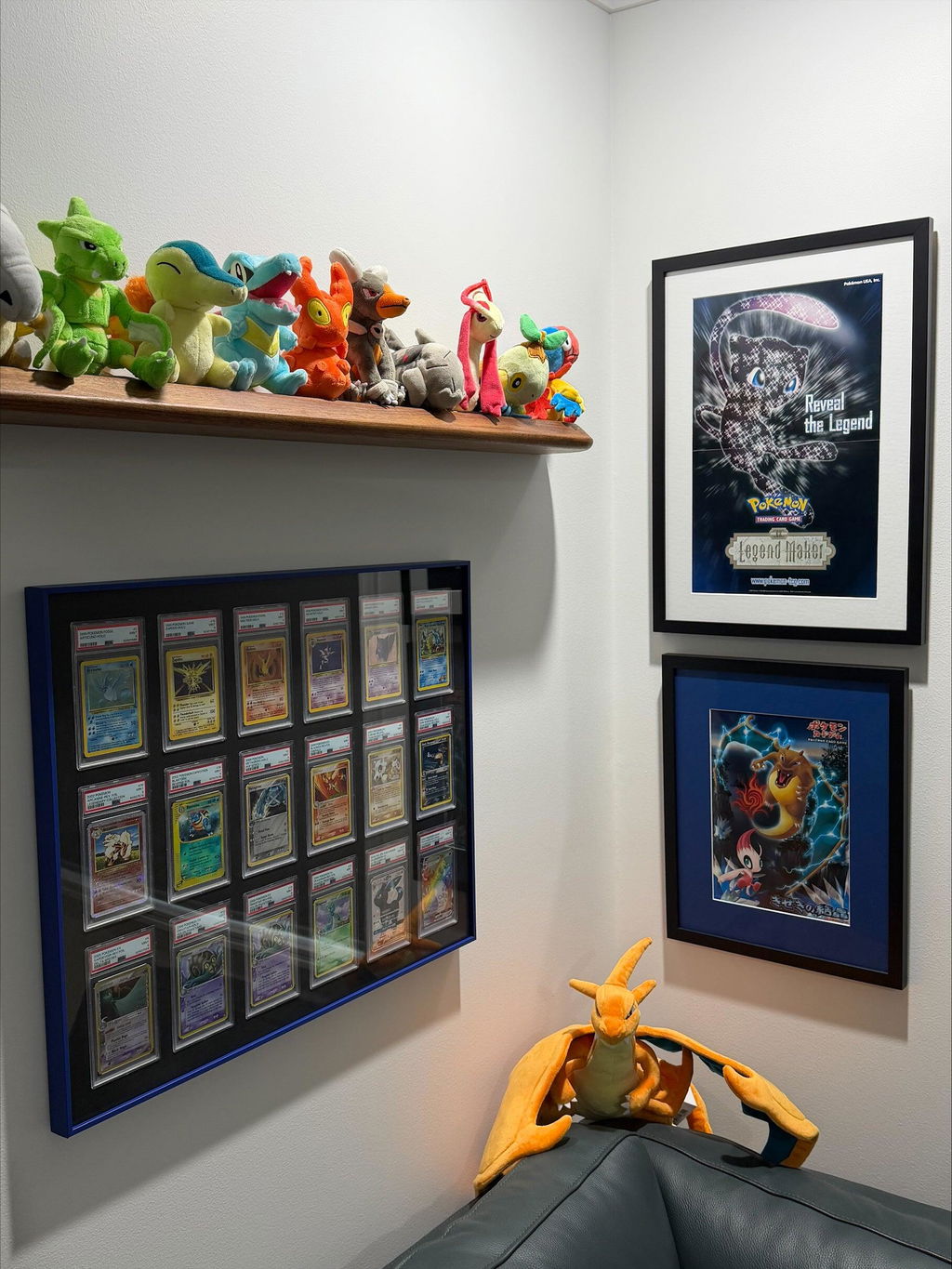
13. Create a Large Pokémon Feature Wall
If you have enough wall space, several different Pokémon displays can be combined into one larger layout.
A larger wall might include:
- Graded card frames.
- Raw or sleeved card displays.
- One Touch collections.
- Sealed products on shelving.
- Pokémon artwork.
- Figures or other collectibles.
The easiest way to keep a mixed wall organised is to use consistent spacing and a limited number of frame finishes.
14. Use Shelves for Cards You Change Regularly
Frames are not always the best option if you change the collection constantly.
Small shelves or slab ledges make it easy to rotate PSA, CGC, BGS or One Touch cards without opening a frame.
This works particularly well for new pickups, recent grades or cards you only want to display temporarily.
The downside is that open shelves collect more dust and can look cluttered once too many cards are added.
15. Use a Single Card as the Main Focus
You do not need a large collection to create a good Pokémon display.
A single favourite card can work extremely well on its own, particularly if it is graded or placed in a rigid magnetic holder.
This approach is useful for a particularly important Charizard, Pikachu, Umbreon or other card that you do not want competing with dozens of surrounding pieces.
Choose the Display Format Around the Cards
The right frame depends heavily on whether the collection uses raw cards, sleeves, magnetic holders or graded slabs.
A shallow raw-card frame has very different requirements from a large display containing dozens of PSA slabs.
As the collection gets larger, frame rigidity, glazing weight, backing and wall mounting become more important.
Aluminium is a premium option for larger displays because it can maintain a relatively slim profile while providing good rigidity, while timber and standard picture frames can work very well for smaller or more traditional displays.
Think About the Background and Frame Colour
Pokémon cards already contain a lot of colour, so the surrounding materials usually work best when they remain fairly simple.
Black, silver and other neutral frame finishes are easy to use across a mixed collection, while gold can work well for smaller feature displays where you want the frame itself to have more presence.
Black backgrounds create stronger contrast, while white backgrounds make the outline of clear slabs and holders more visible.
The aim is to support the artwork rather than match the frame to every individual Pokémon.
Lighting Pokémon Card Displays
Lighting can make a big difference with Pokémon cards because modern releases often use foil, texture and highly reflective artwork.
Strong lighting directly opposite acrylic, glass or graded slabs can create glare and make the cards harder to see.
Soft room lighting, ceiling lights or LEDs positioned above or at an angle are usually easier to work with.
Test the display from the position where you will normally view it before installing dedicated lighting permanently.
Keep Pokémon Cards Away From Prolonged Direct Sunlight
Room placement matters regardless of whether the cards are raw, graded or inside magnetic holders.
UV-resistant acrylic and specialist glazing can add another layer of protection, but valuable Pokémon cards should still be kept away from prolonged direct sunlight where possible.
If you have a choice between two walls, the one receiving less direct sunlight will generally be easier to build the display around.
Leave Space for the Collection to Grow
Pokémon collections change quickly.
A new set might add another card to a character collection, a raw card may later be graded, or one small frame may eventually become part of a much larger wall.
Using matching frame finishes, repeatable layouts and frames that can be reopened makes future changes easier.
You do not need to predict exactly how large the collection will become. A little flexibility is usually enough.
Want to Make Your Own Pokémon Card Display?
Smaller raw-card displays can be relatively straightforward to make using a standard picture frame, matboard and suitable glazing.
Larger displays, graded slabs and magnetic holders involve more decisions around frame depth, holder fit, acrylic, backing, spacing and wall mounting.
If you are considering the DIY route, our guide to making a Pokémon trading card wall display covers the materials, layout options and practical considerations in much more detail.
Final Thoughts
The best Pokémon card display ideas usually start with the collection rather than the room.
Choose a clear group of cards, decide whether they will be displayed raw, sleeved, graded or in magnetic holders, and then build the layout around that.
A three-card evolution line can work just as well as a wall containing dozens of graded cards. What matters is that the cards have a clear reason to sit together and the display gives them enough space to be seen properly.
Continue Exploring
If you enjoyed this guide, you may also find these collector resources helpful.
📚 Collector Guides
-
The Ultimate Trading Card Display Guide: Ideas, Frames, Shelves & Display Solutions for Every Collector
Explore display ideas, wall layouts, shelving, cabinets, lighting, budgets and display solutions for every major trading card game. -
How to Make a Pokémon Trading Card Wall Display
Explore DIY Pokémon trading card displays, frame materials, acrylic, sleeves, graded slabs, One Touch holders and layout planning. -
How to Make a Trading Card Wall Display: Complete DIY Guide
Learn how to plan a trading card wall display, including materials, holders, glazing, layouts, mounting and larger collections. -
Why Premium Aluminium Trading Card Display Frames Are Worth It: The Complete Collector Guide
Explore aluminium trading card display frames, their materials and why they work particularly well for larger graded and One Touch collections.
🛒 Shop Display Collections
-
Aluminium Trading Card Wall Display Frames
Premium aluminium trading card display frames available in a wide range of grid sizes, frame colours and holder formats. -
PSA, CGC & BGS Graded Slab Wall Display Frames
Purpose-built graded trading card display frames for Pokémon, MTG, Yu-Gi-Oh!, One Piece, Sports Cards, Disney Lorcana and other collections. -
One Touch Wall Display Frames
Premium aluminium wall display frames designed for One Touch magnetic trading card holders.

0 comments