


Choosing a display frame for Pokémon cards sounds simple until you start looking at the collection itself.
A single graded Charizard needs a very different display from a 20-card Eeveelution collection, and a wall of PSA slabs has different requirements again from raw cards in sleeves or One Touch magnetic holders.
The best Pokémon card display frame is therefore not just the one that looks good. It needs to suit the cards, the holder format, the size of the collection and the room where it will actually be displayed.
Here are the main things worth considering before choosing a Pokémon trading card display.
Start With the Pokémon Cards You Actually Want to Display
You do not need to put the whole collection on the wall.
In fact, most displays work better when there is a clear reason for the cards to sit together.
That might be:
- A favourite Pokémon.
- An evolution line.
- Vintage cards.
- Modern Illustration Rares or Special Illustration Rares.
- A specific expansion.
- Japanese and English versions of the same card.
- A graded card collection.
- A small group of personal favourites.
Once you know which cards belong in the display, the right frame size and layout become much easier to work out.
Think About the Card Format Before the Frame
The protective holder around the Pokémon card changes almost everything about the display, including the required depth, weight and spacing.
Raw and Sleeved Pokémon Cards
Raw Pokémon cards take up very little space, which makes them useful for larger grids and set-based displays.
For valuable cards, it generally makes more sense to keep them in a penny sleeve, perfect-fit sleeve or another protective sleeve rather than placing the card completely unprotected inside a frame.
Sleeved cards are particularly useful for collectors who like changing the display regularly because the card can remain easy to remove without the bulk of a rigid holder.
PSA, CGC and BGS Graded Pokémon Cards
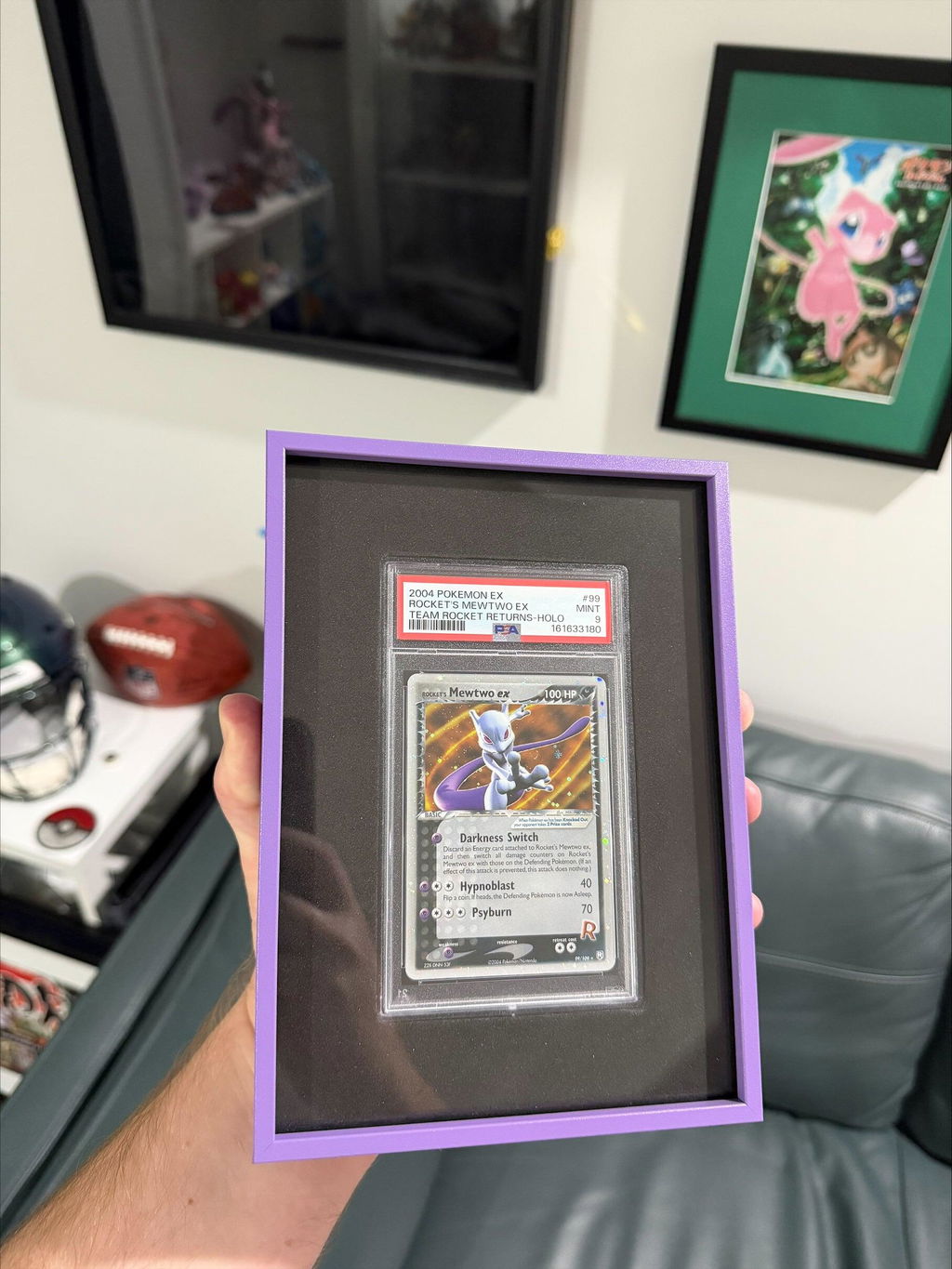
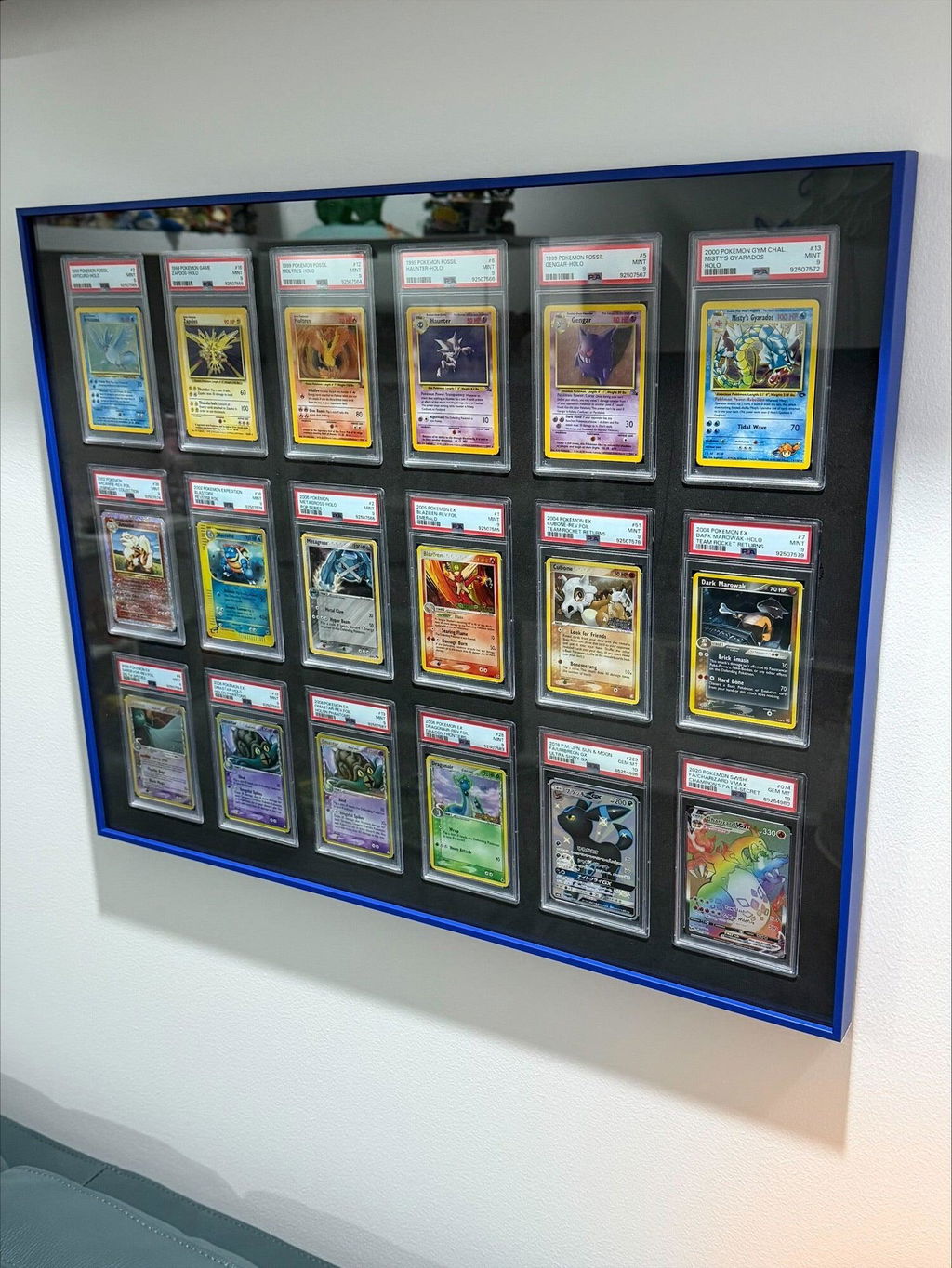
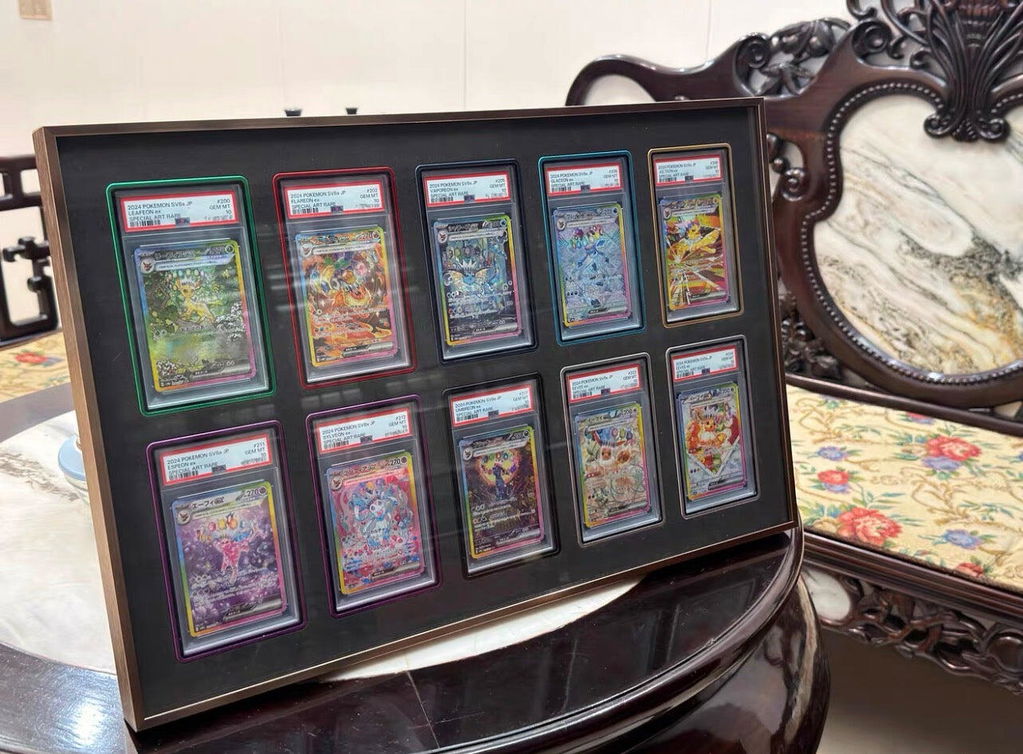
Graded slabs work extremely well in repeated wall layouts because the holder gives every card a defined shape and the grading label creates another consistent visual element across the collection.
A display made entirely from PSA slabs can look very different from one using BGS or CGC holders, so it is worth choosing a frame designed around the actual slab format rather than assuming every graded holder is interchangeable.
For larger slab collections, the total weight also becomes more important. A frame holding dozens of graded Pokémon cards needs substantially more support than a small raw-card display.
One Touch Magnetic Holders
One Touch magnetic holders sit somewhere between raw cards and graded slabs.
They give the Pokémon card a rigid, clear case without requiring professional grading, which makes them useful for alternate artwork, high-end modern cards, vintage favourites and other cards you want to display more prominently.
They are also thicker and heavier than sleeves, so the frame needs enough depth to accommodate the holder comfortably.
Choose a Frame Material That Suits the Size of the Display
Frame material becomes more important as the display grows.
Timber works well for traditional picture-frame layouts and can be relatively easy to customise. Standard picture frames can also work for smaller raw or sleeved Pokémon displays when paired with suitable matboard or backing.
Aluminium is a more premium option and is particularly well suited to larger trading card displays because it can provide a slim outer profile while maintaining good rigidity.
For a large graded Pokémon collection, that combination of rigidity and a relatively clean frame edge can be especially useful.
The right material depends on the size of the display, the card format and the type of finish you want rather than simply choosing one material because it is more expensive.
Acrylic or Glass?
Both acrylic and glass can work well in Pokémon card display frames.
Glass is hard and scratch resistant, which makes it useful for smaller framed displays. Acrylic is considerably lighter and more impact resistant, which becomes increasingly useful as the frame gets larger.
For a large wall display containing multiple graded cards or magnetic holders, reducing the weight of the glazing can make the finished frame much easier to handle and mount.
UV-resistant acrylic or specialist glazing can add another layer of protection, but Pokémon cards should still be kept away from prolonged direct sunlight where possible.
Choose a Layout That Matches the Collection
The layout should come from the cards rather than forcing the cards into a grid simply because that frame size is available.
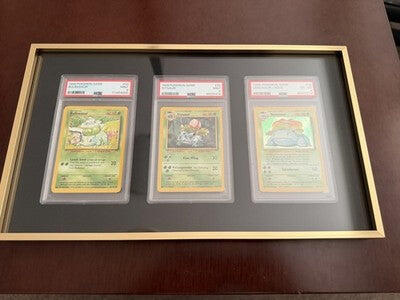
For example, a three-card evolution line naturally suits a three-card layout, while a larger character collection may work better in a repeated grid.
Common Pokémon display layouts include:
- Single-card displays.
- Two-card pairings.
- Three-card evolution lines.
- 3 × 3 grids.
- Character collections.
- Set highlights.
- Large graded-card walls.
There is no need to fill every available position immediately. Leaving some space for the collection to grow can make the display much easier to manage later.
Character Collections Work Particularly Well
Pokémon collecting naturally lends itself to character-based displays because the same Pokémon can appear across decades of sets, artworks and rarities.
A Charizard wall might combine vintage holos, modern Special Illustration Rares and graded cards. An Eeveelution display might use one card for each evolution. A Pikachu collection could mix promotional cards, Japanese releases and modern chase cards.
These displays usually feel more deliberate because there is an obvious connection between every card on the wall.
Set-Based Pokémon Displays
Another approach is to build the display around a particular Pokémon expansion.
You might choose the major chase cards from a set, a group of Illustration Rares, favourite Trainer cards or one smaller subset rather than trying to frame the entire expansion.
This works particularly well for sets with a strong visual identity because the artwork already helps tie the display together.
Black, Silver and Other Frame Finishes
The frame colour should support the cards rather than compete with them.
Pokémon artwork can already contain a lot of colour, so neutral frame finishes tend to be the easiest to work with.
Common options include:
- Matte black.
- Silver.
- Titanium or darker metallic finishes.
- Gold.
Black tends to disappear into darker rooms and creates strong contrast around colourful cards. Silver feels lighter and can work particularly well in modern rooms. Gold can suit smaller feature displays where you want the outer frame itself to have more presence.
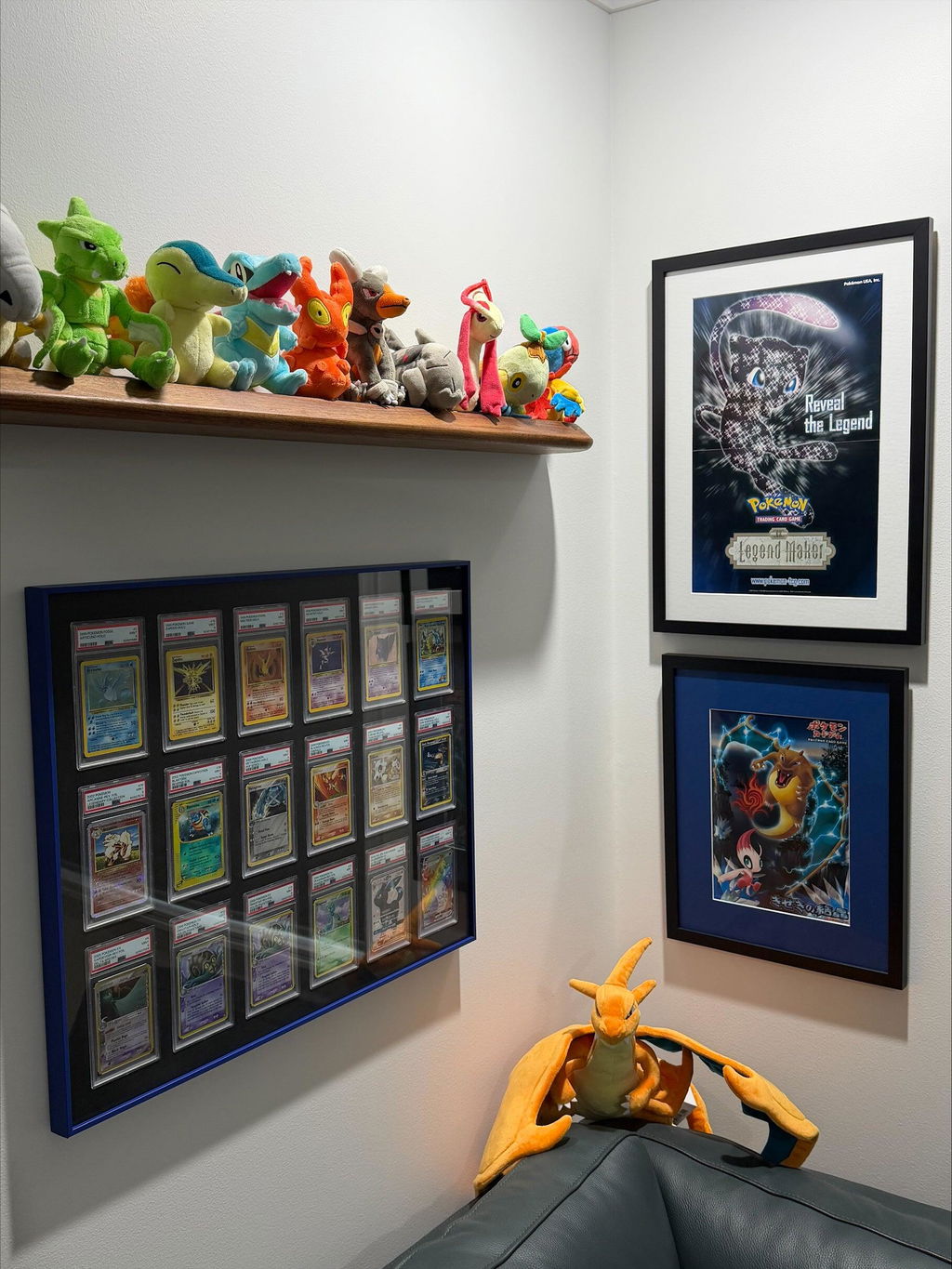
For a large collection, using the same frame finish across several displays can help the wall feel connected even when the cards themselves are very different.
Think About the Background Around the Cards
The material immediately surrounding the Pokémon cards has a significant effect on the finished display.
Matboard creates a traditional framed appearance and works particularly well for raw or sleeved cards. EVA foam can work well with rigid holders such as graded slabs and One Touch magnetic cases because it can support the holder inside a defined opening.
Black backgrounds usually create stronger contrast, while lighter backgrounds make the outer shape of the card or holder more visible.
There is no universal best choice. The background should suit the cards, the holder and the frame rather than becoming the most noticeable part of the display.
Do Not Forget the Room Itself
A Pokémon card frame does not exist in isolation once it is mounted.
Look at the wall colour, furniture, shelving and other displays in the room before choosing the final frame finish and size.
A large frame might look balanced above a desk or cabinet but oversized on a narrow wall. Several smaller frames may work better around shelving or beside another piece of memorabilia.
Before buying a very large display, marking its approximate dimensions on the wall with removable tape is an easy way to judge the scale.
Lighting Can Change How Pokémon Cards Look
Modern Pokémon cards often use foil, textured surfaces and highly reflective artwork, so lighting can have a noticeable effect on the display.
Strong lighting directly opposite acrylic, glass or graded slabs can create glare. Softer lighting from above or from an angle usually makes the cards easier to see.
Before permanently installing LEDs or spotlights, test the cards from the position where you will normally view them.
Plan for New Pokémon Cards
Pokémon collections have a habit of growing.
A display built around nine cards today might become a 12-card collection after another set releases, or a single-character collection may eventually need several separate frames.
If you expect the collection to grow, it can be useful to choose:
- Matching frame finishes.
- Repeatable grid layouts.
- Frames that can be reopened.
- Enough wall space for another display later.
This is often easier than trying to predict exactly how large the collection will eventually become.
Large Pokémon Collections May Work Better Across Several Frames
One enormous frame is not always the best way to display a large Pokémon collection.
Several coordinated frames can make the collection easier to organise and allow each section to have its own theme.
For example, one wall could contain a Charizard display, an Eeveelution display and a larger graded-card frame while still using the same outer frame finish.
This also makes future changes easier because one section can be updated without taking apart the entire wall.
Display the Pokémon Cards You Actually Like
The highest-value cards do not automatically make the best display.
A collection usually looks more interesting when there is an obvious reason those particular cards were chosen.
That could be artwork, a favourite Pokémon, a set you collect heavily, Japanese releases, a certain era or simply cards you enjoy looking at.
The frame should help organise the collection, not decide what deserves to be displayed.
Should You Make Your Own Pokémon Card Display?
For smaller raw-card displays, making your own frame can be relatively straightforward using a standard picture frame, matboard and suitable glazing.
Larger displays and rigid holders such as PSA slabs or One Touch magnetic cases require more planning because frame depth, holder fit, backing strength, glazing weight and wall mounting all start to matter.
If you are considering the DIY route, our guide to making a Pokémon trading card wall display covers the materials, layout decisions and practical considerations in much more detail.
Final Thoughts
The best Pokémon card display frame is the one that fits the collection you actually own.
Start with the cards, decide whether they will be displayed raw, sleeved, graded or in magnetic holders, and then choose the frame size, material and layout around that.
A small three-card evolution display can work just as well as a wall containing dozens of graded Pokémon cards. What matters is that the format makes sense for the collection and leaves enough flexibility for it to change over time.
Continue Exploring
If you enjoyed this guide, you may also find these collector resources helpful.
📚 Collector Guides
-
The Ultimate Trading Card Display Guide: Ideas, Frames, Shelves & Display Solutions for Every Collector
Explore display ideas, wall layouts, shelving, cabinets, lighting, budgets and display solutions for every major trading card game. -
How to Make a Pokémon Trading Card Wall Display
Explore DIY Pokémon trading card displays, frame materials, acrylic, sleeves, graded slabs, One Touch holders and layout planning. -
How to Make a Trading Card Wall Display: Complete DIY Guide
Learn how to plan a trading card wall display, including materials, holders, glazing, layouts, mounting and larger collections. -
Why Premium Aluminium Trading Card Display Frames Are Worth It: The Complete Collector Guide
Explore aluminium trading card display frames, their materials and why they work particularly well for larger graded and One Touch collections.
🛒 Shop Display Collections
-
Aluminium Trading Card Wall Display Frames
Premium aluminium trading card display frames available in a wide range of grid sizes, frame colours and holder formats. -
PSA, CGC & BGS Graded Slab Wall Display Frames
Purpose-built graded trading card display frames for Pokémon, MTG, Yu-Gi-Oh!, One Piece, Sports Cards, Disney Lorcana and other collections. -
One Touch Wall Display Frames
Premium aluminium wall display frames designed for One Touch magnetic trading card holders.

0 comments