


How to Display PSA, CGC & BGS Graded Cards: The Complete Collector Guide
For many collectors, the first graded card marks the point where the collection starts to feel more organised and deliberate.
For some, it may be an older favourite that comes back with a strong grade. For others, it may be a long-awaited CGC submission or a BGS slab that completes a focused collection. Regardless of the grading company or grade, professionally graded cards often become important parts of a collection.
Once a card has been encapsulated inside a professional slab, it also becomes easier to handle, organise and display consistently.
That is why many collectors choose to display selected slabs instead of keeping every graded card inside storage boxes. Whether it is one favourite card above a desk or an entire wall of graded cards, a well-planned display keeps the collection visible without requiring every slab to be shown at once.
Displaying graded cards isn't simply about presentation either.
A well-planned display can keep the artwork visible, organise the collection and create a clear focal point within a room while the slabs continue providing physical protection for the cards themselves.
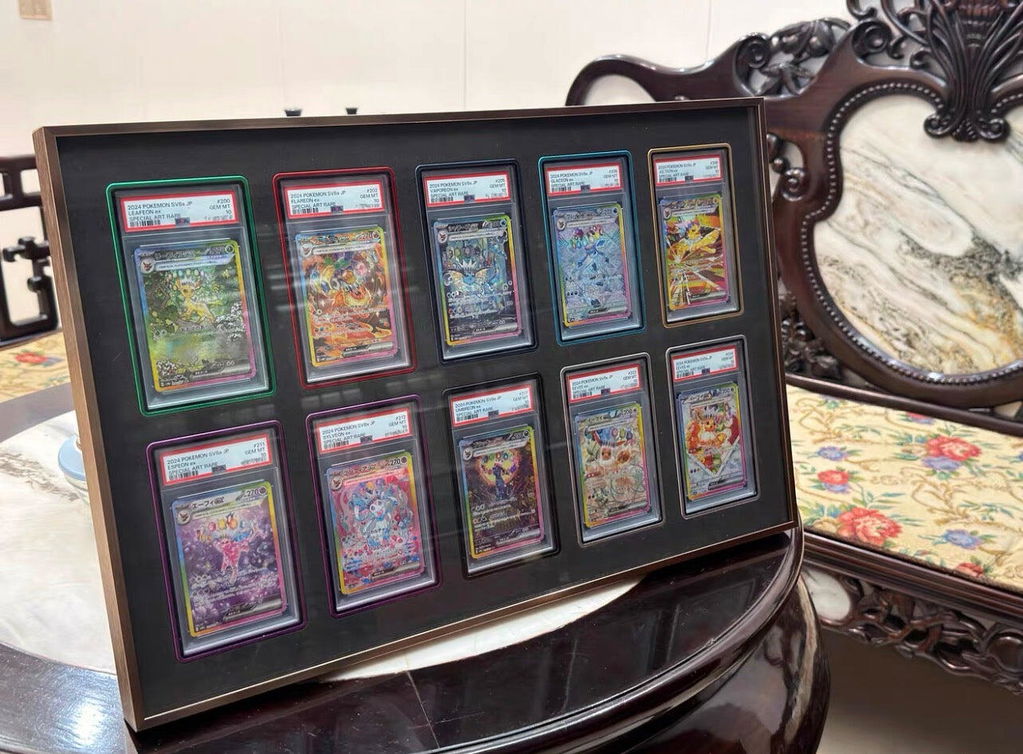
There are many ways to display graded trading cards. Some collectors build symmetrical walls around one slab type, while others use separate coordinated displays for PSA, CGC, BGS or One Touch holders. Some prefer a restrained office display, while others dedicate entire collector rooms to Pokémon, sports cards or other trading card games.
There isn't one perfect solution.
The best display is the one that suits both your collection and the way you enjoy the hobby.
In this complete guide, we'll explore everything you need to know about displaying PSA, CGC and BGS graded cards. From choosing the right display frame and planning a feature wall to protecting your slabs, displaying valuable cards and creating a collection that can continue growing over time, this guide is designed to help collectors at every stage of the hobby.
Why More Collectors Are Displaying Their Graded Cards
The trading card hobby has changed dramatically over the past decade.
While binders and storage boxes remain essential for larger collections, graded cards are often used for display as well as protected storage.
Walk into almost any modern collector room and you'll notice the same trend.
Many collectors now keep selected favourite cards visible instead of storing every slab out of sight.
Whether it is a favourite Charizard, a signed sports rookie card, a vintage Magic: The Gathering card or a Yu-Gi-Oh! Ghost Rare, graded cards can become part of a wall or shelf display rather than remaining entirely in storage.
There are several reasons why wall displays and display frames have become so popular.
- They allow you to enjoy your favourite cards every day.
- They organise individual slabs into a more structured display.
- They create a clean and organised collector display.
- They make excellent use of vertical wall space.
- They encourage thoughtful curation rather than displaying everything.
- They can grow alongside your collection over many years.
Displaying selected graded cards also makes the collection easier to see and enjoy without repeatedly opening storage boxes.
The strongest graded card displays aren't usually built around the most expensive slabs. They're built around the cards that tell your story as a collector. Personal favourites often create far more important displays than simply chasing market value.
Understanding PSA, CGC & BGS Slabs
Although PSA, CGC and BGS all professionally authenticate and grade trading cards, each company produces slabs with slightly different dimensions, labels and overall presentation.
Understanding these differences isn't about deciding which grading company is better. Instead, it's about understanding how each style of slab contributes to the overall appearance of your display.
PSA Slabs
PSA slabs use a consistent PSA holder format and are common across Pokémon, sports cards and other trading card categories. Their relatively simple label and uniform presentation can work well in repeated wall layouts.
CGC Slabs
CGC slabs use their own holder dimensions and label style. They can work well in individual displays or larger layouts when the frame or insert is designed for the specific CGC holder being used.
BGS Slabs
BGS slabs use a thicker holder format with distinctive labels. Because the holder differs from PSA and CGC, displays should be designed specifically around BGS slabs rather than assuming universal compatibility.
Regardless of grading company, consistent spacing, a clear layout and correct holder compatibility have a major effect on the finished display.
The Best Ways to Display PSA, CGC & BGS Graded Cards
There isn't one perfect way to display graded cards.
The best display depends on the size of your collection, the space available and what you enjoy seeing every day. Some collectors want a single main feature above their desk, while others build entire collector walls displaying decades of collecting.
Professionally graded slabs are well suited to a wide variety of display styles, although PSA, CGC and BGS holders are not identical and should not be treated as universally interchangeable.
Single Slab Displays
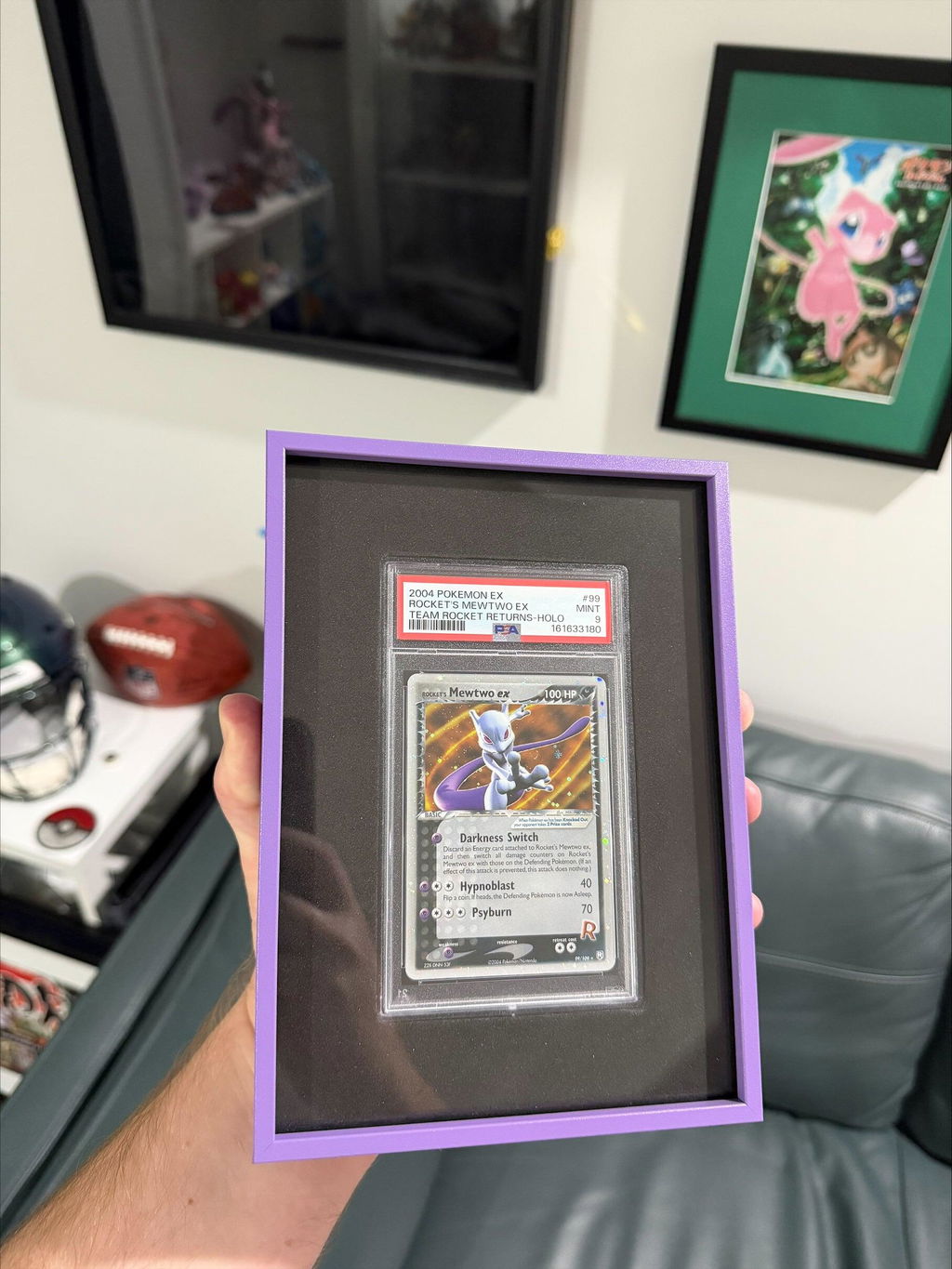
Sometimes a single card is all the display needs.
A single PSA, CGC or BGS slab displayed above a desk, inside a home office or within a collector room naturally draws attention without overwhelming the surrounding space.
This approach works particularly well for:
- Older favourite cards.
- Trophy cards.
- Signed cards.
- PSA 10 feature cards.
- BGS Black Labels.
- Cards with personal importance.
A single display also makes an excellent starting point for collectors who plan to expand their collection over time.
Small Feature Displays
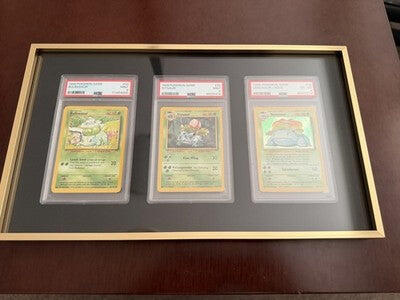
Three, six and nine-card displays remain some of the most popular choices among collectors.
These layouts provide enough room for a focused group of cards while remaining compact enough to suit many rooms.
Collectors often use smaller displays for:
- Starter Pokémon evolution lines.
- Favourite sports players.
- Complete artwork collections.
- Tournament memories.
- Special grading returns.
- Matching illustration cards.
Smaller displays also offer flexibility, making it easy to update your collection as new cards become favourites.
Large Wall Displays
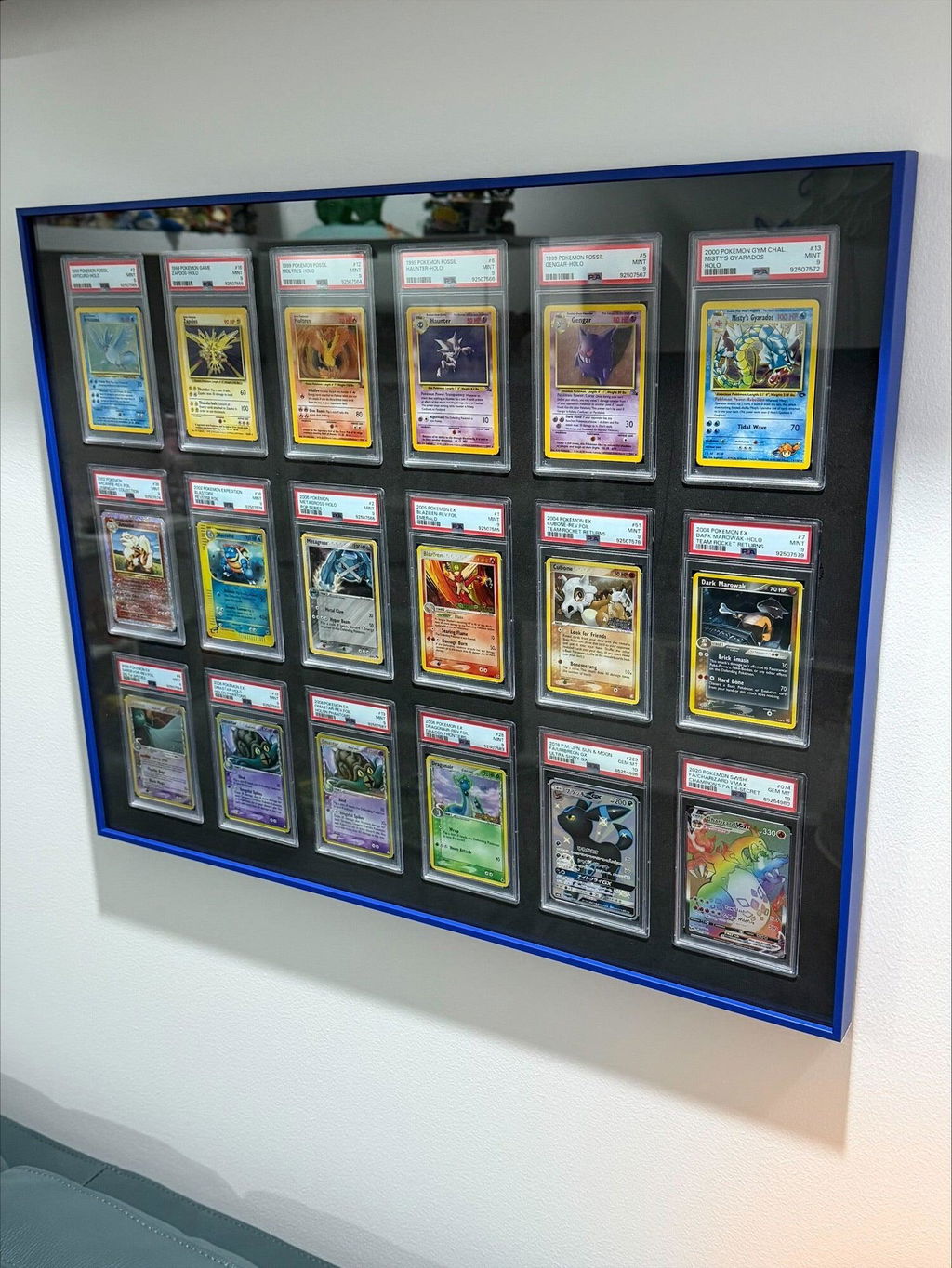
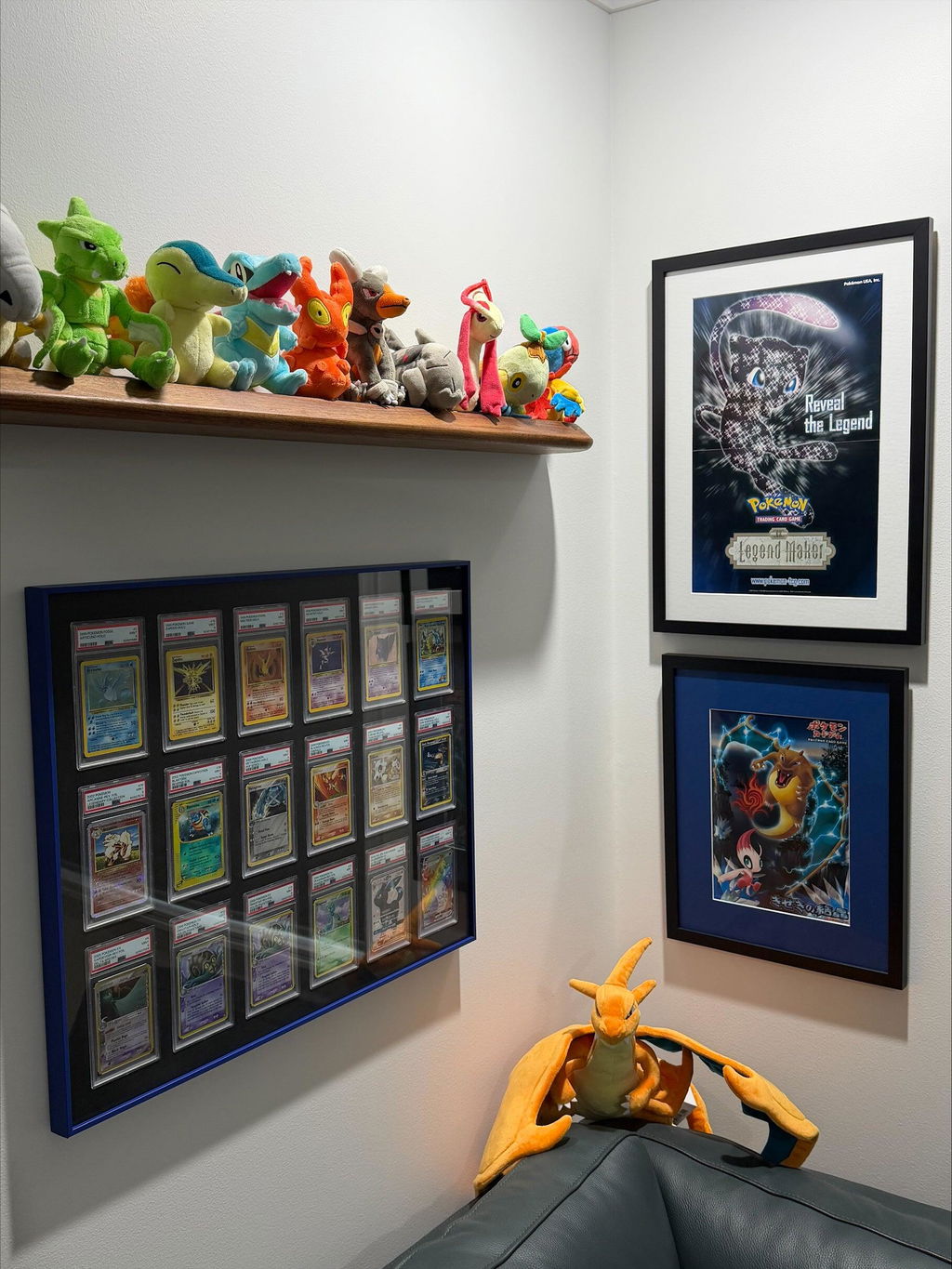
As collections grow, many collectors move beyond individual frames and begin creating dedicated display walls.
Larger displays organise individual slabs into one structured wall layout and allow dozens of cards to be viewed together.
Many feature walls continue evolving over several years as collectors add graded cards and complete favourite sets or themes.
Don't feel pressured to fill every display immediately. Many of the best collector walls grow naturally over several years, making every new addition feel like another milestone in the hobby.
Planning Your Graded Card Display
Before purchasing display frames or hanging anything on the wall, spend some time planning the finished display.
A good display is easier to build when the layout is considered before the first frame is installed.
Start by asking yourself a few simple questions.
- Do I want to display one grading company or several?
- Will this become a permanent feature wall?
- How many graded cards do I expect to own in two or three years?
- Do I prefer perfectly symmetrical layouts or something more relaxed?
- Will I eventually combine graded cards with One Touch magnetic holders or raw cards?
Answering these questions early helps create a display that is easier to expand without constantly redesigning the wall.
Choose a Theme
One of the easiest ways to improve a graded display is to give it a clear purpose.
Some popular themes include:
- Favourite Pokémon.
- Vintage Pokémon.
- Illustration Rare collections.
- Sports rookies.
- Championship moments.
- Magic: The Gathering commanders.
- Yu-Gi-Oh! Ghost Rares.
- One Piece manga cards.
- Disney Lorcana enchanted cards.
A themed display usually feels more cohesive than placing unrelated cards together without a clear reason.
Leave Room for Growth
Collections often grow faster than expected.
Leaving space for future display frames makes expanding your collection significantly easier while maintaining a clean, balanced appearance.
It's much easier to add another matching frame later than completely redesign an already crowded display wall.
Choosing the Right Display Size
The ideal display size depends on the number of slabs you want visible now, the wall space available and how much you expect the collection to grow.
| Collection Stage | Suggested Display |
|---|---|
| First Graded Card | 1-card display. |
| Growing Collection | 3 to 9 graded cards. |
| Established Collector | 12 to 25 graded cards. |
| Collector Room | 36 to 54 slabs or multiple coordinated display frames. |
A display should feel balanced rather than crowded. Selecting favourite slabs usually works better than trying to display every graded card at once.
Displaying PSA, CGC & BGS Slabs Together
One question many collectors ask is whether they should separate grading companies or display everything together.
There isn't a right or wrong answer.
Some collectors prefer the uniform appearance of displaying one slab type, while others organise separate PSA, CGC and BGS displays around the same collection theme.
If your collection includes PSA, CGC and BGS slabs, there are several ways to create a display that still feels balanced.
Organise by Collection Rather Than Grading Company
Instead of grouping cards by the company that graded them, consider organising your display around a theme.
For example:
- Favourite Pokémon.
- Complete evolution lines.
- Vintage collections.
- Sports teams.
- Favourite athletes.
- Magic: The Gathering commanders.
- Yu-Gi-Oh! archetypes.
- One Piece characters.
Most visitors naturally notice the artwork before they notice the grading company.
Maintain Consistent Spacing
PSA, CGC and BGS slabs differ in both appearance and physical dimensions. If multiple grading companies are shown on the same wall, consistent spacing between separate compatible frames can keep the overall layout visually connected.
Use Favourite Cards as Main Features
If your collection contains especially important or visually distinctive slabs, consider positioning them near the centre of the display.
This naturally draws the eye while allowing surrounding cards to complement the overall presentation.
Don't worry too much about mixing grading companies. A thoughtfully planned layout has a far greater impact on the finished display than whether every slab comes from the same grading company.
One Touch Holders vs Graded Slabs
Many collectors eventually own both professionally graded cards and raw cards displayed in One Touch magnetic holders.
Both offer excellent presentation, but they serve slightly different purposes.
| Graded Slabs | One Touch Holders |
|---|---|
| Professionally authenticated. | Useful for raw cards that benefit from rigid protection. |
| Permanent encapsulation. | Easy to change cards. |
| Consistent within one grading company's holder format. | Flexible for evolving collections. |
| Excellent for long-term display. | Excellent for collectors who regularly update displays. |
Many collectors don't choose one over the other.
Instead, they display graded slabs for milestone cards while using One Touch holders for favourite modern pulls, newly acquired cards or collections they expect to change over time.
Both display styles can work well in the same collector room, although their different holder dimensions usually make separate purpose-built frames more practical.
Building a Collector Wall Around Your Favourite Cards
The best displays do not need to focus solely on market value. They can be organised around favourite cards, sets, teams, characters or other clear collection themes.
For some collectors, that may be a group of graded Charizard cards. For others, it may be a wall dedicated to favourite sports players, championship seasons or cards from one long-running collection.
Some ideas include:
- A complete evolution line featuring graded Pokémon.
- A wall built around selected PSA 10 grading results.
- A favourite sports team spanning multiple seasons.
- A collection built around one artist or illustrator.
- A display displaying your favourite trading card game.
- A wall built around older favourites and selected pulls.
The most expensive cards do not automatically create the best display. A clear theme and cards the collector actually wants to see usually matter more.
Protecting Your Graded Card Display
Professionally graded slabs already provide rigid physical protection for the card itself.
Even so, where and how you display your collection still plays an important role in its long-term presentation.
To help keep your display looking its best:
- Avoid prolonged exposure to direct sunlight.
- Display your collection in a stable indoor environment.
- Dust display frames regularly using a soft microfibre cloth.
- Use suitable wall fixings appropriate for the weight of the display.
- Avoid positioning displays directly above heaters or fireplaces.
- Leave enough space around the display for airflow and comfortable viewing.
Choosing the right location within the room is therefore just as important as choosing the display frame. Avoiding prolonged direct sunlight and using appropriate mounting are two of the most important practical considerations.
Frequently Asked Questions
What is the best way to display PSA graded cards?
Wall-mounted display frames are a practical option for organising multiple PSA slabs while keeping selected cards visible and making efficient use of vertical wall space.
Can PSA, CGC and BGS slabs be displayed together?
Yes. Multiple grading companies can appear on the same collector wall, but PSA, CGC and BGS holders differ in size, so the display or frame should be compatible with the specific slab type.
Should I separate PSA, CGC and BGS cards?
Some collectors prefer separate displays by grading company, while others organise the wall by Pokémon, sports teams, favourite artists or other themes. Separate compatible frames can keep different slab types visually coordinated.
What is the best display frame for graded cards?
The ideal display frame depends on the size of your collection and where it will be displayed. Many collectors begin with smaller displays before gradually expanding into larger feature walls.
Can I display expensive graded cards?
Yes. Many collectors proudly display valuable graded cards while taking sensible precautions such as avoiding prolonged direct sunlight and securely mounting display frames.
Will displaying graded cards damage them?
When displayed thoughtfully in a stable indoor environment, professionally graded slabs are well suited to long-term display. Choosing an appropriate location remains one of the most important considerations.
Should I display raw cards or graded slabs?
Both have their place. Graded slabs provide authentication and encapsulation, while One Touch holders suit raw cards that the collector may want to change more easily.
Are One Touch holders as good as graded slabs for display?
Graded slabs provide professional authentication and encapsulation, while One Touch holders offer greater flexibility for raw cards that may be changed or reorganised more regularly.
Can I mix graded slabs and One Touch holders together?
Yes. Many collector rooms use both, although separate purpose-built frames are often more practical because slab and One Touch dimensions differ.
How many graded cards should I display?
There isn't a perfect number. Some collectors display a single favourite slab, while others build feature walls containing dozens of graded cards. A carefully curated display usually creates the greatest visual impact.
Should every display frame match?
Matching display frames generally create a cleaner appearance, particularly when expanding the wall over time.
How much space should I leave between display frames?
Consistent spacing helps every display stand out while giving your collector wall a balanced, organised appearance.
Can I build a display wall over time?
Yes. Collector walls can develop gradually as grading submissions return, favourite cards change and the collection expands.
Where should I display graded cards?
Popular locations include collector rooms, gaming rooms, home offices, living rooms and above desks where the collection can be enjoyed every day.
Should I display my highest-value cards?
Many collectors do, but value does not need to be the only deciding factor. Favourite cards and coherent themes can work just as well.
Can sunlight damage graded cards?
Prolonged direct sunlight should always be avoided where possible. Positioning displays away from strong sunlight helps preserve both the slab and the card over the long term.
Can graded cards be displayed vertically and horizontally?
Yes. Depending on the layout and available space, both vertical and horizontal arrangements can create attractive and balanced displays.
What's the biggest mistake collectors make when displaying slabs?
Trying to display every graded card at once. Selecting the cards that fit the display theme usually creates a cleaner result.
Can I expand my display without replacing existing frames?
Yes. Planning your layout with future growth in mind allows matching display frames to be added as your collection continues to grow.
What makes a great graded card display?
The best displays combine careful planning, balanced layouts, correct slab compatibility and selected cards that work well together.
Final Thoughts
Professionally graded cards can be stored, displayed or used in a combination of both depending on the collection.
Whether your collection includes PSA, CGC or BGS slabs, displaying selected cards keeps the artwork visible instead of limiting the collection entirely to storage.
The best displays are not defined by the number of slabs they contain or the market value of the cards. They are defined by thoughtful planning, correct compatibility and a layout that works for the collection.
Whether you're creating your very first display or designing an entire collector wall, take your time, leave room for your collection to grow and build a display that reflects what makes your hobby enjoyable.
A well-planned display can keep selected cards visible while the rest of the collection remains safely organised in storage.
Continue Exploring
If you enjoyed this guide, you may also find these collector resources helpful.
📚 Collector Guides
-
The Ultimate Trading Card Display Guide: Ideas, Frames, Shelves & Display Solutions for Every Collector
Explore display ideas, wall layouts, shelving, cabinets, lighting, budgets and display solutions for every major trading card game. -
Why Higher-End Aluminium Trading Card Display Frames Are Worth It: The Complete Collector Guide
Discover why handmade aluminium display frames have become a higher-end choice for displaying PSA, CGC, BGS and One Touch trading card collections.
🛒 Shop Display Collections
-
Aluminium Trading Card Wall Display Frames
Higher-End handmade aluminium wall display frames for Pokémon, MTG, Yu-Gi-Oh!, One Piece and Sports Cards. -
PSA, CGC & BGS Graded Slab Wall Display Frames
Purpose-built wall display frames designed specifically for graded trading card collections. -
One Touch Wall Display Frames
Higher-End wall display frames designed for One Touch magnetic trading card holders in a range of grid sizes.

0 comments