


Collectors use several different formats to protect and display trading cards, and each one suits a slightly different purpose.
Some cards stay raw or sleeved, others go into toploaders or One Touch magnetic holders, and some are professionally graded and sealed inside slabs.
There is no single format that works best for every card. The right choice depends on the collection, how much protection you want, how often you need access to the card and how you want the finished display to look.
Whether you collect Pokémon, sports cards, Magic: The Gathering, Yu-Gi-Oh! or One Piece, understanding the differences between these formats makes it easier to choose the one that suits each part of the collection.
Understanding the Different Display Formats
Before choosing a display solution, it helps to separate the main holder formats and what each one is designed to do.
Common options include:
- Raw cards.
- Toploaders.
- One Touch magnetic holders.
- PSA slabs.
- BGS slabs.
- CGC slabs.
- SGC slabs.
Each offers a different balance between access, protection, cost and presentation.
Displaying Raw Cards
Raw cards are cards that have not been professionally graded and are not permanently sealed inside a slab.
They are often displayed in sleeves or other removable protection, depending on the value of the card and the type of display.
Collectors often choose raw cards because:
- They remain easy to access.
- Favourite cards can be displayed immediately.
- There are no grading costs.
- The collection remains flexible.
Raw cards are especially useful for larger artwork-focused displays where keeping the overall layout compact matters.
Best For
- Personal favourites.
- Newly acquired cards.
- Larger themed displays.
- Collectors who prefer flexibility.
Displaying Cards in Toploaders
Toploaders are rigid plastic holders that add structure around a sleeved card while remaining relatively inexpensive.
They are widely used for both storage and display because they provide more support than a sleeve without permanently sealing the card.
Collectors commonly use toploaders for:
- Valuable cards.
- Trade stock.
- Collection storage.
- Display projects.
Their main strength is practicality. They are easy to replace, easy to organise and suitable for larger collections.
Advantages
- Widely available.
- Cost effective.
- Easy to organise.
- Suitable for large collections.
Best For
- Growing collections.
- Display walls.
- Trading collections.
- Everyday protection.
Displaying Cards in One Touch Holders
One Touch magnetic holders provide a more substantial rigid case while keeping the card removable.
Compared with a toploader, the holder itself becomes a more visible part of the display and creates a cleaner, more structured appearance around the card.
Collectors often choose One Touch holders because they offer:
- Clear card visibility.
- A rigid presentation.
- Easy card access.
- A clean overall appearance.
They work particularly well for favourite raw cards that collectors want to keep in a more substantial holder without sending them for grading.
Best For
- Feature cards.
- Favourite raw cards.
- Collector rooms.
- Structured wall displays.
Displaying PSA Graded Cards
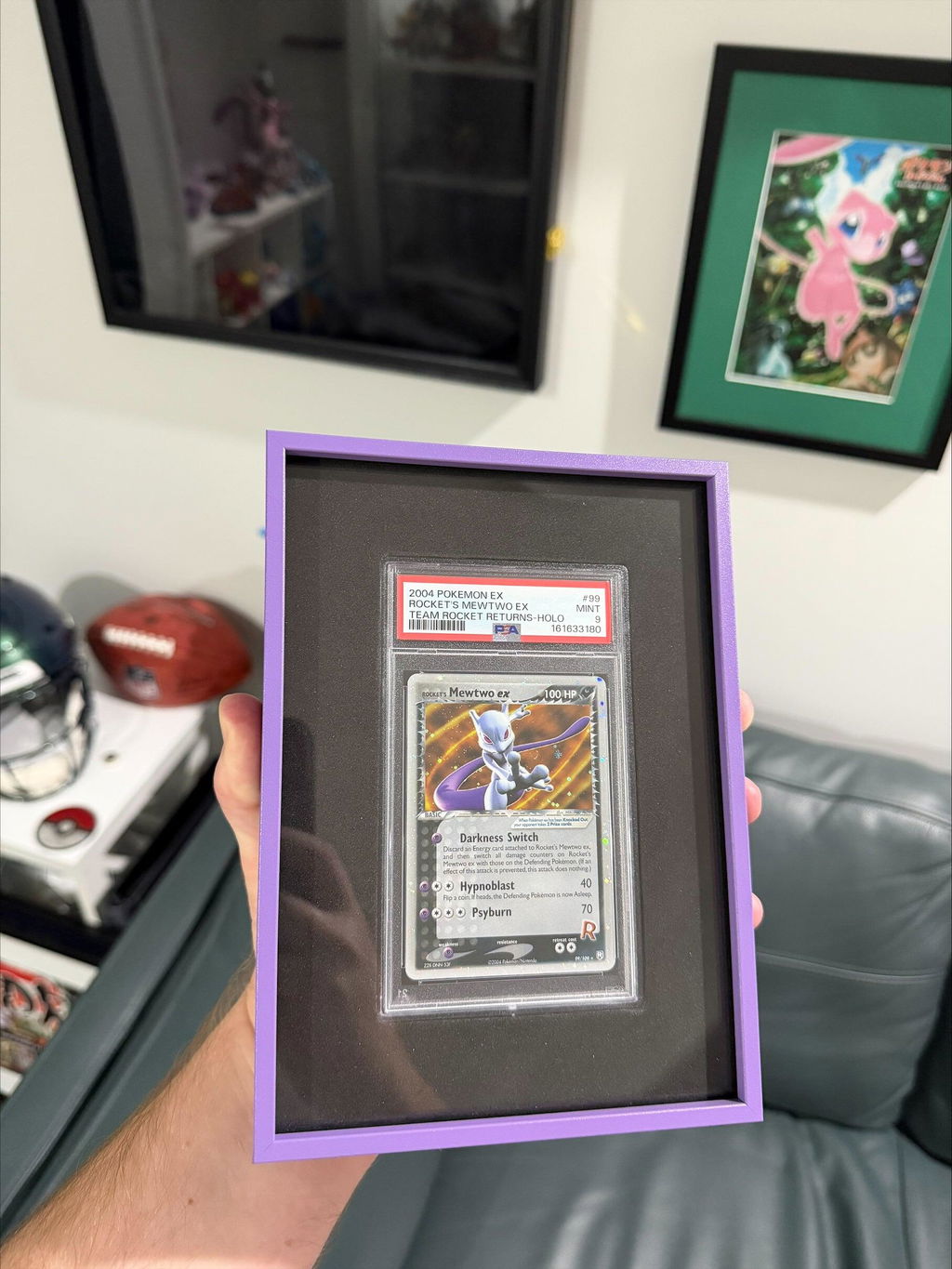
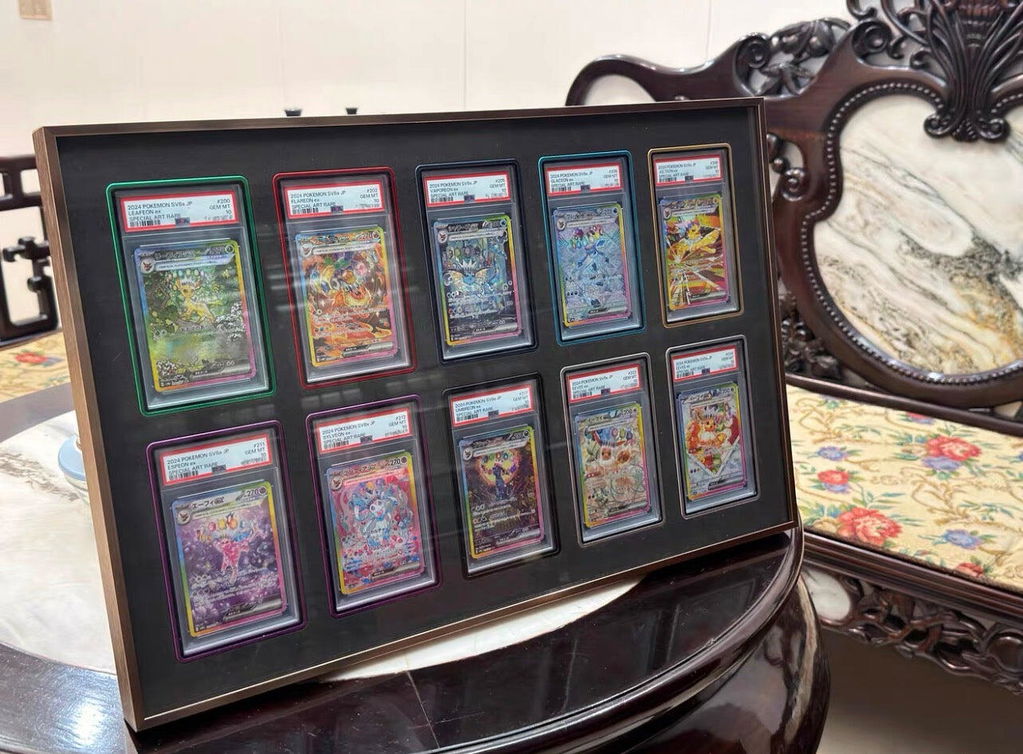
PSA slabs add professional grading, authentication and a permanent label to the card.
That makes the grade itself part of the collection rather than simply a form of protection.
Collectors often choose PSA slabs because:
- Cards are professionally authenticated.
- Condition is independently assessed.
- The slab provides a rigid holder.
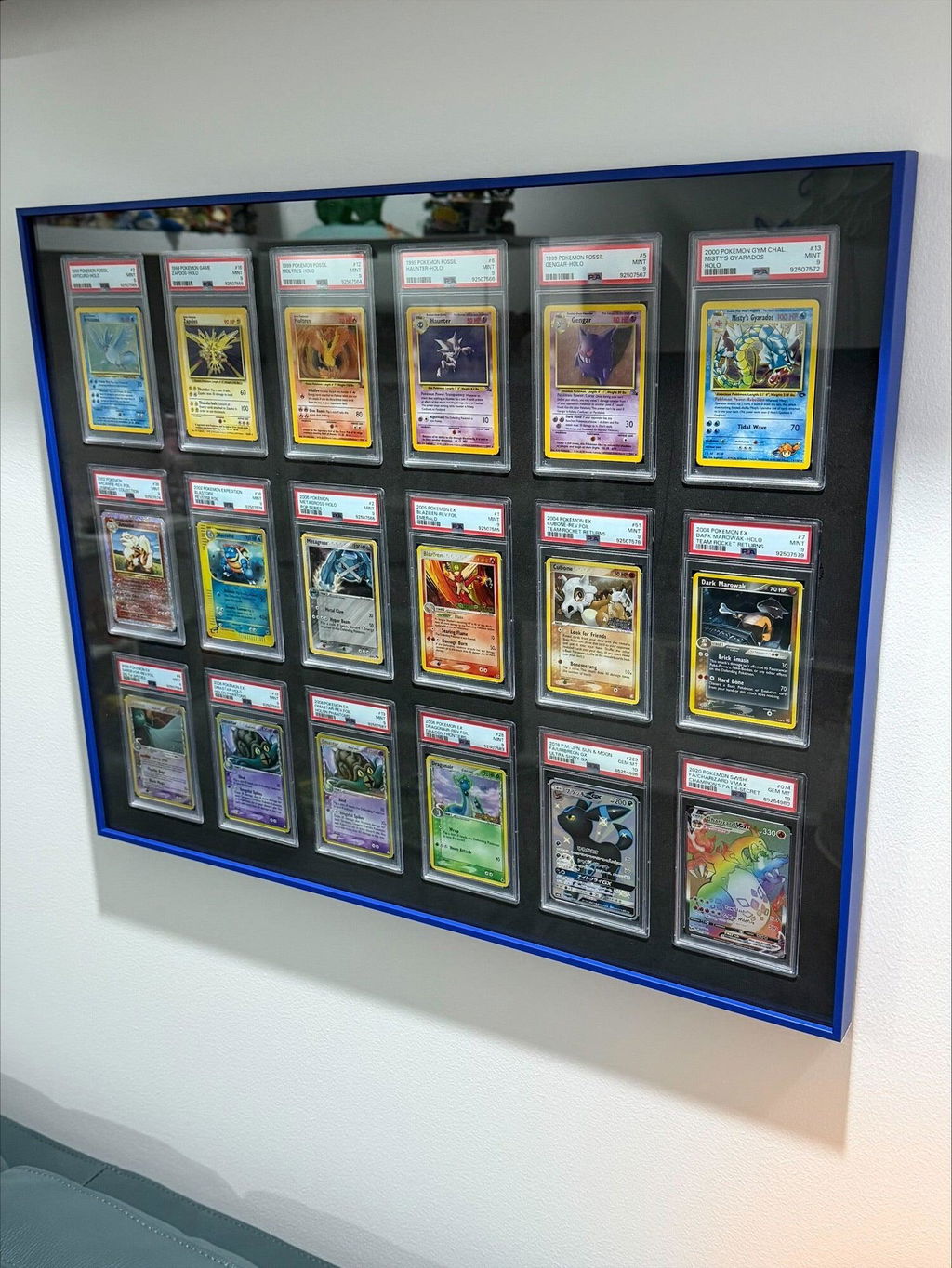
- The repeated slab format creates consistency across a collection.
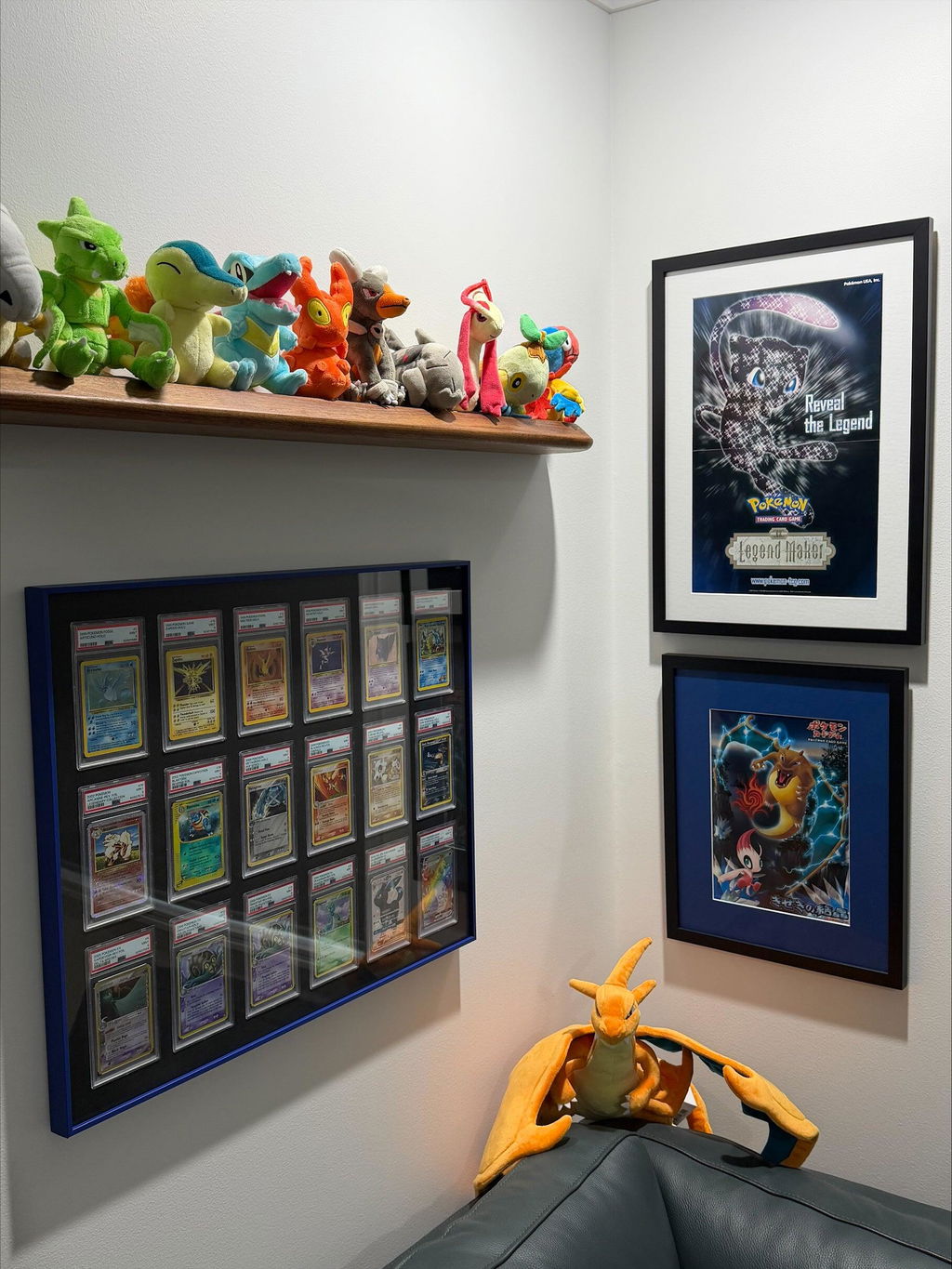
PSA slabs work especially well in structured multi-card displays where the repeated holder and label create a clear visual rhythm.
Best For
- Graded collections.
- Rare cards.
- Cards where the grade matters.
- Long-term collection highlights.
Other Grading Companies
PSA is only one grading format used by collectors.
Other common slabs include:
- BGS (Beckett).
- CGC.
- SGC.
Each company uses a different slab format, label design and overall presentation, so they should not automatically be treated as interchangeable when choosing a frame.
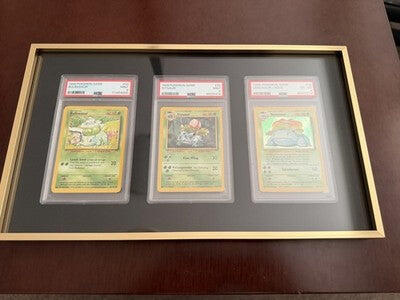
Mixed grading collections can still work very well, but the different holder sizes and visual styles need to be considered when planning the display.
Which Format Looks Best?
There is no universal answer because each holder creates a different visual result.
Some collectors prefer the repeated structure of graded slabs.
Others prefer the cleaner raw-card presentation of One Touch holders or the more practical appearance of toploaders.
Raw cards create the most compact layout and put the least visual emphasis on the holder itself.
The strongest displays are usually the ones where the holder format is consistent enough that the collection feels deliberate rather than mixed together without a clear reason.
Which Format Is Best for Display Frames?
Display frames can be built around several different card and holder formats.
Common options include:
- Raw-card displays.
- Toploader displays.
- One Touch displays.
- PSA slab displays.
- Other graded slab displays.
The ideal option depends on the cards being displayed, the number of cards and how large you want the finished frame to be.
Raw cards keep large collections relatively compact, while rigid holders such as One Touch and graded slabs increase the overall size and weight of the display.
Can You Use Multiple Formats?
Yes.
Many collectors use several holder formats across the same collection because different cards serve different purposes.
For example:
- PSA slabs for cards where grading matters.
- One Touch holders for favourite raw cards.
- Toploaders for larger collections and storage.
- Raw or sleeved cards for compact artwork displays.
Because the formats differ in size and depth, they are often easier to organise in separate frames rather than trying to combine everything into one layout.
Choosing the Right Display Option
When deciding which format makes the most sense, consider:
- Collection goals.
- Budget.
- How often you want to access the card.
- Card value.
- Whether grading matters to you.
- Long-term plans for the collection.
There is no reason every card in a collection needs to use the same holder.
The most practical approach is often to choose the format that makes sense for each part of the collection.
Final Thoughts
Raw cards, toploaders, One Touch holders and graded slabs all have useful roles within a trading card collection.
Raw cards offer flexibility and compact layouts, toploaders provide practical everyday protection, One Touch holders give ungraded cards a more substantial presentation, and graded slabs add professional grading and authentication.
Understanding those differences makes it easier to choose the right format for each card and build a display that feels organised rather than forcing the entire collection into one type of holder.
Continue Exploring
If you enjoyed this guide, you may also find these collector resources helpful.
📚 Collector Guides
-
The Ultimate Trading Card Display Guide: Ideas, Frames, Shelves & Display Solutions for Every Collector
Explore display ideas, wall layouts, shelving, cabinets, lighting, budgets and display solutions for every major trading card game. -
Why Premium Aluminium Trading Card Display Frames Are Worth It: The Complete Collector Guide
Discover why handmade aluminium display frames have become a premium choice for displaying PSA, CGC, BGS and One Touch trading card collections.
🛒 Shop Display Collections
-
Aluminium Trading Card Wall Display Frames
Premium handmade aluminium wall display frames for Pokémon, MTG, Yu-Gi-Oh!, One Piece and Sports Cards. -
PSA, CGC & BGS Graded Slab Wall Display Frames
Purpose-built wall display frames designed specifically for graded trading card collections. -
One Touch Wall Display Frames
Premium wall display frames designed for One Touch magnetic trading card holders in a range of grid sizes.

0 comments