


For collectors who want to display graded cards, two of the most common options are display stands and wall-mounted display frames.
Both can work well for PSA slabs, but they suit different collection sizes and create a very different overall presentation.
A stand is simple, flexible and easy to move, while a frame is better suited to grouping several graded cards together in a more structured layout.
If you are deciding between the two, the best choice usually comes down to how many cards you want to display, how much shelf or wall space you have and how permanent you want the setup to be.
Why Display Graded Cards?
Graded cards are often some of the most important pieces in a collection.
Whether you collect Pokémon, sports cards, Magic: The Gathering or other trading card games, displaying selected slabs makes it easier to enjoy them without constantly taking them in and out of storage.
A good display solution should:
- Keep the cards clearly visible.
- Reduce unnecessary handling.
- Suit the room or collector space.
- Give important cards a clear place within the collection.
What Is a PSA Display Stand?
A display stand is usually designed to hold one graded card upright on a desk, shelf or inside a cabinet.
Collectors commonly use stands for:
- Favourite slabs.
- New acquisitions.
- High-value cards.
- Cards they want to rotate regularly.
They are simple, inexpensive and easy to move, which makes them a practical option for smaller collections.
Advantages of Display Stands
Easy to Move
Display stands can be repositioned quickly without changing the rest of the setup.
Ideal for Single Cards
If you only want to highlight one or two slabs, a stand is often the simplest solution.
Affordable
Most display stands are inexpensive and widely available.
Limitations of Display Stands
Stands work very well for individual cards, but they can become harder to manage as the collection grows.
Common limitations include:
- Limited capacity per stand.
- More visual clutter once many are used together.
- Increasing shelf or desk space requirements.
- Less structure across larger collections.
A row of two or three slabs can look clean. A much larger collection can quickly start taking over a shelf or cabinet.
What Is a PSA Display Frame?
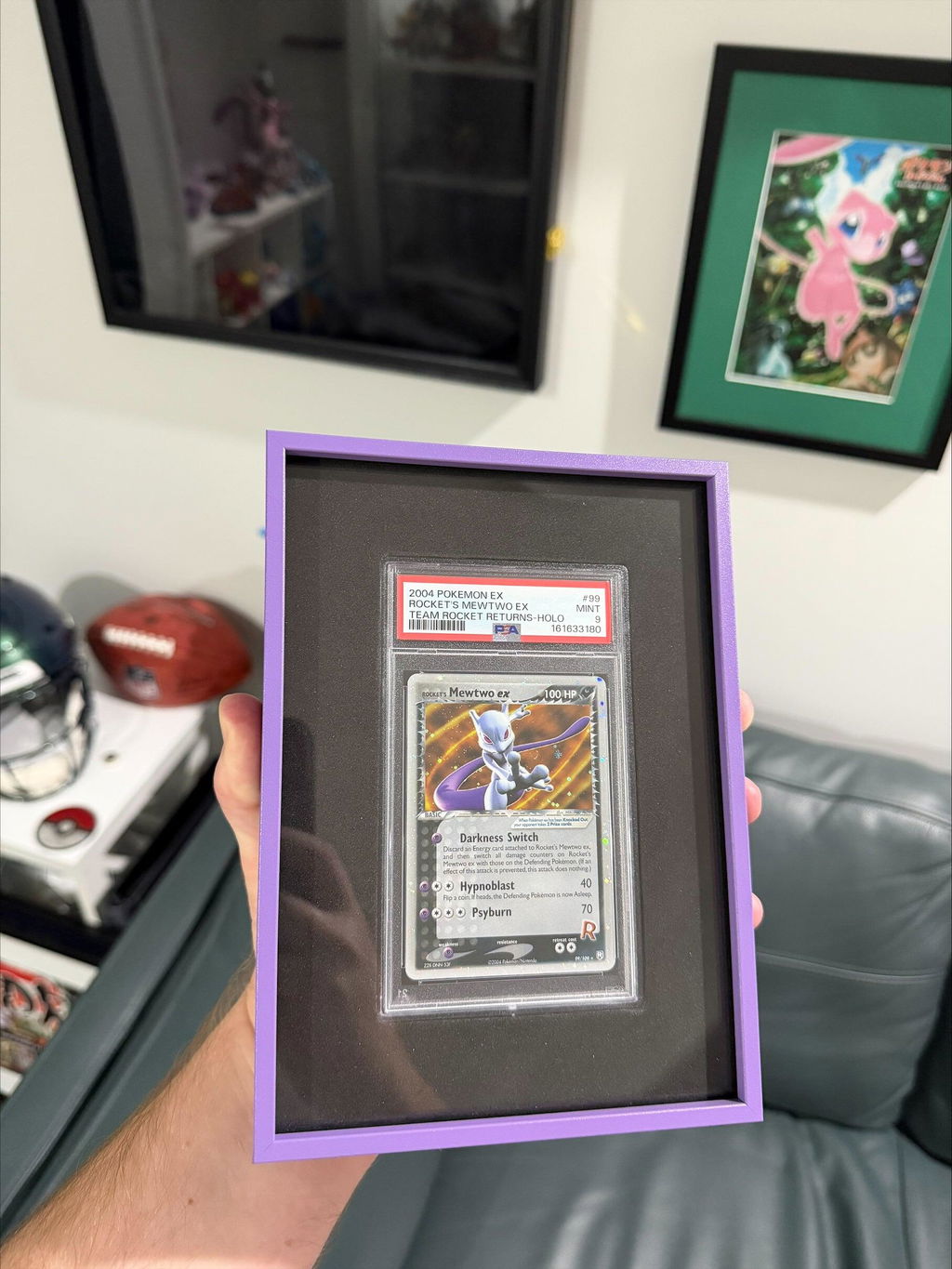
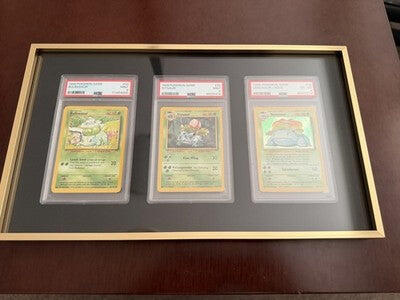
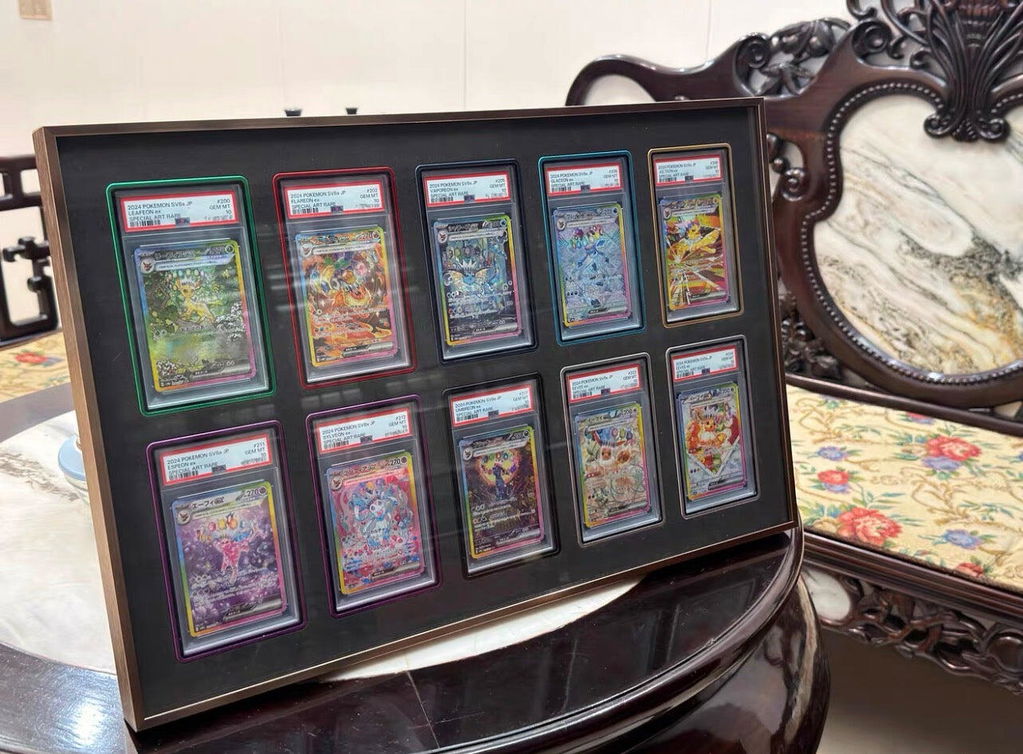
A PSA display frame is designed to hold one or more graded cards within a structured wall-mounted layout.
Instead of treating every slab as a separate display, the frame groups the cards together as one larger collection.
Collectors often use display frames for:
- Favourite cards.
- Complete or partial sets.
- Character collections.
- High-value collection highlights.
- Team or player collections.
Advantages of PSA Display Frames
Organised Presentation
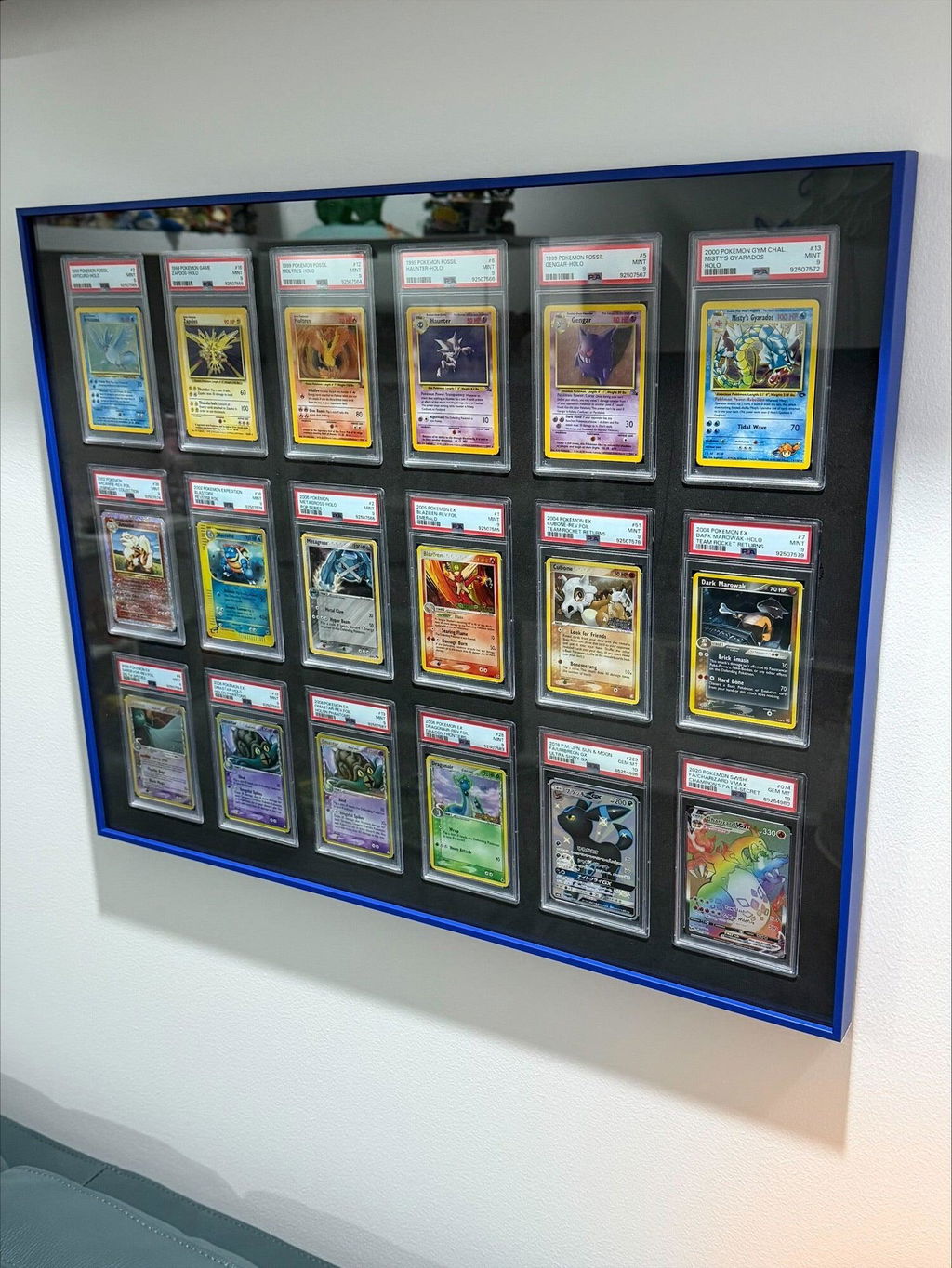
A frame keeps several slabs aligned within one clear layout.
This makes it easier to maintain consistent spacing and gives the collection a more structured appearance.
Better Use of Wall Space
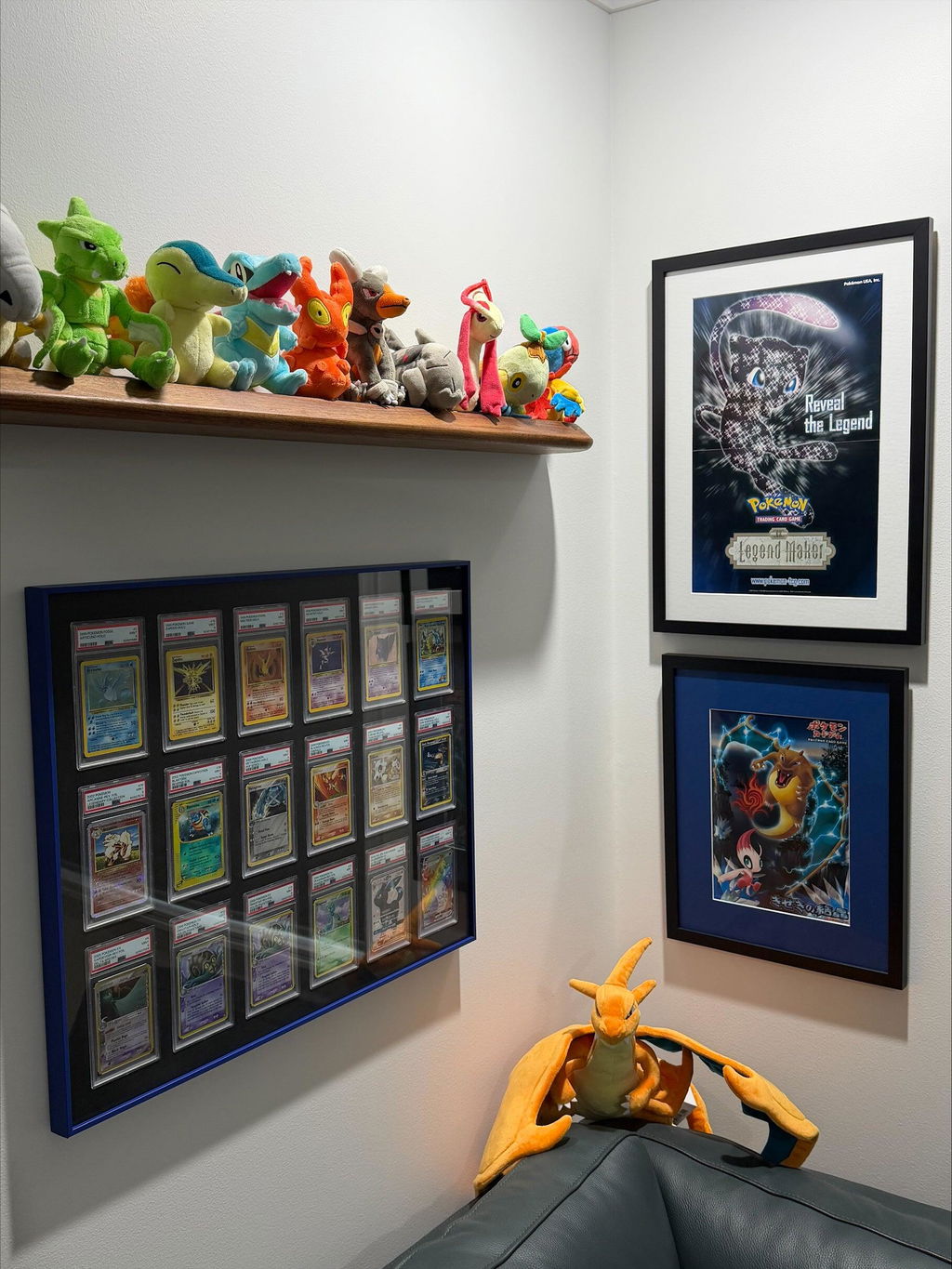
Frames move the collection off desks and shelves and make use of otherwise empty wall space.
Stronger Visual Presence
Several graded cards grouped within one frame create a very different effect from the same number of slabs spread across individual stands.
Useful for Larger Collections
Frames become more practical as the number of displayed slabs increases, particularly when the cards belong together as a set, player, character or theme.
Comparing Display Frames and Display Stands
Space Efficiency
Display stands use shelf, cabinet or desk space.
Display frames use wall space and can group several cards into one footprint.
Collection Size
Stands are particularly useful for one or a small number of cards.
Frames become more useful when several graded cards need to be displayed together.
Visual Presentation
Frames create a more structured overall layout, while stands place more emphasis on each individual card.
Flexibility
Stands are very easy to rearrange, rotate and move.
Frames are better suited to a more permanent wall display where the cards are intended to remain together.
Which Option Works Well for Pokémon Collectors?
Pokémon collectors often build graded collections around a particular character, set, era or group of favourites.
A stand can work well for a single Charizard, Pikachu or other favourite slab, especially if the card changes regularly.
As the number of graded cards grows, a frame can make it easier to keep the collection organised and use wall space more efficiently.
Which Option Works Well for Sports Card Collectors?
Sports collectors commonly display:
- Rookie cards.
- Hall of Fame players.
- Team collections.
- Autographed slabs.
A stand is useful for highlighting one particular card, while a frame can work well when several slabs belong together as part of the same player, team or era.
Can You Use Both?
Yes.
Many collectors use both display methods because they solve different problems.
For example:
- Display stands can be used for newly acquired or frequently rotated cards.
- Display frames can be used for more permanent groups of graded cards.
Using both can provide a useful balance between flexibility and a more structured long-term display.
Final Thoughts
Both PSA display stands and PSA display frames have a useful place in a graded-card collection.
Stands are simple, flexible and ideal for individual slabs, while frames are better suited to grouping several graded cards together and making use of wall space.
The right choice depends on the size of the collection, the available space and how often you expect to change the cards on display.
For many collectors, the most practical setup is not choosing one over the other, but using stands for rotating favourites and frames for the parts of the collection that are intended to stay together.
Continue Exploring
If you enjoyed this guide, you may also find these collector resources helpful.
📚 Collector Guides
-
The Ultimate Trading Card Display Guide: Ideas, Frames, Shelves & Display Solutions for Every Collector
Explore display ideas, wall layouts, shelving, cabinets, lighting, budgets and display solutions for every major trading card game. -
Why Premium Aluminium Trading Card Display Frames Are Worth It: The Complete Collector Guide
Discover why handmade aluminium display frames have become a premium choice for displaying PSA, CGC, BGS and One Touch trading card collections.
🛒 Shop Display Collections
-
Aluminium Trading Card Wall Display Frames
Premium handmade aluminium wall display frames for Pokémon, MTG, Yu-Gi-Oh!, One Piece and Sports Cards. -
PSA, CGC & BGS Graded Slab Wall Display Frames
Purpose-built wall display frames designed specifically for graded trading card collections. -
One Touch Wall Display Frames
Premium wall display frames designed for One Touch magnetic trading card holders in a range of grid sizes.

0 comments