


Lorcana trading cards are highly visual and work naturally in wall displays, but a good DIY build should leave room for a collection that is still evolving. The best approach protects the trading cards, controls glare and makes future changes easy.
If you want to make your own Lorcana trading card display or build a DIY Lorcana card frame, a modular approach is often useful because the collection can expand quickly.
This article is focused on Lorcana collections. For a broader comparison of frame materials, slabs, raw trading cards and large-format display construction, see our complete DIY trading card wall display guide.
Lorcana displays are usually about artwork first
Lorcana trading cards are particularly suited to clean wall displays because so much of the collecting appeal is visual. Character artwork, foil finishes and premium treatments can already provide more than enough colour.
The main practical issue is that Lorcana is a younger TCG, so a collection may change quickly. A display that cannot expand may feel outdated much sooner than expected.
Choosing a frame material without making the project harder than it needs to be
Lorcana trading cards are visually soft and colourful, so the frame rarely needs to make a strong statement. Simple timber, painted MDF, acrylic or a slim metal profile can all work as long as the artwork stays dominant.
For a small raw-card display, timber or MDF is easy to build locally. Larger graded displays benefit from greater rigidity, which is where aluminium or a stronger timber frame becomes more useful.
Because the game and many collections are still growing, modularity is often more valuable than making one enormous permanent frame too early.
Raw Lorcana trading cards, sleeves and graded holders
Raw or premium-sleeved Lorcana trading cards work well in matboard because the artwork can sit close to the glazing. Top loaders and magnetic holders add rigidity and are useful when the collector wants more physical protection.
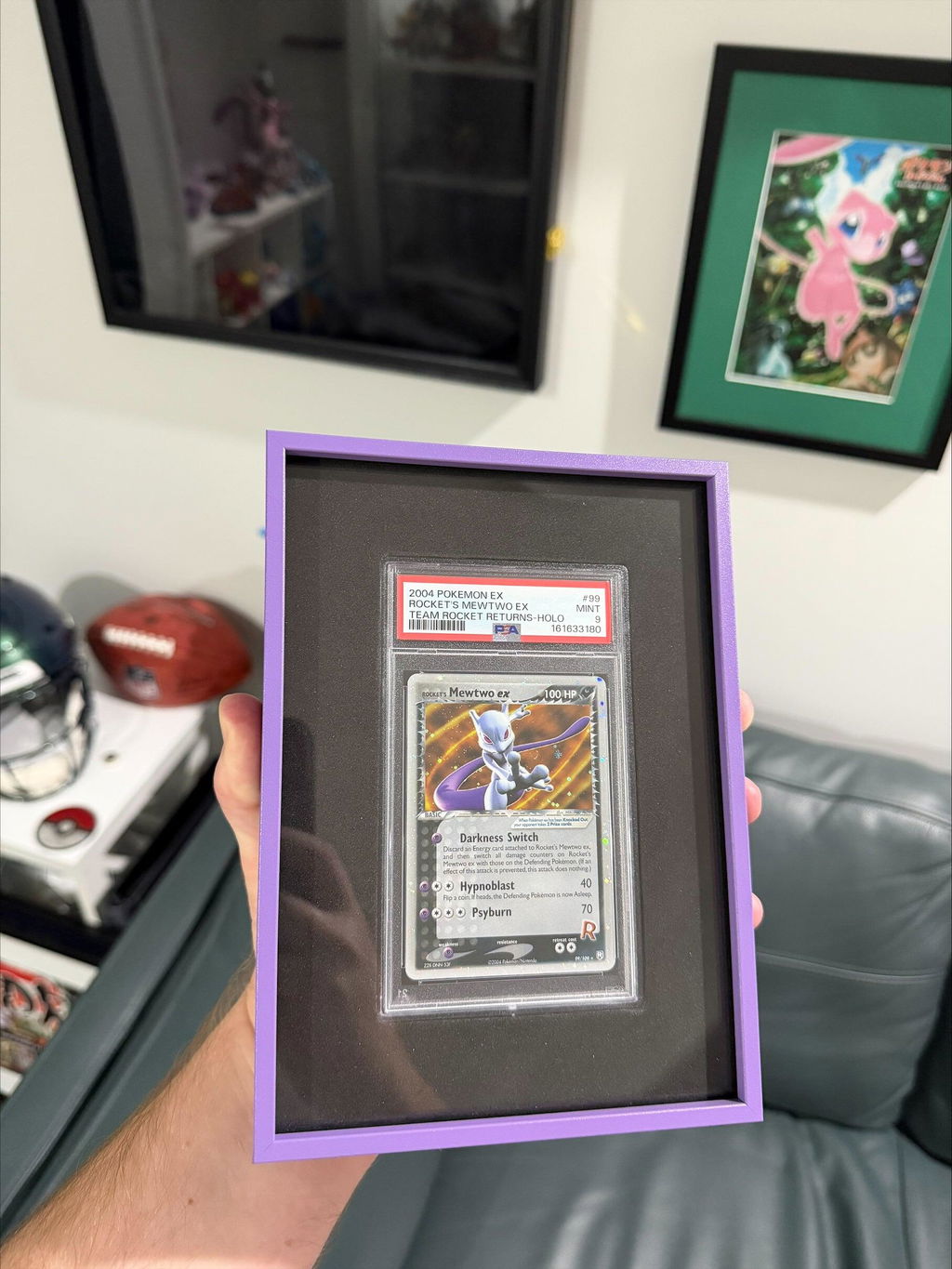
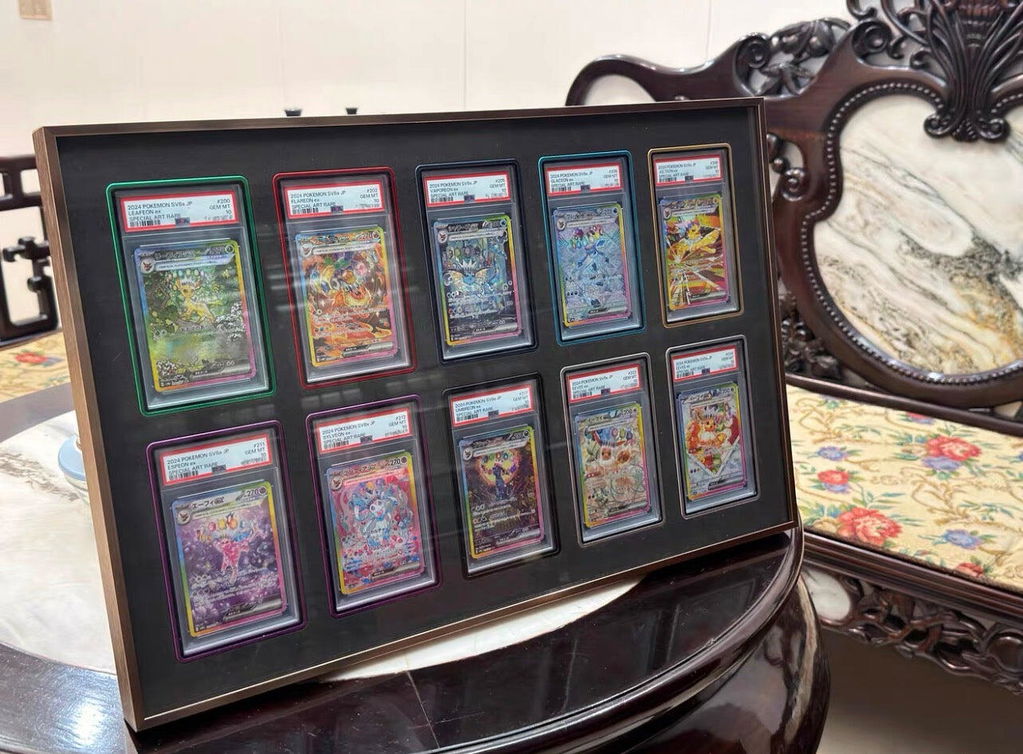
Graded Lorcana trading cards need a deeper frame and an insert designed around the actual slab. EVA foam can work well when the fit is tested first.
Matboard, EVA foam and the part that actually holds the trading cards
Matboard is well suited to sleeved Lorcana trading cards because it keeps the frame shallow and lets the art sit visually close to the front. A subtle neutral mat usually works across different characters and releases.
For graded slabs or magnetic holders, EVA foam provides a cleaner way to support the rigid case. Test the opening with the actual holder and make sure it can be removed without deforming the foam.
Think about future changes as well. A removable insert is far more useful than a permanently fixed one if new Enchanted or favourite trading cards are likely to replace older choices.
Character, colour and release-wave layouts
Lorcana collections can be grouped by character, colour, release wave or favourite artwork. Because the artwork is already cohesive, even a simple grid can look strong.
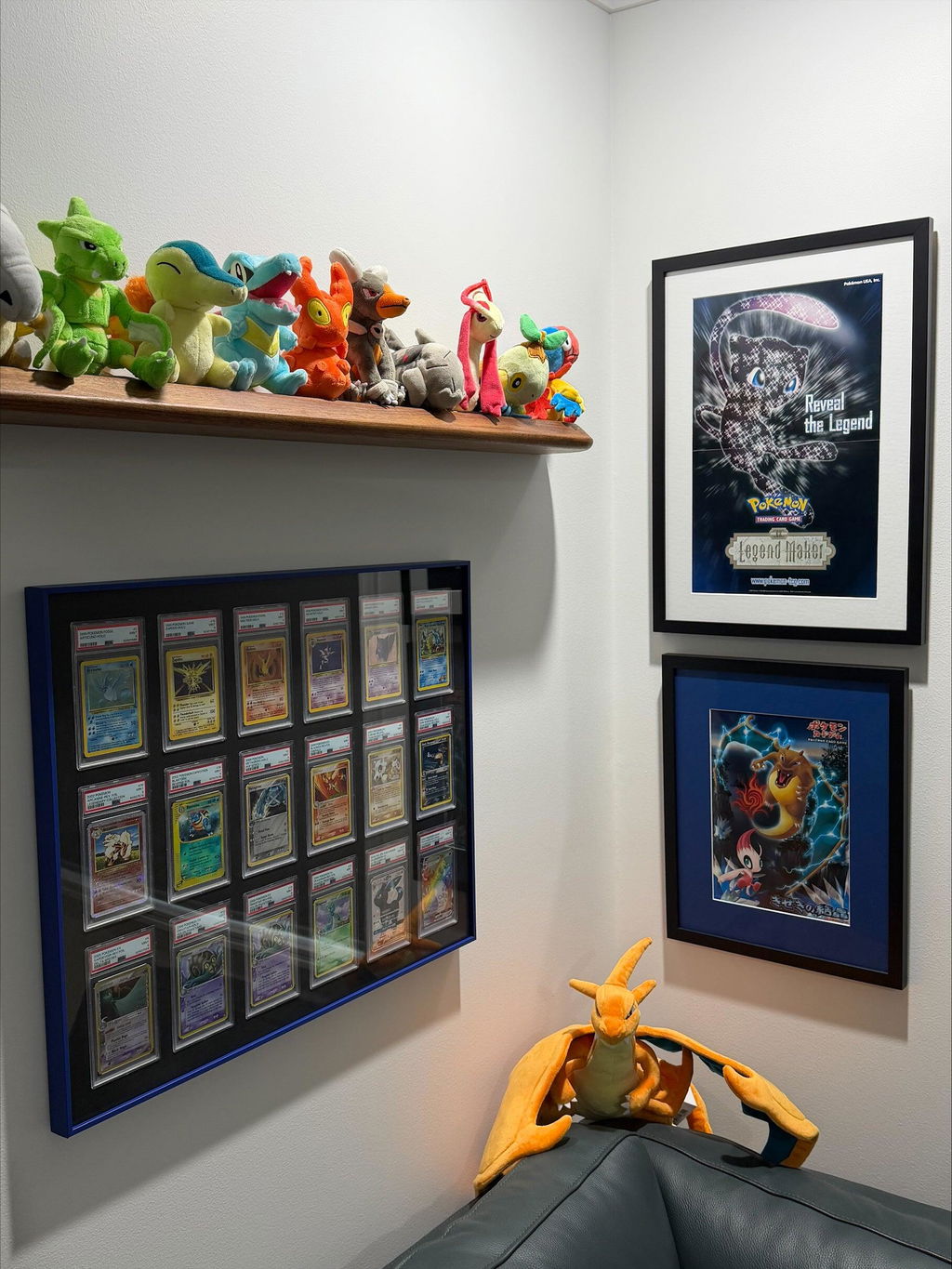
If the collection is still expanding, think about repeating modules rather than one finished wall that cannot grow. A second matching frame added later is often easier than rebuilding a single large display.
Layout planning: where small errors become obvious
Lorcana layouts can be simple because the collection already has strong visual relationships. Character groups, colours, release waves or favourite artwork are enough to create structure.
If the collection is still expanding, repeating smaller modules can be smarter than finishing one wall edge to edge. Another matching frame can be added later without redesigning the whole display.
Keep the underlying geometry consistent. Colourful artwork can handle a lot of variation; the frame itself benefits from restraint.
Keep the frame quieter than the trading cards
Lorcana artwork often contains soft gradients, strong colour and foil. A neutral surrounding material usually gives the collection enough contrast without competing with it.
Glossy and foil trading cards can reflect LEDs strongly, so test lighting at the real viewing angle rather than directly in front of the frame.
Acrylic, glass and UV protection
Acrylic is a practical choice for Lorcana because it keeps larger frames light and is easy to source in custom sizes. Glass suits smaller displays when scratch resistance is the priority.
Premium foils and Enchanted trading cards are still best kept out of direct sunlight. UV-resistant glazing can add protection, but it works best alongside sensible room placement rather than instead of it.
Lighting without turning the glazing into a mirror
Lorcana foils respond strongly to light, so a little goes a long way. Soft ambient lighting or a diffused strip can reveal the finish without covering the artwork in reflections.
Always test the real viewing angle. A light that looks excellent straight on may produce a bright reflection when you are sitting elsewhere in the room.
Build for change
The best large Lorcana display may be the one that is easiest to update. Removable backs, replaceable inserts and modular frames all make sense for a collection that could change substantially over the next few years.
This is one area where a slightly less permanent design can actually be more premium in practice because the display continues to work as the collection evolves.
Frame depth, backing and wall mounting
Sleeved Lorcana trading cards can use a shallow frame. Slabs and magnetic holders need more room. Confirm the depth by stacking the actual glazing, holder, insert and backing before the frame is finalised.
The backing should be removable because a growing collection will change. On larger displays, it also needs enough rigidity to stay flat across the centre.
Mounting hardware should be chosen after the frame is assembled and the real weight is known. The wall type matters just as much as the frame itself.
Where to source materials for a DIY build
Most Lorcana DIY materials can be sourced locally: framing suppliers for matboard and glass, plastics suppliers for acrylic, hardware stores for timber and wall fixings, and foam suppliers for EVA.
Local suppliers are especially useful when you only need one clean panel cut. Paying for an accurate cut can be better value than buying another tool for a single project.
Cheap, mid-range and premium ways to approach the build
A simple Lorcana display can be inexpensive: a standard frame, neutral matboard and basic acrylic are enough for a small sleeved collection.
A mid-range build can add custom-cut glazing, a better frame and a removable insert. For slabs, EVA foam and stronger backing become useful.
A premium display can move into aluminium, specialist UV glazing, lighting and professional mounting. The important thing is to keep the premium elements visually quiet so the artwork remains the focus.
Enchanted and premium-finish trading cards
Premium Lorcana trading cards often deserve a little more visual space rather than being packed into the densest possible grid. A centrepiece trading card can anchor a larger group, or several premium trading cards can occupy their own smaller display.
The more reflective the trading card finish, the more important the relationship between glazing and room lighting becomes.
Lorcana is a good reason to build modularly
A younger trading card game changes quickly. New characters, premium treatments and release waves can change what a collector wants on the wall within a short period.
That makes modular design especially useful. Several matching frames can be expanded later, while one enormous fixed frame may force a complete redesign when the collection grows.
Character and colour groupings
Lorcana trading cards already have strong character identities and colour relationships, so the display does not need complicated decoration. Grouping by character, colour or release wave can create enough structure.
A neutral frame gives the trading card artwork room to stay dominant. If an accent colour is used, choose one that connects the whole collection rather than one that only matches a single trading card.
Premium finishes and glare
Foil and premium Lorcana trading cards can reflect room lighting strongly. Test the complete frame under the lighting conditions where it will actually be displayed.
If glare is excessive, changing the light angle is often more effective than changing the entire glazing system. Soft, diffused light usually gives a more even result than a bright point source.
Raw trading cards versus graded Lorcana trading cards
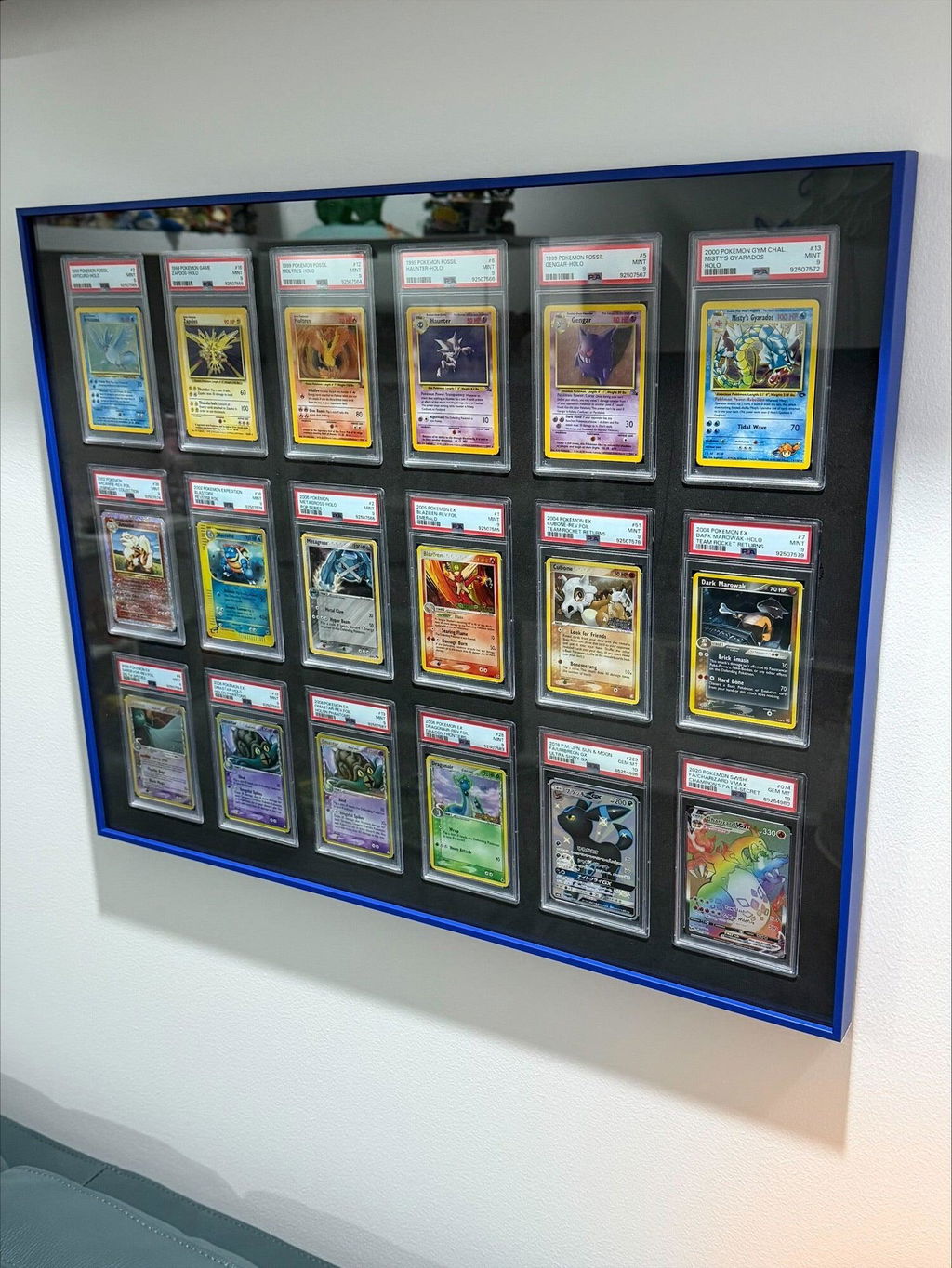
Raw sleeved Lorcana trading cards can create a very light, art-focused frame. Graded trading cards create a more structured wall because the labels and slabs become part of the visual design.
There is no need to force both into one frame. Two matching outer frames with different internal systems can look more deliberate and are easier to update independently.
Keeping a growing Lorcana display easy to update
Removable backing is especially valuable when the collection is likely to change. The goal is to make an update feel routine rather than like rebuilding the frame.
When adding new trading cards, resist the temptation to change the spacing or layout logic halfway through the wall. Consistency is what makes separate modules read as one collection.
Common DIY mistakes that are easy to avoid
- Building a fixed wall around a collection that is still changing quickly.
- Using a frame colour that competes with the artwork.
- Ignoring glare from foil and Enchanted trading cards.
- Making slab openings too tight for easy updates.
- Choosing a shallow frame before checking the actual holder depth.
- Using flexible backing on a wide display.
- Forgetting that another release may justify another module later.
- Mounting the frame before confirming the final weight.
A practical build sequence
- Choose whether the Lorcana trading cards will be sleeved, top-loaded, magnetic-held or graded.
- Measure the actual holders.
- Choose the character, colour or release structure of the display.
- Mock up the wall size and think about future modules.
- Select frame, glazing, insert and backing materials.
- Test one opening with a real trading card holder.
- Dry-fit the whole stack and check glare in the room.
- Assemble the display with removable rear access.
- Mount it using hardware suited to the finished weight and wall type.
When DIY makes sense and when ready-made starts looking attractive
Lorcana is well suited to smaller DIY displays because the trading cards are artwork-led and easy to organise into compact themes.
A large graded collection is a different job. If you would rather keep adding trading cards than spend time cutting foam and acrylic, a repeatable ready-made system may be a better fit for a growing wall.
Why modular framing suits a growing Lorcana collection
Lorcana is still a relatively young trading card game, which means collectors are often building the collection at the same time as the product line is expanding. A permanent wall designed around today's exact total can become outdated quickly.
Matching smaller frames solve that problem neatly. You can add another module later without disturbing the earlier display, and different characters or release waves can have their own visual space.
Keep the outer finish consistent and the modules will still read as one larger wall.
Character-focused displays
Lorcana works particularly well with character groups because the artwork across different trading cards often has a clear visual connection. One character can be followed across several releases, or several related characters can share a frame.
There is no need to add complicated decoration around the trading cards. A simple grid with a neutral background lets the illustrations carry the theme.
Enchanted and premium trading cards as centrepieces
Premium Lorcana trading cards often have enough visual impact to justify a little more space. Rather than packing every opening equally tightly, a centrepiece can anchor a smaller group of related trading cards.
This is especially useful if one trading card is graded while the surrounding collection remains raw or sleeved. Separate zones or matching frames can handle those different depths more cleanly than forcing everything into one layer.
Foil glare and viewing angle
Lorcana foils can look excellent under soft lighting and almost disappear under a hard reflection. Test the display from where you normally sit or stand in the room, not only from directly in front of it.
If you use LED strips, diffusion helps. A line of visible LED points reflected across the glazing can distract from the artwork much more than expected.
Raw, sleeved and graded Lorcana collections
A raw or sleeved Lorcana display can stay shallow and visually light. Graded trading cards create a more structured look because the slab and label become part of the design.
You do not need to choose one format for the entire wall. Two related frames can use different internal construction while sharing the same outer finish.
Making the frame easy to update
A removable backing is particularly useful for Lorcana because the collection may change frequently. The display should open without destroying the insert or requiring the frame to be taken apart permanently.
If you know one section will rotate often, keep it accessible. A display that is easy to update is more likely to stay relevant rather than becoming a snapshot of a collection you no longer have.
Keeping the room and wall in mind
Lorcana artwork is colourful, so the wall colour can change the overall feel of the collection. A dark wall makes a white frame stand out strongly; a light wall can make black framing feel crisp and graphic.
Mark the overall size before building. A group that looks small on a table can become a major visual feature once it occupies a wall.
Choosing what actually deserves wall space
A Lorcana collection can grow much faster than the available wall. Trying to display every trading card usually creates a crowded result and makes the frame obsolete quickly.
Choose the pieces that matter visually: favourite characters, Enchanted trading cards, foils, a specific release, or a small group with a clear theme. The rest of the collection can stay in normal storage.
This makes the wall easier to update and gives the displayed trading cards enough room to be appreciated.
Release-based layouts
Organising Lorcana by release can work well because each set creates a natural stopping point. One frame can represent one release, or several releases can be arranged in matching modules.
This structure is easy to understand and easy to expand. When a new release arrives, you are adding another section rather than redesigning an older one.
Using wall colour as part of the display
Lorcana artwork is often bright and soft at the same time. A dark wall can make light frames and pale artwork feel more dramatic, while a light wall can keep a black or aluminium frame crisp and restrained.
You do not need to repaint a room for the display, but it is worth checking the frame material against the real wall before committing to a colour.
Keeping foil and glossy trading cards readable
Reflective trading cards can look great under controlled light but disappear behind glare from the wrong angle. The easiest fix is often to change the light source or viewing position rather than make the frame more complicated.
Test the display during the day and at night. Window reflections that do not exist in the evening may dominate the glazing in the afternoon.
Raw trading cards can be a better display choice than slabs
Grading is not automatically the best way to present every Lorcana trading card. Raw or sleeved trading cards keep the artwork visually larger and allow a shallower, lighter frame.
Slabs make sense when grading itself is part of the collection or when the rigid holder is desirable. Use the format that suits the collection rather than assuming premium display always means graded.
Planning two or three matching frames instead of one giant frame
A small series of matching frames can be more useful than one oversized wall. They are easier to mount, easier to move and easier to update as the collection grows.
They can also be rearranged if the room changes. One frame can move to another wall without forcing the entire collection to move with it.
Maintenance should be simple
A Lorcana display should not need constant attention. Keep the glazing clean with a suitable soft cloth, check that no holder has shifted, and reopen the frame only when the collection changes.
If the display needs frequent adjustment just to stay aligned, the holder support needs improvement rather than more maintenance.
Use consistency to make separate frames feel like one collection
If you build the Lorcana wall in stages, keep a few things consistent: outer frame finish, general spacing style, mounting height and the way each module relates to the next. The individual frames do not have to be identical internally.
This gives you freedom to change holder formats or collection themes later without making the wall feel disconnected.
Keep a short record of the materials and holder format used in the first Lorcana frame. When the collection expands, that makes it much easier to build another matching module without guessing what you chose the first time.
It is also useful to record where the frame sits in relation to windows and room lighting. If a second Lorcana display is added later, you can repeat the parts that worked and avoid introducing a new glare problem.
That consistency also makes photographs of the finished collection look cleaner, because each Lorcana frame feels like part of the same display system rather than a separate project.
How to make a homemade Lorcana trading card display
A homemade Lorcana trading card display can be built with a standard frame, neutral matboard and acrylic for a small sleeved collection. If you expect the collection to grow, keep the frame easy to reopen or build in matching modules.
To make your own Lorcana card frame feel premium, focus on clean cutting, consistent spacing, glare control and good wall placement before adding more expensive materials.
Frequently asked questions
Can Lorcana trading cards be framed while sleeved?
Yes. Build the mat or opening around the outside dimensions of the sleeve you actually use.
Is a modular display good for Lorcana trading cards?
Yes. Because the game and collections are still expanding, modular displays can make future growth easier.
Can foil Lorcana trading cards be displayed under LED lighting?
Yes, but reflections can be strong. Test the light angle and diffusion before fixing the LEDs permanently.
Is EVA foam suitable for graded Lorcana trading cards?
Yes, provided the slab fit is tested and the foam supports the holder without excessive pressure.
Final thoughts
Lorcana is a good reason not to overbuild a display too early. Keep the structure clean, choose materials that let the artwork lead, plan for collection growth and make sure the frame can be reopened without turning every update into a rebuild.
Continue Exploring
If you enjoyed this guide, you may also find these collector resources helpful.
📚 Collector Guides
-
Best Trading Cards to Display & Collect
Explore Pokémon, MTG, Yu-Gi-Oh!, Sports Cards, One Piece and Disney Lorcana cards, sets, rarities and collection ideas. -
The Ultimate Trading Card Display Guide
Explore trading card wall displays, frames, shelves, layouts and display solutions for collections of every size. -
How to Display Graded Cards on a Wall
Learn how collectors display PSA, BGS and CGC graded cards using wall-mounted trading card displays.
🛒 Shop Display Collections
-
Aluminium Trading Card Wall Display Frames
Premium aluminium trading card display frames available in a wide range of grid sizes, frame colours and holder formats. -
PSA, CGC & BGS Graded Slab Wall Display Frames
Purpose-built graded trading card display frames for Pokémon, MTG, Yu-Gi-Oh!, One Piece, Sports Cards, Disney Lorcana and other collections. -
One Touch Wall Display Frames
Premium aluminium wall display frames designed for One Touch magnetic trading card holders.

0 comments