


Choosing the right display frame size starts with more than simply counting how many trading cards you want to display. The dimensions of the frame, the layout, the available wall space and the way the collection may grow over time all affect how the finished display will look.
A frame that suits both the collection and the room around it will usually look more balanced and intentional. This matters whether you are displaying a single favourite card, a smaller group of graded slabs or a much larger wall-mounted collection.
Start With Your Collection
The first step is deciding what you actually want the frame to hold.
Some collectors want one or two standout cards on display, while others are working with complete sets, themed groups or collections that may continue expanding. The right frame size depends on both the number of cards you have now and how you expect the display to develop.
Before choosing a frame, consider:
- How many trading cards or holders you want to display.
- Whether the collection is likely to keep growing.
- The amount of wall space available.
- The room where the frame will be installed.
- Whether you prefer one larger display or several smaller frames.
Answering those questions first makes it much easier to narrow down the most practical size.
Small Display Frames
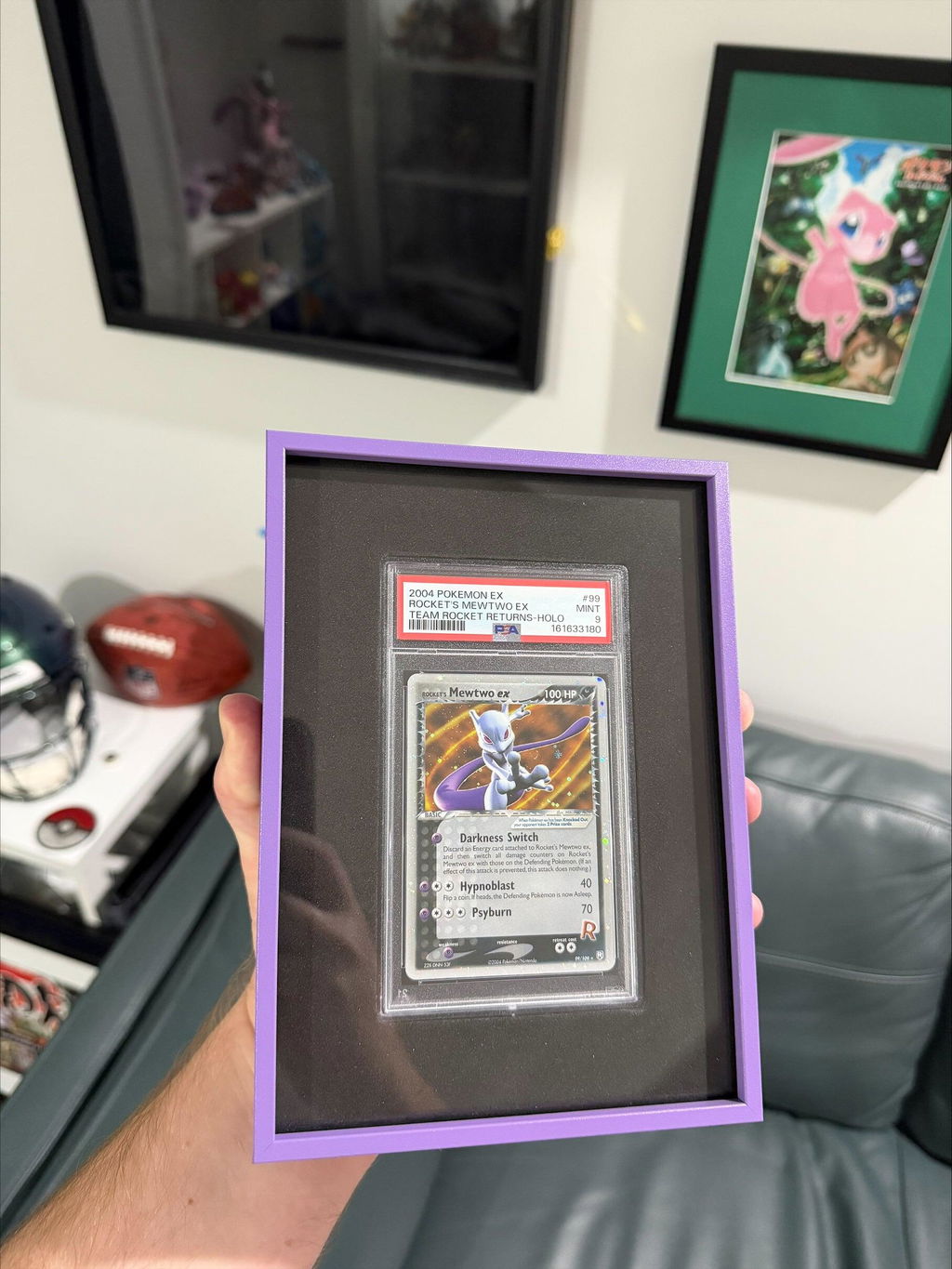
Small display frames work well when the focus is on one card or a compact group rather than a large collection.
They are particularly useful for favourite graded cards, small themed groups, signature cards or individual pieces that you want to display separately from the rest of a collection.
Common uses include:
- Single-card displays.
- Two to six-card layouts.
- Smaller wall spaces.
- Home offices, studies or collector rooms.
Smaller frames are also easier to reposition later if the room layout or collection changes.
Medium Display Frames
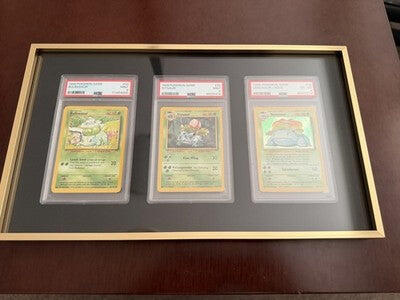
Medium-sized frames are useful for collectors who want to display a meaningful group of cards without dedicating an entire wall to one frame.
They can work well for a particular set, character, player, team, era or collecting theme, while still remaining manageable in most rooms.
This size range can also be a practical middle ground for collectors who want more capacity than a small frame but prefer the flexibility of using several separate displays rather than one very large format.
Large Display Frames
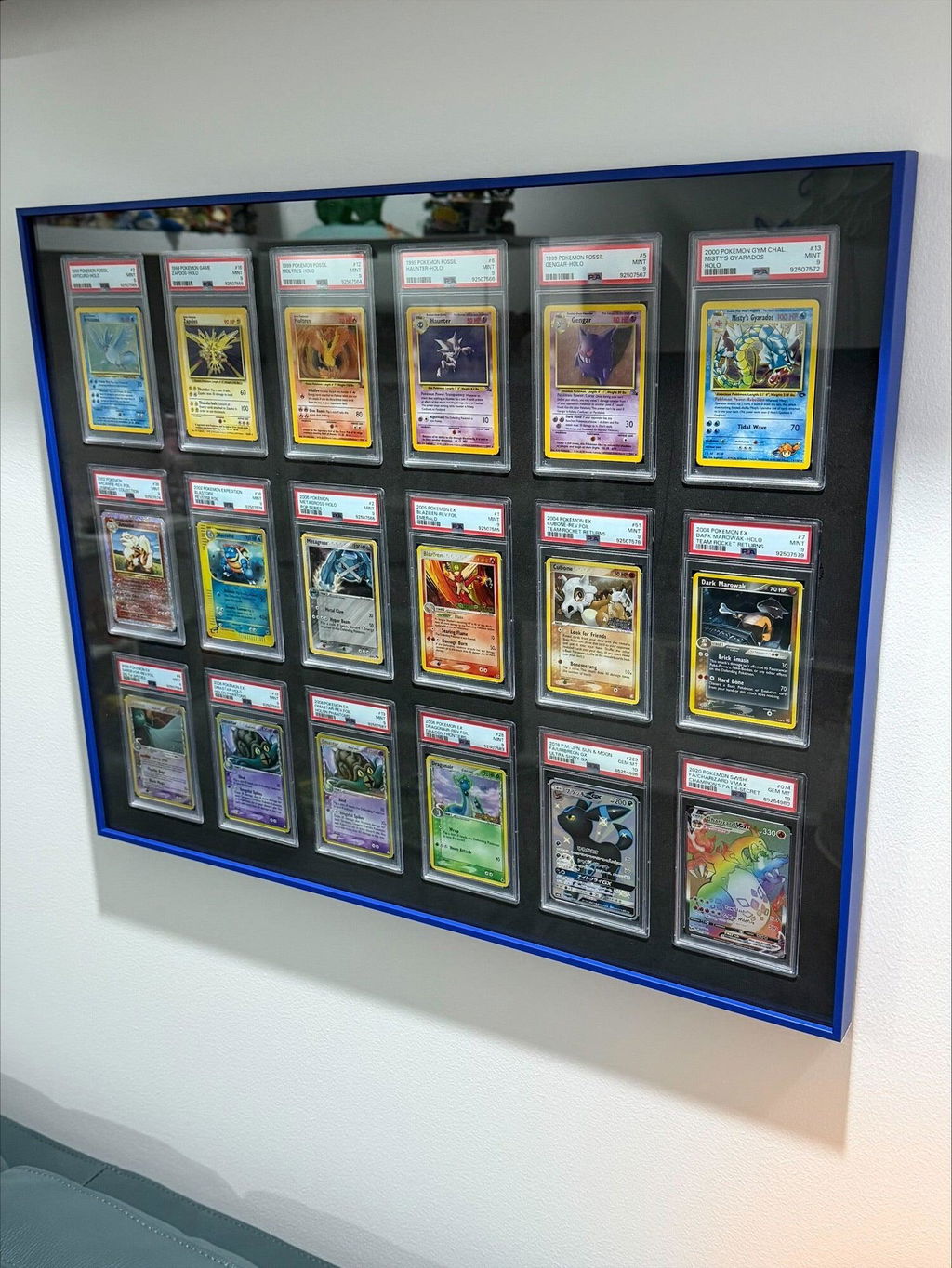
Large display frames are designed for collections where the number of cards becomes a major part of the visual presentation.
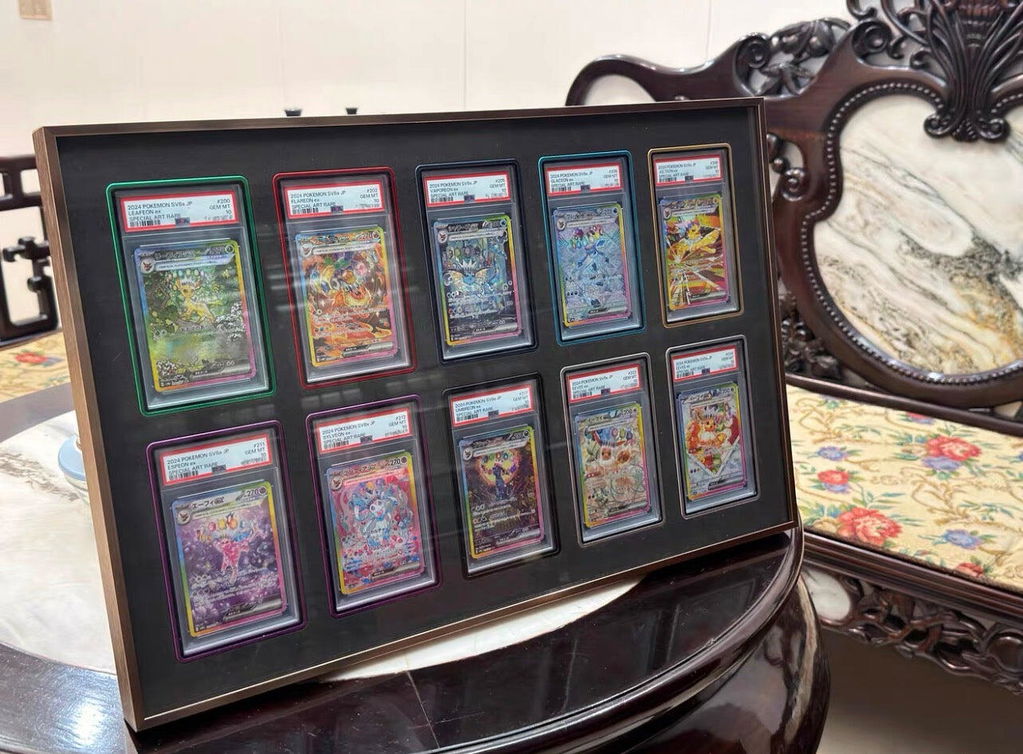
They are commonly used for larger graded-card collections, sports card groups, Pokémon collections and other substantial wall displays where keeping many cards aligned within one structure is preferable to using multiple smaller frames.
Large displays are commonly used for:
- PSA, CGC or BGS graded-card collections.
- Sports card collections.
- Pokémon and other TCG collections.
- Large themed or set-based displays.
As frame size increases, it becomes more important to consider the finished dimensions, total weight, wall type and mounting position before ordering.
Plan for Future Growth
Many collections do not stay the same size for long.
If you know that you are still buying cards from a particular set, grading additional cards or building toward a larger group, it can be worth choosing a display with some capacity for future additions.
Useful things to consider include:
- Cards you already plan to purchase or grade.
- Sets or themes you are actively building.
- Whether the collection is likely to remain together long term.
- How much wall space you are comfortable dedicating to the finished display.
Planning ahead can reduce the chance of outgrowing a frame shortly after the display is completed.
Match the Frame to the Wall Space
The frame needs to suit the room as well as the collection.
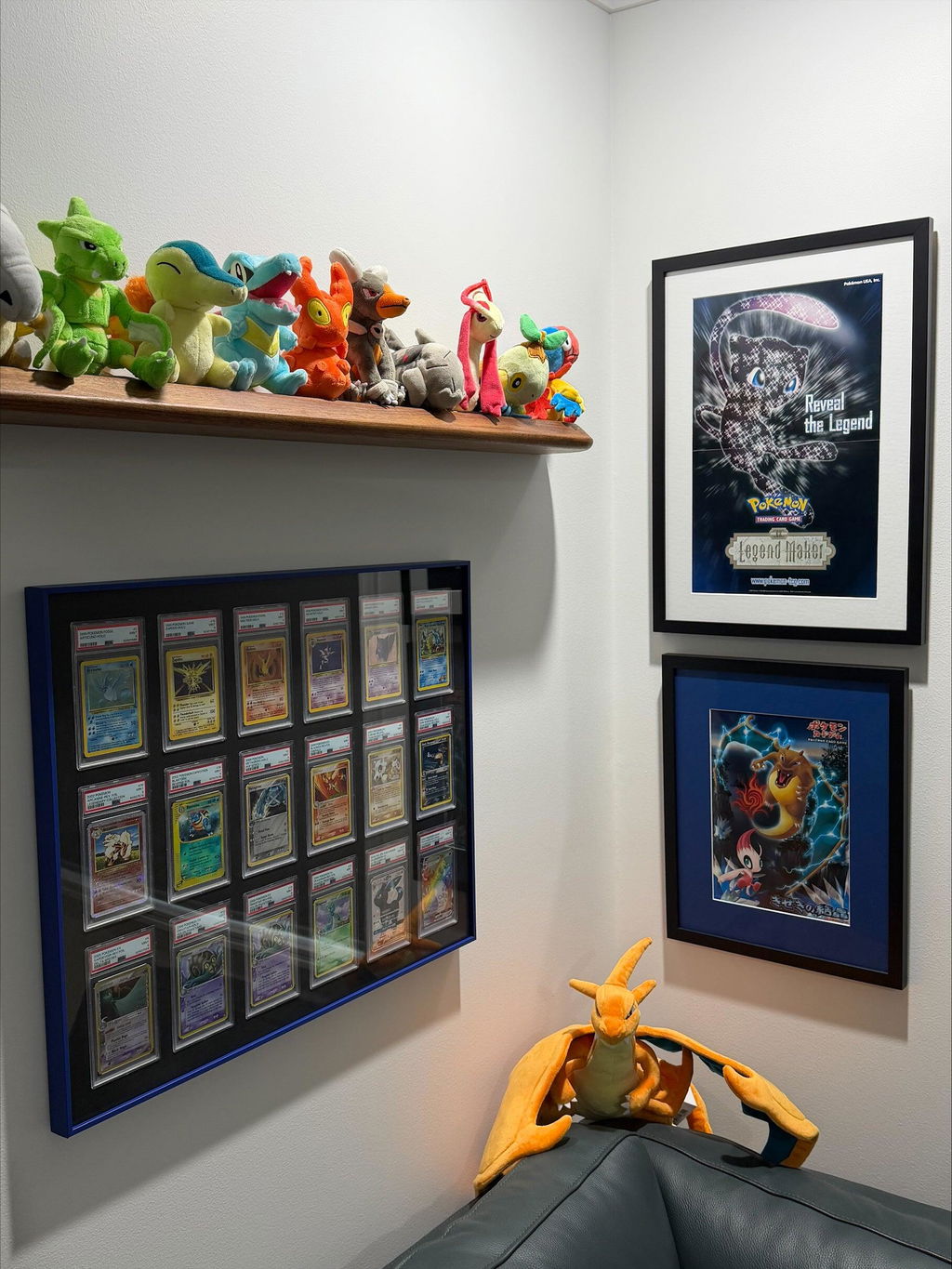
A very small frame can look isolated on a large empty wall, while a large multi-card display can overwhelm a narrow wall or compete with nearby furniture, shelving or artwork.
Before choosing a size, it can help to measure the intended wall area and consider the space around the frame rather than looking only at the frame dimensions themselves.
Lighting also matters. Reflective slabs, acrylic glazing and foil trading cards can produce glare under direct or harsh lighting, so the final position should be considered alongside the frame size.
Layout and Holder Type Matter Too
Frame size is only one part of the decision. The holder format and grid layout also affect how much space the finished display requires.
PSA, CGC, BGS and One Touch holders are not identical in size, so a purpose-built frame should be selected for the holder type being displayed rather than assuming one insert will suit every format.
Other choices that can affect the finished appearance include:
- Grid size and orientation.
- Frame finish.
- Black or white EVA foam where available.
- The colour and visual style of the cards being displayed.
- Whether the frame will be used alone or alongside other displays.
These details work together with the overall frame size to determine how the finished display sits within the room.
One Large Frame or Several Smaller Frames?
For larger collections, it is also worth deciding whether you want one large display or several smaller frames.
One large frame can keep a collection together in a single structured layout, while multiple smaller frames provide more flexibility when arranging cards across different walls or changing the collection over time.
Neither approach is automatically better. The right choice depends on the available wall space, the number of cards, the holder type and how permanent you want the layout to be.
Final Thoughts
The right trading card display frame size should suit the collection, the wall and the way you expect the display to develop over time.
Small frames are useful for individual favourites and compact groups, medium frames provide flexibility for themed collections, and larger formats allow substantial graded-card or trading card collections to be displayed within one organised structure.
Taking a little time to consider card count, holder type, wall dimensions and future growth usually leads to a display that works better both visually and practically.
Continue Exploring
If you enjoyed this guide, you may also find these collector resources helpful.
📚 Collector Guides
-
The Ultimate Trading Card Display Guide: Ideas, Frames, Shelves & Display Solutions for Every Collector
Explore display ideas, wall layouts, shelving, cabinets, lighting, budgets and display solutions for every major trading card game. -
Why Premium Aluminium Trading Card Display Frames Are Worth It: The Complete Collector Guide
Discover why handmade aluminium display frames have become a premium choice for displaying PSA, CGC, BGS and One Touch trading card collections.
🛒 Shop Display Collections
-
Aluminium Trading Card Wall Display Frames
Premium handmade aluminium wall display frames for Pokémon, MTG, Yu-Gi-Oh!, One Piece and Sports Cards. -
PSA, CGC & BGS Graded Slab Wall Display Frames
Purpose-built wall display frames designed specifically for graded trading card collections. -
One Touch Wall Display Frames
Premium wall display frames designed for One Touch magnetic trading card holders in a range of grid sizes.

0 comments