


One Touch magnetic holders are one of the cleanest ways to display ungraded trading cards.
They give the card a rigid clear case without adding a grading label, which makes them particularly useful for modern chase cards, sports rookies, autographs, memorabilia cards and other favourites you want to keep visible.
The main thing to remember is that One Touch holders are not all the same. Different holder depths are designed for different card thicknesses, so the display needs to be planned around the actual magnetic cases you use rather than treating every One Touch as identical.
Here are the main things worth considering when planning a One Touch trading card display.
What Is a One Touch Magnetic Holder?
A One Touch is a rigid magnetic trading card holder made from clear plastic. The two halves close around the card and are held together magnetically rather than with screws.
Compared with a penny sleeve or toploader, the holder gives the trading card much more structure and a cleaner display edge.
Compared with a graded slab, it keeps the card ungraded and avoids adding a certification label above the artwork.
Collectors commonly use One Touch holders for:
- Pokémon chase cards.
- Sports rookie cards.
- Autographs.
- Patch and memorabilia cards.
- Alternate artwork.
- Premium foil cards.
- Cards they prefer to keep ungraded.
Why One Touch Holders Work Well in Wall Displays
The main advantage is consistency.
Once several cards are placed in matching magnetic holders, the collection naturally forms a repeated rectangular grid.
That makes One Touch holders well suited to:
- 3-card and 4-card displays.
- 3 × 3 grids.
- Player collections.
- Pokémon character collections.
- Modern chase-card groups.
- Larger repeated wall layouts.
The clear holder also keeps attention on the card itself rather than adding another strong visual element around it.
One Touch Holder Depth Matters
This is one of the most important things to understand before choosing a display.
One Touch holders are available in different depths for different trading card thicknesses.
A standard Pokémon or trading card may use a relatively shallow holder, while thicker sports cards, patch cards and memorabilia cards can require much deeper magnetic cases.
The front dimensions may look similar, but the total depth can be very different.
That affects:
- Frame depth.
- Insert fit.
- How far the holder sits behind the glazing.
- Whether several holder types can share one frame.
Always plan around the actual magnetic holder rather than assuming every One Touch will fit the same way.
One Touch Displays for Pokémon Cards
Pokémon cards work particularly well in magnetic holders because the artwork remains visually dominant without a grading label above it.
One Touch displays can work well for:
- Charizard collections.
- Eeveelutions.
- Illustration Rares.
- Special Illustration Rares.
- Alternate artwork.
- Promotional cards.
- Favourite ungraded vintage cards.
If the cards already contain a lot of colour, a simple black, silver or other neutral frame finish usually gives the artwork enough room to stand out.
One Touch Displays for Sports Cards
Sports cards are where magnetic-holder depth becomes especially important.
Standard rookies and chrome cards may use relatively shallow holders, while patches, relics and thicker memorabilia cards can require considerably deeper cases.
One Touch sports displays work well for:
- Rookie cards.
- Autographs.
- Patch cards.
- Player collections.
- Team collections.
- Championship cards.
If a collection contains several different holder depths, it can be cleaner to separate the thickest cards rather than making the whole frame much deeper for only one or two pieces.
Choosing the Right Layout
Because One Touch holders already create a strong repeated shape, simple layouts usually work best.
Common options include:
- Single-card displays.
- Two-card pairings.
- Three-card groups.
- 2 × 2 layouts.
- 3 × 3 grids.
- Larger repeated rows and columns.
The layout should follow the collection rather than choosing the biggest frame available and trying to fill it afterwards.
Portrait and Landscape Cards
Sports collections often contain both portrait and landscape trading cards.
A single horizontal card in the middle of a vertical grid can look accidental if the layout was not designed for it.
If landscape cards are important to the collection, consider:
- Grouping them together.
- Using a separate frame.
- Building the layout around mixed orientations from the beginning.
The same principle applies to oversized or unusually thick cards.
Choosing the Right Frame Material
Small One Touch displays can work well in timber or other conventional picture-frame materials.
As the card count grows, the display becomes heavier and the frame needs more rigidity.
Aluminium is a premium option for larger One Touch displays because it can maintain a relatively slim outer profile while providing good rigidity.
This becomes increasingly useful when the frame already contains several rigid magnetic holders, backing materials and front glazing.
Acrylic or Glass for One Touch Displays?
Glass and acrylic can both work well.
Glass is hard and scratch resistant, which makes it useful for smaller displays.
Acrylic is lighter and more impact resistant, which can make it more practical as the frame becomes larger.
Since magnetic holders already contribute weight, reducing the weight of the front panel can make a larger frame easier to handle and mount.
UV-resistant acrylic or specialist glazing can add another layer of protection, but valuable trading cards should still be kept away from prolonged direct sunlight where possible.
EVA Foam Works Well With One Touch Holders
Rigid magnetic holders work particularly well with an insert that supports the outside shape of the case.
EVA foam is useful because it can hold each One Touch inside a defined opening while leaving the card face visible.
The fit should be secure enough that the holder stays level when the frame is vertical, but not so tight that removing the case becomes difficult.
Black EVA tends to make the clear holder edges disappear visually, while white or lighter inserts make the holder outline more obvious.
Consistent Spacing Keeps the Grid Clean
Magnetic holders have strong straight edges, so inconsistent gaps become obvious across a repeated display.
The exact spacing matters less than keeping it consistent between every holder.
The outside margins of the grid should also feel balanced rather than having the cards pushed noticeably closer to one side of the frame.
How Many One Touch Cards Should You Display?
The right number depends on the collection and the wall space available.
Small groups of 3, 4 or 9 holders work well for focused collections, while larger 12, 18 or 24-card grids can suit collections that already have a clear theme.
As the number of holders grows, frame size, finished weight and mounting become increasingly important.
If you are unsure what card count makes sense, our guide to how many trading cards to display in a frame covers different layout sizes in more detail.
Choose a Frame Colour That Does Not Compete With the Cards
Trading card artwork already provides plenty of colour, so restrained frame finishes are usually easy to work with.
Common options include:
- Matte black.
- Silver.
- Titanium or darker metallic finishes.
- Gold.
- Natural timber.
Black creates strong contrast and tends to blend easily into darker rooms. Silver can make larger displays feel lighter, while gold gives the outer frame more visual presence.
If you plan to use several One Touch displays together, repeating the same frame finish can help connect the wall.
Lighting One Touch Cards
One Touch holders create another reflective surface behind the front acrylic or glass.
That means poor lighting can create reflections on both the holder and the frame glazing.
Soft room lighting, ceiling lights or LEDs positioned above or at an angle are usually easier to work with than bright light facing directly into the display.
This is particularly noticeable with chrome sports cards, foil Pokémon cards and other reflective finishes.
Leave Room for the Collection to Change
One of the advantages of magnetic holders is that the cards remain relatively easy to change.
You may upgrade a card, move one into grading, add a new rookie or replace part of the display with a newer favourite.
A frame that can be reopened makes those changes much easier.
For larger collections, several matching frames can also be more practical than one enormous display because each section can be updated independently.
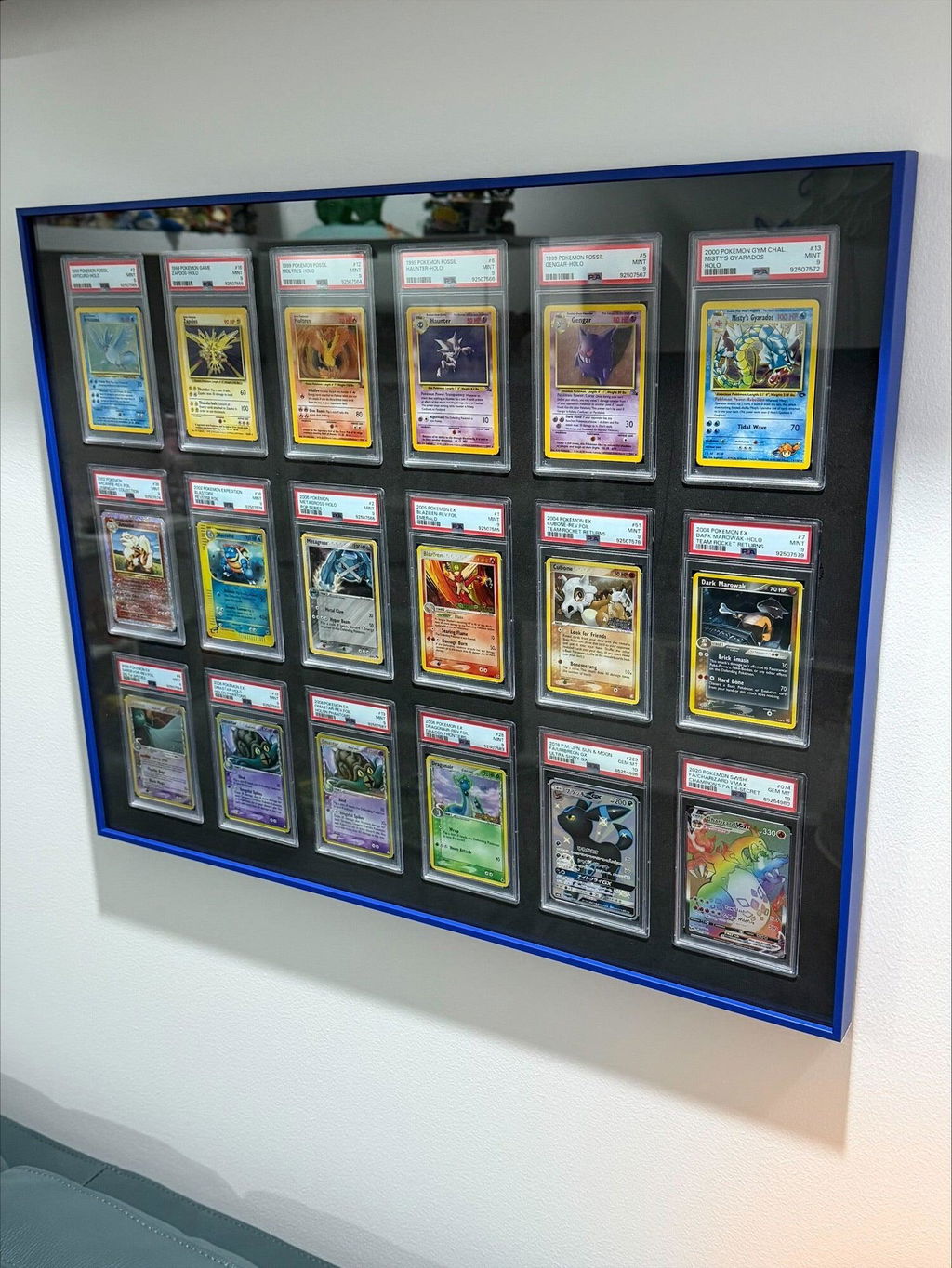
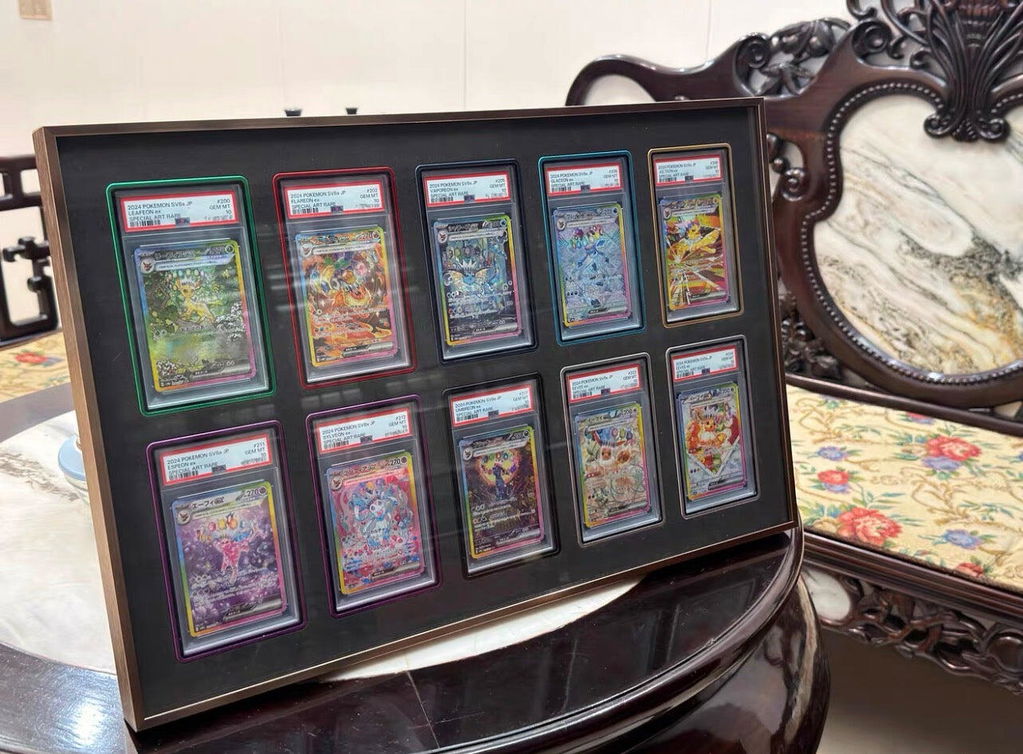
One Touch vs Graded Slabs
One Touch holders and graded slabs can create a similar rigid-grid appearance, but they suit different collecting goals.
A One Touch keeps the trading card ungraded and removable. A PSA, BGS or CGC slab adds third-party authentication, grading and a permanent label to the presentation.
If you prefer changing the display regularly or keeping the artwork free from a grading label, One Touch holders can be a very good fit.
If the grade itself is important to the collection, a dedicated slab display may make more sense.
Should You Make Your Own One Touch Display?
A small DIY One Touch frame can be relatively straightforward if you are comfortable working with frame materials, inserts, glazing and wall mounting.
Larger displays become more involved because holder depth, EVA fit, backing strength, acrylic, overall weight and mounting all need to work together.
If you are considering making your own, our guide to making a One Touch trading card wall display covers magnetic holders, materials, frame depth and layout planning in much more detail.
Final Thoughts
One Touch magnetic holders are a practical middle ground between sleeved trading cards and graded slabs.
They keep the card rigid and clearly visible without adding a grading label, which makes them particularly useful for premium ungraded cards and collections that change over time.
The main things to get right are holder depth, layout, spacing, insert fit and overall frame size.
Once those are planned properly, a One Touch collection can work just as well as a small three-card feature display or a much larger wall of magnetic holders.
Continue Exploring
If you enjoyed this guide, you may also find these collector resources helpful.
📚 Collector Guides
-
The Ultimate Trading Card Display Guide: Ideas, Frames, Shelves & Display Solutions for Every Collector
Explore display ideas, wall layouts, shelving, cabinets, lighting, budgets and display solutions for every major trading card game. -
How to Make a One Touch Trading Card Wall Display
Explore DIY One Touch displays, magnetic holders, EVA foam, acrylic, frame depth, layouts and wall mounting. -
How to Make a Trading Card Wall Display: Complete DIY Guide
Learn how to plan a DIY trading card display, including frame materials, holders, acrylic, EVA foam, layouts and wall mounting. -
Why Premium Aluminium Trading Card Display Frames Are Worth It: The Complete Collector Guide
Explore aluminium trading card display frames, their materials and why they work particularly well for larger graded and One Touch collections.
🛒 Shop Display Collections
-
Aluminium Trading Card Wall Display Frames
Premium aluminium trading card display frames available in a wide range of grid sizes, frame colours and holder formats. -
PSA, CGC & BGS Graded Slab Wall Display Frames
Purpose-built graded trading card display frames for Pokémon, MTG, Yu-Gi-Oh!, One Piece, Sports Cards, Disney Lorcana and other collections. -
One Touch Wall Display Frames
Premium aluminium wall display frames designed for One Touch magnetic trading card holders.

0 comments