


Choosing a trading card display frame is easier once you stop thinking about the frame first.
The cards, holder type, collection size and wall space should determine the display rather than the other way around.
A single PSA card, a 12-card One Touch collection and a large wall of raw Pokémon cards all need different things from a frame. The right choice comes down to matching the display to the collection you actually own and how you want it to look in the room.
Here are the main things worth considering before choosing a trading card display frame.
Start With the Cards You Actually Want on the Wall
You do not need to display everything you own.
Most collections look stronger when the display has a clear focus, whether that is one favourite card, a small themed group or a much larger graded collection.
Before choosing a frame, think about:
- How many trading cards you want to display now.
- Whether those cards belong together naturally.
- Whether the collection is likely to grow.
- The type of holders being used.
- The amount of wall space available.
- Where the display will sit in the room.
Once those points are clear, the frame size and layout become much easier to narrow down.
Choose the Holder Format Before the Frame
The holder around the trading card has a major effect on frame depth, weight, spacing and overall construction.
Raw and Sleeved Trading Cards
Raw and sleeved trading cards are light and take up very little space, which makes them ideal for denser layouts and larger card counts.
Penny sleeves, perfect-fit sleeves and premium sleeves can all work, but the frame needs to be planned around the finished sleeved card rather than the raw card dimensions alone.
This format is particularly useful for set displays, character collections and walls that may change frequently.
Toploaders
Toploaders add more structure than a sleeve while staying relatively light and inexpensive.
They work well for collectors who want more protection without committing to grading or a thicker magnetic holder.
For larger displays, using the same style of toploader throughout usually makes the finished wall look much cleaner.
PSA, CGC and BGS Graded Slabs
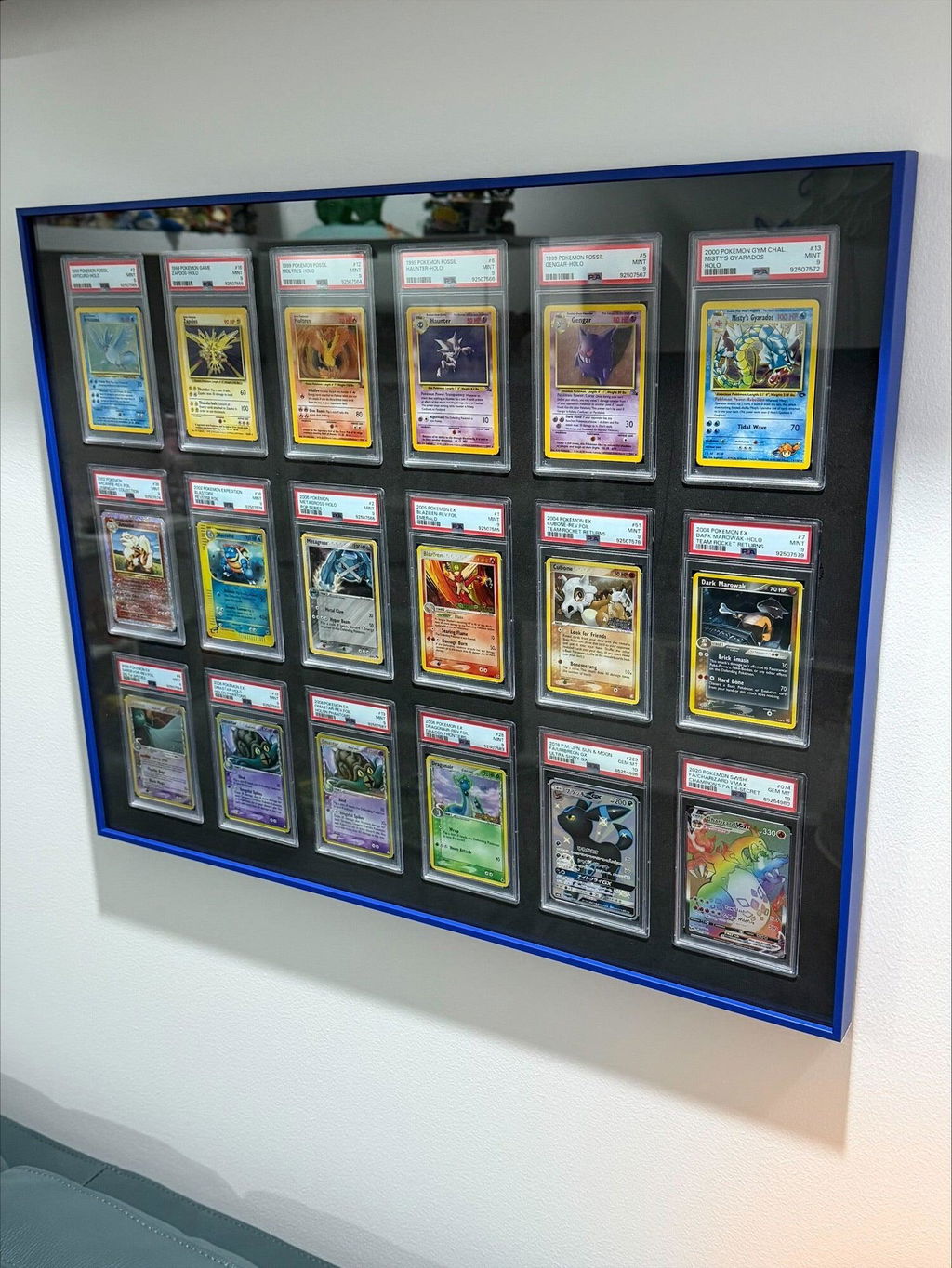
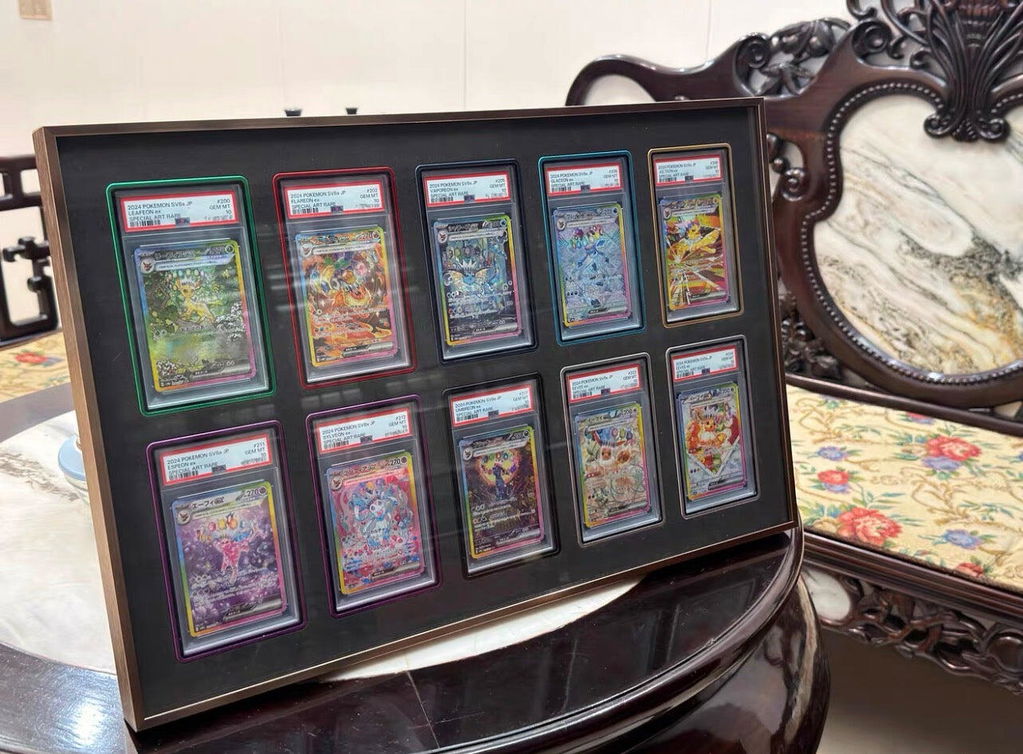
Graded slabs suit repeated grids particularly well because every holder has a defined shape and the grading label creates another consistent visual element.
PSA, CGC and BGS holders are not identical, so it is better to choose a display designed around the actual slab format rather than assuming every graded card will fit the same frame.
Weight also becomes increasingly important as the collection grows. A large graded trading card wall can become substantially heavier than a raw-card display of the same overall size.
One Touch Magnetic Holders
One Touch holders are useful for collectors who want a rigid premium case without professionally grading the trading card.
They are commonly used for sports cards, autographs, memorabilia cards, Pokémon chase cards and other standout pieces.
Magnetic holders can vary in depth, especially with thicker sports cards, so the display should be selected around the actual holder rather than the name alone.
Think About the Size of the Display
A frame that works perfectly for three trading cards may not make sense once the collection grows to 30 or 50.
As the display gets larger, several things become more important:
- Frame rigidity.
- Backing strength.
- Glazing weight.
- Wall mounting.
- Access to the cards later.
- Whether the frame can be moved safely.
This is why a material or construction style that works for a small picture frame may not be ideal for a much larger collector display.
Choose a Frame Material That Matches the Scale
Different frame materials make sense at different sizes and for different types of collection.
Timber Frames
Timber works well for traditional framing and smaller custom displays. It is widely available, easy to finish in different colours and suits raw or sleeved trading cards particularly well.
For deeper displays, timber profiles can also provide enough internal space for magnetic holders or other rigid cases.
Standard Picture Frames
For a small raw-card display, a standard picture frame can be one of the simplest options.
Paired with suitable matboard and backing, it can work very well for a handful of sleeved cards without requiring a fully custom frame.
Aluminium Frames
Aluminium is a more premium option and becomes particularly useful as displays get larger.
Its main advantage is the ability to maintain a relatively slim outer profile while providing good rigidity, which suits larger graded and One Touch collections especially well.
That cleaner profile can also make a large grid feel less visually heavy on the wall.
The best material is not simply the most expensive one. It should suit the scale, weight and holder format of the collection.
Acrylic or Glass?
The front glazing is another part of the display that becomes more important as frame size increases.
Glass is hard and scratch resistant, which makes it useful for smaller frames. Acrylic is lighter and more impact resistant, which often makes it more practical for larger wall displays.
If the frame contains a large number of graded slabs or magnetic holders, reducing the weight of the front panel can make the whole display easier to handle and mount.
UV-resistant acrylic or specialist glazing can add another layer of protection, but valuable trading cards should still be kept away from prolonged direct sunlight where possible.
Choose a Layout That Makes Sense for the Collection
The layout should follow the collection rather than forcing the cards into a random grid.
Common layouts include:
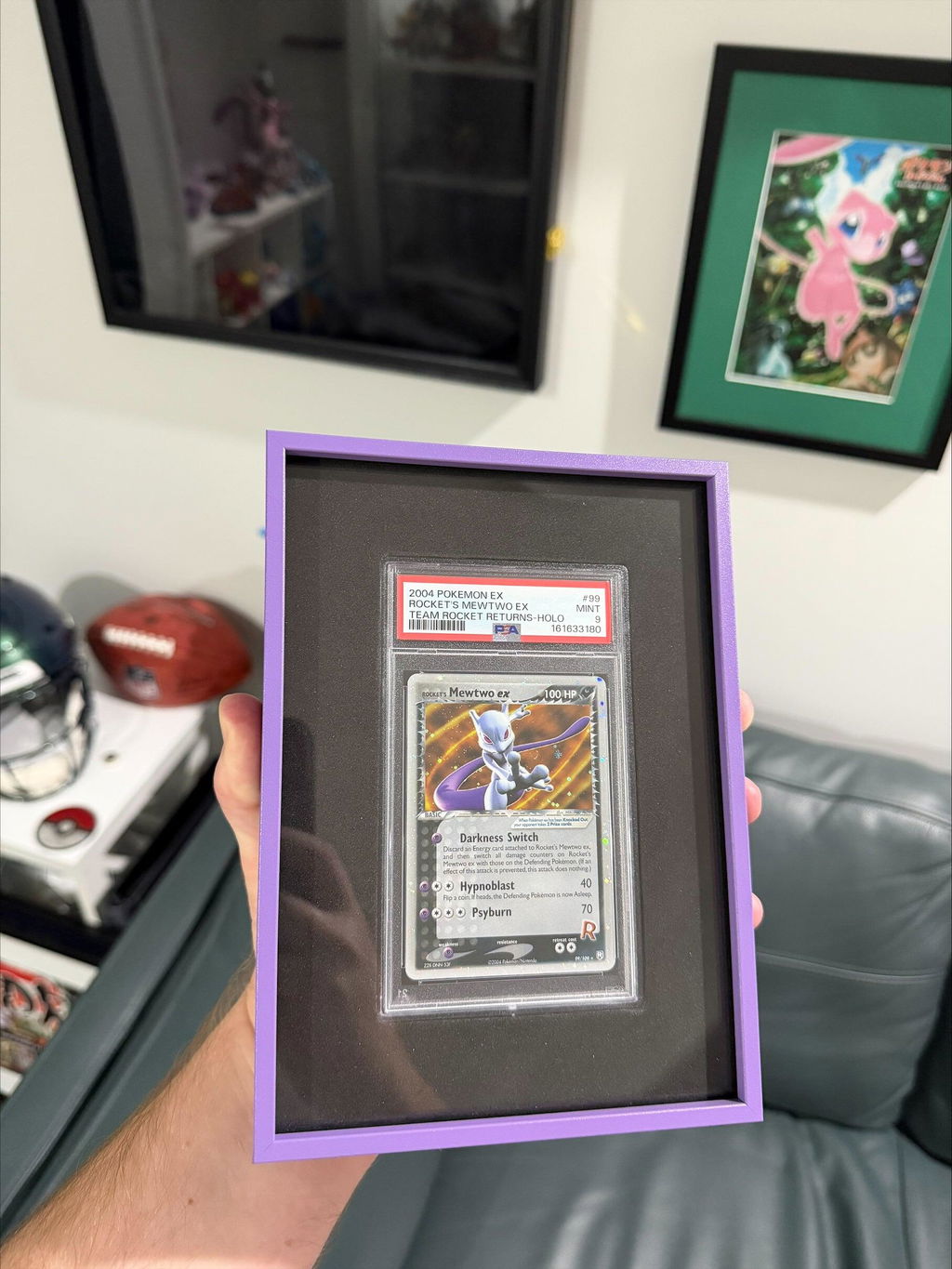
- Single-card displays.
- Two-card pairings.
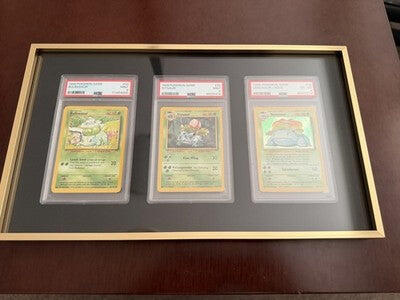
- Three-card groups.
- 3 × 3 grids.
- Larger repeated slab layouts.
- Character or player collections.
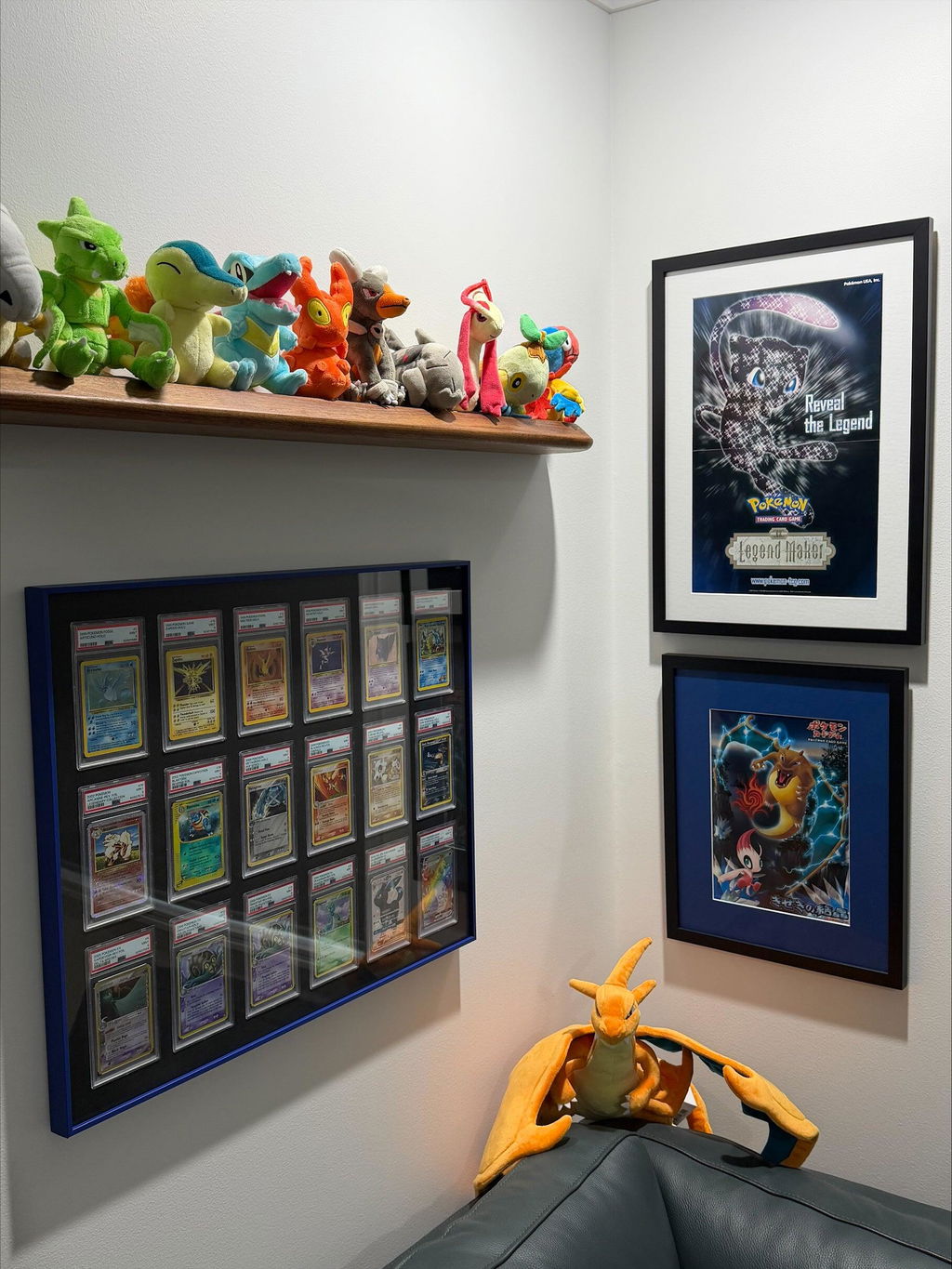
- Several coordinated frames across one wall.
A three-card Pokémon evolution line naturally suits a small horizontal or vertical group. A PSA collection may work better in a much larger repeated grid. A sports collection might use several separate frames for different players or card types.
There is no need to fill every available position immediately. Leaving room for the collection to grow can be useful.
Match the Frame Finish to the Room, Not Every Individual Card
Trading cards already contain plenty of colour and visual detail, so the frame finish usually works best when it stays relatively restrained.
Common options include:
- Matte black.
- Silver.
- Titanium or darker metallic finishes.
- Gold.
- Natural timber.
Black is easy to use because it blends into a wide range of rooms. Silver can make larger displays feel lighter, while gold gives the frame itself more presence.
For a wall with several displays, keeping the outer frame finish consistent can tie the entire collection together even if the trading cards inside each frame are completely different.
Think About the Material Around the Cards
The insert or background inside the frame has a major effect on the finished appearance.
Matboard works particularly well for raw and sleeved trading cards because it creates a traditional framed look and can hide part of the sleeve edge.
EVA foam works well with rigid holders such as graded slabs and One Touch magnetic cases because it can support the holder inside a defined opening.
Black backgrounds tend to make clear holders disappear visually, while white or lighter materials show the shape of each holder more clearly.
The background should support the cards rather than becoming the most noticeable part of the frame.
Consider How the Display Will Look From Across the Room
A trading card display needs to work at more than one viewing distance.
Up close, you will notice artwork, grading labels, signatures and fine details. From several metres away, the individual cards become much smaller and the overall grid and frame shape become more important.
This is why larger displays often benefit from simple layouts and consistent spacing.
If you are considering a particularly large frame, marking the approximate size on the wall with removable tape can make it much easier to judge before committing.
Do Not Ignore Wall Mounting
Wall mounting becomes more important as the frame gets larger and heavier.
A small raw-card display may weigh very little, while a large frame containing dozens of graded slabs, acrylic, backing and an insert can be substantially heavier.
Mounting hardware should be chosen for the wall type and the finished weight of the display rather than simply using whatever came with a lightweight picture frame.
Keeping the frame level and sitting cleanly against the wall also makes a noticeable difference to the finished appearance.
Think About Future Access
Collections change.
You may buy a better copy of a card, complete a set, change grading companies or decide that a different group deserves the wall space.
A frame that can be reopened makes those changes much easier.
This matters particularly with larger displays. Replacing one card should not mean rebuilding the entire wall from scratch.
Several Frames Can Be Better Than One Huge Display
A large collection does not always need one enormous frame.
Several coordinated displays can make the wall easier to organise and allow different parts of the collection to have their own identity.
For example:
- One frame for PSA Pokémon cards.
- One for One Touch sports cards.
- One for raw or sleeved favourites.
- One for a particular player, set or character.
If the frame finishes and spacing remain consistent, several frames can still read as one larger collection.
Quality Matters Most Where It Affects the Result
A higher-quality display is not simply one with more expensive materials.
The parts that matter most are the ones that affect fit, finish, rigidity, protection and usability.
Clean openings, straight alignment, flat glazing, solid backing and secure wall mounting will usually make a bigger difference than decorative extras.
For a small frame, simple materials used accurately may be all you need. For a large graded collection, investing in stronger framing, lighter glazing and a more precise insert can make much more sense.
Should You Buy a Ready-Made Frame or Make Your Own?
For smaller displays, making your own frame can be relatively straightforward using a standard picture frame, matboard and suitable glazing.
As the display gets larger or moves into rigid holders such as graded slabs and One Touch cases, there are more variables to consider, including fit, frame depth, backing strength, acrylic, weight and wall mounting.
If you are considering the DIY route, our complete guide to making a trading card wall display covers the materials, holders, glazing and layout decisions in much more detail.
Final Thoughts
The right trading card display frame is the one that makes sense for the collection you actually own.
Start with the holder type and number of cards, then work outward into frame material, glazing, layout, finish and mounting.
A small raw-card frame and a large aluminium graded-card display can both be the right choice. They are simply solving different display problems.
If the frame keeps the collection organised, easy to view and practical to update, it is doing its job.
Continue Exploring
If you enjoyed this guide, you may also find these collector resources helpful.
📚 Collector Guides
-
The Ultimate Trading Card Display Guide: Ideas, Frames, Shelves & Display Solutions for Every Collector
Explore display ideas, wall layouts, shelving, cabinets, lighting, budgets and display solutions for every major trading card game. -
How to Make a Trading Card Wall Display: Complete DIY Guide
Learn how to plan a DIY trading card display, including frame materials, holders, acrylic, EVA foam, layouts and wall mounting. -
Why Premium Aluminium Trading Card Display Frames Are Worth It: The Complete Collector Guide
Explore aluminium trading card display frames, their materials and why they work particularly well for larger graded and One Touch collections.
🛒 Shop Display Collections
-
Aluminium Trading Card Wall Display Frames
Premium aluminium trading card display frames available in a wide range of grid sizes, frame colours and holder formats. -
PSA, CGC & BGS Graded Slab Wall Display Frames
Purpose-built graded trading card display frames for Pokémon, MTG, Yu-Gi-Oh!, One Piece, Sports Cards, Disney Lorcana and other collections. -
One Touch Wall Display Frames
Premium aluminium wall display frames designed for One Touch magnetic trading card holders.

0 comments