


Graded trading cards are naturally well suited to display.
The slab already gives each card a rigid outer case, a consistent shape and a label that becomes part of the presentation. That makes graded cards much easier to organise into rows, grids and larger wall layouts than loose or sleeved cards.
Whether you collect Pokémon, sports cards, Magic: The Gathering, Yu-Gi-Oh!, One Piece or another trading card game, the best display method usually comes down to how many slabs you own, which grading companies you use and how much space you want the collection to occupy.
Here are the main ways to display graded cards on a wall and the practical things worth considering before choosing a setup.
Why Graded Cards Work So Well on a Wall
Graded cards already have a defined outer format, which makes them easier to arrange consistently.
The rigid holder also means you do not need to rely on the trading card itself for support inside the display.
Collectors often display graded cards because they want to:
- Keep favourite slabs visible instead of stored away.
- Group cards from the same Pokémon, player, set or era.
- Create a repeated grid using the same grading company.
- Separate higher-priority cards from the rest of a collection.
- Build a larger trading card wall without handling raw cards directly.
The slab itself does most of the structural work. The display then needs to keep those slabs aligned, easy to see and secure on the wall.
PSA, CGC, BGS and SGC Slabs Are Not All the Same
One of the first things to check is which grading company your collection actually uses.
PSA, CGC, BGS and SGC all use different slab designs, and those differences affect the finished display.
PSA
PSA slabs are extremely common across Pokémon, sports cards, Yu-Gi-Oh! and other trading card categories.
Because the holder shape and label format are repeated so consistently, a full PSA grid can look particularly clean on a wall.
CGC
CGC slabs are widely used for Pokémon and other trading card games and create a slightly different visual balance because of the holder and label design.
If you mix CGC and PSA slabs in one display, it is worth checking the fit and spacing rather than assuming the holders are interchangeable.
BGS
BGS slabs are thicker and visually heavier than some other graded holders.
They remain popular in sports cards and high-end trading card collections, but a display built specifically around BGS holders needs to account for that different slab profile.
SGC
SGC is especially common in sports collecting and its darker internal presentation gives the slab a noticeably different appearance from PSA, CGC or BGS.
This can look excellent in a dedicated SGC display, particularly when the labels and holder style are repeated across the whole wall.
Mixed Grading Companies Need More Planning
A mixed slab collection can still look good, but it usually needs a little more thought than a wall using one grading company.
Differences in holder width, thickness and label height can become more obvious once the slabs sit next to each other.
If you collect across several grading companies, you may prefer:
- Separate frames for each grading company.
- A layout deliberately designed for mixed slabs.
- Different sections of the wall for PSA, CGC, BGS and SGC.
- A larger display where the outer frame stays consistent even if the slab formats vary.
The goal is not to hide the differences. It is simply to stop those differences from making the wall feel accidental.
1. Desktop and Shelf Stands
For one or two graded cards, a desktop stand is often the simplest option.
They work well on:
- Desks.
- Bookshelves.
- Display cabinets.
- Small collector shelves.
The biggest advantage is flexibility. You can swap slabs in seconds and move the display without touching the wall.
The downside is that stands start taking up a lot of horizontal space once the collection grows, and a row of individual stands can begin to feel crowded.
2. Floating Shelves and Slab Ledges
Floating shelves and narrow display ledges are useful when you want the slabs accessible and easy to rotate.
They are particularly practical for collectors whose display changes regularly.
Advantages include:
- Easy access to every slab.
- Simple collection rotation.
- Flexible spacing.
- No need for a dedicated multi-card frame.
The trade-off is that the slabs remain exposed to dust and can look less structured than a framed grid, especially when different holder styles or card orientations are mixed together.
3. Individual Wall Mounts
Another option is mounting each graded card individually.
This can work well for a small number of slabs because every card gets its own space and can be repositioned independently.
It becomes harder to manage once the collection gets larger, because every holder needs to be aligned separately and small spacing errors become more noticeable across a wide wall.
If you go this route, marking the entire grid before installing the mounts is much easier than positioning each slab one at a time by eye.
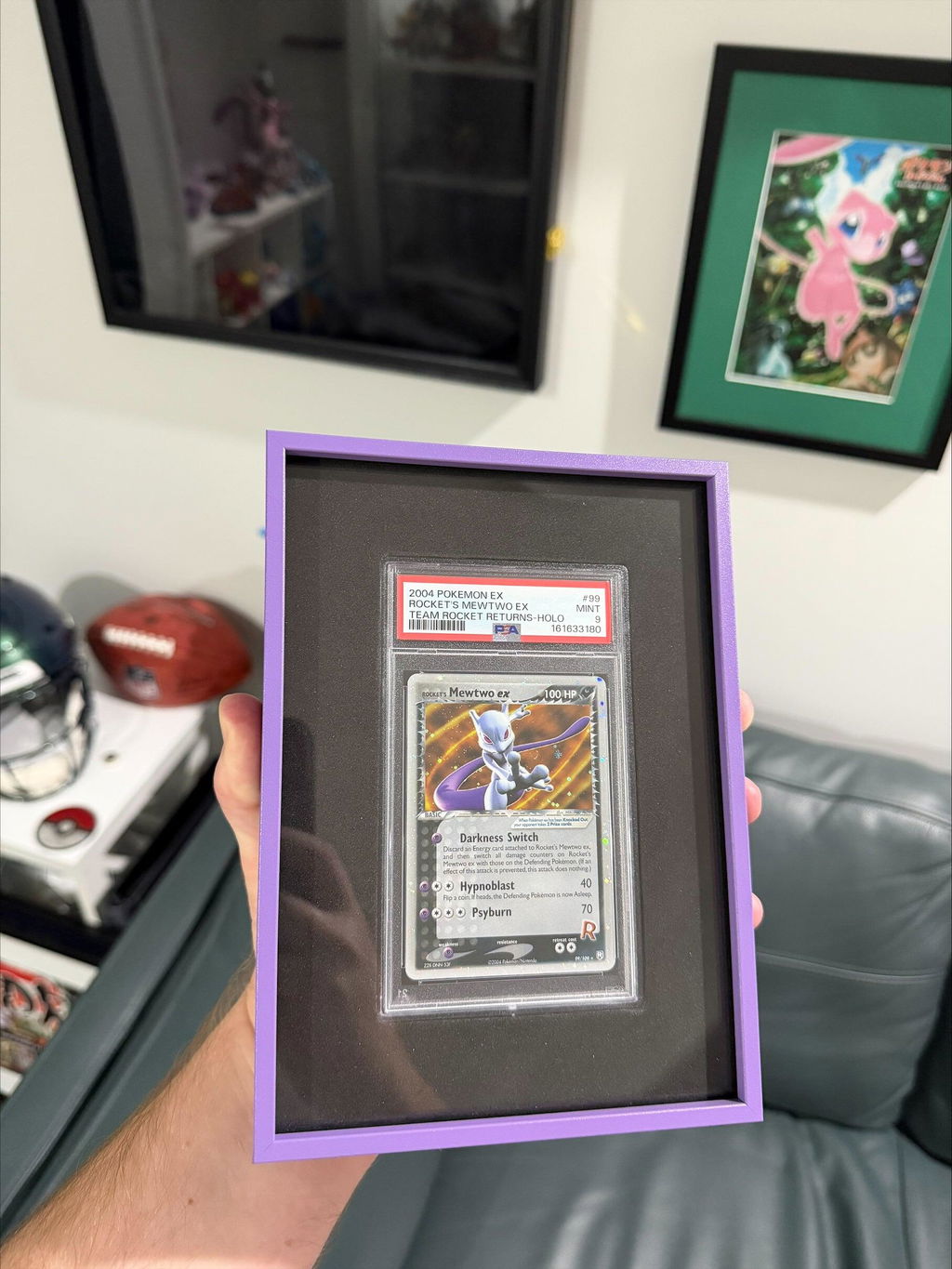
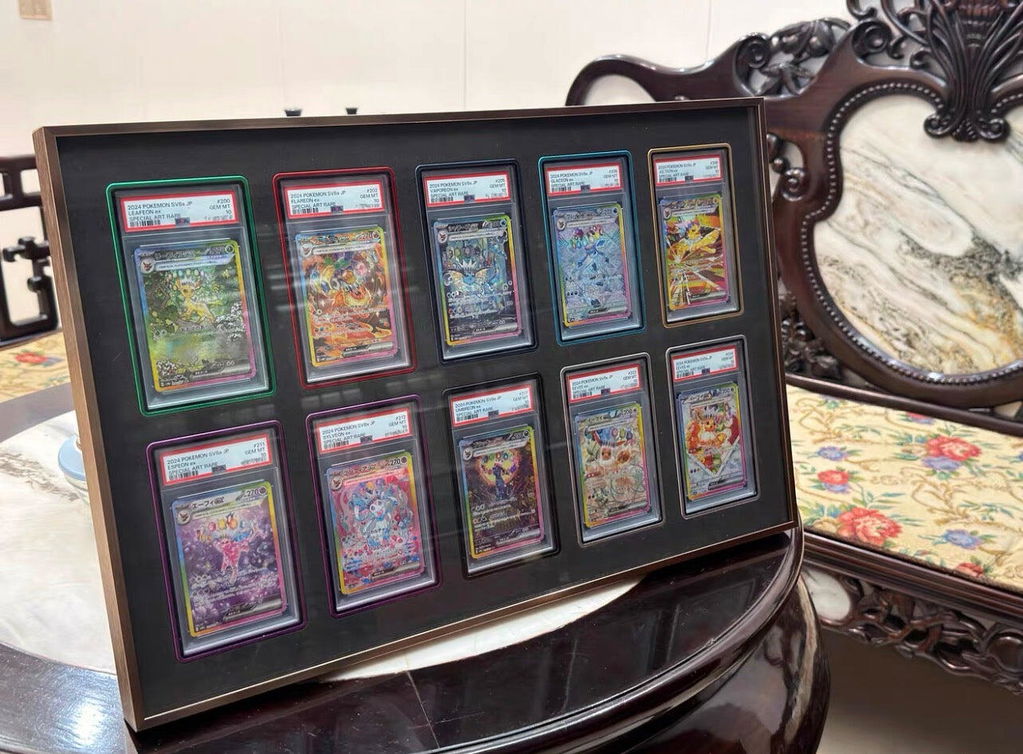
4. Wall-Mounted Graded Card Display Frames
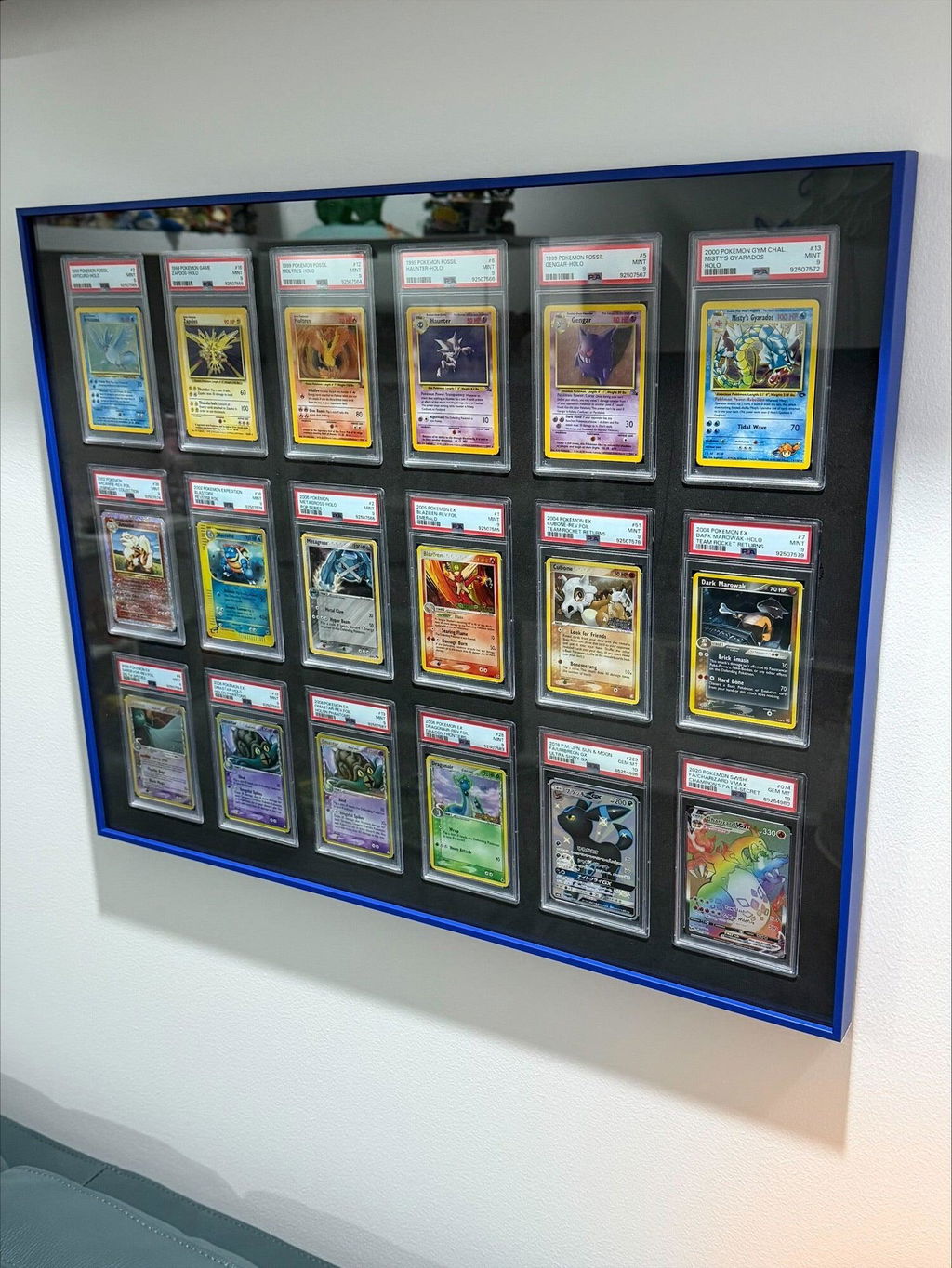
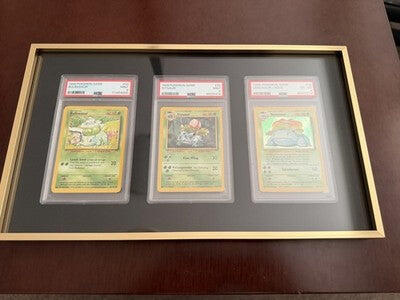
Dedicated graded card frames are useful when you want several slabs to read as one display rather than a group of separate objects.
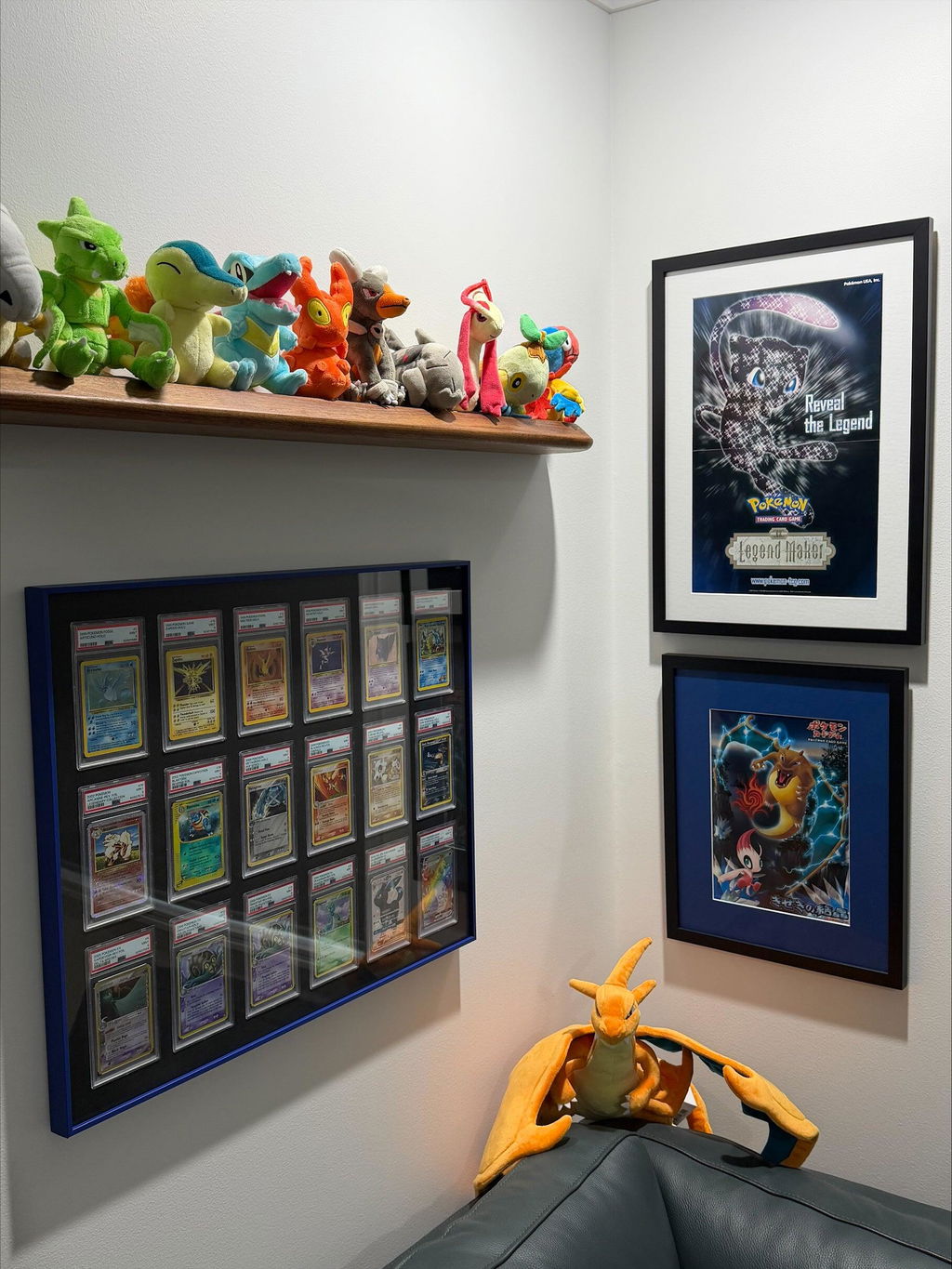
A repeated frame grid can keep the spacing consistent and make a larger collection easier to view from across the room.
This approach becomes particularly useful when displaying:
- Pokémon character collections.
- Sports player collections.
- Rookie card groups.
- Complete graded subsets.
- One grading company across a larger wall.
- High-card-count collections where individual mounts would become difficult to align.
For larger displays, frame rigidity, glazing weight and wall mounting become just as important as the visual layout.
Choosing the Right Frame Material
The larger the graded card display becomes, the more important the outer frame material is.
Timber can work well for smaller or more traditional displays and offers plenty of flexibility in profile and finish.
Aluminium is a more premium option and is particularly useful for larger slab displays because it can maintain a relatively slim profile while providing good rigidity.
That becomes valuable when the frame already contains significant weight from the slabs, backing and glazing.
The best material depends on the scale of the display rather than one option automatically being right for every collection.
Acrylic or Glass for Graded Card Displays?
Glass and acrylic can both work well, but the size of the display matters.
Glass is hard and scratch resistant, which makes it useful for smaller frames. Acrylic is lighter and more impact resistant, which is often more practical for larger slab displays.
Once a frame contains dozens of graded cards, reducing the weight of the glazing can make a noticeable difference to handling and wall mounting.
UV-resistant acrylic or specialist glazing can add another layer of protection, but graded cards should still be kept away from prolonged direct sunlight where possible.
Spacing Makes a Big Difference With Slabs
Graded cards have strong rectangular shapes and visible labels, so inconsistent spacing tends to stand out quickly.
A repeated grid works best when the gaps between slabs feel intentional and the outside margins are visually balanced.
You do not need huge gaps between the cards. The main thing is keeping the spacing consistent across the entire layout.
Think About the Grading Labels
One difference between graded cards and raw trading cards is that the label becomes part of the visual composition.
In a large display, those labels create repeated lines across the wall.
This is one reason collections using the same grading company often look particularly organised. The labels create an additional rhythm beyond the card artwork itself.
If the display contains several grading companies, it can help to group matching slabs together rather than alternating them randomly.
Good Graded Card Display Themes
A graded card wall usually feels more deliberate when the slabs have a reason to sit together.
Favourite Pokémon
A character collection can combine cards from different generations, sets and languages while still maintaining one clear theme.
Sports Players
Rookies, autographs, parallels and career highlights from one player can create a very natural graded display.
Set Highlights
Rather than grading and displaying an entire set, many collectors choose a smaller group of the strongest cards from one release.
Vintage and Modern Comparisons
Displaying older cards beside modern releases can work particularly well for long-running games such as Pokémon, MTG and Yu-Gi-Oh!.
Personal Favourites
The cards do not need to share a financial value or grade. A collection of personal favourites can work perfectly well if the frame and spacing create enough consistency around them.
Large Slab Displays Need Stronger Wall Planning
Graded slabs add weight quickly.
A small frame holding a handful of slabs is very different from a display containing several dozen.
With larger displays, consider:
- The total finished weight.
- The wall construction.
- The mounting hardware.
- Whether the frame can be safely lifted into position.
- How the display will be removed later if needed.
Mounting hardware should be chosen for the wall type and the actual finished display rather than treating the frame like a lightweight picture.
Lighting Graded Cards
Lighting can improve a slab wall considerably, but graded holders also create another reflective surface.
If the display has front glazing as well, you can end up with reflections from both the slab and the acrylic or glass.
Soft lighting from above or from an angle is usually easier to work with than strong light directly opposite the display.
This is particularly noticeable with foil Pokémon cards, chrome sports cards and other reflective finishes.
Test the lighting from the normal viewing position before installing dedicated LEDs or spotlights permanently.
Avoid Prolonged Direct Sunlight
The slab protects the physical card, but it does not make the display immune to environmental conditions.
Keep valuable graded cards away from prolonged direct sunlight where possible.
UV-resistant acrylic and specialist glazing can add another layer of protection, but room placement remains important.
If you have a choice between two walls, the one receiving less direct sunlight will generally be the easier place to build the display around.
Leave Room for the Collection to Change
Graded collections rarely stay fixed.
You might upgrade a grade, add another card from the same set, switch grading companies or decide that a different part of the collection deserves wall space.
A display that can be reopened or expanded makes those changes much easier.
For very large collections, several matching frames can also be more practical than one enormous display because individual sections can be changed independently.
Should You Make Your Own Graded Card Display?
A small DIY slab display can be relatively straightforward if you are comfortable working with frames, backing materials and wall mounting.
Larger graded displays become more involved because slab fit, frame depth, insert material, glazing, backing rigidity, total weight and mounting all need to work together.
If you are considering making your own, our guide to making a graded trading card wall display covers the materials, slab formats and layout decisions in much more detail.
Choosing Between Shelves, Stands and Frames
There is no single best way to display graded cards.
Acrylic stands make sense for one or two favourite slabs. Shelves are useful when you rotate the collection often. Individual mounts work well for smaller wall arrangements. Dedicated frames become more useful when you want several graded cards to read as one organised display.
The right option depends mainly on the number of slabs, how often you want to change them and how structured you want the finished wall to feel.
Final Thoughts
Graded cards are one of the easiest trading card formats to organise visually because the slab already gives every card a rigid and repeatable shape.
The main decisions are how many slabs you want to display, whether you are mixing grading companies, how much wall space is available and whether you prefer stands, shelves, individual mounts or a dedicated frame.
For a small collection, the simplest option may be the best. For a larger slab wall, consistent spacing, strong framing, lighter glazing and secure mounting become much more important.
The display should make the collection easier to enjoy without making the setup more complicated than it needs to be.
Continue Exploring
If you enjoyed this guide, you may also find these collector resources helpful.
📚 Collector Guides
-
The Ultimate Trading Card Display Guide: Ideas, Frames, Shelves & Display Solutions for Every Collector
Explore display ideas, wall layouts, shelving, cabinets, lighting, budgets and display solutions for every major trading card game. -
How to Make a Graded Trading Card Wall Display
Explore DIY graded card displays, slab formats, frame materials, EVA foam, acrylic, layouts and mounting considerations. -
How to Make a Trading Card Wall Display: Complete DIY Guide
Learn how to plan a DIY trading card display, including frame materials, holders, acrylic, EVA foam, layouts and wall mounting. -
Why Premium Aluminium Trading Card Display Frames Are Worth It: The Complete Collector Guide
Explore aluminium trading card display frames, their materials and why they work particularly well for larger graded and One Touch collections.
🛒 Shop Display Collections
-
Aluminium Trading Card Wall Display Frames
Premium aluminium trading card display frames available in a wide range of grid sizes, frame colours and holder formats. -
PSA, CGC & BGS Graded Slab Wall Display Frames
Purpose-built graded trading card display frames for Pokémon, MTG, Yu-Gi-Oh!, One Piece, Sports Cards, Disney Lorcana and other collections. -
One Touch Wall Display Frames
Premium aluminium wall display frames designed for One Touch magnetic trading card holders.

0 comments