


Once a trading card collection reaches a certain size, keeping everything in binders and storage boxes can start to feel a little limiting.
A trading card display wall gives you a way to keep part of the collection visible without trying to put every card you own on the wall. It might be a handful of favourite graded cards, a full Pokémon character collection, a run of sports cards from one player, or several larger frames built around different parts of the collection.
Whether you collect Pokémon, sports cards, Magic: The Gathering, Yu-Gi-Oh!, One Piece, Disney Lorcana or a mixture of different trading card games, the best display walls usually come down to three things: choosing what you actually want to display, keeping the layout organised and using a display format that suits the cards.
Why Build a Trading Card Display Wall?
The obvious reason is that you actually get to see the collection.
Binders and storage boxes are excellent for keeping large collections organised, but they are not particularly useful if there are certain cards you want to look at every day. A wall display lets you separate those cards from the wider collection and give them their own space.
Collectors might use a display wall to:
- Keep favourite trading cards visible.
- Display a particular player, Pokémon, character or set.
- Show graded cards together in a consistent layout.
- Add trading cards to a gaming room, office or collector space.
- Combine trading cards with jerseys, signed items or other memorabilia.
- Create a dedicated section for the strongest part of a larger collection.
The aim does not have to be filling an entire wall. A smaller, well-planned group of trading cards can often look better than trying to display everything at once.
Start With the Collection, Not the Wall
Before choosing frames or measuring the room, decide what the display is actually going to contain.
A wall becomes much easier to plan once there is a clear reason for the trading cards to sit together.
Favourite Trading Cards
This is the simplest approach. Pick the trading cards you genuinely like most and build the display around them rather than worrying about completing a particular set or matching values.
A mixed display can work particularly well when the frame style and spacing remain consistent, even if the cards themselves come from different games or eras.
Pokémon Collections
Pokémon displays often work well around a specific character, evolution line, generation or set. Common examples include:
- Charizard collections.
- Pikachu cards.
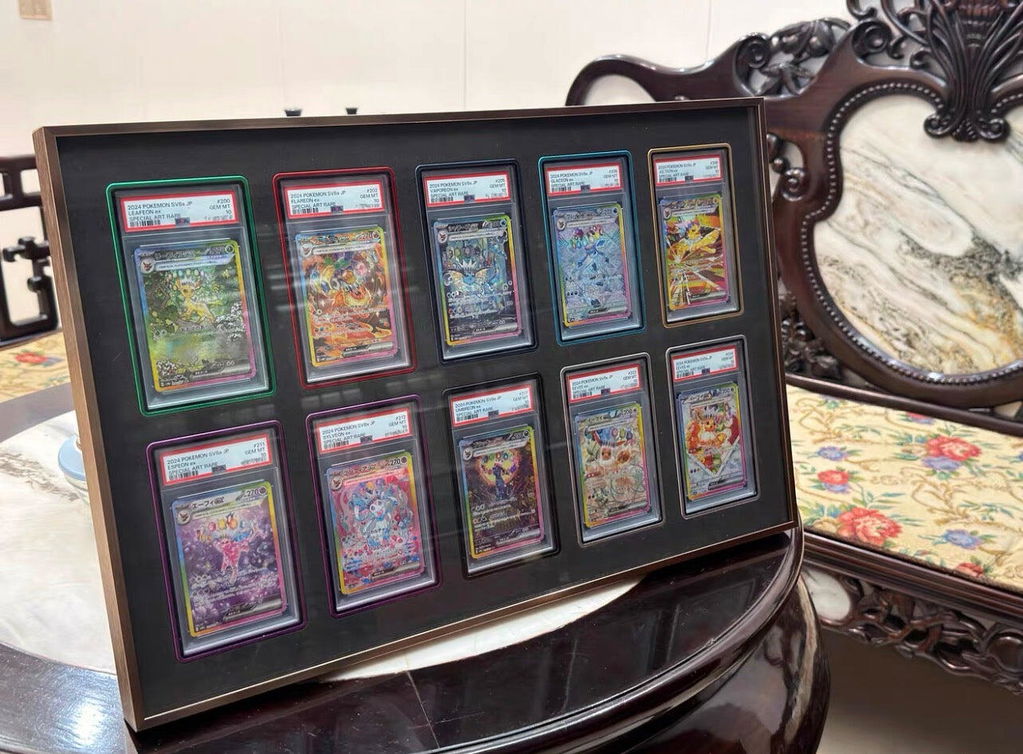
- Eeveelutions.
- Legendary Pokémon.
- Vintage and modern versions of the same Pokémon.
- Cards from one expansion or era.
Because Pokémon artwork can vary so much between cards, keeping the surrounding frame and layout relatively simple usually gives the collection enough room to stand out on its own.
Sports Trading Card Collections
Sports trading card walls can be organised around a favourite team, player, season or type of card.
Popular approaches include:
- Rookie cards.
- Player career collections.
- Favourite teams.
- Championship seasons.
- Autographs and memorabilia cards.
- Hall of Fame players.
Sports collections also work particularly well alongside framed jerseys, signed photographs or other memorabilia when the wall has enough space.
Graded Trading Card Collections
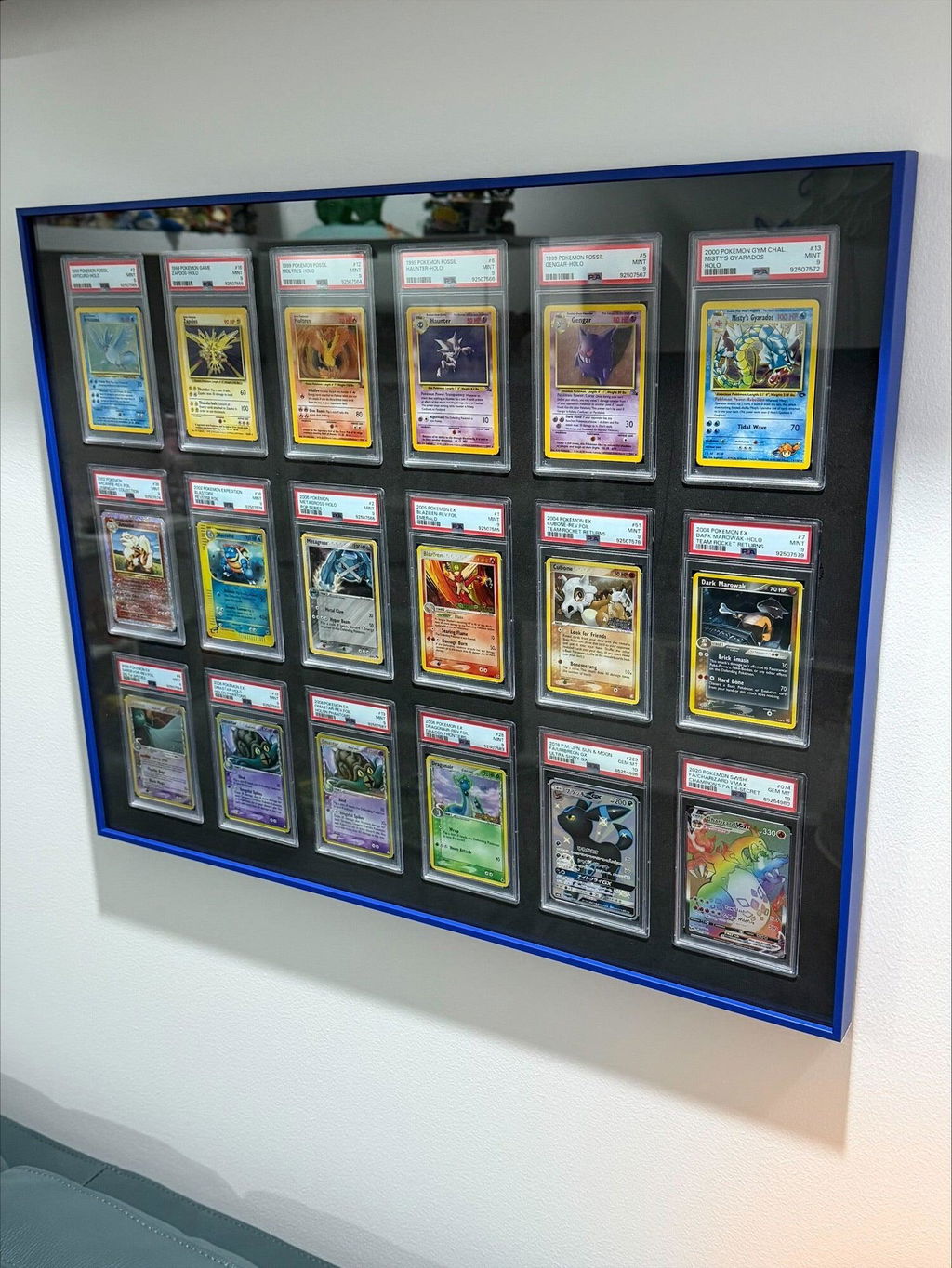
PSA, BGS, CGC and SGC slabs naturally suit grid layouts because every holder has a defined shape and the labels create an additional visual line across the display.
If most of the collection uses the same grading company, a repeated grid can look extremely clean. Mixed slab collections can also work, although the differences in holder size and label design are worth considering before choosing a display.
Choose the Right Trading Card Display Format
The holder around the trading card changes both the appearance of the wall and the type of frame or display you will need.
Raw and Sleeved Trading Cards
Raw trading cards take up very little space, which makes them useful for dense displays and larger grids.
For valuable cards, most collectors will still use a penny sleeve, perfect-fit sleeve or another protective sleeve rather than placing the card completely unprotected inside a frame.
Sleeved trading cards are also useful when the collection changes regularly because they can be removed or replaced without committing the card to a rigid holder.
Toploaders
Toploaders are inexpensive, widely available and easy to replace, which makes them practical for larger collections.
They add more structure than a sleeve while remaining much lighter and thinner than a graded slab or magnetic holder.
If you are planning a large toploader wall, keeping the holders consistent can make a noticeable difference to the finished layout.
One Touch Magnetic Holders
One Touch magnetic holders are a good option for trading cards you want to give more presence without sending them for grading.
They are commonly used for higher-end sports cards, Pokémon cards, alternate artwork, autographs, foils and other standout pieces.
One thing to remember is that magnetic holders can vary in depth, particularly with thicker sports cards and memorabilia cards, so the display needs to suit the actual holders being used.
Graded Slabs
Graded slabs are heavier and larger than raw trading cards, but they are also one of the easiest formats to organise visually.
Repeated PSA, BGS, CGC or SGC holders create a strong grid, and the slab itself already provides a rigid protective case around the card.
For larger graded collections, frame rigidity, wall mounting and overall weight become increasingly important.
Plan the Layout Before Mounting Anything
This is one of those jobs where ten minutes of planning can save a lot of frustration later.
Before drilling into the wall, work out roughly how much space the finished display will occupy and how it relates to the furniture, shelves and other items already in the room.
Things worth considering include:
- The number of trading cards you want to display now.
- Whether that number is likely to grow.
- The type of holder being used.
- Portrait and landscape cards.
- The width and height of the available wall.
- Viewing height.
- Other frames, shelving or memorabilia nearby.
For a larger wall, laying the proposed frame sizes out on the floor first can make the overall proportions much easier to judge.
Single Trading Card Displays
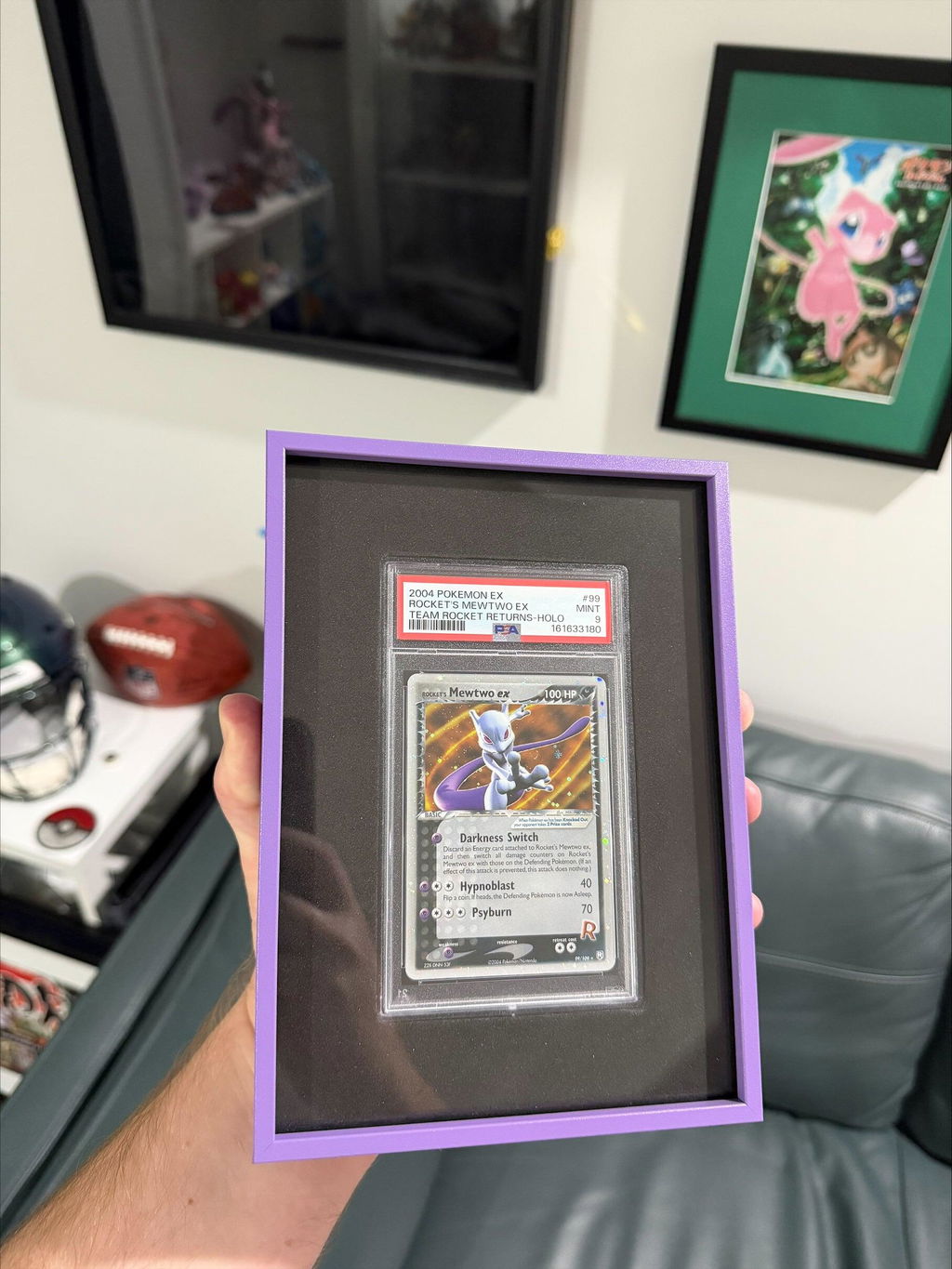
A single trading card display works best when there is one card you specifically want to separate from the rest of the collection.
That could be:
- A favourite card.
- A valuable graded card.
- An autograph.
- A major rookie card.
- A sentimental card.
- The centrepiece of a character or player collection.
Because there is only one trading card competing for attention, the surrounding frame, wall space and lighting become more noticeable. Keeping those elements simple usually works best.
Multi-Card Trading Card Displays
Multi-card displays are useful when several trading cards clearly belong together.
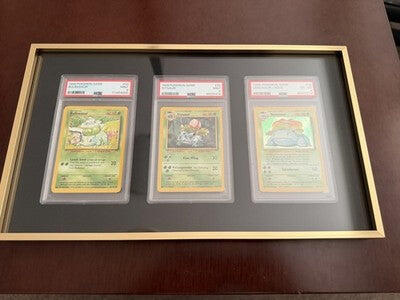
Smaller grids such as 2-card, 3-card, 4-card or 9-card displays work well for compact groups, while larger grids can accommodate full character runs, team collections, set highlights or much larger graded collections.
The exact grid size matters less than keeping the relationship between the trading cards clear. A 16-card frame containing one focused collection will generally look more deliberate than a frame filled simply because there was room available.
Building a Larger Trading Card Feature Wall
A larger wall does not necessarily need one enormous frame.
Using several displays can make the wall easier to expand and gives different parts of the collection their own space.
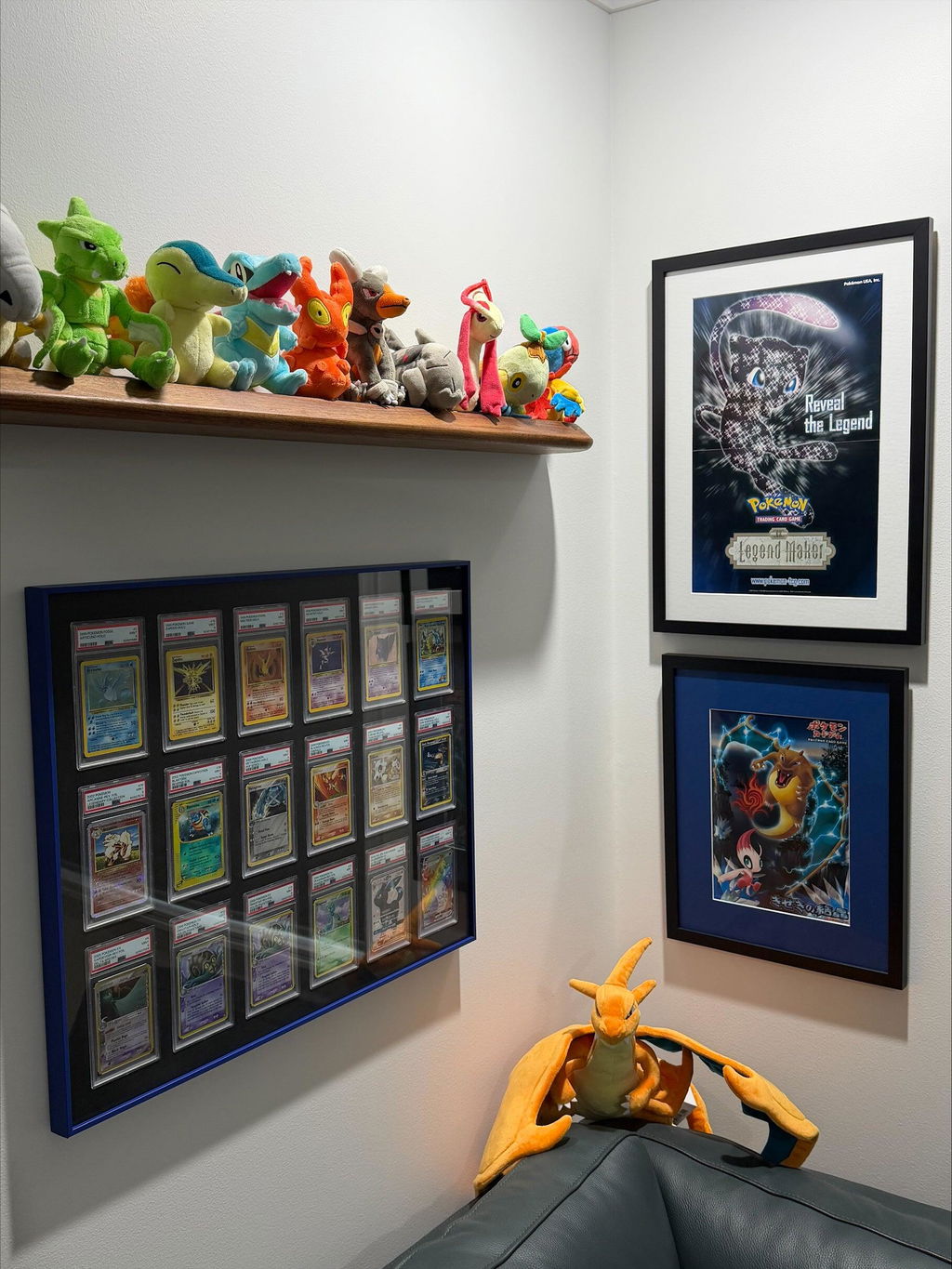
A larger collector wall might combine:
- Graded trading cards.
- Raw or sleeved trading cards.
- One Touch magnetic holders.
- Sports memorabilia.
- Signed items.
- Framed jerseys.
- Shelves or display cabinets.
The important part is giving each section enough space. A wall with several different display types can still feel organised when the outer edges, spacing and overall alignment are consistent.
Spacing Makes a Bigger Difference Than People Expect
One of the easiest ways to make a trading card wall look messy is inconsistent spacing.
This applies both inside individual frames and between separate frames on the wall.
Consistent spacing helps:
- Keep large collections readable.
- Separate different parts of the collection.
- Make repeated grids look deliberate.
- Prevent a large wall from feeling overcrowded.
You do not need huge gaps between everything. You simply want the spacing to look intentional rather than accidental.
Think About the Wall Colour
The wall itself becomes part of the display once several frames are mounted together.
Dark walls can work particularly well with silver or lighter frames, while black frames tend to blend easily into a wide range of rooms. White walls create plenty of contrast and keep colourful trading card artwork from competing with the background.
If the collection already contains a lot of colour, a neutral wall and frame combination usually gives the trading cards more room to stand out.
Lighting a Trading Card Display Wall
Lighting can improve a trading card wall considerably, but more light is not automatically better.
Strong lighting directly opposite acrylic, glass, graded slabs or magnetic holders can create reflections that make the cards harder to see.
Useful options include:
- Normal room lighting.
- Ceiling spotlights.
- Soft accent lighting.
- LED lighting positioned above or around the display.
- Integrated lighting in dedicated display furniture.
Before permanently installing additional lighting, test the display from the position where it will normally be viewed. Foil trading cards, chrome sports cards and clear plastic holders can reflect light very differently depending on the angle.
Keep Trading Cards Away From Prolonged Direct Sunlight
Room placement matters just as much as the display itself.
UV-resistant acrylic and specialist glazing can add another layer of protection, but valuable trading cards should still be kept away from prolonged direct sunlight where possible.
If you are choosing between two walls in the same room, the wall that receives less direct sunlight will generally be the easier place to build the collection around.
Allow Space for the Collection to Grow
Trading card collections rarely stay exactly the same.
You might add another graded card, complete another evolution line, find a better copy of an existing card or decide that a completely different part of the collection deserves wall space.
Leaving some flexibility in the layout can save you from rebuilding the entire wall every time the collection changes.
That might mean leaving space beside a frame, using several smaller displays instead of one fixed layout, or choosing frames that can be reopened when you want to rotate the collection.
Large Trading Card Walls Do Not Need to Be Filled Immediately
It can be tempting to fill every available section of wall as soon as you start planning the display.
There is nothing wrong with leaving empty wall space. In fact, it often makes the collection easier to look at and gives you somewhere obvious to expand later.
A trading card wall should grow with the collection rather than forcing you to buy or display cards simply to complete the layout.
Use the Display Format That Fits the Collection
There is no single correct way to build a trading card display wall.
A raw Pokémon collection may work best in a dense framed grid. A sports collection might use One Touch holders alongside a jersey. A PSA collection may suit a large aluminium slab display. Another collector might prefer several smaller frames spread across a shelving unit or office wall.
The important part is choosing a format that works with the trading cards you actually own rather than designing the room around a display style first and trying to force the collection into it afterwards.
Final Thoughts
A good trading card display wall does not need to be enormous, complicated or filled with the most expensive cards in the collection.
Choose the trading cards you actually want to see, use a holder and frame format that suits them, keep the spacing consistent and plan enough room for the collection to change over time.
Whether that ends up being a single graded card, several framed Pokémon collections, a wall of One Touch holders or a much larger mixed display, the result should make the collection easier to enjoy rather than simply moving it from one type of storage into another.
Continue Exploring
If you enjoyed this guide, you may also find these collector resources helpful.
📚 Collector Guides
-
The Ultimate Trading Card Display Guide: Ideas, Frames, Shelves & Display Solutions for Every Collector
Explore display ideas, wall layouts, shelving, cabinets, lighting, budgets and display solutions for every major trading card game. -
Why Premium Aluminium Trading Card Display Frames Are Worth It: The Complete Collector Guide
Explore aluminium trading card display frames, their construction, materials and why they work particularly well for larger graded and One Touch collections. -
How to Make a Trading Card Wall Display: Complete DIY Guide
Learn how to plan a DIY trading card display, including frame materials, acrylic, EVA foam, holders, layouts, mounting and larger wall displays.
🛒 Shop Display Collections
-
Aluminium Trading Card Wall Display Frames
Premium aluminium trading card display frames available in a wide range of grid sizes, frame colours and holder formats. -
PSA, CGC & BGS Graded Slab Wall Display Frames
Purpose-built graded trading card display frames for Pokémon, MTG, Yu-Gi-Oh!, One Piece, Sports Cards, Disney Lorcana and other collections. -
One Touch Wall Display Frames
Premium aluminium wall display frames designed for One Touch magnetic trading card holders.

0 comments