


Are Trading Cards Worth Collecting? A Beginner’s Guide to the Hobby, Costs, Value & Collecting
Trading cards can be worth collecting for many different reasons.
Some collectors build complete sets. Others focus on one character, athlete, team, trading card game, artist or era. Some collect inexpensive cards simply because they like the artwork, while others build collections around graded cards, rare releases, autographs, sealed products or valuable vintage cards.
There is no requirement for a trading card collection to be expensive, rare or financially valuable.
A collection can contain ten carefully selected cards or several thousand cards accumulated over many years.
The more useful question is not simply whether trading cards are worth collecting.
It is whether trading card collecting suits the way you want to participate in the hobby.
Before starting, it helps to consider:
- Which trading card games, sports or franchises interest you?
- Do you want to collect, play or do both?
- Are you interested in individual cards or complete sets?
- Do you prefer raw or professionally graded cards?
- How much do you want to spend?
- How much storage space do you have?
- Do you want to display the collection?
- Are you interested in modern cards, vintage cards or both?
- Will you buy packs, sealed products or individual cards?
- Are you collecting primarily for the cards themselves or also considering their potential value?
This guide explains what trading card collecting involves, why people collect cards, how much the hobby can cost, the differences between major trading card categories and what beginners should consider before starting.
It covers Pokémon, sports cards, Magic: The Gathering, Yu-Gi-Oh!, One Piece, Disney Lorcana, Dragon Ball, Digimon, Flesh and Blood, Star Wars Unlimited and many other collecting categories.
It also looks at raw and graded cards, packs and singles, complete sets, collecting on a budget, card storage, protection, display options and some of the most common mistakes new collectors make.
What Is Trading Card Collecting?
Trading card collecting is the process of building and organising a collection of cards according to criteria chosen by the collector.
That definition is deliberately broad.
There is no single objective that every collector needs to follow.
A collection might focus on:
- One trading card game.
- One Pokémon.
- One sports team.
- One athlete.
- One Yu-Gi-Oh! monster.
- One Magic: The Gathering artist.
- One One Piece character or crew.
- One card set.
- One rarity.
- One card manufacturer.
- One period or era.
- Graded cards.
- Autographs.
- Promotional cards.
- Serialized cards.
- Cards with particular artwork.
- Cards from childhood.
- Cards connected to events or tournaments.
Some collectors establish strict rules for their collections.
Others simply buy cards they like.
Both approaches are legitimate ways to participate in the hobby.
A trading card collection does not need to follow somebody else's definition of a complete collection. Setting your own collecting rules can make the hobby easier to manage and can prevent unnecessary purchases.
Why Do People Collect Trading Cards?
People collect trading cards for many different reasons, and those reasons can change over time.
A collector may initially buy cards because they play a trading card game and later become interested in artwork, graded cards or older releases.
Another person may begin with sports memorabilia before deciding to collect cards featuring particular athletes.
Understanding why you want to collect can make it much easier to decide what belongs in your collection.
Collecting Favourite Characters
Character collecting is common across Pokémon, Yu-Gi-Oh!, One Piece, Disney Lorcana, Dragon Ball, Digimon and other character-based trading card games.
Instead of attempting to complete every set, a collector might focus entirely on:
- Charizard.
- Pikachu.
- Gengar.
- Eeveelutions.
- Blue-Eyes White Dragon.
- Dark Magician.
- Monkey D. Luffy.
- Roronoa Zoro.
- Elsa.
- Stitch.
- Goku.
- Vegeta.
This can significantly narrow the number of cards the collector needs to consider.
Collecting Favourite Athletes
Sports card collectors often focus on one athlete rather than one complete card product.
A player collection may include:
- Rookie cards.
- Base cards.
- Parallels.
- Numbered cards.
- Autographs.
- Patch cards.
- Graded cards.
- Cards from championship seasons.
- Cards from different teams or stages of the athlete's career.
This approach can work across baseball, basketball, American football, soccer, Formula 1, hockey and many other sports.
Collecting Complete Sets
Set collecting provides a clearly defined objective.
The collector attempts to obtain every card within a particular release or defined checklist.
Set collecting can be useful for people who prefer a measurable finishing point rather than an open-ended collection.
However, the difficulty and cost can vary significantly depending on the size of the set and the rarity of the final cards required.
Collecting Artwork
Some collectors care more about artwork than rarity, competitive usefulness or market price.
This approach is particularly relevant to modern trading card games where alternate artwork and premium illustration treatments have become major parts of card design.
Artwork-focused collections may include:
- Pokémon Illustration Rares.
- Special Illustration Rares.
- Full-art cards.
- Magic: The Gathering showcase treatments.
- Secret Lair artwork.
- One Piece alternate-art cards.
- Disney Lorcana Enchanted cards.
- Yu-Gi-Oh! alternate artworks.
- Dragon Ball premium artwork.
- Cards by one particular artist.
Collecting for Nostalgia
Many people return to trading cards they owned, played or wanted when they were younger.
This may involve rebuilding:
- A childhood Pokémon collection.
- An early Yu-Gi-Oh! deck.
- A favourite sports card set.
- An older Magic: The Gathering collection.
- Cards featuring childhood athletes.
- Cards from a particular anime series.
In these cases, the significance of a card may have very little connection to its market value.
Collecting Graded Cards
Professional grading provides another collecting structure.
Collectors may pursue:
- PSA 10 cards.
- Complete graded sets.
- Different grades of one card.
- Vintage graded cards.
- Graded rookie cards.
- Graded promotional cards.
- Cards graded by PSA, CGC, BGS, SGC, TAG or other grading companies.
The slab itself becomes part of the collecting format because the card is authenticated, assigned a grade and encapsulated inside a rigid holder.
Collecting Cards Connected to Playing
Not every collection is separate from gameplay.
Magic, Pokémon, Yu-Gi-Oh!, One Piece, Flesh and Blood, Lorcana and other games can create collections naturally as players build and modify decks.
A player might eventually keep:
- Retired deck cards.
- Favourite commanders or leaders.
- Tournament cards.
- Promotional cards.
- Premium versions of frequently used cards.
- Cards associated with successful decks.
Collecting Rare and Unusual Cards
Some collectors focus on scarcity.
Their collections may include:
- Serialized cards.
- Short-print cards.
- Promotional releases.
- Tournament prizes.
- Autographs.
- Low-population graded cards.
- Error cards.
- Limited-edition releases.
- Rare parallels.
This can be a more expensive collecting strategy and generally requires greater knowledge of the specific card market.
Is Trading Card Collecting a Good Hobby?
Trading card collecting can be a good hobby for people who enjoy searching, organising, researching and gradually building a collection.
It is also unusually flexible.
The hobby can be approached with a small budget and limited space or expanded into a large collection containing graded cards, sealed products, memorabilia and dedicated displays.
There is also no requirement to participate in every part of the hobby.
A collector can enjoy cards without:
- Playing the associated game.
- Grading cards.
- Buying expensive cards.
- Opening booster packs.
- Completing full sets.
- Following card prices every day.
- Buying sealed products.
- Attending conventions.
Similarly, a competitive player does not need to become a serious collector.
The two activities overlap, but they are not identical.
Advantages of Trading Card Collecting
Depending on the collector, advantages can include:
- A large number of collecting themes.
- Entry points across many different budgets.
- Cards that occupy relatively little space individually.
- Active communities around major games and sports.
- The ability to buy, sell and trade duplicates.
- Regular new releases.
- Strong artwork and design variety.
- Opportunities to build complete sets.
- Options for grading and authentication.
- Many storage and display formats.
Disadvantages of Trading Card Collecting
The hobby also has practical disadvantages.
These can include:
- Costs increasing quickly without a defined budget.
- Large collections requiring significant storage.
- Rare cards becoming expensive.
- Counterfeit cards existing in some markets.
- Condition affecting card value significantly.
- Market prices changing over time.
- Booster packs providing unpredictable results.
- Set completion becoming expensive near the end.
- Cards requiring protection from handling and environmental conditions.
- Collectors accumulating cards they do not actually want.
These disadvantages do not make trading card collecting a bad hobby.
They are reasons to establish clear collecting rules and spending limits before the collection becomes large.
Do You Need to Play Trading Card Games to Collect the Cards?
No.
Many trading card collectors do not actively play the games represented by their collections.
Someone may collect Pokémon cards because they like the characters and artwork without playing the Pokémon Trading Card Game.
A Yu-Gi-Oh! collector may focus on cards from the original anime era without maintaining a competitive deck.
A Magic collector may collect particular artists or older cards without participating in tournaments.
One Piece and Disney Lorcana collectors may similarly focus on characters and artwork rather than gameplay.
Collecting Without Playing
Non-playing collectors often organise cards according to:
- Character.
- Artwork.
- Set.
- Rarity.
- Artist.
- Release date.
- Card colour.
- Grading result.
- Visual theme.
Playing Without Collecting
Players may take the opposite approach.
They may own only the cards required for:
- Competitive decks.
- Commander decks.
- Casual decks.
- Sideboards.
- Trading stock.
Cards are primarily tools for gameplay rather than objects intended for long-term collection.
Combining Playing and Collecting
Many people do both.
A player might use standard versions of cards in a deck while keeping rare, signed, alternate-art or graded versions separately as part of a collection.
This can help separate cards that need regular access from cards intended for long-term storage or display.
Is Trading Card Collecting Only for Children?
No.
Trading card collecting includes children, teenagers and adults, and different parts of the hobby appeal to different age groups.
Many major trading card properties have existed for decades.
As a result, people who first encountered Pokémon, Magic: The Gathering, Yu-Gi-Oh! and sports cards when they were younger may continue collecting or return to the hobby later.
Adult collectors may focus on:
- Vintage cards.
- Graded cards.
- Complete sets.
- High-end sports cards.
- Autographs.
- Premium artwork.
- Sealed products.
- Display collections.
- Cards connected to childhood collections.
The collecting objective is more important than the age of the collector.
Is It Too Late to Start Collecting Trading Cards?
There is no required starting date for a trading card collection.
New collectors enter established hobbies continuously, while new trading card games and sets provide additional entry points.
Starting later does mean that some older cards may be harder or more expensive to obtain.
However, a beginner does not need to collect from the first release of a game.
A collection can begin with:
- The newest available set.
- One favourite character.
- One current athlete.
- One modern card design.
- A recent Commander deck.
- A new trading card game.
- One affordable vintage card.
- A small group of graded cards.
Attempting to catch up on every historical release is usually unnecessary.
Defining a narrower starting point can make an established hobby much easier to enter.
How Much Does It Cost to Start Collecting Trading Cards?
There is no fixed minimum amount required to begin collecting trading cards.
The cost depends heavily on what is being collected.
A beginner collecting inexpensive singles can start with a relatively small amount, while someone immediately pursuing vintage graded cards, rare autographs or premium sealed products may spend considerably more.
The initial budget should account for both cards and basic protection.
Starting a Collection With a Small Budget
A small starting budget may be used for:
- A handful of inexpensive singles.
- Penny sleeves.
- Top loaders.
- A small binder.
- One deck box.
- A few booster packs.
This can be enough to determine whether the hobby remains interesting before committing more money.
Starting With a Moderate Budget
A larger initial budget can provide more options.
A collector might buy:
- Several selected singles.
- A higher-quality binder.
- One Touch magnetic holders.
- A booster box or other sealed product.
- One or two inexpensive graded cards.
- Basic card storage.
Starting With an Expensive Card
A beginner does not need to gradually work toward expensive cards if they already know exactly what they want.
However, buying high-value cards immediately requires more attention to:
- Authenticity.
- Condition.
- Seller reputation.
- Recent comparable sales.
- Card storage.
- Insurance where appropriate.
Learning the market before making large purchases can reduce avoidable mistakes.
The easiest way to control collecting costs is to define the collection before defining the budget. A narrow collection with clear rules can remain affordable even when the wider trading card market contains extremely expensive cards.
Can You Collect Trading Cards on a Budget?
Yes.
Trading card collecting does not require pursuing the most expensive cards in a set.
Many large and visually interesting collections can be built from inexpensive singles.
Collect Common and Uncommon Cards
Common cards are often overlooked because they have little market value, but they can still contain strong artwork, favourite characters and complete visual themes.
A collector interested primarily in presentation may care more about how the cards work together than their individual prices.
Choose One Character
Character collecting can reduce the number of relevant releases dramatically.
Instead of attempting to collect an entire trading card game, the collector follows only cards featuring one character.
Choose One Athlete or Team
Sports collectors can use the same approach.
Rather than buying cards from every player and season, focus on:
- One athlete.
- One team.
- One position.
- One season.
- One championship roster.
Buy Singles Instead of Chasing Cards in Packs
If the objective is obtaining a specific card, purchasing that card directly can be more predictable than repeatedly opening sealed packs hoping to find it.
Opening packs and buying singles provide different experiences and should not be treated as interchangeable purchasing strategies.
Collect Raw Cards Instead of Graded Cards
Professionally graded cards can cost more than comparable raw examples because grading adds authentication, condition assessment and encapsulation.
Collectors who do not require those features may prefer raw cards in suitable protective holders.
Avoid Completing Every Set
The final few cards in a set can sometimes account for a large proportion of the total completion cost.
There is nothing wrong with maintaining an intentionally incomplete collection if the missing cards do not justify the expense for that collector.
Use a Monthly Collecting Budget
A fixed monthly budget can help prevent spending from expanding simply because new products continue to be released.
Unused budget can also be carried forward toward a more significant card rather than spent immediately.
Should Beginners Buy Booster Packs or Individual Cards?
Booster packs and individual cards serve different purposes.
Neither is automatically the correct choice for every collector.
Why Collectors Buy Booster Packs
Booster packs provide an unpredictable selection of cards from a particular product.
They can suit collectors who:
- Enjoy opening sealed products.
- Are beginning a new set.
- Also play the trading card game.
- Want a variety of cards rather than one specific card.
- Collect commons, uncommons and rares together.
Limitations of Booster Packs
Opening packs does not guarantee that the collector will receive the particular card they want.
Repeatedly purchasing packs to obtain one specific rare card can become expensive.
Why Collectors Buy Singles
Singles allow the collector to choose the exact card being purchased.
This is useful when:
- Building a character collection.
- Completing a set.
- Buying one athlete.
- Building a specific deck.
- Collecting one artist.
- Targeting a particular rarity.
- Working within a fixed budget.
Using Both Approaches
Many collectors open a limited amount of sealed product and then purchase individual cards to fill remaining gaps.
This provides some of the variety of opening packs without requiring every missing card to be obtained randomly.
Should You Collect Raw or Graded Trading Cards?
Raw and graded cards can both form strong collections.
The better format depends on the purpose of the collection.
Advantages of Raw Cards
Raw cards can offer:
- Lower purchase prices in many cases.
- More compact storage.
- Greater choice of protective holders.
- Easy binder organisation.
- Suitability for deck building where appropriate.
- Easy transfer between top loaders and magnetic holders.
Advantages of Graded Cards
Graded cards provide:
- Third-party authentication.
- A documented condition grade.
- A rigid protective slab.
- A consistent external format within one grading company.
- Easy identification through the grading label.
- A structured collecting category based on grades.
Disadvantages of Raw Cards
Condition may be more difficult for beginners to evaluate, particularly when purchasing cards online.
Raw cards also require the collector to select suitable sleeves, holders and storage.
Disadvantages of Graded Cards
Grading adds cost and physical size.
A large graded collection requires substantially more storage or display space than the same number of raw cards.
Not every inexpensive card benefits from professional grading.
Can You Collect Both?
Yes.
A collector might keep a complete raw set in a binder while purchasing graded versions of a few favourite cards.
This can provide the space efficiency of raw collecting while allowing selected cards to become larger display pieces.
Should You Grade Your Own Trading Cards?
Professional grading can be useful, but it should not be treated as a requirement for every collectible card.
Before submitting a card, consider:
- The card's condition.
- The grading fee.
- Shipping and insurance costs.
- The reason for grading it.
- Whether authentication is important.
- Whether the card will be sold or kept.
- Whether the collector prefers raw or slabbed presentation.
Reasons to Grade a Card
A collector may choose grading for:
- Authentication.
- Condition assessment.
- Long-term encapsulation.
- A graded set.
- A favourite card.
- A valuable vintage card.
- A rookie card.
- A rare promotional release.
Reasons Not to Grade a Card
Grading may be unnecessary when:
- The card is inexpensive.
- The collector prefers binders.
- The card is used for gameplay.
- The collector prefers One Touch holders.
- The grading cost is disproportionate to the purpose of the card.
- The card will be changed or handled regularly.
Grading should support the collecting objective rather than become an automatic step applied to every card.
What Types of Trading Cards Can You Collect?
The trading card hobby includes several major categories and many smaller ones.
Choosing between them usually depends on whether the collector is most interested in characters, competitive gameplay, sports, artwork, nostalgia or particular franchises.
Trading Card Games
Major trading card games include:
- Pokémon Trading Card Game.
- Magic: The Gathering.
- Yu-Gi-Oh!
- One Piece Card Game.
- Disney Lorcana.
- Flesh and Blood.
- Digimon Card Game.
- Dragon Ball card games.
- Star Wars Unlimited.
- Cardfight!! Vanguard.
- Weiss Schwarz.
- Union Arena.
- Final Fantasy Trading Card Game.
- Sorcery: Contested Realm.
- Altered.
- Grand Archive.
- KeyForge.
Sports Cards
Sports card collecting includes:
- Baseball.
- Basketball.
- American football.
- Soccer and football.
- Hockey.
- Formula 1.
- Motorsport.
- UFC and combat sports.
- Wrestling.
- Golf.
- Tennis.
- Cricket.
Entertainment Trading Cards
Collectors can also pursue cards based on:
- Marvel.
- DC.
- Star Wars.
- Movies.
- Television series.
- Anime.
- Video games.
- Garbage Pail Kids.
- Historic entertainment releases.
The boundaries between trading card games, sports cards and entertainment cards can overlap, but the basic collecting principles remain similar.
Are Pokémon Cards Worth Collecting?
Pokémon provides one of the broadest possible collecting structures because the cards can be organised by Pokémon, generation, set, rarity, artwork, language, era or grading result.
A beginner does not need to attempt to collect every Pokémon card.
More manageable approaches include:
- One favourite Pokémon.
- One evolution line.
- Eeveelutions.
- Starter Pokémon.
- One generation.
- One set.
- Illustration Rares.
- Full-art cards.
- Vintage cards.
- Japanese cards.
- Promotional cards.
- Graded cards.
Why Pokémon Can Suit Beginners
There are many ways to participate without needing to understand competitive gameplay.
The characters are also easy to use as boundaries for a collection.
Someone who likes Gengar, for example, can build a Gengar collection without needing to complete every set containing a Gengar card.
Potential Challenges
Some popular Pokémon and rare card treatments can become expensive.
The large number of releases can also make an undefined collection difficult to manage.
Choosing a specific theme early can make Pokémon collecting considerably easier.
Are Sports Cards Worth Collecting?
Sports cards provide a different collecting structure because real athletes, teams, seasons and sporting events create natural categories.
A collector might focus on:
- One athlete.
- One team.
- Rookie cards.
- Autographs.
- Patch cards.
- Numbered parallels.
- One season.
- Championship teams.
- Hall of Fame players.
- Vintage cards.
- Graded cards.
Why Sports Cards Can Suit Beginners
Existing interest in a sport can immediately provide a collecting direction.
A basketball fan who already follows one team does not need to research an entirely new franchise before choosing what to collect.
Potential Challenges
Sports card products can contain many parallels, variations, manufacturers and card thicknesses.
High-end rookie cards, autographs and rare parallels can also become expensive.
A beginner may find it easier to start with one athlete, team or card type rather than attempting to understand the complete market immediately.
Is Magic: The Gathering Worth Collecting?
Magic: The Gathering can appeal to both players and collectors.
Its long history creates collecting opportunities around:
- Sets.
- Artists.
- Commanders.
- Colour identities.
- Reserved List cards.
- Foils.
- Secret Lair releases.
- Showcase treatments.
- Promotional cards.
- Older formats and eras.
Why Magic Can Suit Beginners
A beginner can start with a single Commander deck or favourite colour combination and allow the collection to develop alongside gameplay.
Potential Challenges
Magic has an extensive history and an enormous card pool.
Attempting to understand every set, format and collectible treatment before beginning is unnecessary.
Starting with one format, deck, artist or set provides a much clearer entry point.
Is Yu-Gi-Oh! Worth Collecting?
Yu-Gi-Oh! offers strong character, monster and anime-based collecting themes.
Popular collection structures include:
- Blue-Eyes White Dragon.
- Dark Magician.
- Dark Magician Girl.
- Red-Eyes Black Dragon.
- Exodia.
- Egyptian God Cards.
- Elemental HERO cards.
- Cyber Dragon.
- Ghost Rares.
- Ultimate Rares.
- Vintage anime-era cards.
- Graded cards.
Why Yu-Gi-Oh! Can Suit Beginners
Collectors familiar with the anime can choose a character or monster immediately without needing to collect competitively useful cards.
Potential Challenges
Yu-Gi-Oh! contains many printings and reprints of popular cards.
Collectors interested in specific older editions should learn how set codes, rarities and editions differ before making expensive purchases.
Is One Piece Card Game Worth Collecting?
One Piece Card Game provides character, crew, leader, colour and artwork-based collecting options.
Collectors may focus on:
- Monkey D. Luffy.
- Roronoa Zoro.
- Nami.
- Sanji.
- Shanks.
- Portgas D. Ace.
- Trafalgar Law.
- Boa Hancock.
- Straw Hat Pirates.
- Manga rares.
- Alternate-art cards.
- Leader cards.
Why One Piece Can Suit Beginners
Existing knowledge of the manga or anime can provide an immediate collecting theme.
A collector can choose one character or crew rather than attempting to complete every release.
Potential Challenges
Premium alternate-art and manga cards can command much higher prices than standard cards.
Beginners should not assume the most expensive rarity is required to build a strong One Piece collection.
Is Disney Lorcana Worth Collecting?
Disney Lorcana provides a clear entry point for collectors interested in Disney characters and artwork.
Collections can focus on:
- One character.
- One Disney film.
- Princesses.
- Villains.
- Ink colours.
- Enchanted cards.
- Promotional cards.
- Complete sets.
A Disney fan can therefore approach Lorcana as a character collection without needing to participate heavily in competitive play.
Are Smaller Trading Card Games Worth Collecting?
A trading card game does not need to be one of the largest global franchises to support an interesting collection.
Games such as Flesh and Blood, Digimon, Star Wars Unlimited, Weiss Schwarz, Union Arena, Grand Archive, Sorcery and others can provide narrower collecting communities and distinctive artwork.
However, collectors should consider the difference between collecting something because they genuinely want the cards and buying cards solely because they expect the game to become more popular.
The long-term popularity and secondary market of newer games can be difficult to predict.
A collection built around cards the collector actually wants remains useful to that collector regardless of short-term market changes.
Should You Collect Trading Cards for Value?
Some collectors consider financial value when deciding which cards to buy.
That is a legitimate part of the hobby, but it is important to separate collecting from guaranteed financial return.
Trading card prices can move substantially over time.
A card may increase in value because demand rises, supply remains limited or the player, character, set or franchise becomes more popular.
The opposite can also happen.
Prices can decline because:
- Demand falls.
- More copies enter the market.
- A card is reprinted.
- A player declines in popularity or performance.
- A new release takes attention away from an older card.
- Collectors change which rarities or card treatments they prefer.
- Large numbers of graded copies enter circulation.
- Overall hobby activity decreases.
For that reason, a high market price today should not be treated as proof of future value.
Collecting for Value vs Collecting Because You Like the Cards
These two approaches can overlap.
A collector may choose cards they genuinely want while still considering:
- Purchase price.
- Condition.
- Scarcity.
- Recent sales.
- Grading population.
- Long-term character or player popularity.
- Historical importance.
The difference is that the collection does not depend entirely on future resale value.
Scarcity Does Not Automatically Create Value
A card can be extremely scarce and still have relatively little market demand.
Another card may exist in much larger numbers but attract significantly more buyers.
Collectors should therefore consider both supply and demand rather than rarity alone.
Popularity Does Not Automatically Mean Scarcity
Popular cards may have large print runs but remain valuable because many collectors want them.
Character demand, player popularity, artwork and historical significance can all affect price independently of absolute supply.
Condition Matters
Two copies of the same card can have very different market prices because of condition.
Important factors can include:
- Surface wear.
- Scratches.
- Corner wear.
- Edge wear.
- Creases.
- Centering.
- Print defects.
- Staining.
This becomes particularly important for older raw cards.
Recent Sales Matter More Than Asking Prices
Active listings can be priced at almost any amount.
A seller asking a particular price does not prove that buyers are paying that amount.
When researching value, compare recent completed sales for the same:
- Card.
- Set.
- Printing.
- Language.
- Parallel.
- Condition.
- Grade where applicable.
A collectible can have market value without being a predictable investment. Treat price history as information rather than a guarantee about what the card will be worth later.
Are Trading Cards a Good Investment?
Trading cards can rise and fall in value, but they behave differently from traditional financial assets.
An investment-focused buyer needs to consider more than the headline market price of the card.
Potential costs can include:
- Marketplace fees.
- Shipping.
- Insurance.
- Grading fees.
- Authentication.
- Storage.
- Import charges.
- Seller fees when the card is eventually sold.
Trading Cards Are Not Automatically Liquid
A card being estimated at a particular value does not mean it can be sold immediately at that price.
The seller still needs to find a buyer.
The actual amount received may depend on:
- Current demand.
- Condition.
- Grading company.
- The marketplace being used.
- Transaction fees.
- Shipping costs.
- The country where the card is being sold.
Market Trends Can Change
Collecting categories move in and out of stronger periods of attention.
A particular player, franchise, card treatment or set can receive significant attention for a period before demand changes.
This makes short-term price movements difficult to predict reliably.
Modern Cards Can Carry Different Risks From Vintage Cards
Modern cards may have:
- Large print runs.
- Many parallel versions.
- New products entering the market regularly.
- Prices affected by release hype.
Vintage cards may have:
- Lower surviving populations.
- More condition variation.
- Greater authentication concerns.
- More established historical demand.
Neither category is automatically safer or more valuable.
Collecting and Investing Can Be Separated
A collector can maintain a personal collection while treating only a small number of purchases as value-sensitive decisions.
For example:
- Most cards may be purchased because they fit the collection.
- More expensive cards may receive additional price research.
- High-value purchases may require authentication or grading checks.
This avoids forcing every inexpensive card into an investment framework.
Is Pokémon Card Collecting a Good Investment?
Pokémon cards can experience substantial changes in market price, particularly across vintage cards, promotional releases, rare modern cards and high-grade examples.
However, there is no guarantee that a particular Pokémon card will appreciate.
Factors that may influence demand include:
- Pokémon popularity.
- Artwork.
- Set significance.
- Vintage status.
- Rarity.
- Language.
- Condition.
- Grade.
- Promotional history.
Popular Pokémon Are Not Automatically the Best Purchases
Characters such as Charizard, Pikachu, Gengar and Eeveelutions often attract substantial collector attention.
That popularity can also mean buyers face strong competition and higher entry prices.
Vintage Pokémon Can Be Condition Sensitive
Older cards may have significant wear even when they appear acceptable in photographs.
Condition should be evaluated carefully before assuming that an older card belongs in the same price range as a high-condition example.
Modern Pokémon Can Change Quickly After Release
New chase cards may receive significant attention immediately after release.
As more products are opened and more copies become available, prices can change.
Collectors interested primarily in ownership rather than immediate release hype may choose to observe the market before purchasing.
Are Sports Cards a Good Investment?
Sports card prices can be influenced by both hobby demand and real-world sporting events.
A player's performance, injuries, team changes, championships and public profile can affect collector interest.
This introduces an additional variable that does not exist in exactly the same way across fictional trading card games.
Rookie Cards
Rookie cards are one of the most commonly followed sports categories.
However, not every rookie becomes historically important or maintains collector demand.
Autographs
Autographs can create additional scarcity and collector interest.
Buyers should still distinguish between:
- Manufacturer-certified autographs.
- On-card autographs.
- Sticker autographs.
- Third-party authenticated signatures.
- Unverified signatures.
Numbered Cards
A low serial number establishes the number of copies produced for that particular parallel.
It does not automatically establish demand.
A /10 card of a low-demand player can remain less valuable than a more common card featuring a major athlete.
Career Risk
Sports card collectors should remember that athlete demand can change because of:
- Performance.
- Injury.
- Retirement.
- Team changes.
- Public perception.
- Long-term career achievements.
Should You Collect Trading Cards for Fun or Value?
The two motivations do not need to be mutually exclusive.
A collector can care about both the collection itself and the amount being spent.
A practical approach is to separate purchases into different categories.
Personal Collection Cards
These are cards the collector wants regardless of short-term resale value.
Examples might include:
- Favourite characters.
- Favourite athletes.
- Artwork.
- Nostalgia cards.
- Cards connected to important events.
High-Value Purchases
More expensive cards may justify additional research before purchase.
This can include checking:
- Recent sales.
- Condition.
- Population reports where relevant.
- Authenticity.
- Comparable cards.
Cards Intended for Trading or Resale
Some collectors maintain duplicates or other cards primarily for trading.
Keeping these separate from the main personal collection can make inventory and buying decisions easier.
Should You Collect Complete Sets or Individual Cards?
This is one of the most important choices when defining a collection.
Complete Set Collecting
Set collectors attempt to complete a defined checklist.
Advantages include:
- A clear objective.
- Easy organisation.
- A natural completion point.
- Every missing card has a known place.
Potential disadvantages include:
- Some cards may be much more expensive than others.
- The collector may need to buy cards they do not particularly like.
- Large sets require significant storage.
- Master sets can include many variations.
Individual Card Collecting
Individual-card collectors choose cards based on personal criteria rather than one complete checklist.
This may include:
- Favourite characters.
- Favourite players.
- Artwork.
- Rarity.
- Historical significance.
- Grading.
- Specific visual themes.
Which Approach Is Better for Beginners?
A small defined set can provide an easy checklist.
However, individual-card collecting offers more control over cost because the collector can skip cards they do not want.
The better approach depends on whether completion itself is part of the appeal.
Should You Collect One Character or an Entire Trading Card Game?
Collecting an entire trading card game is usually too broad to function as one practical collecting goal.
Major games can contain thousands of cards across many years.
A narrower theme is often more manageable.
Character Collections
Examples include:
- Charizard.
- Pikachu.
- Gengar.
- Blue-Eyes White Dragon.
- Dark Magician.
- Luffy.
- Zoro.
- Goku.
- Elsa.
Character Group Collections
A broader alternative is a connected group.
Examples include:
- Eeveelutions.
- Starter Pokémon.
- Legendary Pokémon.
- Straw Hat Pirates.
- Egyptian God Cards.
- Dark Magician-related cards.
- Disney villains.
Game-Wide Collections
If the collector wants broader coverage, it can still be limited by another rule.
For example:
- One favourite card from every Pokémon set.
- One MTG card from every expansion.
- One Yu-Gi-Oh! monster from every anime era.
- One One Piece Leader card from every set.
This creates a manageable interpretation of collecting the wider game.
Should You Collect One Sports Player or an Entire Team?
Player and team collecting create different scales of sports card collections.
One-Player Collection
This can include:
- Rookie cards.
- Base cards.
- Parallels.
- Autographs.
- Memorabilia cards.
- Graded cards.
- Cards from important seasons.
One-Team Collection
A team collection can span:
- Current players.
- Historic players.
- Championship seasons.
- Hall of Fame players.
- Rookies.
- Autographs.
Which Is Easier?
A one-player collection is generally narrower.
A team collection can expand indefinitely as new players and seasons are added.
Collectors who want a defined project may prefer one player or one particular team era.
Should You Collect Vintage or Modern Trading Cards?
Vintage and modern cards can both support large collections, but they create different buying experiences.
Advantages of Vintage Cards
Vintage cards may offer:
- Historical significance.
- Older artwork.
- Nostalgia.
- Lower surviving populations for some releases.
- Connections to earlier periods of a game or sport.
Challenges of Vintage Cards
Collectors may encounter:
- Condition variation.
- Counterfeits.
- Altered cards.
- Higher prices for strong-condition examples.
- Limited availability.
Advantages of Modern Cards
Modern cards may provide:
- Easier product availability.
- Current players and characters.
- Contemporary artwork.
- New rarity treatments.
- Regular releases.
- Greater access to sealed products.
Challenges of Modern Cards
Modern collectors may face:
- Large numbers of parallel versions.
- Frequent releases.
- Release hype.
- Changing card values.
- Difficulty deciding which products matter to the collection.
Can You Collect Both?
Yes.
A character or player collection can naturally show the subject across several different periods.
A mixed vintage-and-modern collection can also make changes in card design and production easier to see.
Should You Collect English or Japanese Trading Cards?
Several trading card games are released in multiple languages.
Pokémon is one of the clearest examples of collectors deliberately choosing between English and Japanese cards.
Reasons to Collect English Cards
Collectors may prefer English cards because:
- They can read the card text.
- Local availability may be better.
- Existing cards are already English.
- They prefer English set structures.
Reasons to Collect Japanese Cards
Japanese cards may appeal because of:
- Japanese-exclusive promotional releases.
- Different set structures.
- Original-language presentation.
- Different product releases.
- Preference for Japanese card design.
Collecting Multiple Languages
A collection can deliberately include several languages.
Examples include:
- English and Japanese versions of the same Pokémon.
- One character across regional releases.
- Promotional cards from different countries.
The language can itself become part of the collecting theme.
Should You Collect Sealed Products or Individual Cards?
Sealed collecting and individual card collecting require different amounts of space and provide different experiences.
Individual Card Collecting
Individual cards are easier to:
- Organise in binders.
- Protect in rigid holders.
- Display in small spaces.
- Collect by character or player.
- Buy individually.
Sealed Product Collecting
Sealed collections may contain:
- Booster packs.
- Booster boxes.
- Elite Trainer Boxes.
- Collector tins.
- Starter decks.
- Structure decks.
- Premium collection boxes.
- Special edition products.
Advantages of Sealed Collecting
Collectors may enjoy:
- Original packaging.
- Complete product presentation.
- Displaying boxes alongside cards.
- Following complete product eras.
Disadvantages of Sealed Collecting
Sealed products generally require much more physical space.
Large collections may require:
- Dedicated shelving.
- Acrylic display cases.
- Storage tubs or cabinets.
- Protection from crushed packaging.
Can You Collect Both?
Yes.
A collector might keep one sealed box from a favourite set while collecting individual cards from the same release.
Should You Collect Graded Cards or Use One Touch Holders?
Graded slabs and One Touch magnetic holders both provide rigid presentation formats, but they serve different purposes.
Graded Slabs
Professional grading provides:
- Authentication.
- Condition grading.
- Permanent encapsulation.
- A grading label.
One Touch Magnetic Holders
One Touch holders allow the collector to encapsulate raw cards in a rigid holder without submitting them for professional grading.
Advantages can include:
- Cards can be changed.
- No grading submission is required.
- The artwork remains visually prominent.
- Multiple cards can use matching external holders.
Which Is Better?
Choose grading when authentication and professional condition assessment matter.
Choose a One Touch holder when the collector wants a premium removable holder without grading the card.
Many collections use both.
How Important Is Card Condition?
Condition affects both presentation and market value.
The importance of condition depends on the collecting objective.
Condition for Personal Collections
A collector may accept visible wear if the card is inexpensive, difficult to obtain or personally important.
Condition for High-Value Cards
More expensive cards require greater attention because small condition differences can create large price differences.
Common Condition Problems
These include:
- Edge whitening.
- Rounded corners.
- Surface scratching.
- Creases.
- Dents.
- Print lines.
- Staining.
- Fading.
- Centering issues.
Near Mint Does Not Mean Perfect
Condition terminology can vary between sellers and marketplaces.
Collectors should inspect photographs rather than relying only on a written condition label.
How Important Is Rarity?
Rarity can influence collectability, but it is only one factor.
A card may be technically rare while attracting little demand.
Another card may be relatively common but highly desirable because of the player, character or artwork.
Types of Rarity
Depending on the card category, rarity may come from:
- Printed rarity classifications.
- Serial numbering.
- Promotional distribution.
- Limited event releases.
- Short prints.
- Low grading populations.
- Regional availability.
Do Not Buy Based on the Word Rare Alone
Some card products use rarity names as part of their internal classification.
The presence of the word “Rare” does not automatically mean the card has a high market value.
Collectors should research the specific card rather than relying only on the printed rarity label.
How Important Is Grading Population?
Population reports show how many examples of a card have been graded by a particular grading company at various grades.
This can provide useful information, but it should not be interpreted in isolation.
A Low Population Does Not Automatically Mean a Card Is Valuable
There may be few graded copies because:
- The card is genuinely scarce.
- Few collectors have submitted it.
- The card has low market demand.
- The card is relatively new.
A High Population Does Not Automatically Make a Card Uncollectible
Popular cards may have large graded populations because many people want them graded.
Strong demand can still support substantial collector interest.
How to Research a Trading Card Before Buying
The amount of research required should generally increase with the amount being spent.
Identify the Exact Card
Confirm:
- Card name.
- Set.
- Card number.
- Year.
- Language.
- Rarity.
- Parallel.
- Edition.
- Condition.
- Grade if applicable.
Check Recent Completed Sales
Compare the closest possible matches rather than cards that only look similar.
A Japanese card, English card, raw card and PSA 10 can all represent the same artwork while having very different prices.
Check the Seller
Review:
- Seller history.
- Feedback.
- Photographs.
- Description.
- Return policy.
- Shipping method.
Check Whether the Photograph Shows the Actual Card
Stock photographs may not reveal the condition of the exact card being purchased.
This matters more as condition and value increase.
Compare Several Listings
One listing does not establish the market.
Comparing several sellers can reveal differences in:
- Condition.
- Shipping.
- Grading.
- Card version.
- Seller reputation.
How to Avoid Fake Trading Cards
Counterfeit cards exist across several major collecting categories.
Expensive cards deserve greater scrutiny.
Compare With Known Genuine Examples
Look at:
- Fonts.
- Card dimensions.
- Colours.
- Foil patterns.
- Card backs.
- Set symbols.
- Copyright information.
- Print quality.
Be Cautious With Prices Far Below the Market
A very low price does not prove that a card is fake, but it should trigger additional checking.
Use Reputable Sellers for Expensive Cards
Established sellers and specialist card stores can provide additional transaction history and accountability.
Verify Graded Cards
For expensive slabs, collectors can verify certification details with the grading company and compare the slab construction with known genuine examples.
A grading label should not be accepted blindly simply because it appears in a plastic holder.
Common Beginner Trading Card Buying Mistakes
Many collecting mistakes happen before the collector has defined what they actually want to collect.
Buying Everything That Looks Interesting
Without a collecting rule, almost every new release can appear relevant.
This can quickly create an unfocused collection.
Opening Packs to Chase One Specific Card
Packs provide random contents.
If the goal is one particular card, repeatedly opening sealed product can become considerably more expensive than buying the card directly.
Buying Based Only on Hype
Online attention can make one card or set appear essential.
The card may still have no connection to the collector's actual goals.
Ignoring Condition
Price comparisons are not meaningful if the cards being compared have significantly different condition.
Assuming Every Graded Card Is Valuable
Grading does not create demand for the underlying card.
Assuming Every Vintage Card Is Valuable
Age alone does not determine market value.
Ignoring Shipping and Fees
The total acquisition cost may include:
- Shipping.
- Taxes.
- Marketplace fees.
- Import charges.
- Grading costs.
Buying Too Many Low-Priority Cards
A collection can become filled with inexpensive cards that were never actually important to the collector.
A wishlist can help distinguish between:
- Priority cards.
- Future purchases.
- Interesting cards that do not need to be owned.
Failing to Check the Exact Printing
Many popular cards have multiple versions that look similar.
Always confirm the set, card number and rarity.
Assuming More Cards Means a Better Collection
A smaller collection with a clear structure can be easier to understand, store and display than thousands of unrelated cards.
How to Know if Trading Card Collecting Is Right for You
Trading card collecting can suit many different personalities, but the hobby is not appealing for exactly the same reasons to everyone.
Before spending heavily, it can be useful to understand which parts of the hobby actually interest you.
You May Enjoy Trading Card Collecting If You Like Research
Collectors often spend time comparing:
- Sets.
- Card numbers.
- Rarities.
- Artists.
- Players.
- Characters.
- Printings.
- Grades.
- Recent sales.
- Collection checklists.
If researching small differences between cards is enjoyable, the hobby provides almost unlimited depth.
You May Enjoy Trading Card Collecting If You Like Organisation
Collections naturally create systems.
Cards can be organised by:
- Set.
- Character.
- Player.
- Team.
- Year.
- Rarity.
- Grade.
- Artist.
- Colour.
- Value.
Collectors who enjoy sorting, cataloguing and gradually filling gaps may find this part of the hobby particularly satisfying.
You May Enjoy Trading Card Collecting If You Like Long-Term Projects
Some collections take months or years to build.
A character collection can continue as new cards are released.
A sports player collection can follow an entire career.
A complete set may require gradually finding the final missing cards.
This makes trading card collecting suitable for people who prefer ongoing projects rather than hobbies with a fixed short-term endpoint.
You May Enjoy Trading Card Collecting If You Like Visual Collections
Cards combine artwork, design, photography, statistics, foil treatments and printed history within a compact format.
Collectors interested in presentation can build displays around:
- Matching artwork.
- Colours.
- Characters.
- Players.
- Grading slabs.
- Card eras.
- Complete visual sets.
You May Enjoy Trading Card Collecting If You Already Follow a Franchise or Sport
Existing interests can make the first collecting decisions much easier.
A Pokémon fan already knows which characters they like.
A basketball fan may already have favourite players or teams.
A One Piece fan may immediately prefer a particular crew or character.
This can reduce the amount of experimentation required when starting.
When Trading Card Collecting May Not Suit You
Trading cards are not automatically the right hobby for everyone.
Some aspects of the hobby can become frustrating if they conflict with the way the collector prefers to spend their time or money.
If You Dislike Repetition
Set completion and pack opening can produce many duplicates.
Collectors who strongly dislike sorting repeated cards may prefer highly selective single-card collecting instead.
If You Find Unpredictable Spending Difficult to Control
Sealed product releases and chase-card hunting can encourage repeated purchases.
A fixed singles-only strategy may be more appropriate for someone who wants predictable costs.
If You Have Very Limited Storage Space
Small raw-card collections are compact, but large slab and sealed-product collections can occupy substantial space.
If You Only Want Guaranteed Financial Returns
Trading cards do not provide guaranteed appreciation.
If the only objective is predictable financial return, a collectible market may not suit that objective.
If You Feel Required to Own Every Release
Major trading card games release new products frequently.
Trying to purchase every release can turn a focused collection into a constant buying cycle.
The hobby becomes much easier to manage when buying is optional rather than automatic. Missing a release does not make a collection incomplete unless the collector has deliberately defined it that way.
Different Types of Trading Card Collectors
Collectors often combine several styles, but recognising the main approaches can help a beginner decide how they want to participate.
The Set Collector
The set collector prefers defined checklists and completion goals.
They may collect:
- One standard set.
- A master set.
- One set from every year.
- Several connected expansions.
The Character Collector
The character collector follows one or several favourite characters across many sets and years.
This is common across Pokémon, Yu-Gi-Oh!, One Piece, Lorcana, Dragon Ball and anime-related cards.
The Player Collector
The player collector follows one athlete across different seasons, teams and card products.
The Team Collector
The team collector builds around a sports franchise rather than one athlete.
The Artwork Collector
Artwork collectors choose cards primarily according to illustration and visual design.
The Artist Collector
The artist collector follows cards credited to a particular illustrator.
The Vintage Collector
Vintage collectors focus on earlier periods of a hobby.
The Modern Collector
Modern collectors follow current releases, players, characters and contemporary card treatments.
The Graded Card Collector
Graded collectors may focus on:
- One grading company.
- One grade.
- Graded sets.
- Vintage slabs.
- Rookie cards.
- Character collections.
The Sealed Collector
Sealed collectors preserve unopened products such as packs, boxes, tins and special collections.
The Rarity Collector
Rarity collectors may pursue:
- Illustration Rares.
- Ghost Rares.
- Manga Rares.
- Enchanted cards.
- Serialized sports cards.
- Cold Foils.
The Display Collector
Some collectors deliberately build around how the cards will look together.
The collection may be selected according to:
- Colour.
- Card format.
- Character group.
- Grid size.
- Slab type.
- Artwork balance.
The General Collector
Not every collection needs a strict category.
A general collector may simply keep favourite cards from several different games, sports and eras.
How Much Should a Beginner Spend on Trading Cards?
There is no correct beginner budget.
The useful amount is the amount that allows someone to explore the hobby without creating financial pressure.
Different budgets can create very different starting collections.
Starting a Trading Card Collection With $25
A small budget can still create a defined collection.
For example:
- Several inexpensive singles.
- A small pack of penny sleeves.
- A few top loaders.
- One small storage box.
A collector could use the entire budget on one theme such as:
- Several Gengar cards.
- A few favourite basketball players.
- One MTG artist.
- Several Blue-Eyes printings.
- A few One Piece character cards.
The purpose at this level is usually to test the collecting theme rather than build a large collection immediately.
Starting a Trading Card Collection With $50
A $50 budget allows a beginner to combine cards and basic storage more comfortably.
A possible setup could include:
- Several selected singles.
- A small binder.
- Sleeves.
- Top loaders for higher-priority cards.
Another option is purchasing one slightly more significant card and several inexpensive supporting cards.
Example Pokémon Collection
- Several affordable cards featuring one Pokémon.
- One higher-priority artwork.
- Sleeves and binder storage.
Example Sports Collection
- Several base cards from one athlete.
- One inexpensive rookie or insert.
- Top loaders for selected cards.
Starting a Trading Card Collection With $100
A $100 budget can support a more complete beginner project.
Possible approaches include:
- One small set.
- A larger character collection.
- A player collection.
- One graded card plus several raw cards.
- A binder and selected singles.
- A limited amount of sealed product plus singles.
Example $100 Character Collection
A collector might divide the budget between:
- Ten to twenty inexpensive cards.
- One stronger centrepiece card.
- Binder storage.
- Several rigid holders.
Example $100 Graded Collection
Depending on the cards chosen, the collector might purchase one or several lower-cost graded cards rather than a large raw collection.
Starting a Trading Card Collection With $250
A $250 budget provides enough room to establish a more deliberate collecting structure.
Possible uses include:
- A larger number of singles.
- Several graded cards.
- A premium binder.
- One Touch holders.
- One significant vintage or modern card.
- A small sealed collection.
At this level, it becomes increasingly useful to decide the collecting objective before spending.
Without a plan, the budget can disappear across many unrelated purchases.
Starting a Trading Card Collection With $500
A $500 starting budget can create a substantial collection, but greater spending power also increases the importance of research.
A beginner could choose:
- Several premium singles.
- A small graded collection.
- One larger complete-set project.
- A combination of raw and graded cards.
- Sealed products and singles.
- A dedicated storage and display setup.
Avoid assuming the budget needs to be spent immediately.
Keeping part of it available for later purchases can be useful after the collector learns which cards actually matter to them.
Starting a Trading Card Collection With $1,000 or More
A larger budget can provide immediate access to premium cards, but it does not remove the need to learn the hobby.
Someone starting with a significant budget should pay particular attention to:
- Authentication.
- Condition.
- Recent comparable sales.
- Card versions.
- Seller reputation.
- Grading.
- Insurance.
- Secure storage.
A larger budget can also be divided across several months rather than spent immediately.
This gives the collector time to refine their preferences.
How to Build a Trading Card Collection in Stages
A collection can grow gradually rather than being built in one purchasing period.
Stage 1: Choose the Main Theme
Examples include:
- One Pokémon.
- One athlete.
- One team.
- One set.
- One artist.
- One rarity.
- One anime character.
Stage 2: Buy Several Affordable Cards
Use inexpensive examples to test whether the theme remains interesting.
Stage 3: Choose a Storage Method
Select:
- A binder.
- Card box.
- Top-loader box.
- Graded-card storage.
- A combination of several methods.
Stage 4: Define the Collection More Clearly
After several purchases, the collector may realise they prefer:
- Older cards.
- Japanese cards.
- Graded cards.
- Specific artwork.
- One card per set.
- Premium rarities.
Stage 5: Create a Wishlist
Identify the cards that would meaningfully improve the collection.
Stage 6: Add a Higher-Priority Card
Once the collection direction is clearer, consider one more significant purchase.
Stage 7: Decide What Should Be Displayed
Selected cards can become the visible part of the collection while the remainder stays organised in storage.
Stage 8: Expand Only When the Original Theme Still Works
A collector does not need to add another game, character or player simply because the first collection has grown.
How to Create a Trading Card Wishlist
A wishlist can reduce impulse buying and help the collector prioritise purchases.
Record the Exact Card
Include:
- Card name.
- Set.
- Card number.
- Language.
- Rarity.
- Condition.
- Desired grade.
Use Priority Levels
The wishlist could be divided into:
- Essential.
- High priority.
- Medium priority.
- Future purchase.
Add a Target Price
Recording an approximate price range can help prevent purchasing during temporary spikes.
Review the Wishlist Regularly
Remove cards that no longer fit the collection.
A card does not need to be purchased simply because it was once considered desirable.
How to Organise a Trading Card Collection
Organisation becomes increasingly important as the collection grows.
The best system is the one that allows the collector to find cards easily and understand what they already own.
Organise by Set
This is the most direct method for complete-set collectors.
Organise by Character
Character collections can be arranged:
- Chronologically.
- By set.
- By rarity.
- By language.
- By artwork.
Organise by Player
Sports cards can be divided by player and then arranged by year or product.
Organise by Team
A team collection can be divided into eras, seasons or individual players.
Organise by Grade
Graded cards can be separated by:
- PSA.
- CGC.
- BGS.
- SGC.
- Other grading companies.
Organise by Value
Higher-value cards may be stored separately in more protective or secure locations.
Separate Duplicates
Duplicates can be moved into dedicated storage for:
- Trading.
- Selling.
- Deck building.
- Future sorting.
Should You Catalogue Your Trading Card Collection?
Small collections may not require formal cataloguing.
As the number of cards increases, an inventory can become useful.
Information That Can Be Recorded
- Card name.
- Set.
- Card number.
- Purchase date.
- Purchase price.
- Condition.
- Grade.
- Language.
- Storage location.
- Whether the card is displayed.
Ways to Catalogue Cards
Collectors may use:
- Spreadsheets.
- Collection apps.
- Set checklists.
- Written inventories.
- Binder numbering systems.
The system does not need to be complicated.
Its primary purpose is to prevent the collection from becoming difficult to manage.
How to Store Trading Cards
Storage needs vary depending on card value, quantity and holder format.
Penny Sleeves
Penny sleeves provide basic protection against surface handling.
Binders
Binders are useful for:
- Complete sets.
- Character collections.
- Artwork collections.
- Lower-value cards.
- Cards viewed frequently.
Top Loaders
Top loaders provide additional rigidity and can be used for higher-priority raw cards.
Card Savers
Card savers are commonly used for grading submissions and temporary rigid protection.
One Touch Magnetic Holders
One Touch holders provide a more substantial removable format for selected raw cards.
Card Storage Boxes
Storage boxes work well for:
- Bulk cards.
- Duplicates.
- Complete sets.
- Cards waiting to be sorted.
Graded Card Boxes
Slab-specific boxes can store larger graded collections efficiently.
Cabinets and Shelving
Larger collections may eventually require dedicated furniture.
How to Protect Trading Cards
Cards are vulnerable to physical handling and environmental conditions.
Protection should be appropriate to the card rather than automatically using the most expensive holder available.
Protect Against Surface Wear
Sleeves can reduce scratches and fingerprints on raw cards.
Protect Against Bending
Rigid holders can provide additional structural support.
Protect Against Moisture
Avoid storing cards in damp rooms, garages or locations subject to large humidity changes.
Protect Against Direct Sunlight
Prolonged direct sunlight can affect printed materials over time.
Protect Against Dust
Enclosed boxes, binders, holders, frames and cabinets can reduce dust exposure.
Protect Against Spills
Keep food and drinks away from sorting and display areas.
Protect Higher-Value Cards Appropriately
More valuable collections may justify:
- Higher-quality storage.
- Secure cabinets.
- Safes.
- Insurance.
- Documented inventories.
Should You Display Trading Cards or Keep Them in Storage?
Most collections do not need to choose exclusively between storage and display.
A practical system often uses both.
Cards That May Suit Display
Examples include:
- Favourite cards.
- Graded cards.
- Character groups.
- Player collections.
- Autographs.
- Matching artwork.
- Premium cards.
Cards That May Suit Storage
These may include:
- Bulk cards.
- Duplicates.
- Incomplete sets.
- Deck cards.
- Cards awaiting sale or trade.
Why Selective Display Works
A collection containing thousands of cards may only need a small number visible at one time.
This allows the collector to maintain a large organised archive while giving selected cards greater visual importance.
Ways to Display Trading Cards
Trading cards can be displayed using many different methods.
Desktop Stands
Single-card stands are useful for small collections and rotating favourites.
Picture Ledges
Narrow ledges can hold several top loaders, One Touch holders or graded slabs.
Floating Shelves
Shelves can combine cards with:
- Deck boxes.
- Figures.
- Sealed products.
- Memorabilia.
Display Cabinets
Glass and acrylic cabinets provide enclosed display space for mixed collections.
Individual Wall Mounts
Individual holders can create flexible card walls.
Multi-Card Display Frames
Purpose-built frames can organise several cards into one consistent grid.
They may be designed around:
- PSA slabs.
- CGC slabs.
- BGS slabs.
- One Touch magnetic holders.
- Other compatible card formats.
Modular Display Walls
Several frames or shelves can be combined as the collection expands.
Displaying cards does not require displaying the entire collection. A smaller rotating selection can create a cleaner result while the wider collection remains organised and protected in storage.
How to Choose Which Trading Cards to Display
Cards selected for display do not need to be the most valuable cards in the collection.
The strongest display usually has a clear visual or collecting connection.
Display One Character
Examples include:
- Charizard.
- Pikachu.
- Gengar.
- Blue-Eyes White Dragon.
- Dark Magician.
- Luffy.
Display One Player
A sports display can follow an athlete across:
- Rookie cards.
- Career seasons.
- Championships.
- Autographs.
Display One Set
A small complete set or selected highlights can create a structured visual group.
Display by Colour
Cards can be chosen because their artwork works together visually.
Display by Grade
A collector may use one grading company or one consistent slab style across the display.
Display by Era
A timeline can show the development of:
- One character.
- One athlete.
- One game.
- One card design.
Can Trading Card Collecting Become a Room Design Hobby?
Yes.
As collections grow, storage and presentation can become part of the wider room design.
A dedicated collector area may combine:
- Card frames.
- Floating shelves.
- Binders.
- Acrylic display cases.
- Glass cabinets.
- Sealed products.
- Figures.
- Memorabilia.
- Lighting.
Small Bedroom Collection
A small setup might use:
- One binder shelf.
- A narrow picture ledge.
- Several card stands.
- One compact wall frame.
Gaming Room Collection
A gaming room may combine:
- Card displays.
- LED shelf lighting.
- Framed playmats.
- Deck storage.
- Figures.
- Sealed products.
Home Office Collection
A more restrained office display may use:
- Black or silver frames.
- One shelf.
- A small graded-card display.
- Closed storage for the wider collection.
Dedicated Collector Room
A larger room may separate:
- Raw cards.
- Graded cards.
- Sealed products.
- Memorabilia.
- Bulk storage.
- Feature displays.
How Trading Card Collections Change Over Time
Very few collectors maintain exactly the same priorities indefinitely.
A collection often becomes more specialised as the collector learns what they actually enjoy.
Broad to Narrow
A beginner might start with Pokémon generally and eventually focus on:
- Gengar.
- Illustration Rares.
- Vintage Japanese cards.
- Graded cards.
Narrow to Broad
The opposite can also happen.
A collector who begins with one athlete may eventually expand into a team or entire sport.
Raw to Graded
A binder collection may gradually develop into a mixed raw-and-graded collection.
Storage to Display
Cards may begin inside boxes and binders before selected favourites are moved into stands, cabinets or wall frames.
One Game to Several Games
A Pokémon collector may later develop smaller MTG, Yu-Gi-Oh! or sports collections.
The original collection does not need to be abandoned for another interest to be added.
How to Know When a Trading Card Collection Is Getting Too Large
A large collection is not automatically a problem.
The issue begins when the collector can no longer organise, identify or safely store it.
Warning Signs
- Cards are stored in unsorted piles.
- Duplicates cannot be identified.
- The same cards are purchased repeatedly by mistake.
- Storage boxes are unlabelled.
- Valuable cards are mixed with bulk cards.
- The collector no longer knows what they own.
- There is no available storage space.
- Purchases no longer fit a collecting goal.
What to Do
Instead of immediately adding more cards:
- Sort the collection.
- Create an inventory.
- Sell duplicates.
- Trade unwanted cards.
- Improve storage.
- Narrow the collection.
- Choose a smaller number of active goals.
When Should You Sell or Trade Trading Cards?
Cards do not need to remain in a collection permanently.
Selling or trading can be useful when:
- The card no longer fits the collection.
- The collector owns duplicates.
- The collection has changed direction.
- The card can fund a higher-priority purchase.
- Storage space is limited.
Trading Duplicates
Duplicates can be exchanged for cards that move the collection forward.
Selling Lower-Priority Cards
Several low-priority cards may sometimes fund one more important card.
Keeping Secondary Collections
A card does not need to be sold simply because it leaves the main collection.
It can be moved into a separate binder or storage category.
Should Trading Card Collecting Have an Endpoint?
Some collections have a natural endpoint.
Others do not.
Collections With Clear Endpoints
Examples include:
- One complete set.
- The five pieces of Exodia.
- One card from every member of a team.
- One starter Pokémon from every generation.
- One card from each season of a player.
Open-Ended Collections
Examples include:
- Every favourite Gengar artwork.
- One athlete's career cards.
- New Illustration Rares.
- One artist's future cards.
- Sealed products from an ongoing game.
Neither format is better.
The collector simply needs to understand whether the project is intended to finish or continue evolving.
Frequently Asked Questions About Trading Card Collecting
Are trading cards worth collecting?
They can be, depending on what the collector wants from the hobby.
Trading cards can be collected for artwork, characters, athletes, nostalgia, gameplay, set completion, grading, display or market value.
Is trading card collecting a good hobby?
It can be a good hobby for people who enjoy researching, organising, building long-term projects and collecting around specific interests.
Is card collecting expensive?
It can be inexpensive or very expensive.
A beginner can start with affordable singles and basic storage, while premium graded cards, vintage cards and sealed products can cost substantially more.
Can I start collecting trading cards with $20 or $50?
Yes.
A small budget can be enough to buy several inexpensive singles, sleeves and basic storage.
How much money should I spend on trading cards?
The amount should fit comfortably within the collector's discretionary budget.
There is no required minimum spend.
Can I collect trading cards without spending much money?
Yes.
Character collections, base cards, artwork collections, inexpensive singles and small set projects can all be built on modest budgets.
Should I start collecting trading cards?
If the hobby interests you, start with a small defined project rather than making a large initial purchase.
This allows you to learn which parts of collecting you actually enjoy.
Is it too late to start collecting trading cards?
No.
A collection can begin with current releases, one favourite character, one athlete, one set or one specific era.
Is it too late to start collecting Pokémon cards?
No.
Pokémon has a large historical catalogue, but a beginner does not need to collect every earlier release.
Can adults collect trading cards?
Yes.
Many adult collectors focus on vintage cards, graded cards, premium artwork, sports cards, sealed products and long-term collection projects.
Do I need to play a trading card game to collect the cards?
No.
Cards can be collected around characters, artwork, sets, rarity, nostalgia and display without playing competitively.
Can I collect Pokémon cards without playing Pokémon?
Yes.
Many Pokémon collectors focus entirely on characters, artwork, grading and set completion.
Can I collect Magic cards without playing MTG?
Yes.
Magic can be collected by artist, set, artwork, colour, vintage status and special card treatments.
Can I collect Yu-Gi-Oh! cards without playing?
Yes.
Yu-Gi-Oh! collections are often built around anime nostalgia, monsters, archetypes and rarities.
What trading cards should beginners collect?
A beginner should usually choose a narrow theme such as one favourite character, athlete, set, artist or card type.
What is the easiest trading card collection to start?
Small character collections, player collections and artwork collections are often easier to begin because there is no requirement to complete a large checklist.
What trading card game is best for beginners to collect?
There is no universal best option.
Choose the game or franchise that already interests you most.
Should I collect Pokémon cards?
Pokémon may suit collectors interested in characters, artwork, sets, nostalgia, Japanese cards and graded cards.
Should I collect sports cards?
Sports cards may suit collectors interested in athletes, teams, rookie cards, autographs, patches and sporting history.
Should I collect Magic: The Gathering cards?
Magic may suit collectors interested in fantasy artwork, artists, Commander, vintage cards and a large historic card catalogue.
Should I collect Yu-Gi-Oh! cards?
Yu-Gi-Oh! may appeal to collectors interested in monsters, anime-era cards, archetypes and premium rarities.
Should I collect One Piece cards?
One Piece may suit collectors interested in characters, crews, manga artwork, Leader cards and alternate-art cards.
Should I collect Disney Lorcana cards?
Lorcana may suit Disney collectors interested in characters, films, artwork and Enchanted cards.
Should I collect several trading card games?
Yes.
It can help to keep one primary collection and smaller secondary collections with clear rules.
Can I collect Pokémon and sports cards at the same time?
Yes.
They can be kept in separate binders, boxes or displays while remaining part of one wider collecting hobby.
Should I collect one character or lots of characters?
One character provides a tighter collecting rule.
Several related characters create more variety while still keeping the collection coherent.
Should I collect one sports player or one team?
One player is narrower and easier to define.
A team collection is broader and can continue indefinitely as new players and seasons are added.
Should I collect complete trading card sets?
Complete sets can be useful for collectors who like checklists and defined finishing points.
Are master sets worth collecting?
They can be, but they are usually more expensive and difficult than standard sets because they may include variations, parallels and promotional cards.
Should beginners collect complete sets?
A small set can be a good beginner project.
Very large or expensive master sets may be better attempted after learning more about the hobby.
Should I collect cards by artwork?
Yes.
Artwork-focused collections can be built across many games without requiring expensive cards.
Should I collect trading cards by artist?
Yes.
Artist collecting can create a clear theme across different sets and years.
Should I collect cards by rarity?
Yes, provided the rarity category is clearly defined and the collector understands the number and cost of relevant cards.
Should I collect promotional cards?
Promotional cards can create interesting collections around events, products and regional releases.
Should I collect vintage cards?
Vintage cards may suit collectors interested in nostalgia, earlier artwork and hobby history.
Should I collect modern trading cards?
Modern cards can provide easier availability, current characters and players, and contemporary artwork.
Can I mix vintage and modern cards?
Yes.
Character and player collections often become stronger when they show multiple eras.
Should I collect English or Japanese Pokémon cards?
Either can work.
Choose according to language preference, availability, artwork, product structure and the collecting theme.
Can I collect both English and Japanese cards?
Yes.
Language can itself become part of the collection structure.
Should I buy booster packs or singles?
Buy singles when you want specific cards.
Buy booster packs when opening random products is itself part of the experience.
Is buying singles cheaper than opening packs?
For one specific card, buying the single is usually more predictable than repeatedly opening random packs.
Should beginners buy booster boxes?
Only if they understand what they want from the box.
A beginner does not need a booster box to start collecting.
Are mystery card boxes worth buying?
Mystery products provide less control over what is received and may not suit collectors with a specific collection target.
Should I collect sealed trading card products?
Sealed products can be collected, but they require considerably more storage space than individual cards.
Should I collect raw or graded cards?
Raw cards suit binders, larger collections and lower-cost collecting.
Graded cards provide authentication, condition grading and rigid slabs.
Are graded cards worth collecting?
They can be, especially for collectors who value authentication, condition assessment and consistent slab presentation.
Should every valuable card be graded?
No.
Grading should serve a specific purpose rather than being automatic.
Should cheap cards be graded?
Usually only if the collector has a specific reason such as sentimental value, completing a graded set or preserving a favourite card.
Should I use PSA, CGC or BGS?
Choose according to card type, slab preference, availability and the way the collection will be stored or displayed.
Do all my graded cards need to use the same grading company?
No.
Using one company can create visual consistency, but mixed collections are common.
Do all my graded cards need to be the same grade?
No.
Some collectors prioritise consistent grades while others prioritise owning the card itself.
Are PSA 10 cards always valuable?
No.
The value still depends on the underlying card and collector demand.
Does a low grading population mean a card is rare?
Not necessarily.
A card may have a low population because few people have submitted it for grading.
Are low population cards always valuable?
No.
Low supply matters only when there is sufficient demand.
Are old trading cards always valuable?
No.
Age alone does not determine value.
Are rare trading cards always expensive?
No.
Scarcity and demand need to be considered together.
Are popular trading cards always expensive?
No.
Some popular cards have large supplies and remain relatively affordable.
Are trading cards a good investment?
Trading cards can change in value, but they should not be treated as guaranteed investments.
Can Pokémon cards increase in value?
Yes, some can, but others can remain flat or decline.
Future price changes cannot be guaranteed.
Can sports cards increase in value?
Yes.
Demand can be influenced by player performance, career history, rarity and collector interest.
Should I buy cards because I think they will increase in value?
Only after recognising that collectible markets are uncertain.
A card's past performance does not guarantee future value.
Should I collect cards for fun or value?
Either approach is possible, and many collectors consider both.
Can I collect cards just because I like the artwork?
Yes.
Artwork is a perfectly valid collection rule.
Can an inexpensive trading card collection still be good?
Yes.
A clear theme and strong organisation do not depend on the total monetary value of the cards.
Does a collection need rare cards?
No.
A collection can be built entirely from common and inexpensive cards.
How many trading cards should I start with?
There is no required number.
Three, five, nine or ten cards can be enough to establish a clear beginner project.
How many cards make a collection?
There is no official threshold.
A small deliberately selected group can still be a collection.
Can one card be the start of a collection?
Yes.
Many larger collections begin with one card that establishes the theme.
How do I stop buying random trading cards?
Define a collection rule and use a wishlist before making purchases.
How do I avoid overspending on trading cards?
Use a fixed budget, prioritise singles, create a wishlist and avoid treating every release as necessary.
Should I set a monthly card budget?
Yes, if it helps keep spending predictable.
Should I buy expensive cards immediately?
A beginner may be better served by learning the market first unless they already understand exactly what they want.
What should I check before buying an expensive trading card?
Check the exact card version, condition, authenticity, seller history and recent comparable sales.
How do I know what a trading card is worth?
Look at recent completed sales for the same card, printing, condition and grade.
Should I use active listings to value my cards?
Active listings can provide context, but completed sales show what buyers have actually paid.
How can I tell if a card is fake?
Compare the card with known genuine examples and inspect printing, fonts, dimensions, foil patterns and card backs.
Should I buy expensive cards from unknown sellers?
Greater caution is appropriate when the seller has little transaction history or provides limited photographs and information.
Should I insure my trading card collection?
Collectors with substantial high-value collections may wish to check whether appropriate insurance coverage is available.
Should I catalogue my trading card collection?
It becomes increasingly useful as the collection grows.
What is the easiest way to track a trading card collection?
Use a spreadsheet, checklist, collection app or simple inventory system.
How should I organise trading cards?
Common systems include set, character, player, team, artist, year, rarity and grade.
Should I organise cards by value?
Value can be useful for storage and security decisions, but it does not need to determine the complete collection structure.
How should I store trading cards?
Use sleeves, binders, top loaders, card boxes, magnetic holders or graded-card boxes according to the type and value of the cards.
Are binders safe for trading cards?
Suitable card binders can be useful for raw collections when cards are inserted and stored carefully.
Should every card go in a top loader?
No.
Top loaders are useful for selected cards, while binders and boxes may be more efficient for large collections.
Are One Touch holders good for trading cards?
They can be a useful rigid removable holder for selected raw cards.
Should I keep cards in boxes or display them?
Many collectors do both.
Store the wider collection and display selected favourites.
Should I display my most expensive trading cards?
Only if you are comfortable with the security and environmental conditions of the display location.
What trading cards should I display?
Choose cards that form a clear visual or collecting group rather than relying only on market value.
How many trading cards should I display?
Display enough to create a coherent group without overcrowding the available space.
Can I rotate the cards I display?
Yes.
Rotating displays can allow a large collection to remain fresh without requiring permanent space for every card.
What is the best way to display trading cards?
Options include stands, shelves, picture ledges, cabinets, individual wall mounts and purpose-built multi-card frames.
What is the best way to display graded cards?
Graded slabs can be displayed using stands, shelves, cabinets or holder-specific wall frames.
Can I display PSA cards on a wall?
Yes.
PSA slabs can be displayed using individual mounts, shelves or compatible multi-card frames.
Can I display One Touch cards on a wall?
Yes.
One Touch holders can be used in compatible wall mounts and purpose-built frames.
Can a trading card collection become part of room décor?
Yes.
Cards can be integrated with shelves, cabinets, framed playmats, memorabilia and collector walls.
Can I build a Pokémon card room?
Yes.
A Pokémon-themed room can combine cards, sealed products, figures, shelves and artwork.
Can I build a sports card collector room?
Yes.
Sports card rooms can combine cards with jerseys, helmets, photographs and other memorabilia.
How do I know when my collection is too big?
It may be time to reorganise when you can no longer find cards, identify duplicates or store the collection safely.
Should I sell duplicate trading cards?
You can sell, trade or keep duplicates depending on your collecting goals.
Should I sell cards that no longer fit my collection?
That can be useful if the cards can fund higher-priority purchases or reduce storage requirements.
Can a trading card collection change over time?
Yes.
Many collectors gradually specialise or add new interests.
Do I need to finish every collection I start?
No.
A collection can be narrowed, paused or deliberately ended.
Can a trading card collection ever be complete?
Some collections have clear checklists, while others remain open-ended as new cards are released.
What makes a good trading card collection?
A strong collection usually has a clear reason connecting the cards and a structure that the collector understands.
Does a good collection need expensive cards?
No.
Theme, organisation and presentation can matter just as much as market value.
What makes a trading card collection unique?
The collection rule can make it unique.
This might be one artist, unusual regional cards, one player timeline, one character or a specific visual theme.
Should I collect what is popular?
Only if the popular cards also fit your actual interests.
Should I collect what I personally like?
Yes.
That is often the simplest way to build a collection that remains relevant to you over time.
Final Thoughts
Trading cards can be worth collecting for many different reasons.
Some collectors are interested in characters and artwork.
Others follow athletes, teams, sets, rarities, grading companies or historic card releases.
Some enjoy opening sealed products.
Others rarely open packs and instead purchase only the individual cards they want.
There is no universal collecting format that every beginner needs to follow.
Pokémon can be collected by character, generation, set, artwork, language or grade.
Sports cards can be collected by athlete, team, rookie year, autograph, parallel or championship.
Magic: The Gathering can be collected by artist, colour, Commander, set, vintage status or card treatment.
Yu-Gi-Oh! can be collected by monster, archetype, anime era, rarity or nostalgia.
One Piece, Disney Lorcana, Dragon Ball, Digimon, Flesh and Blood, Star Wars Unlimited and many other card games provide further ways to build collections around characters, artwork and particular releases.
The hobby can also operate across many different budgets.
A beginner may start with a handful of inexpensive singles and a binder.
Another collector may prefer one or two graded cards.
A larger budget can eventually support premium cards, sealed products, dedicated storage and structured displays.
Spending more does not automatically create a better collection.
The important decision is what the collection is trying to achieve.
Before buying, it can help to define:
- What you want to collect.
- Why those cards interest you.
- How much you want to spend.
- Whether you prefer raw or graded cards.
- Whether you prefer packs or singles.
- How the collection will be stored.
- Whether selected cards will be displayed.
- Whether the collection has a completion point.
Value can be part of the decision, particularly when purchasing expensive cards.
However, scarcity, grading and age do not guarantee future price increases.
A card can be rare without attracting strong demand.
A popular card can be widely available and still remain desirable.
A graded card can have a high numerical grade while the underlying card remains inexpensive.
Research becomes increasingly important as the amount being spent increases.
Collectors buying higher-value cards should pay attention to:
- Condition.
- Authenticity.
- Recent completed sales.
- Exact card versions.
- Seller history.
- Grading information.
The collection itself does not need to be treated as an investment portfolio.
Many collectors simply want cards that fit a character, player, game, artwork or nostalgia-based theme.
A collection can also change over time.
Someone may begin by collecting Pokémon generally and eventually specialise in one Pokémon or one rarity.
A sports collector may begin with one team and later focus entirely on one athlete.
A Magic player may gradually build an artist or vintage collection.
A Yu-Gi-Oh! collector may move from modern releases toward cards associated with an earlier anime era.
Storage and display can evolve in the same way.
A small collection may begin in one binder.
As it grows, selected cards can move into top loaders, One Touch holders or graded slabs.
Favourite cards may eventually be displayed using stands, shelves, cabinets or purpose-built wall frames while the majority of the collection remains organised in storage.
The question “Are trading cards worth collecting?” therefore does not have one universal yes-or-no answer.
They are worth collecting when the hobby provides something the collector actually wants from it and the time, space and spending remain appropriate for that person.
The most useful way to begin is usually with a small, clearly defined collection.
Choose a character, athlete, set, artist, rarity or theme.
Buy several cards.
Organise them properly.
Learn which parts of the hobby you enjoy.
Then decide whether the collection should remain small, become more specialised or grow into something much larger.
Continue Exploring
If you enjoyed this guide, you may also find these collector resources helpful.
📚 Collector Guides
-
The Ultimate Trading Card Display Guide: Ideas, Frames, Shelves & Display Solutions for Every Collector
Explore display ideas, wall layouts, shelving, cabinets, lighting, budgets and display solutions for every major trading card game. -
Why Premium Aluminium Trading Card Display Frames Are Worth It: The Complete Collector Guide
Discover why handmade aluminium display frames have become a premium choice for displaying PSA, CGC, BGS and One Touch trading card collections.
🛒 Shop Display Collections
-
Aluminium Trading Card Wall Display Frames
Premium handmade aluminium wall display frames for Pokémon, MTG, Yu-Gi-Oh!, One Piece and Sports Cards. -
PSA, CGC & BGS Graded Slab Wall Display Frames
Purpose-built wall display frames designed specifically for graded trading card collections. -
One Touch Wall Display Frames
Premium wall display frames designed for One Touch magnetic trading card holders in a range of grid sizes.
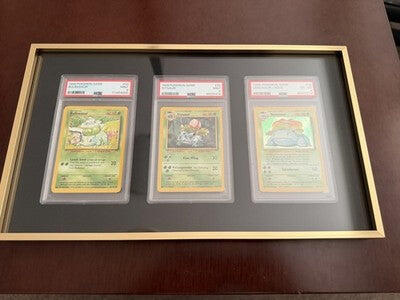
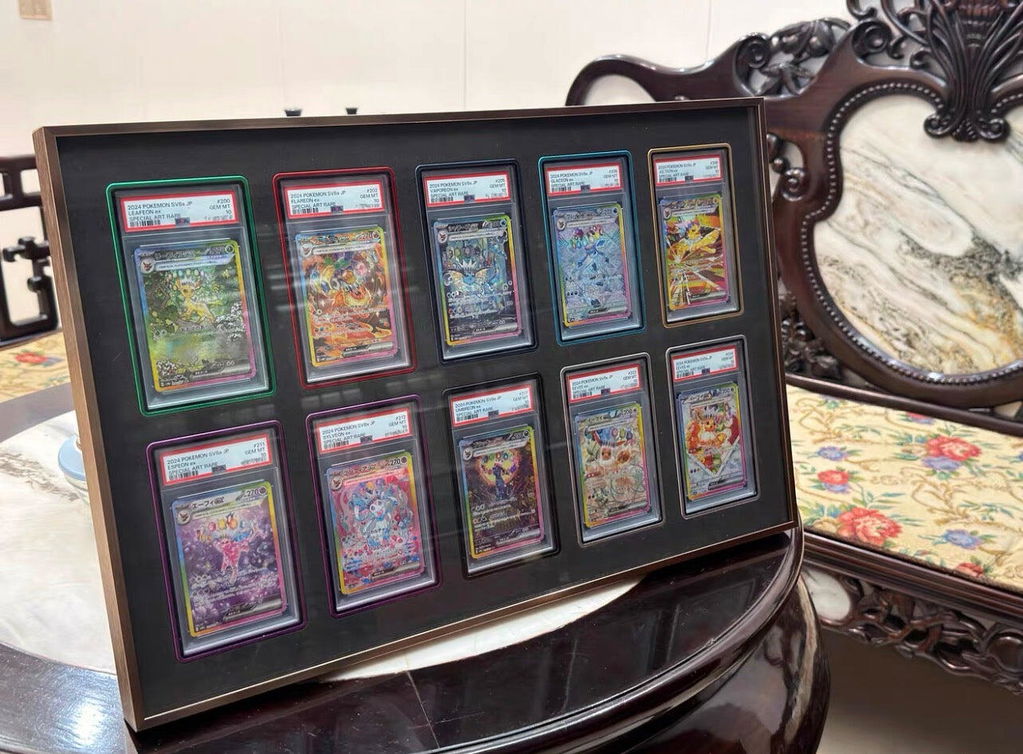


0 comments