


Why Premium Aluminium Trading Card Display Frames Are Worth It: The Complete Collector Guide
Trading card display frames have evolved well beyond basic picture frames and improvised card holders.
Collectors now use purpose-built wall display frames to present graded slabs, One Touch magnetic holders and complete card collections in a cleaner, more organised format.
As collections grow, the differences between entry-level display products and premium frames become more noticeable.
Materials, structural rigidity, finish quality, alignment, mounting, compatibility and layout flexibility all affect how a display looks once it is installed on the wall.
This is where premium aluminium trading card display frames occupy a distinct position.
Aluminium alloy combines the clean appearance of a metal frame with the strength and precision needed for larger multi-card layouts. It suits modern collector rooms, gaming spaces, offices, display walls and premium interiors where the frame needs to feel integrated with the collection rather than added as an afterthought.
Handmade construction also allows these frames to be produced around specific card holders, grid sizes and finishes rather than relying on one generic layout.
A premium metal trading card display frame can be designed for PSA, CGC, BGS and One Touch holders, with options ranging from compact single-card displays through to large 54-card wall frames.
Different aluminium finishes can then be selected to complement the cards, the room or the wider display theme.
Black can create stronger contrast in a modern office. Silver can suit clean collector walls and contemporary gaming rooms. Gold can work with premium Pokémon cards, trophy collections and Egyptian God Card displays. Copper or bronze can complement timber furniture, vintage sports cards and warmer interiors.
This guide explains how premium handmade aluminium trading card display frames are constructed, what separates them from more basic display products, how to choose the right slab compatibility, grid size and frame colour, and how multiple frames can be combined into larger modular wall displays.
What Is a Premium Aluminium Trading Card Display Frame?
A premium aluminium trading card display frame is a purpose-built wall display designed specifically for protected trading cards.
Unlike a conventional picture frame, the internal layout is created around the dimensions of the card holder rather than a photograph or paper print.
Depending on the design, the frame may hold:
- PSA graded slabs.
- CGC graded slabs.
- BGS graded slabs.
- One Touch magnetic card holders.
- Other compatible graded-card formats.
The cards are arranged into a fixed grid, allowing several holders to sit together with consistent spacing and alignment.
The surrounding aluminium alloy frame provides the external structure, while the internal components determine the card positions, visual spacing and overall presentation.
Premium versions typically place greater emphasis on:
- Material quality.
- Structural rigidity.
- Accurate sizing.
- Consistent card alignment.
- Clean internal spacing.
- Quality of the metal finish.
- Compatibility with the intended slab or holder.
- Reliable wall mounting.
- Hand assembly and inspection.
- Availability across different grid sizes.
The result is closer to a specialist collector display system than a general-purpose picture frame.
Why Aluminium Alloy Is Used for Premium Trading Card Frames
Aluminium alloy is widely used in premium products because it combines relatively low weight with useful structural rigidity and a clean manufactured finish.
For trading card display frames, those characteristics become increasingly important as the grid size grows.
A single-card frame places limited demands on the surrounding structure. A 24-card, 36-card or 54-card wall display is a much larger product, and the material needs to maintain its shape while supporting a broader internal layout.
Structural Rigidity
A rigid outer frame helps the display maintain consistent geometry.
This matters because multi-card layouts depend on straight edges, even spacing and alignment across several rows and columns.
If the surrounding frame flexes excessively or loses its shape, small alignment differences become much easier to notice across a large grid.
Aluminium alloy provides a strong external structure without requiring the bulky proportions often associated with heavier materials.
Strength-to-Weight Balance
Metal frames can sound heavy, but aluminium has a favourable strength-to-weight balance.
This allows a large display frame to retain a substantial and premium feel without creating unnecessary weight purely from the outer frame material.
The final weight still depends on the grid size, acrylic glazing, internal components and the number of card holders installed, but aluminium remains practical for wall-mounted collector displays.
Clean, Precise Edges
Aluminium frames naturally suit modern display design because they can be produced with straight edges, narrow profiles and consistent joins.
This creates a more precise appearance around highly structured card grids.
The material works especially well with:
- Modern collector rooms.
- Gaming spaces.
- Home offices.
- Minimal interiors.
- Retail card displays.
- Large feature walls.
Consistent Surface Finishes
Premium aluminium display frames are often finished in black, silver, gold or copper and bronze-inspired tones.
A consistent metal finish helps the frame read as one complete product, particularly across larger sizes where uneven surfaces would be more noticeable.
The finish also allows the frame to be selected as part of the overall display design rather than treated as a purely functional border.
Suitability for Large Grid Formats
One of aluminium's biggest advantages is its suitability for larger display formats.
Collectors may begin with a three-card or nine-card frame, but established collections can require 20, 25, 36, 45, 50 or 54-card layouts.
At these sizes, the frame needs to feel visually controlled rather than oversized or cumbersome.
Aluminium's relatively slim profile helps preserve that balance.
The material alone does not determine quality. A premium aluminium trading card display frame still depends on accurate sizing, careful assembly, suitable internal components and correct compatibility with the intended slab or card holder.
Metal Trading Card Display Frames vs Standard Picture Frames
A standard picture frame is designed around flat artwork, photographs or prints.
A trading card display frame needs to accommodate protective holders with much greater depth and more specific dimensions.
That difference affects almost every part of the construction.
| Premium Trading Card Display Frame | Standard Picture Frame |
|---|---|
| Designed around slabs or magnetic holders. | Designed around paper, photographs or flat artwork. |
| Uses fixed card positions and grid spacing. | Usually uses one open image area. |
| Accounts for holder depth and dimensions. | Usually assumes minimal depth. |
| Available in multi-card layouts. | Usually designed for one image. |
| Built for collector-room and display-wall use. | Built for general interior decoration. |
| May be handmade or built to order. | Often produced in standard retail sizes. |
It is possible to adapt ordinary frames for trading cards, but the finished result often involves compromises around fit, spacing, depth or mounting.
A purpose-built display frame case avoids those compromises by treating the card holders as the primary design requirement.
What Makes a Trading Card Display Frame Premium?
The word premium is used frequently, but it should refer to more than price or appearance.
For an aluminium trading card wall display, premium construction should be visible in the details that affect daily use and long-term presentation.
Purpose-Built Compatibility
The internal layout should be designed around the actual holder being displayed.
PSA, CGC, BGS and One Touch holders do not share identical dimensions.
A frame designed for one type should not be assumed to fit every other holder correctly.
Consistent Alignment
Rows and columns should appear straight and evenly spaced.
This becomes increasingly important as the frame size grows.
A small difference may be difficult to notice in a one-card frame but obvious across a 36-card or 54-card grid.
Clean Internal Spacing
The gap between cards influences whether the display feels compact, balanced or overly crowded.
Premium layouts use spacing deliberately so each holder remains individually visible while the collection still reads as one complete display.
Reliable Construction
The external metal frame, glazing, backing and internal card layout need to work together as one system.
A frame should not rely on the aluminium border alone to create quality.
Finish Quality
Black, silver, gold and copper or bronze finishes should appear consistent across the full perimeter of the frame.
The finish should complement the clean geometry of the metal rather than distract from it.
Appropriate Wall Mounting
Larger trading card display frames require secure and appropriate wall mounting.
The mounting approach should suit the size and finished weight of the frame once the cards or slabs are installed.
Hand Assembly and Inspection
Handmade construction allows each display to be assembled, aligned and inspected as an individual product.
This is particularly relevant for made-to-order frames with different slab formats, finishes and grid sizes.
Why Handmade Construction Matters
A handmade trading card display frame is not necessarily created without machinery.
In premium manufacturing, handmade usually means the frame is assembled, fitted, checked and finished by people rather than produced as one fully automated generic unit.
That distinction matters because trading card frames involve several variables.
- Different slab dimensions.
- Different grid layouts.
- Different frame finishes.
- Different internal spacing requirements.
- Different finished frame sizes.
Built to Order
Made-to-order production allows the frame to be prepared around the selected format instead of limiting every collector to one standard configuration.
A PSA display may require a different internal layout from a BGS or One Touch frame.
A compact three-card frame also involves a very different overall structure from a 54-card feature-wall display.
Individual Assembly
Hand assembly allows the external aluminium frame, acrylic glazing, internal layout and backing to be brought together as a complete display.
This is where alignment and fitting can be checked before the product is completed.
Inspection of the Finished Display
Inspection is especially important for large grids.
The more card positions a frame contains, the more important it becomes to check:
- Overall alignment.
- Internal spacing.
- Frame joins.
- Finish consistency.
- Glazing position.
- Backing fit.
- Mounting components.
Greater Layout Flexibility
Small-batch handmade production also supports a broader range of layouts than mass-market frame systems typically offer.
Collectors can choose compact formats for a small office wall or large grids for a dedicated card room without moving into a completely different product style.
This consistency makes it easier to build a modular display over time.
Handmade vs Mass-Produced Trading Card Frames
Mass-produced frames can be suitable when a collector wants an inexpensive, standard-size display.
Handmade aluminium frames serve a different purpose.
They are generally chosen when the collector places greater importance on materials, size choice, finish consistency and compatibility.
| Handmade Aluminium Display Frame | Mass-Produced Display Frame |
|---|---|
| Often made to order. | Usually produced in fixed standard formats. |
| Can support multiple holder types and grid sizes. | Usually offers limited compatibility. |
| Individually assembled and checked. | Designed for high-volume consistency. |
| Premium aluminium alloy frame construction. | May use lighter or more basic materials. |
| Suitable for modular collector walls. | Often treated as a standalone product. |
| Broader choice of colours and layouts. | Usually limited to a small range. |
Neither approach is automatically correct for every collector.
The choice depends on whether the priority is basic card presentation or a more permanent premium wall display system.
Display Frame, Display Case or Wall Display?
The terms display frame, display case and wall display are often used interchangeably, but they can describe different products.
Trading Card Display Frame
A display frame generally places cards or slabs inside a structured wall-mounted layout.
It is best suited to:
- Multiple cards.
- Graded slabs.
- One Touch magnetic holders.
- Feature walls.
- Grid-based collections.
Trading Card Display Case
A display case may refer to a deeper enclosure or an acrylic box used for three-dimensional collectibles.
It is often better suited to:
- Booster boxes.
- Figures.
- Signed memorabilia.
- Sealed products.
- Single freestanding centrepieces.
Trading Card Wall Display
A wall display is the broader finished arrangement.
It may combine:
- One large metal display frame.
- Several modular aluminium frames.
- Shelves.
- Lighting.
- Artwork.
- Acrylic display cases.
Premium aluminium frames are therefore one component of a larger collector-wall system, although a single large frame can also operate as the main feature on its own.
Choosing the Correct Card Holder Compatibility
Compatibility is one of the most important decisions when selecting a premium trading card display frame.
PSA, CGC, BGS and One Touch holders may appear broadly similar, but they have different external dimensions, thicknesses and proportions.
A purpose-built aluminium display frame should therefore be selected for the specific holder format being used.
This helps ensure:
- Consistent positioning within each card opening.
- Balanced spacing across the complete grid.
- A cleaner fit around the holder.
- Reliable insertion and removal.
- Correct alignment across larger multi-card displays.
A frame designed for PSA slabs should not automatically be assumed to fit BGS, CGC or One Touch holders correctly.
Even small differences become noticeable when repeated across nine, twenty-five or fifty-four positions.
Choose the frame according to the holder type used across the collection. The cards inside the holders can be changed whenever the display is updated, but the frame layout itself should remain matched to the intended PSA, CGC, BGS or One Touch format.
PSA Trading Card Display Frames
PSA slabs are among the most widely recognised graded-card holders across Pokémon, sports cards, Yu-Gi-Oh!, Magic: The Gathering and other collecting categories.
Their consistent shape makes them particularly suitable for structured wall grids.
A purpose-built PSA aluminium display frame can be used for:
- Single-card centrepieces.
- Three-card sets.
- Nine-card collector displays.
- Complete player or character collections.
- Large graded-card walls.
- Mixed sets displayed within the same PSA holder format.
Collectors might use a PSA frame to display:
- Different artworks of one Pokémon.
- A complete evolution line.
- Sports rookie cards.
- Cards from one athlete's career.
- Vintage Yu-Gi-Oh! cards.
- Graded Magic cards.
- Promotional or tournament cards.
Black aluminium creates strong contrast around PSA slabs, while silver provides a lighter and more contemporary appearance.
Gold and copper or bronze finishes can be used when the collection or room benefits from warmer framing.
CGC Trading Card Display Frames
CGC holders have their own dimensions and should be displayed inside a frame designed specifically around that format.
A dedicated CGC wall display keeps the slabs aligned consistently rather than forcing them into openings developed for another grading company.
CGC aluminium display frames can suit:
- Pokémon collections.
- Comic and trading-card crossover displays.
- Modern card releases.
- Vintage graded cards.
- Character-focused walls.
- Set and rarity collections.
The label design and clear slab construction often pair naturally with silver or black aluminium frames.
Gold can introduce a stronger decorative border around trophy cards, premium rarities or collections using warm artwork.
BGS Trading Card Display Frames
BGS slabs are thicker and more substantial than several other common graded-card holders.
That physical difference makes dedicated compatibility particularly important.
A BGS display frame should account for the slab's dimensions rather than relying on a generic graded-card opening.
BGS frames are often selected for:
- High-grade sports cards.
- Autographed cards.
- Patch and memorabilia cards.
- Premium Pokémon cards.
- Black Label collections.
- Modern chase cards.
- Small groups of high-value slabs.
The heavier visual presence of a BGS slab can work especially well with aluminium.
Black creates a restrained border around the slab, while gold can complement premium labels, trophy cards and high-end collector rooms.
Silver offers a clean metal-on-metal appearance, and copper or bronze can soften the display when it is installed alongside timber furniture or warmer room finishes.
One Touch Magnetic Card Holder Display Frames
Not every collector wants to send cards for professional grading.
One Touch magnetic holders provide a clean presentation format while allowing cards to remain ungraded and easier to change.
A purpose-built One Touch wall display frame can be particularly useful for collectors who:
- Regularly rotate displayed cards.
- Collect modern trading card releases.
- Prefer cards without grading labels.
- Build complete visual sets.
- Display cards based on artwork rather than grade.
- Want a consistent holder format across several games.
One Touch frames can hold cards from many standard-size trading card games, provided the card and magnetic holder are compatible with the selected frame format.
This makes them useful for visually focused collections where the card artwork should remain the dominant feature.
Why Collectors Choose One Touch Displays
One Touch holders offer several practical advantages for wall displays.
- Cards can be changed without submitting them for grading.
- There is no grading label above the artwork.
- The same holder style can be repeated throughout the grid.
- Modern pulls can be displayed soon after opening.
- The collection can evolve as new sets are released.
A large One Touch display can also create a more uniform card wall when the collector wants to combine cards from different games under one consistent visual format.
Can Cards Be Changed After the Frame Is Installed?
One of the practical advantages of a purpose-built collector frame is that the collection does not need to remain fixed permanently.
Cards or slabs can be changed as the collection evolves, provided the replacement uses the same compatible holder format.
For example:
- A PSA frame can be updated with different PSA slabs.
- A CGC frame can be updated with different compatible CGC slabs.
- A BGS frame can be updated with different BGS slabs.
- A One Touch frame can be updated with different cards inside compatible One Touch holders.
This allows collectors to rotate displays by season, set, player, character, rarity or current collecting focus.
The frame remains part of the room while the collection inside it changes.
Can Different Trading Card Games Use the Same Display Frame?
The game printed on the card does not usually determine the external size of a PSA, CGC or BGS slab.
As a result, a frame designed for one grading format can generally display compatible slabs containing cards from different trading card games.
A PSA frame, for example, may contain a combination of:
- Pokémon cards.
- Sports cards.
- Magic: The Gathering cards.
- Yu-Gi-Oh! cards.
- One Piece cards.
- Disney Lorcana cards.
- Dragon Ball Super cards.
- Digimon cards.
- Flesh and Blood cards.
- Star Wars Unlimited cards.
Collectors can therefore organise the frame by card game, colour, artwork, rarity or any other visual system.
The important distinction is the external holder format, not the brand or subject printed on the card.
Pokémon Aluminium Display Frames
Pokémon collections are particularly well suited to grid-based wall displays because they can be organised in many different ways.
Popular layouts include:
- Evolution lines.
- Starter Pokémon.
- Eeveelutions.
- Illustration Rare collections.
- Gold card collections.
- Vintage sets.
- Favourite Pokémon across different eras.
- PSA grading returns.
- Japanese and English card displays.
The frame colour can reinforce the collection without changing the cards themselves.
Black Aluminium for Pokémon
Black creates a strong neutral border around colourful card artwork.
It works well in modern gaming rooms, darker collector spaces and mixed Pokémon collections where no single card colour dominates.
Silver Aluminium for Pokémon
Silver provides a cleaner and lighter finish.
It can complement modern full-art cards, cool-toned artwork, silver labels and bright interiors.
Gold Aluminium for Pokémon
Gold can work particularly well with:
- Gold Star cards.
- Gold Secret Rares.
- Charizard collections.
- Trophy and promotional cards.
- Vintage-inspired displays.
- Premium feature walls.
Copper or Bronze Aluminium for Pokémon
Copper and bronze-inspired tones introduce warmth.
They can suit vintage Pokémon cards, earth-toned artwork, timber furniture and collector rooms using warm ambient lighting.
Sports Card Aluminium Display Frames
Sports card collections can be organised around athletes, teams, seasons, championships or card types.
Common display concepts include:
- Rookie-card collections.
- One athlete's career.
- Championship teams.
- Hall of Fame players.
- Autographed cards.
- Patch and memorabilia cards.
- Cards from one franchise.
- Mixed-era team collections.
Black and silver aluminium are natural choices for contemporary sports rooms and home offices.
Gold can suit championship cards, premium parallels and trophy-focused displays.
Copper or bronze works well with vintage baseball, classic football cards, timber shelving and traditional sports offices.
Matching Team Colours Without Using a Coloured Frame
The frame itself does not need to reproduce the team colours exactly.
A neutral black or silver metal frame often allows the cards, jerseys and memorabilia to provide the colour.
Gold or copper can then be used selectively for championship collections or warmer room designs.
Magic: The Gathering Aluminium Display Frames
Magic collections can be organised by colour identity, set, artist, format or period of the game's history.
Suitable display themes include:
- Favourite commanders.
- The five mana colours.
- Reserved List cards.
- Original dual lands.
- Secret Lair collections.
- Cards from one artist.
- Serialized cards.
- Graded vintage cards.
- Complete card cycles.
Black aluminium works naturally with darker fantasy artwork and restrained collector rooms.
Gold can suit premium vintage displays, multicolour cards and collections using white or gold interior accents.
Copper or bronze complements timber shelves, fantasy libraries and red, green or earth-toned Magic artwork.
Silver provides a cleaner alternative for modern cards, blue-themed collections, artifacts and contemporary gaming rooms.
Yu-Gi-Oh! Aluminium Display Frames
Yu-Gi-Oh! collections often have strong character, monster and colour themes that can be reinforced through the frame finish.
Popular wall display arrangements include:
- Blue-Eyes White Dragon collections.
- Dark Magician and Dark Magician Girl.
- The five pieces of Exodia.
- The Egyptian God Cards.
- Ghost Rare collections.
- Ultimate Rare collections.
- Quarter Century Secret Rares.
- Anime-era displays.
- Favourite archetypes.
Silver for Blue-Eyes and Cyber Dragon
Silver aluminium pairs naturally with Blue-Eyes White Dragon, Cyber Dragon and other cool-toned or mechanical collections.
It also suits blue-and-white gaming rooms and modern acrylic shelving.
Gold for Egyptian God Cards and Exodia
Gold aluminium can reinforce Ancient Egyptian themes and create a stronger border around the Egyptian God Cards, Exodia and Millennium Item-inspired displays.
Black for Dark Magician and Mixed Collections
Black works well with Dark Magician, Ghost Rares, darker anime artwork and mixed Yu-Gi-Oh! collections.
Copper or Bronze for Red-Eyes and Vintage Cards
Copper or bronze-inspired finishes suit Red-Eyes Black Dragon, early Duel Monsters cards and rooms using warmer lighting or timber furniture.
One Piece, Lorcana, Dragon Ball and Other Trading Card Games
Premium aluminium frames are not limited to the largest collecting categories.
They can also be used to build displays around newer or more specialised trading card games.
Examples include:
- One Piece Card Game.
- Disney Lorcana.
- Dragon Ball Super Card Game.
- Digimon Card Game.
- Flesh and Blood.
- Star Wars Unlimited.
- Weiss Schwarz.
- Union Arena.
- Marvel trading cards.
- Other compatible sports and entertainment cards.
The same display principles apply.
Collectors can organise cards by character, faction, set, rarity, artwork or release era while selecting a metal frame finish that complements the wider room.
Single-Game Displays vs Mixed Trading Card Displays
Some collectors prefer one frame dedicated entirely to one card game.
Others build mixed displays that bring several collecting interests together.
| Single-Game Display | Mixed Trading Card Display |
|---|---|
| Creates a focused visual theme. | Represents the collector's broader interests. |
| Easy to organise by set or character. | Can be organised by colour or artwork. |
| Works well with franchise-specific room décor. | Works well in general collector rooms. |
| Can use a frame colour matched to one theme. | Often benefits from a neutral black or silver frame. |
| Suitable for dedicated Pokémon, sports, MTG or Yu-Gi-Oh! walls. | Suitable for varied PSA, CGC, BGS or One Touch collections. |
There is no requirement for every card in a frame to come from the same game.
The most important factors are holder compatibility, visual balance and a layout that makes sense for the collector.
Matching the Aluminium Frame to the Cards
The frame can either blend into the display or become a visible design element.
A neutral finish allows the artwork to dominate, while a warmer or more decorative metal finish can reinforce the collection theme.
When matching the frame to the cards, consider:
- The dominant colours across the collection.
- The grading-label colours.
- Whether the cards are modern or vintage.
- The amount of foil or metallic artwork.
- Whether the display contains one game or several.
- The colour of the wall behind the frame.
- The furniture and lighting already in the room.
A collection does not need to match the frame perfectly.
Contrast can be just as effective as coordination.
For example, colourful Pokémon cards can stand out strongly against black aluminium, while a silver frame can provide a quieter border around a cool-toned collection.
Matching the Aluminium Frame to the Room
The right frame finish should also make sense within the room where it will be installed.
A frame may look different depending on the wall colour, lighting and surrounding furniture.
Modern Home Offices
Black and silver are usually the most adaptable choices for contemporary offices.
They pair easily with neutral walls, monitors, metal furniture and clean shelving.
Gaming Rooms
Gaming rooms can support stronger contrasts and more deliberate theme matching.
Silver can suit Blue-Eyes, Cyber Dragon or futuristic displays, while black works with most RGB and darker gaming setups.
Traditional Offices and Libraries
Copper or bronze-inspired aluminium can complement timber desks, bookshelves, leather furniture and warm room lighting.
Premium Collector Rooms
Gold can be used as a deliberate feature, particularly when the room contains trophy cards, gold rarities, championship memorabilia or luxury finishes.
Minimalist Interiors
Black or silver typically provides the cleanest result when the aim is to reduce visual noise and allow the card grid to become the main feature.
Anime and Themed Rooms
The frame colour can reinforce one specific theme without requiring permanent changes to walls or furniture.
Examples include silver for Blue-Eyes, gold for Egyptian God Cards, black for Dark Magician or copper for Red-Eyes.
Choose the frame colour using both the collection and the room. A finish that looks appropriate beside the cards but conflicts with the surrounding furniture may feel disconnected once the frame is installed.
Choosing the Right Grid Size for an Aluminium Trading Card Display Frame
Grid size determines more than the number of cards a frame can hold.
It affects the overall dimensions, visual weight, wall placement, collection structure and how easily the display can expand later.
A compact frame may be used to isolate one important card or a small themed group. A larger aluminium wall display can organise an established collection into a complete feature.
The right choice depends on:
- The number of cards currently being displayed.
- How quickly the collection is expected to grow.
- The available wall space.
- The dimensions of the intended slab or holder.
- Whether the frame will be used alone or as part of a modular arrangement.
- The visual balance of the room.
- Whether the collection follows a complete set, character, player or theme.
It is usually better to choose a grid size based on a clear display concept rather than simply selecting the largest frame that fits the wall.
Small Aluminium Display Frames: 1 to 6 Cards
Small-grid display frames provide the most focused presentation.
They are suitable for compact walls, narrow spaces, offices, hallways and collectors who want individual cards or small groups to remain visually separate.
1-Card Display Frames
A single-card aluminium display frame creates a dedicated centrepiece.
It is particularly suitable for:
- One high-grade PSA, CGC or BGS slab.
- A first graded card.
- A signed sports card.
- A trophy or promotional card.
- A favourite One Touch card.
- A rare card displayed beside related artwork or memorabilia.
Single-card frames can also be repeated across a wall to create a flexible arrangement where each card remains independently positioned.
2-Card Display Frames
A two-card layout works well for direct pairings.
Examples include:
- Two versions of the same card.
- A rookie card and autograph.
- English and Japanese printings.
- Two rival players.
- Two related commanders.
- Dark Magician and Dark Magician Girl.
- A base card and premium parallel.
The format is narrow enough for smaller walls while creating more visual structure than a single-card display.
3-Card Display Frames
Three-card frames are among the most adaptable compact formats.
They naturally suit:
- Pokémon evolution lines.
- The original Pokémon starters.
- The Egyptian God Cards.
- Three sports legends.
- A player’s rookie, championship and final-season cards.
- Three favourite commanders.
- A small grading return.
A three-card aluminium frame can operate as a complete standalone display without requiring a large amount of wall space.
4-Card Display Frames
Four-card layouts provide a compact square or rectangular structure that suits balanced collections.
Possible themes include:
- Four cards from one set.
- Four championship players.
- A small Secret Lair release.
- Four versions of one character.
- A themed group of One Touch cards.
- Four premium rarities.
5-Card Display Frames
Five-card frames are particularly useful when the collection already has a natural five-part structure.
Examples include:
- The complete Exodia set.
- The five Magic mana colours.
- Five members of a team or character group.
- Five cards from a limited release.
- Five stages of a player or collector timeline.
The unusual card count can create a more distinctive display than a conventional square grid.
6-Card Display Frames
Six-card layouts provide enough space for a small collection while remaining easy to install in offices, bedrooms and compact collector rooms.
They can suit:
- Six-card subsets.
- Small team collections.
- One row for vintage and one for modern cards.
- Six favourite Pokémon.
- Commander collections organised by colour identity.
- Character or archetype displays.
Medium Aluminium Display Frames: 8 to 16 Cards
Medium-grid frames create a stronger wall presence without requiring the scale of a complete feature-wall display.
They are suitable for home offices, gaming rooms, collector shelves, living spaces and established themed collections.
8-Card Display Frames
An eight-card frame can be used for:
- Eight favourite cards from one set.
- A sports starting lineup or athlete group.
- Eight Commander decks.
- An anime archetype collection.
- Cards organised across two rows of four.
This format offers more capacity than a compact display while retaining a controlled overall size.
9-Card Display Frames
Nine-card frames are one of the most recognisable grid formats.
A three-by-three layout feels balanced and can be viewed easily as one complete collection.
Suitable uses include:
- Nine-card Pokémon collections.
- Sports rookie-card groups.
- Favourite players from one franchise.
- Nine graded cards from one submission.
- One complete visual set.
- Nine favourite Yu-Gi-Oh! monsters.
- A Magic collection organised around nine commanders or cards.
The symmetrical format works particularly well above desks, cabinets and gaming setups.
10-Card Display Frames
A ten-card frame provides a slightly broader layout and works well for complete top-ten collections.
Collectors may use it for:
- Ten favourite cards.
- Ten championship players.
- A ten-card rarity group.
- A complete character sequence.
- A mixed decade-by-decade display.
12-Card Display Frames
Twelve-card displays offer enough capacity for a substantial themed collection without becoming a dominant architectural feature.
They can suit:
- Twelve-card subsets.
- One card representing each month or release.
- A complete sports lineup with reserves.
- Multiple Pokémon evolution groups.
- Twelve graded cards from one set.
- A Commander or archetype collection.
15-Card Display Frames
Fifteen-card grids provide a wider collector format and work well when the display needs to show progression across several rows.
Possible uses include:
- Cards from one expansion.
- Fifteen favourite athletes.
- Multiple rarity tiers.
- A chronological player or character collection.
- Several related three-card groups within one frame.
16-Card Display Frames
A sixteen-card frame creates a strong square or near-square arrangement.
It is well suited to:
- Four-by-four collector grids.
- Complete themed subsets.
- Sports collections organised by era.
- Sixteen-card grading returns.
- Mixed character collections.
- One feature frame above a desk or cabinet.
The even structure gives the display a highly organised appearance and works well in modern interiors.
Large Aluminium Display Frames: 20 to 30 Cards
Large-grid aluminium frames begin to operate as major wall features.
They are intended for collectors with established themes, larger grading submissions or rooms where the card display should become one of the main visual elements.
20-Card Display Frames
A twenty-card display offers substantial capacity while remaining manageable for many home offices and gaming rooms.
It can be used for:
- Twenty favourite cards from one game.
- A complete player or team timeline.
- A grading submission.
- A large Pokémon character collection.
- Twenty commanders.
- A Yu-Gi-Oh! archetype or rarity group.
24-Card Display Frames
Twenty-four-card frames provide a broad layout that can be divided into several smaller themes.
For example:
- Four groups of six cards.
- Three groups of eight cards.
- Two eras of twelve cards.
- Separate rows for different players, sets or rarities.
This makes the 24-card format useful for collections that need internal organisation without being split across several frames.
25-Card Display Frames
A twenty-five-card frame creates a structured five-by-five grid.
The symmetry makes it particularly effective as a feature-wall display.
Suitable collections include:
- Twenty-five favourite graded cards.
- A complete character or athlete collection.
- Five rows representing five different eras.
- Five themed groups of five cards.
- Large rarity or artwork collections.
At this scale, the frame colour and wall placement become especially important because the aluminium border is part of a much larger visual composition.
30-Card Display Frames
A thirty-card frame suits collections that have moved beyond a compact themed display but do not yet require the largest available format.
It can support:
- Thirty-card set highlights.
- Multiple grading submissions.
- A broad sports franchise collection.
- Several Pokémon or TCG themes within one frame.
- A large One Touch artwork display.
Extra-Large Aluminium Display Frames: 36 to 54 Cards
Extra-large grids are designed for dedicated collector rooms, gaming spaces, retail displays and substantial feature walls.
At these sizes, aluminium alloy construction becomes especially useful because the frame needs to retain clean geometry across a large area.
36-Card Display Frames
A thirty-six-card frame offers enough capacity to document a significant collection while maintaining a regular grid.
It can be used for:
- Six rows of six cards.
- Complete grading projects.
- Sports collections divided by season or player.
- Large Pokémon or Yu-Gi-Oh! themes.
- Thirty-six favourite MTG cards or commanders.
- Mixed TCG displays using one holder format.
45-Card Display Frames
Forty-five-card displays suit collectors who want a broad feature without moving directly to the maximum grid size.
The additional capacity can accommodate:
- Long-term graded collections.
- Multiple character groups.
- A player’s complete career timeline.
- Set highlights across several releases.
- Mixed collections organised into rows or columns.
50-Card Display Frames
A fifty-card frame creates a major display surface and can be used to present a complete collection with minimal interruption.
It is suitable for dedicated collector walls where the frame should read as one large architectural feature.
Collectors may use the layout for:
- Top-fifty card collections.
- Large sports or entertainment card archives.
- Multiple grading eras.
- Complete character and artwork groups.
- A broad mixed-TCG collection.
54-Card Display Frames
A 54-card aluminium display frame represents the largest format within many collector ranges.
It is designed for substantial collections and rooms where the wall display is intended to become a dominant feature.
A 54-card grid can be organised by:
- Card game.
- Set.
- Character.
- Athlete.
- Team.
- Rarity.
- Release year.
- Artwork colour.
- Grading result.
The size also makes it possible to create smaller visual groups inside one frame.
For example, a collector could divide the display into six nine-card sections, nine six-card groups or three eighteen-card themes.
This provides the visual impact of one large metal display frame while retaining internal organisation.
Should You Buy for the Collection You Have or the Collection You Expect to Build?
Choosing between a closely fitted grid and a larger frame with spare capacity depends on how stable the collection is.
A completed collection may suit a frame that matches the exact number of cards.
An active collection may benefit from additional positions that can be filled gradually.
Choose the Exact Grid Size When:
- The collection is complete.
- The display follows a fixed set or card count.
- Every position already has a defined purpose.
- The frame needs to fit a limited wall area.
- You prefer a finished display immediately.
Choose Additional Capacity When:
- The collection is still growing.
- New grading returns are expected.
- The card game regularly releases new additions to the theme.
- You want to create a long-term display project.
- You prefer filling empty positions over time.
Empty positions do not need to be treated as a flaw.
In a developing collector wall, they can provide a clear structure for future additions.
Modular Aluminium Trading Card Wall Displays
A modular wall display uses several frames together rather than relying on one oversized custom structure.
This approach allows the collection to expand in stages while preserving consistency across the wall.
Examples include:
- Two matching 9-card frames above a desk.
- Three 16-card frames arranged in one horizontal row.
- Two 24-card frames forming a balanced feature wall.
- Two 36-card frames for separate card games.
- Two or more 54-card frames for a major collector room.
- Different grid sizes combined around one central frame.
Why Use Multiple Frames?
Several coordinated aluminium frames can provide advantages over one extremely large display.
- The collection can be expanded gradually.
- Different themes can remain separated.
- Individual frames can be repositioned.
- Different holder formats can be displayed independently.
- One section can be updated without changing the entire wall.
- The layout can adapt to doors, furniture and irregular wall spaces.
Separating Slab Types
Modular displays are especially useful when a collector owns several holder formats.
For example:
- One PSA aluminium frame.
- One CGC aluminium frame.
- One BGS aluminium frame.
- One One Touch aluminium frame.
The frames can share the same exterior finish while retaining the correct internal compatibility for each holder.
Separating Card Games
Collectors can also assign one frame to each collecting category.
A large room might include:
- A gold Pokémon display.
- A black sports card display.
- A copper or bronze Magic display.
- A silver Yu-Gi-Oh! display.
This allows each collection to develop its own identity while remaining part of one coordinated wall system.
Using Matching Colours Across Different Grid Sizes
Frames do not need to contain the same number of cards to work together.
A consistent aluminium finish can visually connect:
- A three-card centrepiece.
- A nine-card supporting display.
- A twenty-five-card main frame.
- A larger 54-card collection wall.
The shared material and finish create continuity even when the grid sizes are different.
Combining Frame Colours Across a Collector Wall
Using one frame colour throughout the room creates the most uniform result, but mixed finishes can work when the layout has a clear structure.
One Finish Across the Entire Wall
This approach is the simplest and most controlled.
It works well for:
- Minimal collector rooms.
- Home offices.
- Retail card walls.
- Mixed-TCG collections.
- Walls using several different grid sizes.
One Finish Per Card Game
Different finishes can identify separate collecting categories.
For example:
- Gold for Pokémon.
- Black for sports cards.
- Copper or bronze for Magic: The Gathering.
- Silver for Yu-Gi-Oh!
This creates visible separation while preserving the common aluminium construction.
One Finish Per Collection Theme
Frame colours can also separate themes within the same card game.
Examples include:
- Gold for Pokémon trophy cards and black for modern Illustration Rares.
- Silver for Blue-Eyes and black for Dark Magician.
- Gold for championship sports cards and copper for vintage baseball.
- Black for MTG graveyard cards and copper for green or red collections.
Using One Accent Frame
A single contrasting frame can identify the most important section of the wall.
For example, a gold three-card frame could sit at the centre of a larger arrangement of black aluminium frames.
The contrast creates hierarchy without requiring every frame to use a different finish.
Planning Spacing Between Modular Frames
Spacing affects whether a modular display looks deliberate or disconnected.
The correct distance depends on the frame dimensions, wall size and overall arrangement.
General considerations include:
- Keep spacing consistent between frames in the same row.
- Use the frame edges rather than the internal card grid as the alignment reference.
- Allow enough separation for each frame to remain visually distinct.
- Avoid placing frames so far apart that they no longer read as one display.
- Account for lighting, shelves and nearby furniture.
- Measure the full arrangement before drilling or mounting.
For mixed grid sizes, aligning the top edges or central axes can create a cleaner result than trying to align every internal row of cards.
Planning a Collector Wall Around Furniture
The wall display should relate to the furniture beneath or beside it.
A frame arrangement can be centred above:
- A desk.
- A display cabinet.
- A sofa.
- A gaming station.
- A sideboard.
- A retail counter.
- A card-sorting table.
Large frames generally need enough open wall space around them to avoid feeling compressed by shelves, monitors or cabinets.
Smaller modular frames can be arranged more flexibly around existing furniture and room features.
Map the complete wall arrangement before mounting the first frame. Include future frames in the plan even if they will be purchased later. This helps preserve consistent spacing and prevents the initial display from occupying the only practical expansion area.
Planning a Premium Aluminium Trading Card Display Wall
A premium display frame should be planned as part of the room rather than treated as an isolated object.
The frame size, finish, mounting height, surrounding furniture and lighting all influence how the final wall display appears.
A well-planned collector wall usually feels structured before any cards are examined closely.
The most important decisions include:
- Which wall will hold the display.
- Whether one frame or several modular frames will be used.
- The preferred viewing height.
- The relationship between the frame and nearby furniture.
- The amount of natural and artificial light.
- The expected growth of the collection.
- Whether the cards will be rotated regularly.
Planning these details before installation helps prevent a large frame from feeling misplaced or a modular arrangement from becoming difficult to expand.
Choosing the Best Wall for a Trading Card Display Frame
The best wall is not always the largest wall in the room.
It should provide suitable viewing distance, reliable mounting and a visual relationship with the rest of the space.
Feature Walls
A feature wall allows the trading card display to become one of the main visual elements in the room.
This approach suits:
- Large 25, 36, 45, 50 or 54-card aluminium frames.
- Several matching modular frames.
- Dedicated collector rooms.
- Gaming rooms.
- Retail trading card displays.
- Sports memorabilia rooms.
Large displays generally benefit from open space around the frame so the wall does not feel crowded.
Walls Above Desks
Compact and medium frames work particularly well above desks.
Suitable sizes may include:
- Three-card frames.
- Nine-card frames.
- Twelve-card frames.
- Sixteen-card frames.
- Twenty-card frames.
The frame should be positioned high enough to remain clear of monitors, lamps and shelves while still being easy to view from the desk.
Walls Above Cabinets and Sideboards
A cabinet or sideboard can provide a visual base beneath the frame.
This works well when the furniture also holds:
- Acrylic display cases.
- Sealed products.
- Figures.
- Sports memorabilia.
- Deck boxes.
- Collector books.
The wall-mounted aluminium frame then presents the cards while the furniture below supports related three-dimensional items.
Hallways and Narrow Walls
Hallways and narrow wall sections are often better suited to smaller or vertically arranged frames.
Single-card, two-card, three-card and six-card displays can create a controlled series without making the space feel restricted.
Living Rooms
A trading card wall display can work in a living room when the finish and layout complement the wider interior.
Black and silver aluminium often integrate most easily with modern furniture, while copper or bronze finishes can suit warmer interiors and timber elements.
Home Offices
Home offices are particularly suitable for premium aluminium frames because the material has a clean and structured appearance.
A small display can add personality without making the office feel overly themed, while a larger collector wall can sit behind or beside the main desk.
Choosing the Correct Mounting Height
Mounting height affects both visibility and balance.
A frame positioned too high may feel disconnected from the furniture below it. A frame mounted too low may interfere with desks, monitors, cabinets or seating.
When planning the height, consider:
- The centre of the frame rather than only its top edge.
- The average eye level from the main viewing position.
- The height of nearby furniture.
- The finished dimensions of the frame.
- Whether the room is mainly viewed while standing or sitting.
- Whether additional frames will be installed later.
Large frames often need to be positioned slightly differently from small picture frames because their visual centre occupies more wall space.
For modular layouts, the complete group should be treated as one overall composition.
Wall Mounting and Installation Considerations
A premium metal trading card display frame should be mounted using hardware and wall fixings appropriate for the finished weight and wall construction.
The completed weight includes:
- The aluminium alloy frame.
- The acrylic glazing.
- The backing and internal components.
- Every graded slab or magnetic holder installed.
A large frame filled with dozens of slabs will weigh considerably more than the empty frame.
Identify the Wall Type
Common wall types may include:
- Plasterboard or drywall.
- Timber studs.
- Brick.
- Concrete.
- Masonry.
The appropriate fixing method will depend on the wall material and the finished frame weight.
Use the Correct Mounting Hardware
Large collector frames should not be mounted using lightweight picture hooks intended for small prints.
Suitable fixings may need to engage with wall studs, masonry or appropriately rated anchors.
Check Alignment Before Final Installation
Large grid frames make even small alignment differences easy to notice.
Before completing the installation:
- Measure the wall carefully.
- Mark the frame centre.
- Check the level.
- Confirm spacing from furniture.
- Check planned spacing from future frames.
Plan Access for Card Changes
If cards will be changed regularly, the frame should remain accessible.
A display mounted too close to a ceiling, shelf or side wall may be difficult to open or remove when the collection is updated.
Always select wall fixings according to the completed frame weight and wall material. Larger aluminium display frames containing many graded slabs require more substantial support than ordinary decorative picture frames.
Lighting a Premium Trading Card Wall Display
Lighting affects the appearance of the frame finish, the card artwork and the reflective surfaces of slabs and magnetic holders.
The goal is to make the display easy to view without creating excessive glare.
Ambient Room Lighting
General room lighting should provide enough illumination for the complete wall to remain visible.
Warm lighting can strengthen gold, copper and bronze finishes, while cooler lighting can reinforce silver frames and modern collector rooms.
Picture Lights
A picture light positioned above the frame can create a more formal display.
This works especially well for:
- Single feature frames.
- Home offices.
- Premium collector rooms.
- Sports memorabilia walls.
- Traditional interiors.
The light should be wide enough to illuminate the display evenly rather than creating one bright area in the centre.
LED Strip Lighting
LED strips can be installed around shelves, cabinets or architectural features near the display.
Indirect lighting usually produces a cleaner result than placing visible light strips directly around every frame edge.
Spotlights
Ceiling spotlights can highlight a large feature wall, but their angle should be tested carefully.
Direct reflection from acrylic glazing or slab surfaces can obscure the cards.
Warm vs Cool Lighting
Different colour temperatures affect the frame and card artwork.
| Warmer Lighting | Cooler Lighting |
|---|---|
| Complements gold, copper and bronze finishes. | Complements silver and black frames. |
| Works well with timber furniture. | Works well in modern gaming rooms. |
| Suits vintage sports and classic interiors. | Suits Blue-Eyes, Cyber Dragon and contemporary displays. |
| Creates a softer room atmosphere. | Creates a cleaner, sharper appearance. |
Avoid Prolonged Direct Sunlight
Trading cards, labels, artwork and other collectibles should generally be kept away from prolonged direct sunlight.
Basic UV-protection acrylic can provide a degree of protection, but it does not make a display suitable for continuous direct sunlight.
Where practical, position the frame on an internal wall or a wall that does not receive strong direct sunlight for extended periods.
Using Frame Colour and Lighting Together
The aluminium finish and room lighting should be considered together.
A frame colour may appear noticeably different under warm and cool light.
Black Aluminium
Black remains highly adaptable.
Under cool lighting it creates a sharp modern border. Under warm lighting it becomes softer and can integrate with darker furniture.
Silver Aluminium
Silver reflects more of the surrounding light and works particularly well in bright rooms.
Cool lighting reinforces its contemporary appearance, while neutral lighting keeps it from appearing overly blue.
Gold Aluminium
Gold usually benefits from warm-neutral lighting that retains the richness of the finish without making it appear excessively yellow.
It can create a strong feature around premium cards, trophy collections and gold-themed displays.
Copper or Bronze Aluminium
Copper and bronze-inspired frames respond strongly to warm lighting.
They pair naturally with timber furniture, leather, darker walls and vintage card collections.
Creating a Colour-Coordinated Trading Card Display
Collectors can coordinate the display using the frame finish, card artwork, wall colour and surrounding room elements.
The goal is not necessarily to match every colour exactly.
A controlled combination of matching and contrasting elements often produces a stronger result.
Matching the Frame to the Card Artwork
Examples include:
- Gold aluminium with Gold Star Pokémon cards.
- Silver aluminium with Blue-Eyes White Dragon cards.
- Black aluminium with Dark Magician collections.
- Copper or bronze aluminium with vintage baseball cards.
- Gold aluminium with championship sports cards.
- Black aluminium with MTG black-mana collections.
- Copper aluminium with red-green Magic cards.
Matching the Frame to the Labels
Grading labels can also influence the appearance of the display.
Silver and black frames usually provide the most neutral surroundings when several label colours are used across the collection.
Matching the Frame to the Wall
A dark frame creates greater contrast against a light wall.
Silver can blend more subtly into pale grey or white interiors.
Gold, copper and bronze finishes can become stronger visual features against dark green, navy, charcoal or warm neutral walls.
Matching Several Frames
When using modular frames, the colours can be coordinated in several ways:
- All frames use one finish.
- Each trading card game uses a different finish.
- The main frame uses an accent colour.
- Smaller frames use black or silver while one premium collection uses gold.
- Warm and cool finishes are separated across different walls.
Black Aluminium Trading Card Display Frames
Black is the most versatile finish for many collectors.
It creates a clear border without introducing another strong colour into the collection.
Black aluminium suits:
- Modern collector rooms.
- Gaming spaces.
- Home offices.
- Sports card displays.
- Mixed trading card collections.
- Colourful Pokémon cards.
- Dark Magician and Ghost Rare collections.
- Black-mana Magic displays.
- Minimal interiors.
It is particularly useful when the cards contain many different colours because the frame provides visual consistency without attempting to match every card.
Silver Aluminium Trading Card Display Frames
Silver creates a clean metal appearance and often feels lighter than black.
It suits:
- Bright collector rooms.
- Contemporary offices.
- PSA and CGC slab displays.
- Blue-Eyes White Dragon collections.
- Cyber Dragon collections.
- Modern sports cards.
- Artifact and blue MTG cards.
- White, grey and cool-toned interiors.
Silver can also coordinate with acrylic shelving, metal furniture and modern gaming equipment.
Gold Aluminium Trading Card Display Frames
Gold is a deliberate feature finish.
It generally works best when the collection or room already contains premium, historic or warm decorative elements.
Gold aluminium suits:
- Gold Star Pokémon cards.
- Gold Secret Rares.
- Trophy and promotional cards.
- Charizard collections.
- Egyptian God Cards.
- Exodia displays.
- Championship sports cards.
- Premium MTG collections.
- Luxury collector rooms.
Because gold is visually stronger than black or silver, the surrounding wall and furniture should usually remain controlled.
Copper and Bronze Aluminium Trading Card Display Frames
Copper and bronze-inspired finishes provide a warmer alternative to black, silver and gold.
They suit collections and rooms that use natural, vintage or traditional design elements.
Common applications include:
- Vintage sports cards.
- Classic baseball collections.
- Red-Eyes Black Dragon cards.
- Vintage Pokémon.
- Earth-toned card artwork.
- Red and green Magic collections.
- Timber offices and libraries.
- Warm collector rooms.
- Leather and dark furniture.
The finish can bridge the gap between modern aluminium construction and a more traditional interior.
Can Different Frame Colours Be Used in One Room?
Yes, although the arrangement should follow a clear system.
Mixed colours work best when they communicate a difference in collection type or visual importance.
Examples include:
- Gold Pokémon frames and black sports card frames.
- Silver Blue-Eyes frames and black Dark Magician frames.
- Copper vintage-sports frames and silver modern-sports frames.
- Black main frames with one gold centrepiece.
- One finish on each wall of a larger collector room.
Using every finish randomly across one small wall may make the arrangement feel fragmented.
Repeating each colour at least once or assigning it a specific purpose creates a more controlled result.
Using Aluminium Frames in Different Room Styles
Minimalist Collector Rooms
Use black or silver frames, consistent spacing and limited visible accessories.
The card grids should remain the dominant feature.
Modern Gaming Rooms
Black and silver frames work naturally with monitors, LED lighting, acrylic shelves and metal desk components.
Luxury Collector Rooms
Gold can be used selectively for centrepiece collections, while black or silver supports the surrounding displays.
Traditional Offices
Copper or bronze finishes can coordinate with timber desks, bookshelves and warm lighting.
Sports Memorabilia Rooms
Black and silver provide neutral framing around team colours, while gold can identify championship collections and copper can support vintage memorabilia.
Anime Rooms
Frame colours can reinforce specific themes without requiring the entire room to be redesigned.
Silver can support Blue-Eyes and Cyber Dragon, gold can support the Egyptian Gods, and black can support Dark Magician or mixed anime collections.
Retail and Showroom Displays
Consistent black or silver frames create a controlled presentation when many different cards and products are displayed in the same space.
Combining Aluminium Frames With Shelves and Acrylic Display Cases
A trading card frame does not need to carry every part of the collection.
The strongest collector walls often combine different display formats according to the item being shown.
Aluminium frames can hold:
- Graded cards.
- One Touch holders.
- Grid-based card collections.
Floating shelves can hold:
- Deck boxes.
- Sealed products.
- Small figures.
- Collector tins.
- Sports memorabilia.
Acrylic display cases can hold:
- Booster boxes.
- Large figures.
- Signed balls.
- Helmets.
- Premium sealed products.
- Three-dimensional centrepieces.
Using each display type for its appropriate purpose creates a more organised wall than attempting to place every collectible inside one format.
Planning for Future Collection Growth
A premium aluminium display system should be planned around both the existing collection and likely future additions.
Collectors commonly underestimate how quickly a focused collection can grow.
Future growth may come from:
- New set releases.
- Additional grading submissions.
- New athletes or characters.
- Cards upgraded to higher grades.
- New rarity types.
- Expansion into another trading card game.
- Additional room or wall space becoming available.
Leave Physical Expansion Space
Do not install the first frame in the centre of the only usable wall if additional frames are likely to be added later.
Map the intended final arrangement before mounting the first display.
Keep Holder Types Separate
If the collection may eventually include PSA, CGC, BGS and One Touch holders, plan separate compatible frames rather than attempting to combine incompatible formats inside one grid.
Use Consistent Finishes
Selecting one or two repeatable aluminium finishes makes future frames easier to integrate into the room.
Choose a Grid With Some Spare Capacity
An active collection may benefit from a frame with additional positions.
Empty spaces can be filled as cards are acquired or returned from grading.
Use Modular Growth
Modular frames allow the wall to expand without replacing the original display.
A collector may begin with one nine-card frame, add a second matching frame and later build a larger feature using twenty-five or 54-card formats.
A modular aluminium display wall is easiest to expand when the original mounting position, frame finish and spacing were chosen with future additions in mind.
Aluminium Trading Card Frames vs Wood Display Frames
Aluminium and wood can both be used to create premium trading card displays, but they produce different visual and structural results.
The better choice depends on the collection, room style, frame size and the overall appearance the collector wants to achieve.
Wood is often selected for traditional interiors, natural textures and classic picture-framing styles.
Aluminium is generally chosen for cleaner lines, larger grid formats, modern rooms and displays where structural consistency is especially important.
| Aluminium Trading Card Frame | Wood Trading Card Frame |
|---|---|
| Clean, precise metal profile. | Natural grain and traditional framing appearance. |
| Well suited to modern collector rooms. | Well suited to classic and traditional interiors. |
| Strong choice for large grid displays. | Often preferred for smaller decorative frames. |
| Available in black, silver, gold and copper or bronze finishes. | Available in natural stains, painted finishes and timber tones. |
| Creates consistent lines across modular walls. | Introduces natural variation through grain and finish. |
| Pairs naturally with acrylic shelves, gaming desks and modern furniture. | Pairs naturally with timber shelves, libraries and classic offices. |
When Aluminium Is Usually the Better Fit
An aluminium trading card display frame is often the stronger option when:
- The collection requires a large grid size.
- The room has a modern or minimalist interior.
- Several modular frames will be installed together.
- The collector wants black, silver, gold or copper and bronze-style finishes.
- Precise straight lines are important to the display.
- The cards are held in PSA, CGC, BGS or One Touch formats.
- The frame will become part of a gaming room, office or dedicated collector wall.
When Wood May Be Preferred
A wood display frame may be preferred when:
- The room already contains significant timber furniture.
- A traditional picture-frame appearance is desired.
- The collection has a vintage or archival visual theme.
- Natural grain is intended to become part of the design.
- The frame is relatively small and decorative.
The comparison is not simply about which material is universally better.
It is about choosing the material that best supports the size, room and visual direction of the collection.
Why Aluminium Works Well for Large Trading Card Displays
The advantages of aluminium become more noticeable as the display size increases.
A one-card frame can be produced successfully in many materials because the structure is relatively compact.
A 36-card, 45-card or 54-card display introduces different requirements.
The frame must maintain:
- Straight external edges.
- Consistent internal geometry.
- Reliable support across a broad area.
- Controlled visual proportions.
- A finish that remains consistent around the full perimeter.
Aluminium alloy allows large trading card display frames to retain a relatively clean profile rather than relying on an excessively wide or heavy-looking border.
This helps the card grid remain the main feature even when the frame occupies a substantial section of wall.
Visual Control Across Large Grids
A large grid contains many repeated lines.
Rows, columns, slab edges and internal openings all create visual reference points.
The straight profile of an aluminium frame supports that geometry and helps the complete display feel organised.
Consistency Across Modular Frames
Large collector walls often use several frames rather than one single unit.
Matching aluminium profiles and finishes make it easier to combine different grid sizes while preserving a consistent appearance.
Reduced Visual Bulk
A large display already contains significant visual information.
A clean metal border can provide structure without adding unnecessary decorative detail around dozens of cards.
Interchangeable Card Displays and Collection Rotation
A premium trading card frame does not need to contain the same cards permanently.
Interchangeable displays allow the frame to remain installed while the collection inside it is updated.
This can be useful for collectors who:
- Receive regular grading returns.
- Change their favourite cards over time.
- Rotate sports cards by season.
- Update Pokémon collections as new sets are released.
- Change Commander or MTG displays.
- Rotate Yu-Gi-Oh! rarity and archetype collections.
- Create temporary themed displays.
Seasonal Sports Card Displays
A sports collector might rotate the frame according to the active season.
Baseball cards can be displayed during the MLB season, followed by basketball, football, hockey or Formula 1 collections at other times of the year.
New Set Displays
Trading card game collectors can use one frame for the latest release before later replacing those cards with another completed theme.
Grading Return Displays
A frame can be updated whenever new PSA, CGC or BGS slabs are returned, allowing the strongest cards to move into the main wall display.
Changing One Touch Cards
One Touch frames are particularly flexible because the cards can be changed without requiring a new grading submission.
This suits collectors who enjoy building visual sets, colour themes or rotating artwork collections.
Using Grid Layouts to Create Visual Themes
A grid does not need to be organised only by set number or release date.
Collectors can use the structure creatively to build visual relationships between cards.
Colour-Based Displays
Cards can be arranged according to dominant artwork colour.
For example:
- Blue cards across the top row.
- Red and orange cards through the centre.
- Gold, silver or neutral cards along the bottom.
- A gradient moving from light to dark.
This can be especially effective in One Touch displays where grading labels do not interrupt the artwork.
Character and Player Progression
Rows can represent different stages of a character, athlete or collecting period.
A sports display might progress from rookie cards to championship years and later-career cards.
A Pokémon display could move from early artwork through modern full-art releases.
Rarity Progression
Collectors can organise cards from more common versions through to premium rarities.
This works well for:
- Pokémon rarity collections.
- Yu-Gi-Oh! Ghost, Ultimate and Secret Rares.
- Sports base cards, parallels and autographs.
- Magic foil, showcase and serialized cards.
Symmetrical Displays
Symmetry can be created by placing the most important card in the centre and arranging related cards around it.
This works particularly well with nine-card, twenty-five-card and other odd-numbered grids.
Grouped Displays Within One Large Frame
A large grid can contain several smaller collections.
For example, a 54-card frame could include:
- Six groups of nine cards.
- Nine groups of six cards.
- Three groups of eighteen cards.
- Separate rows for different games or eras.
Internal grouping allows a large display to remain organised even when it contains several themes.
Premium Aluminium Frames as Collector-Room Features
Large aluminium trading card frames can function as architectural features within collector rooms.
They are not simply containers for individual cards.
The complete grid creates pattern, scale and visual order across the wall.
Home Office Displays
A smaller black or silver frame can sit above a desk without overwhelming the workspace.
Collections can remain personal while the metal finish keeps the room visually controlled.
Gaming Room Displays
Gaming rooms can support larger grids, stronger frame colours and more deliberate lighting.
Black aluminium works with most gaming setups, while silver can suit cooler lighting and gold can be used as a centrepiece finish.
Dedicated Collector Rooms
A collector room can combine several frame sizes across one or more walls.
Different games, slab types and finishes can be separated while maintaining one overall display system.
Sports Memorabilia Rooms
Trading card frames can be installed beside framed jerseys, signed balls, helmets, photographs and acrylic memorabilia cases.
The aluminium frame provides a cleaner structure for the card component of the room.
Anime and Trading Card Game Rooms
Frame finishes can be matched to specific room themes without requiring novelty shapes or printed graphics.
The cards, posters, rugs and figures provide the franchise identity while the metal frame keeps the display premium and consistent.
Retail and Studio Displays
Trading card stores, hobby studios and grading businesses may use aluminium wall displays to present:
- Featured inventory.
- Grading examples.
- Staff collections.
- Premium cards.
- Completed customer projects.
- Different slab formats.
Modular frames allow the display to change as stock or promotional priorities change.
Are Premium Aluminium Trading Card Frames Suitable as Gifts?
A handmade aluminium display frame can work as a premium gift when the recipient already owns cards they want to display.
The frame can be given empty, allowing the collector to choose the cards themselves.
This avoids the difficulty of selecting individual cards for someone with specific collecting preferences.
Suitable occasions include:
- Birthdays.
- Christmas.
- Anniversaries.
- Graduations.
- Grading returns.
- Completed sets.
- New collector rooms.
- Home-office upgrades.
- Tournament or collecting milestones.
Choosing a Gift Grid Size
Smaller grid sizes are usually easier to give when the exact wall space is unknown.
Three-card, nine-card and twelve-card formats provide useful capacity without requiring a very large installation area.
Choosing a Gift Frame Colour
Black and silver are generally the most adaptable finishes.
Gold or copper and bronze may be more appropriate when the recipient has a clearly established room or collection theme.
Confirming Holder Compatibility
The most important detail is whether the recipient uses PSA, CGC, BGS or One Touch holders.
A premium gift frame should match the format they actually collect.
How to Care for an Aluminium Trading Card Display Frame
Routine maintenance should be simple and conservative.
The frame, acrylic glazing and card holders should be cleaned using methods appropriate for each surface.
Cleaning the Aluminium Frame
Use a soft, dry microfibre cloth to remove dust from the metal frame.
If additional cleaning is needed, use a lightly dampened cloth and dry the surface afterwards.
Avoid abrasive pads, harsh chemicals and aggressive polishing products that may affect the finish.
Cleaning Acrylic Glazing
Acrylic should be cleaned carefully because abrasive materials can create fine scratches.
Use:
- A clean microfibre cloth.
- Acrylic-safe cleaning products where required.
- Light pressure.
- A separate cloth from the one used on dusty furniture.
Avoid paper towels, abrasive household cleaners and rough cloths.
Cleaning Graded Slabs and One Touch Holders
Remove dust and fingerprints using a clean microfibre cloth before placing holders inside the frame.
This prevents marks from remaining visible behind the glazing.
Checking Mounting Hardware
Large wall displays should be checked periodically to confirm that the mounting hardware remains secure.
This is especially relevant after cards are added, replaced or the frame has been moved.
Managing Dust Around Modular Displays
Leave enough spacing between frames to allow the wall and frame edges to be cleaned without removing the entire arrangement.
Common Mistakes When Buying an Aluminium Trading Card Display Frame
Choosing the Wrong Holder Format
PSA, CGC, BGS and One Touch holders require different internal compatibility.
Do not choose a frame based only on card count.
Buying Only for the Current Collection
A frame that is already full may provide no space for new cards, grading returns or replacements.
Consider whether a larger grid or modular second frame will be needed.
Choosing a Frame Colour Without Considering the Room
A finish may complement the cards but conflict with the wall, furniture or lighting.
Evaluate the complete room rather than the collection alone.
Selecting the Largest Available Frame Automatically
A larger frame is not always the best display.
A tightly curated nine-card or sixteen-card grid can create more impact than a 54-card frame filled without a clear structure.
Ignoring Finished Weight
The final weight includes every slab or magnetic holder.
Wall mounting should be planned for the completed display, not the empty frame.
Installing Without Planning Future Expansion
The first frame can prevent later modular growth if it occupies the centre of the only suitable wall.
Mixing Incompatible Holder Types
A PSA-compatible opening should not be treated as a universal graded-card opening.
Use separate frames for different slab formats where required.
Overcrowding the Surrounding Wall
Large frames need visual space.
Too many posters, shelves and decorative items around the display can reduce the impact of the card grid.
Using Excessive Lighting
Bright spotlights and visible LED strips can create glare and distract from the cards.
Lighting should improve visibility rather than dominate the display.
Assuming Every Metal Frame Is the Same
Material type is only one part of quality.
Collectors should also consider:
- Holder compatibility.
- Internal spacing.
- Grid accuracy.
- Assembly method.
- Finish quality.
- Wall mounting.
- Available sizes.
- Whether the frame is handmade or mass produced.
What to Check Before Ordering a Premium Trading Card Display Frame
A clear buying checklist helps reduce compatibility and installation problems.
Confirm the Holder Type
Identify whether the collection uses PSA, CGC, BGS or One Touch holders.
Count the Cards
Decide whether the frame should hold the exact collection or include space for growth.
Measure the Wall
Allow for:
- The full external frame dimensions.
- Surrounding furniture.
- Mounting access.
- Future modular frames.
- Lighting.
Select the Frame Finish
Compare black, silver, gold and copper or bronze against:
- The card artwork.
- The wall colour.
- The furniture.
- The room lighting.
- Other frames already installed.
Plan the Card Arrangement
Decide whether cards will be organised by:
- Set.
- Character.
- Athlete.
- Team.
- Rarity.
- Release year.
- Artwork colour.
- Grading result.
Consider Future Expansion
Determine whether the frame will remain standalone or become part of a larger modular collector wall.
Plan Suitable Mounting
Identify the wall type and select hardware appropriate for the completed weight.
Before ordering, confirm four details: holder format, card capacity, available wall space and frame finish. Those decisions determine whether the display will fit the collection and integrate correctly with the room.
Frequently Asked Questions About Premium Aluminium Trading Card Display Frames
What is an aluminium trading card display frame?
An aluminium trading card display frame is a purpose-built wall frame designed to hold protected trading cards in a fixed grid layout.
Depending on the model, it may be designed for PSA, CGC, BGS or One Touch magnetic holders.
Why choose aluminium instead of a standard picture frame?
Aluminium trading card frames are designed around the dimensions, depth and spacing requirements of card holders.
A standard picture frame is usually intended for flat photographs or artwork and may not provide the correct fit for graded slabs or magnetic holders.
Are aluminium trading card frames made from solid metal?
The external frame structure is made using aluminium alloy profiles.
The complete display also includes other components such as acrylic glazing, an internal card layout and backing materials.
What is aluminium alloy?
Aluminium alloy is aluminium combined with other elements to achieve useful structural and manufacturing properties.
It is commonly selected for premium metal frames because it offers a practical balance of rigidity, weight, consistency and finish quality.
Are metal trading card frames heavy?
The finished weight depends on the frame size, internal components, acrylic glazing and the number of card holders installed.
Aluminium itself has a favourable strength-to-weight balance, but a large frame containing dozens of graded slabs can still become substantial.
Are aluminium display frames suitable for large collections?
Yes. Aluminium alloy is particularly well suited to larger grid formats because it can maintain clean edges and consistent geometry across a broad frame area.
Large formats may include 24, 25, 30, 36, 45, 50 and 54-card layouts.
Are handmade aluminium trading card frames better than mass-produced frames?
Handmade and mass-produced frames serve different buyers.
Handmade frames are generally selected when the collector values made-to-order compatibility, broader grid choices, finish options, individual assembly and inspection.
Mass-produced frames can still be suitable for basic standard-size displays.
What does handmade mean for a metal display frame?
Handmade does not mean every component is produced without machinery.
It usually means the frame is individually assembled, fitted, aligned, checked and completed by people rather than being produced as one fully automated generic item.
Are aluminium trading card frames built to order?
Premium handmade models are often built to order around the selected holder type, grid size and aluminium finish.
This allows the frame to be prepared for the specific display configuration chosen by the collector.
Can aluminium frames hold PSA slabs?
Yes, provided the frame is designed specifically for PSA slab dimensions.
A dedicated PSA display frame can be used for Pokémon, sports cards, Magic: The Gathering, Yu-Gi-Oh! and other compatible graded cards.
Can aluminium frames hold CGC slabs?
Yes. A CGC-compatible frame should use an internal layout designed around the relevant CGC holder dimensions.
Can aluminium frames hold BGS slabs?
Yes, but BGS holders are thicker and have different dimensions from several other slab types.
The frame should therefore be selected specifically for BGS compatibility.
Can aluminium frames hold One Touch magnetic holders?
Yes. Purpose-built One Touch display frames are available for collectors who prefer displaying ungraded cards inside consistent magnetic holders.
Can one frame hold PSA, CGC and BGS slabs together?
Not usually within the same fixed grid because the holders have different external dimensions.
Collectors with several slab types should generally use separate compatible frames.
Can PSA and One Touch cards be displayed in the same frame?
Not within a purpose-built fixed layout unless the frame has been specifically designed for a mixed format.
Separate PSA and One Touch frames usually create a cleaner and more reliable result.
Can the cards be changed later?
Yes. Cards and slabs can be changed as the collection evolves, provided the replacement holder matches the frame's intended compatibility.
Are the cards permanently fixed inside the frame?
No. A collector display should allow compatible cards or slabs to be removed and replaced when the collection is updated.
Can one aluminium frame display cards from different trading card games?
Yes. The external holder format is more important than the card game inside it.
A PSA frame can contain PSA slabs from Pokémon, sports cards, Yu-Gi-Oh!, Magic: The Gathering, One Piece, Disney Lorcana and other categories.
Can aluminium frames display Pokémon cards?
Yes. Pokémon collections can be organised by evolution line, character, set, artwork, rarity, language or grading result.
Can aluminium frames display sports cards?
Yes. Sports cards can be arranged by athlete, team, rookie year, championship season, autograph, parallel or card era.
Can aluminium frames display Magic: The Gathering cards?
Yes. MTG displays can focus on favourite commanders, Reserved List cards, Secret Lair releases, artists, colour identities or graded vintage cards.
Can aluminium frames display Yu-Gi-Oh! cards?
Yes. Common themes include Blue-Eyes White Dragon, Dark Magician, Exodia, the Egyptian God Cards, Ghost Rares and anime-era collections.
Can they hold One Piece and Disney Lorcana cards?
Yes, when those cards are placed inside a holder compatible with the selected frame.
Can aluminium display frames hold raw cards?
Raw cards are generally displayed inside a compatible protective holder rather than placed loose inside a premium frame.
One Touch magnetic holders are one common option for ungraded card displays.
What grid size should I choose?
The best grid size depends on the number of cards, wall space, collection theme and expected future growth.
Small formats suit focused displays, while large grids suit established collections and feature walls.
What is the best grid size for three related cards?
A three-card frame is suitable for groups such as Pokémon evolution lines, the Egyptian God Cards, three sports legends or a small grading return.
What is the best size for a complete Exodia display?
A five-card display naturally suits the five pieces of Exodia.
Why are nine-card frames popular?
A nine-card frame creates a balanced three-by-three layout that is easy to organise and works well above desks, cabinets and gaming setups.
What is the best size for a large collector wall?
Large collector walls may use 25, 36, 45, 50 or 54-card frames, depending on the wall dimensions and the number of cards.
Several modular frames can also be combined instead of using one large unit.
Should I choose the exact number of spaces I need?
An exact grid works well for completed collections.
A larger frame with spare positions may be more practical for an active collection that is expected to grow.
Do empty card positions look unfinished?
They can, but they can also provide a visible plan for future additions.
Collectors building long-term sets often leave deliberate empty positions for cards they are still acquiring or grading.
Can several aluminium frames be combined?
Yes. Matching aluminium frames can be arranged into modular wall displays using the same finish across different grid sizes.
What is a modular trading card display wall?
A modular display uses several separate frames arranged as one coordinated wall system.
This allows the collection to expand, move or remain divided by game, slab type or theme.
Is it better to use one large frame or several smaller frames?
One large frame creates a strong uninterrupted grid.
Several smaller frames provide more flexibility, easier separation of themes and simpler future expansion.
Can different grid sizes be used together?
Yes. A three-card, nine-card and twenty-five-card frame can work together when the material, finish and spacing are coordinated.
Can different frame colours be combined?
Yes, although the colours should follow a clear system.
Different finishes might represent different games, themes, eras or levels of importance.
What is the most versatile aluminium frame colour?
Black is often the most adaptable because it provides a neutral border around colourful cards and works across modern offices, gaming rooms and mixed collections.
When should I choose a silver aluminium frame?
Silver suits bright interiors, modern gaming spaces, cool-toned collections, PSA and CGC slabs, Blue-Eyes White Dragon and Cyber Dragon displays.
When should I choose a gold aluminium frame?
Gold works well for trophy cards, Gold Star Pokémon, Gold Secret Rares, championship collections, Egyptian God Cards and premium feature walls.
When should I choose copper or bronze?
Copper and bronze-inspired finishes suit warm interiors, timber furniture, vintage sports cards, classic Pokémon, Red-Eyes Black Dragon and earth-toned MTG collections.
Should the frame colour match the cards?
It can, but exact matching is not required.
A contrasting frame can create a stronger border, while a coordinated finish can reinforce one dominant theme.
Should the frame colour match the room?
The finish should work with both the cards and the surrounding wall, furniture and lighting.
A frame that suits the cards but conflicts with the room may feel disconnected after installation.
What colour works best for mixed collections?
Black and silver are usually the safest choices for mixed trading card displays because they do not compete strongly with varied artwork and label colours.
Do gold frames look excessive?
Gold can feel excessive when used without a clear relationship to the collection or room.
When used selectively for premium, historic or gold-themed cards, it can create a controlled centrepiece.
Are aluminium trading card frames suitable for home offices?
Yes. Black and silver frames can add a structured collector display without making the office feel cluttered or overly themed.
Are they suitable for gaming rooms?
Yes. Aluminium works naturally with gaming desks, monitors, LED lighting, acrylic shelving and modern furniture.
Can they be used in living rooms?
Yes, particularly when the frame finish, size and card arrangement complement the wider interior.
Can they be used in sports memorabilia rooms?
Yes. Aluminium card frames can be combined with framed jerseys, signed balls, helmets, photographs and acrylic memorabilia cases.
Can they be used in retail trading card stores?
Yes. Modular wall displays can be used for featured cards, grading examples, premium inventory or rotating promotional collections.
What lighting works best with aluminium display frames?
Use even ambient lighting or carefully positioned picture lights and spotlights that illuminate the display without producing excessive glare.
Does warm lighting work with aluminium?
Yes. Warm lighting works especially well with gold, copper and bronze finishes.
Does cool lighting work with aluminium?
Cool lighting pairs naturally with silver and black frames, modern gaming rooms and Blue-Eyes or Cyber Dragon themes.
Will acrylic glazing prevent all UV exposure?
No. Basic UV-protection acrylic may provide a degree of protection, but it does not make the frame suitable for prolonged direct sunlight.
Can I place a trading card frame opposite a window?
It depends on the amount and duration of direct sunlight and glare.
Where practical, valuable cards should be positioned away from strong prolonged direct sunlight.
How should an aluminium trading card frame be mounted?
It should be mounted using hardware and wall fixings appropriate for the wall construction and the completed frame weight.
Can I use ordinary picture hooks?
Lightweight picture hooks may be unsuitable for larger frames containing many graded slabs.
The fixing method should be selected according to the finished weight and wall type.
How much does a filled display frame weigh?
The weight varies significantly by grid size, holder type and construction.
A large frame containing dozens of slabs will weigh substantially more than an empty frame.
Should I install the frame myself?
Smaller frames may be straightforward for experienced installers.
Larger displays may justify professional installation, particularly on masonry walls or where the completed weight is substantial.
How should I clean the metal frame?
Use a soft microfibre cloth and avoid abrasive pads or harsh chemicals that may affect the finish.
How should I clean acrylic glazing?
Use a clean microfibre cloth and an acrylic-safe cleaner where necessary.
Avoid paper towels and abrasive household products.
Can aluminium frames scratch?
Any finished surface can be marked through rough handling, abrasive cleaning or impact.
Use soft materials and conservative cleaning methods.
Can the acrylic glazing scratch?
Yes. Acrylic is lighter and more impact resistant than glass, but it should be cleaned carefully to avoid fine surface scratches.
Are aluminium frames suitable for valuable cards?
They can provide a structured presentation format, but the collector should still consider holder quality, wall mounting, room security, sunlight exposure and insurance for valuable collections.
Does a display frame replace secure storage?
No. A wall display improves presentation but may not provide the same security as a locked cabinet, safe or off-site storage.
Are premium aluminium frames worth the higher price?
They may be worthwhile for collectors who value handmade construction, metal alloy materials, broad grid choices, finish options, purpose-built compatibility and a long-term modular display system.
Collectors seeking only basic low-cost presentation may prefer a simpler frame.
What should I compare before buying?
Compare:
- Frame material.
- Holder compatibility.
- Grid size.
- Finish options.
- Internal spacing.
- Construction method.
- Mounting requirements.
- Future expansion options.
- Whether the frame is handmade or mass produced.
Is a Premium Aluminium Trading Card Display Frame Worth It?
A premium frame is most relevant when the collector wants more than basic card storage or a temporary display.
The additional value comes from the complete combination of:
- Aluminium alloy construction.
- A clean metal frame profile.
- Purpose-built slab or holder compatibility.
- Handmade assembly.
- Made-to-order grid options.
- Black, silver, gold and copper or bronze finishes.
- Small and large card capacities.
- Interchangeable card displays.
- Modular wall-display planning.
- Integration with collector rooms and interior design.
Those features will not matter equally to every buyer.
A collector displaying one inexpensive card may be satisfied with a basic frame or desktop stand.
A collector planning a structured PSA wall, a 54-card One Touch display, a premium sports office or a modular multi-frame card room has different requirements.
For those larger or more permanent installations, material quality, frame rigidity, compatibility and layout choice become much more important.
Who Should Choose a Premium Handmade Aluminium Frame?
A premium handmade aluminium trading card display frame is likely to suit collectors who:
- Want a purpose-built wall display rather than a modified picture frame.
- Collect PSA, CGC, BGS or One Touch cards.
- Need a specific grid size.
- Want black, silver, gold or copper and bronze finish options.
- Prefer a modern metal frame appearance.
- Plan to build a modular collector wall.
- Want the collection to remain interchangeable.
- Need larger formats such as 25, 36 or 54 cards.
- Are creating a dedicated collector room, gaming room or home office.
- Value handmade, built-to-order construction.
Who May Prefer a Simpler Display?
A more basic frame, shelf or card stand may be sufficient for collectors who:
- Only want to display one low-value card temporarily.
- Do not need a wall-mounted grid.
- Frequently move the display between rooms.
- Prioritise the lowest possible purchase price.
- Do not require specific slab compatibility.
- Have very limited wall space.
The correct display is determined by the collection and intended use, not by selecting the most expensive option automatically.
Final Thoughts
Premium aluminium trading card display frames occupy a specific position within the wider display market.
They are designed for collectors who want purpose-built holder compatibility, a structured grid, a clean metal profile and enough size flexibility to support both compact displays and large collector walls.
Aluminium alloy provides the external rigidity and precise appearance required for multi-card layouts.
Handmade, built-to-order construction allows the same overall frame system to support different slab formats, card capacities and finishes.
PSA, CGC, BGS and One Touch collectors can each use a layout designed around the correct holder rather than relying on one generic opening.
Grid sizes can then be selected according to the collection itself.
A one-card or three-card frame creates a focused display. Nine and sixteen-card formats suit offices and gaming setups. Twenty-five, thirty-six and 54-card layouts can become major feature-wall installations.
Black, silver, gold and copper or bronze finishes provide another level of control.
The frame can remain neutral, match the room, reinforce a card theme or distinguish one collection from another across a modular wall.
The strongest result comes from treating the display as a complete system.
Holder compatibility, grid size, frame colour, wall placement, lighting, mounting and future expansion should all be considered before ordering.
When those decisions are made carefully, a premium handmade aluminium frame becomes more than a border around individual cards.
It becomes the structural foundation of an organised, interchangeable and expandable trading card wall display.
Continue Exploring
If you enjoyed this guide, you may also find these collector resources helpful.
📚 Collector Guides
-
The Ultimate Trading Card Display Guide: Ideas, Frames, Shelves & Display Solutions for Every Collector
Explore display ideas, wall layouts, shelving, cabinets, lighting, budgets and display solutions for every major trading card game. -
How to Choose the Right Trading Card Display Frame Size: The Complete Collector Guide
Compare display frame sizes from compact single-card layouts to large collector walls and choose the right capacity for your collection, room and future growth.
🛒 Shop Display Collections
-
Aluminium Trading Card Wall Display Frames
Premium handmade aluminium wall display frames for Pokémon, MTG, Yu-Gi-Oh!, One Piece and Sports Cards. -
PSA, CGC & BGS Graded Slab Wall Display Frames
Purpose-built wall display frames designed specifically for graded trading card collections. -
One Touch Wall Display Frames
Premium wall display frames designed for One Touch magnetic trading card holders in a range of grid sizes.
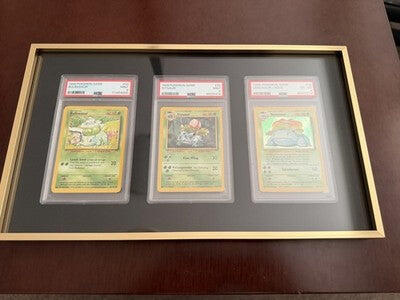
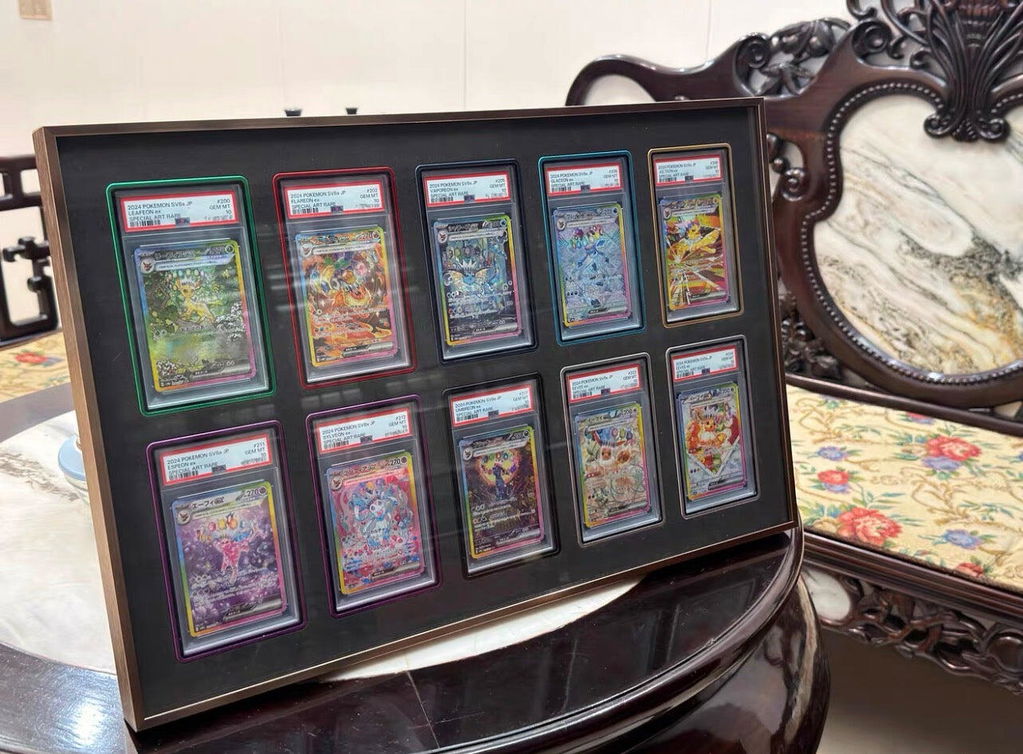


0 comments