


The Ultimate Trading Card Display Guide: Ideas, Frames, Shelves & Display Solutions for Every Collector
There is no single correct way to display a trading card collection.
The best setup depends on the cards being displayed, the available space, the level of protection required and the amount the collector wants to spend.
A small collection may only need a few acrylic stands on a desk. A larger graded collection may suit floating shelves, display cabinets or a purpose-built wall frame. Some collectors prefer binders and regularly rotate individual cards into stands, while others build complete feature walls using PSA, CGC, BGS or One Touch holders.
The display method should fit the collection rather than forcing every card into the same format.
That means considering several practical questions before buying anything.
- Are the cards raw, sleeved, graded or stored in magnetic holders?
- Will the display sit on a desk, shelf or wall?
- How much room is available?
- Will cards be changed regularly?
- Does the collection need protection from dust and handling?
- Is the aim a low-cost setup or a permanent premium display?
- Will the collection continue growing?
- Does the room follow a specific game, character, team or colour theme?
This guide covers trading card display ideas across almost every budget and collection type.
It includes simple desk stands, binders, top loaders, floating shelves, picture ledges, glass cabinets, acrylic display cases, shadow boxes, wall-mounted card displays and premium handmade aluminium trading card display frames.
It also explains how to display Pokémon cards, sports cards, Magic: The Gathering, Yu-Gi-Oh!, One Piece, Disney Lorcana, Dragon Ball, Digimon, Flesh and Blood, Star Wars Unlimited, Weiss Schwarz, Union Arena, Final Fantasy, Cardfight!! Vanguard and many other trading card games.
The aim is not to identify one universal “best” display.
It is to explain where each option works, what its limitations are and how collectors can build a display that suits their cards, room and budget.
Start With the Cards, Not the Display Product
One of the most common mistakes is buying shelves, frames or display cases before deciding which cards will actually be shown.
A display designed for raw cards will not necessarily suit graded slabs. A shelf that works for three favourite cards may become impractical when the collection grows to thirty. A large wall frame may look unnecessary if the cards are regularly removed for trading or deck building.
Before choosing a display method, separate the collection into clear groups.
Cards for Regular Play
Cards that remain in active decks should usually stay accessible.
They may be better suited to:
- Deck boxes.
- Binders.
- Top loaders.
- One Touch magnetic holders.
- Small rotating desk displays.
Cards for Long-Term Display
Cards selected for more permanent presentation may suit:
- Wall-mounted display frames.
- Acrylic display cases.
- Floating shelves.
- Picture ledges.
- Glass cabinets.
- Shadow boxes.
- Graded-card walls.
Cards for Storage Rather Than Display
Not every card needs to be visible.
Bulk cards, duplicates and lower-priority pieces are often better kept inside:
- Binders.
- Storage boxes.
- Drawer systems.
- Deck boxes.
- Labelled card organisers.
Separating storage from display prevents shelves and walls from becoming overcrowded.
Display the cards that benefit from being seen regularly. Keep bulk, duplicates and active deck cards in practical storage. A smaller, carefully organised display usually looks stronger than attempting to show everything at once.
What Types of Trading Cards Can Be Displayed?
Almost any trading card can become part of a display, provided the correct holder and display method are used.
The main distinction is not the game itself.
It is the format of the card and the protection around it.
Raw Trading Cards
Raw cards are cards that have not been professionally graded.
They may be displayed inside:
- Penny sleeves.
- Perfect-fit sleeves.
- Top loaders.
- Card savers.
- One Touch magnetic holders.
- Binder pages.
- Acrylic card stands.
- Purpose-built raw-card frames.
Graded Trading Cards
Professionally graded cards are sealed inside rigid holders, commonly referred to as slabs.
Popular grading companies include:
- PSA.
- CGC.
- BGS.
- SGC.
- TAG.
- ACE.
- Other regional and specialist grading companies.
Because slab dimensions vary, display products should be selected for the intended grading format.
Cards in One Touch Magnetic Holders
One Touch holders provide a consistent presentation format for ungraded cards.
They are especially useful for collectors who want cards to remain interchangeable without the grading label and permanent encapsulation of a slab.
Top-Loaded Cards
Top loaders remain one of the most affordable rigid protection methods.
They can be displayed using:
- Acrylic stands.
- Mini easels.
- Picture ledges.
- Floating shelves.
- Top-loader wall mounts.
- Custom frames.
Sealed Products and Larger Collectibles
Trading card displays often extend beyond individual cards.
Collectors may also show:
- Booster boxes.
- Elite Trainer Boxes.
- Collector tins.
- Starter decks.
- Structure decks.
- Commander decks.
- Deck boxes.
- Playmats.
- Figures.
- Signed memorabilia.
These items usually suit shelves, cabinets and acrylic display cases more than flat card frames.
Trading Card Display Ideas by Budget
A useful display does not need to begin with expensive furniture or custom framing.
Low-cost setups can still look organised when the cards, holders and spacing are consistent.
As the budget increases, collectors gain access to more permanent materials, larger capacities, better dust protection and stronger room integration.
Trading Card Display Ideas Under $10
The lowest budget range is best suited to individual cards, rotating favourites and simple desk displays.
Mini Easels
Small wooden or plastic easels can hold:
- Top loaders.
- One Touch holders.
- Graded slabs.
- Small framed cards.
They are inexpensive, easy to move and require no wall mounting.
The main limitation is stability. Lightweight easels may tip if the holder is thick or the desk is regularly bumped.
DIY Folded Card Stands
Simple stands can be made from folded card, foam board or spare packaging.
This can work for low-value cards or temporary setups.
Valuable cards should remain inside a suitable protective holder rather than resting directly against rough or adhesive materials.
Reusing Existing Shelves
A bookshelf, desk shelf or cabinet already in the room can become a basic card display.
Cards can be placed in stands between:
- Books.
- Deck boxes.
- Figures.
- Sealed products.
- Sports memorabilia.
Using existing furniture is often the cheapest way to test a display idea before investing in dedicated shelving.
Binder Display Pages
Binders remain one of the most economical ways to organise large raw-card collections.
They are not a permanent room display, but they allow the collection to be viewed easily and can support rotating wall or desk displays.
A collector may keep the full set in a binder and display only the strongest nine or twelve cards separately.
Printed Backgrounds
A simple printed background placed behind an acrylic stand can improve a small desk setup.
Examples include:
- Team colours.
- Mana symbols.
- Anime artwork.
- Set logos.
- Neutral black or grey card backdrops.
The background should not touch the card directly unless the card is inside a protective holder.
Trading Card Display Ideas From $10 to $30
This range opens up more reliable stands, better organisation and small wall-mounted options.
Acrylic Card Stands
Clear acrylic stands are among the most adaptable entry-level display products.
They work with:
- Raw cards in holders.
- Top loaders.
- One Touch magnetic holders.
- PSA slabs.
- CGC slabs.
- BGS slabs.
Clear acrylic visually recedes into the background, allowing the card artwork and slab label to remain the focus.
Single-Slab Desktop Stands
Purpose-built graded-card stands provide better support than generic easels.
They are useful for:
- Desk displays.
- Rotating favourites.
- Grading returns.
- Card photography.
- Retail counters.
Small Picture Ledges
Narrow picture ledges can hold several cards without requiring individual wall mounts.
They work well above:
- Desks.
- Gaming setups.
- Sideboards.
- Bedheads.
- Collector shelves.
A ledge also allows cards to be changed easily as the collection evolves.
Pegboard Card Displays
Pegboards provide a flexible wall system for cards, shelves, deck boxes and accessories.
They are useful for collectors who regularly rearrange the room.
The display can include:
- Small card shelves.
- Hooks for playmat tubes.
- Deck-box holders.
- Mini acrylic cases.
- Lightweight framed cards.
Top-Loader Wall Mounts
Individual top-loader mounts can create an inexpensive card wall.
This approach is highly modular because each card can be moved independently.
The trade-off is that a large arrangement may require more measuring and alignment than one complete frame.
Trading Card Display Ideas From $30 to $100
This is where displays begin to feel more permanent.
Collectors can use stronger shelving, small cabinets, shadow boxes and larger wall layouts.
Floating Shelves
Floating shelves remain one of the most useful display options across almost every trading card game.
They can hold:
- Graded slabs.
- One Touch holders.
- Deck boxes.
- Booster boxes.
- Collector tins.
- Figures.
- Small framed displays.
They are especially effective when the collection includes both cards and three-dimensional products.
Acrylic Wall Shelves
Clear acrylic wall shelves create a lighter appearance than timber or metal shelving.
They suit:
- Modern bedrooms.
- Gaming rooms.
- Home offices.
- Graded-card walls.
- Anime displays.
Because the shelf is transparent, the card holders appear to float against the wall.
Shadow Boxes
Shadow boxes are deeper than standard picture frames and can hold cards alongside:
- Tickets.
- Photographs.
- Small figures.
- Team patches.
- Event badges.
- Signed items.
They are particularly useful for mixed memorabilia displays.
Small Glass Cabinets
Compact glass cabinets provide basic dust protection and can display cards alongside figures or sealed products.
They require more floor or furniture space than wall-mounted options but allow the full collection to be viewed from several angles.
Cube Storage Displays
Cube shelves can separate different games, characters or teams into individual sections.
One cube might contain Pokémon, another sports cards and another Magic or Yu-Gi-Oh! products.
This is useful for mixed collections that would feel visually crowded on one open shelf.
Framed Playmats With Card Displays
A framed playmat can provide a large background feature, while cards are displayed on shelves or stands nearby.
This works especially well for:
- Magic: The Gathering rooms.
- Yu-Gi-Oh! rooms.
- Pokémon gaming setups.
- Flesh and Blood collections.
- Signed tournament playmats.
Trading Card Display Ideas From $100 to $300
This budget supports larger, more integrated displays with stronger materials and more deliberate planning.
Multi-Card Wall Frames
Purpose-built multi-card frames organise several cards into one grid.
They can be designed for:
- PSA slabs.
- CGC slabs.
- BGS slabs.
- One Touch magnetic holders.
- Top-loaded cards.
Multi-card frames reduce the need to align many individual mounts and create a more unified wall feature.
Larger Acrylic Display Cases
Acrylic display cases can protect:
- Sealed booster boxes.
- Collector boxes.
- Figures.
- Signed memorabilia.
- Premium deck boxes.
- Small card-and-figure arrangements.
Lit Display Cabinets
Cabinets with integrated lighting can create a more formal collector display.
They are useful for mixed collections that include cards, figures and sealed products.
The lighting should be positioned carefully to avoid glare across slabs and acrylic holders.
Complete Desk Display Systems
A coordinated desk setup may combine:
- Acrylic card stands.
- A small wall frame.
- Floating shelves.
- Deck-box storage.
- LED lighting.
- Framed artwork.
This can create a complete collector area without requiring a dedicated room.
Premium Trading Card Display Solutions
Premium displays are generally chosen when the collection is intended to become a permanent feature of the room.
At this level, collectors place greater emphasis on:
- Materials.
- Holder compatibility.
- Grid accuracy.
- Construction quality.
- Finish options.
- Wall mounting.
- Modular expansion.
- Integration with the room.
Purpose-Built Trading Card Display Frames
Unlike general picture frames, purpose-built card frames are designed around the dimensions and depth of the intended holder.
This creates more reliable spacing and alignment across multi-card layouts.
Handmade Aluminium Trading Card Display Frames
Premium handmade aluminium frames extend the concept further by combining:
- Aluminium alloy construction.
- Purpose-built PSA, CGC, BGS or One Touch compatibility.
- Multiple grid sizes.
- Black, silver, gold and copper or bronze finishes.
- Hand assembly and inspection.
- Made-to-order production.
- Modular wall-display planning.
They are particularly suitable for collectors building large, structured wall displays rather than temporary desk arrangements.
Smaller grids can create compact office displays, while large formats can hold 25, 36, 45, 50 or 54 cards.
Several frames can also be combined into modular collector walls, allowing separate games, slab types or themes to remain organised.
A higher price does not automatically make a display more suitable. Choose the lowest-cost method that still provides the protection, capacity, appearance and flexibility required by the collection.
Displaying Raw Trading Cards
Raw cards offer the widest range of display options because the collector can choose the holder rather than being limited to a grading slab.
The main challenge is balancing presentation with protection and accessibility.
Raw Cards in Penny Sleeves
Penny sleeves provide basic surface protection but very little structural support.
They are better suited to:
- Binders.
- Storage boxes.
- Temporary sorting.
- Cards that will later enter a stronger holder.
They are generally not suitable as a standalone display format.
Raw Cards in Top Loaders
Top loaders are inexpensive, rigid and widely available.
They work well with:
- Acrylic stands.
- Picture ledges.
- Floating shelves.
- Individual wall mounts.
- Custom top-loader frames.
Raw Cards in Card Savers
Card savers are commonly used for grading submissions and temporary protection.
Their wider flexible shape is less visually structured than a top loader or One Touch holder, so they are usually better for storage and submission than permanent display.
Raw Cards in One Touch Magnetic Holders
One Touch holders provide a cleaner premium format for raw cards.
They are suitable for:
- Desktop stands.
- Floating shelves.
- Acrylic displays.
- Purpose-built wall frames.
- Large interchangeable card grids.
They are especially useful for collectors who want the artwork to remain unobstructed by a grading label.
Raw Cards in Binders
Binders remain the most space-efficient way to organise large raw-card collections.
They allow sets to be viewed in order and can be combined with a rotating display system.
For example, the full set can remain in the binder while nine selected cards are displayed on the wall.
Displaying PSA, CGC, BGS and Other Graded Cards
Graded slabs are thicker and heavier than raw-card holders, so the display method needs to support both the holder dimensions and the finished weight.
Individual Slab Stands
These provide the simplest graded-card display.
They work well for desks, shelves and rotating favourites.
Slab Shelves
Narrow shelves can display several slabs in one row.
This allows cards to be changed easily but may require a front lip or stand to prevent movement.
Wall-Mounted Slab Holders
Individual slab mounts create a highly flexible wall.
They are useful for collectors who frequently rearrange the order or spacing.
Multi-Slab Display Frames
Purpose-built frames create consistent rows and columns across a complete collection.
They are particularly useful for larger PSA, CGC or BGS displays where alignment matters.
Glass Cabinets for Graded Cards
Cabinets allow graded cards to sit beside sealed products, figures and memorabilia.
They use more floor space than wall frames but provide more flexibility for mixed collections.
Displaying One Touch Magnetic Holders
One Touch displays sit between raw-card flexibility and graded-card presentation.
They provide a rigid, consistent holder without requiring the card to be professionally graded.
Collectors may use One Touch holders for:
- Modern chase cards.
- Complete visual sets.
- Autographs.
- Patch cards.
- Favourite artwork.
- Cards that may later be graded.
- Regularly changing wall displays.
One Touch holders work with desktop stands, shelves, acrylic cases and purpose-built multi-card frames.
They are particularly effective for large art-focused displays because the holder format remains consistent while the cards can be changed at any time.
Trading Card Display Shelves: Choosing the Right Style
Shelves are one of the most flexible ways to display trading cards because they can support cards, slabs, sealed products, figures and other collectibles within the same area.
The best shelf depends on the weight of the collection, the room style and how frequently the display will be changed.
Floating Shelves
Floating shelves create a clean wall display without visible floor supports.
They work well for:
- PSA, CGC and BGS slabs.
- One Touch magnetic holders.
- Deck boxes.
- Booster boxes.
- Collector tins.
- Small acrylic display cases.
- Figures and statues.
Floating shelves are especially useful when the collector wants to combine cards with other items from the same game, team or character theme.
The shelf depth should suit the holder and any display stand being used. A shelf that is too narrow may leave graded slabs unstable, while an unnecessarily deep shelf can occupy more visual space than the cards require.
Picture Ledges
Picture ledges are narrower than ordinary shelves and often include a raised front edge.
They are useful for:
- Rows of graded cards.
- Top loaders.
- One Touch holders.
- Small framed cards.
- Rotating card displays.
The raised edge can help prevent holders from sliding forward, although collectors should still confirm that the ledge is deep and strong enough for the intended slab format.
Acrylic Shelves
Clear acrylic shelves reduce the amount of visible structure around the cards.
They suit:
- Modern gaming rooms.
- Minimal collector walls.
- Anime bedrooms.
- Home offices.
- Cool-toned displays.
- Graded-card collections.
Acrylic shelves can make slabs appear to float against the wall, but they should still be selected according to the combined weight of the holders.
Timber Shelves
Timber shelves provide a warmer and more traditional appearance.
They work particularly well with:
- Vintage sports cards.
- Magic: The Gathering collections.
- Classic Pokémon cards.
- Traditional offices.
- Libraries.
- Collector rooms using timber furniture.
Metal Shelves
Metal shelving suits industrial interiors, modern gaming rooms and larger mixed collections.
It can support:
- Heavy binders.
- Bulk storage boxes.
- Sealed products.
- Display cases.
- Large numbers of graded cards.
Metal shelves should still include stable stands or front supports when slabs are displayed upright.
Cube Storage
Cube units create separate compartments that can be assigned to different games, teams, characters or product types.
For example:
- One cube for Pokémon.
- One cube for sports cards.
- One cube for Magic: The Gathering.
- One cube for Yu-Gi-Oh!
- One cube for sealed products.
- One cube for figures.
This approach helps mixed collections remain organised without requiring every item to share one visual theme.
Corner Shelves
Corner shelves make use of wall areas that might otherwise remain empty.
They are best suited to smaller displays, figures, sealed products and a limited number of card stands.
They are less suitable for large, perfectly aligned card grids.
Wall-Mounted Trading Card Display Ideas
Wall-mounted displays save desk and shelf space while allowing cards to become a more permanent part of the room.
There are several approaches, ranging from individual mounts to large purpose-built frames.
Individual Card Mounts
Individual mounts allow each card holder to be positioned independently.
They can be used with:
- Top loaders.
- One Touch holders.
- PSA slabs.
- CGC slabs.
- BGS slabs.
This method provides maximum flexibility because cards can be added, removed and rearranged without replacing the complete display.
The main challenge is alignment. A large wall containing dozens of individual mounts requires accurate measuring and consistent spacing.
Adhesive Card Mounts
Some lightweight mounts use removable adhesive strips rather than screws or wall anchors.
These can suit small displays and rental properties, but collectors should check:
- The rated weight.
- The wall surface.
- The condition of the paint.
- The weight of the completed card holder.
- Whether the adhesive remains reliable over time.
Adhesive mounting should not be assumed to suit heavier slabs or valuable collections without confirming the product rating.
Rail and Track Systems
A rail system allows mounts or shelves to be repositioned along one fixed wall track.
This can be useful for:
- Frequently changing displays.
- Retail stores.
- Collector studios.
- Mixed memorabilia walls.
- Temporary exhibitions.
Shadow Box Walls
Several shadow boxes can be arranged together to display cards alongside three-dimensional items.
One box might contain a card and event ticket, while another contains a card and signed photograph.
This approach works well for sports and entertainment memorabilia but usually occupies more wall depth than a conventional frame.
Multi-Card Wall Frames
A purpose-built multi-card frame places the collection into one structured grid.
This reduces the need to measure and align every card independently.
It suits:
- Completed card sets.
- Grading returns.
- Player or character collections.
- PSA, CGC and BGS walls.
- One Touch artwork displays.
- Large collector rooms.
Modular Frame Walls
Several matching frames can be combined into a larger modular display.
Collectors may use:
- Multiple frames in the same size.
- Different grid sizes in one finish.
- Separate frames for each slab type.
- Separate frames for each trading card game.
- One contrasting centrepiece frame.
Modular walls allow the display to grow without replacing the original frames.
Desktop Trading Card Display Ideas
Desktop displays are useful for small collections, rotating favourites and collectors who do not want to mount anything to the wall.
Single-Card Acrylic Stands
Acrylic stands provide a simple display for one slab, top loader or One Touch holder.
They work beside:
- Monitors.
- Books.
- Speakers.
- Deck boxes.
- Gaming accessories.
Multi-Card Desktop Stands
Multi-card stands hold several cards within one compact footprint.
They may be arranged:
- In one straight row.
- Across several stepped levels.
- In a compact grid.
- Around one central card.
Tiered stands can improve visibility by raising the rear cards above the front row.
Rotating Displays
Rotating platforms can be used for cards, sealed products and figures.
They are most useful for:
- Product photography.
- Retail counters.
- Video backgrounds.
- Individual premium cards.
- Small acrylic cases.
Desk Shelves and Monitor Risers
A monitor shelf can create a dedicated display level above the main desk surface.
Cards can be positioned beneath or beside the monitor without reducing the area available for work, gaming or deck building.
Desk Cabinets
Small clear cabinets provide better dust protection than open stands.
They are useful for collectors who want a compact enclosed display but do not have floor space for a full cabinet.
Trading Card Display Cabinets
Cabinets are particularly useful when the collection includes cards, sealed products, figures and memorabilia rather than cards alone.
Glass Display Cabinets
Glass cabinets provide visibility from several angles and basic dust protection.
They can display:
- Graded cards.
- One Touch holders.
- Booster boxes.
- Figures.
- Signed memorabilia.
- Collector tins.
- Deck boxes.
The main disadvantages are the amount of floor space required and the possibility of reflections from room lighting.
Acrylic Display Cabinets
Acrylic cabinets are generally lighter than glass and can provide a cleaner modern appearance.
They may be placed on desks, shelves or cabinets depending on their size.
Lit Cabinets
Integrated lighting can improve visibility, but it should be positioned to avoid reflecting directly from slab surfaces.
Adjustable lighting is useful because cards, sealed products and figures may require different angles.
Locked Cabinets
A lockable cabinet can reduce casual handling and access, particularly in shared spaces or retail environments.
It should not be treated as a substitute for a safe or specialist security system for very valuable collections.
Cabinet Shelf Risers
Risers help create several visible levels within one cabinet.
Without risers, cards placed behind the front row may be difficult to see.
Displaying Trading Cards in a Bedroom
Bedrooms often require displays that use vertical space without occupying too much floor area.
Suitable ideas include:
- Floating shelves above a desk.
- Acrylic shelves.
- Small wall-mounted frames.
- Picture ledges.
- Cards beside anime posters or artwork.
- Under-bed storage for bulk cards.
- One compact cabinet.
- A framed playmat.
A bedroom can become visually crowded quickly, so it is often better to create one main display wall rather than distributing cards across every surface.
Display Ideas for Small Bedrooms
Small-room options include:
- A three-card or nine-card wall frame.
- One narrow ledge above the desk.
- Acrylic stands on a monitor shelf.
- A rotating display containing only current favourites.
- Vertical binder storage.
Anime-Themed Bedrooms
Pokémon and Yu-Gi-Oh! rooms may combine cards with:
- Posters.
- Wall scrolls.
- Rugs.
- Figures.
- LED lighting.
- Playmats.
The card display should use a consistent frame, shelf or holder style so it remains visually organised beside brighter decorations.
Displaying Trading Cards in a Gaming Room
Gaming rooms can support larger displays, stronger lighting and more deliberate colour themes.
Common ideas include:
- A graded-card wall behind the desk.
- Floating shelves above monitors.
- Acrylic cases for figures and sealed products.
- Framed playmats.
- Modular trading card frames.
- LED shelf lighting.
- Deck-box storage.
- A dedicated card-sorting desk.
Using RGB Lighting
RGB lighting can reinforce a game or character theme, but excessive colour movement may compete with the card artwork.
Static or slowly changing colours generally create a cleaner display than constant flashing effects.
Gaming Desk Backdrops
A display behind the monitor may include:
- One large card frame.
- Several small modular frames.
- Two floating shelves.
- A framed playmat.
- Cards arranged around wall art.
The display should not interfere with monitor ventilation, lighting or access to cables.
Displaying Trading Cards in a Home Office
Home offices usually benefit from more restrained displays.
Black, silver and neutral framing can help the cards feel integrated with the workspace rather than making the room appear heavily themed.
Suitable options include:
- A small multi-card frame above the desk.
- One picture ledge.
- Acrylic shelves beside the monitor.
- A single premium card in a stand.
- A cabinet behind the desk.
- A larger aluminium frame on a side wall.
Collectors using the office for video calls may position a structured card wall behind the desk as part of the background.
Displaying Trading Cards in a Living Room
Living-room displays need to coordinate with the wider interior and other people using the space.
A premium wall frame, cabinet or small group of shelves usually integrates more easily than several unrelated card stands spread across the room.
Possible approaches include:
- One large frame above a sideboard.
- A small display cabinet.
- Cards combined with books and artwork.
- Neutral black or silver frames.
- Copper or bronze finishes beside timber furniture.
- A modular wall using consistent spacing.
Large, colourful anime décor may be better suited to a dedicated room unless it already matches the living-room design.
Displaying Trading Cards in a Hallway or Staircase
Hallways and staircases provide useful wall space but require narrower layouts and careful mounting.
Hallway Displays
Suitable options include:
- Single-card frames.
- Three-card frames.
- Vertical modular arrangements.
- Narrow picture ledges.
- A chronological card sequence.
Frames should not project so far from the wall that they restrict the walkway.
Staircase Displays
Cards can follow the angle of the staircase using individual frames or small modular groups.
Alignment should be planned against the stair line rather than the floor alone.
Large heavy frames are generally better suited to flat uninterrupted walls.
Displaying Trading Cards in a Collector Room
A dedicated collector room allows several display methods to be combined without forcing every item into one format.
A complete room may include:
- Premium aluminium wall frames.
- Floating shelves.
- Acrylic display cases.
- Glass cabinets.
- Framed playmats.
- Sealed product shelves.
- Figures and memorabilia.
- Closed storage for bulk cards.
- A central table for sorting and viewing cards.
The room should still distinguish between display and storage.
Keeping bulk cards and duplicates inside closed boxes or cabinets makes the visible collection easier to understand.
Displaying Trading Cards in a Retail Store or Hobby Studio
Retail displays need to support frequent changes, clear visibility and secure mounting.
Useful methods include:
- Locked cabinets.
- Wall-mounted slab holders.
- Premium multi-card frames.
- Rotating acrylic cases.
- Feature shelves.
- Modular grid walls.
- Countertop stands.
Featured Inventory Walls
A store can use one structured wall to display:
- Premium cards.
- Grading examples.
- New releases.
- Staff collections.
- Recent submissions.
- Cards grouped by price or game.
Convention and Temporary Displays
Portable stands, acrylic cases and lightweight modular panels are usually more practical for conventions than permanent wall frames.
Valuable cards should remain supervised and secured appropriately.
Trading Card Display Styles
The same cards can look very different depending on the surrounding materials, colours and layout.
Minimalist Displays
Minimal displays use:
- Neutral walls.
- Black or silver frames.
- Consistent spacing.
- Limited visible accessories.
- One or two display methods.
This style works particularly well for graded cards and modern interiors.
Modern Displays
Modern setups often combine:
- Aluminium frames.
- Clear acrylic shelves.
- LED lighting.
- Metal furniture.
- Large structured grids.
Vintage Displays
Vintage cards can be paired with:
- Timber shelves.
- Copper or bronze finishes.
- Warm lighting.
- Historic photographs.
- Traditional cabinets.
Industrial Displays
Industrial rooms may use:
- Black metal shelves.
- Concrete or dark walls.
- Track lighting.
- Aluminium display frames.
- Visible structural elements.
Luxury Collector Displays
Premium rooms usually focus on material consistency and controlled spacing rather than excessive decoration.
They may include:
- Handmade aluminium frames.
- Integrated lighting.
- Custom cabinets.
- Gold or bronze accent finishes.
- Large feature walls.
- Separate displays for each collection type.
Anime Displays
Anime rooms may combine trading cards with posters, figures, rugs and themed lighting.
Consistent black, silver or clear display products help balance the stronger colours of the surrounding décor.
Sports Memorabilia Displays
Sports cards can be combined with:
- Framed jerseys.
- Signed balls.
- Helmets.
- Photographs.
- Ticket stubs.
- Championship memorabilia.
Wall frames keep the cards organised while cabinets and acrylic cases hold larger objects.
Lighting Trading Card Displays
Lighting should improve visibility without producing strong glare or exposing cards to prolonged direct sunlight.
Ambient Lighting
General room lighting provides the baseline visibility for the complete display.
Picture Lights
Picture lights work well above individual frames and feature walls.
The light should cover the full width of the display evenly.
LED Shelf Lighting
LED strips can be installed beneath shelves or inside cabinets.
Indirect lighting usually appears cleaner than visible strips wrapped around every card.
Spotlights
Adjustable spotlights can highlight large collector walls, but the angle should be tested against reflective slabs and acrylic glazing.
Warm Lighting
Warm lighting suits:
- Gold frames.
- Copper and bronze finishes.
- Timber shelves.
- Vintage sports cards.
- Classic interiors.
Cool Lighting
Cool lighting suits:
- Silver frames.
- Black frames.
- Modern gaming rooms.
- Acrylic shelving.
- Blue-Eyes and Cyber Dragon displays.
Direct Sunlight
Cards, slabs, labels, posters and sealed products should generally be kept away from prolonged direct sunlight.
Basic UV-protection acrylic may reduce some exposure, but it does not make the display suitable for continuous direct sunlight.
Test lighting with the actual slabs and holders in position. A light that appears suitable on an empty wall may create strong reflections once acrylic glazing and graded-card surfaces are installed.
How to Display Pokémon Cards
Pokémon collections can be displayed by character, set, rarity, generation, artwork style, language or grading result.
The wide range of card colours and visual treatments makes Pokémon suitable for both simple shelf displays and large structured walls.
Pokémon Evolution Displays
Evolution lines create natural two-card or three-card layouts.
Examples include:
- Bulbasaur, Ivysaur and Venusaur.
- Charmander, Charmeleon and Charizard.
- Squirtle, Wartortle and Blastoise.
- Gastly, Haunter and Gengar.
- Dratini, Dragonair and Dragonite.
- Ralts, Kirlia and Gardevoir.
A small wall frame, picture ledge or row of acrylic stands can keep the sequence visually clear.
Starter Pokémon Displays
Starter collections can be organised by generation, type or final evolution.
A collector might display:
- The original Kanto starters.
- One starter trio from every generation.
- Only final evolutions.
- Fire, Water and Grass starters in separate rows.
- Japanese and English versions together.
Eeveelution Displays
Eeveelutions are especially suited to nine-card grids, modular walls and colour-based arrangements.
Collectors may use:
- A nine-card wall frame.
- Individual acrylic stands.
- A picture ledge.
- One card per shelf cube.
- A large graded-card display.
The cards can be arranged by release date, type colour or visual balance rather than a fixed numerical order.
Charizard Displays
Charizard collections often include cards from several eras, languages and rarity types.
Display ideas include:
- Vintage cards in one row and modern cards in another.
- PSA slabs arranged by grade.
- Different artworks in a One Touch wall frame.
- Gold or black frames around premium cards.
- A single centrepiece slab with supporting cards nearby.
Illustration Rare and Full-Art Displays
Illustration Rares, Special Illustration Rares and full-art cards work particularly well in One Touch holders because the artwork remains the dominant visual element.
Collectors can organise them by:
- Artwork colour.
- Set.
- Artist.
- Pokémon type.
- Release year.
- Scene or environment.
Vintage Pokémon Displays
Vintage Pokémon cards can be paired with warmer materials and more restrained room styling.
Suitable options include:
- Timber shelves.
- Copper or bronze frame finishes.
- Warm lighting.
- Black frames for stronger contrast.
- Small groups rather than heavily crowded walls.
Sealed Pokémon Product Displays
Pokémon displays may also include:
- Elite Trainer Boxes.
- Booster boxes.
- Collector tins.
- Theme decks.
- Premium collection boxes.
- Figures and plush items.
Sealed products usually work better on shelves or inside acrylic display cases than inside flat wall frames.
How to Display Sports Cards
Sports card collections can be structured around one athlete, team, season, championship, card manufacturer or type of memorabilia.
The display method should account for the wide range of card thicknesses and holder formats used across sports collecting.
Rookie Card Displays
Rookie-card displays may include:
- One athlete's main rookie cards.
- Several rookie cards from one draft class.
- A rookie card beside a later autograph or championship card.
- Different graded examples of the same rookie.
- One rookie from each era of a team.
Player Career Displays
A career display can follow an athlete from early cards through major milestones and later seasons.
Rows may represent:
- Rookie season.
- First championship.
- Most valuable player season.
- Record-breaking years.
- Final season.
- Hall of Fame recognition.
Team Displays
Team collections can be organised by:
- Starting lineup.
- Championship roster.
- Hall of Fame players.
- Different eras.
- One card per position.
- Franchise legends and current players.
Black or silver frames usually provide a neutral border while allowing team colours to remain visible through the card artwork.
Autograph and Patch Card Displays
Autograph and memorabilia cards may be thicker than standard cards.
Before choosing a One Touch holder, stand or frame, confirm the required holder depth.
These cards can be combined with:
- Signed jerseys.
- Signed balls.
- Helmets.
- Tickets.
- Photographs.
- Championship memorabilia.
Vintage Sports Card Displays
Vintage baseball, basketball, football and hockey cards can suit:
- Timber shelving.
- Copper or bronze frames.
- Traditional offices.
- Warm picture lighting.
- Smaller curated groups.
Modern Sports Card Displays
Modern parallels, refractors, autographs and graded rookies often work well with:
- Black aluminium frames.
- Silver metal frames.
- Clear acrylic shelves.
- Cool-neutral lighting.
- Minimal room layouts.
Displaying Baseball Cards
Baseball displays may focus on:
- New York Yankees.
- Los Angeles Dodgers.
- Boston Red Sox.
- Chicago Cubs.
- Atlanta Braves.
- Historic players.
- World Series collections.
Displaying Basketball Cards
Basketball collections may feature:
- Los Angeles Lakers.
- Boston Celtics.
- Chicago Bulls.
- Golden State Warriors.
- New York Knicks.
- Rookie cards.
- Championship and autograph cards.
Displaying American Football Cards
American football displays may be organised around:
- Dallas Cowboys.
- Kansas City Chiefs.
- Green Bay Packers.
- Philadelphia Eagles.
- San Francisco 49ers.
- Quarterbacks.
- Super Bowl collections.
Displaying Soccer and Football Cards
Football card displays may include:
- Real Madrid.
- Barcelona.
- Manchester United.
- Liverpool.
- Arsenal.
- Chelsea.
- International tournament cards.
- Rookie and autograph collections.
Displaying Formula 1 and Motorsport Cards
Formula 1 displays can combine cards with:
- Scale model cars.
- Mini helmets.
- Race programmes.
- Signed photographs.
- Circuit artwork.
- Ferrari, McLaren, Mercedes or Red Bull Racing items.
How to Display Magic: The Gathering Cards
Magic: The Gathering displays often reflect the way the collector plays or organises the game.
Collections may be structured around Commander decks, colours, guilds, artists, sets or older premium cards.
Commander Displays
Favourite Commander cards can be displayed:
- Beside the matching deck box.
- Inside One Touch magnetic holders.
- On acrylic stands.
- In a multi-card wall frame.
- Above a Commander deck shelf.
Collectors with many decks can organise the display by colour identity, power level or the order in which the decks were built.
Five-Colour Displays
The five Magic colours create a natural five-card arrangement.
Collectors may choose one card representing:
- White.
- Blue.
- Black.
- Red.
- Green.
A five-card wall frame or row of stands can keep the colour sequence clear.
Guild and Colour-Identity Displays
Guild collections may be organised around:
- Azorius.
- Dimir.
- Rakdos.
- Gruul.
- Selesnya.
- Orzhov.
- Izzet.
- Golgari.
- Boros.
- Simic.
Reserved List and Vintage Displays
Reserved List cards, original dual lands and older graded cards often suit more restrained displays.
Suitable options include:
- Black display frames.
- Gold accent frames.
- Copper or bronze finishes.
- Timber shelves.
- Secure cabinets.
- Warm-neutral lighting.
Secret Lair Displays
Secret Lair cards are well suited to visual display because many releases use distinctive artwork and themed treatments.
They can be organised by:
- Artist.
- Release.
- Franchise crossover.
- Foil treatment.
- Colour identity.
- Artwork style.
Playmat and Card Combinations
A framed playmat can form the main artwork within an MTG room, with matching cards displayed on shelves or inside a smaller wall frame nearby.
How to Display Yu-Gi-Oh! Cards
Yu-Gi-Oh! collections often have strong monster, character and anime-era themes.
This makes them especially suited to coordinated displays using posters, rugs, figures, coloured lighting and wall frames.
Blue-Eyes White Dragon Displays
A Blue-Eyes display may include:
- Different card artworks.
- Vintage and modern printings.
- Blue-Eyes Ultimate Dragon.
- Kaiba memorabilia.
- Dragon figures.
- Silver or black display frames.
- Cool blue lighting.
Dark Magician Displays
Dark Magician collections can combine:
- Dark Magician cards.
- Dark Magician Girl cards.
- Magician support cards.
- Yugi or Atem artwork.
- Black frames.
- Gold accent frames.
- Purple ambient lighting.
Exodia Displays
The five pieces of Exodia create a natural five-card display.
They can be shown using:
- A five-card wall frame.
- Five individual stands.
- A picture ledge.
- A central Exodia figure with cards arranged around it.
- Gold or bronze room accents.
Egyptian God Card Displays
Slifer the Sky Dragon, Obelisk the Tormentor and The Winged Dragon of Ra work naturally in a three-card frame or symmetrical shelf arrangement.
Gold frames, black backgrounds and warm lighting can reinforce the Ancient Egyptian theme.
Ghost Rare Displays
Ghost Rares should be lit carefully because their reflective finish can disappear under poor lighting or become obscured by glare.
Controlled side lighting, neutral backgrounds and enough spacing between cards usually provide a clearer result.
Anime-Era Displays
Collectors may divide one room or wall into:
- Duel Monsters.
- GX.
- 5D's.
- ZEXAL.
- ARC-V.
- VRAINS.
Using consistent frame colours or shelf materials helps the different series remain visually connected.
How to Display One Piece Cards
One Piece Card Game collections can be organised around characters, crews, leaders, colours, manga rares or card sets.
Character Displays
Popular character-focused collections may feature:
- Monkey D. Luffy.
- Roronoa Zoro.
- Nami.
- Sanji.
- Trafalgar Law.
- Portgas D. Ace.
- Shanks.
- Boa Hancock.
Crew Displays
Cards can be grouped by:
- Straw Hat Pirates.
- Red-Haired Pirates.
- Heart Pirates.
- Whitebeard Pirates.
- Marines.
- Revolutionary Army.
Manga Rare Displays
Manga rares and premium alternate-art cards often suit individual stands, graded slabs or small framed groups where the artwork remains easy to examine.
Leader Card Displays
Leader cards can be arranged by colour, set or deck theme using One Touch holders, stands or a structured wall grid.
How to Display Disney Lorcana Cards
Disney Lorcana collections can be organised around characters, films, ink colours, Enchanted cards or complete sets.
Character Displays
Collectors may focus on:
- Mickey Mouse.
- Elsa.
- Stitch.
- Maleficent.
- Simba.
- Rapunzel.
- Disney villains.
- Princess collections.
Film-Based Displays
Cards can be grouped by film or franchise, such as:
- Frozen.
- The Lion King.
- Beauty and the Beast.
- Aladdin.
- The Little Mermaid.
- Lilo & Stitch.
Enchanted Card Displays
Enchanted cards can be displayed individually or as part of a premium graded or One Touch collection.
Black or silver framing usually allows the colourful artwork to remain dominant.
How to Display Dragon Ball Cards
Dragon Ball collections can be arranged by character, transformation, series, battle or card rarity.
Popular themes include:
- Goku transformations.
- Vegeta collections.
- Gohan cards.
- Frieza forms.
- Broly cards.
- Dragon Ball Super.
- Dragon Ball Z.
- Fusion characters.
Bright card artwork often works well against black frames, while gold may suit premium transformation or trophy-style collections.
How to Display Digimon Cards
Digimon collections can follow evolution lines, tamers, colours, series or favourite Digimon.
Display concepts include:
- Agumon evolution lines.
- Gabumon evolution lines.
- Royal Knights.
- Seven Great Demon Lords.
- Tamer and partner combinations.
- Alternate-art collections.
Evolution-based themes work particularly well in horizontal frames, picture ledges and modular card rows.
How to Display Flesh and Blood Cards
Flesh and Blood displays may be organised around heroes, classes, equipment, Cold Foils, Marvel cards or tournament achievements.
Collectors may use:
- Hero and signature-weapon pairings.
- Equipment sets.
- Cold Foil collections.
- Marvel rarity displays.
- Competitive deck histories.
- Signed or event-stamped cards.
Black, silver and dark metal displays often suit the game's detailed fantasy artwork.
How to Display Star Wars Unlimited Cards
Star Wars Unlimited collections can be organised around characters, factions, eras or card treatments.
Possible themes include:
- Jedi.
- Sith.
- Rebel Alliance.
- Galactic Empire.
- Mandalorians.
- Clone Wars.
- Original Trilogy.
- Hyperspace and Showcase cards.
Black and silver frames work naturally with the franchise's space and technology themes.
How to Display Weiss Schwarz Cards
Weiss Schwarz collectors often build displays around one anime series, character, voice-actor signature or rarity type.
Display ideas include:
- One frame per anime series.
- Signed card collections.
- Character timelines.
- Climax card displays.
- Trial deck and booster set combinations.
- Graded premium cards.
Because the artwork can vary dramatically between franchises, black or clear display products provide the most adaptable background.
How to Display Union Arena Cards
Union Arena cards can be grouped by franchise, character, colour or deck.
Collectors may use separate shelves or frames for each anime property to prevent unrelated visual themes from blending together.
Displays may include:
- Character cards.
- Rare alternate artworks.
- Promotional cards.
- Signed or stamped releases.
- Deck leaders.
How to Display Final Fantasy Trading Cards
Final Fantasy Trading Card Game collections can be structured around individual games, characters, jobs or artwork.
Possible displays include:
- Final Fantasy VII characters.
- Final Fantasy X collections.
- Heroes and villains.
- Summons.
- Character progression.
- Premium foil cards.
Silver and black frames suit modern game artwork, while gold or bronze can complement fantasy and classic-era collections.
How to Display Cardfight!! Vanguard Cards
Cardfight!! Vanguard collections can be organised by clan, nation, unit grade or favourite Vanguard.
Suitable display themes include:
- Royal Paladin.
- Kagero.
- Shadow Paladin.
- Oracle Think Tank.
- Dragon Empire.
- Dark States.
- Brandt Gate.
- Stoicheia.
Leader or signature unit cards can be displayed beside deck boxes, playmats or clan artwork.
How to Display Sorcery, Altered, KeyForge and Other Card Games
Smaller and emerging card games can still support highly focused displays.
Collectors may display:
- Sorcery: Contested Realm artwork.
- Altered heroes and factions.
- KeyForge decks and unique deck identities.
- MetaZoo cryptids.
- Grand Archive characters.
- Battle Spirits Saga cards.
- Force of Will collections.
- Universus cards.
- Star Trek and entertainment trading cards.
- Garbage Pail Kids.
- Marvel and DC trading cards.
- Panini and Topps entertainment releases.
The same principles still apply.
Select a suitable protective holder, choose a display method that fits the room and organise the cards around a clear visual or collecting theme.
Mixing Different Trading Card Games in One Display
A display does not need to contain only one game.
Mixed collections can work when the cards share another unifying element.
Mixing by Colour
Cards from different games can be arranged according to artwork colour.
For example:
- Blue cards from Pokémon, Magic and Yu-Gi-Oh!.
- Gold cards from sports, Lorcana and Pokémon.
- Black and red cards from Magic, Dragon Ball and One Piece.
Mixing by Character Type
A collector may combine:
- Dragons from several games.
- Wizards and spellcasters.
- Robots and mechanical characters.
- Sports legends across several leagues.
- Disney and anime characters.
Mixing by Rarity
Another approach is grouping:
- Graded chase cards.
- Signed cards.
- Serialized cards.
- Promotional cards.
- Tournament prizes.
Using One Holder Format
A mixed display usually looks more controlled when every card uses the same external holder, such as PSA slabs or One Touch magnetic holders.
The consistent holder format provides visual order even when the card games differ.
Mixed trading card displays work best when the cards share one clear connection, such as colour, rarity, character type or holder format. Combining unrelated cards without a visible system can make the display difficult to read.
How to Plan a Trading Card Display Wall
A trading card display wall should be planned around the full wall rather than one frame, shelf or cabinet at a time.
This becomes especially important when the collection is expected to grow.
A display that looks balanced with nine cards may become difficult to expand if the first frame occupies the only practical position for a larger modular layout.
Before mounting anything, consider:
- The total usable wall width and height.
- The size of nearby furniture.
- The number and type of cards being displayed.
- Whether the collection will grow.
- Whether frames, shelves and cabinets will be combined.
- The direction and intensity of room lighting.
- The wall construction and mounting requirements.
- The main viewing position.
Choose a Main Focal Point
Most collector walls benefit from one clear primary display.
This may be:
- A large multi-card frame.
- A framed playmat.
- A central glass cabinet.
- A signed jersey.
- A premium graded card.
- A large character or team display.
Supporting shelves, smaller frames and artwork can then be positioned around that main feature.
Plan the Complete Arrangement Before Mounting
Use paper templates, painter's tape or measured outlines to map the intended positions on the wall.
This helps identify:
- Uneven spacing.
- Frames that are too large for the area.
- Displays mounted too close to furniture.
- Insufficient room for future expansion.
- Conflicts with lights, power outlets or shelving.
Use Consistent Spacing
Consistent spacing helps separate displays while keeping them visually connected.
When several frames share one row, use the external frame edges as the main reference points.
Do not rely only on the card openings because different grid sizes may have different internal spacing.
Balance Large and Small Objects
A wall containing one large frame and several very small items may feel unbalanced if all the smaller pieces are placed on one side.
Balance can be created using:
- Matching shelves.
- Two smaller frames.
- A framed playmat.
- Acrylic cases.
- Artwork of similar visual weight.
Leave Open Wall Space
Open space is part of the display.
Filling every section of wall can make even valuable cards difficult to distinguish.
Larger frames and premium displays usually benefit from more space around them than smaller desk or shelf arrangements.
Grid-Based Trading Card Display Ideas
Grid layouts create order by placing cards into repeated rows and columns.
They are particularly useful for graded slabs and One Touch holders because each card uses a consistent external format.
Three-Card Grids
Three-card displays work well for:
- Pokémon evolution lines.
- Egyptian God Cards.
- Three sports legends.
- Three related commanders.
- Three versions of one character.
- A compact grading return.
Four-Card Grids
A four-card arrangement can create a simple two-by-two composition.
It suits:
- Four premium cards.
- Four team members.
- Four cards from one release.
- Four versions of one artwork.
- Small autograph collections.
Five-Card Grids
Five-card layouts are useful for collections with a natural five-part structure.
Examples include:
- The five pieces of Exodia.
- The five Magic colours.
- Five cards from one player timeline.
- Five premium rarities.
- Five favourite characters.
Nine-Card Grids
The three-by-three grid is one of the most balanced trading card display formats.
It works for:
- Eeveelutions.
- Nine favourite graded cards.
- A complete small set.
- Nine sports players.
- Nine Commander cards.
- Nine anime characters or monsters.
Sixteen-Card Grids
A four-by-four display creates a structured square and works well above desks, cabinets and sideboards.
Collectors can divide the frame into:
- Four rows representing four eras.
- Four groups of four cards.
- One large character or team collection.
- A complete grading submission.
Twenty-Five-Card Grids
A five-by-five arrangement creates a larger symmetrical feature.
It can be organised around:
- Five categories of five cards.
- Five different eras.
- Twenty-five favourite cards.
- A complete character collection.
- A graded sports or Pokémon wall.
Thirty-Six-Card Grids
A thirty-six-card display can be divided into six groups of six or four groups of nine.
This makes it suitable for collectors who want several themes inside one larger frame.
Fifty-Four-Card Grids
A 54-card frame can operate as a complete collector-wall feature.
Possible internal structures include:
- Six groups of nine cards.
- Nine groups of six cards.
- Three groups of eighteen cards.
- Separate rows for different games.
- A chronological collection.
- A complete graded-card archive.
Large grids usually benefit from a clear organisational system before the cards are installed.
Modular Trading Card Display Ideas
A modular display uses several separate frames, shelves or cases arranged as one larger system.
This approach allows the display to grow without replacing the original components.
Matching Frame Modules
Collectors can install several frames using the same material and finish.
Examples include:
- Two matching nine-card frames.
- Three sixteen-card frames.
- Two twenty-four-card frames.
- Two 54-card frames on a large feature wall.
Different Grid Sizes in One Finish
Different capacities can still work together when the external finish remains consistent.
A modular wall may combine:
- A three-card centrepiece.
- Two nine-card supporting frames.
- One twenty-five-card main frame.
Separate Frames for Different Games
Each game can use its own frame while the overall wall retains one consistent system.
For example:
- One Pokémon frame.
- One sports card frame.
- One Magic: The Gathering frame.
- One Yu-Gi-Oh! frame.
- One One Piece or Lorcana frame.
Separate Frames for Different Holder Types
PSA, CGC, BGS and One Touch holders generally require different internal layouts.
A modular wall allows each format to remain inside its own compatible frame while the exterior colours and spacing remain coordinated.
Frames Combined With Shelves
A modular arrangement can combine:
- Wall frames for cards.
- Floating shelves for sealed products.
- Acrylic cases for figures.
- Picture lights above the main display.
- Closed cabinets for storage.
This creates a complete collector wall without forcing every item into the same display method.
How to Choose a Trading Card Display Frame
A trading card display frame should be selected according to the holder type, card count, wall space and intended level of permanence.
Before ordering, confirm:
- The external holder format.
- The number of card positions required.
- The full external frame dimensions.
- The finished frame weight.
- The wall construction.
- The preferred material and finish.
- Whether the cards need to remain interchangeable.
- Whether the display will expand later.
Choose the Correct Holder Compatibility
A frame designed for PSA slabs should not automatically be assumed to fit CGC, BGS, SGC, TAG or One Touch holders.
Even small size differences can become obvious when repeated across a large grid.
Choose the Correct Card Capacity
Collectors should decide whether they want:
- An exact fit for a completed collection.
- Additional spaces for future cards.
- Several smaller modular frames.
- One large uninterrupted grid.
Choose the Correct Frame Material
Common frame materials include:
- Wood.
- Aluminium alloy.
- Plastic.
- Acrylic.
- Composite materials.
Each creates a different appearance and level of structural rigidity.
Choose the Correct Frame Colour
The colour should be considered against both the cards and the room.
Black and silver are generally the most adaptable, while gold, copper and bronze create a stronger decorative effect.
Check How Cards Are Changed
Some frames are intended for permanent installation, while others allow cards or slabs to be rotated regularly.
Collectors who expect frequent changes should confirm that the internal access method is practical after wall mounting.
Premium Handmade Aluminium Trading Card Display Frames
Premium handmade aluminium frames are positioned at the permanent wall-display end of the market.
They are generally selected when the collector wants a purpose-built frame rather than a modified picture frame or collection of individual mounts.
Typical features may include:
- Aluminium alloy frame construction.
- Hand assembly.
- Made-to-order production.
- Dedicated PSA, CGC, BGS or One Touch compatibility.
- Multiple grid sizes.
- Interchangeable card positions.
- Black, silver, gold and copper or bronze finishes.
- Modular wall-display planning.
Why Aluminium Is Used
Aluminium alloy provides a useful balance of rigidity, weight and manufactured consistency.
This becomes increasingly important for larger grid formats where straight edges and stable geometry affect the complete appearance of the display.
Why Handmade Construction Matters
Handmade does not mean every component is created without machinery.
It generally means the frame is individually assembled, fitted, aligned and inspected rather than produced as one generic automated unit.
This supports:
- Different slab formats.
- Broader grid choices.
- Multiple frame finishes.
- Large made-to-order sizes.
- Individual inspection before completion.
Why Premium Frames Use Purpose-Built Compatibility
Premium frames should be designed around the holder rather than asking the collector to adapt the holder to a general picture frame.
This produces cleaner card spacing and a more consistent finished grid.
Why Large Grid Options Matter
Small stands and shelves are effective for limited collections.
Collectors building larger feature walls may need:
- Twenty-card displays.
- Twenty-five-card grids.
- Thirty-six-card frames.
- Forty-five-card layouts.
- Fifty-card frames.
- 54-card wall displays.
Large grids reduce the need to align dozens of separate holders individually.
Choosing a Premium Aluminium Frame Colour
The frame finish can remain neutral or become part of the collection theme.
Black Aluminium
Black provides high contrast and suits:
- Mixed trading card collections.
- Modern gaming rooms.
- Sports cards.
- Dark Magician displays.
- Colourful Pokémon artwork.
- Minimal home offices.
Silver Aluminium
Silver creates a lighter modern appearance and suits:
- PSA and CGC slabs.
- Blue-Eyes White Dragon.
- Cyber Dragon.
- Modern sports cards.
- Cool-toned rooms.
- Clear acrylic shelving.
Gold Aluminium
Gold is a stronger feature finish and works well with:
- Gold Star Pokémon.
- Gold Secret Rares.
- Championship sports cards.
- Egyptian God Cards.
- Exodia collections.
- Premium MTG displays.
- Trophy and promotional cards.
Copper and Bronze Aluminium
Copper and bronze-inspired finishes add warmth and can complement:
- Vintage sports cards.
- Classic Pokémon.
- Red-Eyes Black Dragon.
- Red and green Magic cards.
- Timber furniture.
- Traditional offices.
- Warm room lighting.
Matching Display Colours to Trading Card Themes
Frame, shelf and cabinet colours can reinforce a collection without reproducing every colour in the cards.
Pokémon Colour Themes
Possible combinations include:
- Gold frames for Charizard, trophy cards and gold rarities.
- Silver frames for modern full-art and cool-toned cards.
- Black frames for mixed Pokémon collections.
- Copper or bronze for vintage cards and warm interiors.
Sports Colour Themes
Black and silver frames usually allow team colours to remain dominant.
Gold can identify championship collections, while copper or bronze works well with vintage baseball and classic sports rooms.
Magic: The Gathering Colour Themes
Collectors may use:
- Black for black-mana or mixed collections.
- Silver for blue cards and artifacts.
- Gold for multicolour and premium vintage cards.
- Copper or bronze for red, green and earth-toned collections.
Yu-Gi-Oh! Colour Themes
Common combinations include:
- Silver for Blue-Eyes and Cyber Dragon.
- Black for Dark Magician and Ghost Rares.
- Gold for Exodia and the Egyptian God Cards.
- Copper or bronze for Red-Eyes and vintage Duel Monsters cards.
How to Display Cards Without Damaging the Wall
Collectors in rental properties or shared rooms may want display methods that minimise permanent wall changes.
Freestanding Shelves
Bookcases, cube storage and cabinets require no wall mounting, although tall units may still need safety anchoring.
Picture Ledges With Limited Fixings
One ledge may require fewer wall fixings than several individual card mounts.
Removable Adhesive Systems
Adhesive strips may work for lightweight frames and mounts when used within the manufacturer's weight rating.
Wall paint condition and surface type still affect reliability.
Desk and Cabinet Displays
Acrylic stands, mini cabinets and monitor shelves allow cards to be displayed without any wall contact.
Portable Display Panels
Pegboards and freestanding panels can create a card wall that moves with the collector.
They are useful for rentals, temporary rooms, retail events and conventions.
How to Protect Trading Cards on Display
Displaying a card changes the risks it is exposed to.
The collector should consider light, dust, handling, moisture and mounting stability.
Use a Suitable Card Holder
Raw cards should usually remain inside a sleeve and rigid holder rather than being placed loose on a shelf or against frame materials.
Avoid Prolonged Direct Sunlight
Direct sunlight can affect cards, slab labels, posters and sealed packaging over time.
Basic UV-protection acrylic may reduce some exposure, but it does not make a display suitable for continuous direct sunlight.
Reduce Dust
Open shelves require more frequent cleaning than enclosed frames and cabinets.
Collectors who want lower maintenance may prefer enclosed display cases or frames.
Keep Drinks Away From Displays
Desk and gaming-table displays should be positioned away from cups, bottles and areas where spills are likely.
Use Secure Mounting
Wall-mounted frames and shelves should use fixings suitable for the wall type and the completed display weight.
Check Room Humidity
Cards should be kept away from damp rooms, poorly ventilated areas and locations subject to significant moisture changes.
Limit Unnecessary Handling
Frequently handled cards may be better suited to binders, deck boxes or rotating stands rather than permanent wall displays.
A display frame, holder or cabinet improves presentation but does not remove every environmental or security risk. Valuable cards still require appropriate holders, secure mounting, sensible light exposure and suitable insurance where necessary.
Common Trading Card Display Mistakes
Most display problems are caused by planning decisions rather than the cards themselves.
A collection can use expensive holders, premium shelving and high-quality frames while still looking disorganised if the layout, lighting or compatibility has not been considered properly.
Trying to Display Everything
Large collections often contain duplicates, bulk cards, unfinished sets and cards held for trading or deck building.
Displaying all of them can make the room feel crowded and reduce the visual impact of the strongest cards.
A more practical approach is to:
- Keep the complete collection in organised storage.
- Select one clear theme for the visible display.
- Rotate cards periodically.
- Leave space between major display elements.
- Separate active decks from collector pieces.
Using the Wrong Holder Size
Standard-size trading cards, Japanese-size cards, thick sports cards and graded slabs do not all require the same protective holder.
Before buying sleeves, magnetic holders, stands or frames, confirm:
- The card dimensions.
- The card thickness.
- The external holder dimensions.
- The depth required by the display product.
- Whether the frame is intended for PSA, CGC, BGS, One Touch or another format.
Assuming Every Graded Slab Is the Same Size
PSA, CGC, BGS, SGC, TAG, ACE and other grading companies use different slab dimensions.
A display designed around one grading format should not automatically be treated as universal.
The difference may appear small when comparing two slabs individually, but it becomes much more visible across a large grid.
Using General Picture Frames Without Checking Depth
Standard picture frames are usually designed for photographs, prints and flat artwork.
Graded slabs and One Touch holders require significantly more internal depth.
Adapting an ordinary frame may lead to:
- Poor fit.
- Uneven spacing.
- Pressure against the holders.
- Difficulty closing the backing.
- A frame that projects awkwardly from the wall.
Choosing a Display Based Only on Price
The cheapest display can be perfectly suitable for a temporary desk setup.
It may be less suitable for a large wall, valuable graded collection or permanent collector room.
Compare the price against:
- Capacity.
- Material quality.
- Holder compatibility.
- Mounting method.
- Ease of changing cards.
- Protection from dust.
- Expected display life.
Buying a Large Frame Without Measuring the Wall
Card counts can make a frame sound smaller than it actually is.
A 25-card, 36-card or 54-card frame may occupy a substantial section of wall once the holder size, internal spacing and frame border are included.
Measure the full external dimensions rather than estimating from the number of cards.
Ignoring the Finished Weight
The completed weight includes:
- The frame.
- The glazing.
- The internal structure.
- The backing.
- Every slab or magnetic holder.
A large frame filled with graded cards can weigh much more than the empty display.
Mounting hardware should be selected for the final installed weight.
Mounting Heavy Displays With Lightweight Hooks
Small decorative picture hooks may be unsuitable for large collector frames or loaded shelves.
The fixing method should suit:
- Plasterboard or drywall.
- Timber studs.
- Brick.
- Concrete.
- Masonry.
- The completed display weight.
Using Too Many Display Methods on One Wall
A wall containing individual mounts, several shelf styles, multiple frame colours, posters, wall scrolls and cabinets can become visually fragmented.
Limit the wall to a small number of repeated materials and formats.
For example:
- Black frames with clear acrylic shelves.
- Timber shelves with copper or bronze frames.
- Silver frames with one glass cabinet.
- One large frame with two supporting shelves.
Combining Too Many Unrelated Themes
Pokémon, sports, Magic, Yu-Gi-Oh! and anime collections can share one room, but they usually benefit from separate zones.
Assigning each collection its own frame, shelf or wall section prevents the display from appearing random.
Using Excessive LED Lighting
Lighting should improve visibility.
It should not become the main object in the room.
Strong colour cycling, visible LED dots and multiple competing light sources can make card artwork difficult to view.
Static colours, indirect lighting and controlled brightness usually produce a cleaner result.
Positioning Cards in Direct Sunlight
A bright wall may look suitable during installation but receive several hours of direct sunlight later in the day.
Observe the wall at different times before installing valuable cards.
Ignoring Reflections
Acrylic glazing, glass cabinets, graded slabs and magnetic holders all reflect light.
Test the display from the main viewing position before permanently installing picture lights or spotlights.
Placing Cards Too Close Together
Tight spacing can increase capacity, but it may also make each card harder to distinguish.
Premium displays usually use controlled spacing so the collection reads as one grid without losing the individuality of each card.
Leaving Cards Loose on Shelves
Cards and slabs placed directly against a wall may slide, fall or lean at inconsistent angles.
Use:
- Purpose-built stands.
- Shelves with a front lip.
- Stable easels.
- Holder-specific supports.
- Enclosed frames.
Using Adhesives Directly on Cards or Holders
Do not attach valuable cards directly to walls, matboard, foam board or decorative backgrounds using tape, glue or mounting putty.
The card should remain inside a suitable holder that is supported by the display system.
Ignoring Future Expansion
A collection that currently fills one nine-card frame may later require several frames.
Plan enough surrounding wall space for:
- Additional grading returns.
- New releases.
- New sports seasons.
- New characters or sets.
- Expansion into another trading card game.
Buying Shelving That Cannot Support the Weight
Binders, bulk card boxes, graded slabs and sealed products can become heavy.
Decorative shelves should not be used as bulk storage unless their load capacity is suitable.
Place heavier items on lower shelves and reserve lighter displays for higher positions.
Making the Display Difficult to Update
A frame or shelf may look clean but become frustrating if every card change requires removing several other objects.
Collectors who rotate cards regularly should prioritise:
- Accessible backing systems.
- Open shelves.
- Picture ledges.
- One Touch holders.
- Individual slab mounts.
- Modular frames.
Overlooking the Room Around the Cards
The card display should relate to:
- The wall colour.
- The desk or cabinet below it.
- The room lighting.
- Nearby artwork.
- The frame finishes already present.
- The main viewing distance.
A display can be technically well made but still feel disconnected if it conflicts with the wider room.
How to Build a Trading Card Display in Stages
A complete collector wall does not need to be purchased or installed at once.
Building the display in stages allows the collector to test different layouts before committing to larger frames, cabinets or room renovations.
Stage 1: Organise the Collection
Separate cards into:
- Active decks.
- Binder collections.
- Cards selected for display.
- Cards awaiting grading.
- Cards for sale or trade.
- Bulk and duplicates.
Stage 2: Start With Stands or One Shelf
Use existing furniture, acrylic stands or one picture ledge to test:
- Preferred viewing height.
- Card spacing.
- Lighting.
- Holder types.
- Which cards remain interesting over time.
Stage 3: Establish One Display Theme
Choose one defined group such as:
- Nine favourite Pokémon cards.
- One athlete's rookie cards.
- Favourite MTG commanders.
- A Blue-Eyes collection.
- One Piece manga rares.
- Disney Lorcana Enchanted cards.
Stage 4: Add Permanent Wall Components
Once the layout is clear, consider:
- Floating shelves.
- A multi-card frame.
- Acrylic display cases.
- A framed playmat.
- Dedicated lighting.
Stage 5: Create Modular Expansion
Add matching frames, shelves or cabinets while maintaining the same spacing, materials and visual system.
Stage 6: Move Storage Out of the Main Display
As the visible collection improves, move bulk, packaging and duplicate items into closed storage.
This keeps the main display focused without reducing the size of the overall collection.
Cheap Trading Card Display Setup Example
A low-cost setup might use:
- Nine top loaders.
- Nine small acrylic stands.
- One existing bookshelf.
- A simple printed background.
- One LED desk lamp.
This approach requires no wall mounting and allows every card to be changed easily.
It is suitable for bedrooms, rental properties and collectors testing their first display.
Mid-Range Trading Card Display Setup Example
A mid-range wall might include:
- Two floating shelves.
- Several PSA or One Touch stands.
- One framed playmat.
- A small acrylic display case.
- Indirect shelf lighting.
- Closed storage below the display.
This setup can hold cards, sealed products and figures while remaining flexible enough to change regularly.
Premium Trading Card Display Setup Example
A premium collector wall might combine:
- One large handmade aluminium trading card display frame.
- Dedicated PSA, CGC, BGS or One Touch compatibility.
- A black, silver, gold or copper and bronze frame finish.
- Two matching floating shelves.
- Acrylic cases for sealed products or figures.
- Controlled picture lighting.
- Professional or appropriately rated wall mounting.
- Space for additional modular frames.
The higher cost is concentrated in materials, compatibility, scale and long-term room integration rather than simply increasing the number of decorative items.
Luxury Collector Room Display Example
A larger dedicated room may use several display zones.
Card Wall
- Multiple aluminium frames.
- Separate grids for PSA, CGC, BGS and One Touch holders.
- Consistent frame spacing.
- One finish throughout or one finish per collection.
Sealed Product Wall
- Floating shelves.
- Acrylic booster-box cases.
- Collector tins.
- Premium collection boxes.
Memorabilia Cabinets
- Figures.
- Signed sports equipment.
- Helmets.
- Statues.
- Event items.
Storage Zone
- Closed cabinets.
- Labelled card boxes.
- Binders.
- Deck storage.
- Playmat storage.
Viewing and Sorting Area
- A central table.
- Neutral task lighting.
- Card-safe working surfaces.
- Temporary stands for reviewing cards.
Separating these functions prevents the room from becoming one continuous wall of objects.
Frequently Asked Questions About Trading Card Displays
What is the best way to display trading cards?
The best method depends on the holder type, collection size, budget, available space and how frequently the cards will be changed.
Acrylic stands suit small rotating displays, shelves suit mixed collections and purpose-built wall frames suit larger structured displays.
What is the cheapest way to display cards?
Existing shelves, mini easels, acrylic stands, top-loader mounts and binders are among the lowest-cost options.
Can trading cards be displayed without grading them?
Yes. Raw cards can be displayed inside top loaders, One Touch magnetic holders, acrylic stands, binders, shelves or compatible wall frames.
Should raw cards be displayed loose?
No. Raw cards should generally remain inside suitable sleeves and rigid protective holders.
Are penny sleeves enough for display?
Penny sleeves provide basic surface protection but little structural support.
They are better used inside binders, top loaders or other rigid holders.
Are top loaders good for displaying cards?
Yes. Top loaders are inexpensive, rigid and compatible with stands, ledges, shelves and individual wall mounts.
Are One Touch holders good for card displays?
Yes. They provide a clean, consistent holder for ungraded cards and work well in stands, shelves and purpose-built frames.
Can One Touch cards be changed regularly?
Yes. This is one of the main reasons collectors use them for rotating displays.
What is the best way to display PSA cards?
PSA slabs can be shown using individual stands, picture ledges, acrylic shelves, wall mounts, cabinets or dedicated multi-slab frames.
Can the same display hold PSA and CGC slabs?
Not always. Their external dimensions differ, so fixed-grid frames should be designed for the intended slab format.
Can BGS slabs fit PSA frames?
Usually not. BGS holders are thicker and have different dimensions.
Can SGC, TAG or ACE slabs be displayed?
Yes, using stands, shelves, cabinets or frames designed for their specific dimensions.
What is the best card display for a desk?
Acrylic stands, tiered desktop holders, monitor shelves and small clear cabinets are practical desk options.
What is the best card display for a wall?
Picture ledges, individual mounts, floating shelves, multi-card frames and modular wall systems are common choices.
Are floating shelves good for trading cards?
Yes. They work well for cards, slabs, sealed products, deck boxes and figures.
Are acrylic shelves strong enough for graded cards?
They can be, provided the shelf and mounting hardware are rated for the completed weight.
Are picture ledges better than floating shelves?
Picture ledges are narrower and often include a front lip, making them convenient for rows of cards. Floating shelves provide more depth for figures and sealed products.
Can I display cards in a glass cabinet?
Yes. Glass cabinets are suitable for mixed collections and provide basic dust protection.
Are acrylic cases better than glass cabinets?
Acrylic cases are lighter and useful for individual items. Glass cabinets generally provide more capacity for mixed collections.
What is the difference between a display frame and display case?
A frame usually presents cards in a flat or shallow wall-mounted format. A case generally provides more depth for sealed products, figures and larger memorabilia.
Can I display cards in a rental property?
Yes. Use freestanding shelves, cabinets, pegboards, desktop stands or removable mounting systems within their rated limits.
Can adhesive strips hold graded cards?
Some may support lightweight mounts, but the rating, wall surface and completed slab weight must be checked carefully.
How many cards should I display?
Display enough cards to support one clear theme without overcrowding the available space.
Is a nine-card display a good size?
Yes. A three-by-three grid is balanced, compact and adaptable across many trading card games.
What is the best display for three cards?
A three-card frame, one picture ledge or three matching stands can work well.
What is the best display for five cards?
A five-card frame works naturally for Exodia, the five Magic colours and other five-part collections.
What is the best way to display a large graded-card collection?
Large collections may suit purpose-built frames, modular frame walls, reinforced shelving or locked cabinets.
Can I combine several frames?
Yes. Matching materials, finishes and spacing can connect different grid sizes into one modular wall.
Should all frames be the same colour?
They do not need to be, but using one finish creates the most uniform result.
Different colours can identify separate games or collection themes.
What frame colour works with most cards?
Black and silver are generally the most adaptable because they work with varied artwork and room styles.
When should I use gold frames?
Gold suits trophy cards, championship collections, Gold Star Pokémon, Egyptian God Cards and premium feature displays.
When should I use copper or bronze?
Copper and bronze-inspired finishes suit vintage cards, timber furniture, warm lighting and traditional collector rooms.
Are aluminium trading card frames premium?
They can be. Premium versions typically combine aluminium alloy construction, holder-specific compatibility, handmade assembly, multiple grid sizes and finish choices.
Why choose a handmade frame?
Handmade construction can support made-to-order compatibility, individual fitting, broader size choices and inspection of the completed frame.
Are mass-produced card frames bad?
No. They can be suitable for standard layouts and lower budgets.
Handmade frames serve collectors seeking more compatibility, finish and size flexibility.
Can large frames hold 54 cards?
Yes. Purpose-built 54-card frames can create substantial feature-wall displays.
Should I use one 54-card frame or several smaller frames?
One large frame creates an uninterrupted grid. Several smaller frames provide greater flexibility and easier separation of themes.
Can cards be changed inside a wall frame?
Many collector frames allow compatible cards or slabs to be changed, although access methods vary by design.
Can I display different games in one frame?
Yes, provided the external holders are compatible with the frame.
A clear connection such as colour, rarity or holder type helps mixed collections look organised.
Can Pokémon and sports cards share one PSA frame?
Yes, because the external PSA slab format is the main compatibility factor.
Can Japanese-size and standard-size cards share a One Touch display?
Only when each card is placed inside the correct holder and the external holder dimensions match the frame design.
What is the best way to display Pokémon cards?
Popular options include evolution-line frames, Eeveelution grids, Charizard walls, acrylic stands, binder rotation and One Touch artwork displays.
What is the best way to display sports cards?
Sports cards can be organised by athlete, team, rookie year, championship, autograph or memorabilia theme.
What is the best way to display Magic cards?
MTG collections can be arranged by Commander, colour identity, artist, set, Reserved List status or premium treatment.
What is the best way to display Yu-Gi-Oh! cards?
Common themes include Blue-Eyes, Dark Magician, Exodia, Egyptian God Cards, Ghost Rares and anime-era collections.
Can trading cards be displayed with figures?
Yes. Shelves, cabinets and shadow boxes can combine cards with figures and other three-dimensional items.
Can trading cards be displayed with sealed products?
Yes. Wall frames can hold cards while shelves and acrylic cases hold booster boxes, tins and premium products.
Can I frame a playmat?
Yes. Signed, limited or visually important playmats can be framed and used as large room artwork.
How do I reduce glare on graded cards?
Use diffused lighting, adjust the angle of spotlights and avoid placing bright light sources directly opposite the slabs.
What lighting is best for card displays?
Even ambient lighting, indirect LED shelf lighting and carefully positioned picture lights usually work well.
Is RGB lighting safe for trading cards?
Ordinary room LEDs generally produce far less heat than older lighting, but cards should still be kept away from excessive heat and prolonged direct sunlight.
Does UV acrylic fully protect cards?
No. Basic UV-protection acrylic may reduce some exposure, but it does not make a display suitable for continuous direct sunlight.
Should cards be displayed near a window?
Only after checking whether the location receives prolonged direct sunlight or strong glare.
How do I keep card displays dust-free?
Use enclosed frames or cabinets and clean open shelves regularly with suitable soft materials.
How should acrylic glazing be cleaned?
Use a clean microfibre cloth and an acrylic-safe cleaner where necessary.
How should aluminium frames be cleaned?
Use a soft dry or lightly dampened microfibre cloth and avoid abrasive cleaners.
How should graded slabs be cleaned?
Use a clean microfibre cloth to remove dust and fingerprints before placing them inside the display.
Are wall displays secure?
They can provide stable presentation, but they do not replace locked storage, safes, alarms or insurance for highly valuable cards.
Should valuable cards be displayed?
That depends on the collector's risk tolerance, security, insurance, holder quality and room conditions.
Can display frames damage cards?
A properly designed display should hold the protective holder rather than place pressure directly on the card.
What should I check before buying a display frame?
Confirm the holder format, card count, external dimensions, material, finished weight, mounting requirements and access method.
What should I check before buying shelves?
Check the shelf depth, load rating, mounting hardware and whether the front edge will support card stands safely.
How do I plan for collection growth?
Leave physical wall space, use repeatable frame finishes, select modular components and consider some spare card positions.
Do empty frame positions look bad?
Not necessarily. They can show where future cards will be added and help maintain the intended collection order.
Can a trading card display be used in a living room?
Yes. Neutral finishes, controlled spacing and one structured display usually integrate more easily with shared interiors.
Can a card wall work in a home office?
Yes. Small black or silver frames, acrylic shelves and restrained card groupings work particularly well.
Can a trading card display be used in a shop?
Yes. Retail stores can use locked cabinets, modular frames, acrylic cases and rotating feature displays.
What is the best display for a collector with several games?
Use separate frames, shelves or cubes for each game while repeating one material or finish across the room.
How do I make a display look premium?
Use accurate alignment, consistent spacing, controlled lighting, limited materials and purpose-built holders or frames.
Does a premium display need to be expensive?
No. Careful editing and consistent presentation can make an affordable display look highly organised.
Premium materials become more relevant when scale, permanence and compatibility increase.
Final Thoughts
Trading cards can be displayed using everything from inexpensive desktop stands to large purpose-built collector walls.
The correct choice depends on the collection rather than one universal ranking of display products.
Binders remain efficient for large raw-card collections.
Top loaders and acrylic stands provide an affordable way to display individual cards.
Picture ledges and floating shelves offer flexibility for cards, deck boxes, sealed products and figures.
Glass cabinets and acrylic display cases are better suited to mixed three-dimensional collections.
Purpose-built wall frames provide a more structured option for PSA, CGC, BGS and One Touch collections.
At the premium end, handmade aluminium trading card display frames combine metal alloy construction, dedicated holder compatibility, multiple grid sizes, interchangeable card layouts and modular wall planning.
The display method should also fit the room.
A bedroom may need compact vertical storage. A home office may benefit from one restrained frame. A gaming room can support shelves, framed playmats and stronger lighting. A dedicated collector room can separate card walls, sealed products, memorabilia and storage into different zones.
Budget is only one part of the decision.
Collectors should also consider:
- Holder compatibility.
- Card capacity.
- Ease of rotation.
- Dust protection.
- Lighting.
- Wall construction.
- Finished weight.
- Room style.
- Future growth.
A practical display begins with a clearly defined collection and a realistic understanding of the available space.
Once those decisions are made, the cards can be presented using a system that remains organised, expandable and appropriate for the way the collection is actually used.
Continue Exploring
If you enjoyed this guide, you may also find these collector resources helpful.
📚 Collector Guides
-
How to Choose the Right Trading Card Display Frame Size: The Complete Collector Guide
Compare display frame sizes from compact single-card layouts to large collector walls and choose the right capacity for your collection, room and future growth. -
Why Premium Aluminium Trading Card Display Frames Are Worth It: The Complete Collector Guide
Discover why handmade aluminium display frames have become a premium choice for displaying PSA, CGC, BGS and One Touch trading card collections.
🛒 Shop Display Collections
-
Aluminium Trading Card Wall Display Frames
Premium handmade aluminium wall display frames for Pokémon, MTG, Yu-Gi-Oh!, One Piece and Sports Cards. -
PSA, CGC & BGS Graded Slab Wall Display Frames
Purpose-built wall display frames designed specifically for graded trading card collections. -
One Touch Wall Display Frames
Premium wall display frames designed for One Touch magnetic trading card holders in a range of grid sizes.
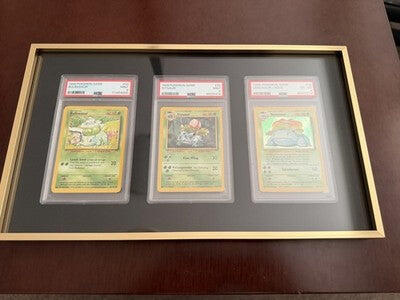
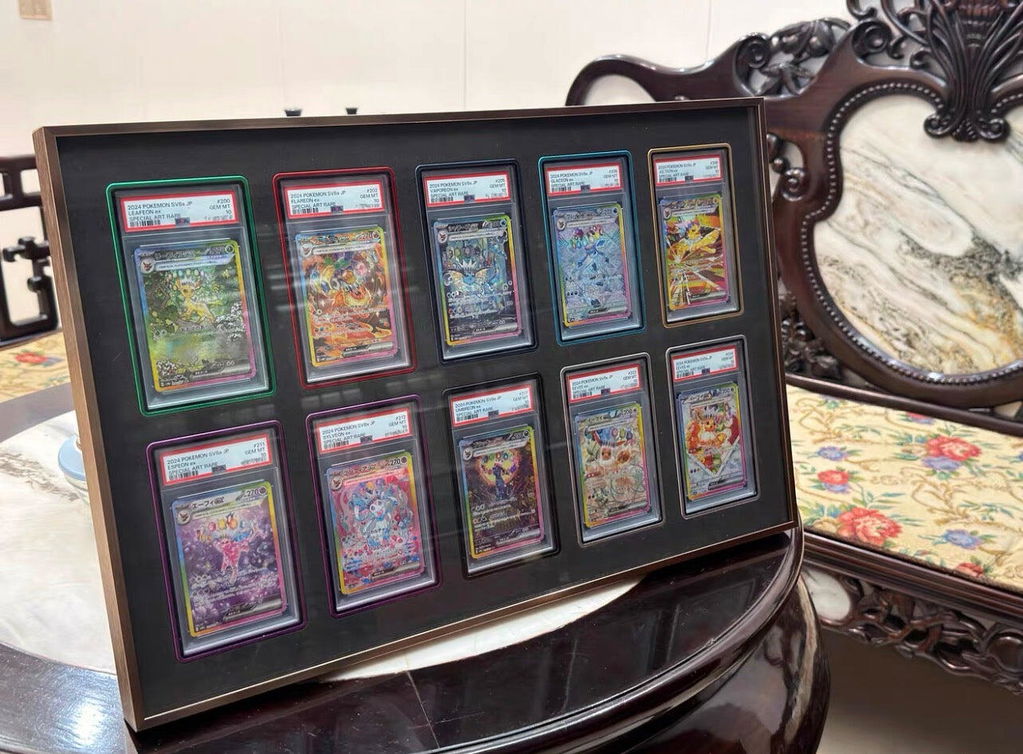


0 comments