


Choosing the best Magic: The Gathering cards to display is a very different problem from simply identifying the strongest cards to play.
Magic has existed for more than three decades, with tens of thousands of cards spanning different planes, characters, artists, mechanics, frames, foil treatments and collectible variants. A display might centre on an iconic card such as Black Lotus, Lightning Bolt or Birds of Paradise, a legendary character such as Jace Beleren or Liliana Vess, a Commander, a complete cycle of cards, one artist, one plane, a favourite expansion or a group of visually related showcase treatments.
Modern Magic has expanded those possibilities even further. Borderless cards, showcase frames, retro frames, serialized cards, Secret Lair releases, Special Guests, full-art lands and Universes Beyond sets provide completely different collecting directions from traditional set collecting.
This guide explores Magic cards primarily as physical collectibles. It covers iconic individual cards, legendary creatures and Planeswalkers, major sets and eras, famous cycles, card treatments, artists, Commander collections, Universes Beyond releases and practical ways to arrange smaller and much larger MTG collections.
The objective is not to rank cards by price or predict which Magic cards will increase in value. Some historically important cards are extremely valuable, but an effective collection can just as easily be built around inexpensive basic lands, favourite Commanders, one illustrator or a set of modern borderless cards.
The important question is simpler: which Magic cards belong together?
Contents
- What Makes a Magic Card Good to Display?
- Iconic Magic: The Gathering Cards
- The Power Nine
- Reserved List and Early Magic Cards
- Famous Magic Artifacts
- Famous Magic Lands
- Planeswalkers
- Legendary Creatures and Commanders
- Phyrexian Cards and Praetors
- Dragons, Angels, Vampires and Other Creature Types
- Popular Magic Sets and Eras
- Modern Horizons
- 2026 Magic Sets
- Universes Beyond
- Magic Card Treatments
- Magic Artists
- Collecting by Colour
- Famous Card Cycles
- Vintage vs Modern Magic
- 3, 5, 9, 12, 18, 24 and 36+ Card Collection Ideas
- Raw, Graded and One Touch Magic Cards
- Displaying Magic Cards
- Frequently Asked Questions
What Makes a Magic: The Gathering Card Good to Display?
Magic cards can be selected for display for reasons that have almost nothing to do with competitive strength.
Artwork is one of the most obvious considerations. Magic has commissioned thousands of pieces of fantasy, science-fiction and crossover artwork, and the visual identity of the game has changed considerably since Alpha appeared in 1993.
Other useful factors include:
- the individual card;
- the character or legendary creature;
- the expansion;
- the plane or setting;
- the artist;
- the card frame;
- foil or nonfoil treatment;
- showcase or borderless treatment;
- rarity;
- colour identity;
- Commander deck;
- creature type;
- a cycle of related cards;
- historical significance;
- and the relationship between neighbouring cards.
This gives Magic collectors an enormous number of ways to create coherent groups without simply arranging cards from highest to lowest value.
A nine-card collection could contain the Power Nine, nine different versions of Lightning Bolt, nine favourite Commanders, nine Planeswalkers, nine cards illustrated by the same artist or nine cards from one particular set. All are legitimate Magic collections, but they communicate completely different ideas.
Iconic Magic: The Gathering Cards to Display
Some Magic cards have become closely associated with the history of the game itself.
They may be famous because of competitive play, rarity, artwork, early Magic history, Commander, unusual mechanics or simply because players have encountered them repeatedly across different eras.
Black Lotus
Black Lotus is arguably the most recognisable individual Magic card ever printed.
The original card appeared in Limited Edition Alpha, Limited Edition Beta and Unlimited Edition and belongs to the group commonly known as the Power Nine.
For collectors interested in Magic history, Black Lotus naturally belongs beside Ancestral Recall, Time Walk, Timetwister and the five original Moxen. Christopher Rush's original Black Lotus artwork also makes the card relevant to collections centred on early Magic illustrators.
Ancestral Recall
Ancestral Recall is another member of the Power Nine and one of Magic's best-known blue cards.
The original artwork by Mark Poole gives it an additional connection to artist-focused collections. Decades later, Poole has continued illustrating Magic cards, allowing a collection to connect the visual history of early Magic with modern releases.
Time Walk
Time Walk is one of the most recognisable early blue sorceries and another member of the Power Nine.
Within a historical collection, it fits naturally beside Ancestral Recall and Timetwister, forming the non-artifact portion of the Power Nine.
Timetwister
Timetwister completes the trio of famous blue Power Nine spells.
Although it is often discussed differently from some of the other Power Nine because of how Magic formats evolved, it remains an essential card in any collection built specifically around the nine historical cards.
Lightning Bolt
Lightning Bolt is one of Magic's most recognisable red spells and has appeared with numerous artworks and treatments.
That makes it useful for a single-card-through-the-eras collection. Rather than displaying one Lightning Bolt, collectors can compare early printings, later core-set versions, promotional cards, retro treatments, Secret Lair interpretations and other official releases.
Counterspell
Counterspell performs a similar role for blue.
Its long printing history means a collection can concentrate on different artworks, borders, foils, promotional versions or treatments while retaining the same underlying card.
Swords to Plowshares
Swords to Plowshares is one of Magic's best-known white removal spells and has been printed in numerous forms across decades of Magic.
Different artwork and frame treatments make it particularly suitable for collectors interested in comparing how a classic card has changed visually.
Dark Ritual
Dark Ritual is another early Magic card with a substantial printing history. Multiple artworks, borders and promotional treatments allow a collector to build around the same card without repeating the same visual presentation.
Birds of Paradise
Birds of Paradise has appeared repeatedly throughout Magic's history and has been illustrated in many different ways.
It works particularly well within an artist-focused collection or a display showing different generations of Magic card design.
Shivan Dragon
Shivan Dragon is an important example of a card whose significance is not simply determined by modern competitive power.
It was one of the defining creatures of early Magic and remains closely associated with the game's original fantasy identity. An early-Magic creature collection could place Shivan Dragon alongside Serra Angel, Sengir Vampire, Mahamoti Djinn and other recognisable creatures from the game's first years.
Serra Angel
Serra Angel is another foundational Magic creature. Its combination of name, artwork and long reprint history makes it useful for collections focused on Angels, white cards or the visual evolution of Magic.
Sengir Vampire
Sengir Vampire occupies a similar position for black. It can form part of an early-creature collection or sit at the beginning of a much larger Vampire display extending into Innistrad, Ixalan and Commander.
Wrath of God
Wrath of God is one of Magic's classic board-clearing spells and has appeared in numerous versions. It can be grouped with other foundational white spells or collected through its changing artwork and card frames.
Armageddon
Armageddon is another recognisable early white spell and fits particularly well into collections centred on Alpha-era or early core-set cards.
Sol Ring
Sol Ring is one of the most recognisable cards in Commander.
Because it has appeared in Commander products, special releases, promotional versions, Secret Lair products and numerous visual treatments, Sol Ring can support an entire collection of its own.
Command Tower
Command Tower is another card strongly associated with Commander and has accumulated many artworks and treatments.
A Commander-staple display could combine Command Tower with Sol Ring, Arcane Signet and other cards closely associated with the format.
Arcane Signet
Arcane Signet is much newer than Sol Ring but rapidly became visually associated with Commander products. Multiple artworks and treatments give collectors another card that can be followed across different Commander releases.
Mana Crypt
Mana Crypt is a recognisable collectible artifact, particularly through high-rarity and special-treatment versions.
Collectors interested in famous mana artifacts can group it with Sol Ring, Mana Vault, Grim Monolith, Chrome Mox, Mox Diamond and other well-known artifact cards.
Mana Vault
Mana Vault dates back to early Magic and has received numerous later treatments. It can therefore sit equally comfortably within an old-school Magic display or a modern artifact collection.
Wheel of Fortune
Wheel of Fortune is another recognisable early card and can form part of a display concentrating on historically significant red spells.
Demonic Tutor
Demonic Tutor has one of the longest and most visually varied histories among famous black cards.
Different versions can be collected by artwork, border, foil treatment or special release.
Vampiric Tutor
Vampiric Tutor can be paired naturally with Demonic Tutor and other famous tutor effects, creating a mechanically linked collection rather than one based on characters or sets.
Enlightened Tutor
Enlightened Tutor adds white to a tutor-themed collection and can be grouped with Mystical Tutor, Worldly Tutor, Vampiric Tutor and related cards.
Mystical Tutor
Mystical Tutor is particularly suitable for collections of blue spells or famous tutors. Special treatments and later printings provide alternatives to the original version.
Worldly Tutor
Worldly Tutor gives green a natural place in a five-colour tutor collection.
Force of Will
Force of Will is one of the most recognisable blue cards outside the Power Nine.
Its original Alliances printing, later premium versions and alternative artwork provide several possible centrepieces for a blue or Legacy-themed collection.
Brainstorm
Brainstorm is another widely recognised blue spell with many printings. A collection of Brainstorm artworks can be inexpensive or highly specialised depending on the versions selected.
Ponder
Ponder can sit alongside Brainstorm, Preordain and other recognisable blue card-selection spells. Multiple artworks and special releases also make it suitable for a single-card collection.
Thoughtseize
Thoughtseize has appeared in several important tournament eras and has received multiple visually distinctive treatments.
It works well alongside other famous black disruption spells or within a collection following the card through different expansions.
Snapcaster Mage
Snapcaster Mage became one of the recognisable creatures of modern competitive Magic and can anchor an Innistrad or blue-spell collection.
Tarmogoyf
Tarmogoyf is strongly associated with the history of Modern and competitive green decks.
Different printings and treatments can be grouped together or combined with other cards historically associated with Modern.
Dark Confidant
Dark Confidant is another recognisable card from competitive Magic history and can be grouped with Tarmogoyf and other cards associated with earlier Modern and Legacy strategies.
Stoneforge Mystic
Stoneforge Mystic can anchor a collection of famous white creatures or equipment-focused cards. It also pairs naturally with equipment such as Batterskull and the various Swords.
Ragavan, Nimble Pilferer
Ragavan, Nimble Pilferer became one of the most recognisable cards introduced through Modern Horizons 2 and can sit within a Modern Horizons collection or a display dedicated to notable modern-era legendary creatures.
Orcish Bowmasters
Orcish Bowmasters became one of the recognisable competitive cards associated with The Lord of the Rings: Tales of Middle-earth. It can sit within a Middle-earth collection or a group of notable modern black cards.
The One Ring
The One Ring became one of the defining cards of Magic: The Gathering—The Lord of the Rings: Tales of Middle-earth.
It can be displayed as part of a Lord of the Rings collection, an artifact collection or a broader Universes Beyond display.
The famous serialized 001/001 version was a unique collectible, but collectors do not need that version to use The One Ring as the centrepiece of a Middle-earth collection.
The Power Nine as a Complete Magic Collection
The Power Nine are:
- Black Lotus;
- Ancestral Recall;
- Time Walk;
- Timetwister;
- Mox Pearl;
- Mox Sapphire;
- Mox Jet;
- Mox Ruby;
- and Mox Emerald.
Conveniently, this creates an exact nine-card historical Magic theme.
The five Moxen can occupy one portion of the arrangement while Black Lotus, Ancestral Recall, Time Walk and Timetwister complete the group.
Collectors can also use the Power Nine as inspiration without needing original tournament-legal copies. The concept itself is useful because it demonstrates how an established group of cards can dictate the size and structure of a collection.
Reserved List and Early Magic Cards to Display
The Reserved List is frequently discussed in Magic collecting, although it should not be confused with a list of the "best" Magic cards or an investment recommendation.
For display purposes, its relevance is historical. Many well-known cards from Magic's earlier expansions sit within this part of the game's collecting history.
Gaea's Cradle
Gaea's Cradle from Urza's Saga is one of the most recognisable lands from the Urza era. It can anchor a collection of famous lands or be grouped with Serra's Sanctum and Tolarian Academy as a trio of legendary lands from the same set.
Serra's Sanctum
Serra's Sanctum naturally fits enchantment-focused collections and Urza's Saga displays.
Tolarian Academy
Tolarian Academy is strongly associated with artifact strategies and Magic's late-1990s competitive history.
Mishra's Workshop
Mishra's Workshop from Antiquities is one of the most recognisable early artifact-related lands and fits naturally into Antiquities, artifact and Mishra-themed collections.
Library of Alexandria
Library of Alexandria is one of the defining cards of Arabian Nights and provides an obvious centrepiece for a collection based on Magic's first expansion.
Bazaar of Baghdad
Bazaar of Baghdad is another famous Arabian Nights land and can be paired with Library of Alexandria and other early expansion cards.
Tabernacle at Pendrell Vale
The Tabernacle at Pendrell Vale is one of Legends' best-known lands and fits a historical land collection spanning Arabian Nights, Antiquities, Legends and Urza's Saga.
Moat
Moat is another famous Legends card and can be included in a collection of early white enchantments or notable Reserved List cards.
Chains of Mephistopheles
Chains of Mephistopheles is recognisable partly because of its unusual rules history and distinctive early-Magic identity. It fits particularly well in a Legends-focused collection.
City of Traitors
City of Traitors from Exodus provides another historically recognisable land for collectors interested in older competitive Magic.
Survival of the Fittest
Survival of the Fittest can anchor a collection of famous green enchantments or cards from the Tempest block era.
Recurring Nightmare
Recurring Nightmare provides a black counterpart for collections focused on powerful and recognisable cards from Exodus.
Grim Monolith
Grim Monolith from Urza's Legacy belongs naturally in a famous-artifact collection alongside Mana Vault, Mana Crypt and other mana-producing artifacts.
Metalworker
Metalworker from Urza's Destiny is another recognisable artifact-related card and can be used within a broader Urza-block display.
Sliver Queen
Sliver Queen is one of the most recognisable cards for Sliver collectors and provides a natural centrepiece for a display covering the evolution of Slivers across Magic.
Famous Magic Artifacts to Collect and Display
Artifacts provide one of the easiest cross-colour Magic collecting themes because they can span the entire history of the game.
Potential cards include:
- Black Lotus;
- the five original Moxen;
- Sol Ring;
- Mana Crypt;
- Mana Vault;
- Grim Monolith;
- Basalt Monolith;
- Chrome Mox;
- Mox Diamond;
- Mox Opal;
- Arcane Signet;
- Sensei's Divining Top;
- Skullclamp;
- Lightning Greaves;
- Swiftfoot Boots;
- Crucible of Worlds;
- Chalice of the Void;
- Aether Vial;
- Batterskull;
- Umezawa's Jitte;
- Sword of Fire and Ice;
- Sword of Feast and Famine;
- Sword of Light and Shadow;
- and The One Ring.
A collector could concentrate entirely on mana artifacts, Commander artifacts, Mox cards, Equipment or famous artifacts from different periods of competitive Magic.
The Mox Family
The five original Moxen are only the beginning of the wider Mox collecting theme.
Later cards such as Mox Diamond, Chrome Mox, Mox Opal, Mox Amber and other Mox-related designs allow collectors to build a collection around one of Magic's most recognisable artifact naming conventions.
The Sword Cycle
Equipment collectors can build around the cycle of colour-pair Swords, including Sword of Fire and Ice, Sword of Light and Shadow and later additions to the cycle.
Because the cards share a naming and visual structure, they work particularly well as a deliberate group rather than isolated equipment cards.
Famous Magic Lands to Display
Lands are one of the richest collecting categories in Magic because they combine gameplay history with some of the game's most recognisable artwork.
Original Dual Lands
The original ten dual lands are:
- Underground Sea;
- Volcanic Island;
- Tropical Island;
- Tundra;
- Bayou;
- Taiga;
- Savannah;
- Scrubland;
- Badlands;
- and Plateau.
These can form a ten-card historical land collection.
Fetch Lands
The commonly collected fetch lands include:
- Polluted Delta;
- Flooded Strand;
- Bloodstained Mire;
- Wooded Foothills;
- Windswept Heath;
- Scalding Tarn;
- Misty Rainforest;
- Verdant Catacombs;
- Marsh Flats;
- and Arid Mesa.
Different printings, Expedition treatments and borderless versions allow this ten-card cycle to be collected in several visual styles.
Shock Lands
Magic's ten Ravnica shock lands are:
- Hallowed Fountain;
- Watery Grave;
- Blood Crypt;
- Stomping Ground;
- Temple Garden;
- Godless Shrine;
- Steam Vents;
- Overgrown Tomb;
- Sacred Foundry;
- and Breeding Pool.
These have appeared across multiple visits to Ravnica and in different treatments, making them suitable for a colour-pair collection.
Full-Art Basic Lands
Full-art Plains, Island, Swamp, Mountain and Forest cards provide a much more accessible collecting category.
Zendikar, Unhinged, Unstable, various Secret Lair releases, Universes Beyond products and many modern sets have produced distinctive full-art lands.
A collector can build an entire display from basic lands without repeating the same illustration.
John Avon Lands
Collectors who prefer artwork over gameplay can narrow the land category further by following one illustrator. John Avon's land artwork is a particularly well-known example, allowing basic lands and other environments from different sets to sit together through a common artistic style.
Zendikar Expeditions
Zendikar Expeditions provide another ready-made land collection. Famous fetch lands, shock lands and other important lands were presented using a shared premium visual treatment, giving otherwise unrelated cards a consistent appearance.
Reversible Lorwyn Eclipsed Shock Lands
Lorwyn Eclipsed added another unusual approach to shock-land collecting through borderless reversible versions depicting the contrast between Lorwyn and Shadowmoor.
These are especially interesting from a display perspective because the same land concept can present two different visual identities depending on the side shown.
Planeswalkers to Collect and Display
Planeswalkers became one of Magic's defining card types after their introduction in Lorwyn.
They are particularly useful for character collections because many major Planeswalkers have appeared on numerous cards across multiple sets.
The Original Lorwyn Five
The first five Planeswalker cards were:
- Ajani Goldmane;
- Jace Beleren;
- Liliana Vess;
- Chandra Nalaar;
- and Garruk Wildspeaker.
This gives collectors a historically defined five-card Planeswalker group corresponding broadly with Magic's five colours.
Jace Beleren
Jace is one of Magic's most recognisable Planeswalkers.
Notable Jace cards include:
- Jace Beleren;
- Jace, the Mind Sculptor;
- Jace, Architect of Thought;
- Jace, Memory Adept;
- Jace, Vryn's Prodigy;
- Jace, Unraveler of Secrets;
- Jace, Cunning Castaway;
- Jace, Wielder of Mysteries;
- and later interpretations of the character.
Jace, the Mind Sculptor is particularly recognisable and can serve as the centrepiece of a Jace-focused collection.
Jace also remains relevant to current Magic through the Echoverse and Reality Fracture storyline, giving collectors an opportunity to place older Jace cards beside substantially newer interpretations.
Liliana Vess
Liliana provides another extensive character collection.
Cards include:
- Liliana Vess;
- Liliana of the Veil;
- Liliana of the Dark Realms;
- Liliana, Heretical Healer;
- Liliana, the Last Hope;
- Liliana, Death's Majesty;
- Liliana, Dreadhorde General;
- and other versions across Magic's story.
Liliana of the Veil is particularly closely associated with Innistrad and competitive Magic history.
Chandra Nalaar
Chandra cards provide a natural red-focused character collection.
Versions include Chandra Nalaar, Chandra Ablaze, Chandra, Pyromaster, Chandra, Torch of Defiance and numerous later Chandra cards.
Garruk Wildspeaker
Garruk was one of the original Lorwyn Planeswalkers and can anchor a green character collection.
Different versions of Garruk also reflect his changing role across Magic's story.
Ajani Goldmane
Ajani has appeared across numerous sets and colour identities, allowing a collection to follow both the character and changes in Magic's story.
Teferi
Teferi has appeared both as a legendary creature and as a Planeswalker.
Cards such as Teferi, Hero of Dominaria and Teferi, Time Raveler are particularly recognisable modern examples.
Karn
Karn is another character capable of supporting both historical and modern collections.
Karn, Silver Golem can be combined with Planeswalker versions such as Karn Liberated and Karn, the Great Creator.
Nicol Bolas
Nicol Bolas is especially suitable for a villain-focused display because the character appears as both a legendary Elder Dragon and a Planeswalker.
A Bolas collection can therefore span completely different card types and eras.
Ugin
Ugin, the Spirit Dragon is another recognisable colourless Planeswalker and pairs naturally with Nicol Bolas because of their story relationship.
Elspeth
Elspeth has appeared across Alara, Theros, New Capenna and other parts of Magic's story and can support a white-aligned Planeswalker collection.
Sorin Markov
Sorin connects Planeswalker collecting with Vampire themes, Innistrad and the Markov family. That makes him particularly useful for collections where a character links several otherwise separate themes.
Tamiyo
Tamiyo can connect Kamigawa, Innistrad and Phyrexian storylines. Different versions of the character can therefore be arranged chronologically rather than simply by colour.
The Wandering Emperor
The Wandering Emperor is strongly associated with Kamigawa: Neon Dynasty and is particularly suitable for collections centred on modern Kamigawa artwork and Japanese-inspired card treatments.
Kaito Shizuki
Kaito provides another modern Kamigawa character and can be paired with The Wandering Emperor, Tamiyo and other characters from the plane.
Other Planeswalkers Worth Collecting
Other character collections can be built around:
- Nissa Revane;
- Gideon Jura;
- Kiora;
- Narset;
- Saheeli;
- Tezzeret;
- Vivien Reid;
- Wrenn;
- Ashiok;
- Kaya;
- Ral Zarek;
- Vraska;
- Domri Rade;
- Dack Fayden;
- Davriel Cane;
- Huatli;
- Lukka;
- and many others.
Legendary Creatures and Commanders to Display
Commander has transformed the way many Magic players collect cards.
Rather than completing an entire expansion, Commander players often develop strong associations with one legendary creature and collect different versions, foils, promos and related cards around that Commander.
Urza
Urza is one of the central characters in early Magic lore and has appeared directly or indirectly across numerous cards.
Urza, Lord High Artificer is an obvious modern centrepiece, while older cards connected to Urza can expand the collection into a historical theme.
Mishra
Mishra naturally pairs with Urza. The Brothers' War makes it possible to build a collection around the two brothers, their machines and cards representing different parts of their conflict.
Yawgmoth
Yawgmoth is another major figure in early Magic history.
Yawgmoth, Thran Physician can anchor a Phyrexian or Weatherlight-saga collection.
Atraxa, Praetors' Voice
Atraxa became one of the most recognisable Commander legends and works particularly well within a Phyrexian collection.
Atraxa, Praetors' Voice can be combined with Atraxa, Grand Unifier and the Praetors.
The Ur-Dragon
The Ur-Dragon is an obvious centrepiece for a Dragon Commander collection.
Dragon displays can expand around famous creatures such as Nicol Bolas, Ugin, Miirym, Tiamat, Old Gnawbone and other major Dragons.
Edgar Markov
Edgar Markov provides a natural centrepiece for Vampire collections.
He can be combined with Olivia Voldaren, Sorin cards and other Innistrad Vampires.
Muldrotha, the Gravetide
Muldrotha is another recognisable Commander and can anchor a collection built around graveyard-focused legendary creatures.
Korvold, Fae-Cursed King
Korvold became a prominent Commander and can sit within a Jund, sacrifice or legendary Dragon collection.
Kenrith, the Returned King
Kenrith provides a five-colour Commander subject and works particularly well within Throne of Eldraine or royal-character collections.
Yuriko, the Tiger's Shadow
Yuriko can anchor a Ninja collection, particularly when combined with cards from Kamigawa and Kamigawa: Neon Dynasty.
Isshin, Two Heavens as One
Isshin provides another modern Kamigawa legendary creature and can be grouped with Samurai-themed cards.
Miirym, Sentinel Wyrm
Miirym is particularly suitable for Dragon collections and can be displayed alongside other famous Dragon Commanders.
Sheoldred, the Apocalypse
Sheoldred, the Apocalypse became one of the most recognisable legendary creatures of the Dominaria United period.
She can also be placed within a larger Phyrexian Praetor collection.
Kaalia of the Vast
Kaalia of the Vast has long been associated with Angel, Demon and Dragon Commander strategies. A Kaalia collection can therefore bridge three large creature categories within one Commander theme.
Prossh, Skyraider of Kher
Prossh is another recognisable Commander-era Dragon and can be included in collections showing influential Commanders from different generations.
Derevi, Empyrial Tactician
Derevi provides another historical Commander subject and can be grouped with legendary creatures from early Commander products.
Nekusar, the Mindrazer
Nekusar developed a strong identity among Commander players and works in a display of famous Grixis Commanders or unusual legendary creatures.
Breya, Etherium Shaper
Breya naturally fits artifact Commander collections and can be placed beside famous artifact cards or other artifact-focused legendary creatures.
Omnath
Different versions of Omnath allow a collector to follow one character as its colour identity changes across multiple cards. That makes Omnath particularly interesting for a collection structured around the evolution of one legendary creature.
Golos, Tireless Pilgrim
Golos became highly recognisable during its period of Commander popularity and can be included in a collection of notable five-colour or colourless legendary creatures.
Chulane, Teller of Tales
Chulane is closely associated with Throne of Eldraine-era Commander and can sit within an Eldraine or Bant Commander collection.
Wilhelt, the Rotcleaver
Wilhelt provides an obvious Commander centrepiece for Zombie collections.
Lathril, Blade of the Elves
Lathril can anchor an Elf Commander collection, particularly one combining modern Commander cards with older Elf staples.
Hakbal of the Surging Soul
Hakbal provides a natural centrepiece for Merfolk collections and can connect Commander with Ixalan-themed cards.
Phyrexian Cards and the Five Praetors
Phyrexia is one of Magic's largest cross-era collecting themes. It can include early references to Yawgmoth and the original Phyrexians, the five Praetors, compleated characters, New Phyrexia and the later Multiverse invasion.
The five Praetors provide an exact five-colour collection:
- Elesh Norn;
- Jin-Gitaxias;
- Sheoldred;
- Urabrask;
- and Vorinclex.
Each Praetor has appeared in multiple versions, meaning the theme can expand well beyond five cards.
Elesh Norn
Elesh Norn, Grand Cenobite is one of the most recognisable Phyrexian cards. Later Elesh Norn cards provide several visual treatments and story stages.
Jin-Gitaxias
Jin-Gitaxias can represent blue within a complete Praetor group and has appeared in both earlier and later Phyrexian sets.
Sheoldred
Sheoldred has several important cards, with Sheoldred, the Apocalypse being particularly recognisable among modern players.
Urabrask
Urabrask provides the red component of the Praetor cycle and can be followed through different visits to Phyrexia.
Vorinclex
Vorinclex completes the five-colour group and has appeared in multiple forms across the Phyrexian story.
Atraxa
Atraxa connects the Praetors with Commander collecting. Atraxa, Praetors' Voice and Atraxa, Grand Unifier can be positioned alongside the five Praetors to expand a simple five-card collection.
Yawgmoth
Yawgmoth provides the historical starting point for a much broader Phyrexian collection. Combining Yawgmoth-related cards with New Phyrexia and March of the Machine material can cover decades of Magic story within one subject.
Dragons to Collect and Display
Dragons are one of Magic's most persistent creature themes and appear across almost every era of the game.
Potential centrepieces include:
- Shivan Dragon;
- Nicol Bolas;
- Ugin, the Spirit Dragon;
- The Ur-Dragon;
- Scion of the Ur-Dragon;
- Tiamat;
- Miirym, Sentinel Wyrm;
- Old Gnawbone;
- Goldspan Dragon;
- Ancient Copper Dragon;
- Ancient Silver Dragon;
- Ancient Gold Dragon;
- Ancient Brass Dragon;
- Ancient Bronze Dragon;
- Atarka;
- Dromoka;
- Kolaghan;
- Ojutai;
- Silumgar;
- and numerous Dragons from Tarkir.
A Dragon collection can be arranged chronologically, by colour, by plane or around one Commander.
Tarkir provides one of the clearest set-specific Dragon themes, while Commander allows Dragons from otherwise unrelated worlds to sit together naturally.
Angels to Collect and Display
Angel cards provide another enormous visual theme.
Examples include:
- Serra Angel;
- Avacyn, Angel of Hope;
- Gisela, Blade of Goldnight;
- Bruna, Light of Alabaster;
- Sigarda, Host of Herons;
- Lyra Dawnbringer;
- Giada, Font of Hope;
- Linvala, Keeper of Silence;
- Aurelia, the Warleader;
- Akroma, Angel of Wrath;
- and Atraxa, Praetors' Voice.
Collectors can focus specifically on Innistrad Angels, Boros Angels, legendary Angels or the evolution from Serra Angel to modern premium Angel cards.
Vampires to Collect and Display
Vampires span early Magic, Innistrad, Ixalan and Commander.
Potential cards include:
- Sengir Vampire;
- Edgar Markov;
- Olivia Voldaren;
- Olivia, Mobilized for War;
- Vito, Thorn of the Dusk Rose;
- Elenda, the Dusk Rose;
- Drana, Liberator of Malakir;
- Blood Artist;
- Captivating Vampire;
- and Vampire Nocturnus.
Sorin cards can also be incorporated because of the character's connection to Vampires and Innistrad.
Elves, Goblins, Merfolk, Zombies and Slivers
Elves
Elf collections can stretch from Llanowar Elves and early green cards through Lorwyn, Commander and modern legendary creatures.
Possible cards include Llanowar Elves, Elvish Archdruid, Priest of Titania, Ezuri, Renegade Leader, Lathril, Blade of the Elves and numerous Lorwyn-related Elves.
Goblins
Goblin collectors can explore cards such as Goblin Lackey, Goblin Matron, Goblin Warchief, Goblin Piledriver, Krenko, Mob Boss and many other versions across Magic history.
Merfolk
Merfolk collections can include Lord of Atlantis, Master of the Pearl Trident, Merrow Reejerey, Kumena, Tyrant of Orazca, Hakbal of the Surging Soul and Merfolk from Lorwyn and Ixalan.
Zombies
Zombie collections can combine cards such as Gravecrawler, Diregraf Colossus, Cryptbreaker, Wilhelt, the Rotcleaver and legendary Zombies from Innistrad, Amonkhet and other settings.
Slivers
Slivers are one of Magic's most distinctive creature-type collections.
Sliver Queen, Sliver Overlord, Sliver Legion, The First Sliver and Sliver Hivelord provide obvious legendary centrepieces, while dozens of individual Slivers allow the collection to become substantially larger.
The Eldrazi Titans
Emrakul, Ulamog and Kozilek form one of Magic's most obvious three-character groups.
The three Eldrazi Titans have appeared in multiple forms, meaning a three-card starting point can expand into a much larger collection.
Emrakul
Emrakul cards include major versions associated with Rise of the Eldrazi, Eldritch Moon and later releases.
Ulamog
Ulamog provides another recurring Titan and can be followed through different Zendikar-era appearances.
Kozilek
Kozilek completes the trio and provides another colourless centrepiece.
A simple three-position display containing one card for each Titan is one of the clearest small Magic collection ideas. Larger collections can use three cards per Titan to create a nine-card arrangement.
Popular Magic: The Gathering Sets to Display
Magic's history can be divided into very different visual periods. Collecting by set allows cards to share expansion symbols, frames, setting and artwork direction.
Alpha
Limited Edition Alpha introduced Magic: The Gathering in 1993.
Cards associated with Alpha include Black Lotus, the Power Nine, Lightning Bolt, Birds of Paradise, Shivan Dragon, Serra Angel, Sengir Vampire and many of the game's foundational spells.
Beta
Limited Edition Beta expanded the original print run and remains closely associated with the earliest period of Magic collecting.
Unlimited
Unlimited brought many of the original cards into a white-bordered printing, creating another visually distinct early-Magic collection.
Arabian Nights
Arabian Nights was Magic's first expansion and contains cards such as Library of Alexandria, Bazaar of Baghdad and City in a Bottle alongside the set's distinctive Arabian-inspired artwork.
Antiquities
Antiquities centred heavily on artifacts and the Brothers' War, making it particularly suitable for artifact and early-Magic lore collections.
Mishra's Workshop is one of the set's most recognisable cards.
Legends
Legends introduced many early legendary creatures and contains several cards that remain well known among collectors.
The set can be particularly interesting for players interested in the origins of Magic's legendary-card concept.
The Dark
The Dark has a distinctive early-Magic visual identity and can be collected independently or as part of a broader 1990s expansion display.
Fallen Empires
Fallen Empires provides another recognisable early expansion and is generally much more accessible than the earliest premium sets.
Ice Age
Ice Age began one of Magic's earliest major block structures and introduced cards and characters that would continue through Alliances and later references.
Alliances
Alliances is particularly associated with Force of Will, making the set important to collectors interested in famous blue cards and Legacy history.
Mirage
Mirage introduced another distinct era of Magic artwork and contains cards that remain important across Commander and Eternal formats.
Visions
Visions continued the Mirage block and contains several cards with long histories in constructed Magic.
Weatherlight
Weatherlight is important both as an expansion and as part of Magic's early long-form story.
Collectors interested in Gerrard, Sisay, Karn and the Weatherlight crew can build around this period rather than one individual set.
Tempest Block
Tempest, Stronghold and Exodus provide one of the defining late-1990s Magic periods.
Sliver Queen, Survival of the Fittest, Recurring Nightmare, City of Traitors and numerous other recognisable cards give collectors several different ways to approach the block.
A Weatherlight-story collection can also extend directly into this era.
Urza Block
Urza's Saga, Urza's Legacy and Urza's Destiny form one of the most recognisable periods in Magic history.
Cards associated with this era include powerful artifacts, enchantments and combo pieces that have remained prominent in Eternal formats.
Urza's Saga
Urza's Saga contains cards such as Gaea's Cradle, Serra's Sanctum and Tolarian Academy, giving collectors several historically significant lands from one expansion.
Urza's Legacy
Urza's Legacy continued the block and is historically notable in the development of Magic's premium foil cards.
Urza's Destiny
Urza's Destiny completes the block and can be included in a larger Urza-era collection.
Invasion Block
Invasion, Planeshift and Apocalypse are strongly associated with multicolour Magic.
A display from this period can concentrate on colour combinations, legendary characters or the block's distinctive multicolour identity.
Mirrodin
Mirrodin provides one of Magic's strongest artifact-focused set identities.
Cards such as Chrome Mox, Chalice of the Void and equipment from the Mirrodin era can be combined with later artifact cards or kept as a period-specific collection.
The plane also connects directly with later New Phyrexia, allowing collectors to contrast Mirrodin's original identity with its transformation.
Original Ravnica Block
Ravnica: City of Guilds, Guildpact and Dissension introduced the ten Ravnican guilds as one of Magic's most recognisable faction systems.
The ten guilds are:
- Azorius Senate;
- House Dimir;
- Cult of Rakdos;
- Gruul Clans;
- Selesnya Conclave;
- Orzhov Syndicate;
- Izzet League;
- Golgari Swarm;
- Boros Legion;
- and Simic Combine.
A ten-card display can use one representative card from every guild, while larger collections can allocate several cards to each.
Lorwyn and Shadowmoor
Lorwyn, Morningtide, Shadowmoor and Eventide provide one of Magic's most visually distinctive connected settings.
Elves, Merfolk, Kithkin, Boggarts, Faeries and Elementals provide obvious creature-based collection structures.
Bitterblossom and other Faerie-related cards can anchor a Lorwyn Faerie collection, while the original five Planeswalkers give the era additional historical importance.
The return to the setting in Lorwyn Eclipsed makes it possible to place cards from the original block beside modern reinterpretations.
Original Innistrad
Innistrad is one of Magic's most recognisable planes and provides strong themes involving Vampires, Zombies, Spirits, Werewolves and Humans.
Important cards and characters associated with Innistrad include Liliana of the Veil, Snapcaster Mage, Olivia Voldaren, Griselbrand, Avacyn and numerous tribal cards.
Vampires
Innistrad Vampire collections can use Olivia Voldaren, Edgar Markov, Sorin cards and numerous red and black Vampires.
Werewolves
Werewolf cards provide another highly cohesive Innistrad collection, particularly because transform cards visually reinforce the theme.
Angels
Avacyn can anchor an Innistrad Angel collection alongside Gisela, Bruna, Sigarda and other Angels.
Return to Ravnica
Return to Ravnica, Gatecrash and Dragon's Maze revisited the ten guilds and provide another generation of cards for collectors following individual guilds.
A Dimir collector, for example, can combine cards from original Ravnica, Return to Ravnica, Guilds of Ravnica and later visits to the plane.
Theros
Theros uses a Greek mythology-inspired setting and provides strong visual themes involving Gods, enchantments and legendary creatures.
The original Theros Gods can form a collection of their own, while later Theros Beyond Death cards can expand the theme.
Theros Gods
Cards involving Heliod, Thassa, Erebos, Purphoros and Nylea provide a five-colour starting group.
Multicolour Gods can expand the collection substantially.
Khans of Tarkir
Khans of Tarkir is built around five clans:
- Abzan;
- Jeskai;
- Sultai;
- Mardu;
- and Temur.
This creates a natural five-faction collection.
Fetch lands are another major collecting category associated with Khans of Tarkir.
Battle for Zendikar and Zendikar Expeditions
Zendikar has long been associated with lands, exploration and Eldrazi.
Zendikar Expeditions introduced premium land treatments that remain particularly suitable for display because the cards share a recognisable visual style.
Fetch lands, shock lands and other famous lands appeared under the Expedition treatment.
Kaladesh and the Masterpiece Series
Kaladesh's invention-focused setting provides a strong artifact theme.
Kaladesh Inventions created premium versions of famous artifacts, allowing cards from completely different eras to appear under a common visual treatment.
This makes an Inventions collection especially effective for display.
Amonkhet and Invocations
Amonkhet and Hour of Devastation use an Egyptian-inspired setting and include the distinctive Amonkhet Invocations treatment.
Collectors can build around Gods, Nicol Bolas, Invocations or the wider plane.
War of the Spark
War of the Spark is particularly relevant to Planeswalker collectors because the expansion contains an unusually large number of Planeswalker cards.
Characters including Jace, Liliana, Nicol Bolas, Gideon, Teferi, Karn, Nissa and many others can be collected within one set.
The Japanese alternate-art Planeswalkers provide another visually distinctive specialist collection.
Throne of Eldraine
Throne of Eldraine combines Arthurian legend and fairy-tale influences.
Oko, Thief of Crowns, Kenrith, the Returned King and numerous storybook-inspired cards make the set suitable for character or showcase-frame collections.
Ikoria: Lair of Behemoths
Ikoria is particularly relevant to collectors interested in giant monsters and alternative treatments.
The set's Godzilla Series cards also represent an important early stage in Magic's crossover-card history.
Kamigawa: Neon Dynasty
Kamigawa: Neon Dynasty is one of the most visually distinctive modern Magic sets.
The combination of traditional Japanese influences, futuristic technology, Samurai, Ninjas and neon-inspired showcase treatments creates several collection directions.
The Wandering Emperor, Kaito Shizuki and numerous legendary creatures can anchor a Kamigawa collection.
Collectors can also combine Neon Dynasty cards with original Champions of Kamigawa, Betrayers of Kamigawa and Saviors of Kamigawa cards to compare the plane across very different periods of its history.
Streets of New Capenna
New Capenna is organised around five crime families and an Art Deco-inspired setting.
The five families create another faction-based collection, while showcase treatments reinforce the set's visual identity.
Dominaria United
Dominaria United returned Magic to one of its foundational planes.
Sheoldred, the Apocalypse became one of the expansion's most recognisable cards, while the set contains numerous legendary characters connected with Magic's broader history.
The Brothers' War
The Brothers' War revisited the conflict between Urza and Mishra and is particularly strong for artifact collectors.
Retro-frame artifact treatments allow famous artifacts from across Magic history to be collected under a common visual structure.
A focused Brothers' War collection can use Urza and Mishra as opposing centrepieces, with artifacts and story cards surrounding them.
Phyrexia: All Will Be One
Phyrexia: All Will Be One is an obvious set for Phyrexian collectors.
Elesh Norn and the other Praetors, Phyrexian treatments, oil-slick styles and compleated characters provide numerous interconnected display themes.
March of the Machine
March of the Machine brings together characters and planes from across Magic's Multiverse.
This makes it particularly useful for collectors who want one card representing several different worlds rather than concentrating on one plane.
Wilds of Eldraine
Wilds of Eldraine returned to Eldraine and introduced the Enchanting Tales bonus sheet.
Enchanting Tales cards provide a ready-made enchantment collection using special artwork and treatments.
The Lost Caverns of Ixalan
The Lost Caverns of Ixalan returned to Dinosaurs, Vampires, Merfolk and Pirates while introducing a subterranean setting.
Jurassic World crossover cards provide another collecting branch within the release.
Murders at Karlov Manor
Murders at Karlov Manor returned to Ravnica through a murder-mystery setting.
Collectors can use the set to extend Ravnica guild collections or concentrate on its detective and mystery-inspired treatments.
Outlaws of Thunder Junction
Outlaws of Thunder Junction brought together villains and antiheroes from across Magic in a Western-inspired setting.
That makes it particularly suitable for a collection built around famous Magic villains rather than one plane.
Modern Horizons
The Modern Horizons series has introduced many cards directly into Modern while also revisiting characters and mechanics from Magic history.
Modern Horizons
The first Modern Horizons set established the direct-to-Modern series and contains numerous references to older Magic mechanics and characters.
Modern Horizons 2
Modern Horizons 2 introduced cards such as Ragavan, Nimble Pilferer and several other cards that became closely associated with Modern.
It also revisited famous mechanics and older characters, making it useful for collectors interested in modern cards with historical Magic references.
Modern Horizons 3
Modern Horizons 3 continued the series with another mixture of new designs, returning mechanics and characters from Magic history.
A three-generation Modern Horizons collection can select a fixed number of cards from each release and compare how the series evolved.
Magic: The Gathering Foundations
Foundations is particularly useful for collectors who want recognisable Magic characters and spells without concentrating exclusively on one plane.
Its broad approach to Magic's creatures, spells and archetypes makes it suitable for a general "Magic icons" display.
Bloomburrow
Bloomburrow uses an animal-focused plane and has a very different visual identity from most Magic settings.
Collectors can build around individual animal types, legendary creatures or the set's distinctive illustrations.
Duskmourn: House of Horror
Duskmourn uses a horror setting built around an enormous haunted environment.
Its horror-inspired cards provide a strong thematic collection for players who prefer darker Magic artwork.
Tarkir: Dragonstorm
Tarkir: Dragonstorm returned to Tarkir and its clans while putting Dragons at the centre of the setting.
It can be combined with original Khans of Tarkir and Dragons of Tarkir cards to create a multi-era Tarkir collection.
Edge of Eternities
Edge of Eternities pushed Magic into a space-fantasy setting and provides a visually distinct collection involving planets, spacecraft, advanced technology and cosmic environments.
Lorwyn Eclipsed
Lorwyn Eclipsed released in January 2026 and returned Magic to Lorwyn and Shadowmoor.
The set revisits creature types strongly associated with the original plane, including Elves, Merfolk, Kithkin, Boggarts and Elementals.
Collectors can combine Lorwyn Eclipsed cards with original Lorwyn, Morningtide, Shadowmoor and Eventide cards to compare the plane across different generations of Magic.
One of the specialist collector treatments is Bitterbloom Bearer illustrated by Rebecca Guay. The headliner version has 500 serialized copies and uses a borderless showcase treatment.
Lorwyn Eclipsed also includes reversible shock lands that contrast Lorwyn and Shadowmoor, giving land collectors another set-specific visual theme.
Secrets of Strixhaven
Secrets of Strixhaven released in April 2026 and returned to Strixhaven and Arcavios.
The five Strixhaven colleges remain natural collection categories:
- Lorehold;
- Prismari;
- Quandrix;
- Silverquill;
- and Witherbloom.
The set includes Mystical Archive spells, Special Guests, borderless Field Notes treatments and Japanese-language Silver Scroll foil cards.
The Mystical Archive is particularly relevant for collectors of famous spells because it includes recognisable cards such as Force of Will and Vampiric Tutor under a shared treatment.
A serialized Emeritus of Ideation illustrated by Mark Poole provides another specialist 2026 collectible, with 500 serialized copies.
That connection is particularly interesting historically because Poole illustrated Ancestral Recall in early Magic, allowing one artist's work to connect a Power Nine card with a 2026 release.
Magic: The Gathering Universes Beyond Cards
Universes Beyond has created an entirely separate collecting branch within modern Magic by bringing external fictional worlds into the game.
These cards can be displayed independently of traditional Magic lore or combined into a broader crossover collection.
For collectors, one of the advantages of Universes Beyond is that the collection structure can be based on familiar characters rather than Magic mechanics. A Lord of the Rings collection can follow Fellowship characters. A FINAL FANTASY collection can follow individual games. Marvel can be divided by heroes, villains or teams.
The Lord of the Rings: Tales of Middle-earth
The Lord of the Rings: Tales of Middle-earth is one of the most prominent Universes Beyond releases.
Characters and subjects include:
- Frodo;
- Sam;
- Gandalf;
- Aragorn;
- Legolas;
- Gimli;
- Gollum;
- Sauron;
- the Nazgûl;
- Orcish Bowmasters;
- and The One Ring.
A nine-card Nazgûl collection is particularly interesting because the card was produced with multiple artworks, naturally lending itself to a nine-position arrangement.
A Fellowship-focused collection provides another direction, while Sauron, the Nazgûl and darker Middle-earth cards can form a separate opposing group.
Magic: The Gathering—FINAL FANTASY
FINAL FANTASY brought characters and settings from across the video-game series into Magic.
Collectors can organise cards by individual game, protagonist, villain, summon or favourite character rather than Magic colour.
This makes the set particularly suitable for collectors who entered Magic through FINAL FANTASY rather than through traditional Magic lore.
A large collection can reserve one row or section for each favourite FINAL FANTASY title rather than mixing the entire franchise randomly.
Magic: The Gathering | Marvel's Spider-Man
Marvel's Spider-Man provides another character-focused Universes Beyond collection.
Spider-Man, associated heroes and villains can be organised around characters rather than Magic mechanics, while different card treatments provide additional collecting depth.
Magic: The Gathering | Avatar: The Last Airbender
Avatar: The Last Airbender can be organised around characters, nations, bending styles and important subjects from the series.
Aang, Katara, Sokka, Toph, Zuko and other characters provide obvious collection anchors.
Magic: The Gathering | Teenage Mutant Ninja Turtles
The Teenage Mutant Ninja Turtles release provides an unusually straightforward four-character centrepiece through Leonardo, Raphael, Donatello and Michelangelo.
Supporting characters and villains can expand the collection beyond the four Turtles.
Magic: The Gathering | Marvel Super Heroes
Magic: The Gathering | Marvel Super Heroes released in June 2026 and draws from characters across the wider Marvel Universe.
The set creates an enormous number of character-focused collection possibilities involving heroes, villains and teams.
Collectors can build around Avengers, individual heroes, villains, artifacts or visually related card treatments.
Special treatments include Cosmic Foil cards, Source Material cards, showcase panel frames and borderless scenes.
Borderless scenes are particularly relevant to physical presentation because multiple cards can be arranged so that the individual illustrations form larger compositions.
This creates a different type of collection from simply placing unrelated expensive cards beside one another. The relationship between the cards is built directly into the artwork.
Magic: The Gathering | The Hobbit
Magic: The Gathering | The Hobbit released on 14 August 2026 and is the latest major Magic set at the time this guide was updated.
The set returns Magic to Middle-earth and follows Bilbo Baggins and the company of Dwarves on the journey toward the Lonely Mountain.
Characters and subjects such as Bilbo, Gandalf, Thorin Oakenshield, Gollum and Smaug provide obvious collection directions.
The set also provides several visual treatments that are particularly relevant to collectors, including book cover cards, Dwarvish language cards, Dragon Hoard frame cards, panoramic scene cards and premium foil treatments.
A Dwarf-focused collection can centre on Thorin and the company, while a smaller collection might concentrate on Bilbo, Gandalf, Gollum and Smaug.
The Hobbit can also be displayed alongside cards from The Lord of the Rings: Tales of Middle-earth to create a larger Middle-earth Magic collection.
Upcoming 2026 Magic Sets
Two additional major releases remain scheduled for 2026 at the time this guide was updated.
Reality Fracture
Reality Fracture is scheduled for 2 October 2026.
The set explores the Echoverse and alternate versions of familiar Magic characters and spells, with Jace central to the storyline.
A 500-copy serialized Bloodline Recollector illustrated by Mark Poole has been announced as a headliner treatment.
Because the set has not yet released at the time of writing, collectors should treat it as an upcoming collection rather than assuming which individual cards will ultimately become its most popular display pieces.
Magic: The Gathering | Star Trek
Magic: The Gathering | Star Trek is scheduled for 13 November 2026.
The release draws from across the Star Trek franchise and is expected to include characters, stories and starships from its long history.
Once released, it will create another major character and franchise-focused Universes Beyond collection.
Magic Card Treatments Worth Collecting
Modern Magic frequently prints the same underlying card in several visual treatments.
This means collectors can either choose one preferred version or deliberately collect several treatments of the same card.
Traditional Foil
Traditional foil is Magic's long-running premium foil treatment and appears across many different products and eras.
Borderless Cards
Borderless cards allow the artwork to occupy substantially more of the card and are particularly suitable for art-focused collections.
Extended-Art Cards
Extended-art cards extend the illustration horizontally into areas normally occupied by the standard frame.
Showcase Cards
Showcase treatments use set-specific frames or visual designs.
Because the treatment is often closely connected to the expansion's setting, groups of showcase cards can create especially coherent collections.
Retro-Frame Cards
Retro-frame treatments apply older Magic frame styles to newer or reprinted cards.
These are useful for collectors who prefer the visual appearance of older Magic while still collecting modern cards.
Serialized Cards
Serialized Magic cards contain individually numbered print runs.
Different products have used different serialization totals, so collectors should check the specific card rather than assuming all serialized cards have the same print quantity.
For example, Lorwyn Eclipsed includes 500 serialized Bitterbloom Bearer cards, while Secrets of Strixhaven includes 500 serialized Emeritus of Ideation cards.
Textured Foils
Textured foil treatments add another physical surface treatment and have appeared across selected premium Magic cards.
Surge Foils
Surge foil is another premium treatment that has appeared particularly prominently in selected Universes Beyond products, including collector treatments associated with The Hobbit.
Cosmic Foils
Cosmic foil appears in Magic: The Gathering | Marvel Super Heroes and provides another set-specific premium treatment.
Japanese Alternate-Art Cards
Japanese alternate-art treatments provide another major collecting direction.
War of the Spark's Japanese alternate-art Planeswalkers are one example, while Strixhaven-related Mystical Archive treatments provide another visually distinct Japanese-language collecting category.
Special Guests
Special Guests bring selected cards into sets with new artwork or treatments, allowing famous cards to be collected within a newer visual environment.
Secret Lair Cards
Secret Lair has dramatically expanded artwork-based Magic collecting.
Individual drops can reinterpret existing cards through specific artists, franchises, visual styles or themes.
A Secret Lair collection can therefore be organised by artist, drop, character, card or visual treatment rather than by conventional expansion.
Collecting Multiple Versions of the Same Magic Card
Magic's enormous reprint history makes single-card collecting much more viable than it might initially appear.
Instead of collecting one version of many cards, a collector can select one favourite card and follow it through different sets and treatments.
Good candidates include:
- Lightning Bolt;
- Counterspell;
- Dark Ritual;
- Swords to Plowshares;
- Birds of Paradise;
- Sol Ring;
- Command Tower;
- Demonic Tutor;
- Brainstorm;
- Ponder;
- Llanowar Elves;
- Wrath of God;
- Serra Angel;
- Shivan Dragon;
- basic lands;
- and recurring legendary characters.
This type of collection can show changes in artwork, borders, typography, foil technology and Magic's broader graphic design over time.
Magic Cards to Collect by Artist
Artist collecting is particularly important in Magic because the game's visual history spans thousands of commissioned illustrations.
Collectors can follow one illustrator across completely unrelated cards and sets.
Christopher Rush
Christopher Rush is closely associated with early Magic and is particularly famous for the original Black Lotus artwork.
A Rush collection can therefore connect directly with the earliest visual identity of Magic.
Mark Poole
Mark Poole illustrated several famous early Magic cards, including Ancestral Recall.
His continued involvement with modern products provides an unusual bridge between Magic's earliest period and 2026.
Rebecca Guay
Rebecca Guay's distinctive fantasy artwork has appeared across many years of Magic.
Lorwyn Eclipsed's serialized Bitterbloom Bearer provides a modern 2026 connection to her work.
John Avon
John Avon is particularly well known for Magic land artwork.
A collection of Avon basic lands and other landscapes can create an entire display without relying on legendary creatures or expensive chase cards.
Seb McKinnon
Seb McKinnon's distinctive modern fantasy artwork has developed a strong following and can create a visually cohesive collection from otherwise unrelated cards.
Magali Villeneuve
Magali Villeneuve has illustrated many prominent characters and fantasy scenes across modern Magic.
Johannes Voss
Johannes Voss has produced numerous recognisable Magic illustrations and provides another substantial modern artist collection.
Kev Walker
Kev Walker's long history with Magic allows a collection to span different periods, card types and settings while retaining an artistic connection.
Donato Giancola
Donato Giancola's detailed fantasy illustrations provide another strong artist-led collecting direction.
Volkan Baga
Volkan Baga has illustrated numerous recognisable Magic cards, including artifacts and fantasy subjects that work well in art-focused collections.
Steve Argyle
Steve Argyle is particularly associated with highly detailed character artwork and provides another recognisable modern artist collection.
Richard Kane Ferguson
Richard Kane Ferguson's highly distinctive style is strongly associated with parts of Magic's earlier visual history and can immediately distinguish an artist-focused group from a normal set collection.
Rob Alexander
Rob Alexander is another important name for collectors interested in Magic's landscape and land artwork.
Other Magic Artists to Explore
- Jason Chan;
- Raymond Swanland;
- Randy Gallegos;
- Jesper Ejsing;
- Wylie Beckert;
- Scott M. Fischer;
- Eric Deschamps;
- Greg Staples;
- Wayne Reynolds;
- Daarken;
- rk post;
- Howard Lyon;
- Adam Paquette;
- Noah Bradley;
- and many others.
Artist collecting can be particularly effective for display because the relationship between cards is visual rather than mechanical.
Collecting Magic Cards by Colour
Magic's five-colour system creates another obvious display structure.
White Cards
White collections can include Angels, Soldiers, board wipes, famous removal spells and white Planeswalkers.
Examples include Swords to Plowshares, Wrath of God, Serra Angel, Avacyn and Elspeth cards.
Blue Cards
Blue collections can include Counterspell, Ancestral Recall, Force of Will, Brainstorm, Snapcaster Mage and Jace cards.
Black Cards
Black collections can include Dark Ritual, Demonic Tutor, Vampiric Tutor, Thoughtseize, Liliana cards, Sheoldred and famous Demons or Vampires.
Red Cards
Red collections can include Lightning Bolt, Wheel of Fortune, Goblins, Dragons and Chandra cards.
Green Cards
Green collections can include Birds of Paradise, Llanowar Elves, famous creatures, Garruk cards and large green Commander staples.
Multicolour Cards
Multicolour collections can be organised around guilds, shards, wedges, Commander colour identities or simply favourite legendary creatures.
Colourless Cards
Artifacts, Eldrazi and colourless Planeswalkers such as Karn and Ugin create another distinct collection category.
Collecting Magic by Plane
Planes provide a useful middle ground between collecting one expansion and collecting an entire creature type.
A Ravnica collection can span several visits to Ravnica while retaining the guild structure. An Innistrad collection can combine original Innistrad, Shadows over Innistrad, Eldritch Moon and later returns. Kamigawa can contrast the original block with Neon Dynasty.
Potential plane-focused collections include:
- Dominaria;
- Ravnica;
- Innistrad;
- Zendikar;
- Kamigawa;
- Theros;
- Tarkir;
- Mirrodin and New Phyrexia;
- Lorwyn and Shadowmoor;
- Ixalan;
- Eldraine;
- Kaladesh;
- Amonkhet;
- Strixhaven and Arcavios;
- New Capenna;
- Bloomburrow;
- and Duskmourn.
Famous Magic Card Cycles to Display
Cycles are particularly useful for physical displays because the cards were intentionally designed as related groups.
Examples include:
- the five original Moxen;
- the ten original dual lands;
- the ten shock lands;
- the ten fetch lands;
- the five original Lorwyn Planeswalkers;
- the five Phyrexian Praetors;
- the five Theros monocolour Gods;
- the colour-pair Sword equipment cycle;
- Ravnica guild cards;
- Strixhaven college cards;
- Tarkir clan cards;
- basic land cycles;
- Commander precon face Commanders;
- and various set-specific mythic cycles.
A cycle removes much of the uncertainty from planning because the intended relationship between the cards already exists.
Vintage Magic vs Modern Magic Displays
One of the most interesting Magic display ideas is to compare cards separated by decades.
Lightning Bolt, Counterspell, Birds of Paradise, Llanowar Elves, Wrath of God and many other cards have received multiple artworks and frame treatments.
A collector can therefore show the same spell under old borders, modern frames, borderless artwork, retro treatments and Secret Lair interpretations.
This highlights how Magic's graphic design and illustration have changed without requiring the cards to share an expansion.
Another approach is to pair old and new versions of the same setting. Original Kamigawa can sit beside Neon Dynasty. Original Lorwyn and Shadowmoor can sit beside Lorwyn Eclipsed. Antiquities cards can be compared with The Brothers' War. Early Phyrexian cards can sit beside New Phyrexia and Phyrexia: All Will Be One.
How to Build a 3-Card Magic Display
Three-card groups work best when the relationship is obvious.
Ideas include:
- Emrakul, Ulamog and Kozilek;
- Urza, Mishra and a Brothers' War artifact;
- three Lightning Bolt artworks;
- three versions of Sol Ring;
- three versions of one Commander;
- three cards by one artist;
- three cards from one Commander deck;
- or three visually connected showcase cards.
How to Build a 4-Card Magic Display
Four cards can work particularly well when a theme naturally contains four subjects.
Universes Beyond provides several possibilities, including the four Teenage Mutant Ninja Turtles. Four-card groups can also be built from four favourite Commanders, four versions of the same spell or four cards forming a visual scene.
How to Build a 5-Card Magic Display
Magic's colour system makes five-card displays particularly natural.
Possible groups include:
- one iconic card from each colour;
- the five original Moxen;
- the five Phyrexian Praetors;
- the five original Lorwyn Planeswalkers;
- the five monocolour Theros Gods;
- the five Strixhaven colleges;
- the five Tarkir clans;
- or five matching basic lands.
How to Build a 6-Card Magic Display
Six cards provide enough room for a central theme with several supporting subjects.
A Commander could be combined with five signature cards from its deck. A five-colour cycle could be joined by a central colourless card. Six cards can also represent one card from six favourite sets or six different versions of one recurring character.
How to Build a 9-Card Magic Display
Nine cards allow a balanced 3 × 3 arrangement and work particularly well for a centrepiece card surrounded by related cards.
Ideas include:
- the Power Nine;
- nine different Sol Rings;
- nine versions of Lightning Bolt;
- nine favourite Planeswalkers;
- nine cards from one Commander deck;
- nine cards by one artist;
- nine Secret Lair cards;
- nine showcase treatments;
- nine favourite Dragons;
- nine Nazgûl artworks;
- three versions each of Emrakul, Ulamog and Kozilek;
- or nine cards from one favourite expansion.
The Power Nine are an especially obvious historical nine-card arrangement because the collecting term itself already defines the exact group.
How to Build a 10-Card Magic Display
Ten positions are particularly useful for Magic because several important land and faction groups contain ten cards.
The original dual lands, fetch lands and shock lands each create exact ten-card collections.
The ten Ravnica guilds provide another natural ten-part structure.
Building 12, 18, 24, 36 or Larger Magic Displays
Larger Magic collections work best when divided into sections.
A 36-card display might use sections for white, blue, black, red, green and colourless cards. A Commander collection could place the Commander at the centre and surround it with signature cards from the deck.
A large Planeswalker collection can be separated by character. A Ravnica collection can be divided by guild. A Magic-history display can move chronologically from early sets through modern Magic.
Large artist collections can also work particularly well because the illustrations provide consistency even when the cards themselves have no mechanical relationship.
18-Card Ideas
An 18-card collection can use two groups of nine, three groups of six or six groups of three.
Examples include nine vintage cards and nine modern counterparts, three cards from each Magic colour plus three colourless cards, or six important characters represented by three cards each.
24-Card Ideas
Twenty-four cards provide enough room to tell a chronological story. A collector could select cards from several eras of Magic, multiple versions of a Commander deck or a larger artist retrospective.
36-Card Ideas
Thirty-six positions allow six groups of six, four groups of nine or other regular structures.
This works well for large creature collections, Planeswalker groups, Commander staples or one-card-per-set projects.
54, 72 and Larger Collections
Very large collections need stronger organisation rather than simply more cards.
A 72-card Magic collection could be divided by colour, set, year, plane, artist or character. For example, twelve cards could be allocated to each of white, blue, black, red, green and colourless or multicolour categories.
Another approach is chronological. Early Magic can begin on one side and modern releases progress across the display. A third approach is franchise-based, with sections for traditional Magic and different Universes Beyond properties.
At these sizes, labels are not necessarily required if the visual grouping itself is clear. Repeated frame treatments, colours, artists or characters can establish the sections.
Raw Magic Cards, Graded Cards and Magnetic Holders
Most Magic cards are traditionally stored raw in sleeves, binders or deck boxes because Magic remains fundamentally a playable trading card game.
However, historically significant cards, rare variants, serialized cards, artist proofs and premium collectibles are also encountered in graded slabs.
Magnetic holders provide another option for collectors who want rigid protection without third-party grading.
The intended holder should be decided before planning a fitted display because raw cards, magnetic holders and graded slabs have completely different external dimensions.
Should You Grade Magic: The Gathering Cards for Display?
Grading is not necessary simply because a card will be displayed.
Some collectors prefer grading for historically important or high-value cards because the slab provides a rigid holder and certification. Others prefer raw cards because the original card occupies more of the visible area and remains closer to the traditional appearance of a Magic collection.
There is no universal correct format.
Cards from Alpha, Beta and other early releases may be encountered in PSA, CGC, BGS and other graded holders, while modern Commander cards are much more commonly kept raw or in removable protective holders.
Displaying Magic Cards in One Touch Magnetic Holders
One Touch magnetic holders can be useful for premium Magic cards that a collector wants to protect rigidly without grading.
Borderless cards, serialized cards, Secret Lair releases, premium foils and favourite Commanders can all be displayed this way.
Using the same holder across the collection also produces a more regular physical arrangement than mixing several unrelated holder formats.
Displaying PSA, CGC and BGS Magic Cards
Graded Magic cards can be organised using the same collection logic as raw cards, but the slab becomes part of the visual presentation.
A PSA collection might focus on early Magic, a BGS collection on premium modern cards, or a collector may simply use whichever grading service already holds the cards they own.
If several slab types are being used, it is worth planning around their different dimensions before choosing a fitted display.
Displaying Magic Cards in Aluminium Frames
Once the cards and holder format have been selected, a fixed multi-card frame can keep the collection arranged as one wall-mounted group.
The Card Collective® produces aluminium trading card display frames with precision-cut EVA inserts for different card and holder formats, including PSA, CGC, BGS and One Touch configurations.
For Magic collections, the useful part is the ability to design around the number of cards rather than forcing the collection into a generic arrangement.
A nine-card Power Nine collection naturally suits a 3 × 3 format. Five-card themes can be expanded with related cards into larger symmetrical arrangements. Commander, Planeswalker, land, artist and set collections can scale into substantially larger grids.
Black or white EVA backgrounds also allow the immediate area surrounding each holder to be selected around the artwork, while different aluminium finishes can be chosen around the wider collection.
As with any card display, the collection should come first. Decide which cards actually belong together, then choose the physical layout around them.
Magic: The Gathering Collection and Display Ideas
- Power Nine;
- five original Moxen;
- Black Lotus and other early artifacts;
- one Lightning Bolt from different eras;
- different Counterspell artworks;
- Dark Ritual through the eras;
- Sol Ring collection;
- Commander staples;
- famous mana rocks;
- Mox collection;
- Equipment and Sword cycle;
- original dual lands;
- fetch lands;
- shock lands;
- full-art basic lands;
- John Avon lands;
- Zendikar Expeditions;
- Kaladesh Inventions;
- Amonkhet Invocations;
- Reserved List cards;
- Arabian Nights cards;
- Antiquities artifacts;
- Urza block;
- Jace collection;
- Liliana collection;
- Chandra collection;
- Nicol Bolas collection;
- Teferi collection;
- Karn collection;
- Sorin collection;
- Phyrexian Praetors;
- Atraxa collection;
- Urza and Mishra;
- Yawgmoth and Phyrexia;
- Weatherlight crew;
- Dragons;
- Angels;
- Vampires;
- Goblins;
- Elves;
- Merfolk;
- Zombies;
- Slivers;
- Eldrazi Titans;
- Ravnica guilds;
- Tarkir clans;
- Strixhaven colleges;
- Theros Gods;
- Innistrad characters;
- Kamigawa legends;
- Lorwyn and Shadowmoor;
- Phyrexian cards;
- retro-frame cards;
- borderless cards;
- showcase cards;
- serialized cards;
- Japanese alternate-art cards;
- Secret Lair cards;
- Special Guests;
- one favourite card from every set;
- one favourite card from every year;
- cards by one illustrator;
- Christopher Rush artwork;
- Rebecca Guay artwork;
- John Avon artwork;
- Mark Poole artwork;
- Seb McKinnon artwork;
- Universes Beyond cards;
- Lord of the Rings cards;
- Nazgûl artworks;
- FINAL FANTASY cards;
- Marvel cards;
- Spider-Man cards;
- Avatar: The Last Airbender cards;
- Teenage Mutant Ninja Turtles cards;
- The Hobbit cards;
- Magic villains;
- Magic heroes;
- favourite Commanders;
- Commander deck centrepieces;
- old-border cards;
- foil cards;
- full-art lands;
- one card from every plane;
- one card from every Ravnica guild;
- one card from every Strixhaven college;
- five cards representing Magic's five colours;
- and vintage-versus-modern versions of the same card.
Frequently Asked Questions About Magic: The Gathering Cards to Display
What are the best Magic: The Gathering cards to display?
The best MTG cards to display depend on the collection. Popular subjects include Black Lotus, the Power Nine, Lightning Bolt, Sol Ring, famous Planeswalkers, legendary creatures, Commanders, premium lands, borderless cards, showcase cards, serialized cards and cards from favourite sets or artists.
What are the most iconic Magic cards?
Black Lotus, Ancestral Recall, Time Walk, the five original Moxen, Lightning Bolt, Counterspell, Birds of Paradise, Sol Ring, Force of Will, Demonic Tutor and several other cards have become strongly associated with different periods of Magic history.
What are the Power Nine?
The Power Nine are Black Lotus, Ancestral Recall, Time Walk, Timetwister, Mox Pearl, Mox Sapphire, Mox Jet, Mox Ruby and Mox Emerald.
Are there exactly nine Power Nine cards?
Yes. That makes the Power Nine an unusually natural historical theme for a nine-card or 3 × 3 Magic collection.
What are the five original Mox cards?
The original Moxen are Mox Pearl, Mox Sapphire, Mox Jet, Mox Ruby and Mox Emerald, corresponding to Magic's five colours.
What other Mox cards can be collected?
Collectors can expand beyond the original five with cards such as Mox Diamond, Chrome Mox, Mox Opal and Mox Amber, creating a broader collection around the Mox name and artifact theme.
What are good Lightning Bolt cards to display?
Lightning Bolt has been printed with numerous artworks, borders and premium treatments. Collectors can compare early versions, later set printings, promos, retro treatments and Secret Lair interpretations.
What other Magic cards have lots of different artworks?
Counterspell, Dark Ritual, Swords to Plowshares, Birds of Paradise, Sol Ring, Command Tower, Brainstorm, basic lands and many other frequently reprinted cards can be collected through different artworks and treatments.
What are good Sol Ring cards to display?
Sol Ring has appeared in numerous Commander products, premium releases and special treatments. A collector can build an entire display from different Sol Ring artworks without changing the underlying card.
What Magic lands are good to display?
Popular land collections include the original dual lands, fetch lands, shock lands, Zendikar Expeditions and full-art basic lands.
What are the ten original dual lands?
Underground Sea, Volcanic Island, Tropical Island, Tundra, Bayou, Taiga, Savannah, Scrubland, Badlands and Plateau form the original ten-card dual-land group.
What are the ten shock lands?
Hallowed Fountain, Watery Grave, Blood Crypt, Stomping Ground, Temple Garden, Godless Shrine, Steam Vents, Overgrown Tomb, Sacred Foundry and Breeding Pool are the ten Ravnica shock lands.
What are the ten fetch lands?
Polluted Delta, Flooded Strand, Bloodstained Mire, Wooded Foothills, Windswept Heath, Scalding Tarn, Misty Rainforest, Verdant Catacombs, Marsh Flats and Arid Mesa make up the commonly collected ten-card fetch-land cycle.
What are good Reserved List cards to display?
Collectors interested in early Magic history may consider cards such as Gaea's Cradle, Serra's Sanctum, Tolarian Academy, Mishra's Workshop, Library of Alexandria, Bazaar of Baghdad, Sliver Queen and other historically notable cards. The Reserved List itself should not be treated as an investment ranking.
What Planeswalker cards are good to display?
Jace, Liliana, Chandra, Teferi, Karn, Nicol Bolas, Ugin, Elspeth, Nissa, Sorin and other recurring Planeswalkers can each support character collections containing several versions of the same character.
Who were the first five Planeswalkers?
The original Lorwyn Planeswalker cards were Ajani Goldmane, Jace Beleren, Liliana Vess, Chandra Nalaar and Garruk Wildspeaker.
What are the best Jace cards to display?
Jace Beleren, Jace, the Mind Sculptor, Jace, Architect of Thought, Jace, Vryn's Prodigy and other Jace cards allow a collector to follow the character through different periods of Magic.
What are the best Liliana cards to display?
Liliana Vess, Liliana of the Veil, Liliana, Heretical Healer, Liliana, the Last Hope and Liliana, Dreadhorde General provide several recognisable options.
What legendary creatures are good to display?
Popular possibilities include Urza, Yawgmoth, Atraxa, The Ur-Dragon, Edgar Markov, Muldrotha, Korvold, Kenrith, Yuriko, Miirym and Sheoldred.
What Commander cards are good to display?
A favourite Commander can be displayed with signature cards from its deck, different printings of the Commander or other legendary creatures with the same colour identity or creature type.
What are some iconic Commander cards?
Sol Ring, Command Tower and Arcane Signet are closely associated with Commander, while legendary creatures such as Atraxa, Edgar Markov, The Ur-Dragon, Muldrotha and Yuriko provide recognisable Commander centrepieces.
What are the five Phyrexian Praetors?
The five Praetors are Elesh Norn, Jin-Gitaxias, Sheoldred, Urabrask and Vorinclex.
What cards work with a Phyrexian collection?
The five Praetors can be expanded with Atraxa, Yawgmoth and other Phyrexian cards from New Phyrexia, Phyrexia: All Will Be One and related sets.
What are good Magic Dragons to display?
Shivan Dragon, Nicol Bolas, The Ur-Dragon, Tiamat, Miirym, Old Gnawbone and the major Tarkir Dragons provide several possible starting points.
What are good Magic Angels to display?
Serra Angel, Avacyn, Gisela, Bruna, Sigarda, Lyra Dawnbringer, Aurelia and Akroma can form part of an Angel-focused collection.
What are good Magic Vampire cards to display?
Sengir Vampire, Edgar Markov, Olivia Voldaren, Elenda, Vito and other Vampires from Innistrad and Ixalan provide a large collection pool.
What are good Sliver cards to display?
Sliver Queen, Sliver Overlord, Sliver Legion, The First Sliver and Sliver Hivelord are obvious legendary centrepieces for a larger Sliver collection.
What are the three Eldrazi Titans?
Emrakul, Ulamog and Kozilek are the three major Eldrazi Titans and form a natural three-card collection.
What MTG cards work in a five-card display?
The five Moxen, five Praetors, five original Lorwyn Planeswalkers, five monocolour Theros Gods, five Strixhaven colleges or one representative card from each Magic colour all create natural five-card groups.
What MTG cards work in a nine-card display?
The Power Nine are the most obvious historical nine-card group. Other possibilities include nine Planeswalkers, nine Commander cards, nine cards by one artist, nine Sol Rings, nine Secret Lair cards or nine cards from one favourite set.
What MTG cards work in a ten-card display?
The ten original dual lands, ten fetch lands, ten shock lands and ten Ravnica guilds each provide a natural ten-part collection.
What are showcase Magic cards?
Showcase cards use alternative frames or visual treatments associated with a particular set or theme. Because several cards share the treatment, they can create visually consistent collections.
What are borderless Magic cards?
Borderless cards allow the artwork to occupy more of the physical card than the standard frame and are particularly suitable for artwork-focused collections.
What are extended-art Magic cards?
Extended-art cards expand the illustration into areas normally occupied by the standard card frame, creating a wider artwork presentation.
What are serialized Magic cards?
Serialized cards are individually numbered premium versions printed in limited quantities. The number of copies depends on the specific release.
Are all serialized Magic cards limited to the same number?
No. Serialization quantities vary by card and product. Collectors should verify the specific release rather than assuming one standard print quantity.
What are Secret Lair cards?
Secret Lair releases reinterpret Magic cards through particular artists, visual styles, themes and collaborations. They can be collected by individual drop, artist, card or broader visual theme.
What are Special Guests in Magic?
Special Guests are selected cards appearing in particular releases with new artwork or treatments, giving collectors another way to find famous cards within modern sets.
What are Japanese alternate-art Magic cards?
Several Magic products have featured Japanese-language or Japanese alternate-art treatments. War of the Spark Planeswalkers and Strixhaven-related Mystical Archive cards are notable examples for collectors.
What are the best Magic sets for artwork?
This is subjective, but visually distinctive sets include Kamigawa: Neon Dynasty, Innistrad, Theros, Lorwyn, Bloomburrow, Duskmourn, New Capenna and many Universes Beyond releases. Showcase treatments can also be more important than the underlying set.
What are the best vintage Magic sets to display?
Collectors can explore Alpha, Beta, Unlimited, Arabian Nights, Antiquities, Legends, The Dark, Ice Age, Alliances, Mirage, Weatherlight, Tempest and the Urza block, among many other early releases.
What are the best modern Magic sets to display?
Modern options include Kamigawa: Neon Dynasty, Dominaria United, The Brothers' War, Phyrexia: All Will Be One, Wilds of Eldraine, Modern Horizons 3, Foundations, Bloomburrow, Tarkir: Dragonstorm, Lorwyn Eclipsed and Secrets of Strixhaven.
What Universes Beyond cards are good to display?
Universes Beyond collections can be built around The Lord of the Rings, FINAL FANTASY, Marvel, Spider-Man, Avatar: The Last Airbender, Teenage Mutant Ninja Turtles, The Hobbit and other crossover releases.
What Lord of the Rings Magic cards are good to display?
The One Ring, Frodo, Sam, Gandalf, Aragorn, Legolas, Gimli, Sauron, Orcish Bowmasters and the Nazgûl provide several obvious Middle-earth collection themes.
Can I display all nine Nazgûl Magic cards together?
Yes. The multiple Nazgûl artworks from The Lord of the Rings: Tales of Middle-earth create a particularly natural nine-card collection.
What Hobbit Magic cards are good to display?
Bilbo, Gandalf, Thorin, Gollum, Smaug and cards representing the company of Dwarves provide obvious themes. Book cover, Dragon Hoard, Dwarvish language and panoramic treatments provide additional visual directions.
What Marvel Magic cards are good to display?
Marvel Super Heroes can be organised by individual heroes, villains, teams or special treatments. Borderless scenes are particularly interesting because multiple cards can combine into larger illustrations.
What is the newest Magic: The Gathering set?
At the time this guide was updated in September 2026, Magic: The Gathering | The Hobbit is the latest major released set. Reality Fracture is scheduled for October 2, followed by Magic: The Gathering | Star Trek on November 13.
Is Lorwyn Eclipsed good for collectors?
Lorwyn Eclipsed provides modern versions of Lorwyn and Shadowmoor themes, creature types and artwork. It can be combined with cards from the original Lorwyn block or collected independently through its modern showcase and premium treatments.
What is Bitterbloom Bearer?
Bitterbloom Bearer is a Lorwyn Eclipsed card with a special headliner version illustrated by Rebecca Guay. The serialized version is limited to 500 individually numbered copies.
Is Secrets of Strixhaven good for collectors?
Yes. The five colleges provide natural collecting categories, while Mystical Archive cards, Special Guests, borderless Field Notes and Japanese Silver Scroll foil treatments create several additional collection structures.
What Magic cards are good to collect by artist?
Collectors can explore artists such as Christopher Rush, Mark Poole, Rebecca Guay, John Avon, Seb McKinnon, Magali Villeneuve, Johannes Voss, Kev Walker, Donato Giancola and many others.
Can I build a Magic collection around one artist?
Yes. Artist collecting is particularly effective in Magic because the same illustrator may have contributed cards across numerous sets, colours and decades.
What are good John Avon cards to display?
John Avon is particularly famous for land artwork, making basic lands and other landscape-focused cards an obvious starting point for an Avon collection.
What are good Rebecca Guay cards to display?
Rebecca Guay has illustrated cards across many Magic eras. Collectors can follow her work chronologically or select cards based purely on visual preference, including newer material connected with Lorwyn Eclipsed.
What are good Mark Poole cards to display?
Mark Poole's work provides an unusual connection between early and current Magic. Ancestral Recall is one of his famous early cards, while 2026 releases provide new collector pieces carrying his artwork.
Can inexpensive Magic cards make a good display?
Yes. Basic lands, commons, uncommons, Commander cards and inexpensive showcase treatments can create extremely coherent displays when the artwork or theme is consistent.
Should Magic cards be organised by value?
Not necessarily. Organising by artist, colour, character, set, plane, Commander, card treatment or creature type often produces a stronger visual collection than simply ranking cards by price.
Should Magic cards be graded for display?
Not necessarily. Grading is common for some historically significant or high-value cards, but many collectors prefer raw cards or magnetic holders. The best format depends on the cards and the collector's priorities.
Can PSA Magic cards be displayed together?
Yes. PSA-graded Magic cards have consistent slab dimensions within the relevant holder format, making them suitable for fitted multi-card arrangements designed around PSA slabs.
Can CGC Magic cards be displayed together?
Yes. CGC-graded Magic cards can be grouped by set, artist, character, era or another collection theme in a display designed for the corresponding slab dimensions.
Can BGS Magic cards be displayed together?
Yes. BGS slabs can be used for Magic displays when the insert and frame are designed around the larger BGS holder dimensions.
Can raw and graded Magic cards be displayed together?
They can, but the different holder sizes create visual and physical differences. A fitted display normally works best when one holder format is used consistently.
Are foil Magic cards better for display?
Not automatically. Foil can add visual interest, but artwork, condition, card treatment and the relationship between neighbouring cards are generally more important than whether every card is foil.
What are good Magic cards for a black-background display?
Dark fantasy artwork, Phyrexian cards, black-aligned cards, Innistrad horror themes, Duskmourn cards and many premium foil treatments can contrast strongly against black.
What Magic cards work well against white?
Colourful borderless cards, full-art lands, bright fantasy artwork, showcase treatments and cards with visually dense illustrations can work particularly well against a white background.
Can I mix Magic cards from different sets?
Yes. A strong relationship such as one artist, character, colour, Commander, creature type or card name can provide consistency even when every card comes from a different expansion.
Can I display different versions of the same Magic card?
Yes. Cards such as Lightning Bolt, Sol Ring, Counterspell, Swords to Plowshares and basic lands have enough different artworks and treatments to support collections based entirely on one card name.
What is a good Magic display for a Commander player?
Place the Commander as the centrepiece and surround it with signature cards from the deck, alternate versions of the Commander, related legendary creatures or cards illustrated in a similar style.
What is a good Magic display for a Dragon collector?
Dragon collections can combine Shivan Dragon, Nicol Bolas, The Ur-Dragon, Tiamat, Miirym and other famous Dragons, or concentrate on a particular setting such as Tarkir.
What is a good Magic display for a Vampire collector?
Edgar Markov, Olivia Voldaren, Sorin-related cards and Vampires from Innistrad and Ixalan provide a large pool for Vampire-focused collections.
What is a good Magic display for a Phyrexian collector?
The five Praetors provide an obvious starting point. Elesh Norn, Jin-Gitaxias, Sheoldred, Urabrask and Vorinclex can then be expanded with Atraxa, Yawgmoth and other Phyrexian cards.
What is a good Magic display for an Eldrazi collector?
Emrakul, Ulamog and Kozilek create an immediate three-card centrepiece. Additional Eldrazi from Zendikar-related sets and Modern Horizons can expand the collection.
What is a good Magic display for a Ravnica collector?
The ten guilds provide the most obvious structure. One representative card from Azorius, Dimir, Rakdos, Gruul, Selesnya, Orzhov, Izzet, Golgari, Boros and Simic creates an exact ten-guild collection.
What is a good Magic display for a Strixhaven collector?
Lorehold, Prismari, Quandrix, Silverquill and Witherbloom provide five natural categories. Mystical Archive and Secrets of Strixhaven treatments can expand the collection further.
What is a good Magic display for a land collector?
Full-art basic lands are an accessible starting point. More specialised collections can focus on fetch lands, shock lands, original duals, Zendikar Expeditions or one land artist such as John Avon.
What is a good Magic display for a Planeswalker collector?
A collector can choose one version of several famous Planeswalkers or concentrate entirely on one character such as Jace, Liliana, Chandra, Teferi or Nicol Bolas across multiple sets.
What is a good Magic display for a Secret Lair collector?
Secret Lair cards work particularly well when grouped by individual drop, illustrator, franchise or visual style rather than mixing unrelated releases randomly.
Can old-border and modern Magic cards be displayed together?
Yes. Comparing old-border cards with modern, borderless or retro-frame versions of the same spell is one of the clearest ways to show the visual evolution of Magic.
Can I organise Magic cards by plane?
Yes. Ravnica, Innistrad, Zendikar, Kamigawa, Theros, Tarkir, Lorwyn, Dominaria and other recurring planes provide large collection themes spanning multiple expansions.
Can I organise Magic cards by creature type?
Yes. Dragons, Angels, Vampires, Elves, Goblins, Merfolk, Zombies, Slivers and Eldrazi are all large enough to support specialised collections.
How many Magic cards should I display together?
There is no required number. The theme should determine the size. Three Eldrazi Titans make sense as three cards, the five Praetors make sense as five, the Power Nine make sense as nine and the ten Ravnica guilds naturally form a ten-part group.
How do I choose cards for a large MTG display?
Divide the collection into clear sections before selecting individual cards. Colour, set, plane, artist, Commander, character, creature type and chronology are all useful structures for collections containing dozens of cards.
Should every card in a Magic display come from the same set?
No. A collection based on one artist, character, spell, Commander or creature type may intentionally include cards from many different sets.
What are good Magic cards to display from different eras?
Frequently reprinted cards such as Lightning Bolt, Counterspell, Birds of Paradise, Dark Ritual, Sol Ring and basic lands make it possible to compare early, middle and modern Magic within the same collection.
Are full-art basic lands worth displaying?
They can be an excellent low-barrier art collection. Full-art lands allow collectors to focus on illustration, set identity and artist without requiring rare creatures or premium chase cards.
Can a Magic display be built around one Commander deck?
Yes. The Commander can act as the centrepiece while signature creatures, artifacts, enchantments and spells from the deck form the surrounding collection.
Final Thoughts
Magic: The Gathering provides almost unlimited ways to build a card collection because the game can be approached through individual cards, characters, artists, sets, planes, colours, creature types, Commander decks, card treatments and external franchises.
One collector might want the Power Nine. Another may collect every version of Lightning Bolt. Another might concentrate on Liliana, Dragons, Phyrexians, Ravnica guilds, Japanese alternate-art cards, full-art lands, serialized cards, Secret Lair releases or cards illustrated by one particular artist.
The strongest approach is to decide what defines the collection before choosing how to display it.
Select the card, character, plane, set, artist, treatment or mechanical theme. Decide whether the cards will remain raw, use magnetic holders or be graded. Work out how many cards genuinely belong in the group. Then choose an arrangement around the finished collection.
For a small collection, that might mean three Eldrazi Titans or five Phyrexian Praetors. Nine positions can hold the Power Nine or a curated group of Planeswalkers. Ten positions naturally suit the original dual lands, fetch lands, shock lands or Ravnica guilds. Larger collections can divide dozens of cards by colour, character, set, artist or era.
The cards do not need to be the most expensive versions available. They need a clear reason to be together.
That is particularly important in Magic because the same card can exist across numerous artworks, borders, foil treatments and releases. A collection can be highly specific without ever needing to chase the rarest printing.
Magic's history also means a collection does not need to stay within one period. Black Lotus and Ancestral Recall represent the beginning of the game. Lorwyn, Innistrad, Ravnica and Tarkir provide recognisable worlds from later periods. Modern Horizons, Secret Lair and showcase treatments create entirely different modern collecting directions. Universes Beyond adds franchises such as The Lord of the Rings, FINAL FANTASY, Marvel and The Hobbit.
With Magic continuing to revisit older planes, introduce new card treatments and expand into new settings, the number of possible collection themes continues to grow alongside the game itself.
Continue Exploring
If you are planning a premium trading card wall display, these guides and collections can help with the next step.
📚 Collector Guides
-
How to Choose the Right Trading Card Display Frame Size: The Complete Collector Guide
Compare display capacities and Grid layouts before choosing the colour configuration for your collection. -
Why Premium Aluminium Trading Card Display Frames Are Worth It: The Complete Collector Guide
Explore aluminium construction, display design and the role of premium materials in a purpose-built trading card wall display. -
The Ultimate Trading Card Display Guide: Ideas, Frames, Shelves & Display Solutions for Every Collector
Compare wall frames, stands, shelves, cabinets and other ways to display trading cards across different budgets and collection types.
🛒 Shop Display Collections
-
Aluminium Trading Card Wall Display Frames
Premium aluminium trading card display frames with multiple Grid layouts, holder-specific configurations, aluminium Frame Colours and supported Black or White EVA Foam options. -
PSA, CGC & BGS Graded Slab Wall Display Frames
Purpose-built graded card display frames for compatible PSA, CGC and BGS slab configurations. -
One Touch Wall Display Frames
Premium wall display frames designed around compatible One Touch magnetic trading card holders.
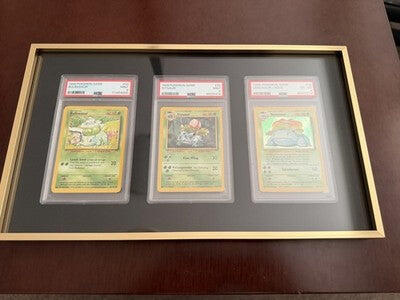
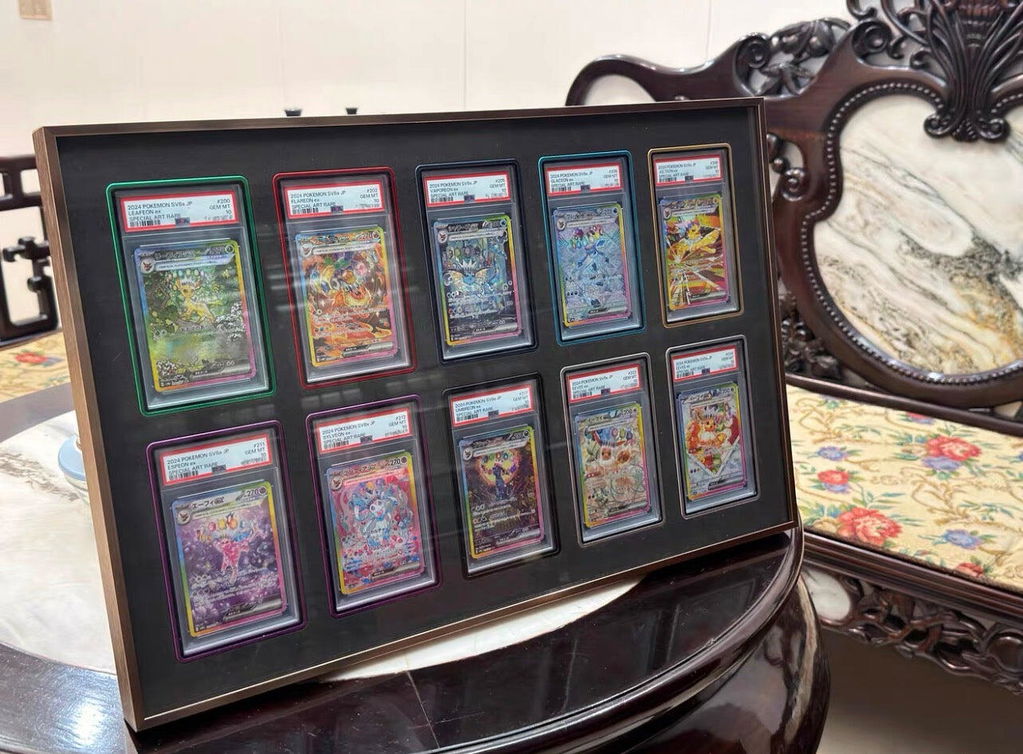


0 comments