


How to Choose the Right Trading Card Display Frame Size: The Complete Collector Guide
One of the first questions almost every collector asks isn't which display frame should I buy?
It's much simpler than that.
How many cards should I display?
Should you choose a single-card display for your favourite PSA slab? Would a 9-card wall display suit your Pokémon collection better? Is it worth planning for a 20-card feature wall now instead of upgrading later? Or should you build the ultimate 54-card collector display from the very beginning?
There isn't one correct answer.
The ideal display frame depends entirely on your collection, your available space and how you enjoy the hobby.
Some collectors want to showcase a single treasured PSA 10 above their desk, while others build entire collector walls displaying dozens of graded Pokémon cards, sports cards or One Touch magnetic holders. Some collections consist entirely of PSA slabs, while others combine CGC, BGS, One Touch holders and carefully selected raw cards into one cohesive display.
The important thing isn't simply choosing a larger display.
It's choosing a display frame that tells the story of your collection while leaving room for it to grow naturally over time.
This guide has been written to help collectors confidently choose the right display frame size, whether you're displaying one favourite card or designing an entire feature wall.
We'll explore every major display size from single-card displays all the way through to 54-card statement walls, while also looking at different collecting styles, PSA, CGC and BGS slabs, One Touch magnetic holders, raw cards, wall display ideas, frame colours and practical tips that will help you create a display you'll continue enjoying for years to come.
Why Choosing the Right Display Frame Size Matters
Choosing the right display size isn't simply about how many cards fit inside the frame.
It's about how your collection is presented, how your display fits within your room and how easily it can evolve as your collection grows.
Many collectors initially focus on the number of slots or grid size without considering what they actually want their finished display to look like.
A carefully planned 9-card display can often create a stronger visual impact than an overcrowded 25-card frame, while a thoughtfully curated 54-card wall can become the centrepiece of an entire collector room.
The best display frame is the one that matches your collecting style rather than simply holding the greatest number of cards.
Before choosing a display size, it's worth thinking about a few important questions.
- Are you displaying PSA, CGC or BGS graded slabs?
- Will your display contain One Touch magnetic holders, raw cards or a combination of both?
- Are you creating a desktop display or a wall display?
- Will this become part of a larger collector wall in the future?
- Do you regularly submit cards for grading?
- Are you displaying favourite cards or building a complete collection?
- How much wall space do you have available?
- Would you prefer one large display frame or several smaller displays?
Answering these questions first usually makes choosing the right display frame much easier.
Instead of guessing how many cards you might want to display, you'll begin thinking about the collection you ultimately want to build.
Try to choose a display frame based on where your collection will be in two or three years, not just the cards you own today. Most collectors underestimate how quickly their collections grow, especially after grading submissions or completing favourite sets.
What Type of Collection Are You Displaying?
Before looking at individual display sizes, it's worth considering exactly what you're planning to showcase.
Different collections naturally suit different display frame sizes, layouts and wall display styles.
PSA, CGC & BGS Graded Slabs
Professionally graded slabs are among the most popular cards to display because they already have a premium, uniform appearance. Their consistent size creates clean, symmetrical wall displays that work beautifully in both smaller display frames and large feature walls.
One Touch Magnetic Holders
One Touch magnetic holders are ideal for collectors who regularly update their displays. They're particularly popular for modern Pokémon cards, sports cards and special pulls that collectors want to admire without permanently grading every card.
Raw Trading Cards
Raw cards continue to be a favourite among collectors building master sets, completing modern releases or rotating cards as new sets arrive. Many collectors enjoy combining raw card displays with graded slabs to showcase different parts of their collection.
Mixed Collections
Some of the most interesting displays combine PSA, CGC and BGS slabs alongside carefully selected One Touch holders and raw cards. When planned thoughtfully, mixed displays create a highly personal collector wall that reflects the journey behind the collection rather than focusing on one display style.
Once you understand the type of collection you're building, choosing the right display size becomes much easier.
Choosing the Right Display Frame Size
There isn't a perfect display size that suits every collector.
The best choice depends on the story you want your collection to tell.
Some collectors only ever want to display a single treasured PSA slab. Others slowly build a feature wall over many years, adding new graded cards as their collection grows. Neither approach is better than the other.
The goal is to choose a display frame that complements both your collection today and where you expect it to be in the future.
The following guide walks through every display size, explaining who it's best suited for, what types of collections work particularly well and how each size changes the overall appearance of your display wall.
1 Card Display Frame
Sometimes a single card deserves the spotlight all on its own.
A one-card display frame is perfect for collectors who own one particularly meaningful card. It could be your first PSA 10, a favourite childhood Pokémon, a signed sports card, a BGS Black Label or a card that simply reminds you why you fell in love with collecting.
Rather than competing with surrounding cards, a single display allows every detail of the artwork, slab and presentation to stand out.
Single-card displays work particularly well in:
- Home offices.
- Gaming setups.
- Desktop displays.
- Shelving displays.
- Smaller collector rooms.
They also make excellent gifts because they celebrate one special card rather than requiring an entire collection.
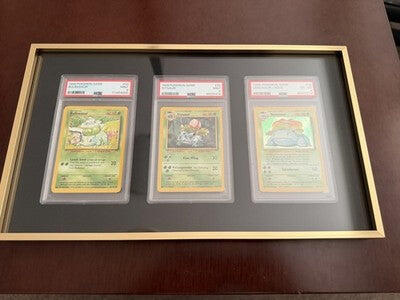
3 Card Display Frame
The three-card display remains one of the most versatile layouts available.
It provides enough room to tell a story without requiring a large collection.
Popular ideas include:
- The original Pokémon starter trio.
- Favourite evolution stages.
- Three generations of the same sports player.
- Three grading milestones.
- Three favourite artworks.
- A trio of signed cards.
Collectors displaying PSA, CGC or BGS slabs often find that three-card layouts feel balanced while still allowing each slab plenty of visual space.
If you're purchasing your first wall display frame, three cards often provide an excellent balance between simplicity and impact.
4 Card Display Frame
A four-card display creates a clean square layout that naturally feels symmetrical.
This makes it particularly popular for collectors who appreciate organised displays and minimalist interiors.
Four-card layouts work especially well for:
- Matching Pokémon artwork.
- Favourite sports moments.
- Four-card promotional sets.
- Season highlights.
- Small graded collections.
Because the layout remains compact, four-card display frames fit comfortably into almost any room while still creating a noticeable feature.
5 Card Display Frame
Five-card displays introduce a natural centrepiece.
Many collectors position their most valuable or sentimental card in the centre while surrounding it with complementary cards.
This layout works beautifully for collectors wanting to highlight:
- A PSA 10 centrepiece.
- A championship card.
- A favourite Charizard.
- A signed rookie card.
- A family favourite collected together.
The additional centre position naturally draws the eye, making five-card displays feel surprisingly premium despite their relatively compact size.
6 Card Display Frame
Six-card display frames begin to feel like miniature gallery walls.
They're large enough to showcase a meaningful collection while remaining manageable for collectors who don't yet want a large feature wall.
Popular themes include:
- Complete starter evolution lines.
- Favourite Pokémon generations.
- Sports championship runs.
- Magic: The Gathering commanders.
- Yu-Gi-Oh! archetypes.
- One Piece crews.
Six-card displays are also an excellent stepping stone for collectors planning larger wall displays in the future.
8 Card Display Frame
Eight-card displays are often overlooked, yet they create one of the cleanest rectangular layouts available.
The additional space allows collectors to showcase larger themed collections without immediately moving into much larger wall displays.
Collectors frequently choose eight-card layouts for:
- Favourite Pokémon team line-ups.
- Complete sports starting line-ups.
- Illustration collections.
- Premium graded submissions.
- Balanced mixed collections featuring PSA, CGC and BGS slabs.
If you're looking for something larger than a traditional six-card display without committing to a full feature wall, eight cards often provide an excellent balance.
9 Card Display Frame
Nine-card display frames are among the most popular choices for collectors, and it's easy to see why.
The classic three-by-three layout creates a perfectly balanced square that immediately feels organised, premium and visually satisfying. It's large enough to tell a story while remaining compact enough to suit almost any wall.
For many collectors, a nine-card display is the point where individual cards begin to feel less like separate pieces and more like one complete work of art.
Popular ideas include:
- Complete Pokémon evolution families.
- Nine favourite PSA slabs.
- Sports career highlights.
- Illustration Rare collections.
- Vintage Pokémon displays.
- Mixed PSA, CGC and BGS collections.
Nine-card display frames work beautifully above desks, inside gaming rooms and as the starting point for larger collector walls.
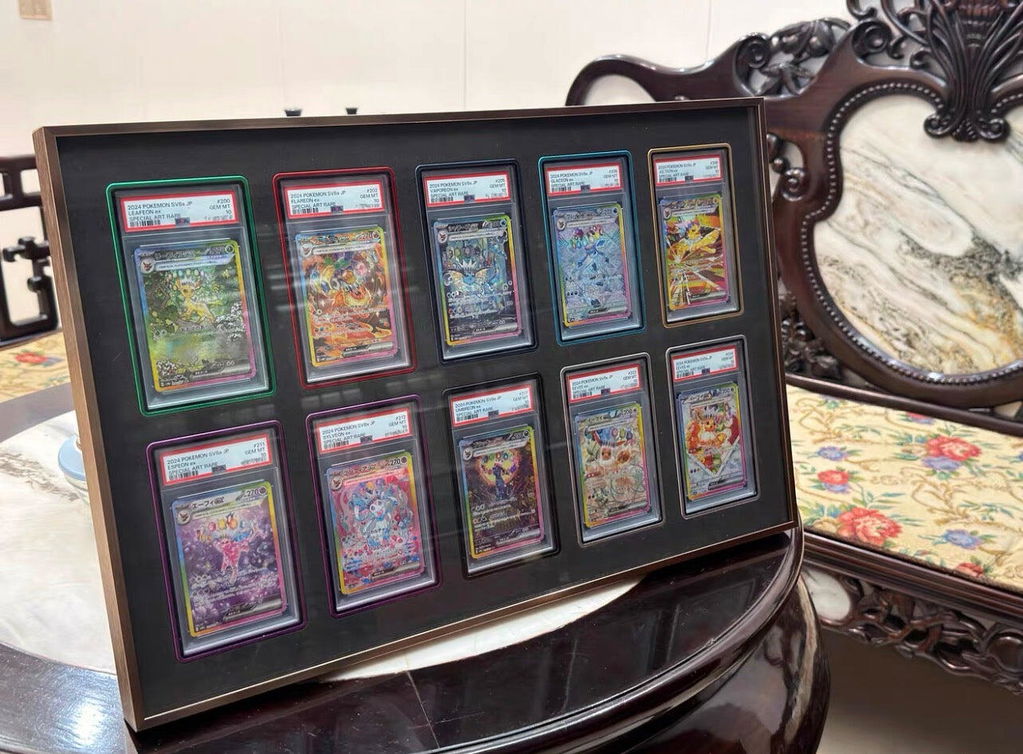
10 Card Display Frame
Ten-card displays provide just enough additional space to expand beyond the traditional square layout while maintaining a clean, organised appearance.
Collectors often choose ten-card displays when they want a little more flexibility without moving into much larger feature walls.
They're particularly well suited to:
- Favourite graded Pokémon cards.
- Top ten sports cards.
- Complete grading submissions.
- Favourite artwork collections.
- Cards celebrating important collecting milestones.
The slightly larger format also gives every slab additional breathing room, creating a display that feels refined rather than crowded.
12 Card Display Frame
Twelve cards represent a noticeable step forward.
Rather than simply displaying individual cards, you're now beginning to build a genuine wall display that naturally attracts attention within the room.
Twelve-card layouts work particularly well for collectors displaying:
- PSA graded Pokémon collections.
- CGC Illustration Rare displays.
- BGS sports cards.
- Favourite grading submissions.
- One Touch magnetic holder collections.
- Mixed graded and raw card displays.
Many collectors find that twelve cards provide the perfect balance between creating a feature wall and keeping the display carefully curated.
15 Card Display Frame
Once you reach fifteen cards, your display naturally becomes one of the defining features of the room.
Rather than showcasing a handful of favourites, you're beginning to tell the broader story of your collection.
This size is particularly popular among collectors who regularly submit cards for grading, as it provides room for collections to evolve while remaining selective.
Fifteen-card displays suit:
- Growing PSA slab collections.
- Sports card hall-of-fame displays.
- Favourite Pokémon generations.
- Master set highlights.
- Collector room centrepieces.
16 Card Display Frame
Sixteen-card layouts are loved by collectors who appreciate symmetry.
The four-by-four arrangement creates a clean, balanced display that feels structured while providing enough space for meaningful themed collections.
Collectors often build sixteen-card displays around:
- Complete Pokémon themes.
- Favourite sports teams.
- Vintage slab collections.
- Gold Secret Rare collections.
- Favourite grading returns.
If you're displaying premium aluminium frames, sixteen cards often create an impressive statement without requiring an entire collector wall.
20 Card Display Frame
Twenty-card display frames mark the transition from displaying cards to creating genuine collector artwork.
This size allows collectors to showcase enough slabs to tell a complete story while remaining practical for most homes, offices and collector rooms.
Twenty-card displays are particularly popular for:
- PSA and CGC Pokémon collections.
- Favourite sports careers.
- Complete grading submissions.
- Personal "best of" collections.
- Feature walls above desks or cabinets.
If you're unsure whether to choose a medium or larger display frame, twenty cards are often considered one of the safest long-term choices because they leave room for future growth without dominating the room.
Many collectors initially worry that a larger display frame will feel overwhelming. In reality, carefully curated twenty-card displays often feel cleaner than smaller displays because they allow related cards to remain together rather than being split across multiple frames.
Choosing the Right Frame Colour
Display size is only one part of creating an impressive collector wall.
The finish you choose can completely change how your collection feels within the room.
While personal preference will always be the deciding factor, many collectors naturally gravitate towards certain finishes depending on the type of collection they're displaying.
Black Aluminium Frames
Black remains one of the most versatile finishes available.
It creates strong contrast, allowing colourful Pokémon artwork, sports cards and modern trading card designs to become the focal point. Black also complements almost every interior style, making it an excellent choice for gaming rooms, offices and collector walls.
Silver Aluminium Frames
Silver creates a brighter, gallery-inspired appearance.
Collectors who prefer minimalist interiors often choose silver because it feels clean and understated while allowing the cards themselves to take centre stage.
Gold Aluminium Frames
Gold finishes create a premium, warm appearance that naturally complements collections featuring Gold Secret Rare Pokémon cards, trophy cards, championship cards and other standout pieces.
Many collectors also enjoy pairing gold aluminium frames with vintage collections or premium sports cards where the warmer finish enhances the overall presentation without distracting from the artwork.
Copper Aluminium Frames
Copper provides a distinctive alternative for collectors wanting something slightly different.
Its warmer tones work particularly well alongside timber furniture, vintage collections and rooms featuring natural materials, creating a display that feels both modern and timeless.
24 Card Display Frame
Twenty-four card display frames begin to create the feeling of a dedicated gallery wall.
At this size, the display becomes more than a collection of favourite cards. It becomes a centrepiece capable of transforming an entire room.
Collectors often choose twenty-four card displays when they've reached the point where a smaller frame no longer tells the complete story of their collection.
Twenty-four cards work particularly well for:
- Complete PSA graded Pokémon collections.
- CGC Illustration Rare displays.
- Sports rookie collections.
- Favourite grading submissions.
- Hall of Fame sports displays.
- Collector rooms beginning to expand.
Although considerably larger than entry-level displays, twenty-four cards still feel carefully curated rather than overwhelming, making this one of the most versatile larger display sizes available.
25 Card Display Frame
Twenty-five cards create one of the most visually satisfying layouts available.
The perfectly balanced five-by-five arrangement naturally feels organised while providing enough room for substantial collections without requiring an enormous wall.
Collectors often build twenty-five card displays around:
- Complete Pokémon themes.
- Favourite sports teams.
- PSA grading milestones.
- Vintage collections.
- Master set highlights.
- Premium slab collections.
Twenty-five card displays often become permanent fixtures within collector rooms because they provide an excellent balance between scale and practicality.
30 Card Display Frame
By thirty cards, your display is no longer simply showcasing favourite slabs.
It's telling the story of your entire collecting journey.
Thirty-card display frames allow collectors to combine multiple themes while maintaining a clean, organised appearance.
Some collectors dedicate sections of the display to different Pokémon generations. Others combine PSA, CGC and BGS slabs with carefully selected One Touch magnetic holders to showcase different parts of their collection.
Thirty-card displays are ideal for collectors who regularly submit cards for grading and expect their display to continue evolving each year.
36 Card Display Frame
Thirty-six cards represent a significant step into feature-wall territory.
Rather than complementing the room, displays of this size often become one of its defining features.
Collectors commonly use thirty-six card displays for:
- Complete graded Pokémon collections.
- Sports career retrospectives.
- Favourite illustration collections.
- Premium investment collections.
- Collector room centrepieces.
- Office feature walls.
One of the greatest strengths of a thirty-six card display is that it provides enough space for a substantial collection while still allowing every slab room to breathe.
The finished result feels organised, premium and intentionally curated rather than overcrowded.
45 Card Display Frame
Forty-five card displays are designed for serious collectors.
At this size, you're no longer choosing a display simply because you need somewhere to store your favourite slabs. You're designing an environment centred around your collection.
Forty-five card displays work exceptionally well for:
- Dedicated collector rooms.
- Large Pokémon collections.
- Comprehensive sports displays.
- Professional offices.
- Gaming rooms.
- Long-term grading collections.
Rather than encouraging collectors to display every card they own, forty-five cards provide enough flexibility to carefully curate a collection while still leaving room for future additions.
50 Card Display Frame
Fifty-card display frames create an impressive statement without necessarily requiring an entire wall.
Collectors often reach this size after years of grading submissions, completing favourite sets or gradually refining their collection into the cards that matter most.
This size provides enough space to:
- Showcase complete grading journeys.
- Display multiple Pokémon generations.
- Celebrate favourite sports careers.
- Create museum-style collector walls.
- Combine PSA, CGC and BGS slabs within one display.
Despite the larger capacity, thoughtful card selection remains just as important. Even fifty-card displays benefit from careful curation rather than simply filling every available position.
54 Card Display Frame
The fifty-four card display frame represents the ultimate collector display.
Rather than simply hanging cards on a wall, you're creating a feature that becomes one of the defining elements of the entire room.
For many collectors, a display of this size represents years of collecting, grading, upgrading and carefully selecting the cards that best reflect their journey.
Fifty-four card displays are particularly well suited to:
- Dedicated collector rooms.
- Feature walls.
- Gaming studios.
- Professional offices.
- Premium Pokémon collections.
- Sports memorabilia rooms.
- Long-term graded slab collections.
One of the biggest misconceptions about larger display frames is that they should be filled as quickly as possible.
In reality, many experienced collectors deliberately leave space available, gradually adding new PSA, CGC and BGS slabs as meaningful cards enter the collection.
This allows the display to evolve naturally while celebrating important grading submissions, favourite purchases and memorable moments throughout the hobby.
A fifty-four card display doesn't have to be completed immediately. Some of the most impressive collector walls are built over many years, with every new slab representing another milestone rather than simply filling an empty space.
Choosing the Right Display Size by Collection Type
While the number of slots is important, the type of collection you're displaying often has an even greater influence on which display frame feels right.
Pokémon Collectors
Pokémon collectors often begin with smaller displays highlighting favourite Pokémon, evolution lines or grading submissions before gradually expanding into larger wall displays featuring complete themes, Illustration Rares, Gold Secret Rares or vintage collections.
Sports Card Collectors
Sports collections naturally lend themselves to larger displays because they often celebrate careers rather than individual cards. Rookie cards, championship moments and favourite players all combine beautifully within larger feature walls.
Magic: The Gathering Collectors
Many Magic collectors build displays around favourite commanders, iconic artwork or memorable decks. Larger displays also work exceptionally well for showcasing complete themes built over many years.
Yu-Gi-Oh! Collectors
Ghost Rares, iconic monsters and favourite archetypes all create striking wall displays, particularly when grouped into balanced themed collections.
One Piece & Disney Lorcana Collectors
The vibrant artwork found throughout modern trading card games makes them particularly well suited to larger display frames where multiple cards combine to create one cohesive visual display.
Planning a Display That Can Grow With Your Collection
One of the biggest mistakes collectors make is choosing a display frame based only on the cards they own today.
The reality is that most collections continue growing.
New Pokémon sets are released several times each year. Sports collectors discover new rookies, grading submissions return throughout the year and favourite cards naturally change as collections evolve.
A display frame shouldn't simply showcase your current collection.
It should support the collection you're likely to have several years from now.
Many experienced collectors intentionally choose a display size that gives them room to grow rather than immediately filling every available slot.
This creates a display that evolves naturally instead of requiring a complete redesign every time a new favourite card is added.
If you're deciding between two display sizes, don't just count the cards you own today. Think about the collection you're working towards over the next few years. Most collectors are surprised how quickly their display grows.
Common Mistakes When Choosing a Display Frame
Choosing a display frame is exciting, but it's also surprisingly easy to make decisions you'll eventually want to change.
Choosing a Frame That's Too Small
Many collectors only think about their current collection.
A few months later another grading submission arrives, a favourite card is purchased and suddenly the display already feels full.
Trying to Display Everything
Displaying every graded slab rarely creates the strongest presentation.
Carefully selecting your favourite cards usually produces a cleaner and more memorable display.
Ignoring Wall Space
Always consider where the display will be installed before deciding on the number of slots.
A larger display can look incredible in the right location, but every room has different proportions.
Not Thinking About Colour
Collectors often spend years building beautiful collections but never consider how the frame itself contributes to the finished display.
The right finish can subtly complement the artwork without distracting from it.
Buying Without a Theme
The strongest collector walls usually tell a story.
Whether that's favourite Pokémon, rookie cards, championship moments or personal grading achievements, themed displays naturally feel more cohesive than unrelated cards placed together.
Quick Display Size Guide
| Display Size | Ideal For |
|---|---|
| 1 Card | A single treasured card or milestone slab. |
| 3–6 Cards | Starter displays, evolution lines and favourite collections. |
| 8–12 Cards | Balanced wall displays and growing collections. |
| 15–20 Cards | Feature displays for established collectors. |
| 24–30 Cards | Collector walls showcasing larger themed collections. |
| 36 Cards | Statement displays and premium collector rooms. |
| 45–54 Cards | Large feature walls celebrating years of collecting. |
Frequently Asked Questions
What display frame size is best for PSA slabs?
There isn't one perfect size. Smaller displays are ideal for showcasing milestone cards, while larger display frames allow collectors to create feature walls celebrating complete grading journeys.
Should I buy a larger display frame than I currently need?
If you expect your collection to continue growing, many collectors find it worthwhile choosing a display that leaves room for future additions.
Can I mix PSA, CGC and BGS slabs together?
Absolutely. Many of the best collector walls combine multiple grading companies. A consistent layout generally has a much greater impact than displaying only one slab style.
Can One Touch magnetic holders be displayed alongside graded slabs?
Yes. Many collectors combine One Touch holders with PSA, CGC and BGS slabs to showcase both graded and raw cards within the same display.
Can I display raw trading cards?
Certainly. Raw cards remain extremely popular, particularly when displayed in premium protective holders or One Touch magnetic cases.
Which display size is the most popular?
Nine, twelve and twenty-card display frames remain popular choices because they balance visual impact with practicality, while larger displays are often chosen by collectors building dedicated feature walls.
Which display size is best for Pokémon cards?
That depends entirely on your collection. Some collectors showcase a single favourite Pokémon, while others build displays around complete generations, evolution lines, Illustration Rares or master set highlights.
Should I display valuable cards?
Many collectors proudly display valuable cards while taking sensible precautions such as avoiding prolonged direct sunlight and securely mounting their display frames.
Can larger display frames be expanded later?
Many collectors expand by adding additional matching display frames, allowing their collector wall to continue growing over time.
What's the biggest mistake when choosing a display size?
Choosing purely based on today's collection instead of considering where the collection is likely to be in the future.
Does the colour of the frame matter?
Frame colour is largely personal preference, but many collectors choose finishes that complement both their collection and the surrounding room. Black offers versatility, silver creates a clean gallery appearance, while gold and copper provide warmer, premium aesthetics.
Is one large display better than several smaller ones?
Neither approach is objectively better. A single large feature wall creates a dramatic focal point, while multiple smaller displays offer greater flexibility as your collection evolves.
Final Thoughts
Choosing the right trading card display frame isn't really about selecting a certain number of slots.
It's about choosing how you want your collection to be experienced.
Whether you're displaying a single PSA slab, a growing collection of CGC and BGS graded cards, favourite One Touch magnetic holders or a carefully curated collection of raw trading cards, the right display frame transforms your collection from something stored away into something you can genuinely enjoy every day.
Some collectors will always prefer a single treasured card displayed above their desk.
Others will eventually build a fifty-four card feature wall celebrating years of collecting, grading and unforgettable hobby moments.
Neither choice is better.
The perfect display is simply the one that tells your story.
Take your time, plan for the future and build a display you'll still be proud of years from now. The cards that mean the most deserve to be seen, enjoyed and shared, not simply stored away in a box.
Continue Exploring
If you enjoyed this guide, you may also find these collector resources helpful.
📚 Collector Guides
-
The Ultimate Trading Card Display Guide: Ideas, Frames, Shelves & Display Solutions for Every Collector
Explore display ideas, wall layouts, shelving, cabinets, lighting, budgets and display solutions for every major trading card game. -
Why Premium Aluminium Trading Card Display Frames Are Worth It: The Complete Collector Guide
Discover why handmade aluminium display frames have become a premium choice for displaying PSA, CGC, BGS and One Touch trading card collections.
🛒 Shop Display Collections
-
Aluminium Trading Card Wall Display Frames
Premium handmade aluminium wall display frames for Pokémon, MTG, Yu-Gi-Oh!, One Piece and Sports Cards. -
PSA, CGC & BGS Graded Slab Wall Display Frames
Purpose-built wall display frames designed specifically for graded trading card collections. -
One Touch Wall Display Frames
Premium wall display frames designed for One Touch magnetic trading card holders in a range of grid sizes.


0 comments