


Choosing the best One Piece cards to display can mean very different things depending on the collection. Some collectors build around one character such as Monkey D. Luffy, Roronoa Zoro, Nami, Sanji, Trafalgar Law, Portgas D. Ace, Shanks, Boa Hancock, Sabo, Yamato, Uta, Donquixote Doflamingo or Marshall.D.Teach. Others concentrate on a particular crew, faction, story arc, card colour, Leader, expansion, parallel, alternate-art card, Manga Rare, Secret Rare, Super Rare, promotional card or premium treatment.
There are also One Piece Card Game collections built around the Straw Hat Pirates, Red-Haired Pirates, Whitebeard Pirates, Heart Pirates, Kid Pirates, Blackbeard Pirates, Big Mom Pirates, Animal Kingdom Pirates, Donquixote Pirates, Navy, Revolutionary Army, Seven Warlords of the Sea, Worst Generation, Four Emperors, Supernovas, Baroque Works, Cross Guild, Kuja Pirates, Roger Pirates and characters connected to major One Piece story arcs such as East Blue, Alabasta, Skypiea, Water 7, Enies Lobby, Thriller Bark, Marineford, Dressrosa, Whole Cake Island, Wano Country and Egghead.
The best One Piece cards to display are therefore not necessarily the most expensive cards or the cards attracting the most attention at a particular time. A collection often works best when the cards have a clear connection through character, crew, storyline, set, rarity, colour, artwork, Leader type or another collecting theme.
This guide focuses on One Piece Card Game cards as physical collectibles rather than predicting future card values. It covers popular characters, crews, factions, expansions, rarities, alternate arts, Manga Rares, Leaders, DON!! cards, card colours, promotional cards, Japanese and English releases, grading formats and collection ideas ranging from compact three-card arrangements to very large One Piece card displays.
What Makes a One Piece Card Good to Display?
The One Piece Card Game combines a huge cast of characters with a trading card game built around Leaders, Characters, Events, Stages and DON!! cards. This creates far more ways to organise a collection than simply selecting the highest-rarity cards.
A collector might display Monkey D. Luffy, Roronoa Zoro, Nami, Usopp and Sanji as an early Straw Hat group. Another might build around Portgas D. Ace, Edward.Newgate and Marco as a Whitebeard Pirates collection. A Trafalgar Law collector could combine cards from multiple expansions, colours and rarities while still maintaining a single-character theme.
Other collections can be much more specific. A collector might want one alternate-art Leader from each booster set, every favourite Nami parallel, a complete group of Seven Warlords characters, multiple Gear 5 Luffy cards or one card representing every major One Piece story arc.
Before choosing a display size, it helps to decide exactly what the collection represents. Character, crew, set, Leader, rarity, manga-artwork and story-arc collections can all produce very different card counts.
Popular One Piece Cards and Characters to Collect
Monkey D. Luffy Cards
Monkey D. Luffy is the central character of One Piece and one of the largest individual collecting categories within the One Piece Card Game.
Luffy appears across booster sets, starter decks, promotional releases, Leader cards, Character cards, alternate-art parallels, premium treatments and Manga Rare cards. That makes it possible to build anything from a compact Luffy collection containing three favourite cards to a large chronological collection showing different stages of his journey.
A Luffy collection can be organised by set code, card colour, rarity, Leader type, artwork or story era. Collectors can also concentrate specifically on cards showing different forms and major moments, including cards associated with Gear 4 and Gear 5.
Because Luffy appears across so many releases, he also works particularly well for collections that compare standard cards with parallel versions. A collector might display a regular Super Rare beside its alternate-art parallel or combine several different premium Luffy cards from different sets.
Gear 5 Luffy Cards
Gear 5 is one of the most recognisable modern Luffy collecting themes.
Gear 5 cards can be grouped around different artworks, premium treatments and expansions or incorporated into a wider Luffy collection showing the progression of his forms.
A Gear 5 display can also be combined with Kaido, Yamato and Wano-related cards to create a broader story-based collection.
Roronoa Zoro Cards
Roronoa Zoro is one of the most prominent Straw Hat characters and a major collecting subject in his own right.
Zoro cards can be organised by Leader cards, Character cards, alternate arts, promotional releases, card colours and story arcs. Collectors interested in swordsmen can also combine Zoro with Dracule Mihawk, Kozuki Oden, Ryuma and other sword users.
A larger Zoro collection can show different outfits, techniques and periods of the story rather than simply repeating cards from one expansion.
Nami Cards
Nami is another major One Piece Card Game collecting subject and appears across numerous sets and premium treatments.
Nami collections can include Character cards, Leader cards, alternate-art versions, promotional cards and cards showing different designs from East Blue through later story arcs.
Because Nami has appeared in multiple visually distinctive parallel artworks, she also works well for collectors who prioritise card art rather than gameplay or rarity alone.
Sanji Cards
Sanji cards provide another strong Straw Hat collection theme and can be organised around sets, colours, alternate artwork or different stages of the character's story.
Whole Cake Island is an obvious Sanji-focused collection theme because it connects Sanji with characters such as Charlotte Pudding, Charlotte Linlin and other members of the Big Mom Pirates.
Usopp Cards
Usopp can be collected individually or as part of a full Straw Hat Pirates collection.
Collectors can also include Sogeking cards when building a collection around the different identities and stages of the character.
Sogeking Cards
Sogeking provides a more specific Usopp collecting theme and fits particularly well within Water 7 and Enies Lobby collections.
Tony Tony.Chopper Cards
Tony Tony.Chopper cards work naturally in Straw Hat displays and can also be collected around different forms, outfits and story arcs.
A Chopper collection can combine regular Character cards with alternate artwork and promotional releases to show several different presentations of the character.
Nico Robin Cards
Nico Robin is an important collecting subject for Straw Hat Pirates, Ohara, Water 7 and Enies Lobby themes.
Robin cards can be organised chronologically or combined with cards representing characters and locations connected to her history.
Franky Cards
Franky cards fit naturally into Straw Hat Pirates, Water 7, Enies Lobby and Egghead collections.
A Franky collection can include cards representing his earlier Water 7 appearance as well as later Straw Hat designs.
Brook Cards
Brook cards are an obvious choice for Straw Hat crew collections and can also form part of Thriller Bark-focused displays.
Jinbe Cards
Jinbe has connections to several different collecting themes, including the Straw Hat Pirates, Fish-Man characters and the Seven Warlords of the Sea.
This allows a Jinbe card to work in several completely different collection structures depending on what surrounds it.
Portgas D. Ace Cards
Portgas D. Ace is one of the strongest individual One Piece Card Game collecting subjects outside the main Straw Hat crew.
Ace collections can include Leader cards, Character cards, Super Rares, alternate-art parallels, promotional cards and Manga Rare treatments.
He also connects naturally to several larger collection themes. Ace can be displayed with Luffy and Sabo as a brothers collection, with Edward.Newgate and Marco as a Whitebeard Pirates collection or with characters such as Sakazuki and other Marines as part of a Marineford display.
Collectors can also focus specifically on cards showing Ace's flame-based imagery, Whitebeard Pirates affiliation or major moments from his story.
Sabo Cards
Sabo works particularly well in Revolutionary Army collections and Luffy, Ace and Sabo displays.
A larger Sabo collection can include Leader cards, Character cards, alternate artwork, promotional releases and cards connected to Dressrosa or the Revolutionary Army.
Shanks Cards
Shanks is one of the most prominent collecting subjects in the One Piece Card Game.
Collectors can build around Red-Haired Pirates cards, Emperor themes, Gol D. Roger connections, Luffy-related cards or premium Shanks treatments.
Shanks also has strong significance within One Piece Card Game collecting because of his appearance on high-profile parallel and Manga Rare cards.
A dedicated Shanks collection can therefore range from standard Character cards through alternate artwork and premium versions while still maintaining one clear character theme.
Trafalgar Law Cards
Trafalgar Law is one of the major character-based collecting categories in the game.
Law cards can be organised around Heart Pirates, Worst Generation, Leader cards, card colours, alternate arts and story arcs such as Dressrosa.
Collectors can also pair Law with Corazon for a character-history collection or with Luffy and Eustass Kid for a Worst Generation group.
Eustass Kid Cards
Eustass Kid is another important Worst Generation character and can form an individual collection or a Kid Pirates group.
Kid cards work naturally alongside Killer, Trafalgar Law and Luffy, especially in collections connected to Sabaody or Wano Country.
Boa Hancock Cards
Boa Hancock is a major collecting subject for Kuja Pirates and Seven Warlords of the Sea themes.
Hancock collections can include Leader cards, Character cards, alternate-art cards, premium treatments and promotional releases.
She can also be displayed alongside Monkey D. Luffy or other Warlords depending on the collection theme.
Yamato Cards
Yamato has become one of the strongest modern character themes within One Piece Card Game collecting.
Yamato cards can be organised around Wano Country, Kozuki Oden connections, Leader cards, alternate-art versions, Secret Rares and premium treatments.
A Yamato collection can also include Kaido and other Animal Kingdom Pirates or instead centre on Yamato's connection to Luffy and Oden.
Uta Cards
Uta provides a distinctive collecting theme connected to One Piece Film: Red and film-related card releases.
Collectors can build around Uta Leader cards, Character cards, promotional cards, alternate arts and cards featuring other Film characters.
Uta also works naturally alongside Shanks because of the connection between the characters.
Edward.Newgate Cards
Edward.Newgate, better known as Whitebeard, is central to Whitebeard Pirates and Marineford collections.
Whitebeard cards can also form part of Four Emperors displays alongside Shanks, Kaido and Charlotte Linlin.
A focused Whitebeard collection can include different Character cards, Leader cards and parallel treatments.
Marco Cards
Marco is one of the most recognisable Whitebeard Pirates characters and works naturally alongside Whitebeard and Ace.
Marco also appears in later storylines, allowing collectors to build a broader character collection rather than restricting cards to Marineford.
Marshall.D.Teach Cards
Marshall.D.Teach, commonly known as Blackbeard, is one of the most important pirate characters in One Piece and provides a major collecting theme.
Blackbeard cards can be organised around the Blackbeard Pirates, Four Emperors, Luffy rivals or characters connected to major events in the story.
A Blackbeard Pirates display can expand beyond Teach to characters such as Shiryu, Van Augur, Jesus Burgess and other crew members.
Kaido Cards
Kaido is a major collecting subject for Wano Country, Animal Kingdom Pirates and Four Emperors collections.
Kaido can be displayed alongside King, Queen and Jack or combined with Luffy, Yamato and Kozuki Oden in a broader Wano collection.
Collectors can also focus specifically on different Kaido forms and card artworks.
King Cards
King is a natural addition to Animal Kingdom Pirates and Wano displays.
King cards can also be collected individually through different Character cards and parallel versions.
Queen Cards
Queen works particularly well alongside Kaido and King in Animal Kingdom Pirates collections.
Jack Cards
Jack can complete a group featuring Kaido's three All-Stars and can also be used in Wano or Zou-related collections.
Charlotte Linlin Cards
Charlotte Linlin, also known as Big Mom, is one of the major Four Emperors and the central character in Big Mom Pirates collections.
Big Mom cards can be displayed with Charlotte Katakuri, Charlotte Pudding, Charlotte Perospero and other members of the Charlotte family.
Charlotte Katakuri Cards
Charlotte Katakuri is a major individual collecting subject and one of the most recognisable characters from Whole Cake Island.
Katakuri collections can include Leader cards, Character cards, alternate arts and cards connected to Big Mom Pirates.
Charlotte Pudding Cards
Charlotte Pudding cards fit naturally into Whole Cake Island and Sanji-themed collections.
Collectors can also combine Pudding with other members of the Charlotte family.
Donquixote Doflamingo Cards
Donquixote Doflamingo is one of the most prominent antagonist collecting subjects within the game.
Doflamingo cards can be organised around Dressrosa, Donquixote Pirates, Seven Warlords of the Sea, Leader cards or alternate-art versions.
He also pairs naturally with Trafalgar Law and Corazon in a character-history display.
Donquixote Rosinante / Corazon Cards
Donquixote Rosinante, better known as Corazon, is particularly important to Trafalgar Law collections.
A Law and Corazon display provides a much more specific character-based theme than simply collecting cards from the same crew.
Dracule Mihawk Cards
Dracule Mihawk cards fit naturally into Seven Warlords, Cross Guild and swordsman collections.
Collectors can also pair Mihawk with Roronoa Zoro to represent their connection throughout the series.
Buggy Cards
Buggy is unusually flexible as a collecting subject because he connects to several different periods and groups within One Piece.
Buggy cards can appear in early-series collections, Roger Pirates themes, Cross Guild displays and Four Emperors collections.
Crocodile Cards
Crocodile is central to Alabasta and Baroque Works collections and also connects to the Seven Warlords and Cross Guild.
A Crocodile collection can therefore span several different story periods while remaining focused on the same character.
Perona Cards
Perona is a popular character for Thriller Bark and Gecko Moria-related collections.
She can also be collected individually through Character cards, alternate-art versions and other premium releases.
Gecko Moria Cards
Gecko Moria cards work naturally in Thriller Bark and Seven Warlords of the Sea collections.
Moria can be paired with Perona, Brook and other Thriller Bark characters for a story-focused display.
Enel Cards
Enel is one of the defining characters of Skypiea and provides an obvious focus for a Skypiea collection.
An Enel collection can include Leader cards, Character cards and alternate-art versions while expanding into other Sky Island characters.
Nefeltari Vivi Cards
Nefeltari Vivi is a strong collecting subject for Alabasta and early-series One Piece collections.
Vivi cards can be displayed alongside Luffy, Crocodile, Pell, Koza and other characters from the Alabasta storyline.
Rebecca Cards
Rebecca cards fit naturally into Dressrosa collections and can be displayed alongside Kyros, Luffy, Law and Doflamingo.
Carrot Cards
Carrot provides another popular character theme and fits naturally into Mink Tribe, Zou, Whole Cake Island and Straw Hat ally collections.
Jewelry Bonney Cards
Jewelry Bonney is an important member of the Worst Generation and has become increasingly significant in later One Piece storylines.
Bonney cards can be displayed as part of Supernova, Worst Generation or Egghead-focused collections.
Bartholomew Kuma Cards
Bartholomew Kuma has connections to the Seven Warlords, Revolutionary Army, Bonney and later storylines.
These connections make Kuma particularly suitable for collectors building narrative rather than crew-based displays.
Rob Lucci Cards
Rob Lucci is one of the central characters for Water 7, Enies Lobby, CP9 and CP0 collections.
Collectors can combine Lucci with Kaku, Spandam and other government-related characters or display him opposite Luffy.
Kaku Cards
Kaku cards fit naturally into CP9 and CP0 collections and can be combined with Rob Lucci in compact two-character or larger faction displays.
Smoker Cards
Smoker is a long-running Navy character and works naturally in Marine, East Blue, Alabasta and Luffy-rival collections.
Tashigi Cards
Tashigi cards fit naturally beside Smoker and can also be used in swordsman or Navy collections.
Monkey D. Garp Cards
Monkey D. Garp is one of the central figures for Navy and Monkey family collections.
A three-character display containing Monkey D. Garp, Monkey D. Dragon and Monkey D. Luffy creates a simple generational theme.
Monkey D. Dragon Cards
Monkey D. Dragon is the central character for Revolutionary Army collections and an important part of Monkey family displays.
Dragon cards can be combined with Sabo, Koala, Emporio.Ivankov and other Revolutionary Army characters.
Sengoku Cards
Sengoku cards work naturally alongside Garp and senior Navy characters and can also be used in Marineford collections.
Sakazuki / Akainu Cards
Sakazuki, also known as Akainu, is a major Navy collecting subject and one of the most important characters for Marineford themes.
Sakazuki can be displayed alongside Kuzan and Borsalino as an Admiral trio or opposite Ace as part of a story-driven collection.
Kuzan / Aokiji Cards
Kuzan, also known as Aokiji, works naturally in Admiral, Navy and Marineford collections.
His later story connections can also place him within collections that extend beyond the Marines.
Borsalino / Kizaru Cards
Borsalino, also known as Kizaru, completes one of the most recognisable Admiral trios alongside Sakazuki and Kuzan.
He can also be used in Sabaody, Marineford, Navy and Egghead collections.
Koby Cards
Koby provides a strong character progression theme because collectors can choose cards representing different stages of his development as a Marine.
Koby can be displayed alongside Garp, Helmeppo and other Navy characters.
Kozuki Oden Cards
Kozuki Oden is a major subject for Wano Country, Roger Pirates and Whitebeard Pirates-related collections.
Oden can be displayed with Yamato, Momonosuke and Hiyori or alongside Gol D. Roger and Edward.Newgate.
Kozuki Momonosuke Cards
Momonosuke cards fit naturally into Wano, Kozuki family and Oden-related collections.
Gol D. Roger Cards
Gol D. Roger is one of the most historically important characters in One Piece and provides a natural foundation for Pirate King and Roger Pirates collections.
Roger can be displayed alongside Silvers Rayleigh, Kozuki Oden, Shanks, Edward.Newgate or Monkey D. Luffy depending on the theme.
Silvers Rayleigh Cards
Silvers Rayleigh works particularly well in Roger Pirates, legendary pirate and Luffy mentor collections.
Popular One Piece Crews to Collect
Straw Hat Pirates Cards
The Straw Hat Pirates provide one of the clearest collection structures in the One Piece Card Game.
A complete core Straw Hat collection can include:
- Monkey D. Luffy
- Roronoa Zoro
- Nami
- Usopp
- Sanji
- Tony Tony.Chopper
- Nico Robin
- Franky
- Brook
- Jinbe
Collectors can choose one representative card for each member or build a much larger Straw Hat collection containing multiple cards of every character.
Another approach is to collect the crew chronologically by adding members in the order they joined the group.
Red-Haired Pirates Cards
Red-Haired Pirates collections naturally centre on Shanks.
The collection can expand through Benn Beckman, Yasopp, Lucky Roux and other members of the crew.
Whitebeard Pirates Cards
Whitebeard Pirates collections can include Edward.Newgate, Portgas D. Ace, Marco, Jozu, Vista and other members of the crew.
This group can also be expanded into a Marineford collection by incorporating opposing Marines and Warlords.
Heart Pirates Cards
Heart Pirates collections naturally centre on Trafalgar Law and can include Bepo, Shachi, Penguin and other crew members.
Kid Pirates Cards
Kid Pirates collections can centre on Eustass Kid and Killer and expand through additional members where suitable cards exist.
Blackbeard Pirates Cards
Blackbeard Pirates collections can centre on Marshall.D.Teach and include characters such as Shiryu, Van Augur, Jesus Burgess and other crew members.
Big Mom Pirates Cards
Big Mom Pirates provide one of the largest family-based pirate collections.
Charlotte Linlin can be combined with Charlotte Katakuri, Charlotte Pudding, Charlotte Perospero, Charlotte Cracker and other members of the Charlotte family.
Animal Kingdom Pirates Cards
Animal Kingdom Pirates collections can centre on Kaido and expand through King, Queen, Jack and other Wano-related characters.
Donquixote Pirates Cards
Donquixote Pirates collections naturally centre on Donquixote Doflamingo and work particularly well as part of a Dressrosa display.
Kuja Pirates Cards
Kuja Pirates collections can centre on Boa Hancock and expand through characters from Amazon Lily.
Roger Pirates Cards
Roger Pirates collections can include Gol D. Roger, Silvers Rayleigh, Kozuki Oden and other characters associated with the crew.
Popular One Piece Factions to Collect
Navy and Marine Cards
The Navy provides one of the largest non-pirate collecting categories.
A Navy collection can include:
- Monkey D. Garp
- Sengoku
- Sakazuki
- Kuzan
- Borsalino
- Smoker
- Tashigi
- Koby
- Helmeppo
The collection can be arranged by rank, generation or story arc.
Revolutionary Army Cards
Revolutionary Army collections can include Monkey D. Dragon, Sabo, Koala, Emporio.Ivankov and other members of the organisation.
Seven Warlords of the Sea Cards
The Seven Warlords provide one of the most recognisable One Piece faction collections.
Depending on the era represented, cards can include:
- Dracule Mihawk
- Boa Hancock
- Donquixote Doflamingo
- Crocodile
- Jinbe
- Bartholomew Kuma
- Gecko Moria
- Trafalgar Law
- Buggy
Worst Generation Cards
The Worst Generation provides a broad collection containing characters from several different crews.
Possible subjects include Monkey D. Luffy, Roronoa Zoro, Trafalgar Law, Eustass Kid, Killer, Jewelry Bonney, Basil Hawkins, X.Drake, Scratchmen Apoo, Capone Bege and Urouge.
Supernova Cards
Supernova collections overlap heavily with Worst Generation collecting and provide another way to group major pirate rookies introduced around the Sabaody period.
Four Emperors Cards
Four Emperors collections can represent different generations of the title.
Depending on the period represented, cards can include Shanks, Edward.Newgate, Kaido, Charlotte Linlin, Marshall.D.Teach, Monkey D. Luffy and Buggy.
Baroque Works Cards
Baroque Works collections naturally centre on Crocodile and can include characters such as Nico Robin in her Miss All Sunday period and other agents connected to Alabasta.
Cross Guild Cards
Cross Guild provides a compact modern collection centred on Buggy, Crocodile and Dracule Mihawk.
CP9 Cards
CP9 collections can include Rob Lucci, Kaku, Kalifa, Jabra and other members associated with Water 7 and Enies Lobby.
CP0 Cards
CP0 collections can extend government-focused displays into later parts of the One Piece story.
Popular One Piece Story Arcs to Collect
East Blue Cards
East Blue collections can represent the beginning of Luffy's journey and the earliest Straw Hat members.
Characters can include Luffy, Zoro, Nami, Usopp, Sanji, Buggy, Arlong, Smoker and other early-series characters.
Alabasta Cards
Alabasta collections can include Luffy, Nefeltari Vivi, Crocodile, Nico Robin, Smoker and characters from Baroque Works.
Skypiea Cards
Skypiea collections can centre around Enel and include Straw Hat cards from the arc and other Sky Island characters.
Water 7 Cards
Water 7 collections can include Franky, Iceburg, CP9 characters and the Straw Hat crew.
Enies Lobby Cards
Enies Lobby is one of the strongest Robin and CP9 collection themes.
Cards can include Nico Robin, Luffy, Zoro, Sanji, Usopp or Sogeking, Franky, Rob Lucci, Kaku and other CP9 characters.
Thriller Bark Cards
Thriller Bark collections can include Brook, Gecko Moria, Perona, Ryuma and the Straw Hat Pirates.
Sabaody Archipelago Cards
Sabaody collections work particularly well for Supernova and Worst Generation characters.
Luffy, Zoro, Law, Kid, Bonney and other Supernovas can form a substantial multi-character display.
Impel Down Cards
Impel Down collections can include Luffy, Buggy, Crocodile, Emporio.Ivankov, Magellan and other characters associated with the prison storyline.
Marineford Cards
Marineford is one of the strongest One Piece collection themes because it brings together major characters from multiple crews and factions.
A Marineford display can include:
- Monkey D. Luffy
- Portgas D. Ace
- Edward.Newgate
- Marco
- Sakazuki
- Kuzan
- Borsalino
- Sengoku
- Monkey D. Garp
- Boa Hancock
- Dracule Mihawk
- Crocodile
- Buggy
Fish-Man Island Cards
Fish-Man Island collections can include Jinbe, Straw Hat Pirates and other Fish-Man characters.
Punk Hazard Cards
Punk Hazard collections can connect Luffy, Trafalgar Law, Smoker and other characters from the arc.
Dressrosa Cards
Dressrosa provides one of the broadest collection themes in the series.
Possible cards include:
- Monkey D. Luffy
- Trafalgar Law
- Donquixote Doflamingo
- Sabo
- Rebecca
- Kyros
- Corazon
- Fujitora
- other Donquixote Pirates
Zou Cards
Zou collections can include Carrot, other Mink characters and members of the Straw Hat alliance.
Whole Cake Island Cards
Whole Cake Island provides a strong Sanji and Big Mom Pirates collecting theme.
Cards can include Sanji, Charlotte Linlin, Charlotte Katakuri, Charlotte Pudding, Charlotte Cracker, Carrot and other characters associated with the arc.
Wano Country Cards
Wano Country provides one of the largest One Piece Card Game collection themes.
Possible subjects include:
- Monkey D. Luffy
- Roronoa Zoro
- Kaido
- Yamato
- Kozuki Oden
- Kozuki Momonosuke
- King
- Queen
- Jack
- Trafalgar Law
- Eustass Kid
- Killer
- other Wano characters
Egghead Cards
Egghead collections can include the Straw Hat Pirates, Jewelry Bonney, Bartholomew Kuma, Vegapunk-related characters, CP0 and Navy characters connected to the storyline.
Popular One Piece Card Game Sets
One Piece Card Game products are identified using set and product codes such as OP for main booster expansions, ST for starter decks, EB for Extra Boosters and P for promotional cards.
Understanding these codes can be useful when organising cards because collectors can identify the exact product family without relying only on the artwork or character.
Romance Dawn - OP01
Romance Dawn, identified as OP01, is the first main One Piece Card Game booster expansion.
Because it begins the OP booster numbering system, OP01 has particular significance for collectors building chronological set collections.
Romance Dawn includes major characters, Leaders, Super Rares, Secret Rares and parallel cards connected to several crews and storylines.
A dedicated OP01 collection might contain favourite Leaders, alternate arts, Super Rares or one representative card from each major crew appearing in the set.
Paramount War - OP02
Paramount War, OP02, strongly connects to Marineford, Whitebeard Pirates and Navy characters.
This makes it particularly suitable for Portgas D. Ace, Edward.Newgate, Marco and Marine-focused collections.
A collector can also pair OP02 cards with cards from later sets featuring the same characters to create a broader Marineford display.
Pillars of Strength - OP03
Pillars of Strength, OP03, expanded the game's range of Leaders, characters and parallel cards.
Collectors can organise an OP03 display around favourite Leaders, Super Rares, Secret Rares or alternate artwork from the expansion.
Kingdoms of Intrigue - OP04
Kingdoms of Intrigue, OP04, has strong connections to storylines including Alabasta and Dressrosa.
This makes it particularly useful for collections featuring Nefeltari Vivi, Crocodile, Donquixote Doflamingo, Rebecca and other characters associated with those arcs.
Awakening of the New Era - OP05
Awakening of the New Era, OP05, became one of the most recognisable One Piece Card Game expansions.
It includes major characters and premium treatments that make the set particularly relevant to collectors interested in Luffy, anniversary-era cards and manga-style treatments.
OP05 can be displayed as a complete set theme or used as one part of broader Luffy, Kid or Law collections.
Wings of the Captain - OP06
Wings of the Captain, OP06, provides another large expansion-based collecting category.
Collectors can focus on favourite OP06 characters, Leaders, alternate-art cards or premium cards from the set.
500 Years in the Future - OP07
500 Years in the Future, OP07, expands the game further into later One Piece characters and storylines.
Collectors can use OP07 as another step within a chronological OP01, OP02, OP03 and onward expansion display.
Two Legends - OP08
Two Legends, OP08, provides additional Leaders, character cards and parallels and can form its own set-focused collection.
Emperors in the New World - OP09
Emperors in the New World, OP09, naturally lends itself to collections centred on major pirate captains and Emperor-related characters.
A collector might choose one OP09 card for each major crew or concentrate entirely on premium parallels from the expansion.
Extra Booster Sets
Extra Booster products use the EB set-code structure rather than the standard OP booster numbering.
These releases add another collecting category for people who want to organise cards by product family rather than character alone.
Memorial Collection - EB01
Memorial Collection, EB01, is one of the recognisable Extra Booster releases within the One Piece Card Game.
Collectors can display EB01 cards separately or combine them with cards from the OP booster sets featuring the same characters.
One Piece Premium and Reprint Products
One Piece Card Game collecting also extends beyond standard booster and starter-deck releases.
Premium products, special collections and reprint-focused products can introduce alternate treatments, popular reprints and visually distinctive versions of existing cards.
Collectors interested primarily in artwork may therefore choose cards from several product types rather than restricting a display to OP-numbered booster cards.
One Piece Starter Deck Cards
Starter decks are identified with ST product codes and form another major part of the One Piece Card Game.
Starter decks are often structured around a particular Leader, crew, colour or group of characters.
For collectors, this creates several possible display themes:
- one Leader from every starter deck
- starter-deck Luffy cards
- starter decks organised by colour
- starter decks organised by crew
- standard and alternate versions of starter-deck characters
One Piece Promotional Cards
Promotional cards use the P designation and can be distributed through events, tournaments, products, magazines, campaigns and other promotional channels depending on the release.
Promo cards can be organised by character, card code, promotional series or event.
A character collector may combine promotional versions with booster and starter-deck versions of the same character.
One Piece Tournament Cards
Tournament cards and event-related promotional cards provide another specialised collecting category.
Collectors can build around tournament packs, participation cards, winner cards, event cards or favourite characters appearing in competitive promotional products.
Understanding One Piece Card Codes
One Piece cards include identification codes that help collectors determine where a card originated.
A code beginning with OP generally identifies a card from a main booster expansion. ST identifies cards associated with starter decks, EB identifies Extra Booster releases and P is used for promotional cards.
The card number following the product code identifies the individual card within that release.
This makes card codes useful for collectors comparing similar artwork or trying to determine whether two cards belong to the same expansion.
One Piece Card Rarities Explained
The One Piece Card Game uses several standard rarity classifications alongside parallel artwork and premium treatments.
Understanding the distinction between rarity and parallel treatment is important because two versions of the same underlying card can share the same game information while looking dramatically different.
Common Cards
Common cards form a large portion of many sets and can still be useful for character, crew, set and story-arc collections.
Uncommon Cards
Uncommon cards sit within the standard rarity structure and include many Characters, Events and other cards.
Rare Cards
Rare cards provide another standard rarity tier and often feature important characters and visually distinctive designs.
Super Rare Cards
Super Rare cards, abbreviated SR, are one of the major collectible rarity categories in One Piece booster sets.
Collectors can build a complete SR collection from one expansion or choose favourite Super Rares from several different sets.
Secret Rare Cards
Secret Rare cards, abbreviated SEC, are another major rarity tier.
A Secret Rare can also appear in premium parallel form, meaning collectors may encounter several visually different versions of the same underlying SEC card.
Leader Cards
Leader cards have a specific gameplay role but have also become a major collecting category.
Collectors can organise Leaders by colour, character, crew, expansion or artwork.
Alternate-Art Cards
Alternate-art cards use different artwork or presentation from the standard version of the card.
These are particularly useful for display because the normal card and alternate-art version can be shown beside each other.
Parallel Cards
Parallel cards are premium versions of existing cards and may use different artwork, foil treatment, texture or other visual differences depending on the release.
SP Cards
SP cards are special premium cards that can use distinctive alternate artwork and treatments.
Because SP cards frequently feature popular characters, they can form a collection category separate from standard alternate-art cards.
Manga Rare Cards
Manga Rare cards are among the most recognisable premium treatments in One Piece Card Game collecting.
They feature manga-inspired artwork and can become the central card in a character collection or form part of a dedicated Manga Rare group.
What Is a One Piece Manga Rare?
A Manga Rare is a premium One Piece Card Game card distinguished by artwork that incorporates imagery inspired by the One Piece manga.
Manga cards are visually different from standard base cards and normal parallel versions, which makes them particularly easy to recognise within a larger collection.
Collectors can build around one favourite Manga Rare, combine several Manga Rares from different sets or place a Manga Rare alongside other premium versions of the same character.
Popular Manga Rare Characters
As the One Piece Card Game has expanded, manga-style cards have featured multiple major characters.
Collectors often organise these cards by character, expansion or chronological release rather than treating each card as an unrelated premium item.
Characters strongly associated with Manga Rare collecting include major names such as Monkey D. Luffy, Shanks, Portgas D. Ace and other prominent characters featured across different expansions.
What Is an SP One Piece Card?
SP cards are special premium cards included in selected One Piece Card Game products.
They can feature popular characters using alternate artwork and premium presentation that differs from normal base cards.
SP collecting can therefore become a theme of its own, particularly for collectors who want a visually consistent premium group without restricting themselves to one character.
One Piece Alternate-Art Cards
Alternate art is one of the most important collector terms within the One Piece Card Game.
A standard Character card might have a conventional game-card design, while its parallel version uses larger artwork and a more premium presentation.
This creates several useful collection structures:
- standard card beside alternate art
- all alternate arts from one set
- alternate arts of one character
- alternate arts from one crew
- alternate-art Leaders
- alternate-art Super Rares
- alternate-art Secret Rares
One Piece Alternate-Art Leader Cards
Alternate-art Leaders are one of the clearest premium One Piece collection categories.
Because each card retains the distinctive Leader format while changing the artwork, multiple alternate-art Leaders can look connected even when the characters come from different crews and expansions.
A large Leader display can also be organised chronologically by set.
One Piece Leader Cards
Leader cards are central to the structure of the One Piece Card Game and provide one of the easiest categories to collect consistently.
A Leader collection can be organised by:
- set
- colour
- crew
- character
- single-colour Leaders
- dual-colour Leaders
- standard Leaders
- alternate-art Leaders
Collectors can also choose one favourite Leader from every expansion to create a chronological display.
Red One Piece Cards
Red cards can form a complete colour-focused collection or be used to organise Leaders and characters associated with red decks.
A red collection can contain cards from many different expansions while retaining a consistent visual and gameplay connection.
Green One Piece Cards
Green cards can be collected through green Leaders, Character cards, alternate arts and dual-colour Leaders that incorporate green.
Blue One Piece Cards
Blue cards provide another clear colour-based collection and can include characters from multiple crews and factions.
Purple One Piece Cards
Purple collections can be organised around purple Leaders, Character cards, premium parallels and dual-colour combinations.
Black One Piece Cards
Black cards have strong associations with Navy characters in several products but can extend well beyond a single faction.
Yellow One Piece Cards
Yellow cards provide another distinct colour category and include characters connected to several crews and themes.
Dual-Colour One Piece Leaders
Some Leaders combine two colours rather than using a single colour identity.
Dual-colour Leaders create another structured collecting category because collectors can organise cards by colour combination.
For a large Leader collection, cards can be arranged from single-colour Leaders into different dual-colour combinations.
DON!! Cards
DON!! cards are a distinctive part of the One Piece Card Game and can also become a collecting category.
Standard DON!! cards are used as a resource during gameplay, while special DON!! cards can feature different character artwork and designs.
A DON!! collection can be organised by:
- character
- set
- special artwork
- crew
- story arc
- promotional release
Special DON!! cards can also be placed alongside matching Character or Leader cards.
One Piece Character Cards
Character cards form the broadest collecting category because they cover hundreds of characters across different crews, factions and storylines.
Character-card collections can be organised by favourite character, crew, set, colour, rarity, story arc or artwork.
One Piece Event Cards
Event cards depict actions, attacks and moments from One Piece.
Although character cards usually receive more collector attention, Event cards can provide important context within story-based collections.
A collector might combine a favourite Luffy Character card with Event cards representing attacks or important moments associated with him.
One Piece Stage Cards
Stage cards represent locations and settings.
They can be incorporated into crew or story-arc displays to give the surrounding character cards a stronger connection to a particular location.
Collecting One Piece Cards by Character
Character collecting is one of the simplest and most expandable approaches.
A Monkey D. Luffy collection might include:
- Leader cards
- Character cards
- Super Rare cards
- Secret Rare cards where applicable
- alternate-art cards
- SP cards
- Manga Rare cards
- promotional cards
- starter-deck cards
- DON!! cards featuring Luffy
- different card colours
- cards from different story arcs
The same approach can be used for Zoro, Nami, Ace, Shanks, Law, Boa Hancock, Yamato, Uta and many other characters.
Collecting One Piece Cards by Crew
Crew collections create an obvious connection between characters without requiring every card to come from the same expansion.
The Straw Hat Pirates provide the most obvious example, but Red-Haired Pirates, Whitebeard Pirates, Heart Pirates, Blackbeard Pirates, Big Mom Pirates and Animal Kingdom Pirates can all support substantial displays.
Collecting One Piece Cards by Faction
Faction collections can bring together characters from different crews or periods of the story.
Strong faction themes include:
- Navy
- Revolutionary Army
- Seven Warlords of the Sea
- Worst Generation
- Four Emperors
- CP9
- CP0
- Baroque Works
- Cross Guild
Collecting One Piece Cards by Story Arc
Story arcs are particularly useful because they allow heroes, villains and supporting characters to appear together while still having a clear connection.
Marineford, Dressrosa, Whole Cake Island, Wano Country, Egghead, Alabasta, Skypiea and Enies Lobby all provide strong multi-character themes.
Collecting One Piece Cards by Set
A set-based display can focus on one expansion or track the development of the One Piece Card Game over time.
A collector might choose one favourite card from OP01, OP02, OP03 and each subsequent set or create separate displays for individual expansions.
Collecting One Piece Cards by Rarity
Rarity-focused collections can bring together cards from many different expansions.
Possible categories include:
- Super Rare cards
- Secret Rare cards
- alternate-art cards
- parallel Leaders
- SP cards
- Manga Rares
- promotional cards
- special DON!! cards
Collecting One Piece Cards by Artwork
Artwork can be the main reason for selecting cards even when the characters, colours and sets differ.
A collector might prefer manga-inspired artwork, full-art characters, dramatic battle scenes, brightly coloured backgrounds, dark artwork, film-related designs or cards depicting specific locations.
Collecting One Piece Cards by Artist or Visual Style
Collectors can also group cards according to visual style rather than gameplay category.
Some cards use detailed character portraits, others concentrate on action scenes, manga panels, stylised backgrounds or highly graphic compositions.
Grouping cards with similar visual treatment can create a coherent collection even when the characters are unrelated.
One Piece Film Card Collections
One Piece films create another collection structure separate from the main story arcs.
Film-related cards can include characters such as Uta and Shanks as well as other characters connected to specific films.
One Piece Film: Red provides an especially clear theme for Uta-focused collections.
Luffy, Ace and Sabo Collections
Luffy, Ace and Sabo form one of the most natural three-card One Piece collections.
The group can be represented using one card for each character or expanded into larger displays containing multiple versions of all three.
A nine-card arrangement, for example, could contain three Luffy cards, three Ace cards and three Sabo cards.
Luffy, Zoro and Sanji Collections
Luffy, Zoro and Sanji provide another compact Straw Hat theme.
Collectors can choose matching card types, cards from the same expansion or simply favourite artworks of each character.
Luffy, Law and Kid Collections
Monkey D. Luffy, Trafalgar Law and Eustass Kid form a strong Worst Generation and Wano-era collection.
Using Leader cards for all three can create one structure, while alternate-art Character cards create another.
Shanks and Luffy Collections
Shanks and Luffy have one of the most important relationships in One Piece.
A two-character collection can be expanded with Gol D. Roger, Uta or other Red-Haired Pirates depending on the intended theme.
Zoro and Mihawk Collections
Roronoa Zoro and Dracule Mihawk provide a clear swordsman and rivalry-based display theme.
Additional swordsmen such as Kozuki Oden can expand the collection.
Law and Corazon Collections
Trafalgar Law and Corazon create one of the strongest character-history collections in the series.
A larger version can incorporate Donquixote Doflamingo and Dressrosa cards.
Whitebeard, Ace and Marco Collections
Edward.Newgate, Portgas D. Ace and Marco provide a compact Whitebeard Pirates theme.
The collection can later expand to include additional commanders or Marineford characters.
Kaido, King and Queen Collections
Kaido, King and Queen form an obvious Animal Kingdom Pirates trio.
Adding Jack creates a four-card group, while Wano allies and opponents can expand it further.
Akainu, Aokiji and Kizaru Collections
Sakazuki, Kuzan and Borsalino provide one of the clearest three-card Navy collections.
A larger Admiral collection can include additional senior Marines and later Admirals.
Monkey Family Cards
Monkey D. Garp, Monkey D. Dragon and Monkey D. Luffy create a simple three-generation family theme.
The three characters also represent very different groups within the One Piece world: Navy, Revolutionary Army and pirates.
Kozuki Family Cards
Kozuki Oden, Momonosuke and Hiyori can form the basis of a Kozuki family collection.
Yamato and other Wano characters can expand the theme.
Charlotte Family Cards
The enormous Charlotte family creates one of the largest family-based collection possibilities in One Piece.
Collectors can begin with Charlotte Linlin, Katakuri and Pudding before adding more siblings.
One Piece Swordsman Cards
Swordsman collections can include Roronoa Zoro, Dracule Mihawk, Kozuki Oden, Ryuma, Tashigi and other sword users.
The theme can be expanded by using cards from different eras or selecting only alternate-art versions.
One Piece Devil Fruit Collections
Devil Fruit users provide another way to connect characters from completely different crews.
A collector can group characters by favourite Devil Fruit abilities or by broader categories such as Paramecia, Zoan and Logia users.
Logia User Cards
Logia-themed collections can include characters such as Portgas D. Ace, Enel, Crocodile, Smoker, Sakazuki, Kuzan and Borsalino.
Zoan User Cards
Zoan collections can include characters such as Tony Tony.Chopper, Kaido and other users of Zoan-type powers.
Paramecia User Cards
Paramecia collections can include a very broad range of characters from across One Piece.
One Piece Emperor Collections
Four Emperors collections can be organised by historical period rather than simply choosing four arbitrary characters.
This allows collectors to show the changing Emperor lineup using characters such as Edward.Newgate, Shanks, Kaido, Charlotte Linlin, Marshall.D.Teach, Luffy and Buggy.
One Piece Admiral Collections
Navy Admiral collections can include Sakazuki, Kuzan, Borsalino and other characters who have held senior Admiral roles.
Garp and Sengoku can also be added for a broader senior Marine collection.
One Piece Villain Collections
A villain-focused collection can represent major opponents across different story arcs.
Possible characters include:
- Buggy
- Crocodile
- Enel
- Rob Lucci
- Gecko Moria
- Donquixote Doflamingo
- Charlotte Katakuri
- Kaido
- Marshall.D.Teach
This structure can also be arranged chronologically to follow Luffy's major opponents through the series.
One Piece Female Character Collections
Collectors can also build around favourite female One Piece characters.
Possible subjects include:
- Nami
- Nico Robin
- Boa Hancock
- Yamato
- Uta
- Nefeltari Vivi
- Rebecca
- Perona
- Carrot
- Jewelry Bonney
- Charlotte Pudding
- Koala
The collection can be based on one card per character or multiple cards of a smaller number of favourites.
Japanese One Piece Cards vs English One Piece Cards
The One Piece Card Game is released in multiple languages and markets, including Japanese and English products.
Collectors may choose entirely Japanese collections, entirely English collections or combine different language versions when the cards share an artwork, character or set connection.
Card codes can help identify corresponding cards across language releases, although printing, release schedules and promotional distribution can differ between markets.
Japanese One Piece Card Collections
Japanese One Piece cards can be collected by character, set, rarity, Leader, card code or promotional release.
Some collectors prefer the Japanese presentation because it matches the original language of One Piece, while others simply collect Japanese versions of favourite artwork.
English One Piece Card Collections
English One Piece cards support the same character, crew, rarity and set-based collection structures.
Collectors who participate in the English-language game may naturally build collections from booster boxes, starter decks, tournament products and promotional releases obtained locally.
Japanese and English Versions of the Same Card
Displaying Japanese and English versions of the same card side by side can create a simple two-card comparison.
This can be expanded into a larger collection containing several characters with both language versions.
Early One Piece Card Game Sets vs Later Sets
The One Piece Card Game is a modern trading card game and does not have the same decades-long vintage history as Pokémon, Magic: The Gathering or traditional sports cards.
However, early releases such as OP01 Romance Dawn and OP02 Paramount War already provide a distinct first-generation collecting category compared with later expansions.
A chronological display can therefore show how card design, artwork, Leaders and premium treatments developed across the game's release history.
Raw One Piece Cards
Raw One Piece cards can be stored in sleeves, binders, deck boxes and other protective formats.
For display, some collectors prefer to place selected cards into rigid holders such as magnetic One Touch holders so every card has consistent external dimensions.
One Piece Cards in One Touch Holders
Magnetic One Touch holders provide a rigid format for ungraded One Piece cards.
This can work particularly well for alternate arts, Leaders, Super Rares, Secret Rares, Manga Rares, SP cards and promotional cards where the collector prefers not to use a grading slab.
Matching holders also make it easier to arrange cards from different sets together.
Graded One Piece Cards
One Piece cards can be submitted to grading companies and encapsulated in slabs.
Collectors commonly choose premium parallels, Manga Rares, alternate-art Leaders, favourite characters, promotional cards and other personally significant cards for grading.
For display purposes, slab dimensions matter because different grading companies use different holder formats.
PSA One Piece Cards
PSA slabs are widely encountered in graded One Piece collections.
A PSA collection can contain cards from many different sets while maintaining consistent external slab dimensions.
This works particularly well for large character collections, Manga Rare collections and alternate-art Leader displays.
CGC One Piece Cards
CGC slabs provide another grading format for One Piece cards.
Collectors displaying CGC cards should use layouts configured around the specific external dimensions of CGC holders.
BGS One Piece Cards
BGS slabs are another option for graded One Piece cards.
Because BGS holders differ in size from PSA and CGC slabs, a display intended for BGS cards should be configured around BGS dimensions.
Graded One Piece Manga Cards
Manga Rares are particularly suited to premium graded collections because multiple manga cards from different sets share a recognisable treatment even when the featured characters differ.
A collector can display one Manga Rare as the centre of a character collection or build an entire multi-card Manga Rare group.
Graded One Piece Alternate-Art Leaders
Alternate-art Leaders provide another strong graded-card theme.
Because every card remains a Leader, the collection retains a consistent category while the character, colour and artwork change from card to card.
Best One Piece Cards for a 3-Card Display
Three-card displays work particularly well for characters with an obvious connection.
- Monkey D. Luffy, Portgas D. Ace and Sabo
- Monkey D. Luffy, Roronoa Zoro and Sanji
- Monkey D. Luffy, Trafalgar Law and Eustass Kid
- Monkey D. Garp, Monkey D. Dragon and Monkey D. Luffy
- Edward.Newgate, Portgas D. Ace and Marco
- Sakazuki, Kuzan and Borsalino
- Kaido, King and Queen
- Buggy, Crocodile and Dracule Mihawk
- Shanks, Monkey D. Luffy and Gol D. Roger
- three Luffy cards
- three Zoro cards
- three Nami cards
- three alternate-art Leaders
- three Manga Rares
- three SP cards
- three cards from one expansion
Best One Piece Cards for a 4-Card Display
Four-card arrangements work well for Emperor groups, crews and character progressions.
- Shanks, Edward.Newgate, Kaido and Charlotte Linlin
- Monkey D. Luffy, Roronoa Zoro, Nami and Sanji
- Kaido, King, Queen and Jack
- four alternate-art Leaders
- four manga-style cards
- four different versions of Luffy
- four different card colours
- four cards from one expansion
Best One Piece Cards for a 5-Card Display
Five-card displays can represent compact crews, five Leaders, five story arcs or five versions of one character.
Luffy, Zoro, Nami, Usopp and Sanji provide an obvious early Straw Hat group.
Best One Piece Cards for a 6-Card Display
Six spaces provide enough room to develop a character or faction theme without requiring a very large collection.
- six Monkey D. Luffy cards
- six Roronoa Zoro cards
- six Nami cards
- six Portgas D. Ace cards
- six Trafalgar Law cards
- six Shanks cards
- six Yamato cards
- six alternate-art Leaders
- six Manga Rare or premium cards
- six Super Rares
- six story-arc cards
- six members of one crew
Best One Piece Cards for an 8-Card Display
Eight spaces can be useful for faction collections, Leader cards or a selection of major characters from one story arc.
A collector could choose eight Warlords, eight Worst Generation characters, eight Wano characters or eight alternate-art Leaders.
Best One Piece Cards for a 9-Card Display
Nine cards provide enough room for a substantial character, crew, rarity or expansion collection.
- nine Monkey D. Luffy cards
- nine Roronoa Zoro cards
- nine Nami cards
- nine Portgas D. Ace cards
- nine Trafalgar Law cards
- nine alternate-art Leaders
- nine Manga Rare and premium cards
- nine OP01 cards
- nine Marineford characters
- nine Worst Generation cards
- nine Navy cards
- nine Seven Warlords cards
- nine Wano characters
- nine cards representing different story arcs
Best One Piece Cards for a 10-Card Display
Ten spaces are particularly suitable for representing the core Straw Hat Pirates.
- Monkey D. Luffy
- Roronoa Zoro
- Nami
- Usopp
- Sanji
- Tony Tony.Chopper
- Nico Robin
- Franky
- Brook
- Jinbe
A ten-card Straw Hat collection can use matching card types or deliberately select favourite artwork from completely different expansions.
Best One Piece Cards for a 12-Card Display
Twelve spaces provide enough room to move beyond a single compact character group.
A 12-card collection could contain the Straw Hat Pirates plus two connected characters, twelve alternate-art Leaders, twelve premium cards, twelve cards from one expansion or twelve favourite Luffy cards.
Best One Piece Cards for a 15-Card Display
Fifteen cards can support a larger character run, story-arc selection or Leader collection.
A collector might display five Luffy cards, five Zoro cards and five Nami cards or select fifteen major characters from one era of the series.
Best One Piece Cards for an 18-Card Display
Eighteen cards can support a substantial set, crew or character collection.
Possible themes include eighteen Straw Hat cards from different expansions, eighteen Leaders, eighteen Marineford cards, eighteen Manga Rare and premium cards or eighteen cards following one character through several story arcs.
Best One Piece Cards for a 24-Card Display
Twenty-four cards provide enough space for a large faction or set-focused collection.
Cards can be organised chronologically, by card colour, by rarity, by crew or into multiple connected groups.
Best One Piece Cards for a 25-Card Display
A 25-card arrangement can support a large square-format character collection or combine several smaller themes in a structured grid.
For example, five rows could represent five different crews, with five characters assigned to each row.
Best One Piece Cards for a 30-Card Display
Thirty cards provide enough room to cover a large number of characters from one saga or several different One Piece factions.
A 30-card display can also be divided into three groups of ten, making it useful for multiple crew collections.
Best One Piece Cards for a 36-Card Display
Thirty-six cards can form a substantial graded or One Touch One Piece collection.
Possible themes include a large Luffy collection, Straw Hat cards across multiple expansions, alternate-art Leaders, Manga Rares and SP cards, or a chronological selection spanning many booster sets.
Best One Piece Cards for a 45-Card Display
Forty-five cards provide enough room to begin representing a broader cross-section of the One Piece world.
Separate rows can represent Straw Hat Pirates, Navy, Warlords, Worst Generation and other major groups.
Best One Piece Cards for a 54-Card Display
A 54-card collection can move beyond a narrow theme and represent a much broader section of the One Piece Card Game.
Separate rows or sections can be organised around:
- Straw Hat Pirates
- Red-Haired Pirates
- Whitebeard Pirates
- Navy
- Revolutionary Army
- Worst Generation
- Seven Warlords
- Four Emperors
- major story arcs
72 and Larger One Piece Card Displays
Very large One Piece displays can represent complete collecting projects rather than a small group of favourite cards.
A 72-card or larger collection could include major characters from across the series, a chronological expansion collection, dozens of alternate-art Leaders, a large graded Luffy collection or cards representing every major crew and faction.
Large displays can also combine several smaller themes. One section might contain Straw Hat Pirates, another the Navy, another the Four Emperors and another premium Manga Rares or Leaders.
At these sizes, planning the collection structure before selecting the final layout becomes particularly important.
Background Colour for One Piece Card Displays
The background surrounding a card affects how strongly the artwork, foil and holder stand out.
Black provides a neutral background that works particularly well with the bright colours used across many One Piece cards.
Lighter backgrounds can create stronger contrast around dark card artwork and black slab labels.
The best choice depends on the cards, holder format, aluminium finish and overall collection rather than one universal rule.
Displaying One Piece Cards in Aluminium Frames
Once a One Piece collection has a defined theme, a dedicated multi-card display frame can keep the cards arranged as one complete group rather than spreading individual slabs or magnetic holders across separate stands.
The Card Collective® aluminium trading card display frames use precision-cut EVA inserts configured around specific holder formats, including PSA, CGC, BGS and One Touch holders.
Different grid configurations allow compact collections such as Luffy, Ace and Sabo to be displayed alongside larger Straw Hat, Manga Rare, Leader, crew, expansion and story-arc collections.
The most practical approach is to decide which cards belong in the collection first and then choose the grid size and holder format around that card list.
A three-card brothers collection has very different requirements from a 36-card PSA Luffy collection or a 72-card display covering multiple crews, factions and expansions.
One Piece Card Collection and Display Ideas by Theme
- Monkey D. Luffy cards
- Luffy Leader cards
- Luffy alternate-art cards
- Luffy Manga Rare cards
- Luffy SP cards
- Luffy promotional cards
- Luffy graded cards
- Gear 5 Luffy cards
- Gear 4 Luffy cards
- Roronoa Zoro cards
- Zoro Leader cards
- Zoro alternate-art cards
- Zoro graded cards
- Zoro swordsman collection
- Nami cards
- Nami Leader cards
- Nami alternate-art cards
- Nami promotional cards
- Nami graded cards
- Sanji cards
- Sanji alternate-art cards
- Usopp cards
- Sogeking cards
- Tony Tony.Chopper cards
- Chopper forms collection
- Nico Robin cards
- Nico Robin alternate-art cards
- Franky cards
- Brook cards
- Jinbe cards
- Straw Hat Pirates cards
- complete Straw Hat crew cards
- early Straw Hat crew cards
- Portgas D. Ace cards
- Ace Leader cards
- Ace alternate-art cards
- Ace Manga Rare cards
- Ace promotional cards
- Ace graded cards
- Sabo cards
- Sabo Leader cards
- Sabo alternate-art cards
- Luffy Ace Sabo cards
- Shanks cards
- Shanks alternate-art cards
- Shanks Manga Rare cards
- Shanks graded cards
- Red-Haired Pirates cards
- Trafalgar Law cards
- Law Leader cards
- Law alternate-art cards
- Law graded cards
- Heart Pirates cards
- Eustass Kid cards
- Kid Leader cards
- Kid Pirates cards
- Boa Hancock cards
- Boa Hancock Leader cards
- Boa Hancock alternate-art cards
- Yamato cards
- Yamato Leader cards
- Yamato alternate-art cards
- Yamato graded cards
- Uta cards
- Uta Leader cards
- Uta Film Red cards
- Edward.Newgate cards
- Whitebeard cards
- Whitebeard Leader cards
- Whitebeard Pirates cards
- Marco cards
- Marshall.D.Teach cards
- Blackbeard cards
- Blackbeard Pirates cards
- Kaido cards
- Kaido Leader cards
- Kaido alternate-art cards
- Animal Kingdom Pirates cards
- King cards
- Queen cards
- Jack cards
- Charlotte Linlin cards
- Big Mom cards
- Big Mom Pirates cards
- Charlotte Katakuri cards
- Katakuri Leader cards
- Charlotte Pudding cards
- Charlotte family cards
- Donquixote Doflamingo cards
- Doflamingo Leader cards
- Doflamingo alternate-art cards
- Donquixote Pirates cards
- Corazon cards
- Law and Corazon cards
- Dracule Mihawk cards
- Mihawk and Zoro cards
- Buggy cards
- Crocodile cards
- Cross Guild cards
- Perona cards
- Gecko Moria cards
- Enel cards
- Nefeltari Vivi cards
- Rebecca cards
- Carrot cards
- Jewelry Bonney cards
- Bartholomew Kuma cards
- Rob Lucci cards
- Kaku cards
- CP9 cards
- CP0 cards
- Smoker cards
- Tashigi cards
- Monkey D. Garp cards
- Monkey D. Dragon cards
- Monkey family cards
- Sengoku cards
- Sakazuki cards
- Akainu cards
- Kuzan cards
- Aokiji cards
- Borsalino cards
- Kizaru cards
- Admiral cards
- Koby cards
- Navy cards
- Marine cards
- Revolutionary Army cards
- Kozuki Oden cards
- Kozuki Momonosuke cards
- Kozuki family cards
- Gol D. Roger cards
- Roger Pirates cards
- Silvers Rayleigh cards
- Seven Warlords of the Sea cards
- Worst Generation cards
- Supernova cards
- Four Emperors cards
- Yonko cards
- Baroque Works cards
- Kuja Pirates cards
- East Blue cards
- Alabasta cards
- Skypiea cards
- Water 7 cards
- Enies Lobby cards
- Thriller Bark cards
- Sabaody cards
- Impel Down cards
- Marineford cards
- Fish-Man Island cards
- Punk Hazard cards
- Dressrosa cards
- Zou cards
- Whole Cake Island cards
- Wano Country cards
- Egghead cards
- One Piece OP01 cards
- Romance Dawn cards
- OP01 alternate-art cards
- OP01 Leader cards
- One Piece OP02 cards
- Paramount War cards
- OP02 alternate-art cards
- One Piece OP03 cards
- Pillars of Strength cards
- One Piece OP04 cards
- Kingdoms of Intrigue cards
- One Piece OP05 cards
- Awakening of the New Era cards
- OP05 premium cards
- One Piece OP06 cards
- Wings of the Captain cards
- One Piece OP07 cards
- 500 Years in the Future cards
- One Piece OP08 cards
- Two Legends cards
- One Piece OP09 cards
- Emperors in the New World cards
- One Piece EB01 cards
- Memorial Collection cards
- One Piece Extra Booster cards
- One Piece starter deck cards
- One Piece ST cards
- One Piece promotional cards
- One Piece P cards
- One Piece tournament cards
- One Piece Common cards
- One Piece Uncommon cards
- One Piece Rare cards
- One Piece Super Rare cards
- One Piece SR cards
- One Piece Secret Rare cards
- One Piece SEC cards
- One Piece Leader cards
- One Piece alternate-art Leaders
- One Piece alternate-art cards
- One Piece parallel cards
- One Piece Manga Rare cards
- One Piece manga cards
- One Piece SP cards
- One Piece special cards
- One Piece DON!! cards
- special DON!! cards
- One Piece Character cards
- One Piece Event cards
- One Piece Stage cards
- red One Piece cards
- green One Piece cards
- blue One Piece cards
- purple One Piece cards
- black One Piece cards
- yellow One Piece cards
- dual-colour One Piece Leaders
- Japanese One Piece cards
- English One Piece cards
- Japanese and English One Piece cards
- One Piece graded cards
- PSA One Piece cards
- CGC One Piece cards
- BGS One Piece cards
- One Piece cards in One Touch holders
- graded Luffy cards
- graded Zoro cards
- graded Nami cards
- graded Ace cards
- graded Shanks cards
- graded Yamato cards
- graded Manga Rare cards
- graded alternate-art Leaders
- One Piece crew collections
- One Piece character collections
- One Piece faction collections
- One Piece set collections
- One Piece rarity collections
- One Piece Leader collections
- One Piece Manga Rare collections
- One Piece SP card collections
- One Piece parallel collections
- One Piece story arc collections
- One Piece swordsman cards
- One Piece Devil Fruit user cards
- Logia user cards
- Zoan user cards
- Paramecia user cards
- One Piece villain cards
- One Piece female character cards
- One Piece Emperor cards
- One Piece Navy collections
- One Piece Film Red cards
- Luffy Zoro Sanji cards
- Luffy Law Kid cards
- Luffy Ace Sabo collection
- Garp Dragon Luffy cards
- Whitebeard Ace Marco cards
- Sakazuki Kuzan Borsalino cards
- Kaido King Queen cards
- Buggy Crocodile Mihawk cards
- Zoro Mihawk cards
- Law Corazon cards
Frequently Asked Questions About One Piece Cards to Display
What are the best One Piece cards to display?
The best One Piece cards to display depend on the collection. Popular options include Monkey D. Luffy, Roronoa Zoro, Nami, Portgas D. Ace, Shanks, Trafalgar Law, Boa Hancock, Yamato, alternate-art Leaders, Manga Rares, SP cards, Secret Rares and cards from favourite crews or story arcs.
What are the best One Piece cards to collect?
Collectors can focus on favourite characters, crews, expansions, Leaders, alternate arts, Manga Rares, SP cards, promotional cards, Secret Rares or complete story-arc themes.
What are the most popular One Piece characters to collect?
Popular collecting subjects include Monkey D. Luffy, Roronoa Zoro, Nami, Sanji, Portgas D. Ace, Sabo, Shanks, Trafalgar Law, Boa Hancock, Yamato, Uta, Edward.Newgate, Kaido, Charlotte Katakuri, Donquixote Doflamingo and other major One Piece characters.
What is a One Piece Manga Rare?
A Manga Rare is a premium One Piece Card Game card featuring artwork that incorporates manga-inspired imagery. Manga Rares are visually distinct from standard versions and normal parallel cards.
Are Manga Rares different from alternate-art One Piece cards?
Yes. Manga Rare refers to a specific premium treatment, while alternate-art card is a broader term covering parallel versions that use artwork different from the standard card.
What is an alternate-art One Piece card?
An alternate-art card uses different artwork or presentation from the standard version of the same underlying card.
What is a One Piece parallel card?
A parallel is an alternative premium version of an existing card. Depending on the product, it can feature different artwork, foil, texture or another visual treatment.
What is an SP One Piece card?
SP cards are special premium cards found in selected One Piece Card Game products and can feature distinctive alternate artwork and presentation.
What does SR mean on a One Piece card?
SR stands for Super Rare.
What does SEC mean on a One Piece card?
SEC stands for Secret Rare.
What does OP mean on a One Piece card?
OP identifies cards associated with the main numbered One Piece Card Game booster expansions, such as OP01, OP02 and OP03.
What does ST mean on a One Piece card?
ST identifies cards associated with One Piece Card Game starter decks.
What does EB mean on a One Piece card?
EB identifies Extra Booster products such as EB01.
What does P mean on a One Piece card?
P is used for promotional One Piece Card Game cards.
What is a One Piece Leader card?
A Leader card is the central card used to define a deck's Leader and colour identity in the One Piece Card Game. Leader cards are also a major collecting category.
What are alternate-art One Piece Leaders?
Alternate-art Leaders are premium parallel versions of Leader cards featuring different artwork and presentation from the standard Leader version.
What are the One Piece card colours?
The primary One Piece Card Game colours are red, green, blue, purple, black and yellow. Some Leaders combine two colours.
What is a dual-colour One Piece Leader?
A dual-colour Leader uses two card colours rather than one.
What are DON!! cards?
DON!! cards are a resource used during the One Piece Card Game. Special DON!! versions can feature collectible character artwork and other designs.
Are special DON!! cards collectible?
Yes. Special DON!! cards can be collected by character, artwork, set or promotional release.
What is the first One Piece Card Game booster set?
Romance Dawn, OP01, is the first main One Piece Card Game booster expansion.
What does OP01 mean in One Piece cards?
OP01 identifies Romance Dawn, the first numbered main booster expansion.
What is One Piece Romance Dawn?
Romance Dawn is OP01 and the first main numbered One Piece Card Game booster set.
What is One Piece Paramount War?
Paramount War is OP02 and has strong connections to Marineford, Whitebeard Pirates and Navy characters.
What is One Piece Pillars of Strength?
Pillars of Strength is OP03.
What is One Piece Kingdoms of Intrigue?
Kingdoms of Intrigue is OP04 and includes characters strongly associated with Alabasta and Dressrosa.
What is One Piece Awakening of the New Era?
Awakening of the New Era is OP05 and contains numerous major characters and premium card treatments.
What is One Piece Wings of the Captain?
Wings of the Captain is OP06.
What is One Piece 500 Years in the Future?
500 Years in the Future is OP07.
What is One Piece Two Legends?
Two Legends is OP08.
What is One Piece Emperors in the New World?
Emperors in the New World is OP09 and naturally connects to collections built around major pirate captains and Emperor-related characters.
What is One Piece EB01?
EB01 identifies Memorial Collection, an Extra Booster product within the One Piece Card Game.
What are the best Monkey D. Luffy cards to collect?
Luffy collectors can focus on Leaders, Character cards, Super Rares, Secret Rares where applicable, alternate arts, Manga Rares, SP cards, promotional releases, starter-deck cards and cards representing different forms and story arcs.
What are the best Gear 5 Luffy cards to collect?
Gear 5 collectors can concentrate on cards specifically depicting that form, including premium and alternate-art treatments, or incorporate them into a chronological Luffy collection.
What are the best Roronoa Zoro cards to collect?
Zoro collections can include Leader cards, Character cards, alternate arts, promotional releases, graded cards and cards representing different stages of his story.
What are the best Nami cards to collect?
Nami collectors can focus on Character cards, Leaders, alternate-art cards, promotional releases and cards from different expansions and story arcs.
What are the best Portgas D. Ace cards to collect?
Ace collections can include Leader cards, Super Rares, alternate arts, Manga Rare treatments, promotional cards and cards connected to Whitebeard Pirates and Marineford.
What are the best Shanks cards to collect?
Shanks collectors can build around Character cards, premium parallels, Manga Rare cards, promotional releases, Red-Haired Pirates and Emperor themes.
What are the best Trafalgar Law cards to collect?
Trafalgar Law collections can include Leaders, Character cards, alternate arts, Heart Pirates cards, Corazon cards and cards connected to the Worst Generation or Dressrosa.
What are the best Boa Hancock cards to collect?
Boa Hancock collections can include Leader cards, Character cards, alternate arts, promotional cards and Seven Warlords or Kuja Pirates themes.
What are the best Yamato cards to collect?
Yamato collectors can focus on Leaders, Character cards, alternate arts, Secret Rares, graded cards and cards connected to Wano or Kozuki Oden.
What are the best Uta cards to collect?
Uta collections can include Leaders, Character cards, alternate arts, promotional cards and One Piece Film: Red-related releases.
What are the best Straw Hat Pirates cards to collect?
A complete Straw Hat collection can include Monkey D. Luffy, Roronoa Zoro, Nami, Usopp, Sanji, Tony Tony.Chopper, Nico Robin, Franky, Brook and Jinbe.
How many Straw Hat Pirates are there to display?
A ten-card arrangement can represent the current core Straw Hat crew with one card for each member.
What cards work well with Monkey D. Luffy?
Luffy can be displayed with Zoro and Sanji, Ace and Sabo, Law and Kid, Shanks, the complete Straw Hat crew or characters from a particular story arc.
What cards work well with Portgas D. Ace?
Ace works naturally with Luffy and Sabo, Whitebeard and Marco, Whitebeard Pirates or characters connected to Marineford.
What cards work well with Trafalgar Law?
Law can be displayed with Luffy and Kid, Heart Pirates, Corazon, Donquixote Doflamingo or other members of the Worst Generation.
What cards work well with Roronoa Zoro?
Zoro works naturally with Luffy and Sanji, the complete Straw Hat crew, Dracule Mihawk or other swordsman characters.
What is a good One Piece three-card collection?
Popular three-card themes include Luffy, Ace and Sabo; Luffy, Zoro and Sanji; Luffy, Law and Kid; Whitebeard, Ace and Marco; Sakazuki, Kuzan and Borsalino; and Buggy, Crocodile and Mihawk.
What is a good One Piece four-card collection?
Four-card collections can represent four Emperors, Kaido and his three All-Stars, four alternate-art Leaders or four different versions of one favourite character.
What is a good One Piece ten-card collection?
Ten cards are particularly suitable for displaying one card for each core member of the Straw Hat Pirates.
What are the best One Piece cards for a 9-card display?
A nine-card display can contain nine cards of one character, nine alternate-art Leaders, nine Manga Rare or premium cards, nine cards from one expansion or nine characters from one crew or faction.
What are the best One Piece cards for a large display?
Large displays work well for complete crew collections, chronological set collections, alternate-art Leaders, graded character collections, story-arc collections and broad groups containing characters from several factions.
What is a One Piece crew collection?
A crew collection contains cards representing members of one pirate crew, such as the Straw Hat Pirates, Red-Haired Pirates, Whitebeard Pirates, Heart Pirates, Blackbeard Pirates or Big Mom Pirates.
What is a One Piece Marineford collection?
A Marineford collection can include Luffy, Ace, Whitebeard, Marco, Sakazuki, Kuzan, Borsalino, Sengoku, Garp, Boa Hancock, Mihawk, Crocodile, Buggy and other characters connected to the storyline.
What is a One Piece Wano collection?
A Wano collection can include Luffy, Zoro, Kaido, Yamato, Kozuki Oden, Momonosuke, King, Queen, Kid, Law and other characters associated with Wano Country.
What is a One Piece Dressrosa collection?
Dressrosa collections can include Luffy, Trafalgar Law, Donquixote Doflamingo, Sabo, Corazon, Rebecca, Kyros and other characters from the arc.
What is a One Piece Whole Cake Island collection?
Whole Cake Island collections can include Sanji, Charlotte Linlin, Charlotte Katakuri, Charlotte Pudding, Carrot and other characters connected to the storyline.
What is a One Piece Egghead collection?
Egghead collections can include Straw Hat Pirates, Jewelry Bonney, Bartholomew Kuma, Vegapunk-related characters, CP0 and Navy characters connected to the arc.
What is a One Piece Seven Warlords collection?
A Warlords collection can include characters such as Dracule Mihawk, Boa Hancock, Doflamingo, Crocodile, Jinbe, Kuma, Gecko Moria, Trafalgar Law and Buggy depending on the period represented.
What is a One Piece Worst Generation collection?
A Worst Generation collection can include Luffy, Zoro, Law, Kid, Killer, Bonney, Hawkins, X.Drake, Apoo, Capone Bege and Urouge.
What is a One Piece Four Emperors collection?
An Emperor collection can represent one specific era or show how the title changed over time using characters such as Whitebeard, Shanks, Kaido, Big Mom, Blackbeard, Luffy and Buggy.
Are Japanese One Piece cards collectible?
Yes. Japanese cards can be collected by character, set, rarity, Leader, artwork or promotion just like English cards.
Are English and Japanese One Piece cards different?
The same underlying cards and characters can appear across languages, but release timing, printing and promotional distribution can differ between markets.
Can Japanese and English One Piece cards be displayed together?
Yes. A collection can mix languages when the cards share a character, artwork, set or another clear connection.
Are One Piece promotional cards collectible?
Yes. Promotional cards are a major collecting category and can be organised by character, event, card code, promotional series or release period.
Are One Piece tournament cards collectible?
Yes. Tournament and event cards can form dedicated collections, especially when they feature favourite characters or distinctive artwork.
Are One Piece Leader cards good to display?
Yes. Leader cards share a consistent role and card format while covering many characters, colours and expansions.
Are alternate-art Leaders good to display?
Yes. Alternate-art Leaders combine consistent Leader formatting with different premium character artwork, making them one of the clearest One Piece display themes.
Are One Piece Manga Rares good to display?
Yes. Their distinctive manga-inspired presentation gives them a strong visual connection even when the cards feature different characters.
Are One Piece SP cards good to display?
Yes. SP cards can create a premium collection containing different characters while maintaining a shared card treatment.
Should I display One Piece cards by colour?
Colour collections can work particularly well for Leader cards. Red, green, blue, purple, black and yellow cards can each form separate collections or be arranged together as a colour progression.
Should I display One Piece cards by set?
Set-based collections provide a clear structure. Collectors can choose favourite cards from one expansion or display one representative card from each expansion chronologically.
Should I display One Piece cards by story arc?
Story arcs work well because they allow characters from opposing crews and factions to appear together while maintaining a clear connection.
Should I display standard and alternate-art versions together?
Yes. Placing the standard card beside its alternate-art version is a simple way to compare the different treatments of the same card.
Can raw One Piece cards be displayed?
Yes. Collectors may choose rigid holders such as One Touch holders when they want consistent external dimensions for a multi-card display.
Can One Piece cards be graded?
Yes. One Piece cards can be submitted to grading companies such as PSA, CGC and BGS.
What One Piece cards are commonly graded?
Collectors may choose to grade Manga Rares, alternate-art Leaders, Secret Rares, SP cards, promotional cards and favourite character cards.
How should I display PSA One Piece cards?
A multi-card display configured specifically around PSA slab dimensions can keep graded One Piece cards aligned with consistent spacing.
Can CGC One Piece cards be displayed?
Yes. A display should be configured around CGC slab dimensions rather than assuming the holder is identical to PSA or BGS.
Can BGS One Piece cards be displayed?
Yes. BGS slabs require a display layout designed around their external dimensions.
Can One Piece cards in One Touch holders be displayed?
Yes. Matching One Touch holders provide consistent external dimensions for ungraded cards and work particularly well for alternate arts, Leaders, Secret Rares, SP cards and Manga Rares.
Can PSA, CGC and BGS One Piece slabs be displayed together?
They can belong to the same overall collection, but the holders have different external dimensions. Precision-cut inserts should therefore be configured around the specific slab format being used.
How many One Piece cards should I display together?
There is no fixed number. Three cards work well for connected characters, ten cards can represent the Straw Hat crew and larger 12, 18, 24, 36, 54 and 72-card arrangements can support substantial character, crew, set, Leader and story-arc collections.
What is the best way to organise a large One Piece card collection?
Large collections are easiest to organise around one consistent structure such as character, crew, faction, story arc, expansion, rarity, colour or chronological order.
Can different One Piece sets be displayed together?
Yes. Characters, crews and story arcs often span many expansions, so cards from different sets can still form a clear collection.
Can One Piece cards from different crews be displayed together?
Yes. Themes such as Four Emperors, Worst Generation, Seven Warlords, Marineford, swordsmen, Devil Fruit users or favourite characters can connect cards from unrelated crews.
Can I build a collection using only One Piece alternate arts?
Yes. Alternate-art cards can form an entire collection, either across many characters or around one favourite character.
Can I collect every One Piece Leader card?
Leader cards provide one of the clearest long-term collecting structures because new Leaders are introduced across booster sets and starter decks. Collectors can organise them chronologically, by colour or by expansion.
Can I collect One Piece cards by card code?
Yes. Product codes such as OP, ST, EB and P allow collectors to organise cards according to their original release family.
What is a good One Piece set collection?
A set collection can include all favourite cards from one expansion, every Leader from that set, every Super Rare, every alternate art or one representative card for each major character.
What is a good One Piece Manga Rare collection?
A Manga Rare collection can contain manga-style cards from multiple expansions or concentrate on one favourite character and related premium cards.
What is a good One Piece Leader collection?
A Leader collection can include one Leader from every booster set, all alternate-art Leaders, Leaders of one colour or Leaders representing favourite crews.
What is a good One Piece character collection?
A character collection can combine Leaders, Characters, alternate arts, Manga Rares, SP cards, promotional releases and different set versions of the same character.
What is a good One Piece villain collection?
A villain collection can follow major opponents chronologically, including characters such as Crocodile, Enel, Rob Lucci, Gecko Moria, Doflamingo, Katakuri, Kaido and Blackbeard.
What are the best One Piece cards for a Straw Hat display?
A straightforward Straw Hat display uses one card for each of Luffy, Zoro, Nami, Usopp, Sanji, Chopper, Robin, Franky, Brook and Jinbe. Larger collections can include multiple cards of every crew member.
What are the best One Piece cards for a Marine display?
A Marine collection can include Garp, Sengoku, Sakazuki, Kuzan, Borsalino, Smoker, Tashigi, Koby and other Navy characters.
What are the best One Piece cards for a swordsman display?
A swordsman collection can include Zoro, Mihawk, Oden, Ryuma, Tashigi and other sword users.
What are the best One Piece cards for a Warlords display?
A Seven Warlords display can include Mihawk, Boa Hancock, Doflamingo, Crocodile, Jinbe, Kuma, Gecko Moria, Trafalgar Law and Buggy depending on the period represented.
What are the best One Piece cards for an Emperor display?
Collectors can represent one specific Four Emperors lineup or build a historical collection using Whitebeard, Shanks, Kaido, Big Mom, Blackbeard, Luffy and Buggy.
What are the best One Piece cards for an OP01 display?
An OP01 Romance Dawn display can focus on Leaders, favourite character cards, Super Rares, Secret Rares or alternate-art parallels from the first main booster set.
What are the best One Piece cards for an OP05 display?
An OP05 Awakening of the New Era collection can focus on major characters, premium parallels, Leaders and cards associated with the expansion's most recognisable artwork.
Do One Piece cards need to be from the same rarity to display together?
No. A character or crew collection can combine Commons, Rares, Super Rares, Secret Rares, Leaders, alternate arts and promotional cards as long as the cards share a clear theme.
Do One Piece cards need to be from the same set to display together?
No. A Luffy, Zoro, Nami or Straw Hat collection will often contain cards from many different expansions.
Is it better to collect one One Piece character or many characters?
Both approaches work. A single-character collection allows deeper coverage of different cards, while a multi-character collection can represent crews, factions, story arcs or the broader One Piece world.
Final Thoughts
The best One Piece cards to display depend on what the collection is intended to represent. For one collector that might mean Monkey D. Luffy, Portgas D. Ace and Sabo. For another it could mean the complete Straw Hat crew, nine alternate-art Leaders, a group of Manga Rares, every favourite Trafalgar Law card or a large collection covering the major One Piece story arcs.
Characters such as Luffy, Zoro, Nami, Sanji, Ace, Shanks, Law, Boa Hancock, Sabo, Yamato, Uta, Whitebeard, Blackbeard, Kaido, Katakuri and Doflamingo provide obvious individual collecting themes. Crews such as the Straw Hat Pirates, Red-Haired Pirates, Whitebeard Pirates, Heart Pirates, Blackbeard Pirates, Big Mom Pirates and Animal Kingdom Pirates provide larger connected groups.
Factions such as the Navy, Revolutionary Army, Seven Warlords, Worst Generation, Four Emperors, Baroque Works and Cross Guild create another level of organisation, while story arcs such as Marineford, Dressrosa, Whole Cake Island, Wano Country and Egghead allow characters from opposing groups to appear together.
Sets such as Romance Dawn, Paramount War, Pillars of Strength, Kingdoms of Intrigue, Awakening of the New Era and later expansions provide a chronological structure, while Super Rares, Secret Rares, alternate-art cards, parallel Leaders, SP cards, promotional cards and Manga Rares create rarity and treatment-based collecting themes.
There is no requirement for every card to come from the same expansion, colour or rarity. What matters is having a clear reason for the cards to be together.
Once that theme is established, the number of cards, holder format and physical layout become much easier to determine. Whether the collection contains three connected characters, ten Straw Hat Pirates, thirty-six graded alternate arts or more than seventy One Piece cards spanning crews, sets and story arcs, planning the collection first creates a much more deliberate final arrangement.
Continue Exploring
If you are planning a premium trading card wall display, these guides and collections can help with the next step.
📚 Collector Guides
-
How to Choose the Right Trading Card Display Frame Size: The Complete Collector Guide
Compare display capacities and Grid layouts before choosing the colour configuration for your collection. -
Why Premium Aluminium Trading Card Display Frames Are Worth It: The Complete Collector Guide
Explore aluminium construction, display design and the role of premium materials in a purpose-built trading card wall display. -
The Ultimate Trading Card Display Guide: Ideas, Frames, Shelves & Display Solutions for Every Collector
Compare wall frames, stands, shelves, cabinets and other ways to display trading cards across different budgets and collection types.
🛒 Shop Display Collections
-
Aluminium Trading Card Wall Display Frames
Premium aluminium trading card display frames with multiple Grid layouts, holder-specific configurations, aluminium Frame Colours and supported Black or White EVA Foam options. -
PSA, CGC & BGS Graded Slab Wall Display Frames
Purpose-built graded card display frames for compatible PSA, CGC and BGS slab configurations. -
One Touch Wall Display Frames
Premium wall display frames designed around compatible One Touch magnetic trading card holders.
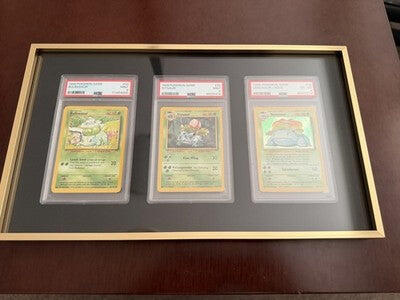
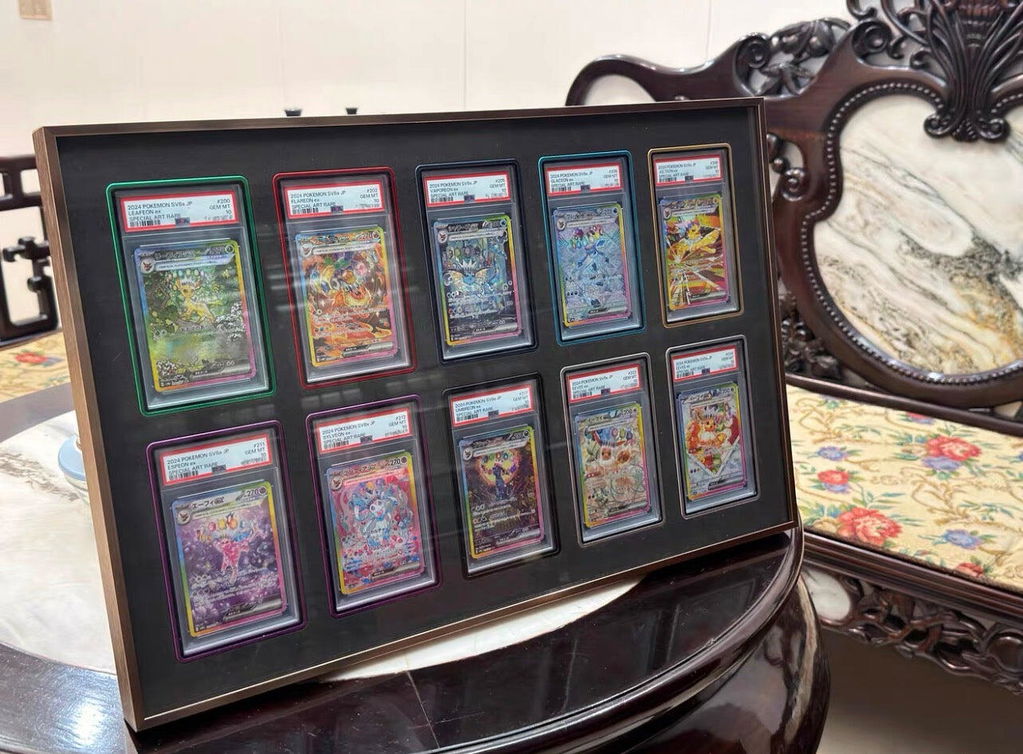


0 comments