


Choosing the best Pokémon cards to display can mean very different things depending on the collection. Some collectors build around one Pokémon such as Charizard, Pikachu, Umbreon, Gengar, Mew, Mewtwo or Rayquaza. Others concentrate on a particular expansion such as Scarlet & Violet—151, Evolving Skies, Prismatic Evolutions, Base Set, Team Rocket, Neo Genesis or one of the many EX-era releases.
There are also collections built around Illustration Rares, Special Illustration Rares, alternate-art cards, vintage holos, promotional cards, Trainer cards, Pokémon ex, Pokémon V and VMAX, Mega Evolution Pokémon, specific illustrators, Japanese releases, evolution lines, regions or complete generations of Pokémon.
This guide explores the Pokémon Trading Card Game from the perspective of choosing cards that work particularly well as part of a physical collection and display. It covers popular Pokémon, notable individual cards, important sets and eras, vintage and modern rarities, Trainers and characters, themed collection ideas and ways of arranging everything from three-card groups to very large graded Pokémon collections.
The objective is not to identify the most expensive Pokémon cards or predict which cards will increase in value. Price can influence what collectors choose to own, but a strong display can just as easily be built from inexpensive Illustration Rares, promos, regular holos or favourite cards with excellent artwork.
Instead, the focus is on the cards themselves: which Pokémon are particularly interesting to collect, which cards and sets collectors commonly explore, what cards work naturally together, how Pokémon TCG terminology differs between eras and how a large card collection can be turned into a coherent physical arrangement.
What Makes a Pokémon Card Good to Display?
A good display card does not necessarily need to be rare or expensive. When several cards are being viewed together, the artwork, colours, card design and relationship between neighbouring cards can matter considerably more than market value.
Modern full-card illustrations make this particularly obvious. Illustration Rares, Special Illustration Rares, alternate arts, Trainer Gallery cards, Galarian Gallery cards and many promotional cards can look dramatically different from conventional Pokémon cards because the illustration occupies most or all of the card.
Traditional cards can work just as well when there is a strong reason for grouping them together. Nine vintage holographic cards from the same era can create a more coherent collection than nine unrelated modern chase cards.
Useful factors to consider include:
- the Pokémon featured on the card;
- the Trainer or character associated with it;
- the expansion and era;
- illustration style and artist;
- card border and overall colour palette;
- rarity and foil treatment;
- whether the card is English, Japanese or another language;
- whether the card is raw, graded or inside a magnetic holder;
- evolution lines and character relationships;
- whether several cards form an intentional sequence;
- and the number of cards available for the intended arrangement.
This is why there is no single list of the best Pokémon cards to display. A Charizard collector, an Eeveelution collector, a vintage holo collector and somebody assembling all 151 original Kanto Pokémon are solving completely different collecting and display problems.
Popular Pokémon to Build a Card Collection Around
Thousands of different Pokémon cards have been released since the Pokémon TCG began, but certain Pokémon repeatedly appear at the centre of dedicated collections.
Charizard and Pikachu are the obvious examples, but they are far from the only possibilities. Umbreon, Eevee, Gengar, Mew, Mewtwo, Rayquaza, Lugia, Giratina, Greninja, Dragonite, Tyranitar, Gyarados and many others have enough cards across multiple eras to support substantial collections of their own.
Charizard Cards
Charizard is one of the easiest Pokémon around which to build a multi-era collection because it has appeared repeatedly throughout almost the entire history of the TCG.
A Charizard display can begin with the original Base Set Charizard and move through Team Rocket, Gym Challenge, Neo, e-Card and EX-era material before continuing into Pokémon-EX, Mega Evolution, Pokémon-GX, Tag Team cards, Pokémon V and VMAX, modern Charizard ex cards and the current Mega Evolution era.
Important Charizard cards and collecting areas include:
- Charizard from Base Set;
- Charizard from Base Set 2;
- Dark Charizard from Team Rocket;
- Blaine's Charizard from Gym Challenge;
- Shining Charizard from Neo Destiny;
- Crystal Charizard from Skyridge;
- Charizard ex from EX FireRed & LeafGreen;
- Charizard Gold Star from EX Dragon Frontiers;
- Charizard G;
- Charizard G LV.X;
- Charizard-EX;
- M Charizard-EX;
- Charizard-GX;
- the Rainbow Rare Charizard-GX associated with Burning Shadows;
- Reshiram & Charizard-GX;
- Shiny Charizard-GX from Hidden Fates;
- Charizard V;
- Shiny Charizard V from Champion's Path;
- Charizard VMAX;
- Charizard VSTAR;
- Charizard V alternate artwork from Brilliant Stars;
- Radiant Charizard;
- Charizard ex from Obsidian Flames;
- Charizard ex from Scarlet & Violet—151;
- Shiny Charizard ex from Paldean Fates;
- and Mega Charizard cards from the modern Mega Evolution series.
These cards are useful for more than simply creating a list of expensive Charizards. They allow a collector to show how the same Pokémon has been interpreted through completely different generations of card design.
A Base Set Charizard, Dark Charizard, Blaine's Charizard, Shining Charizard, Crystal Charizard and a modern Special Illustration Rare all belong to the same character collection while looking dramatically different from one another.
Best Charizard Display Themes
A Charizard collection can be arranged chronologically, beginning with Wizards-era cards and progressing through EX, Diamond & Pearl, XY, Sun & Moon, Sword & Shield, Scarlet & Violet and Mega Evolution.
Another option is to concentrate on particular card types: vintage Charizard holos, Charizard ex cards, Mega Charizard cards, Charizard-GX cards, Charizard V/VMAX/VSTAR cards or modern Charizard ex cards.
Collectors with smaller groups could use three cards from one period, while a larger Charizard collection can easily occupy 9, 18, 36 or more positions.
Charmander, Charmeleon and Charizard
Charizard does not need to be collected alone. Charmander and Charmeleon create a natural three-stage structure.
Scarlet & Violet—151 is particularly useful for this because Charmander, Charmeleon and Charizard ex can be collected as a visually connected modern evolution sequence.
A nine-card arrangement can go further by using three different versions of Charmander, three Charmeleon cards and three Charizard cards, or by comparing the full evolution line across three different eras.
Pikachu Cards
Pikachu has one of the broadest card histories in the entire Pokémon TCG. Unlike many Pokémon collections, a Pikachu collection can expand far beyond normal booster-set cards because Pikachu has been used extensively for promotional releases, anniversaries, Pokémon Center products and collaborations.
Important Pikachu collecting areas include:
- Base Set Pikachu;
- Red Cheeks and Yellow Cheeks Base Set variations;
- Jungle-era Pikachu;
- Wizards Black Star Promo Pikachu cards;
- Birthday Pikachu;
- Surfing Pikachu;
- Flying Pikachu;
- Japanese Pokémon Center Pikachu promos;
- Poncho-wearing Pikachu cards;
- Mario Pikachu;
- Luigi Pikachu;
- Team Skull Pikachu;
- various cosplay and costume Pikachu releases;
- Pikachu Gold Star;
- Pikachu-EX;
- Pikachu & Zekrom-GX;
- Pikachu V;
- Pikachu VMAX;
- Trainer Gallery Pikachu cards;
- Celebrations Pikachu cards;
- Pikachu with Grey Felt Hat;
- Pikachu Illustration Rare cards;
- Pikachu ex from Surging Sparks;
- and the expanding group of 30th-anniversary Pikachu cards.
This makes Pikachu particularly suitable for collectors who enjoy comparing artwork rather than following a single rarity.
Vintage Pikachu Displays
A vintage Pikachu display can concentrate on early Base Set, Jungle and Black Star Promo cards. Different Base Set printings, including 1st Edition, Shadowless and Unlimited examples where applicable, can turn what initially appears to be the same Pikachu into a specialised printing-focused collection.
Japanese Pikachu Promo Displays
Japanese promotional Pikachu cards form an enormous collecting niche of their own. Pokémon Center cards, regional releases, event cards, costume Pikachu, collaboration promos and other Japanese-exclusive or Japan-first releases can be collected independently of the standard English TCG.
For collectors interested primarily in artwork, these promos can be particularly useful because many illustrations do not resemble conventional booster-set Pikachu cards.
30th Celebration Pikachu Cards
Pokémon TCG: 30th Celebration is creating a particularly obvious modern Pikachu collecting project. The expansion includes 30 different Pikachu rare cards, each with different artwork and its own Pikachu numbering.
That means the expansion alone can support a 30-card Pikachu display without combining cards from any other set.
Two revealed Pikachu ex Special Illustration Rares also use the day-and-night visual concept associated with the 30th Celebration expansion, creating another potential paired display.
Umbreon Cards
Umbreon has become one of the most recognisable Pokémon in modern card collecting and also has enough older material to support a cross-era collection.
Important Umbreon cards and groups include:
- Umbreon from Neo Discovery;
- Dark and e-Card-era Umbreon releases;
- Umbreon ex;
- Umbreon Gold Star;
- Umbreon Prime;
- Umbreon-EX;
- Umbreon-GX;
- Shiny Umbreon-GX from Hidden Fates;
- Umbreon & Darkrai-GX;
- Umbreon V;
- Umbreon V alternate artwork;
- Umbreon VMAX;
- Umbreon VMAX alternate artwork from Evolving Skies;
- Umbreon ex from Prismatic Evolutions;
- and modern anniversary Umbreon artwork.
The famous Evolving Skies Umbreon VMAX alternate-art card is only one possible centrepiece. A more interesting Umbreon display can show how the Pokémon changed from Neo-era artwork through Gold Star, EX, GX, Tag Team, V, VMAX and modern ex treatments.
Umbreon and Espeon
Umbreon and Espeon make a natural two-Pokémon collection because both were introduced as Eevee Evolutions in Generation II and are frequently treated as visual counterparts.
A display can alternate Umbreon and Espeon cards, compare matching eras or use darker Umbreon artwork against brighter Espeon cards.
Eevee and the Eeveelutions
Few Pokémon groups fit a nine-card arrangement as naturally as Eevee and its eight Evolutions.
- Eevee;
- Vaporeon;
- Jolteon;
- Flareon;
- Espeon;
- Umbreon;
- Leafeon;
- Glaceon;
- Sylveon.
This immediately creates an exact nine-Pokémon collection.
The cards do not need to come from one expansion. A collector could choose a favourite artwork for each Pokémon, use matching V or VMAX cards, concentrate on Prismatic Evolutions, build around Evolving Skies or deliberately mix vintage and modern releases.
Vaporeon Cards
Vaporeon collectors can begin with Jungle and move through Dark Vaporeon, Vaporeon ex, Vaporeon-EX, Vaporeon-GX, Vaporeon V, Vaporeon VMAX and modern Vaporeon ex cards.
Jolteon Cards
Jolteon has similarly appeared as a Jungle holo, Jolteon ex, Jolteon Gold Star, Jolteon-EX, Jolteon-GX, Jolteon V and Jolteon VMAX, alongside modern ex and promotional releases.
Flareon Cards
Flareon collections can include Jungle Flareon, Dark Flareon, Flareon ex, Flareon Gold Star, Flareon-EX, Flareon-GX, Flareon V and VMAX and newer Eeveelution-focused cards.
Espeon Cards
Espeon can be followed through Neo Discovery, Espeon ex, Espeon Gold Star, Espeon Prime, Espeon-EX, Espeon-GX, Espeon & Deoxys-GX, Espeon V, Espeon VMAX and modern Espeon ex cards.
Leafeon Cards
Leafeon entered later than the original Eeveelutions but has developed a substantial card history through Leafeon LV.X, Leafeon-GX, Leafeon V, Leafeon VMAX and modern ex releases.
Glaceon Cards
Glaceon similarly provides LV.X, GX, V, VMAX and modern ex material, making Leafeon and Glaceon useful as a paired Sinnoh-era Eeveelution theme.
Sylveon Cards
Sylveon has become one of the most recognisable later Eeveelutions. Sylveon-EX, Sylveon-GX, Gardevoir & Sylveon-GX, Sylveon V, Sylveon VMAX and modern Sylveon ex cards provide several distinct generations of artwork.
Best Sets for Eeveelution Cards
Jungle is important for the original Vaporeon, Jolteon and Flareon. Neo Discovery is significant for Umbreon and Espeon. Evolving Skies brought all eight Eevee Evolutions together during the Sword & Shield era, while Prismatic Evolutions made Eevee and its Evolutions central to an entire modern special expansion.
Gengar Cards
Gengar can support a display spanning almost the entire history of the Pokémon TCG.
Important Gengar cards and groups include:
- Gengar from Fossil;
- Sabrina's Gengar;
- Dark Gengar;
- Gengar ex;
- Gengar LV.X;
- Gengar Prime;
- Gengar-EX;
- M Gengar-EX;
- Gengar & Mimikyu-GX;
- Gengar V;
- Gengar VMAX;
- alternate-art Gengar VMAX;
- Trainer Gallery and promotional Gengar cards;
- and modern Mega Gengar cards.
A Gengar collection can also include Gastly and Haunter, producing complete evolution-line displays. Alternatively, Gengar can anchor a wider Ghost-type group with Mimikyu, Chandelure, Dusknoir, Dragapult, Banette and other Ghost Pokémon.
Mew Cards
Mew is unusually flexible because it appears across early promos, vintage sets, Pokémon-ex, Gold Star, Pokémon-EX, Pokémon-GX, Tag Team, V/VMAX and modern ex cards.
Cards and groups worth exploring include:
- Ancient Mew;
- Southern Islands Mew;
- early Mew promotional cards;
- Mew ex;
- Mew Gold Star;
- Mew Prime;
- Mew-EX;
- Mewtwo & Mew-GX;
- Mew V;
- Mew VMAX;
- Mew ex;
- modern Illustration Rare and promotional Mew cards;
- and the Futuristic rare Mew from 30th Celebration.
Ancient Mew is particularly useful in a display because its card design is immediately different from almost every conventional Pokémon card.
Mewtwo Cards
Mewtwo has appeared in the TCG since Base Set and is another strong choice for a chronological collection.
Possible cards include:
- Base Set Mewtwo;
- early Black Star Promo Mewtwo cards;
- Rocket's Mewtwo;
- Mewtwo ex;
- Mewtwo Gold Star;
- Mewtwo LV.X;
- Mewtwo-EX;
- M Mewtwo-EX;
- Mewtwo-GX;
- Shining Mewtwo;
- Mewtwo & Mew-GX;
- Mewtwo V;
- Team Rocket's Mewtwo ex;
- and the Futuristic rare Mewtwo from 30th Celebration.
Mew and Mewtwo can also be combined into a single collection, particularly because the TCG has produced cards where the two appear together.
Rayquaza Cards
Rayquaza is one of the strongest choices for a Legendary Pokémon display because it has major cards across numerous eras.
Collectors can explore:
- Rayquaza ex;
- Rayquaza Gold Star;
- Rayquaza C;
- Rayquaza C LV.X;
- Rayquaza-EX;
- M Rayquaza-EX;
- Shining Rayquaza;
- Rayquaza-GX;
- Amazing Rare Rayquaza;
- Rayquaza V;
- Rayquaza V alternate artwork;
- Rayquaza VMAX;
- Rayquaza VMAX alternate artwork;
- and modern Mega Rayquaza cards.
Evolving Skies is particularly important because Rayquaza shared the expansion's focus with the Eeveelutions. Rayquaza can also be grouped with Groudon and Kyogre to create a Hoenn Legendary trio.
Lugia Cards
Lugia is another Pokémon with enough history to support a substantial cross-era collection.
Notable areas include:
- Lugia from Neo Genesis;
- Lugia ex;
- Lugia LEGEND;
- Lugia-EX;
- Shining Lugia;
- Lugia-GX;
- Lugia V;
- alternate-art Lugia V from Silver Tempest;
- Lugia VSTAR;
- and Lugia promotional cards.
Neo Genesis Lugia and Silver Tempest Lugia V are particularly effective at opposite ends of a vintage-versus-modern arrangement because they show how differently the same Legendary Pokémon can be depicted more than two decades apart.
Giratina Cards
Giratina works particularly well for collectors who prefer darker, distorted or more abstract Pokémon artwork.
Potential cards include:
- Giratina LV.X;
- Giratina-EX;
- Giratina Prism Star;
- Garchomp & Giratina-GX;
- Giratina V;
- the Lost Origin alternate-art Giratina V;
- Giratina VSTAR;
- and Galarian Gallery Giratina VSTAR.
Lost Origin is especially relevant because Giratina sits directly within the expansion's Lost Zone theme.
Dragonite Cards
Dragonite is another Kanto Pokémon with substantial representation across vintage and modern TCG history.
A Dragonite collection can include Fossil Dragonite, Dark Dragonite, Light Dragonite, Dragonite ex, Dragonite-EX, Dragonite-GX, Dragonite V, alternate-art Dragonite V and modern Mega Dragonite cards.
Dragonite can also be combined with Dratini and Dragonair for an evolution-line collection.
Tyranitar Cards
Tyranitar provides a strong Johto-focused collecting theme and has appeared under numerous major card mechanics.
Collectors can explore Neo-era Tyranitar, Dark Tyranitar, Shining Tyranitar, Tyranitar ex, Tyranitar Prime, Tyranitar-EX, Mega Tyranitar-EX, Tyranitar-GX, Tyranitar V and modern Illustration Rare or ex-era interpretations.
Larvitar and Pupitar can be included for a complete evolution display.
Greninja Cards
Greninja is one of the most recognisable Pokémon introduced after the original generations and has strong connections to both the games and TCG.
Greninja collecting can include Greninja-EX, Greninja BREAK, Ash-Greninja-EX, Greninja-GX, Detective Pikachu-era Greninja cards, Radiant Greninja, Greninja ex and modern Mega Greninja ex.
Collectors can also build a Kalos display using Greninja alongside Delphox, Chesnaught, Sylveon, Xerneas, Yveltal and Zygarde.
Magikarp and Gyarados Cards
Magikarp and Gyarados make an unusually effective two-Pokémon collection because the contrast between the two is built directly into the evolution line.
Gyarados collecting can include Base Set Gyarados, Dark Gyarados, Shining Gyarados, Gyarados ex, Gyarados Gold Star, Gyarados-EX, M Gyarados-EX and modern Gyarados ex cards.
Magikarp has its own memorable cards, including promotional releases, Magikarp & Wailord-GX and the Paldea Evolved Illustration Rare illustrated by Shinji Kanda.
The Paldea Evolved Magikarp is particularly suited to artwork-focused displays because the illustration extends across the card with an unusually dense composition.
Blastoise Cards
Blastoise is an obvious choice for collectors building around the original Kanto starters.
Possible cards include Base Set Blastoise, Dark Blastoise, Blastoise ex, Blastoise-EX, M Blastoise-EX, Blastoise-GX, Piplup & Blastoise-related character artwork, and Blastoise ex from Scarlet & Violet—151.
Squirtle and Wartortle cards can turn a Blastoise collection into a complete evolution-line display.
Venusaur Cards
Venusaur provides the corresponding Grass-type Kanto starter collection.
Collectors can explore Base Set Venusaur, Dark Venusaur, Venusaur ex, Venusaur-EX, M Venusaur-EX, Venusaur & Snivy-GX, Venusaur V and Venusaur ex from Pokémon 151.
Bulbasaur and Ivysaur can be incorporated in the same way as Charmander/Charmeleon or Squirtle/Wartortle.
Other Popular Pokémon Worth Exploring
A large Pokémon collection does not need to revolve around only the most obvious names. Many other Pokémon have substantial card histories or particularly strong individual artworks.
These include:
- Arcanine;
- Snorlax;
- Alakazam;
- Machamp;
- Lapras;
- Scyther;
- Ditto;
- Articuno;
- Zapdos;
- Moltres;
- Ho-Oh;
- Suicune;
- Entei;
- Raikou;
- Celebi;
- Latias;
- Latios;
- Groudon;
- Kyogre;
- Jirachi;
- Deoxys;
- Lucario;
- Garchomp;
- Darkrai;
- Arceus;
- Shaymin;
- Reshiram;
- Zekrom;
- Kyurem;
- Zoroark;
- Genesect;
- Chandelure;
- Mimikyu;
- Solgaleo;
- Lunala;
- Necrozma;
- Marshadow;
- Zacian;
- Zamazenta;
- Eternatus;
- Dragapult;
- Koraidon;
- Miraidon;
- Ogerpon;
- Terapagos;
- Tinkaton;
- Ceruledge;
- Roaring Moon;
- Iron Valiant;
- and newer Mega Evolution Pokémon.
The advantage of these Pokémon is that they open completely different collection structures. A Legendary display can combine several generations. A Ghost-type collection can bring together Gengar, Mimikyu, Chandelure, Dusknoir and Dragapult. A Dragon-themed collection can include Dragonite, Rayquaza, Garchomp, Giratina, Reshiram, Zekrom and other Dragon-associated Pokémon.
Popular Pokémon TCG Sets and Eras to Display
Collecting by set is one of the easiest ways to create visual consistency because cards from the same expansion usually share borders, symbols, rarity systems and design conventions.
Base Set
The original English Base Set remains fundamental to Pokémon card collecting.
Its holographic cards include Charizard, Blastoise, Venusaur, Alakazam, Chansey, Clefairy, Gyarados, Hitmonchan, Machamp, Magneton, Mewtwo, Nidoking, Ninetales, Poliwrath, Raichu and Zapdos.
That holo group alone can form a substantial vintage display.
Collectors can also focus on the three Kanto starter final evolutions, Pikachu, early Trainer cards or compare 1st Edition, Shadowless and Unlimited printings.
Jungle
Jungle introduced several Pokémon that remain major collecting subjects, including Vaporeon, Jolteon, Flareon, Snorlax and Scyther.
Other holo subjects include Clefable, Electrode, Kangaskhan, Mr. Mime, Nidoqueen, Pidgeot, Pinsir, Vileplume, Victreebel and Wigglytuff.
For an early Eeveelution display, Jungle is particularly important because it contains the original three Eevee Evolutions.
Fossil
Fossil contains several recognisable vintage holos including Gengar, Dragonite, Articuno, Moltres, Zapdos, Lapras, Haunter, Hitmonlee, Hypno, Kabutops, Magneton, Muk and Raichu.
Collectors interested in Legendary Birds, Gengar or Dragonite can therefore use Fossil as part of a wider species collection as well as a set display.
Team Rocket
Team Rocket introduced Dark Pokémon and remains one of the clearest vintage themes for a dedicated display.
Cards such as Dark Charizard, Dark Blastoise, Dark Dragonite, Dark Raichu, Dark Alakazam, Dark Arbok, Dark Dugtrio, Dark Golbat, Dark Gyarados, Dark Hypno, Dark Machamp, Dark Magneton, Dark Slowbro, Dark Vileplume and Dark Weezing all share the same underlying theme.
Gym Heroes and Gym Challenge
Gym Heroes and Gym Challenge are particularly useful for character-focused collecting because Pokémon are associated directly with Kanto Gym Leaders.
Brock, Misty, Lt. Surge, Erika, Sabrina, Koga, Blaine and Giovanni can each become their own collecting category.
Blaine's Charizard, Sabrina's Gengar and Rocket's Mewtwo are examples of cards that work simultaneously within a Pokémon-specific collection and a Trainer-focused Gym-era collection.
Neo Genesis
Neo Genesis introduced the Johto generation to the English TCG. Lugia is one of its most recognisable cards, while the set also provides early TCG appearances for many Generation II Pokémon.
Neo Discovery
Neo Discovery is particularly important to Umbreon and Espeon collectors and is an obvious source for early Johto-themed displays.
Neo Revelation
Neo Revelation expanded the Johto-era Legendary and rare-card landscape and introduced Shining Gyarados and Shining Magikarp.
Neo Destiny
Neo Destiny is associated with Light Pokémon, Dark Pokémon and Shining Pokémon. Shining Charizard, Shining Mewtwo and Shining Tyranitar make the expansion especially important to collectors following those species.
Legendary Collection
Legendary Collection is immediately recognisable because of its dramatic reverse-holo treatment. A group of Legendary Collection reverse holos can therefore create a highly consistent display even when the Pokémon themselves are unrelated.
Expedition Base Set
Expedition begins the English e-Card period and uses a card layout that looks substantially different from both earlier Wizards releases and later EX-era cards.
Aquapolis
Aquapolis continues the e-Card visual style and includes Crystal Pokémon among its specialist collecting targets.
Skyridge
Skyridge is particularly significant to collectors interested in Crystal Pokémon, including Crystal Charizard. Its e-Card design makes a Skyridge collection immediately recognisable when displayed together.
The Pokémon EX Era
The EX era offers an enormous number of display possibilities because it spans Pokémon-ex, Gold Star cards, distinctive reverse holos, Delta Species Pokémon and numerous themed expansions.
Major expansions include:
- EX Ruby & Sapphire;
- EX Sandstorm;
- EX Dragon;
- EX Team Magma vs Team Aqua;
- EX Hidden Legends;
- EX FireRed & LeafGreen;
- EX Team Rocket Returns;
- EX Deoxys;
- EX Emerald;
- EX Unseen Forces;
- EX Delta Species;
- EX Legend Maker;
- EX Holon Phantoms;
- EX Crystal Guardians;
- EX Dragon Frontiers;
- and EX Power Keepers.
Gold Star Pokémon
Gold Star Pokémon form one of the most recognisable specialist categories from the EX era.
Pokémon represented across the Gold Star releases include Charizard, Pikachu, Mew, Mewtwo, Rayquaza, Umbreon, Espeon, Gyarados, Jolteon, Flareon, Latias, Latios, Groudon, Kyogre, Celebi, Alakazam and others.
A Gold Star display is therefore capable of including some of the most recognisable Pokémon from several generations while retaining a common rarity theme.
Delta Species Pokémon
Delta Species cards provide another visually distinctive EX-era collecting niche because Pokémon can appear with types different from those normally associated with them.
Collectors can build a display entirely around Delta Species cards or use them as unusual variants within single-Pokémon collections.
Diamond & Pearl and Platinum Era
The Diamond & Pearl and Platinum period introduced LV.X cards and provides a natural collecting route for Sinnoh Pokémon.
LV.X cards involving Charizard, Gengar, Rayquaza, Garchomp, Lucario, Mewtwo, Dialga, Palkia and other major Pokémon can be grouped as a card-mechanic display.
Sets such as Supreme Victors and Arceus also provide material for Legendary and character-focused collections.
HeartGold & SoulSilver Era
The HeartGold & SoulSilver era revisited Johto and introduced Pokémon LEGEND cards, where two physical cards combine to create one larger illustration.
Lugia LEGEND and Ho-Oh LEGEND are obvious examples. Displaying the upper and lower halves together preserves the artwork as intended.
Prime cards provide another rarity-specific collection from this period, with Pokémon including Umbreon, Gengar and others appearing under the Prime treatment.
Black & White Era
The Black & White era introduced the Unova generation and expanded Pokémon-EX and Full Art collecting.
Reshiram, Zekrom, Kyurem, Mewtwo, Darkrai and other Pokémon provide strong subjects for displays from this period.
Unova has also become relevant again through Scarlet & Violet—Black Bolt and White Flare, allowing collectors to compare original Black & White-era cards with modern reinterpretations of the same Pokémon.
XY Era and Mega Evolution Cards
The XY era is particularly important to collectors interested in Mega Evolution.
Major Mega Evolution cards include:
- M Charizard-EX;
- M Blastoise-EX;
- M Venusaur-EX;
- M Gengar-EX;
- M Rayquaza-EX;
- M Lucario-EX;
- M Mewtwo-EX;
- M Gardevoir-EX;
- M Tyranitar-EX;
- M Gyarados-EX;
- and numerous other Mega Pokémon.
Popular XY-era expansions and special releases include XY Base Set, Flashfire, Furious Fists, Phantom Forces, Primal Clash, Roaring Skies, Ancient Origins, BREAKthrough, BREAKpoint, Generations, Fates Collide, Steam Siege and Evolutions.
XY—Evolutions
Evolutions deliberately revisited the appearance of early Pokémon cards. That makes the set particularly useful for side-by-side displays where an older Base Set card is placed beside its Evolutions reinterpretation.
Charizard and other familiar Kanto cards work particularly well for this type of vintage-versus-modern comparison.
Sun & Moon Era
The Sun & Moon era introduced Pokémon-GX and eventually Tag Team Pokémon-GX, creating several major collecting categories.
Important sets include Burning Shadows, Shining Legends, Ultra Prism, Forbidden Light, Celestial Storm, Lost Thunder, Team Up, Unbroken Bonds, Unified Minds, Hidden Fates and Cosmic Eclipse.
Burning Shadows
Burning Shadows is particularly associated with Charizard-GX and its high-rarity variants, making it relevant to Charizard collectors.
Shining Legends
Shining Legends revisited the idea of Shining Pokémon and includes cards featuring Pokémon such as Mew, Rayquaza, Lugia and other popular Legendary or Mythical subjects.
Team Up
Team Up introduced Tag Team Pokémon-GX. Pikachu & Zekrom-GX, Gengar & Mimikyu-GX and Latias & Latios-GX are among the pairings that naturally work as centrepieces within species or character collections.
Unbroken Bonds
Reshiram & Charizard-GX makes Unbroken Bonds particularly relevant to Charizard collectors and to anyone building a Tag Team display.
Unified Minds
Mewtwo & Mew-GX creates a direct link between two of the most collected Psychic-type Pokémon and is an obvious centrepiece for a combined Mew/Mewtwo group.
Hidden Fates
Hidden Fates became strongly associated with its Shiny Vault. Shiny Charizard-GX and Shiny Umbreon-GX are prominent examples, but the wider Shiny Vault contains enough Pokémon and Trainers to support a much larger Shiny-themed display.
Cosmic Eclipse
Cosmic Eclipse is particularly useful for collectors interested in cards showing Pokémon alongside Trainers. These character-focused cards provide a bridge between species collecting and Trainer collecting.
Popular Sword & Shield Sets
Champion's Path
Champion's Path is strongly associated with Charizard, particularly Charizard VMAX and Shiny Charizard V.
Shining Fates
Shining Fates continued the modern interest in Shiny Pokémon with a large Shiny Vault. This provides a much broader display theme than simply pursuing its most valuable cards.
Celebrations
Pokémon's 25th-anniversary Celebrations release combined new anniversary cards with a Classic Collection referencing important cards from earlier TCG history.
That makes Celebrations particularly useful for a compact history-of-Pokémon display. Original cards can also be placed beside their Celebrations counterparts.
Fusion Strike
Fusion Strike is particularly relevant to Gengar and Mew collectors. Gengar VMAX, Mew V and Mew VMAX provide several visually strong options from the same expansion.
Brilliant Stars
Brilliant Stars introduced the Trainer Gallery and contains several important Charizard cards, including Charizard V and Charizard VSTAR.
The alternate-art Charizard V also creates a direct visual interaction between Charizard and Venusaur within the illustration.
Astral Radiance
Astral Radiance introduced many Hisuian Pokémon to the TCG and continued the Trainer Gallery concept. It is particularly useful for collections inspired by Pokémon Legends: Arceus.
Lost Origin
Lost Origin is closely associated with Giratina and the Lost Zone. Giratina V and Giratina VSTAR provide an obvious core for a Giratina-focused group.
Silver Tempest
Silver Tempest is particularly important for Lugia collectors. Lugia V, its alternate artwork and Lugia VSTAR provide multiple versions of the same Legendary Pokémon within one expansion.
Crown Zenith
Crown Zenith closed the Sword & Shield period with the Galarian Gallery.
Arceus VSTAR, Giratina VSTAR, Origin Forme Dialga VSTAR and Origin Forme Palkia VSTAR form an especially natural four-card Legendary group.
The wider Galarian Gallery also gives collectors many lower-cost full-art-style cards that can be arranged by Pokémon, Trainer, colour or illustration style.
Popular Scarlet & Violet Sets
The Scarlet & Violet era expanded Illustration Rare and Special Illustration Rare collecting and is therefore particularly strong for artwork-focused displays.
Scarlet & Violet Base Set
The first Scarlet & Violet expansion established the new rarity structure. Koraidon ex and Miraidon ex create a natural paired Paldea Legendary display, while the set's Illustration Rares and Trainer cards provide broader options.
Paldea Evolved
Paldea Evolved contains numerous Illustration Rares and Special Illustration Rares. Magikarp is one of its most visually recognisable cards, but the expansion also provides many Paldea Pokémon and Trainers suitable for broader groups.
Obsidian Flames
Obsidian Flames is particularly relevant to Charizard collectors because of its Dark-type Tera Charizard ex cards.
Scarlet & Violet—151
Pokémon 151 is one of the easiest modern expansions around which to build a coherent collection because it follows the original Kanto Pokédex.
Notable subjects include:
- Bulbasaur;
- Ivysaur;
- Venusaur ex;
- Charmander;
- Charmeleon;
- Charizard ex;
- Squirtle;
- Wartortle;
- Blastoise ex;
- Pikachu;
- Psyduck;
- Poliwhirl;
- Dragonair;
- Zapdos ex;
- Alakazam ex;
- Mew ex;
- and the wider original 151 Pokémon.
A nine-card display can use the three complete Kanto starter evolution lines. A larger collection can follow Pokédex order, concentrate on Illustration Rares and Special Illustration Rares or use favourite Kanto Pokémon only.
Paradox Rift
Paradox Rift is particularly useful for Ancient and Future Pokémon. Roaring Moon and Iron Valiant provide obvious opposing centrepieces, while other Paradox Pokémon can expand the concept.
Paldean Fates
Paldean Fates returned the focus to Shiny Pokémon and includes more than 100 Shiny Pokémon. Shiny Charizard ex is an obvious species-specific target, but the large Shiny pool supports much broader arrangements.
Temporal Forces
Temporal Forces continues the Ancient and Future themes and returned ACE SPEC cards to the modern TCG. It can be combined with Paradox Rift to create a larger Ancient-versus-Future collection.
Twilight Masquerade
Twilight Masquerade centres heavily on Ogerpon and the Kitakami setting. Different Ogerpon masks and associated characters allow a tightly focused display rather than a general Pokémon group.
Shrouded Fable
Shrouded Fable continues the Kitakami-related material with Pecharunt and the Loyal Three, creating another character and story-linked collection theme.
Stellar Crown
Stellar Crown places Terapagos and Stellar Tera Pokémon at the centre of the expansion. It works particularly well alongside other modern Tera Pokémon cards.
Surging Sparks
Surging Sparks is particularly relevant to Pikachu collectors because of its Stellar Tera Pikachu ex cards.
The Pikachu ex Special Illustration Rare provides a dramatically different modern interpretation of Pikachu compared with Base Set and early promotional cards.
Prismatic Evolutions
Prismatic Evolutions is one of the clearest modern choices for an Eevee or Eeveelution display.
Eevee, Vaporeon, Jolteon, Flareon, Espeon, Umbreon, Leafeon, Glaceon and Sylveon provide an exact nine-Pokémon structure. Collectors can concentrate on ex cards, special illustrations, promos or combine the expansion with Evolving Skies and older Eeveelution releases.
Journey Together
Journey Together returned Trainer's Pokémon to the modern TCG, creating a collecting structure based on relationships between characters and their Pokémon rather than species alone.
Destined Rivals
Destined Rivals expanded the Trainer-focused concept and brought Team Rocket prominently back into the TCG.
Cynthia and Garchomp, Ethan and Ho-Oh, Arven and Mabosstiff, and Giovanni with Team Rocket's Mewtwo provide obvious character-and-Pokémon collecting directions.
Black Bolt and White Flare
Black Bolt and White Flare revisit Unova. Across the two expansions, every Pokémon originally discovered in Unova is represented, creating one of the broadest modern regional collecting projects.
Black Bolt includes major subjects such as Zekrom ex and the Snivy evolution line, while White Flare includes Reshiram ex and Pokémon associated with Tepig and Oshawott.
Collectors can build around:
- Zekrom versus Reshiram;
- Black Bolt versus White Flare;
- Snivy, Tepig and Oshawott evolution lines;
- Unova Legendary and Mythical Pokémon;
- Illustration Rare cards;
- Poké Ball parallel cards;
- or the complete Unova Pokédex.
Evolving Skies Cards to Display
Evolving Skies deserves its own section because it intersects with several of the Pokémon most commonly collected individually.
The expansion contains all eight Eevee Evolutions and major Rayquaza cards, allowing collectors to build several completely different displays from the same set.
Important subjects include:
- Umbreon V;
- Umbreon VMAX;
- Rayquaza V;
- Rayquaza VMAX;
- Leafeon V;
- Leafeon VMAX;
- Glaceon V;
- Glaceon VMAX;
- Sylveon V;
- Sylveon VMAX;
- Espeon-related Eeveelution material;
- Vaporeon;
- Jolteon;
- Flareon;
- and numerous Dragon-type Pokémon.
An Evolving Skies display does not need to contain only the most expensive alternate arts. A broader group using standard V, VMAX, Full Art and other cards can retain the set identity at a much lower cost.
The Modern Mega Evolution Era
The return of Mega Evolution creates an unusual opportunity to compare current Pokémon cards directly with XY-era Mega Evolution cards.
A collector can place an older M Charizard-EX beside a modern Mega Charizard, an XY-era M Gengar-EX beside a newer Mega Gengar or compare Mega Pokémon across more than a decade of TCG design.
Mega Evolution
The modern Mega Evolution series reintroduced Mega Evolution Pokémon ex, including major Pokémon such as Mega Lucario and Mega Gardevoir.
Mega Evolution—Phantasmal Flames
Phantasmal Flames is particularly relevant to Charizard and Gengar collectors because of Mega Charizard X ex and Mega Gengar ex.
Mega Evolution—Ascended Heroes
Ascended Heroes expanded the modern Mega Evolution roster and includes Mega Dragonite ex alongside Trainer's Pokémon and other modern card treatments.
Mega Evolution—Perfect Order
Perfect Order includes Mega Zygarde ex and other Mega Evolution Pokémon, making it particularly useful for Kalos-oriented collections.
Mega Evolution—Chaos Rising
Chaos Rising includes Mega Greninja ex, giving Greninja collectors another major modern card to place alongside Greninja-EX, Ash-Greninja-EX, Greninja-GX and Radiant Greninja.
Mega Evolution—Pitch Black
Mega Evolution—Pitch Black released on 17 July 2026 and is the latest released English expansion at the time this guide was updated.
Major featured Pokémon include Mega Darkrai ex, Mega Zeraora ex, Mega Chandelure ex and Mega Excadrill ex, with the set built around darker nighttime imagery.
Other featured cards and Pokémon include Mega Delphox ex, Armarouge, Relicanth, Dhelmise, Chi-Yu and additional dark or night-associated artwork.
This makes Pitch Black particularly suitable for a darker collection involving Darkrai, Chandelure and other Pokémon whose artwork fits the same visual direction.
Pokémon TCG: 30th Celebration
Pokémon TCG: 30th Celebration is scheduled for worldwide release on 16 September 2026. Because this guide is being updated before release, confirmed cards are treated as upcoming rather than as though collectors can already build the complete set.
The expansion is particularly relevant to display-focused collectors because it deliberately spans Pokémon TCG history.
Every card in the expansion is foil, including Basic Energy.
The set also introduces Futuristic rare cards, with Mewtwo and Mew among the first confirmed examples.
30 Pikachu Cards
One of the most unusual features of 30th Celebration is a group of 30 different Pikachu rare cards.
Each uses different artwork, and Pokémon has also revealed Pikachu ex Special Illustration Rare cards connected with the expansion's day-and-night aesthetic.
For Pikachu collectors, this effectively creates a ready-made 30-card modern collection.
Other 30th Celebration Pokémon
Confirmed Pokémon include Espeon, Umbreon, Lapras, Drifloon, Zorua, Lycanroc, Greninja and Sylveon, alongside Mew and Mewtwo.
Classic cards are also returning, including Base Set Charizard and Pikachu & Zekrom-GX.
Once the complete expansion is released, obvious display directions include:
- all 30 Pikachu rare cards;
- the Pikachu day-and-night pair;
- Mew and Mewtwo Futuristic rares;
- Espeon and Umbreon;
- classic cards beside their original versions;
- Illustration Rares;
- Futuristic rares;
- and a broader 30th-anniversary history display.
Understanding Pokémon Card Rarities and Collector Terminology
Pokémon card terminology has changed repeatedly. Understanding these terms makes it easier to search for cards and distinguish cards that may sound similar but belong to completely different eras.
Holo Rare
Traditional holographic rare cards usually apply foil to the artwork area. Vintage Base Set, Jungle and Fossil holos are familiar examples.
Reverse Holo
Reverse holos apply foil differently from standard holo cards, usually outside the normal artwork window. The exact pattern changes by expansion and era.
Pokémon-ex
The lowercase Pokémon-ex mechanic belongs primarily to the EX era. Cards such as Charizard ex, Rayquaza ex and Mew ex belong to this older structure.
Pokémon-EX
Uppercase Pokémon-EX cards are associated mainly with Black & White and XY. Mewtwo-EX, Rayquaza-EX and Charizard-EX are examples.
Mega Pokémon-EX
Mega Evolution cards such as M Charizard-EX, M Gengar-EX and M Rayquaza-EX became one of the defining visual mechanics of the XY period.
Pokémon-GX
Pokémon-GX belongs to the Sun & Moon era. Charizard-GX, Umbreon-GX, Mewtwo-GX and numerous other popular Pokémon received GX cards.
Tag Team Pokémon-GX
Tag Team cards place multiple Pokémon together. Popular examples include Pikachu & Zekrom-GX, Gengar & Mimikyu-GX, Reshiram & Charizard-GX, Mewtwo & Mew-GX and Latias & Latios-GX.
Pokémon V
Pokémon V became a central card mechanic during Sword & Shield. Many received Full Art and alternate-art variants.
Pokémon VMAX
VMAX cards depict Dynamax or Gigantamax Pokémon. Umbreon VMAX, Rayquaza VMAX and Gengar VMAX are particularly recognisable modern examples.
Pokémon VSTAR
VSTAR followed VMAX during Sword & Shield. Lugia VSTAR, Giratina VSTAR and Arceus VSTAR are prominent examples.
Modern Pokémon ex
Pokémon ex returned during Scarlet & Violet. These modern cards are distinct from the lowercase Pokémon-ex cards of the older EX era even though the names look similar.
Illustration Rare
Illustration Rare, usually shortened to IR by collectors, became a major Scarlet & Violet-era rarity. The illustration extends across the card and makes these particularly suitable for artwork-based collections.
Special Illustration Rare
Special Illustration Rare, commonly abbreviated SIR, is another important modern rarity. Pokémon ex and Trainers can appear as SIRs with detailed full-card artwork.
Full Art
Full Art is a broad collector term used across several eras for cards where the illustration or character treatment occupies substantially more of the card than a conventional layout.
Alternate Art
Alternate art or alt art is widely used collector terminology for alternative illustrated versions of cards, particularly during Sun & Moon and Sword & Shield.
Umbreon VMAX, Rayquaza VMAX, Lugia V, Giratina V and Gengar VMAX are among the cards commonly discussed within alternate-art collecting.
Secret Rare
Secret Rare cards traditionally have collector numbers extending beyond the nominal size of the main set, although Pokémon's rarity structures have changed significantly over time.
Rainbow Rare
Rainbow Rare cards became especially recognisable during Sun & Moon and Sword & Shield. Their consistent rainbow treatment can work well when several are displayed together.
Hyper Rare
Hyper Rare is used within modern rarity systems, including gold-coloured high-rarity cards in the Scarlet & Violet era.
Gold Star
Gold Star Pokémon belong to the EX era and can be identified by the gold star beside the Pokémon's name. They form a specialist collecting category spanning several major Pokémon.
Shining Pokémon
Shining Pokémon are particularly associated with the Neo era. Shining Charizard, Shining Mewtwo, Shining Gyarados and Shining Tyranitar are prominent examples.
Radiant Pokémon
Radiant Pokémon appeared during Sword & Shield and feature Shiny Pokémon with a distinctive treatment. Radiant Charizard, Radiant Greninja and Radiant Eevee are examples.
Trainer Gallery
Trainer Gallery subsets show Pokémon in more character-focused artwork, often alongside Trainers, and appeared across several Sword & Shield expansions.
Galarian Gallery
Crown Zenith's Galarian Gallery contains a broad selection of full-art-style Pokémon and character illustrations, including the four-card Arceus, Dialga, Palkia and Giratina VSTAR group.
Promo Cards
Promotional cards can come from collection boxes, Elite Trainer Boxes, Pokémon Center products, tournaments, prereleases, events, films, collaborations and regional campaigns.
Pikachu has an especially large promotional-card ecosystem, but almost every major Pokémon has appeared on promo cards.
1st Edition
Many older English Pokémon expansions had 1st Edition printings. The 1st Edition stamp is an important identifier when cataloguing vintage cards.
Shadowless
Shadowless refers to an early Base Set printing style where the shadow normally visible beside the artwork frame is absent.
Master Set
A master set generally means collecting an expansion plus relevant variants such as reverse holos or parallel cards. Collectors use different definitions, so it is useful to decide what counts before beginning the project.
Chase Card
Chase card is informal terminology for a particularly sought-after card from a set. It is not an official rarity.
Population or Pop
Collectors discussing graded cards may refer to a card's population or “pop”, meaning the number recorded by a grading company at a particular grade or across its population report.
Population data can be relevant to graded-card collecting, but a low population does not automatically make a card visually better for a display.
PSA 10, BGS 10 and Graded Card Terminology
PSA, CGC and BGS use their own grading systems and holders. Terms such as PSA 10, Gem Mint, Pristine and subgrades belong to the grading side of the collecting ecosystem rather than Pokémon's official rarity system.
Trainer and Character Cards
Pokémon displays do not need to focus exclusively on Pokémon species. Trainers and other characters from the games have become major collecting subjects in their own right.
Characters worth exploring include:
- Red;
- Blue;
- Green;
- Misty;
- Brock;
- Erika;
- Sabrina;
- Giovanni;
- Blaine;
- Cynthia;
- Lillie;
- N;
- Rosa;
- Serena;
- Professor Oak;
- Jessie & James;
- Guzma;
- Marnie;
- Leon;
- Gloria;
- Hop;
- Arven;
- Nemona;
- Iono;
- Penny;
- Ethan;
- and other protagonists, rivals, Gym Leaders, Champions and villains.
Red Cards
Red can be combined with Pikachu, Charizard, Venusaur, Blastoise and other Pokémon associated with the original games and later TCG artwork.
Misty Cards
Misty collections can combine Trainer cards with Misty's Pokémon from the Gym era, particularly Water-type Pokémon associated with her.
Sabrina Cards
Sabrina's Gengar is an obvious centrepiece for a Sabrina collection, while other Gym-era Sabrina's Pokémon can expand the theme.
Giovanni and Team Rocket Cards
Giovanni can connect vintage Gym cards, Team Rocket material and modern Team Rocket's Pokémon. Team Rocket's Mewtwo gives the theme a particularly strong modern centrepiece.
Cynthia Cards
Cynthia can be collected through Trainer cards and Pokémon associated with her, especially Garchomp. Modern Trainer's Pokémon provide additional ways to make the character/Pokémon relationship explicit.
Lillie Cards
Lillie is one of the most recognisable Sun & Moon-era Trainers and has appeared across multiple Trainer cards. Lillie-focused collections can also incorporate Pokémon associated with her character.
N Cards
N is particularly useful for Unova collections. Trainer cards can be combined with Reshiram, Zekrom and other Pokémon associated with N across the games and TCG.
Iono Cards
Iono has become a prominent Scarlet & Violet-era Trainer and appears in multiple modern card treatments. Her cards can be displayed independently or within a wider Paldea Trainer collection.
Pokémon Card Displays by Region and Generation
Kanto
Kanto provides Bulbasaur, Charmander, Squirtle, Pikachu, Eevee, Gengar, Dragonite, Mewtwo, Mew and the rest of the original 151.
Collectors can use vintage cards, modern Pokémon 151 cards or deliberately mix the two.
Johto
Johto provides Chikorita, Cyndaquil, Totodile, Lugia, Ho-Oh, Celebi, Umbreon, Espeon, Tyranitar, Suicune, Entei and Raikou.
Hoenn
Hoenn includes Treecko, Torchic, Mudkip, Rayquaza, Groudon, Kyogre, Latias, Latios, Jirachi and Deoxys.
Sinnoh
Sinnoh includes Turtwig, Chimchar, Piplup, Lucario, Garchomp, Dialga, Palkia, Giratina, Darkrai, Shaymin and Arceus.
Unova
Unova includes Snivy, Tepig, Oshawott, Zoroark, Chandelure, Reshiram, Zekrom, Kyurem, Genesect and numerous Pokémon revisited in Black Bolt and White Flare.
Kalos
Kalos includes Chespin, Fennekin, Froakie, Greninja, Sylveon, Xerneas, Yveltal and Zygarde and is closely connected to Mega Evolution.
Alola
Alola includes Rowlet, Litten, Popplio, Solgaleo, Lunala, Necrozma, Marshadow and Alolan regional forms.
Galar
Galar includes Grookey, Scorbunny, Sobble, Zacian, Zamazenta, Eternatus and Dragapult alongside many Pokémon heavily represented during Sword & Shield.
Paldea
Paldea provides Sprigatito, Fuecoco, Quaxly, Koraidon, Miraidon, Tinkaton, Ceruledge and the Paradox Pokémon, alongside characters such as Nemona, Arven, Penny and Iono.
Best Pokémon Evolution Lines to Display
Evolution lines are among the easiest ways to create smaller displays because the relationship between the cards is immediately obvious.
- Charmander → Charmeleon → Charizard;
- Bulbasaur → Ivysaur → Venusaur;
- Squirtle → Wartortle → Blastoise;
- Gastly → Haunter → Gengar;
- Dratini → Dragonair → Dragonite;
- Magikarp → Gyarados;
- Larvitar → Pupitar → Tyranitar;
- Ralts → Kirlia → Gardevoir;
- Riolu → Lucario;
- Gible → Gabite → Garchomp;
- Litwick → Lampent → Chandelure;
- Deino → Zweilous → Hydreigon;
- Froakie → Frogadier → Greninja;
- Rowlet → Dartrix → Decidueye;
- Sprigatito → Floragato → Meowscarada;
- Fuecoco → Crocalor → Skeledirge;
- and Quaxly → Quaxwell → Quaquaval.
Where a set uses connected artwork across an evolution line, keeping the exact sequence together generally produces a stronger result than choosing three unrelated high-value versions.
Legendary Pokémon Card Display Ideas
Legendary Pokémon provide natural groups across different generations.
Kanto gives Articuno, Zapdos and Moltres.
Johto gives Lugia and Ho-Oh, plus Raikou, Entei and Suicune.
Hoenn gives Groudon, Kyogre and Rayquaza.
Sinnoh gives Dialga, Palkia, Giratina and Arceus.
Unova gives Reshiram, Zekrom and Kyurem.
Alola provides Solgaleo, Lunala and Necrozma.
Galar provides Zacian, Zamazenta and Eternatus.
Paldea provides Koraidon and Miraidon alongside newer Legendary and Paradox-related Pokémon.
A large Legendary display can place these groups chronologically, creating a visual progression through Pokémon generations.
Shiny Pokémon Card Displays
Shiny Pokémon have appeared through several different TCG treatments.
A broad Shiny collection might combine:
- Neo-era Shining Pokémon;
- Gold Star Pokémon;
- Hidden Fates Shiny Vault cards;
- Shining Fates cards;
- Radiant Pokémon;
- and Shiny Pokémon from Paldean Fates.
Charizard, Umbreon, Mewtwo, Rayquaza, Gyarados, Greninja and Eevee all provide strong individual subjects, but a display can also deliberately use less obvious Shiny Pokémon.
Another option is to pair a normal version of a Pokémon with its Shiny version.
Japanese Pokémon Cards vs English Pokémon Cards
Japanese and English cards can be displayed separately or together.
Japanese collecting opens access to Pokémon Center promos, event cards, collaboration releases, Japanese-exclusive artwork and cards released under different set structures from their English counterparts.
A bilingual collection can compare the same artwork in English and Japanese. This works particularly well for iconic Pokémon such as Charizard, Pikachu, Eevee, Umbreon, Gengar and Mew.
Pokémon Promo Cards
Promotional cards form a large collecting ecosystem outside normal booster expansions.
Possible themes include:
- Wizards Black Star Promos;
- modern Black Star Promos;
- Pokémon Center promos;
- Japanese event promos;
- prerelease promos;
- Elite Trainer Box promos;
- collection-box promos;
- anniversary promos;
- tournament cards;
- collaboration cards;
- movie-related cards;
- regional promos;
- and Pokémon-specific promo collections.
Pikachu is particularly strong here, but Charizard, Eevee, Mew, Mewtwo and many other popular Pokémon also have substantial promotional histories.
Collecting Pokémon Cards by Artist
Collectors do not need to organise cards by Pokémon or set at all. The Pokémon TCG has used hundreds of illustrators, making artist collections another substantial part of the hobby.
Names collectors may encounter include Mitsuhiro Arita, Ken Sugimori, Atsuko Nishida, Tomokazu Komiya, Yuka Morii, Shinji Kanda, sowsow and many others.
Mitsuhiro Arita
Mitsuhiro Arita has illustrated Pokémon cards since the earliest period of the TCG. An Arita collection can therefore span decades rather than a single expansion.
Ken Sugimori
Ken Sugimori artwork is closely associated with the foundational visual identity of Pokémon and appears across many early cards.
Yuka Morii
Yuka Morii's clay Pokémon illustrations are immediately recognisable and create a collecting theme completely independent of rarity or Pokémon type.
Tomokazu Komiya
Tomokazu Komiya's distinctive illustration style has appeared across numerous generations of the TCG and can create a visually cohesive collection from otherwise unrelated Pokémon.
Shinji Kanda
Shinji Kanda is associated with highly detailed and visually dense illustrations. The Paldea Evolved Magikarp is a particularly recognisable modern example.
Artist collecting is useful because it creates long-tail collecting possibilities that would never appear in a simple “most valuable Pokémon cards” list.
Vintage vs Modern Pokémon Cards
Vintage and modern cards can either be separated or deliberately contrasted.
A chronological Charizard collection might begin with Base Set, Team Rocket and Gym Challenge, move through e-Card and EX-era cards, then continue through Pokémon-EX, GX, V, ex and modern Mega Evolution.
The same idea works for Pikachu, Mewtwo, Gengar, Eevee, Dragonite and other Pokémon with long TCG histories.
This type of display shows changes in borders, HP, rarity systems, foil treatments, illustration styles and card mechanics without requiring every card to come from the same expansion.
How to Build a 3-Card Pokémon Display
Three cards work particularly well when the relationship is obvious.
- Charmander, Charmeleon and Charizard;
- Bulbasaur, Ivysaur and Venusaur;
- Squirtle, Wartortle and Blastoise;
- Articuno, Zapdos and Moltres;
- Raikou, Entei and Suicune;
- Groudon, Kyogre and Rayquaza;
- Reshiram, Zekrom and Kyurem;
- three Charizard cards from different eras;
- three Pikachu promos;
- three Umbreon cards;
- or three cards illustrated by the same artist.
How to Build a 6-Card Pokémon Display
Six cards provide enough room to compare two groups of three.
You could place the three Kanto starter final evolutions beside three modern versions, use Legendary trios from two generations or compare three vintage cards with three modern reinterpretations.
Six positions also work for a tightly curated set collection where displaying the complete expansion would be impractical.
How to Build a 9-Card Pokémon Display
Nine cards are particularly useful because a 3 × 3 arrangement creates a clear centre position and allows symmetrical themes.
Ideas include:
- Eevee plus all eight Eeveelutions;
- the three complete Kanto starter evolution lines;
- nine Charizard cards from different eras;
- nine Pikachu cards;
- nine Umbreon or Eeveelution cards;
- nine favourite Illustration Rares;
- nine Special Illustration Rares;
- nine vintage holos;
- nine Trainer cards;
- nine Legendary Pokémon;
- nine Pokémon 151 cards;
- nine cards by one illustrator;
- or one favourite Pokémon from nine different collecting themes.
For Eeveelutions, Eevee can occupy the centre with the eight Evolutions arranged around it. For Charizard, the collector's favourite card can take the centre position with eight complementary cards surrounding it.
Building 12, 18, 24, 36, 54, 72 or Larger Pokémon Displays
Larger collections allow collectors to stop thinking about individual cards and begin dividing the collection into sections.
An 18-card display can contain two nine-card groups. A 36-card display can contain four distinct nine-card themes. Larger collections can be separated by era, Pokémon, set, rarity, artist or generation.
A large Charizard collection might allocate one section to Wizards-era cards, another to EX and XY, another to Sun & Moon and Sword & Shield, and another to Scarlet & Violet and modern Mega Evolution.
A large Pikachu collection could separate vintage cards, English promos, Japanese promos, modern Illustration Rares and anniversary cards.
A complete 30th Celebration Pikachu collection requires 30 positions for the Pikachu rare series alone.
Should You Display Expensive Pokémon Cards or Favourite Cards?
There is no requirement for the most valuable card in a collection to receive the most prominent position.
Display decisions can be based on artwork, Pokémon, set, era, artist, evolution line, character, rarity, colour or simple visual balance.
An inexpensive Illustration Rare can fit a particular arrangement considerably better than an expensive card whose artwork has no relationship to the surrounding cards.
Raw Pokémon Cards, One Touch Holders and Graded Slabs
The physical holder matters when planning a collection for display.
Raw cards are compact and allow the card itself to dominate visually, but appropriate protection is important.
Magnetic holders such as One Touch cases provide rigid protection without requiring third-party grading.
Graded slabs from PSA, CGC and BGS add certification labels and significantly increase the external dimensions of each card.
Collectors should therefore decide whether a group will remain raw, use magnetic holders or be graded before committing to a fitted multi-card arrangement.
Displaying PSA Pokémon Cards
PSA slabs are common throughout graded Pokémon collections and provide a consistent holder format across cards from completely different eras.
A Base Set Charizard, vintage Pikachu promo, Umbreon VMAX and modern Charizard ex can therefore retain consistent external dimensions even though the underlying cards look completely different.
The grades themselves do not need to match. A visually coherent collection can contain different grades if the cards are being selected primarily for artwork or collecting significance.
Displaying CGC Pokémon Cards
CGC slabs provide another consistent rigid format for graded Pokémon collections. As with PSA, cards from different sets and eras can be brought into a common external format.
Displaying BGS Pokémon Cards
BGS slabs have different physical dimensions from PSA and CGC slabs, so any fitted display needs to account for the BGS holder specifically.
BGS collectors may also choose to organise cards around grades, labels or subgrades, although this is not necessary for a visually coherent collection.
Displaying Pokémon Cards in One Touch Magnetic Holders
One Touch magnetic holders are useful for collectors who want rigid card protection without grading every card.
They can be particularly suitable for modern Illustration Rares, Special Illustration Rares, promos and themed collections where certification is not the objective.
Black or White Backgrounds for Pokémon Cards
Background choice can materially change the appearance of a Pokémon card arrangement.
Black tends to create stronger separation around colourful cards and can work particularly well with darker artwork involving Umbreon, Gengar, Giratina, Darkrai and many vintage holos.
White creates a lighter presentation and can suit colourful Illustration Rares, Eeveelutions, pastel artwork and cards with bright full-card illustrations.
The cards themselves should determine the choice rather than applying one rule to every Pokémon collection.
Displaying Pokémon Cards in Aluminium Frames
Once the cards, holders and arrangement have been selected, a dedicated multi-card frame is one way to keep the group together in a fixed wall-mounted layout.
The Card Collective® produces aluminium trading card display frames with precision-cut EVA inserts configured for PSA, CGC, BGS and One Touch holders. Different grid configurations allow the same basic system to be used for a single centrepiece card, a nine-card themed group or substantially larger Pokémon collections.
This is particularly useful for the collection ideas throughout this guide. A nine-card Eeveelution group can occupy a 3 × 3 arrangement. A three-card Kanto evolution line can remain together. Larger Charizard, Pikachu, Pokémon 151, Legendary or graded-card collections can be divided across larger grids rather than forcing unrelated cards into a small display.
Black and white EVA options allow the immediate background around the holders to be selected around the cards, while different aluminium finishes provide another way to coordinate the physical frame with the collection.
The important part is to plan the cards first. Choose the Pokémon, set, era, rarity, artist or character theme, determine which cards genuinely belong together, and then choose a display configuration around the finished collection.
Pokémon Card Collection and Display Ideas by Theme
- Charizard through the eras;
- Pikachu through the eras;
- 30 Pikachu cards from 30th Celebration;
- Eevee and all eight Eeveelutions;
- Umbreon collection;
- Espeon and Umbreon;
- Gengar collection;
- Mew and Mewtwo;
- Rayquaza collection;
- Lugia and Ho-Oh;
- Groudon, Kyogre and Rayquaza;
- Dialga, Palkia, Giratina and Arceus;
- Reshiram, Zekrom and Kyurem;
- Dragonite through the eras;
- Greninja through the eras;
- Kanto starter evolution lines;
- Johto first partners;
- Hoenn first partners;
- Sinnoh first partners;
- Unova first partners;
- Kalos first partners;
- Alola first partners;
- Galar first partners;
- Paldea first partners;
- Legendary Pokémon;
- Mythical Pokémon;
- Shiny Pokémon;
- Gold Star Pokémon;
- Shining Pokémon;
- Radiant Pokémon;
- Illustration Rares;
- Special Illustration Rares;
- alternate-art cards;
- Tag Team Pokémon-GX;
- Trainer Gallery cards;
- Galarian Gallery cards;
- Trainer cards;
- Team Rocket cards;
- Gym Leader cards;
- Pokémon 151;
- Evolving Skies;
- Prismatic Evolutions;
- Black Bolt and White Flare;
- XY Mega Evolution cards;
- modern Mega Evolution cards;
- 30th Celebration;
- Japanese promos;
- Pikachu promos;
- cards by one illustrator;
- vintage holographic cards;
- modern SIRs;
- English and Japanese versions of the same card;
- one favourite card from every generation;
- one favourite Pokémon from every region;
- Dark-type Pokémon;
- Ghost-type Pokémon;
- Dragon Pokémon;
- starter Pokémon;
- regional Legendary Pokémon;
- and vintage-versus-modern versions of the same Pokémon.
Frequently Asked Questions About the Best Pokémon Cards to Display
What are the best Pokémon cards to display?
The best cards depend on the collection. Popular subjects include Charizard, Pikachu, Umbreon, Eevee and the Eeveelutions, Gengar, Mew, Mewtwo, Rayquaza, Lugia, Giratina, Dragonite and Greninja. Illustration Rares, Special Illustration Rares, alternate arts, vintage holos and cards from popular expansions such as Pokémon 151 and Evolving Skies also provide strong display options.
What are the best Charizard cards to display?
Options span Base Set Charizard, Dark Charizard, Blaine's Charizard, Shining Charizard, Crystal Charizard, Charizard Gold Star, M Charizard-EX, Charizard-GX, Reshiram & Charizard-GX, Charizard V, Charizard VMAX, Charizard VSTAR, Charizard ex from Pokémon 151, Shiny Charizard ex and modern Mega Charizard cards.
What are the best Pikachu cards to display?
Pikachu collections can include Base Set Pikachu, early Black Star Promos, Birthday Pikachu, Surfing Pikachu, Flying Pikachu, Japanese promos, Poncho Pikachu cards, Mario and Luigi Pikachu, Pikachu & Zekrom-GX, Pikachu V and VMAX, Pikachu with Grey Felt Hat, Surging Sparks Pikachu ex and the 30 Pikachu rare cards in 30th Celebration.
What are the best Umbreon cards to display?
Umbreon options include Neo Discovery Umbreon, Umbreon ex, Umbreon Gold Star, Umbreon Prime, Umbreon-EX, Umbreon-GX, Shiny Umbreon-GX, Umbreon & Darkrai-GX, Umbreon V, Umbreon VMAX and modern Umbreon ex cards.
What are the best Gengar cards to display?
Gengar collectors can explore Fossil Gengar, Sabrina's Gengar, Dark Gengar, Gengar ex, Gengar LV.X, Gengar Prime, M Gengar-EX, Gengar & Mimikyu-GX, Gengar VMAX and modern Mega Gengar cards.
What are the best Mew cards to display?
Popular Mew possibilities include Ancient Mew, Southern Islands Mew, Mew ex, Mew Gold Star, Mew Prime, Mew-EX, Mewtwo & Mew-GX, Mew V, Mew VMAX, modern Mew ex and the 30th Celebration Futuristic rare Mew.
What are the best Mewtwo cards to display?
Mewtwo can be followed from Base Set and early promos through Rocket's Mewtwo, Mewtwo ex, Mewtwo Gold Star, Mewtwo LV.X, Mewtwo-EX, M Mewtwo-EX, Mewtwo-GX, Mewtwo & Mew-GX, Team Rocket's Mewtwo ex and the 30th Celebration Futuristic rare.
What are the best Rayquaza cards to display?
Rayquaza options include Rayquaza ex, Rayquaza Gold Star, Rayquaza C LV.X, Rayquaza-EX, M Rayquaza-EX, Shining Rayquaza, Rayquaza-GX, Amazing Rare Rayquaza, Rayquaza V and Rayquaza VMAX.
What are the best Lugia cards to display?
Neo Genesis Lugia provides an obvious vintage starting point. Lugia ex, Lugia LEGEND, Lugia-EX, Shining Lugia, Lugia-GX, Lugia V and Lugia VSTAR allow the collection to progress through later eras.
What are the best Pokémon cards from Evolving Skies to display?
Evolving Skies is particularly strong for Eeveelutions and Rayquaza. Umbreon V and VMAX, Rayquaza V and VMAX, Sylveon, Leafeon, Glaceon and the other Eevee Evolutions provide several different collection structures.
What are the best Pokémon 151 cards to display?
The starter evolution lines are particularly effective: Bulbasaur, Ivysaur and Venusaur ex; Charmander, Charmeleon and Charizard ex; and Squirtle, Wartortle and Blastoise ex. Pikachu, Dragonair, Psyduck, Poliwhirl, Zapdos ex, Alakazam ex and Mew ex provide additional popular subjects.
What are the best Prismatic Evolutions cards to display?
Eevee and the eight Eeveelutions provide the most obvious structure. A collector can select one preferred version of Eevee, Vaporeon, Jolteon, Flareon, Espeon, Umbreon, Leafeon, Glaceon and Sylveon for a nine-card group.
What Pokémon cards look good together?
Cards generally work well when they share a clear relationship. Evolution lines, Eeveelutions, Legendary trios, cards from the same set, one Pokémon through different eras, cards by the same illustrator and Trainer/Pokémon combinations are useful approaches.
What Pokémon cards work in a three-card display?
Evolution lines such as Charmander, Charmeleon and Charizard work naturally. Legendary trios such as Articuno, Zapdos and Moltres or Groudon, Kyogre and Rayquaza are other options.
What Pokémon cards work in a nine-card display?
Eevee and the eight Eeveelutions form an exact nine-Pokémon group. The three complete Kanto starter evolution lines also produce nine cards. Other options include nine Charizards, Pikachus, Illustration Rares, vintage holos or cards from one expansion.
What is the best Pokémon set to display?
There is no universal best set. Pokémon 151 is particularly easy to organise around Kanto. Evolving Skies is strong for Eeveelutions and Rayquaza. Prismatic Evolutions is centred around Eevee and its Evolutions. Vintage collectors may prefer Base Set, Team Rocket, Neo or EX-era expansions.
Is Pokémon 151 good for a display?
Yes. It can be organised by Pokédex number, starter evolution lines, Illustration Rares, Special Illustration Rares or favourite Kanto Pokémon.
Is Evolving Skies good for an Eeveelution collection?
Yes. All eight Eevee Evolutions appear in Evolving Skies, making it one of the most obvious Sword & Shield-era expansions for an Eeveelution-focused collection.
Is Prismatic Evolutions good for an Eeveelution collection?
Yes. The expansion is centred around Eevee and its Evolutions and provides a particularly straightforward route to a modern nine-Pokémon Eeveelution group.
What does IR mean in Pokémon cards?
IR means Illustration Rare. It is a modern rarity associated particularly with Scarlet & Violet-era cards featuring extended full-card illustrations.
What does SIR mean in Pokémon cards?
SIR means Special Illustration Rare. These are high-rarity illustrated cards that can feature Pokémon ex or Trainers with detailed full-card artwork.
What does alt art mean in Pokémon cards?
Alt art means alternate art or alternate artwork. Collectors commonly use the term for alternative illustrated versions of cards, particularly from the Sun & Moon and Sword & Shield periods.
What is a Pokémon chase card?
A chase card is an informal term for a particularly sought-after card within an expansion. It is not an official Pokémon rarity.
What is a Pokémon master set?
A master set generally attempts to include an expansion and relevant variants such as reverse holos or parallels. Exact definitions vary between collectors.
What are Gold Star Pokémon cards?
Gold Star cards are specialist cards from the EX era identified by a gold star beside the Pokémon's name. Pokémon including Charizard, Rayquaza, Mew, Mewtwo, Pikachu, Umbreon and Espeon appeared as Gold Stars.
What are Shining Pokémon cards?
Shining Pokémon are particularly associated with the Neo era and include cards such as Shining Charizard, Shining Mewtwo, Shining Gyarados and Shining Tyranitar.
What are Radiant Pokémon cards?
Radiant Pokémon appeared during Sword & Shield and depict Shiny Pokémon using a distinctive card treatment. Radiant Charizard and Radiant Greninja are popular examples.
What are Trainer Gallery Pokémon cards?
Trainer Gallery cards are illustrated cards from several Sword & Shield expansions that often depict Pokémon interacting with Trainers.
What is the Galarian Gallery?
The Galarian Gallery is a large illustrated subset within Crown Zenith containing Pokémon and character artwork, including the well-known Arceus, Dialga, Palkia and Giratina VSTAR group.
Should I display raw or graded Pokémon cards?
Either can work. Raw cards are compact, graded cards provide certification and consistent rigid holders, while One Touch magnetic cases provide rigid protection without grading.
Can PSA and CGC Pokémon cards be displayed together?
Yes, although collectors prioritising perfect holder consistency may prefer using one grading company within a single arrangement.
Can BGS and PSA Pokémon slabs be displayed together?
Yes, but BGS and PSA holders have different physical dimensions. A fitted insert needs to account for the actual holder dimensions.
Are Japanese Pokémon cards good for displays?
Yes. Japanese cards can be displayed independently, mixed with English cards or used to compare the same artwork across languages. Japanese-exclusive promos create additional possibilities.
What are good Pokémon cards to collect by artist?
Collectors can explore illustrators such as Mitsuhiro Arita, Ken Sugimori, Atsuko Nishida, Tomokazu Komiya, Yuka Morii, Shinji Kanda and many others. Artist collections can span unrelated Pokémon, sets and rarities while retaining a consistent illustration style.
What are the best vintage Pokémon sets to display?
Popular possibilities include Base Set, Jungle, Fossil, Team Rocket, Gym Heroes, Gym Challenge, the Neo expansions, Legendary Collection, Expedition, Aquapolis, Skyridge and the EX-era sets.
What are the best modern Pokémon sets to display?
Popular modern options include Evolving Skies, Brilliant Stars, Lost Origin, Silver Tempest, Crown Zenith, Pokémon 151, Paldean Fates, Surging Sparks, Prismatic Evolutions, Destined Rivals, Black Bolt, White Flare and modern Mega Evolution expansions.
What cards work for a Team Rocket display?
Vintage Dark Pokémon from Team Rocket can be combined with Giovanni cards, Gym-era material and modern Team Rocket's Pokémon from Destined Rivals.
What cards work for a Mew and Mewtwo display?
A collection can combine early Mew and Mewtwo cards, Ancient Mew, Mew ex, Mewtwo ex, Gold Stars, Pokémon-EX, Mewtwo & Mew-GX, Mew V and VMAX, modern ex cards and newer 30th-anniversary material.
What cards work for a Legendary Pokémon display?
Natural groups include Articuno/Zapdos/Moltres, Raikou/Entei/Suicune, Groudon/Kyogre/Rayquaza, Dialga/Palkia/Giratina/Arceus and Reshiram/Zekrom/Kyurem.
What Pokémon cards work well against black?
Umbreon, Gengar, Giratina, Darkrai and other Pokémon with dark or nighttime artwork can contrast strongly against a black background, although the individual artwork should determine the final choice.
What Pokémon cards work well against white?
Colourful Illustration Rares, Eeveelutions, pastel artwork and bright modern full-card illustrations can work particularly well against white.
Should Pokémon cards be organised by value?
Not necessarily. Organising by Pokémon, set, era, artist, evolution line, Trainer or artwork often produces a more coherent collection than simply ranking cards by price.
Can inexpensive Pokémon cards make a good display?
Yes. Illustration Rares, promos, regular holos and lower-rarity cards can create excellent displays. A coherent group of inexpensive cards can look considerably stronger than unrelated expensive cards.
What is the best way to display a large Pokémon collection?
Divide the collection into logical groups before choosing the physical layout. Large collections can be separated by Pokémon, generation, expansion, rarity, era, artist or holder type.
Can I display an entire Pokémon set?
Yes, although complete sets can become physically very large. Many collectors instead display the holo set, Illustration Rares, Special Illustration Rares or favourite cards while storing the remainder separately.
What is a good Charizard display idea?
A chronological Charizard display is particularly effective because it shows the evolution of the TCG. Begin with vintage Charizard cards and progress through EX-era, Mega Evolution, GX, V/VMAX/VSTAR, modern ex and current Mega Evolution cards.
What is a good Pikachu display idea?
Pikachu can be organised by era, Japanese promos, English promos, artwork style or anniversary cards. The 30 Pikachu rare cards in 30th Celebration also create a ready-made modern collection.
What is a good Eevee display idea?
A nine-card arrangement with Eevee in the centre and its eight Evolutions surrounding it is one of the most natural Pokémon card layouts.
What is a good Gengar display idea?
Gengar can be followed from Fossil and Sabrina's Gengar through Dark Gengar, Gengar ex, LV.X, Mega Gengar, Gengar & Mimikyu-GX, Gengar VMAX and modern Mega Evolution cards.
What is a good Rayquaza display idea?
Rayquaza can be organised chronologically through Rayquaza ex, Gold Star, LV.X, Pokémon-EX, Mega Rayquaza, GX, Amazing Rare, V and VMAX cards. Groudon and Kyogre can also be added for a Hoenn Legendary theme.
What is a good Lugia display idea?
Neo Genesis Lugia provides an obvious vintage starting point. Later Lugia ex, LEGEND, EX, GX, V and VSTAR cards can then show Lugia through different TCG generations.
What is a good Giratina display idea?
Giratina LV.X, Giratina-EX, Garchomp & Giratina-GX, Giratina V and Giratina VSTAR provide several eras. Lost Origin is particularly important to modern Giratina collecting.
Are Pokémon Trainer cards good to display?
Yes. Full Art and Special Illustration Rare Trainer cards can form collections around characters such as Cynthia, Lillie, N, Misty, Sabrina, Giovanni, Marnie and Iono. Trainer's Pokémon can expand these into character-and-Pokémon displays.
What is the newest Pokémon TCG set?
At the time this guide was updated in September 2026, Mega Evolution—Pitch Black is the latest released English expansion. Pokémon TCG: 30th Celebration is scheduled for worldwide release on 16 September 2026.
What Pokémon cards are in 30th Celebration?
Confirmed material includes 30 different Pikachu rare cards, Mew and Mewtwo Futuristic rare cards, Illustration Rares featuring Pokémon including Espeon, Umbreon and Lapras, new Greninja and Sylveon ex cards and returning classic cards such as Base Set Charizard and Pikachu & Zekrom-GX.
What are good cards for a Pokémon 151 starter display?
Bulbasaur, Ivysaur and Venusaur ex; Charmander, Charmeleon and Charizard ex; and Squirtle, Wartortle and Blastoise ex create an exact nine-card Kanto starter evolution collection.
What Pokémon cards are good for a vintage-versus-modern display?
Pokémon with long TCG histories work best. Charizard, Pikachu, Blastoise, Venusaur, Gengar, Mewtwo, Dragonite, Eevee and the original Eeveelutions all have cards separated by decades of TCG design.
Can I build a Pokémon display around one illustrator?
Yes. Artist collections are one of the easiest ways to combine unrelated Pokémon while retaining a visual relationship. Mitsuhiro Arita, Yuka Morii, Tomokazu Komiya and Shinji Kanda are examples of illustrators whose work can be followed across multiple sets.
Can Pokémon cards from different sets be displayed together?
Yes. A strong theme such as one Pokémon, one evolution line, one region, one Trainer or one illustrator can provide enough consistency even when every card comes from a different expansion.
Do Pokémon cards need to have matching grades in a display?
No. Matching holder formats can create visual consistency even when the numerical grades differ. Whether matching grades matter is a collector preference rather than a requirement.
Can I mix vintage and modern Pokémon cards?
Yes. In fact, comparing vintage and modern interpretations of the same Pokémon is one of the most effective ways to show how Pokémon TCG artwork and card design have changed.
What are the best Pokémon cards for a dark-themed display?
Umbreon, Gengar, Darkrai, Giratina, Chandelure, Mimikyu and other Ghost- or Dark-associated Pokémon provide many suitable cards. Mega Evolution—Pitch Black also adds newer cards built around darker nighttime artwork.
What are the best Pokémon cards for a colourful display?
Eeveelutions, modern Illustration Rares, Special Illustration Rares, Trainer Gallery cards, Galarian Gallery cards and colourful Pokémon such as Ho-Oh, Rayquaza, Sylveon and Pikachu provide many possibilities.
Final Thoughts
There is no single group of Pokémon cards that every collector should display.
The Pokémon TCG has existed across enough generations, expansions, rarity systems, languages and illustration styles that a collection can be extremely specific. One collector might want nine Eeveelutions. Another might collect every major Charizard era. Another may prefer vintage Team Rocket cards, Japanese Pikachu promos, modern Special Illustration Rares, Trainer cards, Unova Pokémon, Shiny Pokémon or cards illustrated by one particular artist.
The strongest approach is to define the collection before defining the display.
Choose the Pokémon, characters, sets, era, rarity or artwork that matters to the collection. Work out which cards genuinely belong together. Decide whether they will remain raw, sit in One Touch magnetic holders or be graded by PSA, CGC or BGS. Then choose an arrangement that gives the cards enough space and structure to work as a group.
For smaller collections, that may mean three cards from one evolution line or nine cards arranged around a single theme. For larger collections, the same principle can scale into 18, 36, 54, 72 or more cards by dividing the collection into logical sections.
The result does not need to contain the rarest Pokémon cards or the highest grades. It needs to make sense as a collection.
And because the Pokémon TCG continues to add new expansions, artwork, rarities, characters and new versions of established Pokémon, this is a collecting landscape that can keep expanding long after the first display is complete.
Continue Exploring
If you are planning a premium trading card wall display, these guides and collections can help with the next step.
📚 Collector Guides
-
How to Choose the Right Trading Card Display Frame Size: The Complete Collector Guide
Compare display capacities and Grid layouts before choosing the colour configuration for your collection. -
Why Premium Aluminium Trading Card Display Frames Are Worth It: The Complete Collector Guide
Explore aluminium construction, display design and the role of premium materials in a purpose-built trading card wall display. -
The Ultimate Trading Card Display Guide: Ideas, Frames, Shelves & Display Solutions for Every Collector
Compare wall frames, stands, shelves, cabinets and other ways to display trading cards across different budgets and collection types.
🛒 Shop Display Collections
-
Aluminium Trading Card Wall Display Frames
Premium aluminium trading card display frames with multiple Grid layouts, holder-specific configurations, aluminium Frame Colours and supported Black or White EVA Foam options. -
PSA, CGC & BGS Graded Slab Wall Display Frames
Purpose-built graded card display frames for compatible PSA, CGC and BGS slab configurations. -
One Touch Wall Display Frames
Premium wall display frames designed around compatible One Touch magnetic trading card holders.
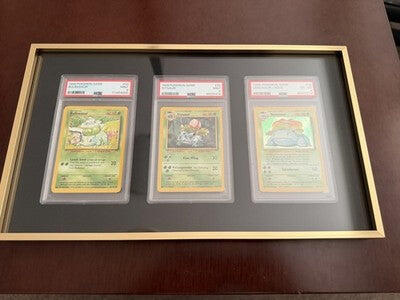
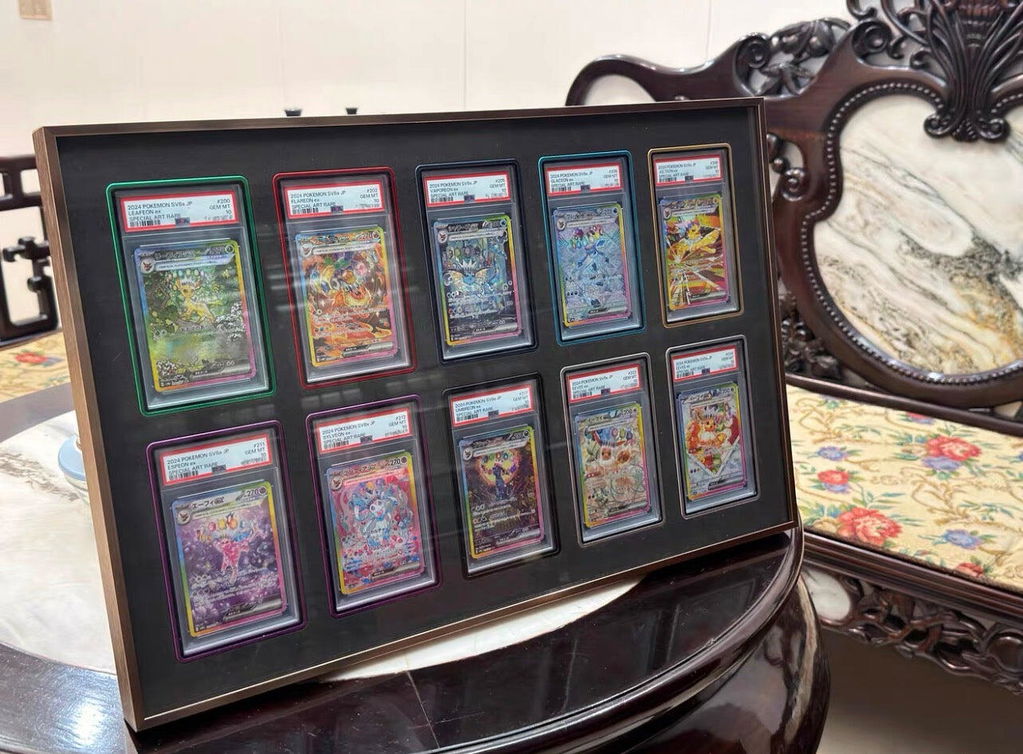


0 comments