


Choosing the best trading cards to display and collect can mean very different things depending on the collection. Some collectors build around one character such as Charizard, Pikachu, Umbreon, Blue-Eyes White Dragon, Dark Magician, Monkey D. Luffy, Mickey Mouse or Elsa. Others concentrate on one player such as Michael Jordan, LeBron James, Kobe Bryant, Tom Brady, Lionel Messi, Cristiano Ronaldo or Shohei Ohtani. There are also collections built around particular trading card games, sports, sets, eras, rarities, artists, card treatments, rookie cards, promotional cards, autographs, numbered parallels, alternate artwork, graded cards or complete teams and franchises.
A Pokémon collector might spend years building a Charizard collection containing vintage holos, modern Special Illustration Rares, promotional cards and Japanese releases. A Magic: The Gathering collector might concentrate on the Power Nine, Reserved List cards, legendary creatures, planeswalkers, Commanders, lands or a particular artist. A Yu-Gi-Oh! collector might build around Blue-Eyes White Dragon, Dark Magician, Exodia, HERO monsters, Ghost Rares or cards from one generation of the anime and trading card game. A sports-card collector might concentrate entirely on Michael Jordan, one rookie class, one club, one championship team, autographs, refractors or vintage cards.
One Piece Card Game collectors have similarly broad choices, ranging from Monkey D. Luffy, Roronoa Zoro, Nami, Portgas D. Ace and Shanks through individual crews, manga cards, alternate-art Leaders, expansions and Japanese releases. Disney Lorcana collectors can build around Mickey Mouse, Elsa, Stitch, Maleficent, Disney Princesses, Disney Villains, particular films, Enchanted cards, premium rarities, ink colours and individual sets.
The best trading cards to display are therefore not necessarily the most expensive cards in a collection. The strongest collections usually have a clear reason for the cards to be together. That connection could be a character, player, team, set, rarity, era, franchise, artwork, card type, illustrator, colour, storyline, championship, generation or another collecting objective.
This ultimate guide looks across Pokémon, Magic: The Gathering, Yu-Gi-Oh!, sports cards, the One Piece Card Game and Disney Lorcana. It covers major characters and players, iconic cards, important sets, rarities, treatments, collecting terminology, vintage and modern cards, raw and graded cards, PSA, CGC, BGS, One Touch holders, collection sizes and hundreds of ways to organise trading cards into a deliberate collection.
The focus is physical card collecting rather than predicting which trading cards will increase in value. Market prices change constantly. Characters, players, artwork, sets, card histories and collecting structures provide a much more useful foundation when deciding which cards belong together.
What Makes a Trading Card Good to Collect or Display?
A good display card does not need to be rare, expensive or difficult to obtain. It needs to contribute something to the collection.
That contribution might come from the subject of the card. A Charizard card can complete a Charmander, Charmeleon and Charizard evolution line. A Kobe Bryant card can complete a trio with Michael Jordan and LeBron James. A Dark Magician Girl card can sit beside Dark Magician and Magician's Rod. A Roronoa Zoro card can complete a Straw Hat group. An Elsa card can complement Anna and Olaf.
The connection might instead come from the card itself. A collector could display nine cards that all use alternate artwork, nine vintage holographic cards, nine rookie cards, nine autographs, nine cards illustrated by the same artist or nine premium cards from different games.
Some of the most useful factors to consider include:
- character or player
- team, crew or franchise
- trading card game
- set or expansion
- generation or era
- rarity
- card treatment
- artwork
- illustrator or artist
- rookie status
- promotional origin
- autograph or memorabilia content
- numbering
- language
- grading company
- grade
- holder format
- card colour or game-specific identity
- storyline or character relationship
- championship, season or historic event
The more clearly that connection can be explained, the easier it normally becomes to decide which cards should stay in the collection and which cards do not belong.
What Are the Most Popular Trading Card Categories?
Trading cards span many games, sports and entertainment properties, but several categories dominate modern collecting.
Pokémon remains one of the most recognisable trading card games in the world, with collectors focusing on characters, sets, artwork, eras, promotional releases and rarities. Magic: The Gathering has an enormous history of competitive, casual and collector-focused cards stretching from early releases such as Alpha and Beta through modern premium treatments and Commander products.
Yu-Gi-Oh! combines famous anime monsters with decades of trading card game history. Sports cards cover basketball, baseball, American football, soccer, hockey and many other sports, often with a strong emphasis on rookie cards, parallels, autographs, memorabilia cards and important players.
The One Piece Card Game has rapidly developed its own collecting culture around major characters, manga cards, alternate artwork, Leaders and set releases. Disney Lorcana combines Disney and Pixar characters with a structured rarity system, premium artwork and franchise-based collecting.
Collectors do not need to choose only one category. A mixed trading-card collection can represent the collector rather than a single game. Someone might display Charizard, Michael Jordan, Blue-Eyes White Dragon, Black Lotus, Monkey D. Luffy and Mickey Mouse together because each card represents a different part of their collecting history.
Best Pokémon Cards to Collect and Display
Pokémon provides one of the largest possible card-collecting ecosystems because the Pokémon Trading Card Game combines more than a thousand Pokémon species with decades of expansions, promotional releases, rarity changes, artwork styles, Japanese products and regional releases.
A Pokémon collection can be built around one species, one evolution line, one region, one generation, one set, one rarity, one illustrator or one particular style of artwork.
Charizard Cards
Charizard is one of the most recognisable Pokémon card subjects and can support an extremely large collection by itself.
Vintage collectors may begin with early Charizard cards from the original Pokémon TCG era. Modern collectors might instead concentrate on Charizard ex, alternate-art cards, Special Illustration Rares, promotional releases or cards from particular Scarlet & Violet sets.
A Charizard collection does not need to contain every Charizard card ever released. It could focus on:
- vintage Charizard cards
- modern Charizard cards
- Japanese Charizard cards
- English Charizard cards
- Charizard ex cards
- Charizard GX cards
- Charizard V cards
- Charizard VMAX cards
- Charizard promotional cards
- graded Charizard cards
- Charizard cards by one illustrator
- Charizard cards from one era
- Charmander, Charmeleon and Charizard evolution lines
Base Set Charizard
The original Base Set Charizard remains one of the defining cards associated with the early Pokémon TCG. It can form the centre of a vintage Base Set collection, an original starter evolution collection or a broader Charizard history.
Collectors can also distinguish between different printings and languages when building a specialised early Charizard collection.
Dark Charizard
Dark Charizard from Team Rocket provides a different early interpretation of the character and works naturally in Team Rocket, vintage holo and Charizard collections.
Shining Charizard
Shining Charizard provides another major vintage Charizard theme and connects naturally to collections built around Shining Pokémon and the Neo era.
Charizard Gold Star
Charizard Gold Star is associated with the EX-era Gold Star card style and provides another distinctive branch for collectors interested in high-profile Charizard releases.
Modern Charizard Cards
Modern Pokémon releases have produced numerous premium Charizard cards across Pokémon ex, GX, V and VMAX eras, alternate-art treatments and Illustration Rare-style collecting.
This means a collector can build an entirely modern Charizard collection without relying on early vintage cards.
Pikachu Cards
Pikachu is another enormous Pokémon collecting subject because of the character's central role in the franchise and the number of promotional, set-based and special-release cards featuring it.
Pikachu collections can focus on vintage cards, Japanese promos, modern Illustration Rares, anniversary releases or cards that feature Pikachu alongside other Pokémon and Trainers.
Birthday Pikachu
Birthday Pikachu is a distinctive promotional-style collecting subject and can be displayed alongside other unusual Pikachu releases.
Flying Pikachu and Surfing Pikachu
Flying Pikachu and Surfing Pikachu provide two recognisable themed versions of the character and work naturally as a pair.
Pikachu Illustrator
Pikachu Illustrator occupies a unique place in Pokémon collecting history because of its association with an early Japanese illustration contest rather than normal booster-pack distribution.
Collectors do not need the original card to create an illustrator-focused collection. Reprints, related promotional cards and other art-contest cards can still provide a strong historical theme.
Umbreon and Eeveelution Cards
Umbreon is one of the most popular Pokémon subjects for modern card collectors and also provides a natural entry point into larger Eeveelution collections.
Collectors can focus on Umbreon alone or combine Eevee with Vaporeon, Jolteon, Flareon, Espeon, Umbreon, Leafeon, Glaceon and Sylveon.
Umbreon VMAX Alternate Art
The Umbreon VMAX alternate-art card associated with Evolving Skies became one of the most recognisable modern Pokémon cards of the Sword & Shield era.
It can be displayed independently, alongside other Evolving Skies alternate arts or as part of an Umbreon and Eeveelution collection.
Espeon and Umbreon Pairings
Espeon and Umbreon provide a particularly natural two-character collection. The pair can be expanded through several eras and different card types.
Gengar Cards
Gengar supports large collections across vintage and modern Pokémon eras.
A collector could combine early holographic Gengar cards with modern Gengar VMAX, illustration-focused cards and Japanese releases.
Gengar also works naturally in Ghost-type collections alongside Gastly, Haunter and other Ghost Pokémon.
Mew and Mewtwo Cards
Mew and Mewtwo are two of the most recognisable Legendary and Mythical Pokémon collecting subjects.
Collectors can display Mew and Mewtwo as a pair or build separate collections for each character.
Mew collections can include promotional cards, vintage holos, modern ex cards and illustration-focused releases. Mewtwo collections can similarly span Base Set-era cards, promotional releases, GX cards and modern Pokémon ex eras.
Rayquaza Cards
Rayquaza is a particularly strong collecting subject for fans of Legendary Pokémon, the Hoenn region and dragon-themed Pokémon cards.
Rayquaza cards span numerous eras and include premium modern artwork, older EX-era cards and high-rarity releases.
Lugia Cards
Lugia provides another major Legendary Pokémon collection and has important connections to the Neo era as well as later modern releases.
A Lugia collection can combine vintage holographic cards, EX-era versions, modern V cards and Japanese releases.
Giratina Cards
Giratina has become a particularly popular subject in modern Pokémon collecting because of distinctive alternate-art and illustration-focused cards.
Collectors can combine Giratina with Dialga, Palkia and Arceus in a Sinnoh Legendary collection.
Greninja Cards
Greninja is a strong modern character theme and can be collected through several Pokémon TCG eras.
Greninja cards can also form part of Kalos, Water-type or starter evolution collections.
Starter Pokémon Collections
Starter Pokémon create one of the easiest large-scale Pokémon collection structures.
A collector can organise cards by generation, beginning with Bulbasaur, Charmander and Squirtle and continuing through later generations.
Another approach is to collect complete evolution lines:
- Bulbasaur, Ivysaur and Venusaur
- Charmander, Charmeleon and Charizard
- Squirtle, Wartortle and Blastoise
- Chikorita, Bayleef and Meganium
- Cyndaquil, Quilava and Typhlosion
- Totodile, Croconaw and Feraligatr
- Treecko, Grovyle and Sceptile
- Torchic, Combusken and Blaziken
- Mudkip, Marshtomp and Swampert
The concept can continue through every Pokémon generation.
Legendary Pokémon Collections
Legendary Pokémon can be organised by region, trio, duo, generation or card era.
Examples include:
- Articuno, Zapdos and Moltres
- Raikou, Entei and Suicune
- Lugia and Ho-Oh
- Groudon, Kyogre and Rayquaza
- Dialga, Palkia and Giratina
- Reshiram and Zekrom
- Xerneas and Yveltal
- Solgaleo and Lunala
- Zacian and Zamazenta
- Koraidon and Miraidon
Pokémon Illustration Rare and Special Illustration Rare Cards
Illustration-focused Pokémon cards have become one of the most important modern collecting categories.
Illustration Rares and Special Illustration Rares allow collectors to build around artwork rather than simply character or set.
A collection might include one Illustration Rare from every Scarlet & Violet expansion, one favourite card for each Pokémon type or several cards by the same illustrator.
Pokémon Alternate-Art Cards
Alternate-art cards became a major collector focus during several modern Pokémon eras.
Collectors can build displays containing alternate-art Pokémon V, VMAX and other premium cards, or select one favourite alternate art from each expansion.
Vintage Pokémon Holographic Cards
Vintage holographic Pokémon cards provide a completely different visual and historical collecting direction.
Collections can focus on Base Set, Jungle, Fossil, Team Rocket, Gym Heroes, Gym Challenge, Neo Genesis and other early expansions.
Japanese Pokémon Cards
Japanese Pokémon cards form another enormous collecting category.
Collectors may prefer Japanese cards because of particular artwork releases, promotional cards, printing differences, set structures or the original Japanese context of the Pokémon franchise.
A collection can also compare English and Japanese versions of the same card.
Pokémon Promotional Cards
Promotional Pokémon cards include cards distributed through products, events, cinema promotions, tournaments, anniversary releases and special campaigns.
This provides a collecting category separate from standard booster sets.
Best Pokémon Sets to Collect
Set collecting can range from early vintage Pokémon expansions to modern releases.
Popular themes include:
- Base Set
- Jungle
- Fossil
- Team Rocket
- Gym Heroes
- Gym Challenge
- Neo Genesis
- Neo Discovery
- Neo Revelation
- Neo Destiny
- EX-era expansions
- Diamond & Pearl era
- Platinum era
- HeartGold & SoulSilver era
- Black & White era
- XY era
- Sun & Moon era
- Sword & Shield era
- Scarlet & Violet era
- Pokémon 151-focused collections
- Evolving Skies collections
- anniversary sets
Best Magic: The Gathering Cards to Collect and Display
Magic: The Gathering has one of the deepest histories of any trading card game. Collections can be organised around individual cards, sets, colours, planes, legendary creatures, Commanders, artists, mechanics, card frames, premium treatments or specific periods of Magic history.
Black Lotus
Black Lotus is one of the most recognisable cards in Magic: The Gathering history and is central to discussions of early Magic collecting.
It is closely associated with the Power Nine and early sets such as Alpha, Beta and Unlimited.
A collector interested in Magic history can build a Power Nine-themed collection using original cards, reprints where applicable, artwork references or related historical pieces depending on budget and collecting objectives.
The Power Nine
The Power Nine are among the most famous early Magic cards.
The group includes:
- Black Lotus
- Ancestral Recall
- Time Walk
- Timetwister
- Mox Pearl
- Mox Sapphire
- Mox Jet
- Mox Ruby
- Mox Emerald
A nine-card display is therefore particularly natural for a Power Nine collection.
Mox Cards
The five original Mox cards can also form a five-card collection independently of the other Power Nine cards.
The colour association makes them particularly useful for a symmetrical Magic collection.
Reserved List Cards
The Reserved List is one of the most frequently discussed areas of Magic collecting.
Collectors may focus on famous Reserved List cards, particular sets containing Reserved List cards or cards connected to older competitive formats and Magic history.
Original Dual Lands
The original dual lands form one of the most recognisable groups of early Magic cards.
Collectors can display the ten lands together or organise them according to colour pair.
Planeswalker Cards
Planeswalkers provide a large character-driven Magic collection.
Popular subjects include Jace, Chandra, Liliana, Ajani, Garruk, Teferi, Karn, Elspeth and numerous others.
A collector can focus on one planeswalker across several sets or display a group representing different colours and planes.
Legendary Creatures
Legendary creatures have become especially important because of Commander.
A collection might focus on favourite Commanders, legendary Dragons, legendary Angels, legendary Demons or cards from a particular plane.
Commander Cards
Commander provides one of the largest modern Magic collecting ecosystems.
Collectors can display:
- favourite Commanders
- foil Commanders
- borderless Commanders
- Commanders by colour identity
- tribal Commanders
- partner Commanders
- Commanders from one plane
- Commanders illustrated by one artist
Magic Dragon Cards
Dragons are one of Magic's most recognisable creature themes.
Dragon collections can span decades of sets and include legendary Dragons, Elder Dragons, foil Dragons and premium artwork treatments.
Magic Angel Cards
Angels provide another major creature-based collecting theme.
Collectors can focus on white Angels, legendary Angels, particular artists or premium versions.
Magic Demon Cards
Demon collections provide a darker counterpart to Angel collections and can span numerous sets and artistic styles.
Artifact Collections
Artifacts are another historically important Magic card type and can support specialised collections involving famous mana rocks, equipment, vehicles or cards from artifact-focused sets.
Magic Land Collections
Lands provide one of the broadest artwork-focused collection categories in Magic.
Collectors can build around:
- basic lands
- full-art lands
- foil lands
- original dual lands
- shock lands
- fetch lands
- triomes
- special-release lands
- lands from one plane
- lands by one artist
Magic Colour Collections
Magic's five colours provide a natural five-card or five-section collecting structure:
- White
- Blue
- Black
- Red
- Green
A sixth section can represent colourless cards, artifacts or multicolour cards.
Magic Set Collecting
Magic collectors can focus on complete sets, one representative card from each set or particular eras.
Early-set themes include Alpha, Beta, Unlimited, Arabian Nights, Antiquities, Legends and The Dark.
Later collectors may focus on blocks, planes, Masters products, Commander releases, Secret Lair cards or modern premium treatments.
Magic Foil Cards
Foils provide one of the longest-running premium card treatments in Magic.
A foil collection can focus on one character, one set, one artist or one card type.
Borderless and Extended-Art Magic Cards
Modern Magic products frequently use alternate frames and expanded artwork.
Borderless and extended-art cards work especially well in artwork-focused collections because the visual treatment becomes the connection between otherwise unrelated cards.
Showcase Magic Cards
Showcase treatments give individual sets and planes distinct artistic identities.
A collector can choose favourite showcase treatments across multiple sets or focus on one particular product.
Serialized Magic Cards
Serialized cards provide another modern collecting category.
Collectors interested in individually numbered cards can build around serial numbers, characters, sets or particular premium releases.
Magic Artist Collections
Magic has a long tradition of collecting cards by illustrator.
An artist collection can cross sets, colours and card types while retaining one clear artistic connection.
Best Yu-Gi-Oh! Cards to Collect and Display
Yu-Gi-Oh! combines iconic anime monsters, long-running archetypes, changing card frames, numerous rarity treatments and more than two decades of trading card game history.
Collectors can build around one monster, one archetype, one anime character, one summoning mechanic, one rarity or one era.
Blue-Eyes White Dragon Cards
Blue-Eyes White Dragon is one of the most recognisable cards in Yu-Gi-Oh! and can support an extensive collection by itself.
Blue-Eyes cards exist across starter products, booster sets, promotional cards, anniversary products and premium rarity treatments.
A collection might include:
- Blue-Eyes White Dragon
- Blue-Eyes Ultimate Dragon
- Blue-Eyes Alternative White Dragon
- Blue-Eyes Chaos MAX Dragon
- Blue-Eyes Spirit Dragon
- White Stone cards
- Maiden with Eyes of Blue
- Kaibaman
- Blue-Eyes support cards
Dark Magician Cards
Dark Magician provides another enormous Yu-Gi-Oh! collecting theme.
Collectors can focus on different artworks, rarities, printings and support cards.
Dark Magician also works naturally with Dark Magician Girl, Magician of Black Chaos and related Spell and Trap cards.
Dark Magician Girl Cards
Dark Magician Girl is one of the most collected individual Yu-Gi-Oh! characters and has received numerous artworks, premium printings and promotional releases.
A dedicated Dark Magician Girl collection can be organised chronologically or by rarity.
Red-Eyes Black Dragon Cards
Red-Eyes Black Dragon provides another major original-era monster collection.
Collectors can combine Red-Eyes with Joey Wheeler-related cards or create a broader dragon collection with Blue-Eyes.
Exodia Cards
Exodia provides one of the most obvious five-card Yu-Gi-Oh! collections because the original strategy revolves around assembling five pieces:
- Exodia the Forbidden One
- Right Arm of the Forbidden One
- Left Arm of the Forbidden One
- Right Leg of the Forbidden One
- Left Leg of the Forbidden One
Collectors can use matching printings or intentionally combine different rarities and eras.
Egyptian God Cards
The three Egyptian God Cards form a natural three-card display:
- Slifer the Sky Dragon
- Obelisk the Tormentor
- The Winged Dragon of Ra
The group can be expanded with alternate artworks, support cards and related anime-era cards.
Elemental HERO Cards
Elemental HERO provides one of the largest archetype-based Yu-Gi-Oh! collection possibilities.
Collectors can focus on:
- Elemental HERO Flame Wingman
- Elemental HERO Neos
- Elemental HERO Shining Flare Wingman
- Elemental HERO Avian
- Elemental HERO Burstinatrix
- Elemental HERO Sparkman
- Elemental HERO Bubbleman
- Elemental HERO fusion monsters
Cyber Dragon Cards
Cyber Dragon is another major GX-era collecting theme.
Cyber Dragon, Cyber End Dragon, Cyber Twin Dragon and later support cards can form a compact or extremely large collection.
Stardust Dragon Cards
Stardust Dragon is one of the defining monsters of the Synchro era.
Collectors can combine Stardust Dragon with Shooting Star Dragon and other Yusei-related cards.
Black Rose Dragon Cards
Black Rose Dragon is another major Synchro-era monster and can be paired with Stardust Dragon or collected independently.
Number and Xyz Monster Collections
Xyz-era collecting can focus on Number monsters, protagonist cards or individual archetypes.
A large Number-card display can become an extensive long-term project.
Yu-Gi-Oh! Ghost Rare Cards
Ghost Rare cards are one of the most visually distinctive Yu-Gi-Oh! rarity treatments.
Collectors can build entirely around Ghost Rares or select favourite monsters from different eras.
Ultimate Rare Cards
Ultimate Rare cards use embossed and textured elements that distinguish them from standard printings.
An Ultimate Rare collection can focus on GX-era cards, archetypes or favourite monsters.
Collector's Rare Cards
Collector's Rare cards provide another premium rarity category with distinctive surface treatments.
Starlight Rare Cards
Starlight Rare cards became a major premium collecting category within modern Yu-Gi-Oh! products.
Collectors can focus on individual characters, archetypes or one Starlight Rare from several sets.
Quarter Century Secret Rare Cards
Quarter Century Secret Rare cards became closely associated with Yu-Gi-Oh!'s 25th anniversary period.
They provide a broad collection category spanning nostalgic monsters, modern cards and premium reprints.
Secret Rare Cards
Secret Rare has appeared throughout many eras of Yu-Gi-Oh! and provides a much broader collecting category than newer premium treatments.
Yu-Gi-Oh! Archetype Collections
Archetypes provide one of the strongest ways to organise Yu-Gi-Oh! cards.
Possible collecting themes include:
- Blue-Eyes
- Dark Magician
- Red-Eyes
- Elemental HERO
- Destiny HERO
- Cyber Dragon
- Crystal Beast
- Blackwing
- Six Samurai
- Lightsworn
- Synchro Dragon
- Galaxy-Eyes
- Number
- Utopia
- Odd-Eyes
- Performapal
- Salamangreat
- Sky Striker
- Dragonmaid
- Dark World
- Toon
- Harpie
- Egyptian God
- Exodia
Yu-Gi-Oh! Anime-Era Collections
Collectors can also organise cards according to the anime generation they associate with them.
Duel Monsters
Duel Monsters collections can focus on Yugi, Kaiba, Joey, Pegasus and their signature monsters.
Yu-Gi-Oh! GX
GX collections can include Elemental HERO, Cyber Dragon, Crystal Beast and other academy-era archetypes.
Yu-Gi-Oh! 5D's
5D's collections can focus on Synchro monsters including Stardust Dragon, Red Dragon Archfiend and Black Rose Dragon.
Yu-Gi-Oh! ZEXAL
ZEXAL collections can focus on Xyz Monsters, Numbers and Utopia.
Yu-Gi-Oh! ARC-V
ARC-V collections can include Odd-Eyes, Pendulum monsters and cards connected to the different summoning dimensions.
Yu-Gi-Oh! VRAINS
VRAINS collections can focus on Link Monsters and archetypes associated with that era.
Best Sports Cards to Collect and Display
Sports-card collecting differs from trading card games because the central collecting subjects are real players, teams, seasons and sporting achievements rather than fictional characters and game mechanics.
The same fundamental collection structures still apply. A collector can focus on one player, one rookie class, one team, one season, one championship, one card brand or one particular parallel.
Michael Jordan Cards
Michael Jordan remains one of the most recognisable basketball-card collecting subjects.
A Jordan collection can include cards from different seasons, brands, inserts and premium releases.
Collectors might focus on:
- early Michael Jordan cards
- Chicago Bulls cards
- Michael Jordan inserts
- Michael Jordan refractors
- Michael Jordan graded cards
- Michael Jordan cards from one manufacturer
- Jordan championship-era cards
- Jordan and Kobe Bryant cards
- Jordan, Kobe and LeBron cards
LeBron James Cards
LeBron James provides one of the largest modern basketball-card collecting themes.
Collections can focus on rookie cards, Cleveland Cavaliers cards, Miami Heat cards, Los Angeles Lakers cards, championship seasons, inserts, parallels or autographs.
Kobe Bryant Cards
Kobe Bryant is another major basketball collecting subject.
A Kobe collection can focus on rookie-era releases, Los Angeles Lakers cards, championship cards, inserts, parallels and premium products.
Stephen Curry Cards
Stephen Curry cards provide a major modern basketball theme.
Collectors can focus on rookie cards, Golden State Warriors cards, championship seasons, parallels, autographs and milestone-related cards.
Magic Johnson and Larry Bird Cards
Magic Johnson and Larry Bird form a natural basketball pairing because of their rivalry and importance to the NBA during the 1980s.
The pair can also be combined with Kareem Abdul-Jabbar, Julius Erving and other stars from the era.
Shaquille O'Neal Cards
Shaquille O'Neal cards can be organised around his rookie period, Orlando Magic years, Los Angeles Lakers championships or later teams.
Kevin Durant Cards
Kevin Durant provides another broad modern basketball collection across several teams and eras.
Tom Brady Cards
Tom Brady is one of the central American football card subjects.
Collectors can build around rookie cards, New England Patriots cards, Tampa Bay Buccaneers cards, Super Bowl appearances, numbered parallels and autographs.
Patrick Mahomes Cards
Patrick Mahomes has become one of the major modern NFL collecting subjects.
Rookie cards, Kansas City Chiefs cards, Super Bowl cards, parallels and autographs can form the foundation of a Mahomes collection.
Joe Montana Cards
Joe Montana provides a strong historical NFL quarterback collection and can be paired with other San Francisco 49ers legends.
Peyton Manning Cards
Peyton Manning cards can span Indianapolis Colts and Denver Broncos periods as well as championship and record-focused collections.
Babe Ruth Cards
Babe Ruth provides one of the most historically important baseball-card themes.
Vintage cards associated with Ruth can form part of a broader early baseball history collection.
Mickey Mantle Cards
Mickey Mantle is another defining baseball-card collecting subject.
Mantle cards can anchor New York Yankees, vintage baseball and Hall of Fame collections.
Shohei Ohtani Cards
Shohei Ohtani has become one of the most prominent modern baseball-card collecting subjects.
Collectors can focus on rookie cards, Japanese connections, Los Angeles Angels cards, Los Angeles Dodgers cards, numbered parallels, autographs and cards celebrating his pitching and hitting achievements.
Mike Trout Cards
Mike Trout remains a major modern baseball collecting subject, particularly for collectors interested in rookie cards and premium parallels.
Aaron Judge Cards
Aaron Judge cards can support New York Yankees, home-run and modern superstar collections.
Lionel Messi Cards
Lionel Messi is one of the largest soccer-card collecting subjects.
Collectors can focus on Barcelona, Argentina, Paris Saint-Germain, Inter Miami, World Cup, Champions League, rookie-era releases, stickers, parallels and autographs.
Cristiano Ronaldo Cards
Cristiano Ronaldo cards span Sporting CP, Manchester United, Real Madrid, Juventus, Portugal and other stages of his career.
A Messi and Ronaldo pairing is also one of the most obvious two-player soccer collections.
Pelé Cards
Pelé cards provide a major historical soccer collection and can form part of World Cup, Brazil or all-time-great collections.
Diego Maradona Cards
Diego Maradona is another major historical soccer collecting subject with strong connections to Argentina, Napoli and World Cup history.
Kylian Mbappé Cards
Kylian Mbappé provides a major modern soccer-card theme involving France, Paris Saint-Germain, Real Madrid and international tournaments.
Neymar Cards
Neymar cards can be organised around Santos, Barcelona, Paris Saint-Germain, Brazil and international competitions.
Connor McDavid Cards
Connor McDavid provides one of the strongest modern hockey-card collecting themes.
Rookie cards, Edmonton Oilers cards, parallels and autographs can form the basis of a collection.
Wayne Gretzky Cards
Wayne Gretzky remains one of the defining hockey-card subjects and fits naturally in vintage, Edmonton Oilers, Los Angeles Kings and all-time-great collections.
Sports Rookie Cards
Rookie cards are among the most important concepts in sports-card collecting.
A rookie-card collection can focus on:
- one player
- one draft class
- one team
- one sport
- Hall of Fame players
- championship winners
- number-one draft picks
- quarterbacks
- NBA superstars
- soccer wonderkids
- baseball prospects
Sports Card Parallels
Parallels use different colours, patterns, serial numbering or finishes while retaining the underlying card design.
A rainbow collection attempts to collect multiple parallels of the same player and card.
Parallels can also be organised by colour, rarity or serial-number range.
Numbered Sports Cards
Serial-numbered cards display a printed production number such as /99, /50, /25, /10, /5 or 1/1.
Collectors can focus on one numbering tier, one player or one product.
Sports Card Autographs
Autograph cards provide another major sports-card collection category.
A collector might pursue signatures from one team, one Hall of Fame class, one championship roster or one generation of players.
Patch and Memorabilia Cards
Memorabilia cards can contain pieces of material associated with sports equipment or uniforms depending on the product.
Patch cards are often visually distinctive and can become the focus of player or team collections.
Case Hit Sports Cards
Case-hit inserts and short-print designs provide another major modern sports-card collecting category.
Collectors may pursue complete insert sets or one favourite player from each case-hit family.
Refractors and Chrome Cards
Chrome-style cards and refractor treatments are major collecting categories across several sports.
A collector can combine different refractor colours of one player or select iconic refractors across several years.
Vintage Sports Cards
Vintage sports-card collecting can involve baseball, basketball, football, soccer and hockey cards from earlier eras.
Vintage collections often focus more heavily on historic players, teams and sets than modern parallel structures.
Modern Sports Cards
Modern sports products frequently include extensive parallel systems, inserts, short prints, autographs, memorabilia cards and serial-numbered cards.
This creates many different ways to collect one player without needing cards from dozens of unrelated brands.
Best One Piece Cards to Collect and Display
The One Piece Card Game provides a strong character-driven collecting ecosystem based on one of the world's largest manga and anime franchises.
Collectors can build around characters, pirate crews, factions, story arcs, Leaders, sets, alternate art, manga cards, promotional releases and Japanese or English cards.
Monkey D. Luffy Cards
Monkey D. Luffy is the central character of One Piece and naturally supports one of the largest individual card collections.
A Luffy collection can include:
- Leader cards
- Character cards
- alternate-art cards
- manga cards
- promotional cards
- Japanese Luffy cards
- English Luffy cards
- graded Luffy cards
- Luffy cards from multiple expansions
Roronoa Zoro Cards
Roronoa Zoro is another major One Piece collecting subject and works naturally in Straw Hat, swordsman and character-specific collections.
Zoro can also be paired with Dracule Mihawk in a swordsman-focused collection.
Nami Cards
Nami is a major Straw Hat collecting subject and appears across numerous One Piece Card Game products and treatments.
Collectors can focus on alternate art, promotional cards, Japanese versions or cards from different sets.
Sanji Cards
Sanji provides another large Straw Hat theme and can be collected independently or alongside Luffy and Zoro.
Luffy, Zoro and Sanji form one of the clearest three-character Straw Hat arrangements.
Tony Tony Chopper Cards
Chopper cards can form a dedicated character collection or be included within a larger Straw Hat crew display.
Nico Robin Cards
Nico Robin provides another significant Straw Hat character theme with connections to several story arcs and card sets.
Portgas D. Ace Cards
Portgas D. Ace is one of the strongest non-Straw Hat character themes in One Piece collecting.
Ace cards can be collected independently or combined with Luffy and Sabo.
Luffy, Ace and Sabo
Luffy, Ace and Sabo form a natural three-card or larger brothers collection.
Shanks Cards
Shanks is another major One Piece card subject and works naturally in Red-Haired Pirates, Emperor and Luffy-related collections.
Trafalgar Law Cards
Trafalgar Law supports extensive collections involving Heart Pirates, Worst Generation characters and alternate-art cards.
Law can also be paired with Donquixote Rosinante, commonly known as Corazon.
Boa Hancock Cards
Boa Hancock provides another major character collection with connections to the Kuja Pirates and Seven Warlords.
Yamato Cards
Yamato cards provide a strong Wano-focused collection and can be combined with Kaido, Momonosuke and Kozuki characters.
Sabo Cards
Sabo can be collected independently, as part of the Revolutionary Army or alongside Luffy and Ace.
Whitebeard Cards
Edward Newgate, better known as Whitebeard, provides a major Emperor and Whitebeard Pirates theme.
Whitebeard can be paired with Ace and Marco or expanded into a larger crew collection.
Blackbeard Cards
Marshall D. Teach, known as Blackbeard, provides an important pirate and antagonist collection.
Blackbeard cards can be included in Emperor, villain and crew-based displays.
Kaido Cards
Kaido provides a major Animal Kingdom Pirates and Wano collection.
Kaido, King and Queen create a compact crew-focused arrangement.
Big Mom Cards
Charlotte Linlin, known as Big Mom, supports Emperor, Whole Cake Island and Charlotte family collections.
Donquixote Doflamingo Cards
Doflamingo provides a major villain, Warlord and Dressrosa collection.
Doflamingo can be paired with Corazon or expanded into a Donquixote Pirates collection.
Dracule Mihawk Cards
Mihawk is a natural collecting subject for swordsman, Seven Warlords and Zoro-related collections.
Buggy Cards
Buggy can appear in East Blue, Cross Guild and Emperor-focused collections.
One Piece Straw Hat Pirate Collections
The Straw Hat crew provides one of the most obvious One Piece collection structures.
A ten-character arrangement can include:
- Monkey D. Luffy
- Roronoa Zoro
- Nami
- Usopp
- Sanji
- Tony Tony Chopper
- Nico Robin
- Franky
- Brook
- Jinbe
One Piece Crew Collections
Other pirate crews create additional collection structures:
- Red-Haired Pirates
- Whitebeard Pirates
- Heart Pirates
- Kid Pirates
- Blackbeard Pirates
- Big Mom Pirates
- Animal Kingdom Pirates
- Donquixote Pirates
- Kuja Pirates
- Roger Pirates
One Piece Faction Collections
Collectors can also organise cards around broader factions:
- Navy or Marines
- Revolutionary Army
- Seven Warlords
- Worst Generation
- Four Emperors
- Baroque Works
- Cross Guild
- CP9
- CP0
One Piece Story Arc Collections
Story arcs provide another large collecting structure.
Possible themes include:
- East Blue
- Alabasta
- Skypiea
- Water 7
- Enies Lobby
- Thriller Bark
- Sabaody
- Impel Down
- Marineford
- Fish-Man Island
- Punk Hazard
- Dressrosa
- Zou
- Whole Cake Island
- Wano Country
- Egghead
One Piece Manga Cards
Manga artwork cards are one of the most recognisable premium One Piece Card Game collecting categories.
Collectors commonly refer to these as Manga Rares, although the term is often used by the collecting community to describe the manga-style alternate artwork rather than a simple base rarity printed on the card.
A manga-card collection can be built chronologically as new characters receive manga treatments.
One Piece Alternate-Art Leaders
Leader cards are central to One Piece gameplay and also provide a strong collector category.
Alternate-art Leaders can be collected by colour, crew, set, character or artwork style.
One Piece Card Colours
The One Piece Card Game uses several card colours that can also provide collection structures:
- Red
- Green
- Blue
- Purple
- Black
- Yellow
Dual-colour Leaders create additional ways to organise cards by colour identity.
One Piece Set Collections
Collectors can organise cards by numbered main sets, Extra Boosters, starter products, promotional releases and premium products.
A simple long-term collection might contain one favourite card from every major One Piece Card Game expansion.
Japanese One Piece Cards
Japanese One Piece cards provide a separate collecting route and can be compared directly with English versions.
Collectors can focus on Japanese promotional cards, manga cards, alternate-art Leaders or complete character collections.
Best Disney Lorcana Cards to Collect and Display
Disney Lorcana combines Disney and Pixar characters with trading-card rarity, colour and artwork systems.
Collections can be built around characters, films, franchises, ink colours, glimmer classifications, sets and premium rarities.
Mickey Mouse Lorcana Cards
Mickey Mouse is one of the central character themes in Disney Lorcana.
Mickey collections can include Storyborn, Dreamborn and Floodborn versions, several ink colours, promotional cards and premium treatments.
Minnie Mouse Lorcana Cards
Minnie Mouse works naturally alongside Mickey but can also support an independent collection.
Donald Duck Lorcana Cards
Donald Duck can be combined with Mickey, Minnie and Goofy in a classic Disney character collection.
Goofy Lorcana Cards
Goofy provides another major Mickey & Friends character theme.
Elsa Lorcana Cards
Elsa is one of the strongest individual character subjects in Lorcana collecting.
Collectors can organise Elsa cards by set, ink, rarity, artwork or glimmer classification.
Elsa - Spirit of Winter is one of the recognisable early Lorcana cards associated with The First Chapter.
Anna and Olaf Lorcana Cards
Anna and Olaf allow Elsa collections to expand into broader Frozen displays.
Elsa, Anna and Olaf also form a natural three-card collection.
Stitch Lorcana Cards
Stitch is another major Lorcana collecting subject.
Stitch - Carefree Surfer is one recognisable early card, while later Stitch versions provide opportunities for larger chronological character collections.
Tinker Bell Lorcana Cards
Tinker Bell can be collected independently or within Peter Pan and fairy-focused collections.
Tinker Bell - Giant Fairy provides one of the best-known early Floodborn interpretations.
Maleficent Lorcana Cards
Maleficent is a major Disney Villain collecting subject.
Maleficent - Monstrous Dragon provides a particularly recognisable early Lorcana interpretation.
Belle Lorcana Cards
Belle can form a dedicated character collection, Beauty and the Beast collection or Disney Princess collection.
Belle - Strange but Special is one notable early card associated with The First Chapter.
Rapunzel Lorcana Cards
Rapunzel provides another major Disney Princess collecting theme.
Rapunzel - Gifted with Healing is one of the recognisable early Lorcana cards.
Ariel Lorcana Cards
Ariel supports large collections across multiple Lorcana releases and can be combined with Ursula, Sebastian, Flounder and King Triton.
Ursula Lorcana Cards
Ursula is one of Lorcana's strongest villain themes and fits naturally within Little Mermaid and Disney Villain collections.
Simba Lorcana Cards
Simba can be combined with Mufasa, Scar, Nala, Timon and Pumbaa in a Lion King collection.
Aladdin Lorcana Cards
Aladdin cards can be displayed alongside Jasmine, Genie and Jafar.
Jafar Lorcana Cards
Jafar provides another major Disney Villain theme and works naturally alongside Aladdin characters.
Disney Princess Lorcana Cards
Disney Princesses provide one of the broadest Lorcana collections.
Possible characters include:
- Snow White
- Cinderella
- Aurora
- Ariel
- Belle
- Jasmine
- Pocahontas
- Mulan
- Tiana
- Rapunzel
- Merida
- Moana
Disney Villain Lorcana Cards
Disney Villain collections can include:
- Maleficent
- Ursula
- Jafar
- Scar
- Hades
- Captain Hook
- The Evil Queen
- Queen of Hearts
- Cruella De Vil
- Mother Gothel
- Gaston
- Dr. Facilier
Disney Lorcana Enchanted Cards
Enchanted cards are one of Lorcana's major premium collector categories and use expanded artwork.
Collectors can build around Enchanteds from one set, one ink colour, one Disney franchise or favourite characters across several releases.
Disney Lorcana Legendary Cards
Legendary cards provide another broad high-rarity Lorcana collection.
Collectors can choose Legendary cards by set, character, franchise or ink.
Disney Lorcana Ink Colours
Lorcana's six inks provide an obvious six-card or six-section structure:
- Amber
- Amethyst
- Emerald
- Ruby
- Sapphire
- Steel
Storyborn, Dreamborn and Floodborn Lorcana Cards
Lorcana's glimmer classifications provide another collecting concept.
Storyborn cards generally connect characters closely to familiar story identities. Dreamborn and Floodborn cards can present increasingly reimagined interpretations.
Collectors can display Storyborn, Dreamborn and Floodborn versions together to show how Lorcana reinterprets Disney characters.
Collecting Trading Cards by Character
Character collecting works particularly well for Pokémon, Yu-Gi-Oh!, One Piece and Lorcana because the same characters can appear repeatedly across multiple releases.
Possible long-term character collections include:
- Charizard
- Pikachu
- Umbreon
- Gengar
- Mew
- Mewtwo
- Rayquaza
- Blue-Eyes White Dragon
- Dark Magician
- Dark Magician Girl
- Red-Eyes Black Dragon
- Stardust Dragon
- Monkey D. Luffy
- Roronoa Zoro
- Nami
- Portgas D. Ace
- Shanks
- Trafalgar Law
- Mickey Mouse
- Elsa
- Stitch
- Maleficent
- Ariel
- Belle
Collecting Trading Cards by Player
Player collecting is one of the core sports-card strategies.
A collector can follow one player across rookie cards, teams, seasons, inserts, parallels, autographs and major career milestones.
Possible player collections include:
- Michael Jordan
- LeBron James
- Kobe Bryant
- Stephen Curry
- Shaquille O'Neal
- Kevin Durant
- Tom Brady
- Patrick Mahomes
- Joe Montana
- Peyton Manning
- Babe Ruth
- Mickey Mantle
- Shohei Ohtani
- Mike Trout
- Aaron Judge
- Lionel Messi
- Cristiano Ronaldo
- Pelé
- Diego Maradona
- Kylian Mbappé
- Neymar
- Wayne Gretzky
- Connor McDavid
Collecting Trading Cards by Set
Set collecting creates a clear boundary around the collection.
Some collectors complete entire sets. Others choose only the highest-rarity cards, favourite characters or one representative card from each release.
Set-based collecting can work across every category in this guide:
- Pokémon expansions
- Magic sets
- Yu-Gi-Oh! booster sets
- sports-card product releases
- One Piece booster sets
- Lorcana sets
Collecting Trading Cards by Era
Era collecting provides another useful structure when a franchise has a long history.
Pokémon can be divided into vintage Wizards-era cards, EX-era cards, Diamond & Pearl, Black & White, XY, Sun & Moon, Sword & Shield and Scarlet & Violet periods.
Magic can be divided into early Magic, block eras, modern sets, Commander periods and premium-treatment eras.
Yu-Gi-Oh! can be organised around Duel Monsters, GX, Synchro, Xyz, Pendulum and Link periods.
Sports cards can be divided by decade, league era, dynasty or player generation.
Vintage Trading Cards
Vintage collecting means different things in different hobbies.
For Pokémon, early Base Set through Neo-era products are often treated as vintage by collectors. In Magic, the game's earliest sets date back to 1993. Yu-Gi-Oh! collectors may focus on early North American and Japanese releases from the beginning of the TCG. Sports cards have a much longer physical history stretching back through several generations.
One Piece and Disney Lorcana are comparatively young games, so they do not yet have a decades-long vintage period in the same sense.
Modern Trading Cards
Modern cards frequently place greater emphasis on artwork, premium treatments, serial numbering and alternative versions.
Examples include:
- Pokémon Illustration Rares and Special Illustration Rares
- Magic borderless and showcase cards
- Yu-Gi-Oh! premium rarities
- sports-card refractors, parallels, autographs and case hits
- One Piece alternate art and manga cards
- Lorcana Enchanted and other premium cards
Alternate-Art Trading Cards
Alternate artwork has become one of the strongest cross-category collecting themes.
Pokémon alternate arts, One Piece alternate-art Leaders, Magic borderless and showcase cards and Lorcana premium artwork all allow collectors to prioritise visual presentation.
Full-Art Trading Cards
Full-art designs reduce or remove traditional card frames and allow the illustration to occupy more of the card.
Full-art collections can combine completely different games if the collector wants a broader artwork-focused display.
Foil Trading Cards
Foil cards exist across many trading card games.
A collector could build a foil collection within one game or create a mixed display containing favourite foil cards from Pokémon, Magic, Yu-Gi-Oh!, One Piece and Lorcana.
Promotional Trading Cards
Promotional cards often have histories completely separate from normal booster cards.
Promos can come from:
- events
- tournaments
- cinema releases
- special products
- magazines
- conventions
- anniversary campaigns
- retail promotions
- organised play
This makes promotional-card collecting one of the strongest cross-game themes.
Japanese Trading Cards
Japanese cards provide particularly strong collecting categories within Pokémon, Yu-Gi-Oh! and One Piece.
Collectors may focus on Japanese-exclusive releases, original printings, promotional cards, different card backs, different set structures or artwork released in Japan before other regions.
Autographed Trading Cards
Autographs are most strongly associated with sports cards but also appear in some entertainment and promotional card contexts.
Sports collectors can organise autograph collections around teams, Hall of Fame players, rookie classes, championship rosters or favourite athletes.
Numbered Trading Cards
Serial numbering is especially important in sports cards and modern premium collectible products.
Collectors can organise numbered cards by:
- /99
- /75
- /50
- /25
- /10
- /5
- 1/1
A collection could use the same player across progressively lower-numbered parallels or combine one card from each numbering tier.
One-of-One Cards
Cards marked 1/1 represent unique printed copies within a particular product or variation.
One-of-one collecting is most common in modern sports cards but can also appear in other premium card categories.
Trading Card Artist Collections
Artists provide another way to connect otherwise unrelated cards.
Pokémon and Magic collectors in particular can build extensive collections around individual illustrators.
Lorcana also credits artists, while artwork-driven One Piece collections can focus on particular visual treatments.
Trading Card Colour Collections
Colour can provide a strong visual structure even when the cards come from different games.
Possible themes include:
- red cards
- blue cards
- green cards
- black cards
- gold cards
- silver cards
- rainbow cards
- monochrome artwork
Game-specific colour systems such as Magic colours, One Piece colours and Lorcana inks provide even more structured alternatives.
Trading Card Evolution and Progression Collections
Progression is another useful collection concept.
Pokémon evolution lines are the clearest example, but other games also contain character transformations and upgraded forms.
Examples include:
- Charmander to Charizard
- Gastly to Gengar
- Eevee and its evolutions
- Blue-Eyes White Dragon and upgraded Blue-Eyes monsters
- Elemental HERO fusion progressions
- Luffy forms and interpretations
- Storyborn, Dreamborn and Floodborn Lorcana characters
Trading Card Rivalry Collections
Rivalries create easy two-card or multi-card themes.
Examples include:
- Charizard and Blastoise
- Mew and Mewtwo
- Blue-Eyes White Dragon and Dark Magician
- Yugi and Kaiba signature monsters
- Michael Jordan and Magic Johnson
- Michael Jordan and LeBron James
- Lionel Messi and Cristiano Ronaldo
- Luffy and Blackbeard
- Zoro and Mihawk
- Ariel and Ursula
- Aladdin and Jafar
- Simba and Scar
Trading Card Trio Collections
Three-card arrangements are useful because many collecting themes naturally divide into trios.
Examples include:
- Charmander, Charmeleon and Charizard
- Bulbasaur, Ivysaur and Venusaur
- Squirtle, Wartortle and Blastoise
- Articuno, Zapdos and Moltres
- Raikou, Entei and Suicune
- Slifer, Obelisk and Ra
- Jordan, Kobe and LeBron
- Messi, Ronaldo and Neymar
- Luffy, Ace and Sabo
- Luffy, Zoro and Sanji
- Elsa, Anna and Olaf
- Simba, Mufasa and Scar
Best Trading Cards for a 1-Card Display
A single-card display places all attention on one card.
This works particularly well for a favourite card, rare promotional card, autograph, manga card, Enchanted card, major rookie card or iconic vintage card.
Possible subjects include:
- one favourite Charizard
- one Pikachu promo
- Black Lotus
- one favourite Commander
- Blue-Eyes White Dragon
- Dark Magician Girl
- Michael Jordan
- LeBron James rookie card
- Lionel Messi card
- Luffy manga card
- one Lorcana Enchanted
Best Trading Cards for a 2-Card Display
Two-card displays work particularly well for rivalries, partnerships and before-and-after comparisons.
- Mew and Mewtwo
- Espeon and Umbreon
- Lugia and Ho-Oh
- Groudon and Kyogre
- Blue-Eyes and Dark Magician
- Dark Magician and Dark Magician Girl
- Michael Jordan and Kobe Bryant
- LeBron James and Stephen Curry
- Lionel Messi and Cristiano Ronaldo
- Luffy and Shanks
- Zoro and Mihawk
- Law and Corazon
- Mickey and Minnie
- Belle and Beast
- Ariel and Ursula
Best Trading Cards for a 3-Card Display
Three spaces provide enough room for evolution lines, legendary trios, player groups and small character teams.
- Charmander, Charmeleon and Charizard
- Bulbasaur, Ivysaur and Venusaur
- Squirtle, Wartortle and Blastoise
- Articuno, Zapdos and Moltres
- Slifer, Obelisk and Ra
- Dark Magician, Dark Magician Girl and Magician of Black Chaos
- Michael Jordan, Kobe Bryant and LeBron James
- Tom Brady, Peyton Manning and Patrick Mahomes
- Messi, Ronaldo and Mbappé
- Luffy, Ace and Sabo
- Luffy, Zoro and Sanji
- Elsa, Anna and Olaf
- Mickey, Minnie and Donald
- Ariel, Ursula and King Triton
Best Trading Cards for a 4-Card Display
Four-card displays work well for compact teams, generations and character groups.
- four favourite Charizard cards
- four Pokémon starter final evolutions
- four favourite planeswalkers
- four Yu-Gi-Oh! protagonist monsters
- Jordan, Kobe, LeBron and Curry
- Messi, Ronaldo, Pelé and Maradona
- Luffy, Zoro, Nami and Sanji
- Mickey, Minnie, Donald and Goofy
- Elsa, Anna, Olaf and Kristoff
Best Trading Cards for a 5-Card Display
Five cards are particularly natural for Magic's five colours and Exodia's five original pieces.
- five Mox cards
- one Magic card for each colour
- five pieces of Exodia
- five Eeveelutions
- five NBA legends
- five quarterbacks
- five Straw Hat Pirates
- five Disney Princesses
Best Trading Cards for a 6-Card Display
Six cards work particularly well for Lorcana's six inks and One Piece's major card colours.
- six Lorcana ink cards
- six One Piece colour cards
- six Pokémon Illustration Rares
- six Magic planeswalkers
- six Yu-Gi-Oh! Ghost Rares
- six NBA rookie cards
- six soccer legends
- six One Piece manga cards
- six Disney Villains
Best Trading Cards for an 8-Card Display
Eight-card displays can represent larger character groups or carefully selected premium cards.
Collectors might choose eight Eeveelutions plus Eevee in a different-sized structure, eight sports legends, eight Yu-Gi-Oh! archetype cards, eight One Piece crew members or eight Lorcana Enchanteds.
Best Trading Cards for a 9-Card Display
Nine is one of the most useful card counts because it creates a balanced three-by-three arrangement.
Possible nine-card collections include:
- the Power Nine
- Eevee and eight evolutions
- nine Charizard cards
- nine Illustration Rares
- nine legendary Pokémon
- nine Yu-Gi-Oh! Ghost Rares
- nine Blue-Eyes cards
- nine basketball legends
- nine rookie cards
- nine soccer stars
- nine Luffy cards
- nine manga cards
- nine Lorcana Enchanteds
- nine Disney Villains
- nine Disney Princess cards
Best Trading Cards for a 10-Card Display
Ten spaces can represent complete groups such as the Straw Hat crew or the ten original Magic dual lands.
Other ideas include ten favourite Pokémon, ten NBA stars, ten quarterbacks, ten soccer players or ten Lorcana characters.
Best Trading Cards for a 12-Card Display
Twelve cards allow a collection to move beyond a simple character group.
Possible themes include:
- twelve Charizard cards
- twelve Pokémon Special Illustration Rares
- twelve Magic Commanders
- twelve Yu-Gi-Oh! archetype cards
- twelve NBA rookie cards
- twelve baseball legends
- twelve One Piece alternate arts
- twelve Disney Princesses
Best Trading Cards for a 15-Card Display
Fifteen spaces can support three groups of five or five groups of three.
This makes it useful for mixed themes such as five Pokémon evolutions, five sports rivalries or five three-character franchise groups.
Best Trading Cards for an 18-Card Display
Eighteen cards allow collectors to build significant rarity or character collections.
Possible structures include:
- eighteen Illustration Rares
- eighteen Magic legends
- eighteen Yu-Gi-Oh! premium cards
- eighteen NBA legends
- eighteen rookie cards
- eighteen One Piece alternate arts
- eighteen Lorcana Enchanteds
Best Trading Cards for a 24-Card Display
Twenty-four spaces provide enough room for multiple connected subcollections.
A collector could allocate four cards to each of six categories, combine six groups of four or build a substantial single-player or single-character collection.
Best Trading Cards for a 25-Card Display
A five-by-five 25-card arrangement is particularly useful when a collector wants a square structure.
Five rows can represent five different eras, teams, franchises, rarities or card types.
Best Trading Cards for a 30-Card Display
Thirty cards can support five groups of six, six groups of five or a large chronological collection.
This works well for six Lorcana inks, six One Piece colours or multi-era sports and TCG collections.
Best Trading Cards for a 36-Card Display
Thirty-six spaces provide enough room for a serious card collection while still allowing clear organisation.
Examples include:
- 36 PSA Pokémon cards
- 36 Charizard cards
- 36 Magic legendary creatures
- 36 Yu-Gi-Oh! premium rarity cards
- 36 NBA rookie cards
- 36 Michael Jordan cards
- 36 soccer cards
- 36 One Piece manga and alternate-art cards
- 36 Lorcana Enchanteds
Best Trading Cards for a 45-Card Display
Forty-five cards can contain five groups of nine, which makes it particularly useful when the collection naturally divides into categories.
A mixed collection could allocate nine spaces each to Pokémon, Magic, Yu-Gi-Oh!, sports cards and another category.
Best Trading Cards for a 54-Card Display
Fifty-four cards allow six groups of nine, making this size particularly suitable for a collection spanning the six major categories in this guide.
For example:
- nine Pokémon cards
- nine Magic cards
- nine Yu-Gi-Oh! cards
- nine sports cards
- nine One Piece cards
- nine Disney Lorcana cards
Alternatively, all 54 spaces can be devoted to one character, player, set, rarity or franchise.
Best Trading Cards for a 72-Card or Larger Display
Once a collection reaches 72 cards or more, it becomes possible to represent an entire collecting project rather than a selection of favourites.
Large collections can cover:
- the history of one Pokémon
- one card from dozens of Pokémon sets
- Magic history by expansion
- dozens of legendary creatures or Commanders
- Yu-Gi-Oh! monsters across several anime eras
- a large Hall of Fame sports collection
- one player's career
- One Piece crews and factions
- One Piece sets and manga cards
- Lorcana characters by franchise
- Lorcana Enchanted and premium cards
- a mixed trading-card history spanning multiple games
At these sizes, planning the card list before choosing the final layout becomes especially important.
Raw Trading Cards
Raw cards are cards that have not been encapsulated by a grading company.
They can be stored in sleeves, binders, toploaders, magnetic holders or other protective formats.
Many collectors prefer raw cards because they can enjoy the card without a grading label and can choose their own holder system.
Trading Cards in One Touch Holders
Magnetic One Touch holders provide a consistent rigid format for raw cards.
They are particularly useful when displaying premium cards that the collector does not want to grade.
Possible One Touch collections include:
- Pokémon Illustration Rares
- Magic premium cards
- Yu-Gi-Oh! premium rarities
- sports rookie cards
- sports autographs
- One Piece manga cards
- One Piece alternate-art Leaders
- Lorcana Enchanted cards
Graded Trading Cards
Third-party grading encapsulates cards in rigid holders and assigns grades according to the grading company's standards.
Collectors may grade cards for authentication, condition assessment, consistency or simply because they prefer the slab format.
For display planning, the most important practical detail is that different grading companies use different holder dimensions.
PSA Trading Cards
PSA slabs are common across Pokémon, sports cards, Yu-Gi-Oh!, Magic, One Piece and Lorcana.
A PSA collection can be organised around any of the themes in this guide.
Examples include:
- PSA Charizard cards
- PSA vintage Pokémon cards
- PSA Black Lotus and early Magic cards
- PSA Blue-Eyes cards
- PSA Michael Jordan cards
- PSA rookie cards
- PSA One Piece manga cards
- PSA Lorcana Enchanteds
CGC Trading Cards
CGC is another grading option used across trading card categories.
Collectors displaying CGC cards should use a layout designed around CGC holder dimensions rather than assuming every grading slab is identical.
BGS Trading Cards
BGS is particularly familiar in sports-card and premium trading-card collecting.
BGS holders use different dimensions from PSA and CGC slabs, which matters when cards are arranged in precision-cut display inserts.
Should You Mix PSA, CGC and BGS Cards?
Collectors can certainly own cards graded by different companies, but mixing slab types within one precision-cut physical layout is less straightforward because the holders are not the same size.
Collectors who want a highly consistent arrangement often standardise around one holder format for the particular group being displayed.
Should You Grade Trading Cards Before Displaying Them?
Grading is not required for display.
A collector may prefer PSA, CGC or BGS slabs, while another may prefer raw cards in One Touch holders.
The better choice depends on the cards, the collector's preferences and whether uniformity of holder size matters.
Displaying Trading Cards in Aluminium Frames
Once a card collection has a defined structure, a dedicated multi-card display frame can keep the cards arranged as one complete group rather than spreading individual slabs or magnetic holders across separate stands.
The Card Collective® aluminium trading card display frames use precision-cut EVA inserts configured around specific holder formats, including PSA, CGC, BGS and One Touch holders.
Different grid configurations allow small groups such as an Egyptian God trio, Charmander evolution line or Luffy, Ace and Sabo collection to be displayed using the same basic concept as much larger 36-card, 54-card, 72-card and larger collections.
The most practical approach is to decide which cards belong in the collection first, decide whether they will use PSA, CGC, BGS or One Touch holders and then choose the grid size around that final card list.
A three-card Pokémon evolution line has completely different requirements from a 36-card Michael Jordan collection, a 54-card One Piece collection or a large mixed display spanning Pokémon, Magic, Yu-Gi-Oh!, sports cards, One Piece and Disney Lorcana.
Trading Card Collection and Display Ideas
- Charizard card collection
- vintage Charizard collection
- modern Charizard collection
- Japanese Charizard collection
- graded Charizard collection
- Charizard ex collection
- Charizard V and VMAX collection
- Charmander evolution collection
- Pikachu card collection
- Japanese Pikachu promo collection
- vintage Pikachu collection
- modern Pikachu collection
- Umbreon card collection
- Eeveelution card collection
- Eevee evolution collection
- Espeon and Umbreon collection
- Gengar card collection
- Gastly Haunter Gengar collection
- Mew card collection
- Mewtwo card collection
- Mew and Mewtwo collection
- Rayquaza card collection
- Lugia card collection
- Lugia and Ho-Oh collection
- Giratina card collection
- Dialga Palkia Giratina collection
- Greninja card collection
- Kanto starter collection
- Johto starter collection
- Hoenn starter collection
- Sinnoh starter collection
- Unova starter collection
- Kalos starter collection
- Alola starter collection
- Galar starter collection
- Paldea starter collection
- Legendary Bird collection
- Legendary Beast collection
- Legendary Pokémon collection
- Mythical Pokémon collection
- Dragon Pokémon collection
- Ghost Pokémon collection
- starter evolution-line collection
- Pokémon Illustration Rare collection
- Pokémon Special Illustration Rare collection
- Pokémon alternate-art collection
- Pokémon full-art collection
- Pokémon Trainer collection
- Pokémon promo collection
- Pokémon Japanese card collection
- Pokémon English and Japanese comparison collection
- Base Set collection
- Jungle collection
- Fossil collection
- Team Rocket collection
- Gym Heroes collection
- Gym Challenge collection
- Neo Genesis collection
- Neo-era collection
- EX-era Pokémon collection
- XY-era Pokémon collection
- Sun & Moon collection
- Sword & Shield collection
- Scarlet & Violet collection
- Pokémon 151 collection
- Evolving Skies collection
- Black Lotus display
- Power Nine collection
- five Mox collection
- Reserved List collection
- original dual land collection
- Magic planeswalker collection
- Jace collection
- Chandra collection
- Liliana collection
- Teferi collection
- Magic Commander collection
- legendary creature collection
- Magic Dragon collection
- Magic Angel collection
- Magic Demon collection
- Magic artifact collection
- Magic land collection
- full-art land collection
- foil land collection
- fetch land collection
- shock land collection
- Magic five-colour collection
- Magic foil collection
- Magic borderless collection
- Magic showcase collection
- Magic extended-art collection
- Magic serialized-card collection
- Magic artist collection
- Alpha Magic collection
- Beta Magic collection
- Unlimited Magic collection
- Arabian Nights collection
- Antiquities collection
- Legends collection
- early Magic collection
- Commander card display
- Blue-Eyes White Dragon collection
- Blue-Eyes premium rarity collection
- Blue-Eyes support-card collection
- Dark Magician collection
- Dark Magician Girl collection
- Dark Magician and Dark Magician Girl collection
- Red-Eyes Black Dragon collection
- Exodia five-piece collection
- Egyptian God card collection
- Slifer Obelisk Ra display
- Elemental HERO collection
- Elemental HERO fusion collection
- Cyber Dragon collection
- Crystal Beast collection
- Stardust Dragon collection
- Black Rose Dragon collection
- 5D's dragon collection
- Number monster collection
- Utopia collection
- Galaxy-Eyes collection
- Odd-Eyes collection
- Yu-Gi-Oh! Ghost Rare collection
- Yu-Gi-Oh! Ultimate Rare collection
- Yu-Gi-Oh! Collector's Rare collection
- Yu-Gi-Oh! Starlight Rare collection
- Quarter Century Secret Rare collection
- Secret Rare Yu-Gi-Oh! collection
- Duel Monsters collection
- GX collection
- 5D's collection
- ZEXAL collection
- ARC-V collection
- VRAINS collection
- anime protagonist ace-monster collection
- Yu-Gi-Oh! dragon collection
- Yu-Gi-Oh! spellcaster collection
- Yu-Gi-Oh! villain card collection
- Michael Jordan collection
- Michael Jordan rookie-era collection
- Michael Jordan championship collection
- Michael Jordan insert collection
- LeBron James collection
- LeBron James rookie collection
- LeBron Cavaliers collection
- LeBron Lakers collection
- Kobe Bryant collection
- Kobe rookie collection
- Kobe Lakers collection
- Stephen Curry collection
- Golden State Warriors collection
- Magic Johnson collection
- Larry Bird collection
- Magic and Bird collection
- Shaquille O'Neal collection
- Kevin Durant collection
- Jordan Kobe LeBron collection
- NBA legends collection
- NBA rookie collection
- NBA championship collection
- NBA Hall of Fame collection
- Tom Brady collection
- Tom Brady rookie collection
- Patrick Mahomes collection
- Mahomes rookie collection
- Joe Montana collection
- Peyton Manning collection
- NFL quarterback collection
- Super Bowl MVP card collection
- NFL rookie-card collection
- Babe Ruth collection
- Mickey Mantle collection
- Shohei Ohtani collection
- Shohei Ohtani rookie collection
- Mike Trout collection
- Aaron Judge collection
- baseball Hall of Fame collection
- New York Yankees collection
- baseball rookie-card collection
- Lionel Messi collection
- Cristiano Ronaldo collection
- Messi and Ronaldo collection
- Pelé collection
- Diego Maradona collection
- Kylian Mbappé collection
- Neymar collection
- World Cup card collection
- Champions League collection
- soccer rookie-card collection
- soccer legends collection
- Wayne Gretzky collection
- Connor McDavid collection
- hockey legends collection
- sports autograph collection
- sports patch-card collection
- sports memorabilia-card collection
- numbered sports-card collection
- /99 card collection
- /50 card collection
- /25 card collection
- /10 card collection
- /5 card collection
- 1/1 sports-card collection
- sports refractor collection
- sports-card rainbow collection
- case-hit collection
- rookie autograph collection
- Hall of Fame autograph collection
- Monkey D. Luffy collection
- Luffy manga-card collection
- Luffy alternate-art collection
- Roronoa Zoro collection
- Zoro and Mihawk collection
- Nami collection
- Sanji collection
- Luffy Zoro Sanji collection
- Tony Tony Chopper collection
- Nico Robin collection
- Portgas D. Ace collection
- Sabo collection
- Luffy Ace Sabo collection
- Shanks collection
- Trafalgar Law collection
- Law and Corazon collection
- Boa Hancock collection
- Yamato collection
- Whitebeard collection
- Whitebeard Ace Marco collection
- Blackbeard collection
- Kaido collection
- Kaido King Queen collection
- Big Mom collection
- Doflamingo collection
- Mihawk collection
- Buggy collection
- Straw Hat Pirates collection
- Red-Haired Pirates collection
- Whitebeard Pirates collection
- Heart Pirates collection
- Kid Pirates collection
- Blackbeard Pirates collection
- Big Mom Pirates collection
- Animal Kingdom Pirates collection
- Donquixote Pirates collection
- Kuja Pirates collection
- Roger Pirates collection
- Navy One Piece collection
- Revolutionary Army collection
- Seven Warlords collection
- Worst Generation collection
- Four Emperors collection
- Cross Guild collection
- CP9 collection
- CP0 collection
- East Blue collection
- Alabasta collection
- Skypiea collection
- Water 7 collection
- Enies Lobby collection
- Marineford collection
- Dressrosa collection
- Whole Cake Island collection
- Wano collection
- Egghead collection
- One Piece manga-card collection
- One Piece alternate-art Leader collection
- One Piece Leader collection
- One Piece promo collection
- Japanese One Piece collection
- English One Piece collection
- One Piece set collection
- One Piece colour collection
- Mickey Mouse Lorcana collection
- Minnie Mouse Lorcana collection
- Donald Duck Lorcana collection
- Goofy Lorcana collection
- Mickey and Minnie collection
- Mickey & Friends collection
- Elsa Lorcana collection
- Anna Lorcana collection
- Elsa and Anna collection
- Frozen Lorcana collection
- Stitch Lorcana collection
- Lilo & Stitch Lorcana collection
- Tinker Bell Lorcana collection
- Peter Pan Lorcana collection
- Maleficent Lorcana collection
- Belle Lorcana collection
- Beauty and the Beast Lorcana collection
- Rapunzel Lorcana collection
- Tangled Lorcana collection
- Ariel Lorcana collection
- Ursula Lorcana collection
- Little Mermaid Lorcana collection
- Simba Lorcana collection
- Mufasa Lorcana collection
- Scar Lorcana collection
- Lion King Lorcana collection
- Aladdin Lorcana collection
- Jasmine Lorcana collection
- Jafar Lorcana collection
- Disney Princess Lorcana collection
- Disney Villain Lorcana collection
- Disney hero Lorcana collection
- Lorcana Enchanted collection
- Lorcana Legendary collection
- Lorcana promo collection
- Lorcana ink collection
- Amber Lorcana collection
- Amethyst Lorcana collection
- Emerald Lorcana collection
- Ruby Lorcana collection
- Sapphire Lorcana collection
- Steel Lorcana collection
- Storyborn Lorcana collection
- Dreamborn Lorcana collection
- Floodborn Lorcana collection
- Lorcana franchise collection
- Lorcana set collection
- Lorcana artist collection
- graded Pokémon collection
- graded Magic collection
- graded Yu-Gi-Oh! collection
- graded sports-card collection
- graded One Piece collection
- graded Lorcana collection
- PSA Pokémon collection
- PSA sports-card collection
- PSA One Piece collection
- PSA Lorcana collection
- CGC trading-card collection
- BGS trading-card collection
- One Touch trading-card collection
- mixed TCG collection
- mixed trading-card collection
- one favourite card from every hobby
- one Pokémon one MTG one Yu-Gi-Oh! one sports one One Piece one Lorcana card
- vintage trading-card collection
- modern trading-card collection
- full-art trading-card collection
- alternate-art trading-card collection
- foil trading-card collection
- promo trading-card collection
- Japanese trading-card collection
- artist trading-card collection
- red trading-card collection
- blue trading-card collection
- green trading-card collection
- black trading-card collection
- gold trading-card collection
- rainbow trading-card collection
Frequently Asked Questions About Trading Cards to Collect and Display
What are the best trading cards to collect?
The best trading cards to collect depend on the collector. Popular choices include Pokémon cards, Magic: The Gathering cards, Yu-Gi-Oh! cards, sports cards, One Piece cards and Disney Lorcana cards. Within those categories, collectors can focus on characters, players, sets, rarities, artwork, rookie cards, promotional cards and premium treatments.
What are the best trading cards to display?
Cards with a clear relationship normally create the strongest display. Examples include a Pokémon evolution line, Power Nine Magic cards, Egyptian God Cards, Michael Jordan cards, Straw Hat Pirates or Disney Princess Lorcana cards.
What trading cards are most popular with collectors?
Pokémon, Magic: The Gathering, Yu-Gi-Oh!, sports cards, One Piece and Disney Lorcana all have large collector communities. Popularity within each category can vary significantly by character, player, card, set and era.
Should I collect Pokémon cards or sports cards?
Pokémon collecting is primarily driven by characters, artwork, sets and rarities, while sports-card collecting is organised around players, rookie cards, teams, parallels, autographs and sporting achievements. The better choice depends on what the collector enjoys following.
Should I collect Pokémon or Yu-Gi-Oh! cards?
Pokémon provides extensive species, evolution, illustration and set-based collecting. Yu-Gi-Oh! provides iconic monsters, archetypes, anime-era themes and numerous premium rarities. Both can support large long-term collections.
Should I collect Pokémon or One Piece cards?
Pokémon has a much longer trading-card history, while One Piece Card Game collecting is closely connected to characters, crews, manga cards and modern alternate artwork. Collectors can also collect both.
Should I collect Lorcana cards?
Lorcana works particularly well for collectors interested in Disney characters, films, premium artwork, Enchanted cards, ink colours and franchise-based collections.
What is the easiest trading-card collection to start?
Choosing one favourite character or player is one of the easiest approaches. Instead of attempting a complete set, select several cards connected to one subject and expand gradually.
What trading cards are best for beginners?
Cards connected to a subject the collector already likes are usually the easiest starting point. A Pokémon fan might start with one species, a basketball fan with one player, a One Piece fan with one crew and a Disney fan with one character or film.
Should I collect one card game or several?
There is no requirement to collect only one. Some collectors enjoy specialising deeply in one game, while others prefer a mixed collection containing cards from several hobbies.
Can Pokémon and sports cards be displayed together?
Yes. A mixed collection can contain completely different card categories when the connection is personal rather than game-specific.
Can Pokémon and Yu-Gi-Oh! cards be displayed together?
Yes. Some collectors build broad trading-card collections featuring favourite cards from both games.
Can One Piece and Lorcana cards be displayed together?
Yes. Both are standard trading-card formats and can form part of a wider entertainment-card collection.
What are the best Pokémon cards to collect?
Popular Pokémon collecting themes include Charizard, Pikachu, Umbreon, Eeveelutions, Gengar, Mew, Mewtwo, Rayquaza, Lugia, Illustration Rares, Special Illustration Rares, vintage holos and promotional cards.
What are the best Charizard cards to collect?
Collectors can focus on Base Set Charizard, Dark Charizard, Shining Charizard, Charizard Gold Star, modern Charizard ex cards, promotional cards and cards from different Pokémon eras.
What are the best Pikachu cards to collect?
Pikachu collectors can focus on vintage cards, Japanese promos, Birthday Pikachu, Flying Pikachu, Surfing Pikachu, modern Illustration Rares and anniversary releases.
What are the best Umbreon cards to collect?
Umbreon collections can include vintage Umbreon cards, modern premium cards, alternate artwork, Japanese releases and cards from larger Eeveelution sets.
What are the best Eeveelution cards to display?
A collection can contain Eevee alongside Vaporeon, Jolteon, Flareon, Espeon, Umbreon, Leafeon, Glaceon and Sylveon.
What are the best Gengar cards to collect?
Gengar collectors can combine vintage holographic cards, modern premium cards, Gengar VMAX and Japanese releases.
What are the best Legendary Pokémon cards to collect?
Popular Legendary themes include Articuno, Zapdos, Moltres, Lugia, Ho-Oh, Rayquaza, Groudon, Kyogre, Dialga, Palkia and Giratina.
What are Pokémon Illustration Rares?
Illustration Rares are artwork-focused cards introduced in the Scarlet & Violet era that give the illustration a much larger role in the card's presentation.
What are Pokémon Special Illustration Rares?
Special Illustration Rares are premium illustration-focused cards that can feature Pokémon and Trainer subjects.
Are Japanese Pokémon cards collectible?
Yes. Japanese Pokémon cards support extensive collecting around original releases, promos, exclusive products, artwork and Japanese versions of internationally released cards.
What vintage Pokémon cards should I collect?
Collectors often focus on Base Set, Jungle, Fossil, Team Rocket, Gym sets, Neo expansions and early promotional cards.
What are the best Magic cards to collect?
Popular Magic collecting themes include Black Lotus, the Power Nine, Reserved List cards, original dual lands, planeswalkers, legendary creatures, Commanders, Dragons, Angels, lands, foils and premium artwork treatments.
What is Black Lotus?
Black Lotus is one of the most famous cards from the earliest era of Magic: The Gathering and a member of the Power Nine.
What are the Power Nine?
The Power Nine are Black Lotus, Ancestral Recall, Time Walk, Timetwister and the five original Mox cards.
How many Power Nine cards are there?
There are nine cards in the Power Nine, making them an obvious nine-card collection.
What are the five Mox cards?
The original Mox cards are Mox Pearl, Mox Sapphire, Mox Jet, Mox Ruby and Mox Emerald.
What Magic cards are good to display?
Popular choices include Power Nine cards, dual lands, favourite Commanders, planeswalkers, legendary creatures, Dragons, full-art lands, borderless cards and artist collections.
Should I collect Magic cards by set?
Set collecting provides a clear historical structure, but collectors can also organise Magic cards by colour, plane, artist, creature type, Commander or card treatment.
What are the best Yu-Gi-Oh! cards to collect?
Popular subjects include Blue-Eyes White Dragon, Dark Magician, Dark Magician Girl, Red-Eyes Black Dragon, Exodia, Egyptian God Cards, Elemental HERO monsters, Cyber Dragon and Stardust Dragon.
What are the best Blue-Eyes cards to collect?
Collectors can combine Blue-Eyes White Dragon with Blue-Eyes Ultimate Dragon, Blue-Eyes Alternative White Dragon, Blue-Eyes Chaos MAX Dragon and other Blue-Eyes cards.
What are the best Dark Magician cards to collect?
Dark Magician collections can include several artworks, premium rarities, promotional printings, Dark Magician Girl and related support cards.
What are the five Exodia cards?
The original five-card Exodia group consists of Exodia the Forbidden One, both arms and both legs of the Forbidden One.
What are the three Egyptian God Cards?
They are Slifer the Sky Dragon, Obelisk the Tormentor and The Winged Dragon of Ra.
What is a Yu-Gi-Oh! Ghost Rare?
Ghost Rare is a premium Yu-Gi-Oh! treatment known for its distinctive holographic image effect.
What is an Ultimate Rare Yu-Gi-Oh! card?
Ultimate Rare cards use embossed and textured foil elements that distinguish them from standard rarities.
What are Quarter Century Secret Rare cards?
Quarter Century Secret Rare is a premium Yu-Gi-Oh! rarity associated with the game's 25th anniversary period and has appeared across nostalgic and modern cards.
What are the best sports cards to collect?
Sports-card collectors frequently focus on rookie cards, major players, Hall of Fame cards, parallels, autographs, memorabilia cards, numbered cards and case-hit inserts.
What are the best basketball cards to collect?
Popular basketball subjects include Michael Jordan, LeBron James, Kobe Bryant, Stephen Curry, Magic Johnson, Larry Bird, Shaquille O'Neal and Kevin Durant.
What are the best Michael Jordan cards to collect?
Jordan collectors can focus on rookie-era cards, Chicago Bulls cards, inserts, parallels, championship years and graded examples.
What are the best LeBron James cards to collect?
LeBron collections can focus on rookie cards, Cavaliers, Heat and Lakers cards, championships, inserts, parallels and autographs.
What are the best Kobe Bryant cards to collect?
Kobe collections can include rookie cards, Lakers cards, championship cards, inserts, parallels and premium releases.
What are the best football cards to collect?
Popular NFL subjects include Tom Brady, Patrick Mahomes, Joe Montana, Peyton Manning and other major quarterbacks, rookies and Hall of Fame players.
What are the best baseball cards to collect?
Popular baseball subjects include Babe Ruth, Mickey Mantle, Shohei Ohtani, Mike Trout, Aaron Judge, rookie cards, vintage sets and autographs.
What are the best soccer cards to collect?
Popular soccer subjects include Lionel Messi, Cristiano Ronaldo, Pelé, Diego Maradona, Kylian Mbappé and Neymar, along with rookie cards, World Cup cards and autographs.
What are the best hockey cards to collect?
Wayne Gretzky and Connor McDavid provide two major hockey themes, while collectors also focus on rookie cards, Hall of Fame players and team histories.
What is a rookie card?
A rookie card is generally associated with the early professional-card appearances of a player, although exact definitions can vary by sport, brand and product.
What is a sports-card parallel?
A parallel is an alternative version of a base card using different colours, foil patterns, serial numbering or other visual treatments.
What is a sports-card rainbow?
A rainbow collection attempts to collect multiple parallels of the same underlying card.
What does /99 mean on a sports card?
A card numbered /99 indicates that the particular numbered version has 99 copies in that print run.
What does 1/1 mean on a trading card?
A 1/1 card indicates a one-of-one version within that particular release or variation.
Are autograph sports cards good to collect?
Yes. Autographs can support collections around one player, one team, Hall of Fame players or championship rosters.
What are the best One Piece cards to collect?
Popular One Piece subjects include Luffy, Zoro, Nami, Sanji, Ace, Sabo, Shanks, Trafalgar Law, Boa Hancock, Whitebeard, Blackbeard, manga cards and alternate-art Leaders.
What are the best Luffy cards to collect?
Luffy collectors can focus on Leaders, Character cards, alternate arts, manga cards, promotional cards and cards from multiple expansions.
What are the best Zoro cards to collect?
Zoro collections can include different Leader and Character cards, alternate artwork, promotional cards and cards connected to swordsman themes.
What are One Piece manga cards?
Manga cards use manga-panel-inspired artwork and are commonly referred to by collectors as Manga Rares.
What are One Piece alternate-art Leaders?
Alternate-art Leaders use premium artwork versions of Leader cards and form one of the main One Piece collecting categories.
What is a good One Piece character collection?
Popular themes include Luffy, Zoro, Nami, Ace, Shanks, Trafalgar Law, Boa Hancock, Whitebeard and individual pirate crews.
How many Straw Hat Pirates can I represent in a card collection?
A ten-card arrangement can represent Luffy, Zoro, Nami, Usopp, Sanji, Chopper, Robin, Franky, Brook and Jinbe.
What is a good three-card One Piece display?
Luffy, Ace and Sabo or Luffy, Zoro and Sanji are two particularly natural three-character arrangements.
Are Japanese One Piece cards collectible?
Yes. Japanese One Piece cards can be collected by character, set, alternate artwork, manga artwork and promotional release.
What are the best Disney Lorcana cards to collect?
Popular Lorcana themes include Mickey Mouse, Elsa, Stitch, Maleficent, Belle, Ariel, Rapunzel, Disney Princesses, Disney Villains, Enchanted cards, Legendary cards and particular ink colours.
What are Enchanted Lorcana cards?
Enchanted cards are premium full-art Lorcana cards with expanded artwork and distinctive treatments.
What are the six Lorcana inks?
The six Lorcana inks are Amber, Amethyst, Emerald, Ruby, Sapphire and Steel.
What are Storyborn Lorcana cards?
Storyborn is a Lorcana glimmer classification generally associated with characters presented closely to familiar Disney story identities.
What are Dreamborn Lorcana cards?
Dreamborn glimmers reimagine Disney characters in alternative forms within Lorcana.
What are Floodborn Lorcana cards?
Floodborn glimmers represent more dramatically transformed interpretations of Disney characters.
What are the best Mickey Mouse Lorcana cards to collect?
Mickey collectors can focus on cards from different sets, inks, glimmer classifications, rarities and premium artwork treatments.
What are the best Elsa Lorcana cards to collect?
Elsa collections can combine multiple Elsa cards, premium versions, different inks and Frozen-related cards.
What are the best Stitch Lorcana cards to collect?
Stitch collectors can combine early Stitch cards, later interpretations, premium treatments and Lilo & Stitch franchise cards.
What are the best Disney Princess Lorcana cards?
Collectors can build around Snow White, Cinderella, Ariel, Belle, Jasmine, Pocahontas, Mulan, Rapunzel, Merida, Moana and other Princess characters represented in the game.
What are the best Disney Villain Lorcana cards?
Maleficent, Ursula, Jafar, Scar, Hades, Captain Hook, the Evil Queen, Cruella De Vil and other villains provide strong collecting themes.
Should I collect raw or graded trading cards?
Raw cards provide flexibility and can be placed in sleeves, toploaders or magnetic holders. Graded cards provide rigid encapsulation and a third-party grade. Neither format is automatically better for every collection.
Should I put expensive cards in One Touch holders?
Magnetic holders can provide rigid protection for raw cards, but collectors should choose a holder designed for the thickness and dimensions of the particular card.
Should I grade my favourite trading cards?
Grading is optional. Some collectors grade cards for authentication, condition assessment or consistent slab presentation, while others prefer raw cards.
What trading cards should I grade?
Collectors often choose major rookie cards, rare Pokémon cards, premium Yu-Gi-Oh! rarities, One Piece manga cards, Lorcana Enchanteds, vintage cards, autographs and personally important cards, but there is no universal requirement.
Is PSA good for trading cards?
PSA is widely used across sports cards and trading card games and is one of the most frequently encountered slab formats.
Is CGC good for trading cards?
CGC is another major grading option used by trading-card collectors.
Is BGS good for trading cards?
BGS remains widely recognised, particularly in sports cards and premium trading-card collecting.
Can PSA and BGS cards fit the same display insert?
Not necessarily. PSA and BGS holders have different external dimensions, so precision-cut inserts should be designed for the specific slab format.
Can PSA and CGC cards fit the same display?
A display can contain both if it has been designed accordingly, but precision-cut layouts generally work best when configured around the exact holder dimensions being used.
What are the best cards for a three-card display?
Good examples include Charmander, Charmeleon and Charizard; Slifer, Obelisk and Ra; Jordan, Kobe and LeBron; Luffy, Ace and Sabo; or Elsa, Anna and Olaf.
What are the best cards for a six-card display?
Six spaces work well for the six Lorcana inks, six One Piece colours, six favourite Pokémon, six sports legends or six premium Yu-Gi-Oh! cards.
What are the best cards for a nine-card display?
Nine spaces work particularly well for the Power Nine, Eevee and Eeveelutions, nine Charizard cards, nine Yu-Gi-Oh! rarities, nine sports stars, nine One Piece cards or nine Lorcana Enchanteds.
What are the best cards for a 12-card display?
Twelve spaces can hold one character across multiple sets, twelve rookie cards, twelve Legendary Pokémon, twelve Magic Commanders or twelve Disney characters.
What are the best cards for an 18-card display?
Eighteen spaces can support substantial collections of Pokémon Illustration Rares, Yu-Gi-Oh! premium cards, sports rookies, One Piece alternate arts or Lorcana Enchanteds.
What are the best cards for a 36-card display?
Thirty-six cards allow a collector to build a serious single-character, player, rarity, set or franchise collection.
What are the best cards for a 54-card display?
Fifty-four cards can represent one large collection or six groups of nine, making it suitable for a broad trading-card display spanning several games.
What are the best cards for a 72-card display?
Seventy-two spaces are useful for long-term collecting projects such as a character history, large set collection, Hall of Fame sports collection or multi-game trading-card collection.
How should I organise a large trading-card collection?
Choose one clear organising principle such as character, player, set, rarity, era, colour, artist, team, crew or franchise. Large collections become much easier to plan once every card has a reason to belong.
Should cards be arranged chronologically?
Chronological order works particularly well for player careers, trading-card set histories and recurring character cards. Other collections may work better by colour, rarity or artwork.
Should I arrange cards by rarity?
Rarity is useful when the collection is specifically focused on premium cards. Character and player collections do not need every card to share the same rarity.
Should I display cards from the same set together?
Cards from one set naturally work together, but a strong character or player collection can span many different sets.
Can vintage and modern trading cards be displayed together?
Yes. A chronological collection can deliberately show how a character, game, player or card design changed over time.
Can Japanese and English trading cards be displayed together?
Yes. Side-by-side language comparisons can form a particularly interesting Pokémon, Yu-Gi-Oh! or One Piece collection.
Can graded and raw cards be displayed together?
They can, but different holder formats create different dimensions. Collections often look more consistent when one physical holder format is used within a single grid.
How many cards should I collect before displaying them?
There is no minimum. A collection can begin with one important card, a two-card rivalry or a three-card group and expand gradually.
Do trading cards need to be expensive to display?
No. A coherent group of affordable cards can make a stronger collection than unrelated expensive cards.
Should I display my most expensive trading cards?
That depends on the collector's security, environmental and protection preferences. Value alone does not determine whether a card belongs in a display.
What is the best way to build a trading-card collection?
Define the subject first, decide what qualifies for the collection and add cards that strengthen that theme rather than buying unrelated cards simply because they are popular.
How do I stop a trading-card collection becoming random?
Use a rule. For example, only Charizard cards, only one rookie card per Hall of Fame player, only Enchanted Lorcana cards, only manga One Piece cards or only Yu-Gi-Oh! Ghost Rares.
What is a character collection?
A character collection follows one fictional character across multiple cards, sets, eras and treatments.
What is a player collection?
A player collection follows one athlete across rookie cards, seasons, teams, brands, parallels, autographs and career milestones.
What is a set collection?
A set collection is organised around cards from one particular trading-card release or expansion.
What is a master set?
The meaning varies by hobby, but a master set generally attempts to go beyond a basic numbered set by including additional variations, parallels or related cards according to the collector's chosen definition.
What is a rainbow collection?
In sports cards and some other card categories, a rainbow refers to collecting multiple colour or treatment parallels of the same underlying card.
What is an artist collection?
An artist collection contains cards illustrated by the same artist, even when the cards come from different sets or feature different characters.
What is a franchise collection?
A franchise collection groups cards according to a shared property such as Frozen, The Lion King, Lilo & Stitch or a broader entertainment franchise.
What is an evolution-line collection?
An evolution-line collection contains Pokémon from the same evolutionary sequence, such as Charmander, Charmeleon and Charizard.
What is a crew collection in One Piece?
A crew collection groups cards representing members of one pirate crew, such as the Straw Hat Pirates, Heart Pirates or Whitebeard Pirates.
What is an archetype collection in Yu-Gi-Oh!?
An archetype collection groups monsters, Spells and Traps that belong to a recognised card family such as Blue-Eyes, Elemental HERO, Cyber Dragon or Blackwing.
What is a Commander collection in Magic?
A Commander collection focuses on legendary creatures and other cards used or collected as Commanders in the Commander format.
What is a Hall of Fame sports-card collection?
A Hall of Fame collection includes cards of athletes who have been inducted into a particular sport's Hall of Fame.
What is a championship card collection?
A championship collection can represent players from one title-winning team, championship seasons or cards commemorating major sporting victories.
What is a mixed trading-card collection?
A mixed collection contains cards from more than one game, sport or franchise.
Can a mixed trading-card collection still look organised?
Yes. It can be organised by rarity, colour, year, card treatment or simply one representative card from each collecting interest.
What six trading cards could represent the major hobbies in this guide?
A collector could choose one Pokémon card, one Magic card, one Yu-Gi-Oh! card, one sports card, one One Piece card and one Disney Lorcana card.
What cards should I choose for a mixed collection?
Choose cards that genuinely represent the collector's interests. That might mean Charizard, Black Lotus, Blue-Eyes White Dragon, Michael Jordan, Monkey D. Luffy and Mickey Mouse, but another collector could choose completely different subjects.
Should I collect cards because they are valuable?
Value can be one consideration, but market price alone does not create a coherent collection. Character, player, artwork, history and personal collecting objectives usually provide more durable structure.
What is the best trading-card game for collectors?
There is no single best game. Pokémon offers enormous character and artwork depth, Magic provides decades of set and gameplay history, Yu-Gi-Oh! provides iconic monsters and rarities, One Piece offers strong character and alternate-art collecting and Lorcana provides Disney franchise and artwork-based collecting.
Are sports cards trading cards?
Yes. Sports cards are a major branch of trading-card collecting, although the terminology, rarity structures and collecting priorities differ from trading card games.
Are Pokémon cards considered trading cards?
Yes. Pokémon cards are part of the Pokémon Trading Card Game and are also widely collected independently of gameplay.
Are Magic cards collectible even if I do not play?
Yes. Many Magic collections are built around artwork, old sets, Reserved List cards, legendary creatures, lands and other collector-focused themes.
Are Yu-Gi-Oh! cards collectible even if I do not play?
Yes. Iconic monsters, nostalgia, rarity treatments, anime connections and archetypes provide many non-gameplay collecting routes.
Are One Piece cards collectible even if I do not play?
Yes. Character, manga, alternate-art, Leader and crew collecting can be completely separate from competitive play.
Are Lorcana cards collectible even if I do not play?
Yes. Disney characters, franchises, Enchanted cards, premium rarities and artwork provide independent collector appeal.
What is the best way to display graded trading cards?
Choose the slab format first and use a display system designed around that holder's dimensions. This keeps spacing and alignment consistent across the collection.
What is the best way to display One Touch cards?
Use matching One Touch holders and choose a display layout configured around their external dimensions.
How should I plan a trading-card frame?
Choose the cards first, confirm the holder type, count the final cards and then choose the grid. Planning in that order avoids selecting a frame size and then forcing unrelated cards into empty spaces.
Should every space in a trading-card display be filled?
A completed grid usually produces the clearest result, but collectors can also plan around future additions when the collection is still growing.
What is the best background colour for trading cards?
There is no universal answer. Dark backgrounds can provide contrast with bright card artwork, while lighter backgrounds may suit darker slabs and cards. The card artwork and frame finish should determine the final choice.
Can I display a complete Pokémon evolution line?
Yes. Three-stage evolution lines are particularly suitable for three-card arrangements.
Can I display all Eeveelutions together?
Yes. Eevee and its evolutions create one of the most recognisable Pokémon collection themes.
Can I display the Power Nine together?
Yes. The nine cards naturally form a nine-card Magic collection.
Can I display all five Mox cards together?
Yes. The five original Mox cards create a compact Magic collection.
Can I display all five Exodia pieces together?
Yes. The five Exodia pieces form one of the clearest five-card Yu-Gi-Oh! collections.
Can I display all three Egyptian God Cards together?
Yes. Slifer, Obelisk and Ra create a natural three-card arrangement.
Can I display Jordan, Kobe and LeBron together?
Yes. The three players create a particularly recognisable basketball collection spanning different NBA generations.
Can I display Messi and Ronaldo together?
Yes. Their long-running rivalry makes them one of the most natural two-player soccer collections.
Can I display Luffy, Ace and Sabo together?
Yes. Their relationship makes them one of the clearest three-card One Piece themes.
Can I display Luffy, Zoro and Sanji together?
Yes. The three characters provide another immediately recognisable Straw Hat grouping.
Can I display Elsa, Anna and Olaf together?
Yes. They form a compact Frozen Lorcana collection.
Can I display Disney Princess Lorcana cards together?
Yes. Princess cards can be selected by character, rarity, artwork or film.
Can I display Disney Villain Lorcana cards together?
Yes. Disney Villains provide one of Lorcana's clearest cross-franchise collection themes.
What is a good trading-card collection for someone who likes artwork?
Consider Pokémon Illustration Rares, Magic borderless cards, One Piece alternate arts, Lorcana Enchanteds, Yu-Gi-Oh! premium rarities or sports-card inserts with distinctive designs.
What is a good trading-card collection for someone who likes vintage cards?
Vintage Pokémon, early Magic, early Yu-Gi-Oh! and historical sports cards provide extensive possibilities.
What is a good trading-card collection for someone who likes modern cards?
Modern Pokémon illustration cards, One Piece alternate arts, Lorcana premium cards, Yu-Gi-Oh! premium rarities and modern sports parallels all provide strong artwork and treatment-based collections.
What is a good trading-card collection for someone who likes Japanese cards?
Pokémon, Yu-Gi-Oh! and One Piece all provide deep Japanese-language collecting possibilities.
What is a good trading-card collection for someone who likes autographs?
Sports cards provide the broadest autograph ecosystem, including rookie autographs, Hall of Fame signatures and team collections.
What is a good trading-card collection for someone who likes numbered cards?
Modern sports cards provide extensive numbered parallels, while some other card games and premium releases also use serialisation.
What is a good collection if I only want nine cards?
The Power Nine, Eevee and Eeveelutions, nine favourite Charizards, nine Yu-Gi-Oh! premium cards, nine sports legends, nine One Piece characters or nine Lorcana Enchanteds can all create clearly defined nine-card collections.
What is a good collection if I want more than 50 cards?
Large character histories, player careers, complete rarity groups, set histories, team collections, crew collections and mixed trading-card collections all scale naturally beyond 50 cards.
Should I plan the card list before buying a display frame?
Yes. Deciding the exact cards and holder format first makes it much easier to select an appropriate grid and prevents unnecessary empty spaces or forced additions.
Final Thoughts
The best trading cards to display and collect are not defined by one game, one rarity or one price point. The strongest collection is usually the one with the clearest purpose.
Pokémon collectors can build around Charizard, Pikachu, Umbreon, Eeveelutions, Gengar, Mew, Mewtwo, Rayquaza, Lugia, Giratina, starters, Legendary Pokémon, Illustration Rares, Special Illustration Rares, alternate artwork, vintage holos, Japanese cards and decades of expansions.
Magic: The Gathering collectors can focus on Black Lotus, the Power Nine, original Mox cards, Reserved List cards, dual lands, planeswalkers, Commanders, legendary creatures, Dragons, Angels, lands, artists, foils, borderless cards and the enormous history of Magic sets.
Yu-Gi-Oh! collectors can organise cards around Blue-Eyes White Dragon, Dark Magician, Dark Magician Girl, Red-Eyes Black Dragon, Exodia, Egyptian God Cards, Elemental HERO, Cyber Dragon, Stardust Dragon, archetypes, anime eras, Ghost Rares, Ultimate Rares, Collector's Rares, Starlight Rares, Quarter Century Secret Rares and other premium printings.
Sports-card collectors can follow Michael Jordan, LeBron James, Kobe Bryant, Stephen Curry, Tom Brady, Patrick Mahomes, Babe Ruth, Mickey Mantle, Shohei Ohtani, Lionel Messi, Cristiano Ronaldo, Wayne Gretzky and countless other players through rookie cards, seasons, teams, championships, parallels, autographs, patches, refractors and numbered cards.
One Piece Card Game collectors can build around Monkey D. Luffy, Roronoa Zoro, Nami, Sanji, Ace, Sabo, Shanks, Trafalgar Law, Boa Hancock, Whitebeard, Blackbeard, Kaido, pirate crews, factions, story arcs, Leaders, alternate arts, manga cards, Japanese releases and numbered booster sets.
Disney Lorcana collectors can organise cards around Mickey Mouse, Elsa, Stitch, Maleficent, Belle, Ariel, Rapunzel, Disney Princesses, Disney Villains, individual films, franchises, Enchanted cards, Legendary cards, ink colours and Storyborn, Dreamborn and Floodborn glimmers.
Those six collecting ecosystems can remain completely separate or become part of one larger trading-card collection. A collector might own one carefully selected card from each hobby, hundreds of cards from one franchise or several dedicated collections organised independently.
The same principle applies regardless of scale. Decide what the collection represents first. Then choose the exact cards. Then decide whether the collection will use raw cards, One Touch holders, PSA slabs, CGC slabs, BGS slabs or another consistent holder format. Only after the card list and holder format are established does the final physical layout need to be chosen.
A collection can be as small as Mew and Mewtwo, Messi and Ronaldo or Mickey and Minnie. It can contain three cards such as Charmander, Charmeleon and Charizard; Slifer, Obelisk and Ra; Jordan, Kobe and LeBron; Luffy, Ace and Sabo; or Elsa, Anna and Olaf. It can contain nine cards such as the Power Nine or a complete Eevee and Eeveelution group. It can contain 36 graded rookie cards, 54 One Piece alternate arts or more than 72 cards documenting one character, player, game or franchise.
There is no universal list of trading cards that every collector should own. The important part is establishing why the cards belong together. Character, player, set, era, rarity, artwork, artist, team, crew, franchise, colour, language, promotion and card treatment can all provide that connection.
Once the collection has that structure, displaying it becomes much simpler. Instead of filling spaces with unrelated cards, every position becomes part of the collection itself.
Continue Exploring
If you are planning a premium trading card wall display, these guides and collections can help with the next step.
📚 Collector Guides
-
How to Choose the Right Trading Card Display Frame Size: The Complete Collector Guide
Compare display capacities and Grid layouts before choosing the colour configuration for your collection. -
Why Premium Aluminium Trading Card Display Frames Are Worth It: The Complete Collector Guide
Explore aluminium construction, display design and the role of premium materials in a purpose-built trading card wall display. -
The Ultimate Trading Card Display Guide: Ideas, Frames, Shelves & Display Solutions for Every Collector
Compare wall frames, stands, shelves, cabinets and other ways to display trading cards across different budgets and collection types.
🛒 Shop Display Collections
-
Aluminium Trading Card Wall Display Frames
Premium aluminium trading card display frames with multiple Grid layouts, holder-specific configurations, aluminium Frame Colours and supported Black or White EVA Foam options. -
PSA, CGC & BGS Graded Slab Wall Display Frames
Purpose-built graded card display frames for compatible PSA, CGC and BGS slab configurations. -
One Touch Wall Display Frames
Premium wall display frames designed around compatible One Touch magnetic trading card holders.
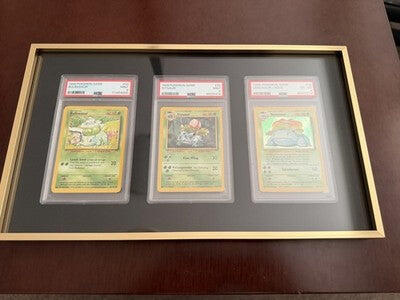
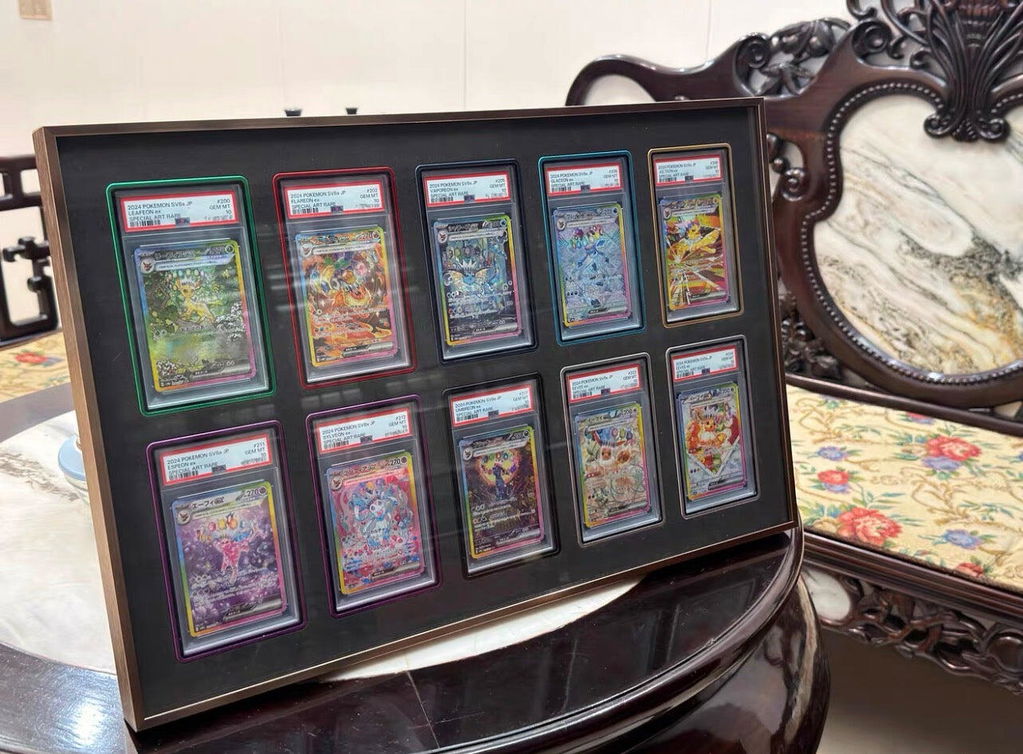


0 comments