


Choosing the best Yu-Gi-Oh! cards to display can mean very different things depending on the collection. Some collectors build around one monster such as Blue-Eyes White Dragon, Dark Magician, Dark Magician Girl, Red-Eyes Black Dragon, Stardust Dragon, Black Rose Dragon, Galaxy-Eyes Photon Dragon or Elemental HERO Neos. Others concentrate on a particular archetype, expansion, rarity, anime era, summoning mechanic or card treatment.
There are also collections built around the Egyptian God Cards, Exodia, HERO monsters, Cyber Dragons, Signer Dragons, Number monsters, Toon monsters, Ghost Rares, Ultimate Rares, Collector's Rares, Starlight Rares, Quarter Century Secret Rares, vintage 1st Edition cards, Japanese OCG cards, promotional cards, tournament cards, alternate artworks or complete sets such as Legend of Blue Eyes White Dragon, Metal Raiders, Magician's Force and Invasion of Chaos.
The best Yu-Gi-Oh! cards to display are therefore not necessarily the strongest competitive cards or the most expensive Yu-Gi-Oh! cards. A collection often works better when the cards have a clear connection, whether that comes from a character, monster family, archetype, set, rarity, era, artwork, card type or collecting goal.
Yu-Gi-Oh! has accumulated decades of cards across the OCG and TCG, covering the original Duel Monsters period, GX, 5D's, ZEXAL, ARC-V, VRAINS and the continually expanding modern card game. That gives collectors an enormous number of ways to build a collection around specific monsters, characters, card series, rarities and release periods.
This guide focuses on Yu-Gi-Oh! cards as physical collectibles. It covers major monsters, popular cards, sets, rarities, archetypes, characters, anime eras, card types, alternate artworks, promotional cards, vintage releases and collection ideas that can be used when planning a small display or a much larger Yu-Gi-Oh! card collection.
What Makes a Yu-Gi-Oh! Card Good to Display?
A good Yu-Gi-Oh! display normally begins with a clear collecting rule.
That rule could be as simple as collecting different Blue-Eyes White Dragon artworks or as broad as building a collection containing one ace monster from every major Yu-Gi-Oh! anime era.
Other collectors might concentrate on:
- one monster
- one archetype
- one anime character
- one booster set
- one rarity
- one summoning mechanic
- one monster Type
- one Attribute
- one language or region
- one release era
- 1st Edition cards
- promotional cards
- tournament cards
- alternate artwork cards
- graded Yu-Gi-Oh! cards
Yu-Gi-Oh! is particularly well suited to this type of collecting because many of its most famous monsters have been printed repeatedly across different sets and rarities.
Blue-Eyes White Dragon, Dark Magician, Dark Magician Girl, Red-Eyes Black Dragon, Cyber Dragon and Stardust Dragon can each support substantial collections by themselves.
At the same time, naturally connected groups such as the Egyptian God Cards, Sacred Beasts, Exodia pieces, Signer Dragons and Dimension Dragons make it possible to build much smaller collections with an obvious structure.
Popular Yu-Gi-Oh! Cards and Monsters to Collect
Some Yu-Gi-Oh! monsters have become collecting categories in their own right. They appear across multiple expansions, promotional products, rarity treatments and alternate artworks, making them useful starting points for both new and established collectors.
Blue-Eyes White Dragon
Blue-Eyes White Dragon is one of the most recognisable Yu-Gi-Oh! cards ever printed and remains one of the largest individual collecting subjects in the game.
Collectors can concentrate on vintage Blue-Eyes White Dragon cards, Starter Deck versions, booster-set printings, promotional versions, alternate artworks, Japanese OCG cards, modern anniversary cards or premium rarity treatments.
Searches around Blue-Eyes collecting frequently involve terms such as LOB Blue-Eyes White Dragon, Legend of Blue Eyes White Dragon Blue-Eyes, SDK Blue-Eyes White Dragon, Starter Deck Kaiba Blue-Eyes, 1st Edition Blue-Eyes White Dragon, Ghost Rare Blue-Eyes, Ultimate Rare Blue-Eyes, Secret Rare Blue-Eyes and Quarter Century Blue-Eyes cards.
A larger Blue-Eyes collection can expand into related monsters including Blue-Eyes Alternative White Dragon, Blue-Eyes Chaos MAX Dragon, Blue-Eyes Ultimate Dragon, Neo Blue-Eyes Ultimate Dragon, Blue-Eyes Spirit Dragon, Azure-Eyes Silver Dragon, Deep-Eyes White Dragon, Blue-Eyes Jet Dragon, Dictator of D., The White Stone of Ancients and The White Stone of Legend.
Collectors can also build around different artworks of Blue-Eyes White Dragon rather than different monsters. This creates a focused display where every card shares the same monster but represents a different period in Yu-Gi-Oh! printing history.
Dark Magician
Dark Magician is the signature monster most closely associated with Yugi Muto and Atem and is one of the defining Spellcaster cards in Yu-Gi-Oh!.
Like Blue-Eyes White Dragon, Dark Magician has appeared across numerous artworks, products, rarities and promotional releases.
A Dark Magician collection can include the original monster alongside Dark Magician Girl, Magician of Black Chaos, Dark Magician of Chaos, Palladium Oracle Mahad and later Dark Magician Fusion Monsters.
Support cards such as Dark Magical Circle, Eternal Soul, Magician Navigation, Magician's Rod, Soul Servant and The Eye of Timaeus can expand a monster-focused display into a complete Dark Magician archetype collection.
Dark Magician Girl
Dark Magician Girl has become a major collecting category independent of Dark Magician.
The card has appeared with multiple artworks, rarity treatments, anniversary releases and promotional versions.
A Dark Magician Girl collection might compare English TCG printings with Japanese OCG releases or concentrate specifically on alternate artwork cards.
Collectors interested in the wider theme can add cards such as Magician's Valkyria, Chocolate Magician Girl, Berry Magician Girl, Apple Magician Girl, Lemon Magician Girl and Kiwi Magician Girl.
Red-Eyes Black Dragon
Red-Eyes Black Dragon is closely associated with Joey Wheeler and remains one of the most famous original Duel Monsters cards.
The Red-Eyes theme has expanded significantly beyond the original Normal Monster.
Related cards include Red-Eyes Darkness Metal Dragon, Red-Eyes Black Flare Dragon, Red-Eyes Flare Metal Dragon, Red-Eyes Slash Dragon, Meteor Black Comet Dragon, Black Metal Dragon and Red-Eyes Fusion.
Collectors can build a vintage Red-Eyes display, a modern Red-Eyes archetype collection or a mixed chronological collection showing how the theme developed across different eras.
Exodia the Forbidden One
Exodia provides one of the clearest naturally structured collections in Yu-Gi-Oh! because the original win condition uses five separate cards:
- Exodia the Forbidden One
- Right Arm of the Forbidden One
- Left Arm of the Forbidden One
- Right Leg of the Forbidden One
- Left Leg of the Forbidden One
A matching set of the five Exodia pieces is one of the most obvious five-card Yu-Gi-Oh! collection ideas.
Collectors can search for matching set codes and rarities or deliberately compare Exodia pieces from different periods.
The collection can also expand with Exodia Necross, The Legendary Exodia Incarnate, Exodius the Ultimate Forbidden Lord and other Forbidden One support cards.
The Egyptian God Cards
The Egyptian God Cards form another instantly recognisable Yu-Gi-Oh! collection.
- Slifer the Sky Dragon
- Obelisk the Tormentor
- The Winged Dragon of Ra
The three cards are strongly associated with the Battle City storyline and can be collected across promotional versions, playable printings, anniversary releases and different rarities.
The Winged Dragon of Ra can also be expanded into a larger group using The Winged Dragon of Ra - Sphere Mode and The Winged Dragon of Ra - Immortal Phoenix.
Collectors interested in Egyptian-themed cards can place the God Cards alongside Exodia, Gravekeeper's cards and other cards connected to the ancient Egyptian setting of the original series.
The Sacred Beasts
The three Sacred Beasts from Yu-Gi-Oh! GX form another natural three-card collection:
- Uria, Lord of Searing Flames
- Hamon, Lord of Striking Thunder
- Raviel, Lord of Phantasms
They can be displayed as a trio or expanded with Armityle the Chaos Phantasm, Raviel, Lord of Phantasms - Shimmering Scraper and later Sacred Beast support.
Black Luster Soldier
Black Luster Soldier is one of the most recognisable Ritual monsters from the early Yu-Gi-Oh! era.
Collectors can build around Black Luster Soldier itself or include Black Luster Soldier - Envoy of the Beginning and later versions of the theme.
The contrast between the original Ritual Monster and the later Chaos-era versions makes Black Luster Soldier particularly useful for a vintage-to-modern collection.
Chaos Emperor Dragon - Envoy of the End
Chaos Emperor Dragon - Envoy of the End is one of the defining cards associated with the famous Chaos era of early competitive Yu-Gi-Oh!.
It naturally pairs with Black Luster Soldier - Envoy of the Beginning and cards from Invasion of Chaos.
Jinzo
Jinzo is closely associated with Joey Wheeler and Pharaoh's Servant and remains one of the most recognisable early Effect Monsters.
Collectors can focus on early Jinzo printings, different rarities, promotional versions or related Jinzo support cards.
Summoned Skull
Summoned Skull is another classic Yugi-associated monster with strong links to the earliest period of Yu-Gi-Oh! collecting.
It works particularly well in vintage Duel Monsters collections alongside Dark Magician, Celtic Guardian, Gaia the Fierce Knight and Kuriboh.
Relinquished
Relinquished is closely associated with Maximillion Pegasus and the Duelist Kingdom era.
It can be combined with Thousand-Eyes Restrict, Millennium-Eyes Restrict and Toon cards to create a wider Pegasus-themed collection.
Popular Yu-Gi-Oh! GX Cards to Collect
Yu-Gi-Oh! GX introduced a large number of monsters and archetypes that remain popular with collectors.
Elemental HERO Flame Wingman
Elemental HERO Flame Wingman is one of Jaden Yuki's most recognisable early Fusion Monsters.
It fits naturally alongside Elemental HERO Avian, Elemental HERO Burstinatrix and later Flame Wingman variants.
Elemental HERO Shining Flare Wingman
Elemental HERO Shining Flare Wingman is another major early HERO Fusion Monster and can form part of an Elemental HERO Fusion collection.
Elemental HERO Neos
Elemental HERO Neos became Jaden's primary ace monster later in GX.
A Neos collection can include Elemental HERO Neos, Aqua Neos, Air Neos, Dark Neos, Flare Neos, Glow Neos, Grand Neos, Magma Neos, Storm Neos, Chaos Neos, Rainbow Neos, Brave Neos and Nebula Neos.
Cyber Dragon
Cyber Dragon is one of the defining monsters of the GX period and has remained relevant through years of additional support.
A Cyber Dragon collection can include:
- Cyber Dragon
- Cyber Dragon Zwei
- Cyber Dragon Drei
- Cyber Dragon Core
- Cyber Dragon Herz
- Cyber Dragon Nachster
- Cyber Twin Dragon
- Cyber End Dragon
- Cyber Dragon Nova
- Cyber Dragon Infinity
- Chimeratech Overdragon
- Chimeratech Rampage Dragon
- Chimeratech Megafleet Dragon
Cyber End Dragon
Cyber End Dragon is one of the most recognisable GX Fusion Monsters and is closely associated with Zane Truesdale.
It can form a three-card sequence with Cyber Dragon and Cyber Twin Dragon or sit within a much larger Cyber Dragon collection.
Destiny HERO - Plasma
Destiny HERO - Plasma is one of the defining monsters associated with Aster Phoenix.
A Destiny HERO collection can include Plasma, Dogma, Malicious, Diamond Dude, Dasher and later cards such as Destiny HERO - Destroyer Phoenix Enforcer.
Rainbow Dragon
Rainbow Dragon is strongly associated with Jesse Anderson and the Crystal Beast archetype.
It can be displayed with the seven original Crystal Beasts or alongside later Rainbow Dragon forms.
Ancient Gear Golem
Ancient Gear Golem is strongly associated with Dr. Crowler and remains the defining monster of the Ancient Gear archetype.
Related cards include Ultimate Ancient Gear Golem, Chaos Ancient Gear Giant and Ancient Gear Howitzer.
Popular Yu-Gi-Oh! 5D's Cards to Collect
Stardust Dragon
Stardust Dragon is Yusei Fudo's defining ace monster and one of the most famous Synchro Monsters.
Collectors can build around Stardust Dragon itself or expand with Shooting Star Dragon, Shooting Quasar Dragon, Majestic Star Dragon, Cosmic Blazar Dragon, Stardust Sifr Divine Dragon and related Synchron cards.
Stardust Dragon has also appeared in collectible rarity treatments that make it relevant to Ghost Rare, Ultimate Rare and premium rarity collections.
Red Dragon Archfiend
Red Dragon Archfiend is Jack Atlas's signature monster.
Later related cards include Scarlight Red Dragon Archfiend, Hot Red Dragon Archfiend Abyss, Hot Red Dragon Archfiend Bane and Red Supernova Dragon.
Black Rose Dragon
Black Rose Dragon is Akiza Izinski's signature Synchro Monster and one of the defining cards of the early Synchro era.
Collectors can combine different Black Rose Dragon printings with Rose Dragon cards, Plant monsters or other Signer Dragons.
Ancient Fairy Dragon
Ancient Fairy Dragon is one of the Signer Dragons and is closely associated with Luna.
Black-Winged Dragon
Black-Winged Dragon is associated with Crow Hogan and can be combined with Blackwing monsters.
Life Stream Dragon
Life Stream Dragon is associated with Leo and completes the larger six-Signer-Dragon grouping.
Popular Yu-Gi-Oh! ZEXAL Cards to Collect
Number 39: Utopia
Number 39: Utopia is Yuma Tsukumo's defining ace monster and one of the most recognisable Xyz Monsters.
Collectors can expand into Number C39: Utopia Ray, Number S39: Utopia the Lightning and numerous other Utopia forms.
Number Monsters
The Number monsters provide one of the largest possible Yu-Gi-Oh! collecting projects.
A collector might focus on individual Numbers, complete numerical sequences, character-associated Numbers or premium rarity versions.
Galaxy-Eyes Photon Dragon
Galaxy-Eyes Photon Dragon is Kite Tenjo's signature monster.
Related cards include Neo Galaxy-Eyes Photon Dragon, Number 62: Galaxy-Eyes Prime Photon Dragon, Galaxy-Eyes Cipher Dragon, Galaxy-Eyes Full Armor Photon Dragon and other Photon and Galaxy monsters.
Popular Yu-Gi-Oh! ARC-V Cards to Collect
Odd-Eyes Pendulum Dragon
Odd-Eyes Pendulum Dragon is Yuya Sakaki's defining monster and one of the most recognisable Pendulum cards.
It can anchor an Odd-Eyes, Performapal or Pendulum Magician collection.
The Four Dimension Dragons
The four Dimension Dragons provide an especially strong four-card collecting theme:
- Odd-Eyes Pendulum Dragon
- Dark Rebellion Xyz Dragon
- Clear Wing Synchro Dragon
- Starving Venom Fusion Dragon
The group combines four major summoning styles in one compact collection.
Dark Rebellion Xyz Dragon
Dark Rebellion Xyz Dragon is associated with Yuto and provides a clear Xyz counterpart to Odd-Eyes Pendulum Dragon.
Clear Wing Synchro Dragon
Clear Wing Synchro Dragon is associated with Yugo and can form part of a Synchro Dragon or Dimension Dragon collection.
Starving Venom Fusion Dragon
Starving Venom Fusion Dragon is associated with Yuri and provides the Fusion component of the Dimension Dragon group.
Popular Yu-Gi-Oh! VRAINS Cards to Collect
Decode Talker
Decode Talker became one of the defining monsters associated with Playmaker and the early Link Summoning period.
Firewall Dragon
Firewall Dragon is another major Playmaker-associated monster and one of the most recognisable Cyberse cards.
Accesscode Talker
Accesscode Talker became a famous modern Link Monster and fits naturally into a Code Talker or Cyberse collection.
Borreload Dragon
Borreload Dragon is associated with Revolver and provides a strong centrepiece for Rokket and Borrel collections.
Related cards include Borrelsword Dragon, Borrelend Dragon, Borreload Savage Dragon and Borreload Furious Dragon.
Popular Yu-Gi-Oh! Archetypes to Collect
Archetype collecting is one of the most natural ways to organise Yu-Gi-Oh! cards. The cards already share names, artwork themes, support cards and gameplay connections.
Blue-Eyes
The Blue-Eyes archetype can range from a few iconic Dragons to dozens of monsters, support cards and alternate artworks.
Dark Magician
The Dark Magician theme can combine Dark Magician, Dark Magician Girl, related Spellcasters, Fusion Monsters and signature Spell and Trap support.
Red-Eyes
Red-Eyes collectors can combine vintage Red-Eyes Black Dragon cards with later Fusion, Xyz and support cards.
HERO
HERO is one of the largest and most recognisable Yu-Gi-Oh! archetype families.
It includes Elemental HERO, Destiny HERO, Evil HERO, Vision HERO, Masked HERO and Xtra HERO cards.
Elemental HERO
Early Elemental HERO collections might include Avian, Burstinatrix, Clayman, Sparkman and Bubbleman.
Fusion-focused collections can include Flame Wingman, Shining Flare Wingman, Thunder Giant, Rampart Blaster, Wildedge and many later HERO Fusion Monsters.
Destiny HERO
Destiny HERO collections are strongly associated with Aster Phoenix and can include Plasma, Dogma, Malicious, Dasher and Destroyer Phoenix Enforcer.
Masked HERO
Masked HERO cards provide another distinct HERO collecting path, with cards such as Masked HERO Dark Law, Acid and Anki.
Cyber Dragon
Cyber Dragon remains one of the strongest GX-era themes for collectors because it spans original GX cards and substantial later support.
Crystal Beast
The seven original Crystal Beasts create a natural group:
- Crystal Beast Ruby Carbuncle
- Crystal Beast Amethyst Cat
- Crystal Beast Emerald Tortoise
- Crystal Beast Topaz Tiger
- Crystal Beast Amber Mammoth
- Crystal Beast Cobalt Eagle
- Crystal Beast Sapphire Pegasus
Rainbow Dragon can then sit alongside the seven monsters as the archetype's defining boss monster.
Toon
Toon cards are strongly associated with Maximillion Pegasus.
Popular Toon cards include Blue-Eyes Toon Dragon, Toon Dark Magician Girl, Toon Summoned Skull, Toon Mermaid, Toon Dark Magician and Toon Black Luster Soldier.
Blackwing
Blackwing cards are closely associated with Crow Hogan and the 5D's era.
Popular examples include Blackwing - Gale the Whirlwind, Blackwing - Bora the Spear, Blackwing - Shura the Blue Flame and Black-Winged Dragon.
Six Samurai
The Six Samurai and Legendary Six Samurai cards provide a large Warrior-based collecting theme with a consistent Japanese-inspired design.
Lightsworn
Lightsworn is one of the best-known archetypes from the late GX and early Synchro period.
Judgment Dragon is the defining monster, supported by cards such as Lumina, Lightsworn Summoner, Lyla, Lightsworn Sorceress and Jain, Lightsworn Paladin.
Gladiator Beast
Gladiator Beast cards became highly recognisable through their competitive history.
Gladiator Beast Gyzarus and Gladiator Beast Heraklinos are among the most recognisable Extra Deck cards from the archetype.
Gravekeeper's
Gravekeeper's is one of the game's long-running archetypes and centres on Necrovalley.
Important cards include Gravekeeper's Spy, Gravekeeper's Commandant, Gravekeeper's Chief and Gravekeeper's Descendant.
Dark World
Dark World is a DARK Fiend archetype with cards such as Grapha, Dragon Lord of Dark World, Snoww, Unlight of Dark World and Reign-Beaux.
Ancient Gear
Ancient Gear collections can centre on Ancient Gear Golem and expand into Ultimate Ancient Gear Golem, Chaos Ancient Gear Giant and other Machine monsters.
Black Luster Soldier
Black Luster Soldier cards span Ritual, Chaos and later support releases, making the theme useful for collectors interested in both vintage and modern Yu-Gi-Oh!.
Harpie
Harpie cards are strongly associated with Mai Valentine.
Harpie Lady, Harpie Lady Sisters, Harpie's Pet Dragon and later Harpie support can create a Duel Monsters character collection or standalone archetype display.
Amazoness
Amazoness cards are another theme closely connected with Mai Valentine and have received support across multiple eras.
Ojama
Ojama cards are associated with Chazz Princeton and can form a distinctive GX character collection around Ojama Yellow, Ojama Green, Ojama Black and their Fusion Monsters.
Armed Dragon
Armed Dragon cards are also associated with Chazz Princeton and offer a level-based progression that works naturally in sequence.
Volcanic
Volcanic cards are associated with Axel Brodie and can be collected around Volcanic Doomfire, Volcanic Rocket and Blaze Accelerator support.
Fossil
Fossil Fusion cards provide another GX-era theme connected to Jim Crocodile Cook.
Infernity
Infernity cards are associated with Kalin Kessler and remain a recognisable 5D's-era archetype.
Resonator
Resonator monsters naturally complement Red Dragon Archfiend cards in a Jack Atlas collection.
Synchron
Synchron cards such as Junk Synchron, Quickdraw Synchron and other Tuners work naturally alongside Yusei's Warrior and Stardust monsters.
Synchron and Junk
A larger Yusei collection can combine Junk Warrior, Junk Synchron, Nitro Warrior, Turbo Warrior, Road Warrior, Stardust Dragon and later Synchro evolutions.
Photon and Galaxy
Photon and Galaxy cards are strongly associated with Kite Tenjo and centre around Galaxy-Eyes Photon Dragon.
Gagaga
Gagaga monsters are closely associated with Yuma and include cards such as Gagaga Magician and Gagaga Girl.
Performapal
Performapal cards are associated with Yuya and can be combined with Odd-Eyes and Pendulum Magician cards.
Pendulum Magician
Pendulum Magicians provide another ARC-V collection and can also be combined with Dark Magician-inspired or spellcaster-themed cards.
Speedroid
Speedroid cards are associated with Yugo and work naturally with Clear Wing Synchro Dragon.
Predaplant
Predaplant cards are associated with Yuri and can be combined with Starving Venom Fusion Dragon.
Phantom Knights
The Phantom Knights are associated with Yuto and naturally complement Dark Rebellion Xyz Dragon.
Code Talker
Code Talker collections can include Decode Talker, Transcode Talker, Encode Talker and Accesscode Talker.
Rokket
Rokket cards are closely associated with Revolver and work naturally alongside Borrel monsters.
Salamangreat
Salamangreat is one of the defining VRAINS-era archetypes and is associated with Soulburner.
Sky Striker
Sky Striker became one of the most recognisable modern Yu-Gi-Oh! archetypes.
Collectors can build around Sky Striker Ace - Raye, Sky Striker Ace - Roze and the archetype's various Link Monsters.
Dragonmaid
Dragonmaid cards combine humanoid and Dragon forms and have become a popular modern collector theme.
House Dragonmaid, Dragonmaid Sheou and the individual Dragonmaid monsters provide a visually consistent group.
Shaddoll
Shaddoll was one of the defining Fusion archetypes of the Duelist Alliance era.
El Shaddoll Construct, El Shaddoll Winda and El Shaddoll Shekhinaga are obvious focal points.
Burning Abyss
Burning Abyss uses DARK Fiend monsters inspired by characters from Dante's Divine Comedy.
Dante, Traveler of the Burning Abyss is the best-known card associated with the archetype.
Nekroz
Nekroz provides a strong Ritual Monster collecting theme and became particularly well known through competitive Yu-Gi-Oh!.
Qliphort
Qliphort is one of the major archetypes associated with the early Pendulum era.
Infernoid
Infernoid cards provide another distinct theme associated with the Duelist Alliance period and surrounding sets.
Branded
Branded cards form part of a large interconnected modern storyline centred on Fallen of Albaz.
Despia
Despia cards connect naturally with Branded and include Aluber the Jester of Despia and several Fusion Monsters.
Fallen of Albaz
Fallen of Albaz can anchor a larger lore-based collection featuring Albion the Branded Dragon, Lubellion the Searing Dragon, Mirrorjade the Iceblade Dragon and related cards.
Dogmatika
Dogmatika forms another part of the wider Albaz storyline and can be collected independently or as part of a larger lore collection.
Tri-Brigade
Tri-Brigade cards connect with the same broader storyline and can create a Beast, Beast-Warrior and Winged Beast-focused modern collection.
Swordsoul
Swordsoul provides a modern Synchro collection with monsters such as Swordsoul Grandmaster - Chixiao and Swordsoul Supreme Sovereign - Chengying.
Kashtira
Kashtira became a major modern archetype associated with Xyz Summoning and cards such as Kashtira Fenrir and Kashtira Arise-Heart.
Labrynth
Labrynth provides a modern Trap-focused collecting theme with cards such as Lovely Labrynth of the Silver Castle and Lady Labrynth of the Silver Castle.
Runick
Runick cards provide a distinctive Spell-heavy theme that can be collected independently or alongside other modern archetypes.
Spright
Spright became one of the defining modern archetypes of its period and can be collected around cards such as Spright Blue, Spright Jet and Gigantic Spright.
Tearlaments
Tearlaments became another major modern archetype and can be collected around its Main Deck monsters and Fusion Monsters.
Vanquish Soul
Vanquish Soul offers a visually distinctive modern archetype inspired by fighting-game concepts.
Snake-Eye
Snake-Eye cards provide another modern collecting direction and can be combined with related FIRE themes.
Yu-Gi-Oh! Cards by Anime Character
Character collecting is particularly important in Yu-Gi-Oh! because many famous monsters are closely linked to individual duelists.
Yugi Muto and Atem Cards
A Yugi or Atem collection can include Dark Magician, Dark Magician Girl, Buster Blader, Summoned Skull, Gaia the Fierce Knight, Black Luster Soldier, Kuriboh, Celtic Guardian, the Magnet Warriors, Slifer the Sky Dragon and Exodia.
Seto Kaiba Cards
A Kaiba collection naturally centres on Blue-Eyes White Dragon.
Other cards associated with Kaiba include Blue-Eyes Ultimate Dragon, XYZ-Dragon Cannon, Vorse Raider, Kaiser Sea Horse and Obelisk the Tormentor.
Joey Wheeler Cards
Joey collections can include Red-Eyes Black Dragon, Jinzo, Gearfried the Iron Knight, Flame Swordsman, Thousand Dragon, Baby Dragon, Time Wizard and Gilford the Lightning.
Tea Gardner Cards
Tea-themed collections can focus on cards associated with her anime appearances and Fairy or Spellcaster monsters.
Mai Valentine Cards
Mai Valentine collections naturally revolve around Harpie Lady, Harpie Lady Sisters, Harpie's Pet Dragon and Amazoness cards.
Maximillion Pegasus Cards
Pegasus-themed collections can combine Relinquished, Thousand-Eyes Restrict, Toon World and famous Toon monsters.
Marik Ishtar Cards
The Winged Dragon of Ra is the defining Marik card.
Other cards associated with Marik include Lava Golem and various DARK, Fiend and control-oriented cards used during Battle City.
Bakura Cards
Bakura collections can centre on Destiny Board, the Spirit Message cards and DARK Fiend monsters.
Jaden Yuki Cards
Jaden collections can include Elemental HERO cards, Neo-Spacians, Elemental HERO Neos and major Fusion Monsters such as Flame Wingman and Shining Flare Wingman.
Zane Truesdale Cards
Cyber Dragon, Cyber Twin Dragon and Cyber End Dragon are the obvious foundation of a Zane collection.
Aster Phoenix Cards
Destiny HERO monsters form the core of an Aster Phoenix collection.
Jesse Anderson Cards
Crystal Beast monsters and Rainbow Dragon form the basis of a Jesse Anderson collection.
Chazz Princeton Cards
Chazz collections can include Ojama cards, Armed Dragon monsters and VWXYZ Machine monsters.
Yusei Fudo Cards
A Yusei collection can include Stardust Dragon, Junk Warrior, Junk Synchron, Nitro Warrior, Turbo Warrior, Road Warrior, Shooting Star Dragon and Shooting Quasar Dragon.
Jack Atlas Cards
Jack Atlas collections naturally revolve around Red Dragon Archfiend, Resonator monsters and later Red Dragon Archfiend upgrades.
Akiza Izinski Cards
Black Rose Dragon is the defining Akiza card and can be combined with Plant monsters and Rose Dragon support.
Crow Hogan Cards
Blackwing monsters and Black-Winged Dragon form the basis of a Crow Hogan collection.
Yuma Tsukumo Cards
Number 39: Utopia and its upgrades are central to a Yuma collection.
Kite Tenjo Cards
Galaxy-Eyes Photon Dragon and Photon or Galaxy cards form the main Kite collection.
Yuya Sakaki Cards
Odd-Eyes Pendulum Dragon, Performapal monsters and Pendulum Magicians form the core of a Yuya collection.
Yuto Cards
Dark Rebellion Xyz Dragon and Phantom Knights are strongly associated with Yuto.
Yugo Cards
Clear Wing Synchro Dragon and Speedroid cards are associated with Yugo.
Yuri Cards
Starving Venom Fusion Dragon and Predaplant cards are associated with Yuri.
Playmaker Cards
Decode Talker, Firewall Dragon, Cyberse monsters and Code Talkers provide the main structure for a Playmaker collection.
Revolver Cards
Rokket monsters and Borrel Dragons form the centre of a Revolver collection.
Soulburner Cards
Salamangreat monsters are strongly associated with Soulburner and the VRAINS era.
Important Vintage Yu-Gi-Oh! Sets
Vintage set collecting is a major part of the Yu-Gi-Oh! hobby. Early booster sets contain many of the cards most strongly associated with the original anime and the first years of the TCG.
Legend of Blue Eyes White Dragon
Legend of Blue Eyes White Dragon, usually abbreviated as LOB, is the first major Yu-Gi-Oh! TCG booster set and one of the most recognisable names in vintage Yu-Gi-Oh! collecting.
Important cards associated with LOB include Blue-Eyes White Dragon, Dark Magician and all five original pieces of Exodia.
LOB 1st Edition cards are a distinct collecting category, while Unlimited Edition and later reprint versions provide more accessible ways to build an LOB-focused collection.
Metal Raiders
Metal Raiders contains numerous famous early cards including Summoned Skull, Mirror Force and Gate Guardian.
It also contains many monsters associated with the Duelist Kingdom and early Battle City period.
Magic Ruler / Spell Ruler
The set originally released in the TCG as Magic Ruler was later known as Spell Ruler.
It introduced many important Spell Cards and includes Relinquished and other cards associated with early Ritual strategies.
Pharaoh's Servant
Pharaoh's Servant contains iconic cards such as Jinzo and Thousand-Eyes Restrict.
It remains one of the most recognisable early booster sets for collectors.
Labyrinth of Nightmare
Labyrinth of Nightmare contains DARK and Fiend-themed cards as well as numerous cards associated with the original anime era.
Legacy of Darkness
Legacy of Darkness expanded several early themes and contains cards relevant to Dragon, Warrior and character-based collections.
Pharaonic Guardian
Pharaonic Guardian is particularly important for Gravekeeper's and Necrovalley collectors.
Magician's Force
Magician's Force is one of the most recognisable early Yu-Gi-Oh! sets because of its Spellcaster focus and association with Dark Magician Girl.
Dark Crisis
Dark Crisis contains numerous DARK, Fiend and character-associated cards and forms part of the classic early TCG set sequence.
Invasion of Chaos
Invasion of Chaos is one of the defining vintage Yu-Gi-Oh! sets.
Chaos Emperor Dragon - Envoy of the End and Black Luster Soldier - Envoy of the Beginning are two of the most famous cards associated with the set.
Ancient Sanctuary
Ancient Sanctuary contains numerous LIGHT, Fairy and ancient-themed cards and closes the earliest sequence of major TCG booster sets.
Important Yu-Gi-Oh! GX Era Sets
Soul of the Duelist
Soul of the Duelist helped mark the transition into a newer era of Yu-Gi-Oh! card design and contains several cards associated with early GX-period strategies.
Rise of Destiny
Rise of Destiny continued this transition and contains additional Machine, Warrior and character-associated cards.
Flaming Eternity
Flaming Eternity contains numerous cards from the period immediately preceding the full GX-era focus.
The Lost Millennium
The Lost Millennium is strongly associated with the beginning of the Elemental HERO era.
Cybernetic Revolution
Cybernetic Revolution is particularly important for Cyber Dragon collectors.
Cyber Dragon and Cyber End Dragon are among its most recognisable cards.
Elemental Energy
Elemental Energy expanded Elemental HERO and introduced further themes associated with Yu-Gi-Oh! GX.
Shadow of Infinity
Shadow of Infinity is especially important for Sacred Beast collectors because Uria, Hamon and Raviel are strongly associated with the set.
Enemy of Justice
Enemy of Justice includes additional HERO and GX-era cards and is relevant to collectors following the evolution of the early GX card pool.
Power of the Duelist
Power of the Duelist expanded Neo-Spacian and Elemental HERO themes.
Cyberdark Impact
Cyberdark Impact is important for collectors interested in Cyberdark monsters and later GX-era card design.
Strike of Neos
Strike of Neos continued the development of Elemental HERO Neos and related GX themes.
Force of the Breaker
Force of the Breaker contains additional archetypes and cards associated with the later GX period.
Tactical Evolution
Tactical Evolution introduced new rarity and card-design elements and contains several notable GX-era cards.
Gladiator's Assault
Gladiator's Assault is especially important for Gladiator Beast collectors.
Phantom Darkness
Phantom Darkness contains several DARK-focused cards and is one of the more recognisable late GX-era sets.
Light of Destruction
Light of Destruction is especially relevant to Lightsworn collectors and contains Judgment Dragon and other important cards from the archetype.
Important Yu-Gi-Oh! 5D's and Synchro Era Sets
The Duelist Genesis
The Duelist Genesis introduced Synchro Monsters into the TCG era and contains Stardust Dragon.
Crossroads of Chaos
Crossroads of Chaos includes Black Rose Dragon and is closely associated with Plant and early 5D's strategies.
Crimson Crisis
Crimson Crisis continued the 5D's period with additional Synchro Monsters and DARK-themed cards.
Raging Battle
Raging Battle is especially relevant to Blackwing collectors.
Ancient Prophecy
Ancient Prophecy contains Ancient Fairy Dragon and additional Signer-era cards.
Stardust Overdrive
Stardust Overdrive continued the early 5D's period and contains further Synchro and anime-associated cards.
Absolute Powerforce
Absolute Powerforce is closely associated with Jack Atlas and Red Dragon Archfiend-related themes.
The Shining Darkness
The Shining Darkness contains additional Blackwing and 5D's-era cards.
Duelist Revolution
Duelist Revolution continued the Synchro era and introduced cards that became significant to competitive Yu-Gi-Oh!.
Starstrike Blast
Starstrike Blast contains further Synchro-era cards and archetype support.
Storm of Ragnarok
Storm of Ragnarok includes Nordic and Aesir cards and provides another distinctive 5D's collection theme.
Extreme Victory
Extreme Victory represents the final core booster set of the 5D's era and contains additional Synchro and character-associated cards.
Important Yu-Gi-Oh! ZEXAL and Xyz Era Sets
Generation Force
Generation Force helped establish the Xyz Summoning era and introduced numerous black-bordered Xyz Monsters.
Photon Shockwave
Photon Shockwave is particularly relevant to Photon and Galaxy-Eyes collectors.
Order of Chaos
Order of Chaos includes additional Xyz-era monsters and character-associated cards.
Galactic Overlord
Galactic Overlord contains further Galaxy and Dragon-related cards from the ZEXAL period.
Return of the Duelist
Return of the Duelist introduced and expanded several archetypes that became important during the Xyz era.
Abyss Rising
Abyss Rising is strongly associated with WATER themes and contains several notable Xyz-era archetypes.
Cosmo Blazer
Cosmo Blazer continued the ZEXAL era with additional Fire, Xyz and archetype support.
Lord of the Tachyon Galaxy
Lord of the Tachyon Galaxy contains several major Dragon and Xyz cards and is closely associated with later ZEXAL themes.
Judgment of the Light
Judgment of the Light includes additional Number and Synchro-related support during the later ZEXAL period.
Shadow Specters
Shadow Specters introduced and supported several darker supernatural archetypes.
Legacy of the Valiant
Legacy of the Valiant contains further late-ZEXAL themes and archetype support.
Primal Origin
Primal Origin closed the ZEXAL core set period and contains additional Xyz and archetype cards.
Important Yu-Gi-Oh! ARC-V and Pendulum Era Sets
Duelist Alliance
Duelist Alliance is one of the most important modern-era Yu-Gi-Oh! sets because it introduced or expanded major archetypes including Shaddoll.
The New Challengers
The New Challengers continued the early Pendulum period and expanded several Duelist Alliance-era themes.
Secrets of Eternity
Secrets of Eternity contains additional Pendulum-era cards and archetype support.
Crossed Souls
Crossed Souls continued the ARC-V period with additional Fusion, Synchro, Xyz and Pendulum support.
Clash of Rebellions
Clash of Rebellions contains several cards associated with ARC-V characters and later archetypes.
Dimension of Chaos
Dimension of Chaos continued the ARC-V period with further Pendulum and Extra Deck development.
Breakers of Shadow
Breakers of Shadow contains additional archetype support and major Pendulum-era cards.
Shining Victories
Shining Victories is especially notable for collectors because it includes support for Blue-Eyes and other major themes.
The Dark Illusion
The Dark Illusion contains support for Dark Magician and several other established and modern archetypes.
Invasion: Vengeance
Invasion: Vengeance introduced and expanded additional ARC-V-era strategies.
Raging Tempest
Raging Tempest contains several major archetype cards from the later Pendulum period.
Maximum Crisis
Maximum Crisis represents the closing part of the ARC-V core set era and contains numerous cards relevant to Pendulum collectors.
Important Yu-Gi-Oh! VRAINS and Link Era Sets
Code of the Duelist
Code of the Duelist began the Link Summoning core set era and introduced Cyberse and Link-focused cards.
Circuit Break
Circuit Break continued the early Link era with additional Cyberse and archetype support.
Extreme Force
Extreme Force expanded Link Summoning and introduced additional VRAINS-era cards.
Flames of Destruction
Flames of Destruction contains several important Link-era cards and archetypes.
Cybernetic Horizon
Cybernetic Horizon continued the Link era while also revisiting older themes.
Soul Fusion
Soul Fusion introduced and expanded multiple archetypes during the VRAINS period.
Savage Strike
Savage Strike contains Borreload Savage Dragon and several important cards from the later VRAINS era.
Dark Neostorm
Dark Neostorm expanded numerous Link-era archetypes and introduced additional Extra Deck monsters.
Rising Rampage
Rising Rampage continued the modern Link era with new archetypes and support.
Chaos Impact
Chaos Impact introduced additional archetypes and continued support for established themes.
Ignition Assault
Ignition Assault contains further VRAINS-era cards and modern archetype support.
Eternity Code
Eternity Code closed the main VRAINS-era core set sequence and contains Accesscode Talker and other recognisable modern cards.
Modern Yu-Gi-Oh! Sets and Collecting
Modern Yu-Gi-Oh! releases continue to introduce new archetypes while revisiting established monsters such as Blue-Eyes White Dragon, Dark Magician, Red-Eyes Black Dragon, HERO monsters and Cyber Dragon.
Modern collections are often built around premium rarity treatments, alternate artwork cards, lore-connected archetypes, tournament staples or complete archetype cores.
Rather than attempting to collect every modern Yu-Gi-Oh! card, many collectors choose one specific modern archetype or one rarity category and expand gradually.
Yu-Gi-Oh! Card Rarities Explained for Collectors
Rarity is one of the largest areas of Yu-Gi-Oh! collecting. The same card can exist in multiple rarity treatments, creating substantial differences in appearance even when the artwork is identical.
Common Yu-Gi-Oh! Cards
Common cards generally use standard printed card names and artwork without traditional holographic rarity treatments.
Commons remain important for complete sets, archetype collections and character collections.
Rare Yu-Gi-Oh! Cards
Traditional Rare cards typically feature a foil card name while the artwork itself remains non-holographic.
Super Rare Yu-Gi-Oh! Cards
Super Rare cards generally have holographic artwork with a standard card name.
Ultra Rare Yu-Gi-Oh! Cards
Ultra Rare cards traditionally combine holographic artwork with a foil card name.
Many famous early monsters were released as Ultra Rares, making the rarity especially important in vintage collecting.
Secret Rare Yu-Gi-Oh! Cards
Secret Rare cards traditionally use a diagonal holographic pattern and have appeared across many generations of Yu-Gi-Oh! products.
Vintage Secret Rares, modern Secret Rares and anniversary Secret Rare treatments can all form separate collecting themes.
Ultimate Rare Yu-Gi-Oh! Cards
Ultimate Rare is one of the most recognisable premium Yu-Gi-Oh! rarity treatments.
Ultimate Rare cards use textured foil effects that can extend through the artwork and other parts of the card depending on the release.
GX and 5D's-era Ultimate Rares are particularly important to collectors.
Popular Ultimate Rare collection themes include Elemental HERO monsters, Cyber Dragon cards, Synchro Monsters, iconic Spell and Trap cards and tournament-era Ultimate Rares.
Ghost Rare Yu-Gi-Oh! Cards
Ghost Rare cards use a distinctive holographic artwork treatment that can appear pale, reflective or three-dimensional depending on the viewing angle.
Ghost Rare collections are often built around famous Extra Deck monsters, Dragons and iconic cards.
Collector's Rare Yu-Gi-Oh! Cards
Collector's Rare cards use extensive textured foil detailing.
The rarity became particularly associated with specialist side sets and provides collectors with premium versions of monsters, Spell Cards and Trap Cards.
Starlight Rare Yu-Gi-Oh! Cards
Starlight Rare became one of the highest-profile modern rarity treatments.
The extensive holographic pattern makes Starlight Rares visually distinctive when multiple cards are displayed together.
Quarter Century Secret Rare Yu-Gi-Oh! Cards
Quarter Century Secret Rare cards became a major anniversary-era collecting category.
Many famous monsters, competitive cards and reprints have appeared in Quarter Century Secret Rare, allowing collectors to build anything from a small group of iconic cards to a large dedicated QCSR collection.
Prismatic Secret Rare Yu-Gi-Oh! Cards
Prismatic Secret Rare is another rarity term encountered across specific Yu-Gi-Oh! releases and regions.
Platinum Secret Rare Yu-Gi-Oh! Cards
Platinum Secret Rare treatments provide another high-foil option for collectors interested in modern reprints and premium finishes.
Gold Rare Yu-Gi-Oh! Cards
Gold Rare and related Gold-series treatments use gold-coloured foil elements and have appeared across dedicated products.
Gold rarity collections can be built around favourite monsters, staples or complete Gold Series releases.
Parallel Rare Yu-Gi-Oh! Cards
Parallel foil treatments have appeared in various Yu-Gi-Oh! products and regional releases.
They provide another collecting category for people interested in unusual foil patterns.
Mosaic Rare Yu-Gi-Oh! Cards
Mosaic Rare cards use a distinctive mosaic-style foil pattern and are associated with specific products.
Starfoil Rare Yu-Gi-Oh! Cards
Starfoil Rare uses a pattern of small reflective stars across the card and provides another easily recognisable rarity treatment.
Collecting Yu-Gi-Oh! Cards by Rarity
Rarity-based collecting works particularly well when the collection uses one consistent rule.
Examples include:
- Ghost Rare Dragons
- Ultimate Rare HERO cards
- Ultimate Rare Synchro Monsters
- Collector's Rare Spell Cards
- Starlight Rare monsters
- Quarter Century Secret Rare iconic cards
- Secret Rare vintage cards
- Ultra Rare Duel Monsters cards
- Gold Rare reprints
A different approach is to collect the same card in multiple rarities.
For example, a collector might build a Blue-Eyes White Dragon rarity display containing Ultra Rare, Secret Rare, Ghost Rare and Quarter Century versions.
1st Edition Yu-Gi-Oh! Cards
1st Edition cards are particularly important in vintage Yu-Gi-Oh! collecting.
Many early TCG sets were released in 1st Edition before later Unlimited Edition printings became available.
Collectors interested in sets such as Legend of Blue Eyes White Dragon, Metal Raiders, Pharaoh's Servant, Magician's Force and Invasion of Chaos often distinguish carefully between 1st Edition and Unlimited versions.
The exact set code, language, edition and printing should always be checked when identifying a vintage Yu-Gi-Oh! card.
Unlimited Edition Yu-Gi-Oh! Cards
Unlimited Edition cards provide another way to collect vintage sets and iconic monsters.
Although collectors often place additional emphasis on 1st Edition cards, Unlimited versions still represent important historical printings and can allow collectors to build complete vintage themes more practically.
Yu-Gi-Oh! Set Codes and Printings
Yu-Gi-Oh! cards use set codes that help identify the product or expansion where the card appeared.
For collectors, the set code can be just as important as the monster name because the same artwork may have been printed numerous times.
A Blue-Eyes White Dragon from one product may look almost identical to another version while belonging to a different release, rarity or print run.
When building a precise collection, collectors should record:
- card name
- set code
- language
- rarity
- edition
- artwork version
- condition
- grading company if graded
Yu-Gi-Oh! TCG vs OCG Cards
The Yu-Gi-Oh! Official Card Game began in Japan before the international Trading Card Game expanded into other regions.
OCG and TCG cards can differ in release schedules, product structure, rarity availability, artwork handling and promotional distribution.
Some collectors focus entirely on English-language TCG cards.
Others build Japanese OCG collections or compare the same monster across English and Japanese printings.
Blue-Eyes White Dragon, Dark Magician, Dark Magician Girl and Red-Eyes Black Dragon provide enough different releases to support substantial TCG-versus-OCG collections.
Japanese Yu-Gi-Oh! Cards
Japanese Yu-Gi-Oh! cards form a major collector category.
Collectors might focus on early OCG releases, Japanese promotional cards, alternate artworks, premium rarity treatments or Japanese versions of favourite monsters.
A Japanese Yu-Gi-Oh! collection can be built around one monster or used to compare regional printings across the history of the game.
Yu-Gi-Oh! Promotional Cards
Promotional cards have been distributed through many different channels throughout Yu-Gi-Oh! history.
Yu-Gi-Oh! Tin Promos
Collector tins have included promotional cards across numerous eras.
Tin promos can be collected by year, monster, character or complete product series.
Shonen Jump Promos
Shonen Jump promotional cards form a recognisable category of North American Yu-Gi-Oh! collecting.
Video Game Promos
Yu-Gi-Oh! video games have historically included promotional cards.
Collectors can build displays around cards bundled with particular games or compare video-game promos across multiple console generations.
Movie Promos
Yu-Gi-Oh! theatrical releases and movie-related products have also produced promotional cards connected to major characters and monsters.
Tournament Cards
Tournament cards range from widely distributed participation cards to extremely limited prize releases.
A tournament-focused collection can be built without pursuing the rarest prize cards by using Tournament Pack, Champion Pack, Astral Pack and OTS Tournament Pack cards.
Prize Cards
Yu-Gi-Oh! prize cards occupy a specialised area of collecting.
These cards are often associated with major tournaments and competitive history rather than standard booster releases.
Lost Art Promotion Cards
Lost Art Promotion cards have become a recognisable collector category because they feature artwork associated with versions that differ from regular regional releases.
Yu-Gi-Oh! Alternate Artwork Cards
Alternate artwork is one of the strongest art-based collecting categories in Yu-Gi-Oh!.
Unlike Pokémon and Magic: The Gathering, standard Yu-Gi-Oh! cards generally do not publicly list individual card illustrators. For that reason, collecting by named artist is much less practical.
Collecting by alternate artwork is a better fit.
Blue-Eyes White Dragon, Dark Magician, Dark Magician Girl, Red-Eyes Black Dragon and other famous monsters have appeared with multiple artworks.
A collection containing different artworks of one monster can show how that monster has been represented across different periods of the game.
Iconic Yu-Gi-Oh! Spell Cards to Collect
Yu-Gi-Oh! collecting does not need to focus entirely on monsters. Numerous Spell Cards are strongly associated with particular characters, eras and competitive formats.
Monster Reborn
Monster Reborn is one of the most recognisable Spell Cards in Yu-Gi-Oh! and has appeared in numerous printings and artworks.
Polymerization
Polymerization is one of the defining cards associated with Fusion Summoning and appears throughout the anime and card game.
Pot of Greed
Pot of Greed is one of the most famous classic Yu-Gi-Oh! Spell Cards and has been printed many times across different products.
Raigeki
Raigeki is another recognisable early Spell Card and can fit naturally into vintage staple collections.
Harpie's Feather Duster
Harpie's Feather Duster is associated with Mai Valentine and can be combined with Harpie cards or collected as a famous standalone Spell.
Change of Heart
Change of Heart is another iconic early card that fits well into vintage Yu-Gi-Oh! collections.
Graceful Charity
Graceful Charity is strongly associated with older formats and can form part of a classic banned-card or staple collection.
Delinquent Duo
Delinquent Duo is another famous early Spell Card that can be collected alongside other cards from older competitive formats.
Snatch Steal
Snatch Steal has a long competitive history and can fit within a classic staple display.
Premature Burial
Premature Burial is another recognisable card from earlier Yu-Gi-Oh! formats.
Dark Hole
Dark Hole has been reprinted many times and can be collected across different eras and rarities.
Iconic Yu-Gi-Oh! Trap Cards to Collect
Mirror Force
Mirror Force is one of the most recognisable Trap Cards in Yu-Gi-Oh! and is strongly associated with early anime and TCG history.
Magic Cylinder
Magic Cylinder is another iconic Trap Card with strong links to Dark Magician and Yugi-themed collections.
Ring of Destruction
Ring of Destruction is associated with Kaiba and has a long history within the card game.
Torrential Tribute
Torrential Tribute is one of the classic Trap Cards used across many older formats.
Call of the Haunted
Call of the Haunted is another recognisable early Trap Card and can fit into vintage staple displays.
Solemn Judgment
Solemn Judgment has appeared across numerous rarities and releases, making it particularly suitable for rarity-based collecting.
Collecting Yu-Gi-Oh! Cards by Monster Type
Dragon Cards
Dragon is one of the most recognisable Yu-Gi-Oh! monster Types.
A Dragon collection can include Blue-Eyes White Dragon, Red-Eyes Black Dragon, Stardust Dragon, Black Rose Dragon, Galaxy-Eyes Photon Dragon, Odd-Eyes Pendulum Dragon, Borreload Dragon and many others.
Spellcaster Cards
Spellcaster collections naturally centre on Dark Magician and Dark Magician Girl but can expand into Gravekeeper's, Magician and Pendulum themes.
Warrior Cards
Warrior collections can include HERO, Six Samurai, Noble Knight and numerous anime-character monsters.
Machine Cards
Cyber Dragon and Ancient Gear provide two of the most recognisable Machine archetypes.
Machine collections can also include Machina and numerous classic mechanical monsters.
Fiend Cards
Fiend collections can combine Dark World, Burning Abyss, Archfiend and many DARK monsters.
Fairy Cards
Fairy collections can include LIGHT monsters, Counter Fairy cards and numerous archetypes from across Yu-Gi-Oh! history.
Zombie Cards
Zombie collections can be built around classic Zombie monsters, Zombie World cards and later archetypes.
Dinosaur Cards
Dinosaur cards can include early anime-associated monsters as well as later competitive Dinosaur support.
Beast Cards
Beast collections can span numerous archetypes and eras.
Beast-Warrior Cards
Beast-Warrior themes can include Brotherhood of the Fire Fist, Tri-Brigade and other archetypes.
Winged Beast Cards
Blackwing, Harpie and Raidraptor cards provide obvious Winged Beast collecting themes.
Cyberse Cards
Cyberse monsters are strongly associated with the VRAINS and Link Summoning period.
Decode Talker, Firewall Dragon and Accesscode Talker provide obvious centrepieces.
Collecting Yu-Gi-Oh! Cards by Attribute
The six standard Yu-Gi-Oh! Attributes provide another natural collecting structure:
- DARK
- LIGHT
- EARTH
- WATER
- FIRE
- WIND
DIVINE exists as a special Attribute associated with cards such as the Egyptian God Cards.
DARK Yu-Gi-Oh! Cards
DARK collections can include Dark Magician, Red-Eyes Black Dragon, Dark World, Burning Abyss, Phantom Knights and numerous other archetypes.
LIGHT Yu-Gi-Oh! Cards
LIGHT collections can include Blue-Eyes White Dragon, Cyber Dragon, Lightsworn and many Fairy monsters.
EARTH Yu-Gi-Oh! Cards
EARTH collections can include Warrior, Machine, Rock and Beast themes.
WATER Yu-Gi-Oh! Cards
WATER collections can focus on aquatic archetypes, sea-themed monsters and cards from WATER-heavy expansions.
FIRE Yu-Gi-Oh! Cards
FIRE collections can include Volcanic, Salamangreat, Fire King and other FIRE-focused themes.
WIND Yu-Gi-Oh! Cards
WIND collections can include Harpie, Speedroid and various Dragon and Winged Beast monsters.
DIVINE Yu-Gi-Oh! Cards
DIVINE is most strongly associated with Slifer the Sky Dragon, Obelisk the Tormentor and The Winged Dragon of Ra.
Yu-Gi-Oh! Summoning Mechanics to Collect
Fusion Monsters
Fusion Monsters use the familiar purple card frame and stretch from the earliest years of Yu-Gi-Oh! to modern releases.
Popular Fusion Monsters include:
- Blue-Eyes Ultimate Dragon
- Thousand-Eyes Restrict
- Elemental HERO Flame Wingman
- Elemental HERO Shining Flare Wingman
- Cyber Twin Dragon
- Cyber End Dragon
- Rainbow Neos
- Starving Venom Fusion Dragon
- El Shaddoll Construct
- El Shaddoll Winda
- Mirrorjade the Iceblade Dragon
Ritual Monsters
Ritual Monsters are Main Deck monsters with blue card frames.
Popular Ritual cards include Black Luster Soldier, Relinquished, Blue-Eyes Chaos MAX Dragon and numerous Nekroz monsters.
Synchro Monsters
Synchro Monsters use white card frames and became central to Yu-Gi-Oh! 5D's.
Popular Synchro cards include Stardust Dragon, Red Dragon Archfiend, Black Rose Dragon, Ancient Fairy Dragon, Black-Winged Dragon and numerous later Synchro monsters.
Xyz Monsters
Xyz Monsters use black card frames and became central to Yu-Gi-Oh! ZEXAL.
Popular Xyz cards include Number 39: Utopia, Number 62: Galaxy-Eyes Prime Photon Dragon, Cyber Dragon Infinity and many Number monsters.
Pendulum Monsters
Pendulum Monsters use a distinctive split design and became central to the ARC-V era.
Odd-Eyes Pendulum Dragon, Performapal monsters and Pendulum Magicians provide strong Pendulum collecting themes.
Link Monsters
Link Monsters use blue Extra Deck frames and directional Link Arrows.
Popular Link Monsters include Decode Talker, Firewall Dragon, Borreload Dragon, Borrelsword Dragon and Accesscode Talker.
The Yu-Gi-Oh! Signer Dragons
The Signer Dragons from Yu-Gi-Oh! 5D's provide a natural six-card collection:
- Stardust Dragon
- Red Dragon Archfiend
- Black Rose Dragon
- Ancient Fairy Dragon
- Black-Winged Dragon
- Life Stream Dragon
The group works well for collectors interested in anime cards, Synchro Monsters or the 5D's period.
The Yu-Gi-Oh! Dimension Dragons
The four Dimension Dragons from ARC-V provide another compact collection:
- Odd-Eyes Pendulum Dragon
- Dark Rebellion Xyz Dragon
- Clear Wing Synchro Dragon
- Starving Venom Fusion Dragon
Because each card represents a different summoning style, the group also works as a mechanical history display.
Vintage Yu-Gi-Oh! Cards
Vintage Yu-Gi-Oh! collecting usually focuses on cards from the earliest TCG years.
Popular vintage collecting subjects include:
- LOB Blue-Eyes White Dragon
- early Dark Magician cards
- Red-Eyes Black Dragon
- the five Exodia pieces
- Summoned Skull
- Jinzo
- Relinquished
- Mirror Force
- Black Luster Soldier
- Chaos Emperor Dragon - Envoy of the End
- Black Luster Soldier - Envoy of the Beginning
- Dark Magician Girl
- 1st Edition booster cards
- Starter Deck cards
- early promotional cards
Vintage collections can be organised by set, monster, character, rarity or chronological release order.
Modern Yu-Gi-Oh! Cards
Modern Yu-Gi-Oh! collecting includes an enormous range of archetypes, premium rarities and reprints of famous older cards.
Some collectors focus entirely on modern archetypes such as Sky Striker, Dragonmaid, Branded, Despia, Swordsoul, Kashtira or Labrynth.
Others use modern releases to continue collections that began with vintage monsters.
A Blue-Eyes collection, for example, can include cards printed decades apart while still maintaining one clear theme.
Vintage vs Modern Yu-Gi-Oh! Displays
A collection does not need to choose between vintage and modern cards.
One useful approach is to display an early printing beside a newer version of the same monster.
This works particularly well with:
- Blue-Eyes White Dragon
- Dark Magician
- Dark Magician Girl
- Red-Eyes Black Dragon
- Cyber Dragon
- Stardust Dragon
- Black Rose Dragon
- Elemental HERO monsters
The result shows how one card or archetype has developed across different periods of Yu-Gi-Oh! without abandoning the central collecting theme.
Best Yu-Gi-Oh! Cards for a 3-Card Display
Three-card layouts work particularly well for naturally connected groups.
- Slifer the Sky Dragon, Obelisk the Tormentor and The Winged Dragon of Ra
- Uria, Hamon and Raviel
- Blue-Eyes White Dragon, Dark Magician and Red-Eyes Black Dragon
- Stardust Dragon, Red Dragon Archfiend and Black Rose Dragon
- Cyber Dragon, Cyber Twin Dragon and Cyber End Dragon
- Dark Magician, Dark Magician Girl and Magician of Black Chaos
- Elemental HERO Neos, Stardust Dragon and Number 39: Utopia
- three different Blue-Eyes White Dragon artworks
- three different Dark Magician artworks
- three Ghost Rare cards
- three Ultimate Rare cards
- three Quarter Century Secret Rare cards
Best Yu-Gi-Oh! Cards for a 4-Card Display
The four Dimension Dragons are the clearest four-card Yu-Gi-Oh! collection:
- Odd-Eyes Pendulum Dragon
- Dark Rebellion Xyz Dragon
- Clear Wing Synchro Dragon
- Starving Venom Fusion Dragon
Other four-card ideas include four Blue-Eyes artworks, four Dark Magician artworks, four anime protagonist ace monsters or four premium rarity cards.
Best Yu-Gi-Oh! Cards for a 5-Card Display
The five Exodia pieces provide the most obvious five-card Yu-Gi-Oh! collection.
Other ideas include five protagonist ace monsters, five different Blue-Eyes rarities, five Dark Magician artworks or five vintage Secret Rares.
Best Yu-Gi-Oh! Cards for a 6-Card Display
Six-card layouts provide enough space for several highly structured themes.
- the six Signer Dragons
- one monster representing DARK, LIGHT, EARTH, WATER, FIRE and WIND
- six Blue-Eyes cards
- six Dark Magician cards
- six Elemental HERO Fusion Monsters
- six Cyber Dragon cards
- six Ghost Rares
- six Ultimate Rares
- six Quarter Century Secret Rares
- six classic Duel Monsters ace cards
Best Yu-Gi-Oh! Cards for a 9-Card Display
Nine-card layouts provide enough space to build a broader collection while still keeping the theme concentrated.
- nine iconic Duel Monsters cards
- nine Blue-Eyes White Dragon cards
- nine Dark Magician and Dark Magician Girl cards
- nine HERO cards
- nine Cyber Dragon cards
- nine Signer and 5D's cards
- nine Number monsters
- nine Ghost Rares
- nine Ultimate Rares
- nine Collector's Rares
- nine Quarter Century Secret Rares
- nine cards from Legend of Blue Eyes White Dragon
- nine cards from Invasion of Chaos
- nine protagonist ace monsters
Best Yu-Gi-Oh! Cards for a 12-Card Display
Twelve spaces allow the collection to move beyond one small monster group.
Possible themes include twelve iconic cards from the original Duel Monsters period, twelve Blue-Eyes cards, twelve HERO Fusion Monsters, twelve Ultimate Rares or twelve favourite cards from one booster set.
Best Yu-Gi-Oh! Cards for an 18-Card Display
An 18-card layout can cover multiple characters or anime eras.
Collectors might allocate three cards each to six major characters or build an 18-card rarity collection containing selected Ghost Rares, Ultimate Rares and Quarter Century Secret Rares.
Best Yu-Gi-Oh! Cards for a 24-Card Display
Twenty-four cards provide enough space for substantial archetype collections.
HERO, Cyber Dragon, Blue-Eyes, Dark Magician, Blackwing, Crystal Beast and Number cards can all expand effectively into this size.
Best Yu-Gi-Oh! Cards for a 36-Card Display
Thirty-six-card displays work well for collectors who want to show a large portion of one archetype, set or rarity collection.
A 36-card display might contain:
- 36 Blue-Eyes cards
- 36 Dark Magician cards
- 36 HERO cards
- 36 Ghost Rares
- 36 Ultimate Rares
- 36 Quarter Century Secret Rares
- 36 vintage Yu-Gi-Oh! cards
- 36 anime ace monsters
54, 72 and Larger Yu-Gi-Oh! Card Displays
Large layouts make it possible to display substantial collections as one organised group.
A 54-card display might cover several anime eras, a large archetype, a set-based collection or dozens of premium rarity cards.
A 72-card or larger collection can be used for extensive Blue-Eyes collections, large graded Yu-Gi-Oh! collections, full character groups, rarity collections or cards spanning the history of the TCG.
For collections at this scale, it is particularly useful to plan the complete card list before choosing the final grid.
Raw Yu-Gi-Oh! Cards
Raw Yu-Gi-Oh! cards can be stored using sleeves, binders, toploaders and other protective holders.
Raw cards use less physical space than graded cards but require more care during handling.
Collectors who want a rigid individual holder without grading can also use magnetic One Touch holders.
Yu-Gi-Oh! Cards in One Touch Holders
Magnetic One Touch holders provide a rigid format for raw Yu-Gi-Oh! cards.
Using identical holders across the collection creates consistent dimensions and makes it easier to organise cards into a fixed grid.
One Touch collections can work particularly well for matching sets, rarity groups, archetypes and favourite cards that the collector does not intend to grade.
Graded Yu-Gi-Oh! Cards
Graded Yu-Gi-Oh! cards are sealed inside slabs with labels identifying the card and assigned grade.
Vintage 1st Edition cards, premium rarity cards, iconic monsters, promotional releases and tournament cards are all commonly found in graded collections.
Collectors building a multi-card graded display should consider whether all slabs are from the same grading company because slab dimensions differ.
PSA Yu-Gi-Oh! Cards
PSA-graded Yu-Gi-Oh! cards are commonly encountered across vintage and modern collecting.
A collection consisting entirely of PSA slabs can use a display layout designed specifically around PSA dimensions.
Popular PSA Yu-Gi-Oh! themes include Blue-Eyes White Dragon cards, Dark Magician cards, vintage 1st Edition cards, Ghost Rares and promotional cards.
CGC Yu-Gi-Oh! Cards
CGC also grades Yu-Gi-Oh! cards.
Collectors using CGC slabs should select a display designed around the relevant CGC slab dimensions rather than assuming PSA and CGC holders are identical.
BGS Yu-Gi-Oh! Cards
BGS Yu-Gi-Oh! slabs use different dimensions from PSA holders.
A BGS collection therefore requires a display insert configured around BGS slabs.
Choosing a Background for Yu-Gi-Oh! Cards
Yu-Gi-Oh! cards contain a wide range of border colours depending on card type.
Fusion Monsters use purple frames, Synchro Monsters use white, Xyz Monsters use black, Link Monsters use blue and standard Effect Monsters generally use orange-toned frames.
A neutral dark background can work well across mixed Yu-Gi-Oh! collections because it does not compete heavily with these different card colours.
A lighter background can create stronger separation around darker cards and slabs.
For large mixed collections, consistency is usually more useful than trying to match the background to each individual card.
Displaying Yu-Gi-Oh! Cards in Aluminium Frames
Once a Yu-Gi-Oh! collection has a clear structure, a dedicated multi-card display frame can keep the cards arranged as one complete collection rather than separating them across individual stands or unrelated holders.
The Card Collective® aluminium trading card display frames use precision-cut EVA inserts configured around specific card-holder formats, including PSA, CGC, BGS and One Touch holders.
Different grid configurations allow a collector to match the frame to the actual size of the collection.
A three-card layout can suit the Egyptian God Cards or Sacred Beasts. Five spaces naturally suit Exodia. Six spaces can hold the Signer Dragons. Nine spaces can be used for Blue-Eyes variants, Dark Magician cards or selected premium rarities.
Larger layouts can hold substantial HERO, Cyber Dragon, Blue-Eyes, Ghost Rare, Ultimate Rare, Quarter Century Secret Rare or set-based collections.
The useful approach is to decide which cards actually belong together first, then choose the grid size and holder format around that finished list.
A collector displaying five Exodia pieces has a very different requirement from someone displaying 36 Ultimate Rares or 72 graded Blue-Eyes cards, even though all three are Yu-Gi-Oh! collections.
Yu-Gi-Oh! Collection and Display Ideas by Theme
- Blue-Eyes White Dragon cards
- Blue-Eyes White Dragon alternate artworks
- Blue-Eyes White Dragon rarity collection
- Blue-Eyes archetype cards
- Blue-Eyes Ultimate Dragon cards
- Dark Magician cards
- Dark Magician alternate artworks
- Dark Magician rarity collection
- Dark Magician Girl cards
- Dark Magician Girl alternate artworks
- Red-Eyes Black Dragon cards
- Red-Eyes archetype cards
- Exodia five-piece collection
- Exodia cards
- Egyptian God Cards
- Slifer the Sky Dragon cards
- Obelisk the Tormentor cards
- The Winged Dragon of Ra cards
- Sacred Beast cards
- Black Luster Soldier cards
- Chaos Emperor Dragon cards
- Jinzo cards
- Summoned Skull cards
- Relinquished cards
- Yugi Muto cards
- Atem cards
- Seto Kaiba cards
- Joey Wheeler cards
- Mai Valentine cards
- Maximillion Pegasus cards
- Marik Ishtar cards
- Bakura cards
- Duel Monsters cards
- Duel Monsters ace monsters
- Yu-Gi-Oh! GX cards
- Jaden Yuki cards
- Elemental HERO cards
- Elemental HERO Fusion Monsters
- Elemental HERO Flame Wingman cards
- Elemental HERO Neos cards
- Neo-Spacian cards
- Destiny HERO cards
- Masked HERO cards
- Evil HERO cards
- Vision HERO cards
- Zane Truesdale cards
- Cyber Dragon cards
- Cyber End Dragon cards
- Cyberdark cards
- Aster Phoenix cards
- Jesse Anderson cards
- Crystal Beast cards
- Rainbow Dragon cards
- Chazz Princeton cards
- Ojama cards
- Armed Dragon cards
- Ancient Gear cards
- Sacred Beast cards
- Yu-Gi-Oh! 5D's cards
- Yusei Fudo cards
- Stardust Dragon cards
- Shooting Star Dragon cards
- Jack Atlas cards
- Red Dragon Archfiend cards
- Akiza Izinski cards
- Black Rose Dragon cards
- Crow Hogan cards
- Blackwing cards
- Signer Dragons
- Synchron cards
- Junk cards
- Resonator cards
- Infernity cards
- Yu-Gi-Oh! ZEXAL cards
- Yuma Tsukumo cards
- Number monsters
- Number 39: Utopia cards
- Kite Tenjo cards
- Galaxy-Eyes Photon Dragon cards
- Galaxy cards
- Photon cards
- Gagaga cards
- Yu-Gi-Oh! ARC-V cards
- Yuya Sakaki cards
- Odd-Eyes Pendulum Dragon cards
- Odd-Eyes cards
- Performapal cards
- Pendulum Magician cards
- Dimension Dragons
- Dark Rebellion Xyz Dragon cards
- Clear Wing Synchro Dragon cards
- Starving Venom Fusion Dragon cards
- Phantom Knights cards
- Speedroid cards
- Predaplant cards
- Yu-Gi-Oh! VRAINS cards
- Playmaker cards
- Decode Talker cards
- Firewall Dragon cards
- Accesscode Talker cards
- Code Talker cards
- Revolver cards
- Rokket cards
- Borrel Dragon cards
- Salamangreat cards
- Fusion Monster collection
- Ritual Monster collection
- Synchro Monster collection
- Xyz Monster collection
- Pendulum Monster collection
- Link Monster collection
- Dragon monster collection
- Spellcaster collection
- Warrior collection
- Machine collection
- Fiend collection
- Fairy collection
- Zombie collection
- Dinosaur collection
- Cyberse collection
- DARK monster collection
- LIGHT monster collection
- EARTH monster collection
- WATER monster collection
- FIRE monster collection
- WIND monster collection
- DIVINE monster collection
- Toon cards
- Harpie cards
- Amazoness cards
- Six Samurai cards
- Lightsworn cards
- Gladiator Beast cards
- Gravekeeper's cards
- Dark World cards
- Shaddoll cards
- Burning Abyss cards
- Nekroz cards
- Qliphort cards
- Infernoid cards
- Sky Striker cards
- Dragonmaid cards
- Branded cards
- Despia cards
- Fallen of Albaz cards
- Dogmatika cards
- Tri-Brigade cards
- Swordsoul cards
- Kashtira cards
- Labrynth cards
- Runick cards
- Spright cards
- Tearlaments cards
- Vanquish Soul cards
- Snake-Eye cards
- Legend of Blue Eyes White Dragon cards
- LOB cards
- LOB 1st Edition cards
- Metal Raiders cards
- Magic Ruler cards
- Spell Ruler cards
- Pharaoh's Servant cards
- Labyrinth of Nightmare cards
- Legacy of Darkness cards
- Pharaonic Guardian cards
- Magician's Force cards
- Dark Crisis cards
- Invasion of Chaos cards
- Ancient Sanctuary cards
- Soul of the Duelist cards
- Rise of Destiny cards
- Flaming Eternity cards
- The Lost Millennium cards
- Cybernetic Revolution cards
- Elemental Energy cards
- Shadow of Infinity cards
- Enemy of Justice cards
- Power of the Duelist cards
- Cyberdark Impact cards
- Strike of Neos cards
- Force of the Breaker cards
- Tactical Evolution cards
- Gladiator's Assault cards
- Phantom Darkness cards
- Light of Destruction cards
- The Duelist Genesis cards
- Crossroads of Chaos cards
- Crimson Crisis cards
- Raging Battle cards
- Ancient Prophecy cards
- Stardust Overdrive cards
- Absolute Powerforce cards
- The Shining Darkness cards
- Duelist Revolution cards
- Starstrike Blast cards
- Storm of Ragnarok cards
- Extreme Victory cards
- Generation Force cards
- Photon Shockwave cards
- Order of Chaos cards
- Galactic Overlord cards
- Return of the Duelist cards
- Abyss Rising cards
- Cosmo Blazer cards
- Lord of the Tachyon Galaxy cards
- Judgment of the Light cards
- Shadow Specters cards
- Legacy of the Valiant cards
- Primal Origin cards
- Duelist Alliance cards
- The New Challengers cards
- Secrets of Eternity cards
- Crossed Souls cards
- Clash of Rebellions cards
- Dimension of Chaos cards
- Breakers of Shadow cards
- Shining Victories cards
- The Dark Illusion cards
- Invasion: Vengeance cards
- Raging Tempest cards
- Maximum Crisis cards
- Code of the Duelist cards
- Circuit Break cards
- Extreme Force cards
- Flames of Destruction cards
- Cybernetic Horizon cards
- Soul Fusion cards
- Savage Strike cards
- Dark Neostorm cards
- Rising Rampage cards
- Chaos Impact cards
- Ignition Assault cards
- Eternity Code cards
- vintage Yu-Gi-Oh! cards
- modern Yu-Gi-Oh! cards
- 1st Edition Yu-Gi-Oh! cards
- Unlimited Edition Yu-Gi-Oh! cards
- Japanese Yu-Gi-Oh! cards
- Yu-Gi-Oh! OCG cards
- English Yu-Gi-Oh! TCG cards
- Yu-Gi-Oh! promo cards
- Yu-Gi-Oh! tin promos
- Shonen Jump Yu-Gi-Oh! promos
- video game promo cards
- movie promo cards
- tournament Yu-Gi-Oh! cards
- Yu-Gi-Oh! prize cards
- Tournament Pack cards
- Champion Pack cards
- Astral Pack cards
- OTS Tournament Pack cards
- Lost Art Promotion cards
- Common Yu-Gi-Oh! cards
- Rare Yu-Gi-Oh! cards
- Super Rare Yu-Gi-Oh! cards
- Ultra Rare Yu-Gi-Oh! cards
- Secret Rare Yu-Gi-Oh! cards
- Ultimate Rare Yu-Gi-Oh! cards
- Ghost Rare Yu-Gi-Oh! cards
- Collector's Rare Yu-Gi-Oh! cards
- Starlight Rare Yu-Gi-Oh! cards
- Quarter Century Secret Rare cards
- Prismatic Secret Rare cards
- Platinum Secret Rare cards
- Gold Rare cards
- Parallel Rare cards
- Mosaic Rare cards
- Starfoil Rare cards
- alternate artwork Yu-Gi-Oh! cards
- iconic Yu-Gi-Oh! Spell Cards
- iconic Yu-Gi-Oh! Trap Cards
- Monster Reborn cards
- Polymerization cards
- Pot of Greed cards
- Raigeki cards
- Mirror Force cards
- Solemn Judgment cards
- PSA Yu-Gi-Oh! cards
- CGC Yu-Gi-Oh! cards
- BGS Yu-Gi-Oh! cards
- One Touch Yu-Gi-Oh! cards
Frequently Asked Questions About Yu-Gi-Oh! Cards to Display
What are the best Yu-Gi-Oh! cards to display?
The best Yu-Gi-Oh! cards to display depend on the collection. Blue-Eyes White Dragon, Dark Magician, Dark Magician Girl, Red-Eyes Black Dragon, Exodia, the Egyptian God Cards, Stardust Dragon, Black Rose Dragon, Cyber Dragon and Elemental HERO cards are popular because they support clear themes and multiple printings.
What are the most popular Yu-Gi-Oh! cards to collect?
Blue-Eyes White Dragon, Dark Magician, Dark Magician Girl, Red-Eyes Black Dragon, Exodia and the Egyptian God Cards are among the game's most recognisable collecting subjects. HERO, Cyber Dragon, Stardust, Utopia and Galaxy-Eyes cards also support substantial collections.
What is the most iconic Yu-Gi-Oh! card?
Blue-Eyes White Dragon and Dark Magician are two of the strongest candidates because of their central roles in the original anime and their enormous number of printings, artworks and collector releases.
What are the best Blue-Eyes White Dragon cards to collect?
A Blue-Eyes collection can include vintage booster and Starter Deck printings, alternate artworks, premium rarity versions and related monsters such as Blue-Eyes Alternative White Dragon, Blue-Eyes Ultimate Dragon and Blue-Eyes Spirit Dragon.
What are the best Blue-Eyes White Dragon cards to display?
Different Blue-Eyes artworks work particularly well together. A larger collection can add Ghost Rare, Secret Rare, anniversary and modern Blue-Eyes printings.
What cards go with Blue-Eyes White Dragon?
Blue-Eyes Alternative White Dragon, Blue-Eyes Ultimate Dragon, Neo Blue-Eyes Ultimate Dragon, Blue-Eyes Spirit Dragon, Azure-Eyes Silver Dragon and the White Stone monsters all fit naturally within a Blue-Eyes collection.
What are the best Dark Magician cards to collect?
Dark Magician can be collected across different artworks and rarities or combined with Dark Magician Girl, Magician of Black Chaos, Dark Magician of Chaos and modern Dark Magician support.
What cards go with Dark Magician?
Dark Magician Girl, Magician's Rod, Eternal Soul, Dark Magical Circle, Magician Navigation and several related Fusion Monsters all fit within the wider Dark Magician theme.
What are the best Dark Magician Girl cards to collect?
Dark Magician Girl has multiple artworks, promotional releases and rarity treatments. Collectors can build an entire collection around different versions of the card.
What are the best Red-Eyes cards to collect?
Red-Eyes Black Dragon can be combined with Red-Eyes Darkness Metal Dragon, Red-Eyes Flare Metal Dragon, Red-Eyes Slash Dragon, Red-Eyes Black Flare Dragon and other Red-Eyes support.
How many cards are in Exodia?
The original Exodia win condition uses five cards: Exodia the Forbidden One, Right Arm of the Forbidden One, Left Arm of the Forbidden One, Right Leg of the Forbidden One and Left Leg of the Forbidden One.
What are the five Exodia cards?
The five cards are Exodia the Forbidden One plus its left arm, right arm, left leg and right leg.
What are the three Egyptian God Cards?
The Egyptian God Cards are Slifer the Sky Dragon, Obelisk the Tormentor and The Winged Dragon of Ra.
What cards go with the Egyptian God Cards?
The God Cards can be displayed by themselves or combined with related Ra forms, Exodia, Egyptian-themed cards and cards associated with Yugi, Kaiba and Marik.
What are the three Sacred Beasts?
The three Sacred Beasts are Uria, Lord of Searing Flames; Hamon, Lord of Striking Thunder; and Raviel, Lord of Phantasms.
What are the Yu-Gi-Oh! Signer Dragons?
The major Signer Dragons are Stardust Dragon, Red Dragon Archfiend, Black Rose Dragon, Ancient Fairy Dragon, Black-Winged Dragon and Life Stream Dragon.
What are the four Dimension Dragons?
The Dimension Dragons are Odd-Eyes Pendulum Dragon, Dark Rebellion Xyz Dragon, Clear Wing Synchro Dragon and Starving Venom Fusion Dragon.
What are the best Yu-Gi-Oh! GX cards to collect?
Elemental HERO cards, Elemental HERO Neos, Cyber Dragon, Cyber End Dragon, Destiny HERO, Crystal Beast, Rainbow Dragon, Sacred Beast and Ancient Gear cards are major GX collecting themes.
What are the best Elemental HERO cards to collect?
Popular Elemental HERO cards include Avian, Burstinatrix, Sparkman, Flame Wingman, Shining Flare Wingman, Neos and numerous later Fusion Monsters.
What are the best Cyber Dragon cards to collect?
Cyber Dragon, Cyber Twin Dragon, Cyber End Dragon, Cyber Dragon Nova, Cyber Dragon Infinity and Chimeratech monsters form a strong Cyber Dragon collection.
What are the best Crystal Beast cards to collect?
The seven original Crystal Beasts and Rainbow Dragon provide the most obvious Crystal Beast collection.
What are the best Yu-Gi-Oh! 5D's cards to collect?
Stardust Dragon, Red Dragon Archfiend, Black Rose Dragon, Ancient Fairy Dragon, Black-Winged Dragon and Life Stream Dragon are major 5D's collector cards.
What are the best Stardust Dragon cards to collect?
A Stardust collection can include Stardust Dragon, Majestic Star Dragon, Shooting Star Dragon, Shooting Quasar Dragon, Cosmic Blazar Dragon and other related Synchro Monsters.
What cards go with Red Dragon Archfiend?
Scarlight Red Dragon Archfiend, Hot Red Dragon Archfiend Abyss, Hot Red Dragon Archfiend Bane, Red Supernova Dragon and Resonator monsters all fit naturally with Red Dragon Archfiend.
What are the best Yu-Gi-Oh! ZEXAL cards to collect?
Number 39: Utopia, other Number monsters, Galaxy-Eyes Photon Dragon and Photon or Galaxy cards are among the strongest ZEXAL collecting themes.
What are Number cards in Yu-Gi-Oh!?
Number monsters are an extensive group of Xyz Monsters strongly associated with Yu-Gi-Oh! ZEXAL.
What are the best Galaxy-Eyes cards to collect?
Galaxy-Eyes Photon Dragon, Neo Galaxy-Eyes Photon Dragon, Number 62: Galaxy-Eyes Prime Photon Dragon and Galaxy-Eyes Cipher Dragon provide a strong core.
What are the best Yu-Gi-Oh! ARC-V cards to collect?
Odd-Eyes Pendulum Dragon, the Dimension Dragons, Performapal, Pendulum Magician, Phantom Knights, Speedroid and Predaplant cards are major ARC-V themes.
What are the best Yu-Gi-Oh! VRAINS cards to collect?
Decode Talker, Firewall Dragon, Accesscode Talker, Code Talkers, Rokket, Borrel and Salamangreat cards are strong VRAINS-era collecting subjects.
What is the first Yu-Gi-Oh! TCG booster set?
Legend of Blue Eyes White Dragon is the first major Yu-Gi-Oh! TCG booster set.
What does LOB mean in Yu-Gi-Oh!?
LOB is the common abbreviation for Legend of Blue Eyes White Dragon.
What are the best LOB cards to collect?
Blue-Eyes White Dragon, Dark Magician and the five Exodia pieces are among the most recognisable cards associated with Legend of Blue Eyes White Dragon.
What is Metal Raiders?
Metal Raiders is one of the earliest Yu-Gi-Oh! TCG booster sets and contains famous cards including Summoned Skull and Mirror Force.
Is Magic Ruler the same as Spell Ruler?
Magic Ruler was the original TCG name of the set later known as Spell Ruler.
What Yu-Gi-Oh! set has Jinzo?
Jinzo is strongly associated with Pharaoh's Servant.
What Yu-Gi-Oh! set has Dark Magician Girl?
Dark Magician Girl is famously associated with Magician's Force in the early TCG era, although the card has received many later printings.
What Yu-Gi-Oh! set has Chaos Emperor Dragon?
Chaos Emperor Dragon - Envoy of the End is one of the defining cards associated with Invasion of Chaos.
What Yu-Gi-Oh! set has Black Luster Soldier - Envoy of the Beginning?
Black Luster Soldier - Envoy of the Beginning is strongly associated with Invasion of Chaos.
What Yu-Gi-Oh! set has Cyber Dragon?
Cyber Dragon is strongly associated with Cybernetic Revolution.
What Yu-Gi-Oh! set has Cyber End Dragon?
Cyber End Dragon is also strongly associated with Cybernetic Revolution.
What Yu-Gi-Oh! set has the Sacred Beasts?
Uria, Hamon and Raviel are strongly associated with Shadow of Infinity.
What Yu-Gi-Oh! set has Judgment Dragon?
Judgment Dragon is strongly associated with Light of Destruction.
What Yu-Gi-Oh! set has Stardust Dragon?
Stardust Dragon is associated with The Duelist Genesis.
What Yu-Gi-Oh! set has Black Rose Dragon?
Black Rose Dragon is associated with Crossroads of Chaos.
What Yu-Gi-Oh! set has Ancient Fairy Dragon?
Ancient Fairy Dragon is associated with Ancient Prophecy.
What are the main Yu-Gi-Oh! rarities?
Common, Rare, Super Rare, Ultra Rare and Secret Rare are core rarity categories. Collectors can also encounter Ultimate Rare, Ghost Rare, Collector's Rare, Starlight Rare, Quarter Century Secret Rare, Gold Rare and other specialised treatments.
What is an Ultimate Rare Yu-Gi-Oh! card?
Ultimate Rare cards use textured foil treatments that can extend through the artwork and other areas of the card.
What are the best Ultimate Rare Yu-Gi-Oh! cards to collect?
Collectors often focus on GX and 5D's-era monsters, HERO cards, Cyber Dragon cards, Synchro Monsters and tournament-era Ultimate Rares.
What is a Ghost Rare Yu-Gi-Oh! card?
Ghost Rare cards use a distinctive holographic artwork treatment that changes significantly depending on the viewing angle.
What are the best Ghost Rare Yu-Gi-Oh! cards to display?
Ghost Rare Dragons, Synchro Monsters, ace monsters and iconic reprints work particularly well when collected together because the rarity treatment remains consistent across the group.
What is a Collector's Rare Yu-Gi-Oh! card?
Collector's Rare is a premium textured rarity treatment found across specialist Yu-Gi-Oh! releases.
What is a Starlight Rare Yu-Gi-Oh! card?
Starlight Rare is a highly holographic modern rarity treatment associated with premium cards from the Link and later eras.
What is a Quarter Century Secret Rare?
Quarter Century Secret Rare is an anniversary-era rarity treatment used across numerous iconic and modern Yu-Gi-Oh! cards.
What does QCSR mean in Yu-Gi-Oh!?
QCSR is a common abbreviation collectors use for Quarter Century Secret Rare.
What is a Prismatic Secret Rare Yu-Gi-Oh! card?
Prismatic Secret Rare is a premium foil treatment associated with particular Yu-Gi-Oh! products and regional releases.
What is a Gold Rare Yu-Gi-Oh! card?
Gold Rare cards use gold-coloured foil detailing and are associated with Gold Series and other specialised products.
What is a Starfoil Rare?
Starfoil Rare cards feature small reflective star patterns across the card surface.
What is a Mosaic Rare?
Mosaic Rare cards use a mosaic-style foil pattern that creates a distinctive reflective finish.
Are 1st Edition Yu-Gi-Oh! cards different from Unlimited cards?
Yes. Many older TCG sets were released as 1st Edition printings followed by Unlimited Edition versions. Collectors should check the exact edition and set code when identifying vintage cards.
How can I tell what set a Yu-Gi-Oh! card is from?
The card's set code identifies the product or expansion associated with that printing. This is particularly important because one monster can appear in many different products.
Are Japanese Yu-Gi-Oh! cards collectible?
Yes. Japanese OCG cards form a major collector category and include early releases, promotional cards, premium rarities and alternate artwork versions.
What is the difference between Yu-Gi-Oh! OCG and TCG cards?
The OCG and TCG serve different regions and can differ in release schedules, product structures, rarity distribution and promotional availability.
Can I collect English and Japanese Yu-Gi-Oh! cards together?
Yes. Some collectors deliberately display English TCG and Japanese OCG versions of the same monster together.
Are Yu-Gi-Oh! promo cards collectible?
Yes. Tin promos, magazine promos, video game promos, movie promos, tournament cards and Lost Art Promotion cards all provide distinct collecting categories.
What are Yu-Gi-Oh! OTS cards?
OTS Tournament Packs are products distributed through participating Official Tournament Stores and contain tournament-support cards, including premium rarity releases.
What are Yu-Gi-Oh! Tournament Pack cards?
Tournament Pack cards were distributed through organised play and form part of the early tournament history of the TCG.
What are Champion Pack Yu-Gi-Oh! cards?
Champion Packs are another organised-play product line that can be collected by set, rarity or tournament era.
What are Astral Pack cards?
Astral Packs followed earlier tournament-support product lines and contain cards connected to organised play.
What are Lost Art Yu-Gi-Oh! cards?
Lost Art Promotion cards use artwork associated with versions that differ from standard regional releases.
Can you collect Yu-Gi-Oh! cards by artist?
Standard Yu-Gi-Oh! cards generally do not publicly credit individual illustrators. Alternate artworks, specific monsters, archetypes and visual treatments are therefore more practical art-focused collecting categories.
What are the best Dragon cards to display in Yu-Gi-Oh!?
Blue-Eyes White Dragon, Red-Eyes Black Dragon, Stardust Dragon, Black Rose Dragon, Galaxy-Eyes Photon Dragon, Odd-Eyes Pendulum Dragon and Borreload Dragon can create a collection spanning several eras.
What are the best Spellcaster cards to display?
Dark Magician and Dark Magician Girl provide the most obvious starting point. Gravekeeper's cards, Magician cards and other Spellcasters can expand the collection.
What are the best Machine cards to collect?
Cyber Dragon and Ancient Gear provide two major Machine collecting themes, while Machina and other Machine archetypes can expand the category further.
What are the best DARK Yu-Gi-Oh! cards to collect?
Dark Magician, Red-Eyes Black Dragon, Dark World, Burning Abyss, Phantom Knights and many famous Fiend and Spellcaster monsters are DARK.
What are the best LIGHT Yu-Gi-Oh! cards to collect?
Blue-Eyes White Dragon, Cyber Dragon, Lightsworn and numerous Fairy monsters provide strong LIGHT collecting themes.
What are the different Yu-Gi-Oh! summoning card colours?
Fusion Monsters traditionally use purple frames, Ritual Monsters blue frames, Synchro Monsters white frames, Xyz Monsters black frames and Link Monsters blue Extra Deck frames. Pendulum cards use a distinctive split design.
What are the best Fusion Monsters to display?
Blue-Eyes Ultimate Dragon, Thousand-Eyes Restrict, Elemental HERO Flame Wingman, Cyber End Dragon, Rainbow Neos, Starving Venom Fusion Dragon and Mirrorjade the Iceblade Dragon provide examples from several eras.
What are the best Synchro Monsters to display?
Stardust Dragon, Red Dragon Archfiend, Black Rose Dragon, Ancient Fairy Dragon and other Signer Dragons provide an obvious Synchro collection.
What are the best Xyz Monsters to display?
Number 39: Utopia, Galaxy-Eyes Xyz Monsters, Cyber Dragon Infinity and other Number cards are popular Xyz collecting options.
What are the best Link Monsters to display?
Decode Talker, Firewall Dragon, Borreload Dragon, Borrelsword Dragon and Accesscode Talker provide a strong group of recognisable Link Monsters.
What are the best Pendulum cards to collect?
Odd-Eyes Pendulum Dragon, Performapal cards and Pendulum Magicians are among the strongest Pendulum-era collecting themes.
What are the most iconic Yu-Gi-Oh! Spell Cards?
Monster Reborn, Polymerization, Pot of Greed, Raigeki, Dark Hole, Change of Heart and Harpie's Feather Duster are among the most recognisable Spell Cards from the game's history.
What are the most iconic Yu-Gi-Oh! Trap Cards?
Mirror Force, Magic Cylinder, Ring of Destruction, Torrential Tribute, Call of the Haunted and Solemn Judgment are among the most recognisable Trap Cards.
Are Yu-Gi-Oh! cards good to display graded?
Yes. Graded Yu-Gi-Oh! cards work particularly well when the collection uses a consistent grading company and slab format.
Can PSA Yu-Gi-Oh! cards be displayed together?
Yes. PSA Yu-Gi-Oh! cards can be arranged in a multi-card frame designed around PSA slab dimensions.
Can CGC Yu-Gi-Oh! cards be displayed together?
Yes. The display insert should be configured for the relevant CGC slab dimensions.
Can BGS Yu-Gi-Oh! cards be displayed together?
Yes. BGS slabs require a layout designed specifically around BGS dimensions.
Can Yu-Gi-Oh! cards in One Touch holders be displayed together?
Yes. Using matching One Touch holders creates consistent dimensions across the collection and allows raw cards to be arranged in a structured multi-card display.
What is a good 3-card Yu-Gi-Oh! collection?
The Egyptian God Cards and Sacred Beasts are natural three-card collections. Blue-Eyes White Dragon, Dark Magician and Red-Eyes Black Dragon also create a recognisable Duel Monsters trio.
What is a good 4-card Yu-Gi-Oh! collection?
The four Dimension Dragons create one of the clearest four-card collections in Yu-Gi-Oh!.
What is a good 5-card Yu-Gi-Oh! collection?
The five original Exodia pieces form the clearest five-card Yu-Gi-Oh! collection.
What is a good 6-card Yu-Gi-Oh! collection?
The six Signer Dragons or one monster representing each standard Attribute can create a structured six-card display.
What is a good 9-card Yu-Gi-Oh! collection?
Nine spaces work well for Blue-Eyes variants, Dark Magician cards, HERO cards, premium rarities, protagonist ace monsters or selected cards from one booster set.
What is a good 12-card Yu-Gi-Oh! collection?
Twelve spaces can cover a larger archetype group, twelve favourite vintage cards, twelve premium rarity cards or a selection of monsters from several anime eras.
How do I organise a large Yu-Gi-Oh! collection?
Large collections are easier to organise when they follow one or more clear rules, such as monster, archetype, character, anime era, set, rarity, summoning mechanic, Attribute, monster Type, language or release period.
How do I display a large Blue-Eyes White Dragon collection?
Separate the collection into categories such as original Blue-Eyes printings, alternate artworks, related monsters and premium rarities. Once the final number of cards is known, select a grid that accommodates the complete collection.
How do I display a Dark Magician collection?
A Dark Magician display can be organised by artwork, rarity, release period or related archetype cards such as Dark Magician Girl and Magician of Black Chaos.
How do I display an Exodia collection?
A five-card layout naturally suits one complete set of Exodia pieces. Larger layouts can compare multiple Exodia sets from different releases or rarities.
How do I display the Egyptian God Cards?
The three Egyptian God Cards fit naturally into a three-card layout. Larger collections can add alternate printings, promotional versions and related Ra cards.
How do I display a HERO collection?
HERO collections can be divided into Elemental HERO, Destiny HERO, Masked HERO, Evil HERO and Vision HERO sections or organised chronologically from early GX cards to modern releases.
How do I display a Yu-Gi-Oh! rarity collection?
A rarity collection can use one card from each rarity or concentrate entirely on Ultimate Rare, Ghost Rare, Collector's Rare, Starlight Rare or Quarter Century Secret Rare cards.
How do I display vintage and modern Yu-Gi-Oh! cards together?
One approach is to pair older printings with modern versions of the same monster. Blue-Eyes White Dragon, Dark Magician, Red-Eyes Black Dragon, Cyber Dragon and Stardust Dragon all provide enough printings for chronological collections.
Should I organise Yu-Gi-Oh! cards by set or character?
Either works. Set collecting is useful when the goal is completing or representing a particular expansion, while character collecting works better when the collection follows monsters associated with a specific duelist.
Should I organise Yu-Gi-Oh! cards by rarity?
Rarity works particularly well for collectors who enjoy consistent foil treatments. Ghost Rare, Ultimate Rare and Quarter Century Secret Rare collections are obvious examples.
What Yu-Gi-Oh! cards look good together?
Cards usually work well together when they share a clear relationship. Examples include the Egyptian Gods, Exodia pieces, Signer Dragons, Dimension Dragons, Blue-Eyes variants, Dark Magician cards, HERO Fusion Monsters or cards from one set.
Can I mix Yu-Gi-Oh! cards from different eras?
Yes. A collection can deliberately show the progression from Duel Monsters through GX, 5D's, ZEXAL, ARC-V and VRAINS by using ace monsters or representative cards from each period.
What cards represent each Yu-Gi-Oh! anime era?
Dark Magician and Blue-Eyes White Dragon strongly represent Duel Monsters, Elemental HERO Neos and Cyber Dragon represent GX, Stardust Dragon represents 5D's, Number 39: Utopia represents ZEXAL, Odd-Eyes Pendulum Dragon represents ARC-V and Decode Talker or Firewall Dragon represent VRAINS.
Final Thoughts
There is no single list of the best Yu-Gi-Oh! cards to display because the game contains decades of monsters, archetypes, booster sets, characters, rarities, promotional releases, alternate artworks and summoning mechanics.
A collector might build around Blue-Eyes White Dragon, Dark Magician, Dark Magician Girl, Red-Eyes Black Dragon, Exodia, the Egyptian God Cards, Elemental HERO, Cyber Dragon, Stardust Dragon, Number monsters, Galaxy-Eyes or one modern archetype.
Another collection might focus entirely on Legend of Blue Eyes White Dragon, vintage 1st Edition cards, Ultimate Rares, Ghost Rares, Collector's Rares, Starlight Rares or Quarter Century Secret Rares.
Character collections can follow Yugi, Kaiba, Joey, Jaden, Zane, Yusei, Jack Atlas, Yuma, Kite, Yuya or Playmaker. Set collectors can move from Legend of Blue Eyes White Dragon and Metal Raiders through the GX, Synchro, Xyz, Pendulum and Link eras. Other collectors can organise cards by Dragon, Spellcaster, Machine or Warrior Type, or by DARK, LIGHT, FIRE, WATER, EARTH and WIND Attributes.
The strongest collection normally has a clear rule. That rule might
Continue Exploring
If you are planning a premium trading card wall display, these guides and collections can help with the next step.
📚 Collector Guides
-
How to Choose the Right Trading Card Display Frame Size: The Complete Collector Guide
Compare display capacities and Grid layouts before choosing the colour configuration for your collection. -
Why Premium Aluminium Trading Card Display Frames Are Worth It: The Complete Collector Guide
Explore aluminium construction, display design and the role of premium materials in a purpose-built trading card wall display. -
The Ultimate Trading Card Display Guide: Ideas, Frames, Shelves & Display Solutions for Every Collector
Compare wall frames, stands, shelves, cabinets and other ways to display trading cards across different budgets and collection types.
🛒 Shop Display Collections
-
Aluminium Trading Card Wall Display Frames
Premium aluminium trading card display frames with multiple Grid layouts, holder-specific configurations, aluminium Frame Colours and supported Black or White EVA Foam options. -
PSA, CGC & BGS Graded Slab Wall Display Frames
Purpose-built graded card display frames for compatible PSA, CGC and BGS slab configurations. -
One Touch Wall Display Frames
Premium wall display frames designed around compatible One Touch magnetic trading card holders.
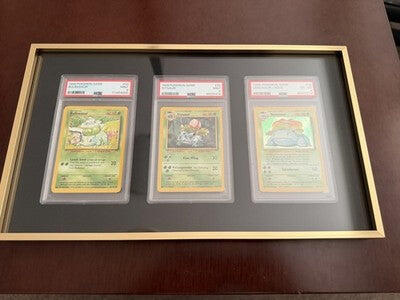
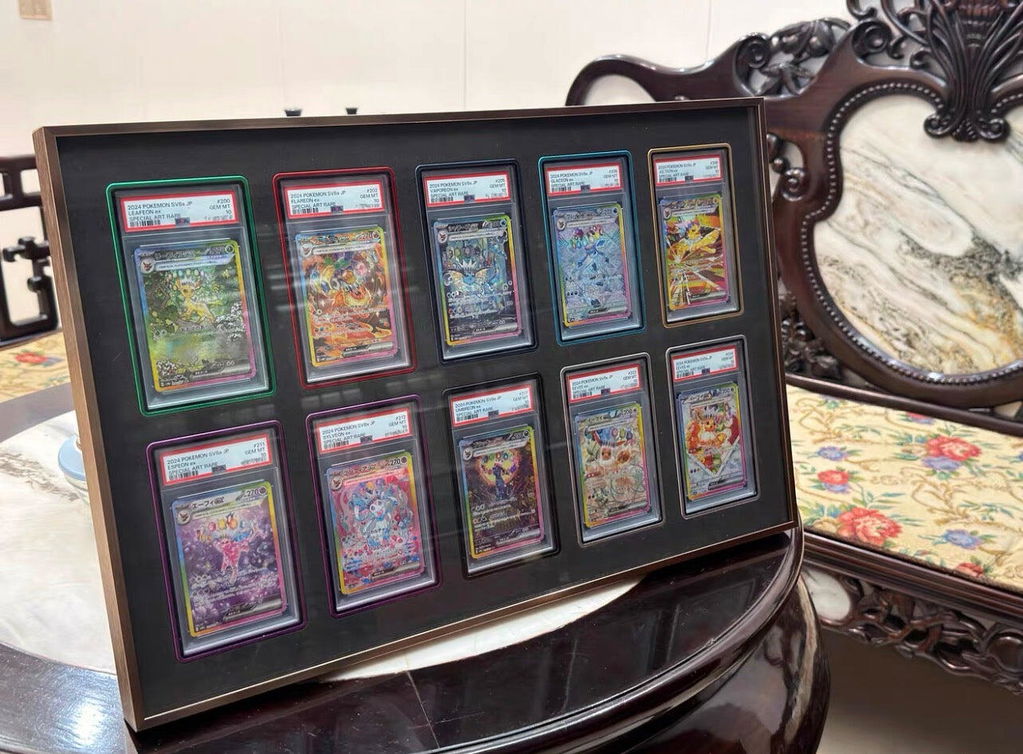


0 comments