


How to Move a Trading Card Collection Safely: Packing Cards, Slabs & Displays
Moving a trading card collection is very different from moving ordinary household items.
A collection might contain thousands of inexpensive cards alongside graded slabs, valuable singles, complete binders, sealed products, One Touch holders and large wall displays. Some items are relatively easy to pack. Others require considerably more thought.
The challenge is not simply getting everything into boxes. It is keeping the collection organised, reducing unnecessary movement during transport and making sure you can account for everything when it reaches the other end.
That becomes increasingly important as the collection grows.
This guide covers practical ways to prepare, organise and pack a trading card collection when moving house or transporting a large collection from one location to another.
Why Moving a Trading Card Collection Requires Planning
A small collection may fit inside one binder or card box. A larger collection can be spread across an entire room.
You may have:
- Raw cards.
- Graded cards.
- PSA slabs.
- CGC slabs.
- BGS slabs.
- Cards in One Touch holders.
- Binders.
- Bulk storage boxes.
- Complete sets.
- Sealed products.
- Display frames.
- Cards currently away for grading.
Without a plan, those different parts of the collection can quickly become mixed together during a move.
The objective should be to preserve both the physical protection and organisation of the collection.
Start by Taking an Inventory
Before packing anything, work out what you actually need to move.
You do not necessarily need an individual record for every common card, but you should have a reasonable understanding of the major groups within the collection.
For example:
- PSA Storage Box 1.
- PSA Storage Box 2.
- BGS Collection.
- Pokémon Binder Collection.
- Sports Card Binder Collection.
- One Touch Collection.
- Trade Cards.
- Bulk Box 1.
- Bulk Box 2.
- Wall Display 1.
- Wall Display 2.
This gives you a checklist before the collection starts disappearing into moving boxes.
Document Important Cards Before the Move
A move is a good time to make sure your records are current.
For significant cards, consider recording:
- Card details.
- Current holder.
- Grade.
- Grading certification number.
- Current photographs.
- Current storage location.
You can also photograph complete storage groups before packing them.
This is particularly useful if you already maintain a catalogue or collection inventory.
Do Not Treat Every Part of the Collection the Same
A box containing inexpensive bulk cards does not necessarily need the same packing method as a collection of high-value graded slabs.
Separate the collection according to what it is and how it needs to be handled.
Useful groups might include:
- Higher-value cards.
- Graded slabs.
- Raw cards.
- One Touch cards.
- Binders.
- Bulk.
- Sealed products.
- Displays.
This makes it easier to choose appropriate packing materials for each group.
How to Pack Raw Trading Cards for Moving
Raw cards should generally remain inside the protective system you already use where that system is suitable for transport.
Depending on the collection, that might include:
- Penny sleeves.
- Toploaders.
- Card savers.
- Team bags.
- Storage boxes.
- Binders.
- Magnetic holders.
The important part is preventing cards from moving freely inside oversized containers.
If cards can repeatedly slide, fall or collide with one another during transport, the existing container may need additional internal support.
Should You Remove Cards From Their Sleeves Before Moving?
Usually there is little reason to remove cards from protective sleeves purely because you are moving.
Doing so creates additional handling and another opportunity for accidental damage.
If the existing sleeve or holder is suitable, keeping the card protected and minimising unnecessary handling is generally the simpler approach.
How to Pack Toploaded Cards
Toploaders protect individual cards but can still move around significantly if placed loosely inside a large box.
Keep toploaders upright or securely grouped inside an appropriately sized storage container.
Avoid leaving large empty spaces that allow the entire group to shift repeatedly during transport.
If necessary, use clean packing material to reduce unused space around the storage container.
How to Move Trading Card Binders
Binders can become surprisingly heavy once completely filled.
Before moving them, check that:
- Cards are securely positioned in their pockets.
- Pages are not overloaded.
- The binder closes correctly.
- Loose cards have been removed.
- The binder itself is in reasonable condition.
During transport, avoid placing excessive weight directly on top of filled binders.
It can also help to keep binders flat and supported rather than allowing them to bend around other objects inside a moving box.
How to Move Graded Trading Cards
Graded slabs are rigid, but that does not mean they should simply be thrown together inside a moving carton.
The holder protects the card, while the slab itself can still become scratched, chipped or damaged.
Keep graded cards organised inside appropriately sized slab storage boxes or another protective container that prevents excessive movement.
For larger collections, separating slabs by grading company can also make packing easier because different holders have different physical dimensions.
How to Pack PSA Slabs for Moving
PSA slabs should be kept together in a container that supports the holders and limits movement.
If you already use dedicated PSA slab storage, there may be little reason to completely reorganise the collection before moving.
Instead, secure the existing storage system and clearly label the outer moving box.
For example:
Trading Cards - PSA Slabs - Box 1 of 3
This makes the collection considerably easier to account for when unpacking.
How to Pack CGC Slabs for Moving
CGC slabs can be handled using the same general principle.
Keep the holders supported, minimise unnecessary movement and avoid mixing them loosely with unrelated household items.
If your collection inventory includes physical locations, temporarily update those locations to the relevant moving box.
For example:
Location: Moving Box TC-04
How to Pack BGS Slabs for Moving
BGS holders have different dimensions from PSA and other slab formats, so a storage solution designed tightly around another grading company's holder should not automatically be assumed to fit.
If your BGS slabs already have suitable dedicated storage, keeping them within that system can reduce unnecessary handling.
Again, the goal is to prevent the holders from repeatedly moving against each other or the outer box.
Should You Wrap Individual Graded Slabs?
Whether individual wrapping is worthwhile depends on the collection, the storage system and the distance being travelled.
For particularly important slabs, an additional protective sleeve or bag can help protect the slab surface from scratches.
However, a properly fitted slab storage system may already provide sufficient separation for normal handling.
Focus on preventing uncontrolled movement rather than adding layers without a clear purpose.
How to Pack Cards in One Touch Holders
One Touch magnetic holders are rigid but should still be packed so they cannot move freely or repeatedly collide with one another.
If you have a large One Touch collection, group the holders together inside an appropriately sized container.
Do not assume storage designed specifically for PSA or BGS slabs will provide the same fit for One Touch holders.
Different holder formats should be treated according to their actual dimensions.
How to Move High-Value Trading Cards
Higher-value cards deserve additional attention during a move.
Before packing them, confirm that your inventory and photographs are current.
You may also want to keep particularly significant cards separated from ordinary bulk and clearly account for their location throughout the move.
For a relatively small number of valuable cards, keeping them under your direct control may be more practical than placing them among general household moving boxes.
Should Valuable Trading Cards Go in the Moving Truck?
This depends on the size of the collection, the value involved, the transport arrangements and what alternatives are available.
For a manageable number of particularly important cards, some collectors may prefer to transport them personally rather than placing them into general household freight.
If professional movers are being used, check their terms and any limitations relating to valuable collectibles before deciding how those items should be transported.
How to Pack Bulk Trading Cards
Bulk is often physically easier to replace than high-value cards, but it can be one of the heaviest parts of a collection.
Thousands of cards add substantial weight surprisingly quickly.
Use containers that can comfortably support the weight inside them.
Do not create enormous boxes simply because the cards physically fit. Several manageable boxes can be much easier to move than one extremely heavy container.
Keep Bulk Cards Organised During the Move
If your bulk is already separated by set, sport, game, year or another system, preserve that organisation where possible.
Label the individual storage boxes before placing them into larger moving cartons.
For example:
- Pokémon Modern Bulk 1.
- Pokémon Modern Bulk 2.
- Sports Base Cards 2024.
- Duplicate Holos.
- Trade Bulk.
Otherwise, months of organisation can disappear into one enormous pile during the move.
How to Pack Complete Trading Card Sets
Complete and near-complete sets should remain clearly identified.
If the set is stored in a binder, keep the binder labelled.
If it is stored in card boxes, keep those boxes together and avoid mixing unrelated cards into them simply to save space.
A small amount of extra packing space is usually easier to deal with than rebuilding the organisation of an entire set after moving.
How to Move Sealed Trading Card Products
Sealed products can vary dramatically in shape and construction.
Booster boxes, collection boxes, tins and other sealed products may require different packing approaches.
Avoid crushing lightweight retail packaging under heavier collection boxes.
If maintaining the condition of the sealed packaging matters to you, pack those items accordingly rather than treating them like ordinary household goods.
Use a Numbering System for Moving Boxes
A simple numbering system makes a large collection much easier to track.
For example:
- TC-01: PSA slabs.
- TC-02: PSA slabs.
- TC-03: BGS and CGC slabs.
- TC-04: Pokémon binders.
- TC-05: Sports binders.
- TC-06: One Touch cards.
- TC-07: Bulk.
The prefix immediately identifies the cartons as part of the trading card collection.
You can then record those box numbers in your collection catalogue.
Do Not Write Valuable Contents on the Outside
There is a difference between organising your collection and advertising exactly what is inside a moving box.
Your private inventory can contain detailed information.
The external label only needs enough information for you to recognise the box.
A neutral code such as TC-01 may be preferable to writing a detailed description of expensive cards across the outside.
Create a Moving Checklist
A simple checklist can help make sure every part of the collection reaches the destination.
For example:
- TC-01 packed.
- TC-02 packed.
- TC-03 packed.
- Display 01 packed.
- Display 02 packed.
- Personal high-value case packed.
Check the list when items leave the original location and again when they arrive.
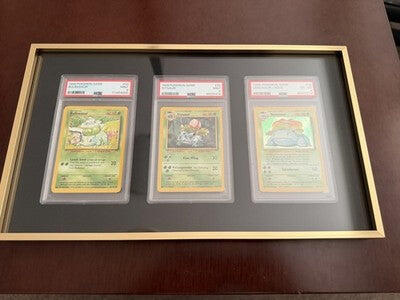
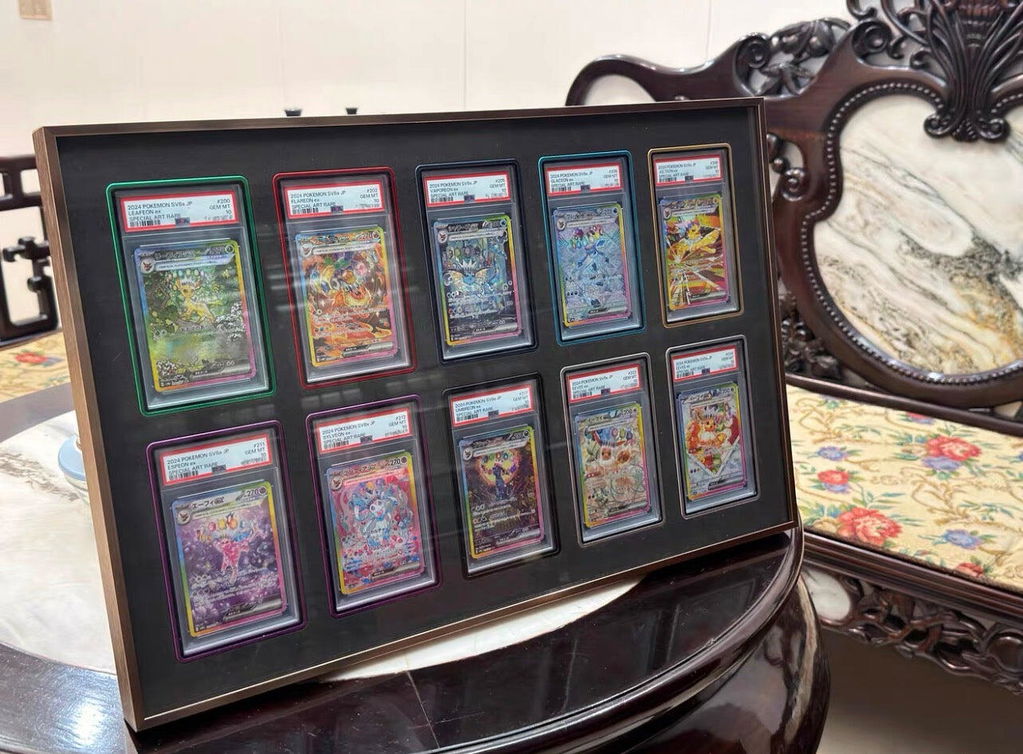
How to Move Trading Card Display Frames
Trading card displays require a different approach from individual cards and slabs.
The cards may be protected by their holders, but the display itself can contain a frame, glazing, backing and internal insert.
Large displays also have significantly more surface area than an individual card holder.
If possible, use the original protective packaging supplied with the display.
If the original packaging is unavailable, the display should be protected against impact, surface damage and movement within the outer carton.
Should You Remove Cards From a Display Before Moving?
For a substantial move, removing the cards can simplify the situation because the cards and display can then be protected separately.
This is particularly worth considering for high-value cards or very large displays.
However, the appropriate approach depends on the construction of the display and how securely the cards are retained.
If you are unsure, prioritise protecting the cards independently.
Photograph Your Display Before Taking It Apart
If you have spent time arranging a collection into a particular grid, take a clear photograph before removing anything.
You can then recreate the same layout after the move.
For larger displays, you can also record card positions in your catalogue.
For example:
- Position 1: Card A.
- Position 2: Card B.
- Position 3: Card C.
This becomes particularly useful for displays containing dozens of cards.
Protect the Glazing on a Trading Card Display
Acrylic glazing is lightweight and suitable for large display applications, but its surface can still be scratched.
Use clean, soft protective material against exposed surfaces and avoid allowing rough packing materials to rub directly against the glazing.
Large panels should also remain properly supported rather than being allowed to flex unnecessarily during handling.
Protect the Corners of Large Display Frames
Corners and edges are common impact points during transport.
Large frames should have appropriate protection around the perimeter, particularly if they are being placed inside a larger moving carton.
The objective is to prevent an impact to the outer packaging from transferring directly into the frame.
Do Not Leave a Large Display Loose Inside a Box
A large outer carton does not automatically mean better protection.
If the display can slide several centimetres in every direction, the item can build momentum before hitting the side of the box.
Appropriate internal packing should hold the display securely while providing cushioning around it.
Moving Oversized Trading Card Displays
Oversized displays require additional planning because they may exceed ordinary parcel dimensions.
A large multi-card display may need:
- Custom protective packaging.
- Additional surface protection.
- Edge and corner protection.
- More than one person for handling.
- An appropriate vehicle.
- Specialist freight arrangements.
Measure the completed packed item rather than assuming the frame dimensions alone determine whether it will fit into a vehicle or freight service.
Keep Trading Cards Away From Moisture
Moving exposes collections to environments they may not normally encounter.
Boxes may spend time in garages, storage units, trucks or temporary accommodation.
Avoid leaving trading cards in areas where they may be exposed to water or prolonged high humidity.
Cardboard moving boxes should also be kept away from wet floors and obvious sources of moisture.
Be Careful With Extreme Heat
Vehicles and enclosed storage spaces can become considerably hotter than normal indoor environments.
Avoid leaving a collection unnecessarily inside a hot vehicle or other extreme environment for extended periods.
This is another reason why planning the collection move separately from ordinary household items can be useful.
Moving a Trading Card Collection Into Storage
Sometimes a collection is not moving directly from one home to another.
It may spend weeks or months in temporary storage.
In that situation, think beyond the journey itself.
Consider:
- How the cards will be organised.
- How boxes will be stacked.
- Whether you need access to particular cards.
- Temperature and humidity conditions.
- Protection from water.
- Whether heavy items could be placed on top.
Put collection boxes somewhere they can be accessed without dismantling the entire storage unit.
Do Not Put Heavy Household Items on Card Boxes
Trading card boxes may look solid, but they are not designed to support unlimited weight.
Avoid placing heavy furniture, books or other dense household items directly on top of collection cartons.
Clearly separating trading-card cartons from general moving boxes can reduce accidental stacking.
Moving a Collection Internationally
An international move introduces additional considerations.
Transport times are longer, packages may pass through several handling points and customs requirements can vary by destination.
If you are moving a significant collection internationally, check the requirements that apply to your specific destination and shipping method before sending it.
Do not assume the process will be identical to sending an ordinary domestic parcel.
Should You Ship a Trading Card Collection by Courier?
Courier shipping can be appropriate for some collections, particularly smaller groups of cards and slabs.
However, suitability depends on the value, dimensions, weight, destination and available service.
For significant shipments, compare service levels rather than choosing purely on price.
Tracking, transit time, handling and the courier's terms may all matter.
Should You Split a Large Collection Into Multiple Shipments?
Sometimes splitting a collection into several manageable packages can make packing and handling easier.
It can also prevent one enormous carton from becoming excessively heavy.
However, multiple shipments create multiple tracking numbers and handling events.
There is no universal answer. Consider the size and structure of the actual collection.
What to Do With Cards Currently at Grading
If cards are already with PSA, CGC, BGS or another grading company while you move, remember to update your delivery information where required.
Do not let a grading submission disappear from your moving checklist simply because the cards are not physically in your home.
Your collection inventory should identify them as being away for grading.
Unpacking the Collection at the New Location
Do not immediately open every collection box at once.
Use the inventory created before the move.
Confirm that each numbered carton has arrived and inspect the outer packaging for obvious damage.
Then unpack systematically.
For example:
- Higher-value cards.
- Graded slabs.
- Binders.
- One Touch cards.
- Displays.
- Bulk.
This lets you confirm the important parts of the collection first.
Inspect Important Cards After Moving
Once the collection has arrived, inspect significant cards and holders before putting everything away.
For graded cards, check the slab.
For raw cards, check that the holder and card have remained correctly positioned.
For displays, inspect the frame, glazing, backing and internal components before reinstalling them.
Update Your Collection Catalogue After the Move
Temporary moving locations such as TC-01 and TC-02 should eventually be replaced with their new permanent locations.
For example:
Old Location: Moving Box TC-02
New Location: Graded Storage Cabinet, Drawer 2
or:
New Location: 18 Grid Wall Display
This completes the move from an organisational perspective.
Planning the New Trading Card Space
Moving can also be an opportunity to reconsider how the collection is organised.
Instead of automatically recreating the old room, look at the new space and determine what actually works.
Consider:
- Where bulk will be stored.
- Where graded slabs will be kept.
- Which cards should remain easily accessible.
- Which cards should be displayed.
- Available wall dimensions.
- Furniture placement.
- Direct sunlight.
- Room traffic.
Planning these areas before unpacking everything can prevent the new room from immediately becoming cluttered.
Decide What Actually Needs to Go Back on Display
You do not necessarily need to recreate every display from the previous room.
A move gives you a natural opportunity to reassess the collection.
You might decide to:
- Rotate different cards onto the wall.
- Combine smaller groups into one larger display.
- Separate collections by player or character.
- Display only graded cards.
- Create a dedicated set display.
- Keep lower-priority cards in organised storage.
Your collection catalogue can help identify suitable groups.
Planning Displays Around the New Wall Space
Measure the available wall before deciding which collection groups should be displayed.
A display that worked perfectly in the previous room may not suit the proportions of the new space.
Start with:
- Available wall width.
- Available wall height.
- Furniture underneath.
- Doors and windows.
- Desired orientation.
- Number of cards.
- Holder format.
Then choose a display configuration that suits both the collection and the room.
Dedicated Displays for Different Holder Formats
PSA, CGC, BGS and One Touch holders have different dimensions.
If you are rebuilding a display after moving, confirm which holder format you intend to use before choosing the display.
The Card Collective® aluminium trading card display range includes dedicated configurations for supported PSA, CGC, BGS and One Touch holders across multiple grid capacities.
For collections that do not suit an existing configuration, a custom display can be planned around the card quantity, holder format, grid, orientation and preferred finish.
Common Mistakes When Moving a Trading Card Collection
Packing Everything Into One Huge Box
Trading cards become heavy quickly. Several manageable boxes are usually easier to handle than one enormous carton.
Mixing Valuable Cards With Household Items
Keep important collection items organised separately rather than filling spare gaps in unrelated moving boxes.
Leaving Empty Space Around Slabs
Rigid holders can still be damaged if they repeatedly collide with one another or the container.
Forgetting Cards That Are Away for Grading
They remain part of the collection even though they are not physically present.
Failing to Label Boxes
A simple numbering system makes unpacking considerably easier.
Advertising Valuable Contents on the Carton
Use neutral identification codes where detailed external descriptions are unnecessary.
Moving Large Displays Without Measuring Them
Measure the fully packed display, not just the aluminium frame.
Leaving the Collection in Heat or Moisture
Temporary storage environments should receive the same consideration as permanent storage.
Unpacking Everything at Once
Work through the collection systematically so important groups can be checked first.
A Simple Trading Card Moving Checklist
Before moving:
- Inventory the major parts of the collection.
- Photograph significant cards.
- Record graded certification numbers.
- Identify higher-value cards.
- Separate raw, graded, One Touch, binders and bulk.
- Number collection boxes.
- Photograph existing displays before dismantling them.
- Record cards currently away for grading.
During the move:
- Keep collection boxes organised.
- Prevent excessive movement inside cartons.
- Avoid unnecessary heat and moisture exposure.
- Keep particularly important cards accounted for.
- Protect large displays separately.
After moving:
- Confirm every numbered box has arrived.
- Inspect important cards and holders.
- Inspect display frames and glazing.
- Update storage locations.
- Plan the new collection space.
- Reinstall or redesign displays.
Frequently Asked Questions About Moving Trading Cards
How do you safely move a trading card collection?
Organise the collection before packing, keep cards inside appropriate protective holders, prevent unnecessary movement within boxes and clearly track the location of important collection groups.
How should I pack Pokémon cards when moving house?
Keep cards organised in suitable binders, card boxes or protective holders and pack those containers securely so they cannot move excessively inside larger moving cartons.
How should I move sports cards?
Separate raw cards, graded slabs, binders and bulk where practical. Preserve your existing organisation and use appropriately sized protective containers.
How do I pack PSA slabs for moving?
Keep PSA slabs supported inside an appropriately sized slab storage system and prevent excessive movement. Clearly identify the storage group within your private moving inventory.
How do I move CGC graded cards?
Keep CGC slabs securely grouped in suitable storage and minimise movement between holders during transport.
How do I move BGS slabs?
Use storage appropriate to the dimensions of BGS holders rather than assuming a tightly fitted PSA storage system will provide the same fit.
Can graded cards get damaged while moving?
Yes. The slab protects the card, but the holder itself can still be scratched, chipped or damaged if poorly packed.
Should I individually wrap graded cards?
It depends on the storage system and importance of the cards. Additional slab sleeves or protection may be useful, but preventing uncontrolled movement is the main priority.
How should I move cards in One Touch holders?
Keep the holders securely grouped inside an appropriately sized container and prevent them from repeatedly colliding with one another.
Should I take cards out of binders before moving?
Not automatically. If the binder is in good condition and the cards are securely positioned, unnecessary removal may create more handling than necessary.
Should trading card binders be moved flat?
Filled binders should remain properly supported and should not be bent around other objects or crushed beneath heavy household items.
How do I move thousands of trading cards?
Break the collection into manageable groups and boxes rather than creating one extremely heavy container. Label and inventory those groups before moving.
How heavy are bulk trading cards?
Large quantities of cards become heavy quickly, which is why manageable box sizes are preferable to filling the largest carton available.
Should I photograph my trading card collection before moving?
Photographing important cards, graded slabs and complete collection groups can create a useful record before transport.
Should I record PSA certification numbers before moving?
For significant slabs, recording certification numbers can help identify individual graded cards within your collection records.
Should I transport valuable cards myself?
For a manageable number of particularly significant cards, keeping them under your direct control may be worth considering rather than placing them among general household freight.
Should valuable cards go in a moving truck?
That depends on the value, collection size, mover terms and alternatives available. Check any restrictions or limitations that apply to valuable collectibles.
How should I label trading card moving boxes?
A neutral numbering system such as TC-01, TC-02 and TC-03 can help you track boxes without describing valuable contents in detail on the outside.
How do I keep track of cards during a move?
Create an inventory and temporarily record each card or collection group's moving-box number as its physical location.
How should I pack trading card display frames?
Protect the frame, glazing, edges and corners and prevent the display from moving inside the outer packaging. Original protective packaging can be useful where available.
Should I remove cards from a display frame before moving?
For significant cards or large displays, removing and protecting the cards separately may simplify the move. The appropriate approach depends on the construction of the display.
How do I move a large trading card display?
Large displays may require additional surface, edge and corner protection, appropriately sized packaging, more than one person for handling and potentially specialist transport.
Can trading cards be stored in a garage while moving?
Be cautious with temporary environments that experience high humidity, moisture or extreme temperatures. A garage may not provide the same conditions as the collection's normal indoor storage.
Can heat damage a trading card collection during moving?
Extreme environments should be avoided. Do not leave the collection unnecessarily inside a very hot vehicle or enclosed storage area for extended periods.
How should I store trading cards temporarily during a move?
Keep them organised, protected from water and excessive humidity, away from crushing weight and somewhere reasonably accessible if the storage period will be extended.
How should I unpack a trading card collection?
Confirm all numbered collection boxes have arrived, then unpack important cards and graded slabs first before moving through binders, displays and bulk.
Should I reorganise my card collection after moving?
A move can be a useful opportunity to reassess storage and display rather than automatically recreating the previous setup.
How do I plan trading card displays in a new house?
Measure the available wall space, decide which cards you want displayed, identify their holder format and choose a grid configuration that suits both the cards and the room.
Can PSA, CGC, BGS and One Touch cards use the same display?
Holder dimensions differ, so a display designed specifically around one holder format should not automatically be assumed to fit another.
What should I do with cards currently at grading when I move?
Keep them recorded in your inventory and update relevant contact or delivery information with the grading service where required.
What is the biggest mistake when moving a trading card collection?
Poor organisation can create problems even when the cards are physically protected. Knowing what you packed, where it is and whether every collection group arrived is an important part of the move.
Final Thoughts
Moving a trading card collection safely is largely an exercise in organisation.
The cards need appropriate physical protection, but you also need to know what you packed, where it is and how it will be handled.
Start with an inventory.
Separate different parts of the collection.
Document significant cards.
Keep graded slabs properly supported.
Preserve the organisation of binders and sets.
Avoid creating excessively heavy bulk boxes.
Protect large displays separately.
Number your collection cartons.
Then check everything again when it reaches the new location.
A move can also be an opportunity to reconsider what you actually want on display.
Instead of automatically rebuilding the previous setup, you can select the cards that suit the new room, measure the available wall space and build the display around the collection you actually want to see.
The Card Collective® aluminium trading card display range includes dedicated configurations for supported PSA, CGC, BGS and One Touch holders across multiple grid capacities, with custom display enquiries available for collections that require a different configuration.
Continue Exploring
If you are planning a premium trading card wall display, these guides and collections can help with the next step.
📚 Collector Guides
-
How to Choose the Right Trading Card Display Frame Size: The Complete Collector Guide
Compare display capacities and Grid layouts before choosing the colour configuration for your collection. -
Why Premium Aluminium Trading Card Display Frames Are Worth It: The Complete Collector Guide
Explore aluminium construction, display design and the role of premium materials in a purpose-built trading card wall display. -
The Ultimate Trading Card Display Guide: Ideas, Frames, Shelves & Display Solutions for Every Collector
Compare wall frames, stands, shelves, cabinets and other ways to display trading cards across different budgets and collection types.
🛒 Shop Display Collections
-
Aluminium Trading Card Wall Display Frames
Premium aluminium trading card display frames with multiple Grid layouts, holder-specific configurations, aluminium Frame Colours and supported Black or White EVA Foam options. -
PSA, CGC & BGS Graded Slab Wall Display Frames
Purpose-built graded card display frames for compatible PSA, CGC and BGS slab configurations. -
One Touch Wall Display Frames
Premium wall display frames designed around compatible One Touch magnetic trading card holders.


0 comments