


The Ultimate Magic: The Gathering Room Guide: Display Ideas, Décor, Setups & Collector Inspiration
Every Magic: The Gathering player eventually reaches a point where deck boxes, binders and storage cases are no longer enough.
Your collection may represent years of Commander nights, unforgettable topdecks, favourite artists, carefully tuned decks, sealed products, tournament memories and cards you have carried from one format to another.
Eventually, many players want more than somewhere practical to store everything.
They want a room that reflects the game itself.
That might mean a dedicated Magic room, a Commander setup, a fantasy-inspired home office, a gaming desk surrounded by favourite decks or one carefully planned display wall featuring graded cards, Reserved List pieces, Secret Lair artwork and memorable commanders.
The best MTG rooms do not necessarily belong to the people with the largest collections or the biggest budgets.
Some of the strongest setups begin with one bookshelf, one gaming table, a few carefully chosen display frames and a clear idea of the atmosphere the collector wants to create.
Magic: The Gathering offers an enormous amount of visual inspiration.
Collectors can build rooms around the five mana colours, favourite planes, iconic sets, legendary creatures, fantasy artwork, Commander decks, vintage cards or major moments from the game's history.
One player may prefer a dark gothic room built around black mana, demons and graveyard strategies. Another may create a bright green-and-gold Commander space inspired by forests, elves and natural textures. A collector focused on blue control may prefer a clean, minimal office with cool lighting, acrylic shelves and carefully displayed cards.
There is no single correct way to design a Magic: The Gathering room.
The goal is to create a space that supports the way you actually enjoy the game, whether that means playing Commander with friends, organising hundreds of decks, displaying valuable cards, opening new sets or simply spending time surrounded by the artwork and stories that made the game meaningful to you.
This complete guide explores Magic room ideas for different budgets, spaces and collecting styles. We will cover gaming tables, Commander setups, desk displays, shelves, acrylic display cases, display frames, lighting, fantasy décor, card organisation and practical ways to showcase raw cards, graded slabs, deck boxes, playmats, dice, tokens, sealed products and favourite commanders.
Why Magic: The Gathering Rooms Have Become So Popular
Magic has always been more than a card game.
For many players, it is also a social hobby, a creative outlet, a collecting journey and a long-term connection to fantasy worlds that continue evolving over decades.
A Magic room brings those parts of the hobby together.
Instead of keeping decks, binders and collectibles spread throughout the house, players can create one space designed around playing, organising and displaying the game.
A well-planned Magic room may include:
- Commander decks.
- Modern, Pioneer, Legacy or Standard decks.
- Raw cards in sleeves, binders or One Touch magnetic holders.
- PSA, CGC, BGS or other graded Magic cards.
- Reserved List cards.
- Vintage cards.
- Serialized cards.
- Secret Lair collections.
- Foils and showcase treatments.
- Deck boxes.
- Playmats.
- Dice and counters.
- Tokens.
- Set booster boxes and collector booster boxes.
- Fantasy artwork.
- Books, novels and art books.
- Miniatures, statues and gaming accessories.
The room can become part gaming space, part collector room and part personal library.
For Commander players, it can also become the place where friends gather regularly, making comfort, table layout and storage just as important as wall décor.
Do not begin by trying to display every Magic card you own. Start with the decks, cards, artwork and memories that best represent your relationship with the game. A carefully curated display usually creates more impact than filling every available surface.
Plan Your Magic Room Before Buying Furniture or Décor
One of the easiest ways to overspend is buying shelves, tables and decorations before deciding how the room needs to function.
A Magic room built mainly for Commander nights requires a different layout from a home office focused on collecting, grading and displaying valuable cards.
Before purchasing anything, consider:
- Will the room be used mainly for playing, collecting or both?
- Do you need space for a full Commander pod?
- How many decks need to remain easily accessible?
- Will you display raw cards, graded cards, sealed products or all three?
- Do you collect one format, one set, one artist or one colour identity?
- Will the room also function as a home office, bedroom or gaming room?
- How much wall, shelf and desk space is available?
- Will the collection continue expanding?
- Do you prefer a dark fantasy atmosphere or a cleaner modern setup?
- Do you need secure storage for higher-value cards?
Answering these questions early makes it easier to choose the right desk, gaming table, shelving, lighting and display solutions.
For example, a player with thirty Commander decks may need accessible deck-box storage and a large table more than another wall display. A collector focused on Power Nine, dual lands or premium foils may prioritise framed card displays, acrylic cases and controlled lighting.
The room should support the hobby first.
Décor should strengthen the experience rather than make the space harder to use.
Choosing a Theme for Your Magic: The Gathering Room
Magic has one of the richest visual identities of any trading card game.
That gives collectors far more creative freedom than simply choosing one logo or one colour scheme.
A clear theme can guide wall colours, shelves, lighting, artwork and display choices while helping the room feel intentional rather than random.
The Five Mana Colours
The five colours of Magic provide a natural starting point for room design.
White Mana Rooms
White-inspired rooms often suit collectors who prefer clean, ordered and symmetrical spaces.
Ideas include:
- Light walls and shelving.
- Gold or silver display frames.
- Angel, knight and soldier artwork.
- Organised deck storage.
- Warm, balanced lighting.
- Minimal desk layouts.
Blue Mana Rooms
Blue-inspired setups often feel calm, modern and precise.
Collectors may use:
- Cool lighting.
- Clear acrylic shelves.
- Ocean, sky or arcane artwork.
- Minimalist desk accessories.
- Display frames for counterspell, wizard or artifact collections.
- Clean cable management.
Black Mana Rooms
Black mana lends itself naturally to darker fantasy interiors.
Popular ideas include:
- Dark timber furniture.
- Black display frames.
- Gothic artwork.
- Subtle red or purple lighting.
- Demon, vampire, zombie and graveyard themes.
- Metal or leather desk accessories.
Red Mana Rooms
Red-inspired rooms can feel energetic without becoming overwhelming.
Consider:
- Warm lighting.
- Dragon artwork.
- Volcanic or mountain imagery.
- Copper or black display finishes.
- Bold but controlled accents.
- Displays built around Goblins, burn cards or legendary Dragons.
Green Mana Rooms
Green mana works well with natural textures and warmer interiors.
Ideas include:
- Timber shelves.
- Plants.
- Forest artwork.
- Green ambient lighting.
- Elves, beasts and land-focused displays.
- Copper or gold display frames.
You do not need to build the entire room around one colour.
Many players use a neutral base and introduce mana colours through artwork, playmats, deck boxes, lighting and displayed cards.
Guild and Colour-Identity Rooms
Players who strongly identify with one guild or colour combination may prefer a more specific theme.
Examples include:
- Azorius rooms using white, blue and clean architectural lines.
- Dimir setups with dark blue lighting and subtle spy-inspired décor.
- Rakdos rooms using black, red and theatrical fantasy artwork.
- Gruul rooms with timber, stone and natural textures.
- Selesnya spaces using plants, light woods and communal gaming layouts.
- Izzet rooms with workshop-style shelving, blue-red lighting and artifact displays.
- Golgari rooms with darker natural textures and graveyard-themed artwork.
- Orzhov rooms using black, white and gold accents.
- Simic rooms with blue-green lighting and biomancy-inspired décor.
- Boros rooms with red-white displays, weapon imagery and organised layouts.
This approach works particularly well for Commander players who repeatedly build within the same colour identity.
Magic Room Ideas for Different Spaces
You do not need a dedicated basement or spare room to create an impressive MTG setup.
Many players use bedrooms, home offices, apartments, gaming rooms or one carefully planned wall.
Small MTG Rooms and Apartments
When space is limited, vertical organisation becomes essential.
Useful ideas include:
- Wall-mounted display frames.
- Narrow floating shelves.
- Acrylic shelves for graded cards.
- Stackable deck-box storage.
- Under-desk storage.
- One compact play area.
- A display above the desk or monitor.
- Rotating displays for favourite commanders.
Small spaces often look better when the collection is edited carefully.
One framed Commander display, one shelf of favourite deck boxes and one organised play area can create more impact than several crowded surfaces.
Magic-Themed Bedrooms
A Magic bedroom can feel immersive without becoming visually chaotic.
Consider combining:
- One feature wall.
- Floating shelves for decks and sealed products.
- Framed fantasy artwork.
- A compact card display.
- Soft ambient lighting.
- Under-bed card storage.
- A desk area for deck building.
Neutral bedding and furniture can help the artwork, cards and accessories stand out naturally.
MTG Home Offices
Home offices work especially well for adult collectors who want a refined display that still reflects the hobby.
A clean MTG office might include:
- A framed card display above the desk.
- Acrylic shelves holding graded or favourite cards.
- One premium playmat.
- Organised deck-box storage.
- Fantasy artwork.
- Subtle lighting.
- A small display case for one centrepiece collectible.
A Magic office can feel mature and professional when the collection is curated carefully and presented with consistent finishes.
Dedicated Commander Rooms
Commander is one of the most social ways to play Magic, so the room should support conversation and comfort as much as presentation.
A dedicated Commander room may include:
- A large central table.
- Four or more comfortable chairs.
- Accessible deck storage.
- Dice and token organisers.
- Playmat storage.
- Good overhead lighting.
- Side tables for drinks and accessories.
- Wall displays featuring favourite commanders.
- Artwork inspired by planes, guilds or colour identities.
The strongest Commander rooms are easy to use.
Players should be able to find decks, tokens and accessories quickly without interrupting the game.
Magic Gaming Rooms
A broader gaming room can combine Magic with PC gaming, tabletop games, miniatures and other hobbies.
Useful features include:
- A flexible gaming table.
- Wall-mounted shelves.
- Display frames.
- Acrylic display cases.
- Bookshelves for rules books and art books.
- Monitor or SpellTable setup.
- Lighting zones for gaming and display.
- Storage that separates Magic from other games.
Dedicated MTG Collector Rooms
A dedicated collector room allows the collection itself to become the focus.
These spaces may combine:
- Large trading card display frames.
- Graded card walls.
- Reserved List displays.
- Secret Lair shelves.
- Collector booster boxes.
- Art prints.
- Deck libraries.
- Acrylic display cases.
- Custom lighting.
- A central table for viewing cards and building decks.
Rather than filling every wall, many experienced collectors create one hero display and allow the rest of the room to support it.
A Magic room should be easy to play in, not just impressive to look at. Leave enough table space for decks, playmats, dice, tokens and drinks before adding decorative pieces around the room.
Choosing the Right Table for Magic: The Gathering
The table is the centre of almost every Magic room.
It is where decks are tested, Commander games last for hours, trades are negotiated, binders are opened and new collections are organised.
A visually impressive room can still become frustrating if the table is too small, poorly lit or surrounded by uncomfortable seating.
The best table depends on how you use the space.
Commander Tables
Commander usually requires more room than most other formats.
Each player may need space for:
- A full playmat.
- A Commander deck.
- A graveyard and exile zone.
- Tokens.
- Dice and counters.
- Food or drinks placed safely away from cards.
A table for four players should provide enough space for everyone to maintain a clear battlefield without cards overlapping.
Round tables encourage conversation, while rectangular tables often provide more usable play space and are easier to position against a wall when not in use.
Convertible Gaming Tables
Collectors who use the room for work, board games or other hobbies may prefer a table that can serve several purposes.
A convertible gaming table can provide:
- A large surface for Commander.
- Storage for playmats and accessories.
- A removable cover for office or dining use.
- Cup holders positioned away from cards.
- Built-in trays for dice and tokens.
These tables can be useful in smaller homes where a room needs to support several activities.
Budget MTG Tables
You do not need a custom gaming table to create an effective Magic setup.
A sturdy dining table, folding table or large desk can work well when paired with comfortable seating, good lighting and clear storage nearby.
The most important factors are stability, usable surface area and enough room for every player.
Before buying a table, place four playmats on the floor or an existing surface to visualise the space required for a full Commander pod. This simple test can prevent choosing a table that looks large but feels cramped during actual games.
Building the Perfect MTG Desk Setup
For many collectors, the desk is where most of the hobby happens.
It may be used for deck building, sorting bulk cards, joining SpellTable games, watching Magic content, cataloguing a collection or working from home.
A well-designed MTG desk setup should feel organised enough for everyday use while still providing space to enjoy favourite cards and accessories.
Popular desk setup ideas include:
- A favourite Commander displayed beside the monitor.
- Acrylic card stands.
- One Touch magnetic holders.
- A small framed card display.
- Deck boxes arranged by format or colour.
- Dice and token organisers.
- A premium playmat used as a desk mat.
- Floating shelves above the desk.
- Soft task lighting.
- Clear storage for sleeves and accessories.
SpellTable and Webcam Setups
Remote Magic has become an important part of the hobby for many players.
A reliable SpellTable setup may include:
- An overhead webcam or phone mount.
- Even lighting across the battlefield.
- A clear playmat.
- A stable internet connection.
- A microphone positioned away from loud keyboard noise.
- Enough desk space to keep cards fully visible.
- A second monitor for life totals, chat or deck information.
Avoid lighting that creates heavy glare across card sleeves. Diffused lighting from several angles usually makes cards easier for remote opponents to see.
Deck-Building Desks
Collectors who regularly build and tune decks benefit from having a clear sorting area.
Useful additions include:
- Shallow card trays.
- Labelled storage boxes.
- Dividers organised by colour or card type.
- A small binder stand.
- Easy access to sleeves and deck boxes.
- A waste bin for packaging and old sleeves.
- Good neutral lighting for checking card condition.
Keeping the centre of the desk clear makes it easier to compare cards, test mana curves and sleeve completed decks without constantly moving decorations.
Choosing Shelves for an MTG Collection
Shelving is one of the most important parts of any Magic room because collections can grow quickly.
Commander decks, binders, bulk boxes, sealed products, Secret Lair drops, art books and accessories all need different types of storage.
The right shelves help separate playable items from display pieces while keeping the room visually organised.
Floating Shelves
Floating shelves are useful for creating clean display areas without taking up floor space.
They work well for:
- Favourite deck boxes.
- Secret Lair collections.
- Collector booster boxes.
- Small display frames.
- Fantasy artwork.
- Miniatures and statues.
- MTG novels and art books.
Floating shelves can also be arranged by mana colour, plane, set or Commander theme.
Acrylic Shelves
Clear acrylic shelves are particularly effective for cards and sealed products because they visually disappear into the background.
They suit collectors displaying:
- Graded Magic cards.
- One Touch magnetic holders.
- Serialized cards.
- Premium foils.
- Favourite commanders.
- Secret Lair cards.
- Small sealed products.
Acrylic shelves pair especially well with minimalist home offices and modern gaming rooms.
Bookshelves and Cube Storage
Bookshelves and cube storage units are practical for larger collections.
Individual sections can be dedicated to:
- Commander decks.
- Binders.
- Bulk storage boxes.
- Playmats.
- Dice and tokens.
- Sealed products.
- Magic novels.
- Board games and related hobbies.
Matching deck boxes and clear labels can make large storage units feel far more organised.
Heavy-Duty Storage Shelves
Large card collections can become surprisingly heavy.
Collectors storing several thousand cards should choose shelving designed to support the weight safely rather than relying on lightweight decorative shelves.
Place heavier bulk boxes on lower shelves and reserve higher shelves for lighter display pieces.
Organising Commander Decks
Commander collections can expand rapidly.
One deck becomes five, five becomes fifteen and eventually it becomes difficult to remember which box contains which strategy.
A clear organisation system makes decks easier to find while adding structure to the room.
Popular methods include organising by:
- Mana colour.
- Colour identity.
- Commander name.
- Power level.
- Theme or creature type.
- Budget.
- How frequently the deck is played.
Organising by Colour Identity
Displaying deck boxes in white, blue, black, red and green sections creates an immediate visual system.
Multicolour decks can be grouped by guild, shard, wedge or number of colours.
Organising by Power Level
Players with several Commander groups may prefer separating casual, upgraded, high-power and competitive decks.
This makes it easier to choose a deck that suits the table before a game begins.
Displaying Favourite Commanders
Some players display the Commander card outside the deck box using a stand, One Touch holder or small frame.
This creates a collection display while making each deck easy to identify.
Favourite commanders can also be arranged into a wall display based on colour identity, plane, artist or personal history.
Playmat Storage and Display Ideas
Playmats are practical gaming accessories, but many also feature artwork worth displaying.
Improper storage can cause creases, curled edges and unnecessary wear.
Common playmat storage options include:
- Playmat tubes.
- Vertical tube racks.
- Wide drawers.
- Rolled storage inside cube units.
- Wall-mounted playmat displays.
- Flat archival storage for valuable signed mats.
Displaying Signed or Limited Playmats
Signed, event-exclusive or artist playmats may be better suited to wall display than regular use.
A framed playmat can become a major piece of fantasy artwork within the room, especially when paired with cards by the same artist or from the same set.
Dice, Token and Counter Organisation
Dice and tokens are easy to accumulate and difficult to organise.
Without a system, they quickly spread across desks, shelves and gaming tables.
Useful storage ideas include:
- Small drawer organisers.
- Clear acrylic containers.
- Labelled token boxes.
- Dice trays.
- Compartment cases.
- Magnetic tins.
- Dedicated shelf sections.
Players who use custom tokens may choose to display favourite pieces alongside the Commander deck they belong to.
Building an MTG Display Wall
A Magic display wall can transform individual cards, artwork and gaming accessories into one cohesive feature.
The strongest walls usually combine different scales rather than placing dozens of unrelated objects together.
A balanced MTG display wall might include:
- A multi-card display frame.
- A framed playmat.
- Fantasy art prints.
- Floating shelves.
- Acrylic card displays.
- Favourite Commander cards.
- Graded vintage cards.
- Subtle accent lighting.
Collectors may build a wall around one set, plane, artist, colour identity or period of Magic history.
Reserved List Display Walls
Collectors focused on Reserved List cards may prefer a restrained and highly organised wall display.
Black, silver or gold frames can provide a neutral background while allowing the card artwork to remain the focus.
Popular display themes may include:
- Original dual lands.
- Power Nine cards.
- Vintage artifacts.
- Early expansion cards.
- Cards connected to one artist.
Commander Display Walls
Commander-focused walls can be more colourful and personal.
They may include:
- Favourite commanders.
- Signature spells.
- Tokens.
- Deck boxes.
- Playmats.
- Art prints.
- Colour-identity groupings.
Secret Lair Display Walls
Secret Lair collections often work well as display pieces because of their distinctive artwork and themed releases.
Collectors may group them by artist, franchise crossover, foil treatment or release series.
Display Frames vs Acrylic Display Cases
Display frames and acrylic display cases serve different purposes inside an MTG room.
| Display Frames | Acrylic Display Cases |
|---|---|
| Ideal for cards and graded slabs. | Ideal for sealed products and three-dimensional collectibles. |
| Creates wall artwork. | Adds depth to desks and shelves. |
| Makes efficient use of vertical space. | Helps protect items from dust. |
| Works well for themed card collections. | Works well for boxes, statues and accessories. |
| Suitable for feature walls. | Suitable for individual centrepieces. |
Many collectors combine both, using frames for meaningful cards and acrylic cases for sealed products, statues or premium accessories.
Lighting for Magic Rooms and Card Displays
Lighting can completely change the atmosphere of an MTG room.
It affects how comfortable the room feels during long games, how clearly cards can be read and how effectively artwork and display pieces stand out.
A useful Magic room may need several types of lighting.
Gaming Table Lighting
Overhead lighting should illuminate the full battlefield evenly without creating strong glare on sleeves.
Warm-neutral lighting often provides a comfortable balance between atmosphere and card readability.
Display Lighting
LED strips, picture lights and shelf lighting can highlight cards, artwork and sealed products.
Use lighting to guide attention rather than illuminating every object equally.
Ambient Lighting
Ambient lighting can reinforce the room's theme.
Examples include:
- Cool blue lighting for an island or control theme.
- Deep red accents for Dragons or Rakdos.
- Green shelf lighting for forest and Elf collections.
- Warm gold lighting for white mana, angels or Orzhov.
- Purple accents for black mana and graveyard themes.
Where possible, avoid prolonged direct sunlight on valuable cards, foils, sealed products and artwork.
Lighting for gameplay and lighting for display do not need to be the same. Use clear, even illumination over the table and softer accent lighting around shelves, frames and artwork.
Displaying Different Types of Magic: The Gathering Collections
No two Magic collections develop in exactly the same way.
Some players build dozens of Commander decks, while others focus on vintage cards, Reserved List pieces, Secret Lair releases, premium foils, serialized cards or sealed products.
The strongest MTG rooms are designed around the collection itself rather than forcing every item into the same display style.
Understanding what you collect helps determine whether you need wall frames, acrylic shelves, display cases, deck storage, binders or secure archival storage.
Displaying Commander Cards and Decks
Commander collections are often highly personal.
A deck may represent years of upgrades, memorable games, favourite mechanics or a legendary creature that immediately connects with the player.
Rather than hiding every Commander inside a deck box, some players display the Commander card separately using:
- Acrylic card stands.
- One Touch magnetic holders.
- Small desktop frames.
- Wall-mounted card displays.
- Dedicated shelves above the deck collection.
Commander displays can be organised by colour identity, power level, plane, tribe or the order in which the decks were built.
A player with several Dragon decks may create one red-and-black display area, while an Elf collector might use timber shelves and green accents to complement the collection.
Displaying Raw Magic Cards
Most Magic cards remain raw because they are intended for decks, binders, trading or regular collection updates.
Raw cards can still become impressive display pieces when placed inside suitable protective holders.
Popular options include:
- Perfect-fit sleeves.
- Top loaders.
- One Touch magnetic holders.
- Binder display pages.
- Desktop card stands.
- Wall frames designed for protected raw cards.
Raw-card displays are particularly useful for modern showcase cards, favourite commanders, borderless treatments, artist collections and cards that may eventually return to a deck.
Displaying Graded Magic Cards
Professionally graded Magic cards often become natural centrepieces within collector rooms.
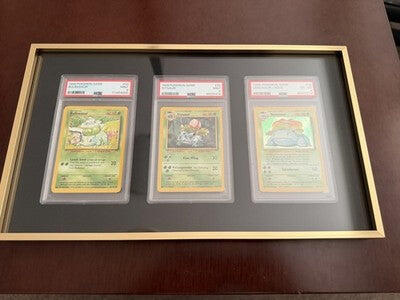
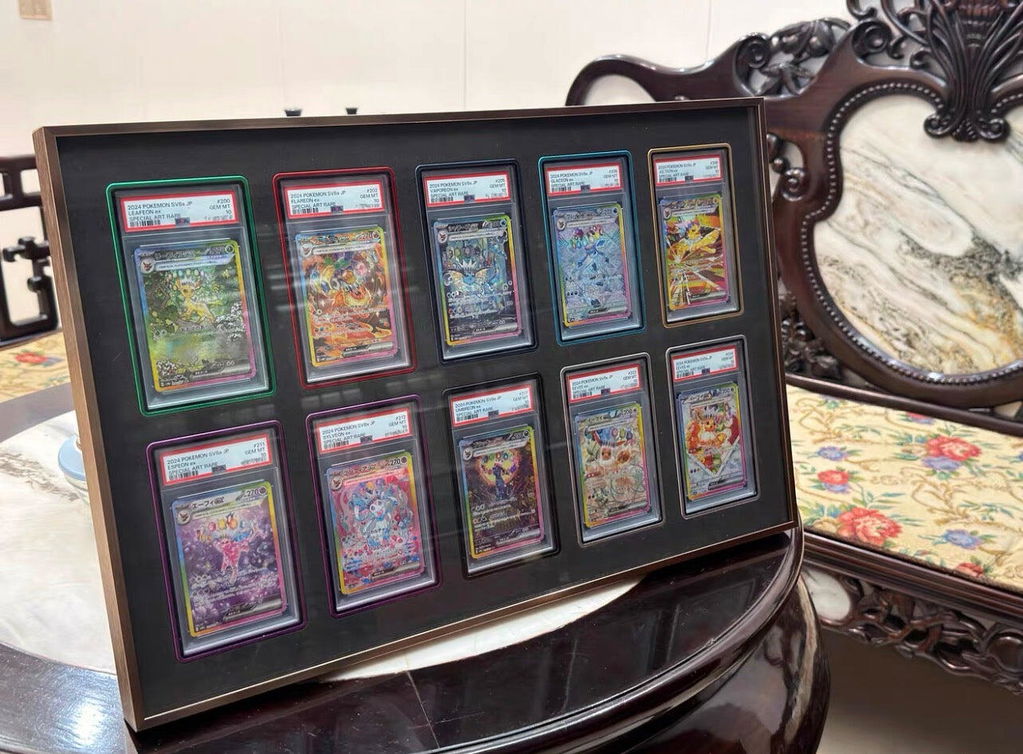
PSA, CGC and BGS slabs provide a consistent format that works well in wall displays, on acrylic shelves or inside dedicated cabinets.
Collectors commonly grade:
- Vintage cards.
- Reserved List cards.
- Power Nine pieces.
- Original dual lands.
- Rare promotional cards.
- Serialized cards.
- High-value foils.
- Artist-signed cards.
A carefully curated graded-card wall can create a stronger impression than displaying every valuable card together without a theme.
Some collectors organise graded slabs chronologically, beginning with early Magic sets before moving through later expansions and modern premium releases.
Reserved List Collections
Reserved List cards hold a unique place within Magic collecting.
They may represent the earliest years of the game, long-term collecting goals or cards that players remember from formats they played decades ago.
Reserved List displays often benefit from a more restrained design.
Black, silver, gold or timber finishes can complement the historic nature of the cards without distracting from the artwork.
Popular display themes include:
- Original dual lands.
- Vintage artifacts.
- Early legendary creatures.
- Cards from Arabian Nights, Antiquities, Legends or The Dark.
- Cards connected to one artist.
- Cards collected throughout a player's history with Magic.
Because many Reserved List cards are valuable, consider where the display will be positioned and whether additional security or controlled access is appropriate.
Power Nine Displays
Power Nine cards are among the most recognisable and historically significant cards in Magic.
A complete or partial Power Nine collection naturally deserves a display that keeps attention on the cards themselves.
Collectors may choose:
- A symmetrical multi-card wall frame.
- Individual graded-card stands.
- A secure illuminated cabinet.
- Acrylic shelves with consistent spacing.
- A display supported by early Magic artwork and set history.
Even a single Power Nine card can become the centrepiece of an entire room when given enough visual space.
Secret Lair Collections
Secret Lair releases are especially suited to display because many are designed around distinctive artists, visual treatments and crossover themes.
Collectors may organise Secret Lair cards by:
- Artist.
- Release date.
- Foil treatment.
- Franchise crossover.
- Creature type.
- Colour identity.
- Favourite visual style.
Secret Lair cards can work well in wall frames, acrylic shelves or rotating desk displays where the artwork can be changed regularly.
Serialized and Premium Cards
Serialized cards, textured foils, showcase treatments and collector-booster exclusives have created a new category of premium Magic collectibles.
These cards often benefit from individual presentation rather than being placed among large groups of ordinary cards.
A collector might use:
- A dedicated One Touch holder.
- A single-card desk display.
- A small illuminated acrylic case.
- A framed group of cards from the same release.
- A graded slab display.
The display should support the visual treatment without adding excessive colour or decoration around it.
Artist Collections
Magic has one of the most celebrated art histories in tabletop gaming.
Collectors who follow particular artists can build highly cohesive displays combining cards, signed prints, artist proofs, playmats and books.
An artist-focused wall might include:
- Cards arranged chronologically.
- Signed cards.
- Artist proofs.
- Framed playmats.
- Original sketches or prints.
- Set artwork.
- Books featuring the artist's work.
Consistent framing and spacing help the display feel like one complete body of work.
Displaying Sealed Magic Products
Sealed Magic products can become colourful display pieces while also documenting different eras of the game.
Collectors may display:
- Draft booster boxes.
- Set booster boxes.
- Collector booster boxes.
- Commander preconstructed decks.
- Bundles.
- Gift editions.
- Secret Lair packaging.
- Older tournament products.
Booster Box Shelves
Booster boxes work well on floating shelves, inside cabinets or within clear acrylic display cases.
They can be arranged by:
- Release date.
- Plane.
- Set block.
- Format relevance.
- Artwork.
- Personal significance.
Leaving space between boxes often creates a cleaner presentation than stacking them tightly from wall to wall.
Commander Preconstructed Deck Displays
Preconstructed Commander decks can be displayed by set, colour identity or plane.
Collectors who keep original packaging may use shelving or acrylic cases, while players who use the decks may display the deck boxes alongside the face commanders.
Protecting Sealed Products
Acrylic cases can help reduce dust and accidental handling while maintaining visibility.
For older or higher-value products, avoid placing them near direct sunlight, heaters or areas with large temperature changes.
Fantasy Artwork and MTG Room Décor
Magic artwork can transform a practical gaming room into a space that feels connected to the worlds of the game.
Décor works best when it supports the collection rather than competing with it.
Framed Card Art
Large prints of favourite card artwork can create a dramatic feature without requiring dozens of smaller decorative pieces.
Collectors may choose artwork based on:
- A favourite plane.
- A favourite Commander.
- A signature spell.
- A specific artist.
- A memorable set.
- A favourite guild or colour identity.
Mana Symbol Décor
The five mana symbols can be introduced through wall prints, shelf labels, lighting zones, cushions or desk accessories.
Using mana symbols sparingly often creates a more refined result than repeating them across every surface.
Plane-Inspired Rooms
Magic's different planes provide strong visual themes.
Examples include:
- Ravnica rooms with guild symbols and urban fantasy artwork.
- Innistrad setups using gothic décor, dark timber and candle-inspired lighting.
- Zendikar rooms with maps, adventure imagery and natural textures.
- Kamigawa-inspired spaces combining traditional Japanese elements with neon accents.
- Theros rooms using classical architecture, stars and mythological artwork.
- New Capenna rooms with Art Deco influences and gold details.
- Dominaria rooms built around Magic history, legends and early set artwork.
- Ixalan rooms featuring maps, dinosaurs, pirates and warmer natural colours.
A plane-inspired room does not need to recreate a fantasy set literally.
Small references through artwork, lighting and materials are often enough to establish the atmosphere.
Fantasy Bookshelves
Bookshelves can display MTG novels, art books, lore guides and related fantasy literature alongside cards and collectibles.
Combining books with deck boxes, framed cards and small sculptures can make the room feel more like a personal fantasy library.
Magic: The Gathering Room Ideas for Every Budget
A strong MTG room can be created gradually at almost any budget.
The most effective improvements are usually the ones that make the room easier to play in, easier to organise or more enjoyable to spend time inside.
Cheap and Budget MTG Room Ideas
Collectors working with a smaller budget can begin with practical upgrades such as:
- Clear storage boxes.
- Card dividers.
- Affordable floating shelves.
- Basic LED lighting.
- A playmat used as desk décor.
- Printed mana-symbol labels.
- Acrylic card stands.
- One small Commander display.
- Second-hand bookshelves.
- Simple cable management.
A clean, organised room usually feels more impressive than an expensive room filled with clutter.
MTG Room Ideas Under $50
Affordable additions may include:
- Deck-box organisers.
- Dice trays.
- Token storage.
- Small wall prints.
- LED shelf lighting.
- Playmat tubes.
- Acrylic card stands.
- Floating shelves.
MTG Room Ideas From $50 to $150
This budget can support more permanent upgrades such as:
- Better shelving.
- A compact display frame.
- A desk lighting upgrade.
- A webcam mount for SpellTable.
- Premium deck storage.
- Acrylic display cases.
- Framed artwork.
Premium MTG Room Ideas
More established rooms may include:
- A dedicated Commander table.
- Large trading card wall frames.
- Custom shelving.
- Illuminated display cabinets.
- Premium seating.
- Graded-card walls.
- Framed playmats.
- Secure storage for valuable cards.
- Custom lighting zones.
Premium does not need to mean excessive.
Matching finishes, consistent spacing and practical storage often create a more impressive result than simply purchasing expensive furniture.
Building Your MTG Room Over Time
Very few Magic rooms are completed all at once.
Collections change, new decks are built and different formats become more or less important over time.
A room that can evolve is usually more useful than one designed around a single moment in the collection.
Players may gradually upgrade:
- Deck storage.
- Gaming tables.
- Lighting.
- Display frames.
- Acrylic display cases.
- Playmat storage.
- Desk setups.
- Webcam equipment.
- Secure card storage.
Leaving some shelves and display positions open can make future additions feel intentional rather than crowded.
Build the room around the way you use Magic today, but leave room for the player you may become. A casual Commander collection can grow into dozens of decks, while one favourite vintage card can eventually become an entire display wall.
Common Mistakes When Designing an MTG Room
Prioritising Décor Over Play Space
A Magic room should remain comfortable to use.
Do not fill the gaming table, desk or walkways with decorations that constantly need to be moved before playing.
Choosing a Table That Is Too Small
Commander games require more space than many players expect.
Test the layout with full-size playmats before committing to a table.
Ignoring the Weight of Card Storage
Large card collections are heavy.
Use strong shelving and place bulk boxes on lower levels.
Displaying Every Card
A curated collection usually creates more impact than attempting to show every valuable or visually interesting card at once.
Poor Sleeve Glare and Lighting
Harsh overhead lighting can make cards difficult to read during in-person and SpellTable games.
Use diffused, even lighting where possible.
Mixing Valuable Cards With Everyday Play Areas
Keep irreplaceable cards and sealed products away from drinks, crowded tables and frequently handled storage.
Using Inconsistent Storage
Random deck boxes and unlabelled containers can make large collections difficult to navigate.
A simple labelling system can dramatically improve the room.
Ignoring Future Growth
Commander decks, sealed products and bulk cards can accumulate quickly.
Leave room for additional shelves, storage and display pieces.
Frequently Asked Questions
What should every Magic: The Gathering room have?
A useful MTG room should have adequate table space, comfortable seating, clear card storage, good lighting and enough organisation to keep decks, dice, tokens and playmats accessible.
How do I create an MTG room on a budget?
Start with practical improvements such as affordable shelving, labelled storage boxes, better lighting, cable management and one carefully chosen display area.
What is the best table size for Commander?
The best size depends on the number of players and the space each person needs. Test the surface using four playmats and allow additional room for decks, tokens, dice and drinks.
How should I organise Commander decks?
Commander decks can be organised by colour identity, power level, Commander name, theme, format or how frequently they are played.
How do I display favourite Commander cards?
Favourite commanders can be displayed using card stands, One Touch holders, small desktop frames or multi-card wall displays.
Are floating shelves good for Magic cards?
Yes. Floating shelves work well for deck boxes, sealed products, artwork, graded cards and lightweight display pieces.
Are acrylic shelves good for MTG collections?
Clear acrylic shelves can create a clean display for graded cards, One Touch holders, premium foils and small sealed products.
How should I store thousands of Magic cards?
Use strong shelving, labelled card boxes and a consistent system based on set, colour, format, card type or collection purpose.
How should I display graded Magic cards?
Graded cards can be displayed on acrylic shelves, individual stands, inside cabinets or within wall frames designed for compatible slabs.
Can I display raw Magic cards?
Yes. Raw cards can be displayed in sleeves, top loaders, One Touch magnetic holders, binders, stands or suitable wall frames.
How do I display Reserved List cards?
Reserved List cards often suit restrained displays using consistent spacing, neutral finishes and protection from direct sunlight and frequent handling.
How should I store playmats?
Playmats can be stored inside tubes, wide drawers, vertical racks or flat storage. Signed or limited playmats may be framed.
What lighting is best for an MTG room?
Use even, comfortable lighting over the gaming table and softer accent lighting around shelves, artwork and displays.
How do I reduce glare during SpellTable games?
Use diffused lighting from several angles and avoid positioning one bright light directly above glossy card sleeves.
Can an MTG room also function as a home office?
Yes. Use closed storage for bulk cards, keep the desk centre clear and limit displays to carefully selected cards, artwork and deck boxes.
What are good MTG room décor ideas?
Popular ideas include fantasy art, mana symbols, framed playmats, floating shelves, acrylic displays, ambient lighting and décor inspired by favourite planes or guilds.
What is the biggest mistake when building a Magic room?
Focusing entirely on appearance while ignoring how the room will function during deck building, storage and multiplayer games.
Can I mix different Magic themes in one room?
Yes. Separate themes into different shelves, walls or zones so the room remains organised.
How do I protect valuable Magic cards on display?
Use suitable holders, avoid prolonged direct sunlight, keep displays away from drinks and choose secure mounting or cabinets where appropriate.
Is one large display better than several small displays?
A large feature wall creates a strong focal point, while smaller displays allow greater flexibility. The better choice depends on the room and collection.
Final Thoughts
The best Magic: The Gathering room is not defined by the number of decks, the value of the collection or the amount spent on furniture.
It is defined by how well the space supports the way you enjoy the game.
For one player, that may mean a large Commander table surrounded by friends, accessible deck storage and bright, even lighting.
For another, it may be a quiet home office with one framed Reserved List display, clear acrylic shelves and carefully organised binders.
Some collectors will build walls around favourite commanders, Secret Lair artwork or graded vintage cards. Others will focus on playmats, fantasy art, deck boxes and memories from years of regular games.
There is no perfect MTG room.
The right room is the one that makes deck building easier, games more enjoyable and the collection more meaningful to experience every day.
Plan around how you play, leave room for the collection to grow and choose displays that highlight the cards, decks and stories that matter most.
Magic collections are never truly finished.
The room should be able to evolve with them.
Continue Exploring
If you enjoyed this guide, you may also find these collector resources helpful.
📚 Collector Guides
-
The Ultimate Trading Card Display Guide: Ideas, Frames, Shelves & Display Solutions for Every Collector
Explore display ideas, wall layouts, shelving, cabinets, lighting, budgets and display solutions for every major trading card game. -
Why Premium Aluminium Trading Card Display Frames Are Worth It: The Complete Collector Guide
Discover why handmade aluminium display frames have become a premium choice for displaying PSA, CGC, BGS and One Touch trading card collections.
🛒 Shop Display Collections
-
Aluminium Trading Card Wall Display Frames
Premium handmade aluminium wall display frames for Pokémon, MTG, Yu-Gi-Oh!, One Piece and Sports Cards. -
PSA, CGC & BGS Graded Slab Wall Display Frames
Purpose-built wall display frames designed specifically for graded trading card collections. -
One Touch Wall Display Frames
Premium wall display frames designed for One Touch magnetic trading card holders in a range of grid sizes.


0 comments