


What Trading Cards Should I Collect? A Beginner’s Guide to Choosing Pokémon, Sports Cards, MTG, Yu-Gi-Oh! & More
There is no single trading card collection that is right for every collector.
Some people collect Pokémon because they already have a favourite character. Others collect sports cards around one player or team. Magic: The Gathering collectors may focus on particular artists, sets or Commander cards, while Yu-Gi-Oh! collectors might build an entire collection around one monster, archetype or era of the anime.
Other collectors do not begin with a particular game at all.
They may decide to collect:
- Cards with artwork they like.
- Graded cards.
- Vintage cards.
- Modern cards.
- Rookie cards.
- Autographs.
- Promotional cards.
- Japanese cards.
- Complete sets.
- Cards from one character or player.
- Cards from their childhood.
- Cards from one particular artist.
- Sealed trading card products.
The number of possible directions can make starting a collection seem more complicated than it needs to be.
A useful starting point is to decide what part of trading cards actually interests you.
That could be the artwork, the game, the characters, the history, the sport, completing sets, finding unusual cards or simply building a collection around something you already follow.
This guide explores the major trading card games and collecting categories, including Pokémon, sports cards, Magic: The Gathering, Yu-Gi-Oh!, One Piece, Disney Lorcana, Dragon Ball, Digimon, Flesh and Blood, Star Wars Unlimited, Weiss Schwarz, Union Arena, Final Fantasy and Cardfight!! Vanguard.
It also covers different collecting strategies, budgets, card formats, themes and collection sizes.
The aim is not to identify one universal “best” trading card to collect.
It is to help new collectors understand the available options and choose a collection that gives them a clear direction.
Start With What You Already Like
One of the simplest ways to choose a trading card collection is to begin with an interest that already exists outside collecting.
A Pokémon fan does not need to understand every Pokémon set before starting a collection.
A basketball fan does not need to collect every NBA player.
A Magic player does not need to own cards from every expansion.
Starting with an existing interest immediately reduces the number of choices.
Ask questions such as:
- Do I already have a favourite trading card game?
- Is there a particular Pokémon or character I like?
- Do I follow a particular sport?
- Do I support a particular team?
- Is there an athlete whose career I follow?
- Is there an anime or franchise I already enjoy?
- Do I prefer vintage or modern artwork?
- Do I want to play with the cards or only collect them?
- Do I enjoy completing sets?
- Do I prefer a small focused collection or a large varied collection?
The answers can provide the first boundaries for the collection.
A collector who likes Charizard already has a possible collection theme.
A collector who follows the Los Angeles Lakers can begin with Lakers cards rather than attempting to understand the complete basketball card market.
A Yu-Gi-Oh! fan who grew up watching the original anime may decide to focus on Duel Monsters-era cards rather than every modern release.
There is no requirement for a collection to cover an entire game.
A narrow collection is not necessarily a small collection. Choosing one character, player, team, artist, set or era simply gives the collection a clear structure. It can always expand later.
Should You Collect Cards You Like or Cards That Are Valuable?
This is one of the first decisions many new collectors encounter.
Card collecting can involve expensive and valuable items, but price and collectability are not the same thing.
A card can be inexpensive and still fit a collection perfectly.
A valuable card can also be completely irrelevant to the collection someone is trying to build.
Collecting Cards Because You Like Them
This approach places the card itself ahead of its market price.
A collector may choose cards because of:
- The artwork.
- The character.
- The player.
- The set.
- The card design.
- The rarity treatment.
- The artist.
- The language.
- The historical period.
- A personal connection to the game or sport.
This provides enormous flexibility because inexpensive cards can sit beside expensive cards if they belong to the same theme.
Collecting Valuable Cards
Some collectors deliberately focus on rarer or higher-value cards.
Examples may include:
- Vintage Pokémon cards.
- Rare promotional cards.
- Graded rookie cards.
- Sports autographs.
- Low-numbered parallels.
- Vintage Magic cards.
- Premium Yu-Gi-Oh! rarities.
- Manga Rare One Piece cards.
- Enchanted Lorcana cards.
This style generally requires more research because condition, authenticity, grading, print variations and market prices become more important.
Combining Both Approaches
Many collections naturally contain both inexpensive and valuable cards.
A collector might build a complete character collection containing dozens of affordable cards and one or two expensive centrepieces.
This can create a more complete collection without requiring every purchase to be a premium card.
Should You Collect for Fun or Investment?
Trading cards can have financial value, but future prices are uncertain.
Cards can increase in value, decrease in value or remain relatively stable for long periods.
Collectors interested primarily in the financial side should understand that trading cards are not guaranteed investments.
Prices can be influenced by:
- Player performance.
- Character popularity.
- Set availability.
- Reprints.
- Population reports.
- Card condition.
- Grading results.
- Changes in collector demand.
- New game releases.
- Changes in the wider collectibles market.
A collector buying purely because a card is expected to rise in price is making a different decision from someone buying because the card belongs in their collection.
New collectors should understand that distinction before setting a budget.
Collecting for Enjoyment
This allows the collection to be organised around whatever the collector finds interesting.
That might mean:
- Every card featuring one Pokémon.
- Cards from one childhood set.
- Every rookie card of one athlete.
- MTG cards from one artist.
- Every version of Blue-Eyes White Dragon.
- One Piece cards featuring one crew.
Collecting With Value in Mind
Collectors considering value may place greater emphasis on:
- Condition.
- Scarcity.
- Grading.
- Print runs.
- Historical significance.
- Demand.
- Previous sales.
- Authenticity.
Neither approach is required.
The important distinction is understanding why a card is being purchased before spending money on it.
Choose a Type of Collection
A trading card collection does not have to be defined by the game alone.
Two people may both collect Pokémon while building completely different collections.
One might collect complete sets.
Another might collect only Gengar cards.
Another might collect Japanese promotional cards.
Another might collect PSA-graded vintage cards.
Another might collect Illustration Rares purely for the artwork.
Choosing the structure of the collection can therefore be more useful than simply choosing the trading card game.
Collecting One Character
Character collecting is one of the easiest ways to create a focused trading card collection.
Instead of trying to collect an entire game, the collector follows one character across different sets, years, rarities and artwork styles.
Pokémon Character Collections
Popular examples include:
- Pikachu.
- Charizard.
- Gengar.
- Mew.
- Mewtwo.
- Rayquaza.
- Umbreon.
- Espeon.
- Lucario.
- Gardevoir.
- Dragonite.
- Eevee and its evolutions.
A character collection can contain cards from different generations, languages and rarity levels.
Yu-Gi-Oh! Character and Monster Collections
A Yu-Gi-Oh! collector might focus on:
- Blue-Eyes White Dragon.
- Dark Magician.
- Dark Magician Girl.
- Red-Eyes Black Dragon.
- Exodia.
- Stardust Dragon.
- Elemental HERO cards.
- Cyber Dragon.
One Piece Character Collections
Possible themes include:
- Monkey D. Luffy.
- Roronoa Zoro.
- Nami.
- Sanji.
- Trafalgar Law.
- Portgas D. Ace.
- Shanks.
- Boa Hancock.
Disney Lorcana Character Collections
A Lorcana collector may choose:
- Mickey Mouse.
- Elsa.
- Stitch.
- Maleficent.
- Simba.
- Rapunzel.
- Disney villains.
- Disney princesses.
Character collecting can begin inexpensively and expand gradually as new cards are released.
Collecting One Sports Player
Player collecting provides a similar structure for sports cards.
Rather than collecting an entire sport, league or team, the collection follows one athlete.
The cards can cover:
- Rookie cards.
- Base cards.
- Parallels.
- Numbered cards.
- Autographs.
- Patch cards.
- Insert cards.
- Championship seasons.
- Milestone cards.
- Graded cards.
A player collection can be very small or contain hundreds of different cards.
Basketball Player Collections
Collectors might focus on players from different generations, from historic stars to current players and rookies.
The collection could be organised chronologically or separated into rookie cards, inserts, autographs and parallels.
Baseball Player Collections
Baseball is particularly suited to long-term player collecting because many athletes appear across numerous products and seasons.
A collection can follow the player's entire career.
American Football Player Collections
Quarterbacks, rookies, Hall of Fame players and championship-winning athletes often provide natural collection themes.
Soccer and Football Player Collections
Football cards can follow a player across:
- Different clubs.
- International teams.
- Domestic leagues.
- European competitions.
- World Cups.
- Rookie and early-career cards.
Formula 1 Driver Collections
Motorsport collectors can build collections around one driver using:
- Rookie cards.
- Base cards.
- Parallels.
- Numbered cards.
- Autographs.
- Race-specific cards.
- Championship seasons.
Collecting One Sports Team
Team collecting broadens the collection while keeping a clear boundary.
Instead of following one athlete, the collector can include players from different eras.
A team collection might contain:
- Current players.
- Historic players.
- Rookies.
- Hall of Fame players.
- Championship teams.
- Team legends.
- Autographs.
- Memorabilia cards.
- Team sets.
This approach is particularly useful for collectors who follow the same team over many seasons.
Collecting Championship Teams
A narrower variation is to collect cards from one particular championship roster or season.
This creates a defined endpoint and can include:
- One card for each player.
- Key rookie cards.
- Autographs.
- Championship inserts.
- Cards from the championship season.
- Related tickets or memorabilia.
Collecting Complete Trading Card Sets
Set collecting gives the collection a clearly defined objective.
The collector attempts to obtain every card included in a particular checklist.
This can involve:
- A standard base set.
- A master set.
- A subset.
- A promotional set.
- A parallel set.
- A particular rarity group.
Why Collect Complete Sets?
Set collecting provides a measurable goal.
Instead of deciding what card to buy next, the checklist determines what is missing.
This suits collectors who enjoy:
- Organisation.
- Checklists.
- Trading duplicates.
- Opening packs.
- Searching for missing cards.
- Completing defined projects.
Pokémon Set Collecting
Pokémon sets may contain common cards, uncommon cards, rares and several premium rarity categories.
A collector can choose between completing only the numbered base set or pursuing a much larger master collection.
Sports Set Collecting
Sports collectors can complete base sets from a particular product and season.
This may be more practical than attempting to collect every parallel, autograph and insert variation.
TCG Set Collecting
Magic, Yu-Gi-Oh!, One Piece, Lorcana and other games can also be collected by expansion or release.
The difficulty and cost depend heavily on the size of the checklist and the rarity structure.
Before attempting a complete set, decide what “complete” means. A numbered base set, master set, parallel set and every possible variation can represent very different budgets and collection sizes.
Collecting Cards by Artwork
Trading cards are also miniature pieces of printed artwork.
Some collectors build collections primarily around the visual design rather than rarity, competitive usefulness or market value.
Artwork collections may focus on:
- Full-art cards.
- Illustration cards.
- Alternate artwork.
- Landscape scenes.
- Connected artwork.
- Specific colour palettes.
- Particular artistic styles.
- Cards depicting the same environment.
- Cards from one illustrator.
Pokémon Illustration Collections
Modern Pokémon releases provide numerous opportunities for artwork-focused collecting.
Collectors may choose Illustration Rares, Special Illustration Rares, Trainer cards or cards from particular artists.
The collection does not need to follow Pokédex order or rarity.
Cards can instead be arranged according to:
- Colour.
- Artist.
- Environment.
- Season.
- Visual style.
- Pokémon type.
- Connected scenes.
Magic: The Gathering Artwork Collections
Magic has an extensive history of commissioned artwork across many different styles.
Collectors may focus on:
- One artist.
- Basic lands.
- Full-art lands.
- Borderless cards.
- Showcase treatments.
- Secret Lair artwork.
- Fantasy landscapes.
- Particular planes or settings.
Anime Trading Card Artwork Collections
Yu-Gi-Oh!, One Piece, Dragon Ball, Weiss Schwarz and other anime-related games can also be collected around visual themes rather than gameplay.
This is particularly useful for collectors who enjoy the franchise but do not actively play the card game.
Collecting Cards by Artist
Artist collecting creates a collection that can cross sets, years and sometimes even different card games.
The collector identifies an illustrator and searches for cards featuring that artist's work.
This approach is particularly established in games with large artwork catalogues such as Pokémon and Magic: The Gathering.
An artist collection can include:
- Every affordable card by the artist.
- One card from each set.
- Only full-art cards.
- Signed cards where legitimately available.
- Japanese and English versions.
- Different printings of the same artwork.
Artist collecting can reveal inexpensive cards that might otherwise be overlooked when attention is focused only on rarity.
Collecting Cards by Rarity
Rarity collecting focuses on one particular card treatment or rarity category.
The exact terminology varies between trading card games.
Examples include:
- Pokémon Illustration Rares.
- Pokémon Special Illustration Rares.
- Pokémon Gold cards.
- Yu-Gi-Oh! Ghost Rares.
- Yu-Gi-Oh! Quarter Century Secret Rares.
- One Piece Manga Rares.
- Lorcana Enchanted cards.
- Flesh and Blood Cold Foils.
- Sports card parallels.
- Numbered sports cards.
- MTG showcase and premium treatments.
Why Rarity Collections Work
They create a consistent collecting rule without restricting the collector to one character.
For example, someone collecting Pokémon Illustration Rares can own cards featuring dozens of different Pokémon while the rarity treatment keeps the collection connected.
The Cost Can Vary Significantly
Some rarity categories contain inexpensive cards alongside extremely expensive chase cards.
Collectors do not necessarily need every card within the category.
A collection can focus on favourite examples rather than becoming a complete rarity set.
Collecting Vintage Trading Cards
Vintage collecting focuses on older cards and earlier periods of a trading card game or sport.
There is no single age at which every trading card automatically becomes vintage.
The term is often used according to the history of the particular hobby.
Vintage Pokémon
Collectors may focus on:
- Early English sets.
- Early Japanese releases.
- Original-era holographic cards.
- Promotional cards.
- First Edition cards.
- Specific childhood sets.
Vintage Sports Cards
Sports card collecting extends much further back than most modern trading card games.
Collectors may specialise in:
- One decade.
- One manufacturer.
- Historic rookie cards.
- Hall of Fame players.
- Pre-war cards.
- Post-war cards.
- Cards from one franchise.
Vintage Magic: The Gathering
Magic collectors may focus on early sets, original printings, Reserved List cards, older foils or cards connected to particular periods of the game.
Vintage Yu-Gi-Oh!
Yu-Gi-Oh! collectors may concentrate on early sets, original anime-era monsters, first printings or cards associated with the game's earliest competitive formats.
Vintage collecting generally makes card condition more important because older cards have had more opportunities to be damaged, played or stored poorly.
Collecting Modern Trading Cards
Modern cards provide a different collecting experience.
New products are released regularly, cards are generally easier to find and collectors can participate while sets are actively available.
Modern collecting may suit someone who enjoys:
- Opening current products.
- Following new releases.
- Modern card artwork.
- Current sports players.
- New rarity treatments.
- Trading with other active collectors.
- Building sets as they release.
Advantages of Modern Collecting
Current products usually provide easier access to:
- Pack openings.
- Complete checklists.
- Current market information.
- Active trading communities.
- Recently released singles.
Modern Does Not Automatically Mean Cheap
Some newly released cards can command substantial prices, particularly scarce parallels, autographs, premium rarities and highly popular characters.
A modern collection can therefore range from inexpensive base cards to premium chase cards.
Collecting Cards From Your Childhood
Some collectors return to trading cards because they remember particular sets, players or characters from earlier periods of their life.
This creates a straightforward collecting theme.
Instead of attempting to understand every current release, the collector can identify:
- The cards they previously owned.
- The cards they wanted but never obtained.
- The sets they remember opening.
- The players they followed.
- The Pokémon they used in games.
- The Yu-Gi-Oh! monsters they remember from the anime.
- The MTG sets they previously played.
Rebuilding an Old Collection
Some collectors attempt to recreate a collection they once owned.
This may involve finding the same card versions or simply rebuilding the same general set or character group.
Buying the Cards You Could Not Get
Another approach is to collect cards that were difficult or expensive to obtain when they were originally released.
The collection then becomes focused on one particular era without requiring every card from that period.
Collecting Promotional Cards
Promotional cards are released outside the standard structure of ordinary booster sets.
Depending on the game, they may be distributed through:
- Events.
- Tournaments.
- Retail promotions.
- Product bundles.
- Magazines.
- Movies.
- Video games.
- Anniversary releases.
- Convention promotions.
Promo collecting can be appealing because the cards often have a clear story explaining where they came from.
Pokémon Promo Collections
Pokémon has released promotional cards through numerous products and events across different regions.
A collector might focus on one promotional series rather than attempting to collect every Pokémon promo ever produced.
Tournament and Event Promos
Competitive trading card games may distribute cards for participation, placement or attendance.
These can form a collection around the history of competitive play.
Collecting Japanese Trading Cards
Japanese cards are popular across several trading card hobbies, particularly Pokémon and anime-related games.
A collector might choose Japanese cards because of:
- Different product releases.
- Exclusive promotional cards.
- Different card layouts.
- Printing differences.
- Japanese-exclusive artwork or treatments.
- Interest in the original market for the game.
Japanese Pokémon Cards
Pokémon originated in Japan, and the Japanese card game has its own release structure, promotional history and product range.
Collectors may focus entirely on Japanese cards or combine Japanese and English versions of favourite cards.
Japanese Anime Trading Cards
Games connected to Japanese franchises may also have regional releases that appeal to collectors interested primarily in the original series.
Do You Need to Choose One Language?
No.
A collection can contain cards from several languages if they fit the chosen theme.
Using one language simply provides another possible collecting rule.
Collecting Graded Trading Cards
Some collectors prefer cards that have been authenticated, assessed and encapsulated by a professional grading company.
Common grading companies include:
- PSA.
- CGC.
- BGS.
- SGC.
- TAG.
- ACE.
- Other regional grading services.
Graded collecting can be combined with almost every other collection strategy.
A collector could build:
- A PSA Pokémon collection.
- A graded rookie-card collection.
- A graded vintage sports collection.
- A CGC comic and trading card collection.
- A graded Charizard collection.
- A graded Blue-Eyes collection.
- A collection containing only high-grade examples.
Collecting One Grade
Some collectors deliberately target one grade across an entire collection.
This can create consistency, although it may make certain cards considerably harder or more expensive to obtain.
Collecting the Card Rather Than the Grade
Other collectors prioritise obtaining the card itself and accept different grades according to availability and budget.
This can make difficult collections more achievable.
A numerical grade is only one characteristic of a card. Before paying a premium for a particular grade, consider whether your collection is actually built around grading consistency or whether owning the card itself is the priority.
Collecting Raw Trading Cards
A card does not need to be professionally graded to belong in a serious collection.
Raw cards provide several advantages.
They are often:
- Less expensive than graded equivalents.
- Easier to store in binders.
- Available in a wider range of conditions.
- Suitable for set collecting.
- Easier to trade.
- Useful for collectors who prefer viewing the card without a grading label.
Raw collections can still use protective sleeves, top loaders, card savers and One Touch magnetic holders according to the card and its intended use.
Binder Collections
Raw cards are particularly well suited to binders.
This makes them useful for:
- Complete sets.
- Character collections.
- Artist collections.
- Pokédex collections.
- Team collections.
- Rarity collections.
Raw Card Display Collections
Collectors who want to display raw cards can place selected cards into rigid holders such as One Touch magnetic holders while keeping the remainder of the collection in binders.
Collecting Autographed Cards
Autographs create another collecting category across sports, entertainment and some trading card games.
Sports collectors may collect signatures from:
- One player.
- One team.
- Hall of Fame players.
- One rookie class.
- Championship teams.
- Players from one era.
Entertainment card collectors may focus on actors, voice actors or creators where officially licensed autograph cards exist.
Pack-Issued Autographs
Some trading card products include authenticated autograph cards directly within the product checklist.
These differ from cards signed later in person.
In-Person Autographs
Collectors buying cards signed outside an official card product should consider provenance and authentication, particularly when the signature materially affects the card's price.
Collecting Memorabilia and Patch Cards
Sports cards may contain pieces of jerseys, equipment or other memorabilia.
These cards are often thicker than standard trading cards and may require different holders.
A memorabilia collection might focus on:
- One athlete.
- One team.
- One sport.
- Game-used material.
- Patch designs.
- Numbered memorabilia cards.
- Autograph and patch combinations.
Collectors should check the specific card thickness before purchasing magnetic holders or other rigid protection.
Collecting Rookie Cards
Rookie cards are one of the most established collecting categories in sports cards.
A collector might focus on:
- One athlete's rookie cards.
- One rookie from every season.
- One team's rookies.
- One complete draft class.
- Hall of Fame rookie cards.
- Graded rookie cards.
- Autographed rookies.
- Numbered rookie parallels.
One Rookie Card Per Player
This creates a relatively simple collection where the objective is representation rather than every possible variation.
Rookie Card Master Collections
A more extensive collection might attempt to obtain numerous rookie products, parallels, inserts and autographs for one player.
The required budget can increase significantly when rare variations are included.
Collecting Numbered Cards
Serial-numbered cards state the number of copies associated with that particular version.
Examples may include cards numbered:
- /999.
- /499.
- /199.
- /99.
- /50.
- /25.
- /10.
- /5.
- 1/1.
Numbered-card collecting is particularly common in sports cards but also appears in other collectible card products.
Collecting One Serial Number
Some collectors look for cards carrying a particular serial number, such as:
- The player's jersey number.
- The first card in the print run.
- The final card in the print run.
- A personally significant number.
Collecting a Parallel Rainbow
A rainbow involves obtaining multiple colour or design parallels of the same base card.
This can range from a manageable group of common parallels to a very difficult collection containing extremely scarce versions.
Collecting Sealed Trading Card Products
Not every trading card collection needs to consist entirely of individual cards.
Some collectors keep products unopened.
Sealed collections may contain:
- Booster packs.
- Booster boxes.
- Elite Trainer Boxes.
- Starter decks.
- Structure decks.
- Collector boxes.
- Premium collection boxes.
- Tins.
- Special edition products.
Collecting Sealed Products by Set
A collector might keep one sealed product from each expansion.
Collecting Sealed Products by Character
Products featuring a particular Pokémon, character or athlete can form their own collection.
Collecting Sealed Products by Era
Another option is to focus on products from one period of the game.
Sealed products require considerably more physical storage space than individual cards, so available room becomes an important part of the collecting decision.
Collecting Cards by Colour
Colour collecting places visual consistency ahead of game, set or rarity.
This can work within one trading card game or across several.
A collector could build:
- A blue card collection.
- A black and gold collection.
- A rainbow artwork collection.
- A red sports parallel collection.
- A green MTG collection.
- A purple Pokémon artwork collection.
This approach is particularly useful when the collection will eventually be displayed because the cards can be selected according to the overall visual arrangement.
Collecting Cards Around One Theme
A theme can connect cards that would otherwise have little in common.
Possible themes include:
- Dragons.
- Ghosts.
- Wizards.
- Robots.
- Dinosaurs.
- Fire.
- Water.
- Space.
- Villains.
- Heroes.
- Legendary creatures.
- Championships.
- Rookie seasons.
- Retro artwork.
Cross-Game Theme Collections
A dragon collection could include cards from:
- Pokémon.
- Yu-Gi-Oh!
- Magic: The Gathering.
- Dragon Ball.
- Digimon.
- Other fantasy trading card games.
The cards do not need to belong to the same game if the theme itself provides the connection.
Collecting Cards From One Year or Era
A time period can also define a collection.
This works particularly well for sports cards and long-running trading card games.
Examples include:
- 1990s basketball cards.
- Early Pokémon cards.
- Original Yu-Gi-Oh! era cards.
- Early Magic sets.
- Cards from one sports season.
- Cards released during one anniversary year.
A time-based collection can combine several players, characters or sets while maintaining one historical boundary.
Collecting Cards by Franchise
Some collectors prefer a broad franchise collection rather than one specific card game.
A Pokémon collection might include:
- Trading cards.
- Promotional cards.
- Sealed products.
- Figures.
- Coins.
- Accessories.
A Star Wars collector may combine trading cards from different products and eras with other Star Wars memorabilia.
Sports collectors can similarly combine cards with tickets, photographs, jerseys and other team items.
This creates a wider collectibles collection in which trading cards are one component rather than the entire focus.
Should You Collect One Game or Several?
There is no requirement to remain within one trading card game.
However, collecting several games at once increases the number of releases, cards and products competing for the same budget.
Advantages of Collecting One Game
- Easier to understand the card catalogue.
- Fewer new releases to follow.
- Simpler storage.
- More focused budget.
- Easier set and character planning.
Advantages of Collecting Several Games
- Greater artwork variety.
- Access to several franchises.
- More collecting themes.
- Less dependence on one release schedule.
- Ability to follow several existing interests.
A Middle Ground
A collector might have one primary collection and several smaller secondary collections.
For example:
- Pokémon as the main collection.
- A small Yu-Gi-Oh! nostalgia collection.
- One favourite sports player.
- A handful of One Piece cards.
This provides variety without requiring every game to become a complete collection.
Should You Collect Pokémon Cards?
Pokémon is one of the most accessible trading card categories for new collectors because there are many different ways to build a collection.
A collector does not need to complete every set or chase the most expensive cards.
Pokémon can be collected by:
- Character.
- Set.
- Generation.
- Rarity.
- Artist.
- Artwork style.
- Language.
- Vintage era.
- Modern era.
- Grading company.
- Promotional release.
- Sealed product.
Who Pokémon Collecting Suits
Pokémon may suit collectors who:
- Already know the franchise.
- Have favourite Pokémon.
- Enjoy colourful artwork.
- Prefer character-based collecting.
- Want both inexpensive and premium card options.
- Like complete set collecting.
- Want access to both English and Japanese cards.
- Are interested in graded cards.
- Enjoy collecting across several eras.
Collecting Pokémon by Character
This is one of the simplest ways to begin.
Choose one Pokémon and collect different cards featuring it.
Popular examples include:
- Pikachu.
- Charizard.
- Gengar.
- Mew.
- Mewtwo.
- Rayquaza.
- Dragonite.
- Lucario.
- Gardevoir.
- Umbreon.
- Espeon.
- Eevee.
A character collection can include common cards, promotional cards, modern full-art cards, vintage printings and graded cards.
Collecting Pokémon by Evolution Line
Evolution lines provide a natural small collection.
Examples include:
- Bulbasaur, Ivysaur and Venusaur.
- Charmander, Charmeleon and Charizard.
- Squirtle, Wartortle and Blastoise.
- Gastly, Haunter and Gengar.
- Dratini, Dragonair and Dragonite.
This works well for collectors who want a defined group without collecting every card featuring one character.
Collecting Pokémon by Generation
A generation-based collection can focus on:
- Kanto Pokémon.
- Johto Pokémon.
- Hoenn Pokémon.
- Sinnoh Pokémon.
- Unova Pokémon.
- Kalos Pokémon.
- Alola Pokémon.
- Galar Pokémon.
- Paldea Pokémon.
This gives the collection a wider theme while still limiting the number of characters involved.
Collecting Pokémon Illustration Rares
Illustration-focused Pokémon cards suit collectors who care primarily about artwork.
A collection may contain cards selected by:
- Favourite artist.
- Colour palette.
- Landscape artwork.
- City scenes.
- Night scenes.
- Seasonal artwork.
- Connected visual themes.
Collecting Vintage Pokémon
Vintage Pokémon may appeal to collectors interested in earlier sets, original artwork and cards associated with the beginning of the hobby.
This type of collection usually requires more attention to condition because older cards may have been played, stored loosely or handled for many years.
Collecting Japanese Pokémon Cards
Japanese Pokémon cards provide another collecting route.
A collector might focus on:
- Japanese-exclusive promos.
- Japanese set releases.
- Japanese versions of favourite cards.
- Matching Japanese and English cards.
- Japanese vintage cards.
Collecting Graded Pokémon Cards
Pokémon is widely collected in PSA, CGC, BGS and other graded formats.
A graded collection can focus on:
- One Pokémon.
- One set.
- One grade.
- Vintage cards.
- Modern chase cards.
- Promotional cards.
Collecting Sealed Pokémon Products
Sealed collectors may keep:
- Booster packs.
- Booster boxes.
- Elite Trainer Boxes.
- Premium collection boxes.
- Collector tins.
- Special edition products.
This requires significantly more storage space than collecting individual cards.
Pokémon is broad enough that a beginner should define a smaller starting theme. One character, one set, one generation or one rarity type is usually easier to manage than trying to collect everything at once.
Should You Collect Sports Cards?
Sports cards suit collectors who already follow a sport, athlete, team or league.
The category is extremely broad because one sport can include decades of releases, many manufacturers, thousands of players and numerous card types.
Sports cards can be collected by:
- Player.
- Team.
- Sport.
- Rookie cards.
- Autographs.
- Memorabilia cards.
- Numbered cards.
- Parallels.
- One season.
- One championship team.
- One manufacturer.
- Vintage era.
- Grading company.
Who Sports Card Collecting Suits
Sports cards may suit collectors who:
- Already follow a sport closely.
- Have favourite athletes or teams.
- Enjoy long-term player collecting.
- Like rookie-card collecting.
- Are interested in autographs.
- Prefer numbered or scarce card variations.
- Enjoy historical sports memorabilia.
- Want to combine cards with jerseys, tickets or other memorabilia.
Collecting One Athlete
This is one of the most straightforward sports card strategies.
A player collection can include:
- Base cards.
- Rookie cards.
- Parallels.
- Numbered cards.
- Autographs.
- Patch cards.
- Insert cards.
- Graded cards.
- Championship cards.
- Career milestone cards.
Collecting One Team
Team collecting provides a broader collection while maintaining a clear boundary.
A team collection may include:
- Current players.
- Past players.
- Rookies.
- Hall of Fame players.
- Championship seasons.
- Autographs.
- Team sets.
Collecting Rookie Cards
Rookie cards are a major sports collecting category.
A collector may choose:
- One rookie card from each favourite player.
- One rookie from every season.
- One team's rookie cards.
- A complete draft class.
- Graded rookie cards.
- Autographed rookies.
Collecting Autographs
Autographed sports cards provide a different collecting focus.
A collection might include:
- One autograph from each team legend.
- One player's autograph cards.
- Hall of Fame autographs.
- Rookie autographs.
- Championship-team signatures.
Collecting Patch and Memorabilia Cards
Memorabilia cards can include pieces of jerseys, equipment or other material.
These cards may be thicker than ordinary trading cards and require appropriate holders.
Collecting Numbered Cards
Collectors may focus on serial-numbered cards such as:
- /999.
- /499.
- /199.
- /99.
- /50.
- /25.
- /10.
- /5.
- 1/1.
The lower number reduces supply for that particular version, although player demand still plays a major role in the card's market value.
Collecting Vintage Sports Cards
Vintage sports cards can provide an entirely different collecting experience from modern parallels and autographs.
Collectors may focus on:
- One decade.
- One player.
- One team.
- One manufacturer.
- Hall of Fame players.
- Historic rookie cards.
Should You Collect Basketball Cards?
Basketball cards may suit collectors interested in player-focused collecting, rookie cards, parallels and autographs.
Common collection themes include:
- One favourite player.
- One team.
- Rookie cards.
- Championship teams.
- Hall of Fame players.
- Autographs.
- Numbered parallels.
- Graded cards.
Team-Based Basketball Collections
Collectors may focus on teams such as:
- Los Angeles Lakers.
- Boston Celtics.
- Chicago Bulls.
- Golden State Warriors.
- New York Knicks.
- Other favourite franchises.
Basketball Rookie Collections
A collector may build one rookie card from each favourite player or pursue multiple rookie variations for one athlete.
The second approach can become considerably more expensive because modern products may include numerous parallels and autograph versions.
Should You Collect Baseball Cards?
Baseball has one of the longest and most established histories in card collecting.
It suits collectors interested in:
- Vintage cards.
- Long player careers.
- Historic teams.
- Rookie cards.
- Autographs.
- Set collecting.
- Hall of Fame collections.
Historic Baseball Collections
A collector may focus on:
- One decade.
- One franchise.
- World Series teams.
- Hall of Fame players.
- Historic rookie cards.
Modern Baseball Collections
Modern collections can focus on:
- Current rookies.
- Autographs.
- Chrome cards.
- Numbered parallels.
- Prospects.
- One current team.
Should You Collect American Football Cards?
American football cards can be collected around players, teams, rookie classes, quarterbacks or Super Bowl history.
Possible themes include:
- Quarterback rookie cards.
- One team.
- Super Bowl champions.
- Hall of Fame players.
- Autographs.
- Patch cards.
- Numbered parallels.
- Graded rookie cards.
Quarterback Collections
Quarterbacks often create natural long-term collections because cards can follow their careers across rookie seasons, playoff runs and championships.
Should You Collect Soccer and Football Cards?
Football card collecting can span domestic leagues, international teams, club competitions and major tournaments.
A collector might focus on:
- One player.
- One club.
- One national team.
- World Cup cards.
- Champions League cards.
- Rookie and early-career cards.
- Autographs.
- Numbered cards.
Club Collections
Possible club themes include:
- Real Madrid.
- Barcelona.
- Manchester United.
- Liverpool.
- Arsenal.
- Chelsea.
- Other favourite clubs.
International Collections
A collector may also build around:
- World Cup squads.
- National-team legends.
- Tournament rookies.
- One country's players.
Should You Collect Formula 1 Cards?
Formula 1 cards may appeal to collectors who already follow drivers, teams and motorsport history.
Possible collection themes include:
- One driver.
- One constructor.
- Rookie cards.
- World champions.
- Race winners.
- Autographs.
- Numbered parallels.
- Graded cards.
Constructor Collections
A collector might focus on:
- Ferrari.
- McLaren.
- Mercedes.
- Red Bull Racing.
- Historic constructors.
Formula 1 cards can also be combined with scale cars, mini helmets, race programmes and other motorsport memorabilia.
Should You Collect Magic: The Gathering Cards?
Magic: The Gathering suits collectors who enjoy fantasy artwork, long-running card history, deck building, artists, sets and specialised card treatments.
Magic can be collected independently of playing the game.
Possible collection themes include:
- One set.
- One colour.
- One colour combination.
- Commander cards.
- Legendary creatures.
- Planeswalkers.
- One artist.
- Basic lands.
- Full-art lands.
- Secret Lair cards.
- Foils.
- Vintage cards.
- Reserved List cards.
- One creature type.
Who MTG Collecting Suits
Magic may suit collectors who:
- Already play the game.
- Enjoy fantasy artwork.
- Like artist-based collecting.
- Want a long history of older cards to explore.
- Prefer theme-based collections.
- Enjoy Commander.
- Want to collect lands or visual card treatments.
Collecting Magic by Colour
The five main colours provide a simple collecting structure:
- White.
- Blue.
- Black.
- Red.
- Green.
A collector could focus on one colour or build a display around all five.
Collecting Commanders
Commander collectors may keep:
- Favourite commanders.
- Commanders from previous decks.
- One commander from each colour identity.
- Premium versions of favourite commanders.
- Signed or special-print commanders.
Collecting MTG Artists
Magic has a large catalogue of commissioned artwork, making artist collecting particularly practical.
A collector might pursue:
- Every affordable card by one artist.
- One artwork from each set.
- Only lands.
- Only premium treatments.
- Signed cards where legitimate and available.
Collecting Basic Lands
Basic lands can form surprisingly large artwork collections.
Collectors may focus on:
- Full-art lands.
- One artist.
- One plane.
- Foil lands.
- Old-border lands.
- Secret Lair lands.
Collecting Secret Lair Cards
Secret Lair releases often suit artwork-focused collectors because they frequently use distinctive visual treatments and franchise crossovers.
Collecting Vintage Magic
Older Magic cards may appeal to collectors interested in:
- Early sets.
- Original printings.
- Reserved List cards.
- Older foils.
- Historic competitive cards.
- Classic artwork.
Should You Collect Yu-Gi-Oh! Cards?
Yu-Gi-Oh! is particularly suited to monster, archetype, rarity and anime-era collecting.
A collector does not need to follow the current competitive game to build a Yu-Gi-Oh! collection.
Possible themes include:
- One monster.
- One archetype.
- One anime character.
- One anime era.
- One rarity.
- Vintage cards.
- Promotional cards.
- Graded cards.
- Complete sets.
Who Yu-Gi-Oh! Collecting Suits
Yu-Gi-Oh! may suit collectors who:
- Grew up with the anime.
- Have favourite monsters.
- Enjoy fantasy and anime artwork.
- Like rarity-based collections.
- Want strong nostalgia-focused collecting options.
- Prefer archetype collections.
Collecting Blue-Eyes White Dragon
Blue-Eyes collections can include:
- Different artworks.
- Different printings.
- Vintage cards.
- Modern premium rarities.
- Blue-Eyes support cards.
- Blue-Eyes Ultimate Dragon.
- Graded cards.
Collecting Dark Magician
Dark Magician collections may include:
- Dark Magician artworks.
- Dark Magician Girl.
- Magician support cards.
- Anime-era printings.
- Premium rarities.
- Graded examples.
Collecting Exodia
Exodia provides one of the clearest small Yu-Gi-Oh! collection themes.
A collector can begin with the five main pieces and then expand into:
- Different printings.
- Different rarities.
- Related support cards.
- Graded versions.
- Anime-era cards.
Collecting Egyptian God Cards
Slifer the Sky Dragon, Obelisk the Tormentor and The Winged Dragon of Ra form a natural three-card collection.
This can then expand into multiple artworks, printings and rarity treatments.
Collecting Yu-Gi-Oh! by Anime Era
Possible eras include:
- Duel Monsters.
- GX.
- 5D's.
- ZEXAL.
- ARC-V.
- VRAINS.
A collector can focus on the signature monsters, characters and archetypes associated with one series.
Collecting Yu-Gi-Oh! by Rarity
Rarity collectors may focus on:
- Ultimate Rares.
- Ghost Rares.
- Collector's Rares.
- Quarter Century Secret Rares.
- Other premium foil treatments.
The same monster can exist across many sets, artworks and rarity treatments. Always identify the exact printing before assuming two visually similar cards belong to the same release or have the same market value.
Should You Collect One Piece Cards?
The One Piece Card Game offers strong character, crew, leader and alternate-art collecting options.
Possible collection themes include:
- One character.
- One crew.
- Leader cards.
- Alternate artworks.
- Manga Rares.
- Promotional cards.
- One complete set.
- Graded premium cards.
Who One Piece Collecting Suits
One Piece may suit collectors who:
- Already follow the anime or manga.
- Have favourite characters.
- Enjoy modern alternate artwork.
- Want to collect by crew.
- Like character-focused displays.
Collecting One Piece by Character
Popular options include:
- Monkey D. Luffy.
- Roronoa Zoro.
- Nami.
- Sanji.
- Shanks.
- Trafalgar Law.
- Portgas D. Ace.
- Boa Hancock.
Collecting One Piece by Crew
A crew collection may focus on:
- Straw Hat Pirates.
- Red-Haired Pirates.
- Heart Pirates.
- Whitebeard Pirates.
- Marines.
- Revolutionary Army.
Collecting Leader Cards
Leader cards create another defined category and can be organised by colour, set, character or deck type.
Collecting Manga Rares
Manga Rare collecting sits at the premium end of One Piece collecting.
Collectors may decide to pursue only favourite examples rather than attempting to own every Manga Rare.
Should You Collect Disney Lorcana Cards?
Disney Lorcana may suit collectors who already have strong connections to Disney characters, films or artwork.
Possible collection themes include:
- One character.
- One film.
- Disney villains.
- Disney princesses.
- Ink colours.
- Enchanted cards.
- Promotional cards.
- Complete sets.
- Favourite artwork.
Collecting Lorcana by Character
Possible character collections include:
- Mickey Mouse.
- Elsa.
- Stitch.
- Maleficent.
- Simba.
- Rapunzel.
Collecting Lorcana by Film
Collections can be organised around:
- Frozen.
- The Lion King.
- Beauty and the Beast.
- Aladdin.
- The Little Mermaid.
- Lilo & Stitch.
Collecting Enchanted Cards
Enchanted cards provide a premium artwork-focused category for collectors who do not want to complete every base set.
Should You Collect Dragon Ball Cards?
Dragon Ball cards can be collected around characters, transformations, battles, series or premium artwork.
Possible themes include:
- Goku.
- Vegeta.
- Gohan.
- Frieza.
- Broly.
- Fusion characters.
- Transformation sequences.
- Dragon Ball Z.
- Dragon Ball Super.
Transformation Collections
Transformation sequences provide a particularly clear visual collecting theme.
A Goku collection, for example, may focus on several different transformation stages rather than every Goku card ever released.
Character Rivalry Collections
Another option is combining related characters such as:
- Goku and Vegeta.
- Gohan and Cell.
- Goku and Frieza.
- Gogeta and Vegito.
Should You Collect Digimon Cards?
Digimon collecting works particularly well for evolution lines and character relationships.
Possible themes include:
- One Digimon.
- One evolution line.
- One Tamer.
- Tamer and partner combinations.
- Alternate artworks.
- Royal Knights.
- Seven Great Demon Lords.
- One colour.
- Complete sets.
Evolution-Line Collections
A collector might build around:
- Agumon and its evolutions.
- Gabumon and its evolutions.
- Veemon and related evolutions.
- Favourite Digimon families.
This creates a collection with a natural sequence and clear endpoint.
Should You Collect Flesh and Blood Cards?
Flesh and Blood may suit collectors who already play the game or enjoy darker fantasy artwork and premium card treatments.
Possible collection themes include:
- One hero.
- One class.
- Equipment.
- Cold Foils.
- Marvel cards.
- Promotional cards.
- Signed cards.
- Tournament cards.
- Competitive deck history.
Hero Collections
A hero collection can include:
- Hero cards.
- Signature weapons.
- Related equipment.
- Premium versions.
- Event or promotional cards.
Cold Foil Collections
Cold Foils provide a rarity-focused route for collectors interested in premium visual treatments.
Should You Collect Star Wars Unlimited Cards?
Star Wars Unlimited can be collected around characters, factions, eras and premium treatments.
Possible themes include:
- Jedi.
- Sith.
- Rebel Alliance.
- Galactic Empire.
- Mandalorians.
- Clone Wars.
- Original Trilogy.
- One character.
- Leader cards.
- Hyperspace cards.
- Showcase cards.
Character Collections
Collectors may focus on individual characters across several sets and treatments.
Era Collections
A collector could build one collection around the Original Trilogy and another around the Clone Wars or another Star Wars period.
Faction Collections
Factions provide another clear structure for collectors who prefer a wider cast of characters.
Should You Collect Weiss Schwarz Cards?
Weiss Schwarz may appeal to collectors who follow particular anime, games or entertainment franchises.
A collection can focus on:
- One anime series.
- One character.
- Signed cards.
- Premium rarity cards.
- Trial decks.
- One franchise release.
- Favourite artwork.
Franchise-Based Weiss Schwarz Collections
This format allows collectors to build around a franchise they already enjoy without needing to follow every property released through the card game.
Signed Card Collections
Signature cards can form a premium collection where officially produced versions are available.
Should You Collect Union Arena Cards?
Union Arena may suit collectors who want to collect cards from specific anime and entertainment franchises.
Possible themes include:
- One franchise.
- One character.
- One deck colour.
- Promotional cards.
- Rare alternate artwork.
- Stamped or signed-style releases.
Because several franchises may appear within the wider product line, collecting only one property can keep the collection focused.
Should You Collect Final Fantasy Trading Cards?
Final Fantasy Trading Card Game collections can be built around individual games, characters, jobs or artwork.
Possible themes include:
- Final Fantasy VII.
- Final Fantasy X.
- One protagonist.
- One villain.
- Summons.
- Job classes.
- Foil cards.
- Premium artwork.
Collecting by Final Fantasy Game
Choosing one numbered game provides a clear boundary and allows multiple characters to remain connected within one collection.
Should You Collect Cardfight!! Vanguard Cards?
Cardfight!! Vanguard may suit collectors who already play the game or have favourite clans, nations or units.
Possible themes include:
- One clan.
- One nation.
- One Vanguard unit.
- Character-associated cards.
- Premium rarity cards.
- Promotional cards.
Clan and Nation Collections
Possible themes include:
- Royal Paladin.
- Kagero.
- Shadow Paladin.
- Oracle Think Tank.
- Dragon Empire.
- Dark States.
- Brandt Gate.
- Stoicheia.
Should You Collect Smaller or Emerging Trading Card Games?
Not every collection needs to focus on the largest trading card games.
Smaller or newer games can provide more focused collecting communities and fewer years of releases to navigate.
Examples include:
- Sorcery: Contested Realm.
- Altered.
- Grand Archive.
- Force of Will.
- Universus.
- KeyForge.
- Battle Spirits Saga.
- Other regional or emerging card games.
Advantages of Smaller Card Games
Potential advantages include:
- Fewer historic sets to understand.
- A smaller card catalogue.
- More focused collecting goals.
- Distinctive artwork.
- Smaller communities with specialised knowledge.
Things to Consider
Smaller games may also have:
- Less marketplace activity.
- Fewer local sellers.
- More limited product availability.
- Smaller grading populations.
- Less historical price data.
Collectors should therefore choose them primarily because the game, artwork or franchise is genuinely interesting rather than simply because the cards appear scarce.
Should You Collect Entertainment Trading Cards?
Trading cards are not limited to traditional card games and sports.
Entertainment cards may cover:
- Marvel.
- DC.
- Star Trek.
- Movies.
- Television series.
- Anime franchises.
- Music.
- Historic entertainment properties.
Character Collections
A collector might focus on one superhero, actor, series or franchise.
Autograph Collections
Some entertainment card products contain officially issued autograph cards from actors, performers or creators.
Sketch Card Collections
Some entertainment products include original or limited sketch cards.
These can create an art-focused collection that differs significantly from ordinary printed cards.
What Type of Trading Card Collector Are You?
Choosing a card game is only part of the decision.
The style of collecting may be even more important.
Most collectors fit into one or more broad categories.
The Set Collector
This collector wants a defined checklist and works toward completion.
Suitable collection types include:
- Pokémon sets.
- Sports base sets.
- MTG expansions.
- Yu-Gi-Oh! sets.
- One Piece sets.
- Lorcana sets.
The Character Collector
This collector follows one character across many different releases.
Suitable examples include:
- Charizard.
- Pikachu.
- Blue-Eyes White Dragon.
- Dark Magician.
- Luffy.
- Elsa.
- Goku.
The Player Collector
This collector follows one athlete across seasons, teams and products.
The Team Collector
This collector follows one sports franchise across different players and eras.
The Artwork Collector
This collector prioritises visual design over market value or gameplay.
The Graded Card Collector
This collector prefers encapsulated cards and may focus on specific grades, companies or slab formats.
The Vintage Collector
This collector focuses on older cards and particular historical periods.
The Modern Collector
This collector follows current releases, new artwork and contemporary players or characters.
The Sealed Collector
This collector keeps booster products, boxes, tins and other products unopened.
The Rarity Collector
This collector focuses on one premium treatment, rarity or parallel category.
The Display Collector
This collector chooses cards partly according to how they will look together as a visible collection.
They may focus on:
- Matching colours.
- Consistent holders.
- Character groups.
- Artwork themes.
- Graded cards.
- One Touch collections.
The Mixed Collector
Many collectors combine several approaches.
Someone may simultaneously collect:
- A complete Pokémon set.
- Graded Charizard cards.
- One favourite basketball player.
- A small Yu-Gi-Oh! nostalgia collection.
There is no requirement for every part of a collection to follow exactly the same rule.
How to Choose Between Pokémon, Sports Cards, MTG and Yu-Gi-Oh!
For a beginner choosing between the largest categories, the decision can be simplified by considering what type of collection they want to build.
Choose Pokémon If You Prefer
- Character collecting.
- Colourful artwork.
- Set completion.
- Japanese and English releases.
- Vintage and modern options.
- Graded card collecting.
- Strong visual display themes.
Choose Sports Cards If You Prefer
- Real athletes.
- Teams and leagues.
- Rookie cards.
- Autographs.
- Patch cards.
- Serial numbering.
- Long-term player collections.
Choose Magic: The Gathering If You Prefer
- Fantasy artwork.
- Playing and collecting together.
- Artist collecting.
- Commander.
- Vintage cards.
- Large historic card catalogues.
- Colour and theme-based collecting.
Choose Yu-Gi-Oh! If You Prefer
- Anime nostalgia.
- Monster collections.
- Archetypes.
- Premium foil rarities.
- Vintage anime-era cards.
- Strong character and monster themes.
Choose One Piece If You Prefer
- Anime and manga characters.
- Modern alternate artwork.
- Crew collections.
- Leader cards.
- Premium Manga Rare collecting.
Choose Lorcana If You Prefer
- Disney characters.
- Film-based collections.
- Artwork-focused collecting.
- Enchanted cards.
- Modern set completion.
The correct choice depends on what the collector actually wants to look for repeatedly over time.
A large collecting category can still become boring if the collector has no connection to the cards themselves.
What Trading Cards Should You Collect on a Small Budget?
A limited budget does not prevent someone from building a substantial collection.
The easiest approach is to avoid defining the collection around expensive chase cards.
Character Base Cards
Many popular characters appear on inexpensive base cards across numerous sets.
This can create a large character collection without requiring premium rarities.
Common and Uncommon Artwork Collections
Attractive artwork is not limited to rare cards.
A collector can build a visually strong binder using inexpensive cards selected purely by artwork.
Sports Base Cards
Player and team collections can begin with affordable base cards from different seasons.
Lower-Cost Parallels
Not every parallel is scarce or expensive.
A collector may choose readily available colour variations rather than low-numbered versions.
Incomplete Set Building
A collector can begin one set and fill it gradually rather than purchasing every missing card immediately.
One Small Display Theme
A three-card or nine-card collection can provide a complete visual project without requiring hundreds of cards.
A collection does not become better simply because every card is expensive. A clear theme, consistent organisation and cards you actually want to own can create a stronger collection than a random group of unrelated high-value cards.
What Trading Cards Should You Collect With a Medium Budget?
A medium budget provides more flexibility without requiring the collection to focus entirely on premium cards.
Possible approaches include:
- One complete modern set.
- One character with several premium cards.
- A graded-card starter collection.
- A sports player collection containing a rookie and autograph.
- A Pokémon Illustration Rare collection.
- A Yu-Gi-Oh! premium-rarity collection.
- Several One Piece alternate arts.
- A small sealed product collection.
Mix Affordable Cards With Centrepieces
One practical structure is to build the majority of the collection using accessible cards while reserving a smaller portion of the budget for premium centrepieces.
For example:
- Twenty inexpensive character cards plus one graded favourite.
- A sports player binder plus one rookie autograph.
- A Pokémon set plus one premium chase card.
- A Yu-Gi-Oh! archetype binder plus one Ghost Rare.
This keeps the collection broad without requiring every card to carry a premium price.
What Trading Cards Should You Collect With a Larger Budget?
A larger budget increases the number of options but also increases the importance of research.
Possible collection directions include:
- Graded vintage cards.
- Premium rookie cards.
- Autographs.
- Low-numbered parallels.
- Vintage Pokémon.
- High-grade character collections.
- Rare promotional cards.
- Premium MTG cards.
- Manga Rare One Piece cards.
- Enchanted Lorcana cards.
Do Not Let the Budget Define the Collection
Having more available money does not mean every purchase needs to be expensive.
It is still useful to define:
- The exact theme.
- The desired condition.
- The preferred grading company.
- The number of cards wanted.
- The amount of storage or display space available.
A focused collection of twenty carefully selected cards may be easier to manage than several hundred expensive cards purchased without a clear structure.
Should You Collect Raw or Graded Trading Cards?
One of the biggest decisions for a new collector is whether to collect raw cards, graded cards or a combination of both.
Neither format is automatically better.
The right choice depends on the type of cards being collected, how they will be stored or displayed, the available budget and whether professional grading is important to the collection.
What Are Raw Trading Cards?
A raw card is simply a card that has not been professionally graded and encapsulated by a grading company.
Raw cards may be stored inside:
- Penny sleeves.
- Perfect-fit sleeves.
- Top loaders.
- Card savers.
- One Touch magnetic holders.
- Binder pages.
Advantages of Collecting Raw Cards
Raw cards generally provide greater flexibility.
Collectors can:
- Store large collections efficiently.
- Use binders.
- Move cards between different holders.
- Build complete sets without grading every card.
- Handle cards more easily when deck building.
- Choose which cards may eventually be submitted for grading.
- Display selected cards in One Touch holders or top loaders.
Advantages of Collecting Graded Cards
Graded cards provide professional authentication, an assigned condition grade and a rigid encapsulated holder.
They may suit collectors who want:
- Consistent slab presentation.
- Professional condition assessment.
- Authentication for applicable cards.
- Long-term individual card collections.
- Graded set registries.
- Structured wall displays.
- A collection organised by grade.
Disadvantages of Graded Cards
Grading adds cost and physical size to the collection.
A binder containing hundreds of raw cards occupies significantly less space than hundreds of graded slabs.
Collectors should also remember that:
- Grading fees increase the total acquisition cost.
- Different grading companies use different slab dimensions.
- Not every inexpensive card benefits from grading.
- Large slab collections require more storage space.
- Grades assigned by different companies are not necessarily directly interchangeable.
Can You Collect Both?
Yes.
Many collections naturally contain both formats.
A collector might keep an entire Pokémon set raw in a binder while owning graded copies of three favourite cards.
A sports collector might keep hundreds of base cards raw while purchasing graded rookie cards.
A Yu-Gi-Oh! collector might keep an archetype collection in a binder while displaying graded vintage cards separately.
Grading every card is not necessary. Many collectors use raw cards for the majority of their collection and reserve graded slabs for individual cards where authentication, condition, protection or presentation matters more.
Which Trading Card Grading Company Should You Collect?
Collectors choosing graded cards will encounter several grading companies.
The most appropriate option depends on the card category, collector preference, local market and the type of slab presentation preferred.
PSA
PSA slabs are widely used across Pokémon, sports cards and many other trading card categories.
Collectors may choose PSA when building:
- Pokémon collections.
- Sports card collections.
- Vintage card collections.
- Player collections.
- Character collections.
- Graded sets.
CGC
CGC is another established grading option used across trading card categories.
Collectors may prefer the slab design, grading service or consistency with cards they already own.
BGS
Beckett Grading Services is particularly familiar within sports card collecting and is also used for other trading cards.
BGS slabs differ in size and construction from PSA and CGC holders.
SGC
SGC is another grading option, particularly visible within sports card collecting.
TAG and Other Grading Companies
Collectors may also encounter TAG, ACE and numerous regional or specialist grading services.
Before building a collection around one company, consider:
- Whether the company grades the intended card type.
- The appearance of the slab.
- How easily the slabs can be stored.
- Availability in the collector's country.
- Compatibility with existing displays.
- Whether consistent slab dimensions matter to the collection.
Do All Your Graded Cards Need to Use the Same Company?
No.
A mixed collection can contain cards from several grading companies.
However, collectors planning a structured wall display or highly uniform shelf may prefer consistent slab dimensions.
Should You Collect Trading Cards for Value?
Some collectors consider potential value when deciding what to collect.
That is a legitimate factor, but it changes the type of research required.
Card prices can move because of:
- Player performance.
- Character popularity.
- New product releases.
- Reprints.
- Changes in competitive play.
- Grading populations.
- Card condition.
- Collector demand.
- Changes in overall hobby activity.
A card being expensive today does not guarantee that it will become more expensive later.
Scarcity and Demand Are Different
A card can be extremely scarce while having relatively little collector demand.
Another card may have a much larger supply but significantly more people trying to own it.
Collectors considering value should therefore look beyond rarity alone.
Expensive Does Not Mean Rare
A high market price may reflect strong demand rather than extremely low supply.
Likewise, an obscure card with a very small print run may remain inexpensive if few collectors are actively pursuing it.
Recent Sales Matter More Than Asking Prices
Online marketplaces can contain listings at almost any asking price.
A seller listing a card for a particular amount does not establish that buyers are paying that amount.
Collectors researching market value should compare recent completed sales for the same card, printing, condition and grade where possible.
Condition Can Change the Price Significantly
Two copies of the same card may have very different values because of:
- Corner wear.
- Edge wear.
- Surface scratches.
- Creases.
- Print defects.
- Centering.
- Grading result.
Do Not Assume Every Old Card Is Valuable
Age alone does not determine value.
Older cards may still have:
- Large surviving populations.
- Limited demand.
- Poor condition.
- Less popular characters or players.
Do Not Assume Every New Chase Card Will Hold Its Price
New releases can experience significant attention immediately after launch.
Prices may later change as more products are opened and additional copies enter the market.
Collectors should avoid treating an early release price as a guaranteed long-term value.
Should You Collect Trading Cards as an Investment?
Trading cards can increase or decrease in market value, but collecting cards and investing are not exactly the same activity.
An investment-focused buyer needs to consider factors that may matter less to someone collecting purely for a personal collection.
These include:
- Purchase price.
- Historical sales.
- Market liquidity.
- Transaction fees.
- Grading costs.
- Storage.
- Insurance.
- Condition.
- Authenticity.
- Supply.
- Demand.
- The time required to eventually sell.
Cards Are Not Automatically Liquid Assets
Owning a card with an estimated market value does not guarantee that it can immediately be sold for that amount.
The actual sale may depend on:
- Finding a buyer.
- Marketplace fees.
- Shipping costs.
- Current demand.
- The card's exact condition.
- The grading company.
- The country in which it is being sold.
Collecting and Investing Can Overlap
A collector may choose cards they enjoy while still considering:
- Scarcity.
- Condition.
- Historical importance.
- Character or player demand.
- Long-term collectability.
The important distinction is that future price appreciation cannot be guaranteed.
Market value can be one factor when choosing cards, but it should not be confused with certainty. Trading card prices can rise, fall or remain unchanged, and selling costs can materially affect the amount ultimately received.
What Trading Cards Are Good for Beginners?
A beginner-friendly collection usually has three characteristics.
- The cards are reasonably easy to find.
- The collecting goal is easy to understand.
- The collection can begin without requiring a large initial budget.
This means the best beginner cards are not necessarily the rarest or most popular cards.
Pokémon Character Collections
Choosing one Pokémon creates an immediate collecting boundary.
A beginner can start with inexpensive cards and gradually add premium versions later.
Sports Player Collections
Choose one athlete and begin with ordinary base cards from different seasons.
Rookies, parallels, autographs and graded cards can be added later.
Yu-Gi-Oh! Monster Collections
One favourite monster or archetype provides a clear starting point.
MTG Artist Collections
Choose one artist and collect affordable examples of their work across several sets.
One Piece Character Collections
One favourite character can provide a manageable introduction to the wider card game.
Small Complete Sets
A defined set gives the collector a checklist and a clear completion point.
Before starting, check the total number of cards and whether the set contains particularly difficult or expensive cards.
Nine-Card Collections
A beginner can deliberately limit a project to nine cards.
Examples include:
- Nine favourite Pokémon.
- Nine basketball players.
- Nine MTG artworks.
- Nine Yu-Gi-Oh! monsters.
- Nine One Piece characters.
- Nine favourite cards from several games.
Once the nine-card collection is complete, the collector can decide whether to expand it or begin another theme.
What Trading Cards Should Kids Collect?
For younger collectors, accessibility and simple organisation may be more useful than focusing on expensive cards.
Possible starting collections include:
- Favourite Pokémon.
- Favourite sports players.
- Favourite teams.
- Favourite Disney characters.
- Favourite anime characters.
- One complete affordable set.
- Cards obtained through ordinary packs and trading.
Keep the Collection Easy to Understand
Simple categories such as one character, one team or one binder section make it easier to organise new cards.
Use Appropriate Storage
Binders, sleeves and storage boxes can help prevent cards from being scattered or damaged.
Separate More Valuable Cards
If a collection contains cards with significantly higher value, they can be moved into suitable rigid holders rather than remaining loose with bulk cards.
What Trading Cards Should Adults Collect?
Adults entering or returning to trading card collecting have a very broad range of options.
Some return to cards they knew previously, while others begin with a completely new game or sport.
Nostalgia Collections
Examples include:
- Original-era Pokémon.
- Early Yu-Gi-Oh! monsters.
- Sports players followed while growing up.
- Older Magic cards.
- Anime and entertainment cards.
Artwork Collections
Collectors with little interest in gameplay can build around illustrations, artists and visual themes.
Display-Focused Collections
Some collectors deliberately choose cards that will eventually form a complete visual display.
This may include:
- Nine matching artworks.
- A complete evolution line.
- A graded player timeline.
- A set of premium MTG cards.
- A One Touch character collection.
- A large graded-card wall.
Historical Collections
Collectors interested in hobby history may focus on earlier sets, important releases or cards associated with significant periods in a game or sport.
What Trading Cards Should You Collect if You Do Not Play the Game?
Playing a trading card game is not required to collect its cards.
Many cards can be collected entirely for:
- Artwork.
- Characters.
- Rarity.
- History.
- Artists.
- Display.
- Set completion.
- Grading.
Pokémon Without Playing
Pokémon can be collected by character, artwork, set or generation without building a playable deck.
Magic Without Playing
Magic cards can be collected by artist, plane, creature type, card treatment or historical set.
Yu-Gi-Oh! Without Playing
Collectors can focus entirely on anime monsters, vintage cards, rarities or particular archetypes.
One Piece Without Playing
Character, crew and alternate-art collections do not require knowledge of competitive deck construction.
Collecting and playing can overlap, but neither activity requires the other.
Should You Collect Complete Trading Card Sets?
Set collecting is one of the most structured ways to collect cards.
The collector follows a defined checklist and attempts to obtain every required card.
Advantages of Complete Set Collecting
- Clear collecting goal.
- Defined checklist.
- Easy binder organisation.
- Natural sense of progression.
- Every new card has an obvious place.
Disadvantages of Complete Set Collecting
- Some cards may be disproportionately expensive.
- Large sets require significant binder space.
- Collectors may end up buying cards they do not particularly like.
- Completing master sets can require numerous variants.
What Is a Master Set?
The meaning of a master set can vary between collecting communities.
It generally expands beyond the basic numbered checklist and may include additional variants such as:
- Reverse holos.
- Parallel versions.
- Secret cards.
- Promotional cards.
- Stamped variants.
- Other set-related releases.
Before attempting one, define exactly which cards will count toward completion.
Should You Collect One Character?
Character collecting is one of the easiest ways to create a collection that can continue for years.
It works particularly well across Pokémon, Yu-Gi-Oh!, One Piece, Lorcana, Dragon Ball, Digimon and entertainment cards.
Advantages of Character Collecting
- Clear theme.
- Easy buying decisions.
- Cards can span many sets.
- Affordable and expensive cards can coexist.
- New releases can be added gradually.
- The collection works well in binders or displays.
Possible Character Collections
- Charizard.
- Pikachu.
- Gengar.
- Blue-Eyes White Dragon.
- Dark Magician.
- Monkey D. Luffy.
- Roronoa Zoro.
- Elsa.
- Goku.
- Vegeta.
Do You Need Every Card of That Character?
No.
A character collection can be defined however the collector chooses.
It might include:
- Every affordable card.
- Only favourite artworks.
- Only graded cards.
- Only English cards.
- Only Japanese cards.
- One card from each era.
- Only premium rarities.
Should You Collect One Sports Player?
Player collecting provides the sports equivalent of character collecting.
The collection follows one athlete across different seasons, products and stages of their career.
A Player Collection Can Include
- Base cards.
- Rookie cards.
- Inserts.
- Parallels.
- Numbered cards.
- Autographs.
- Memorabilia cards.
- Graded cards.
- Championship cards.
- Career milestone cards.
Choose Your Own Completion Rules
For players with thousands of cards, owning every release may be unrealistic.
A collector might instead pursue:
- One card from every season.
- One card from every team.
- Favourite designs only.
- Rookie-year cards.
- Autographs.
- One graded card from each major career period.
Should You Collect Trading Cards by Artist?
Artist collecting shifts attention away from rarity, gameplay and characters and toward the artwork itself.
This is particularly practical in card games that clearly credit individual illustrators.
Artist Collections Can Include
- One card from every set featuring the artist.
- Only favourite artworks.
- One character illustrated by several artists.
- Full-art cards.
- Basic lands.
- Signed cards where appropriate and authentic.
Why Artist Collections Work Well
The cards do not need to belong to the same set or even share similar gameplay.
The illustrator becomes the connection between them.
This can produce a visually consistent collection while allowing the collector to explore cards they may otherwise have overlooked.
Should You Collect Trading Cards by Colour?
Colour-based collecting is particularly useful for collectors interested in displaying their cards.
The collection is chosen according to the dominant colours of the artwork rather than one set, player or character.
Possible Colour Collections
- Blue cards.
- Red cards.
- Gold cards.
- Black cards.
- Pastel artwork.
- Monochrome cards.
- Rainbow cards.
- Cards with matching backgrounds.
Mixing Games by Colour
A colour collection can contain cards from several games.
For example, one display could combine blue Pokémon artwork, Magic cards, Yu-Gi-Oh! monsters and sports parallels.
The colour palette provides the visual connection even though the franchises differ.
Should You Collect Trading Cards by Rarity?
Rarity collecting creates a defined rule that can span multiple sets.
Examples include:
- Pokémon Illustration Rares.
- Pokémon Special Illustration Rares.
- Yu-Gi-Oh! Ghost Rares.
- Yu-Gi-Oh! Ultimate Rares.
- One Piece alternate arts.
- One Piece Manga Rares.
- Lorcana Enchanted cards.
- Flesh and Blood Cold Foils.
- Sports numbered parallels.
Check the Size of the Category First
Some rarity categories contain a manageable number of cards.
Others expand continuously with every new release.
Before defining the collection as “every card” of one rarity, check how many already exist and how frequently new examples are released.
Should You Collect Promotional Trading Cards?
Promotional cards are distributed outside ordinary set structures or through particular events, products and campaigns.
They may come from:
- Tournaments.
- Store events.
- Product bundles.
- Magazine releases.
- Conventions.
- Anniversary products.
- Pre-release events.
- Special campaigns.
Why Promo Collecting Is Different
Promotional cards may not appear in ordinary booster products.
This can make acquisition more dependent on:
- Secondary marketplaces.
- Collector communities.
- Regional availability.
- Event participation.
- Trading.
Regional Promotional Cards
Some promotions are distributed only in particular countries or regions.
Collectors building international promo collections should account for shipping costs, marketplace access and language differences.
Should You Collect English or Japanese Trading Cards?
Some trading card categories are available across multiple languages.
Pokémon is one of the clearest examples, with substantial collecting communities around both English and Japanese releases.
Reasons to Collect English Cards
- The collector reads English.
- Local availability may be stronger.
- The cards may match an existing collection.
- The collector prefers English card names and text.
Reasons to Collect Japanese Cards
- Access to Japanese-exclusive releases.
- Different promotional cards.
- Different set structures.
- Preference for the Japanese card design.
- Interest in original-language releases.
Can You Collect Both?
Yes.
A collection can deliberately pair the English and Japanese versions of the same card.
Another approach is using English cards for complete sets and Japanese cards for selected promos or favourite artwork.
Should You Collect Vintage or Modern Trading Cards?
Vintage and modern collecting provide very different experiences.
Vintage Cards
Vintage collecting may involve:
- Older sets.
- Historic players.
- Early franchise releases.
- Original artwork.
- Older printing methods.
- Cards with established hobby history.
Modern Cards
Modern collecting provides:
- Regular new releases.
- Modern artwork.
- Current athletes and characters.
- New rarity treatments.
- Greater access to unopened products.
- Active set completion.
Condition Differences
Vintage cards have had considerably more time to experience wear, storage damage and handling.
A beginner collecting older cards should become familiar with common condition issues before paying significant premiums for higher-condition examples.
Can a Collection Mix Vintage and Modern Cards?
Yes.
A character or player collection often becomes more interesting when it shows several different eras.
For example, a Charizard collection can contain cards from early Pokémon releases alongside modern illustration cards.
Should You Collect Sealed Trading Card Products?
Sealed collecting focuses on unopened products rather than individual cards.
Possible products include:
- Booster packs.
- Booster boxes.
- Elite Trainer Boxes.
- Collector boxes.
- Starter decks.
- Structure decks.
- Theme decks.
- Special collection boxes.
- Collector tins.
Advantages of Sealed Collecting
- Products preserve their original presentation.
- Boxes can become part of a larger room display.
- Collectors can focus on packaging and product history.
- A collection can represent complete release eras.
Disadvantages of Sealed Collecting
- Products require significantly more physical space.
- Large boxes can be difficult to store.
- Packaging can be damaged.
- Shipping costs may be higher.
- Collectors do not directly view the cards inside.
Mixing Sealed and Individual Cards
A collection can contain both.
For example, a collector might keep one sealed booster box from a favourite set while collecting individual cards from the same release.
Should You Open Trading Card Packs or Buy Singles?
This is one of the most common decisions in card collecting.
Opening packs and buying individual cards serve different purposes.
Opening Packs
Packs provide random cards from a defined product.
They may suit collectors who:
- Enjoy opening new products.
- Want to discover cards rather than choose each one.
- Are building a broad set.
- Also play the card game.
Buying Singles
Singles allow the collector to choose the exact card being purchased.
This is usually more direct when building:
- Character collections.
- Player collections.
- Specific displays.
- Graded collections.
- Missing set cards.
- Artist collections.
Which Is Cheaper?
If the goal is one specific card, buying that card directly removes the randomness of opening packs.
Opening enough packs to find one particular card may cost substantially more than purchasing the card individually.
However, collectors building broad sets may still choose to open some product before purchasing missing singles.
A Combined Approach
One practical strategy is:
- Open a limited amount of a new product.
- Organise the cards obtained.
- Identify the missing cards actually wanted.
- Purchase or trade for those singles.
This prevents the collection from depending entirely on repeated random pack openings.
Should You Buy Trading Card Boxes?
Booster boxes provide a larger quantity of packs from the same release.
They may suit collectors who want:
- A substantial opening session.
- Cards from one particular set.
- Duplicates for trading.
- Cards for deck building.
- A starting point for set completion.
They are less efficient when the collector wants only one or two specific cards from the set.
Should You Buy Trading Card Mystery Boxes?
Mystery products vary considerably in structure.
The buyer may not know the exact cards, packs or products included before purchase.
Before buying, check:
- Who produced the mystery product.
- What types of cards can be included.
- Whether odds or product quantities are disclosed.
- Whether the contents are factory sealed or repackaged.
- The normal market value of the possible contents.
Collectors seeking particular cards are generally better able to control the collection by purchasing known products or individual cards.
How Many Trading Cards Should You Collect?
There is no correct collection size.
A collection can contain three cards or tens of thousands.
The practical limit depends on:
- Budget.
- Storage space.
- Display space.
- The collecting theme.
- How much organisation the collector wants to maintain.
Small Collections
A small collection might contain:
- Three related cards.
- Nine favourite cards.
- One evolution line.
- One player's key cards.
- One small set.
Medium Collections
A medium collection may include several binder pages, one complete set or several defined character and player collections.
Large Collections
Large collections require more deliberate storage.
Collectors may need:
- Multiple binders.
- Labelled storage boxes.
- Graded-card storage.
- Dedicated shelving.
- Inventory records.
- Separate display and storage areas.
The collection does not need to stop growing, but the organisation system should grow with it.
How to Decide What Not to Collect
Choosing what to ignore is one of the most useful skills in building a focused collection.
There will always be more cards available than any one collector can reasonably own.
Set Clear Boundaries
A collection might deliberately exclude:
- Cards above a certain price.
- Duplicate artworks.
- Languages the collector does not want.
- Unlimited parallel variations.
- Cards outside one defined era.
- Sealed products.
- Cards that do not fit the display theme.
Avoid Buying Cards Only Because They Are Popular
A card can be highly popular without fitting the collection.
If the goal is a Gengar collection, a popular Charizard card does not automatically belong in it.
Avoid Expanding Every New Interest Into a Full Collection
A collector can own several cards from another game without needing to begin another complete set.
Small side collections can remain small.
Sell or Trade Cards That No Longer Fit
Collections can change over time.
Cards that no longer fit the collecting goal can be:
- Sold.
- Traded.
- Moved into a secondary binder.
- Used to fund another collecting goal.
How to Research a Trading Card Before Buying It
Research becomes increasingly important as individual card prices increase.
Before purchasing an unfamiliar card, identify exactly what it is.
Check the Exact Card
Confirm:
- Card name.
- Set.
- Card number.
- Language.
- Rarity.
- Parallel or variation.
- Edition where applicable.
- Condition.
- Grade if encapsulated.
Check Recent Sales
Compare the same version of the card wherever possible.
Do not compare a raw card with a high-grade slab or one parallel with another and assume they have the same market value.
Check Multiple Photographs
For raw cards, examine:
- Front surface.
- Back surface.
- Corners.
- Edges.
- Centering.
- Creases.
- Scratches.
Check Seller Information
For online purchases, review:
- Seller feedback.
- Item description.
- Photographs.
- Return policy.
- Shipping method.
- Whether the photograph shows the actual card being sold.
Be Careful With Cards That Appear Too Cheap
A price significantly below normal recent sales deserves additional checking.
Possible explanations include:
- Poor condition.
- A different printing.
- A different language.
- An incorrectly identified card.
- A reproduction or counterfeit.
- A seller simply pricing below the wider market.
The price alone does not establish which explanation applies.
How to Avoid Fake Trading Cards
Counterfeit cards exist across several major trading card categories.
The risk becomes more important as the price of the card increases.
Compare Against Known Genuine Examples
Check characteristics such as:
- Card dimensions.
- Font.
- Colour.
- Foil pattern.
- Card back.
- Set symbols.
- Copyright information.
- Print quality.
Be Careful With Unusually Low Prices
A major discount does not prove that a card is counterfeit, but it is a reason to investigate the listing more carefully.
Use Reputable Sellers for Expensive Purchases
Established marketplaces, specialist card stores and sellers with strong transaction histories can reduce some purchasing uncertainty.
Grading Does Not Mean Every Slab Listing Is Genuine
Counterfeit slabs and labels can also exist.
For expensive graded cards, collectors can verify certification information with the relevant grading company and compare the holder with known genuine examples.
Where Should Beginners Buy Trading Cards?
Trading cards can be purchased through several different channels.
Each has advantages and limitations.
Local Card Shops
Local hobby stores may offer:
- Sealed products.
- Singles.
- Accessories.
- Local trading communities.
- Events and tournaments.
Online Marketplaces
Large marketplaces provide access to sellers across different regions and can be useful for locating specific cards.
Buyers should compare condition, seller history, shipping costs and recent sales.
Card Shows
Card shows allow collectors to compare many cards in person.
They may include:
- Sports cards.
- Pokémon.
- Other TCGs.
- Graded cards.
- Vintage cards.
- Sealed products.
Collector Communities
Local groups and established online communities can provide opportunities to trade and purchase cards.
The same basic precautions around authenticity, payment and condition still apply.
Direct Trading
Trading can help collectors exchange duplicates for cards that better fit their collection.
Both sides should understand the exact cards and condition involved before completing the trade.
How to Set a Trading Card Collecting Budget
A collecting budget helps prevent one purchase from consuming money intended for several different collecting goals.
Choose a Time Period
The budget could be:
- Weekly.
- Monthly.
- Per set.
- Per card show.
- Per collecting project.
Separate Cards From Supplies
The cost of collecting may also include:
- Sleeves.
- Top loaders.
- Binders.
- One Touch holders.
- Storage boxes.
- Grading fees.
- Shipping.
- Display products.
Reserve Part of the Budget for Specific Cards
If every available dollar is spent on packs and inexpensive cards, it may become difficult to purchase a more important card when one becomes available.
Track Larger Purchases
A simple spreadsheet or collection app can record:
- Card.
- Purchase date.
- Purchase price.
- Seller.
- Grade.
- Condition.
- Collection category.
This becomes increasingly useful as the collection grows.
How to Organise a Trading Card Collection
The best organisation system depends on the collection itself.
A small character collection needs a different system from thousands of sports cards or several complete TCG sets.
Organise by Set
This works well for complete-set collectors.
Organise by Character
This works for Pokémon, Yu-Gi-Oh!, One Piece, Dragon Ball, Lorcana and other character-based collections.
Organise by Player
Sports collections can be divided by player and then arranged chronologically.
Organise by Team
Team collectors can separate cards by:
- Season.
- Player.
- Card manufacturer.
- Rookie status.
- Autographs and memorabilia.
Organise by Rarity
Premium cards can be separated from base cards and duplicates.
Organise by Value
Higher-value cards may be stored in more protective holders or a more secure location.
Separate Duplicates
Duplicates can be stored separately for:
- Trading.
- Selling.
- Deck building.
- Future sorting.
How to Store Trading Cards
Storage should protect cards while keeping the collection reasonably accessible.
Binders
Binders are useful for:
- Complete sets.
- Character collections.
- Artist collections.
- Lower-value cards.
- Collections that are viewed regularly.
Card Storage Boxes
Boxes provide efficient storage for:
- Bulk cards.
- Duplicates.
- Sorted sets.
- Cards awaiting sale or trade.
Top Loaders
Top loaders provide rigid protection for individual cards while remaining relatively compact.
One Touch Magnetic Holders
One Touch holders provide a more structured format for individual cards and are particularly useful when cards will also be displayed.
Graded-Card Storage
Slab boxes, cases, cabinets and dedicated shelves can be used for larger graded collections.
Collectors should confirm compatibility because slab dimensions differ between grading companies.
How to Protect a Trading Card Collection
Protection requirements depend on the card's value, condition and how frequently it is handled.
Use Sleeves
Raw cards selected for a collection should generally be protected from unnecessary surface wear.
Use Rigid Holders Where Appropriate
Top loaders and magnetic holders provide additional structural protection.
Keep Cards Away From Moisture
Avoid damp storage areas and locations subject to significant humidity changes.
Avoid Prolonged Direct Sunlight
Cards, slab labels and sealed packaging can be affected by prolonged direct sunlight.
Keep Food and Drinks Separate
Card-sorting and display areas should be kept away from likely spills.
Handle Cards Carefully
Clean, dry hands and careful handling are usually sufficient for ordinary card organisation.
Cards should be handled by their edges where practical rather than repeatedly touching the surfaces.
Should You Display Your Trading Card Collection?
Not every card needs to be displayed.
Many collectors use a combination of visible display and closed storage.
Cards That Work Well for Display
Possible choices include:
- Favourite cards.
- Graded cards.
- Complete visual groups.
- Character collections.
- Player collections.
- Premium artwork.
- Autographs.
- Cards with matching colours.
Cards That May Be Better in Storage
These may include:
- Bulk cards.
- Duplicates.
- Active deck cards.
- Incomplete sorting projects.
- Cards being prepared for sale.
Rotate the Display
A display does not need to contain the same cards permanently.
Collectors can rotate cards according to:
- New purchases.
- New grading returns.
- Seasons.
- New sets.
- Favourite characters.
- Current sports seasons.
How to Display a Small Trading Card Collection
Small collections can be displayed without requiring a dedicated room or large wall.
Single-Card Stands
Individual stands suit one or several favourite cards.
Three-Card Displays
Three cards work naturally for:
- Pokémon evolution lines.
- Egyptian God Cards.
- Three favourite athletes.
- Three related characters.
Nine-Card Displays
A nine-card grid provides enough capacity to create a clear collection while remaining relatively compact.
Picture Ledges
A narrow ledge allows cards to be rearranged without changing the wall layout.
Desktop Displays
Acrylic stands and One Touch holders can create a display beside a monitor, bookshelf or gaming setup.
How to Display a Large Trading Card Collection
Larger collections require more planning because the cards, holders and display equipment occupy significant space.
Floating Shelves
Shelves work well when cards will be changed frequently or combined with sealed products and figures.
Display Cabinets
Cabinets can hold graded cards, sealed products and other memorabilia within one enclosed area.
Multi-Card Frames
Purpose-built frames can organise several cards into one structured grid.
Modular Frame Walls
Several frames can be combined so the collection can expand over time.
Separate Storage From Display
Trying to place an entire large collection on the wall can quickly make the room crowded.
A more practical approach is to display selected cards while keeping the wider collection organised in binders, boxes or cabinets.
How to Choose Cards for a Trading Card Display
A display can follow the same collecting rules as the wider collection or use an entirely separate visual theme.
Display by Character
Examples include:
- Nine Charizard cards.
- Nine Pikachu cards.
- Several Blue-Eyes artworks.
- One Luffy collection.
Display by Player
A sports display can follow one player's career from rookie cards through later seasons.
Display by Colour
Cards can be chosen because their artwork shares a common palette.
Display by Grade
A collector may create a wall using cards with the same grade or grading company.
Display by Set
A small complete set or selected highlights from a larger set can form a structured display.
Display by Timeline
Cards can be arranged chronologically to show:
- A character across several eras.
- A player's career.
- A franchise's history.
- The development of one card game.
When Should You Use a Trading Card Display Frame?
A purpose-built frame becomes useful when individual cards are intended to operate as one structured wall display.
It may suit collectors who:
- Have a defined group of cards.
- Want consistent spacing.
- Prefer a permanent wall display.
- Collect graded slabs.
- Use One Touch magnetic holders.
- Want several cards aligned inside one frame.
- Are building a larger collector wall.
Frames for PSA Cards
PSA-specific frames can hold several slabs within one consistent grid.
Frames for CGC Cards
CGC slabs should use layouts designed around their external dimensions rather than assuming PSA compatibility.
Frames for BGS Cards
BGS holders are thicker and require suitable internal dimensions.
Frames for One Touch Cards
One Touch frames allow ungraded cards to share a consistent external holder and can make individual cards easier to rotate.
Choosing the Right Grid Size
The number of card positions should reflect both the current collection and likely future growth.
Possible sizes may range from compact displays containing only a few cards to large 25, 36, 45, 50 or 54-card collector walls.
When Does a Collection Become Too Large?
A collection is not too large simply because it contains many cards.
It becomes difficult to manage when the collector can no longer identify, store or access the cards effectively.
Signs the Collection Needs Reorganising
- Cards are stored in unsorted piles.
- Duplicates cannot be identified.
- Cards are being purchased twice accidentally.
- Valuable cards are mixed with bulk.
- Binders have no clear structure.
- Storage boxes are not labelled.
- There is no room for new purchases.
- The collector no longer knows what the collection contains.
Reduce Rather Than Expand
Sometimes the next step is not another purchase.
It may be better to:
- Sort existing cards.
- Sell duplicates.
- Trade unwanted cards.
- Complete unfinished sets.
- Improve storage.
- Create an inventory.
- Choose a smaller number of active collecting goals.
Can You Change What You Collect?
Yes.
Collecting goals frequently change as people learn more about the hobby.
A collector might begin by opening Pokémon packs and later focus entirely on one character.
A sports collector might start with one team and eventually concentrate on one player.
An MTG player may begin with playable cards and later develop an artist collection.
A Yu-Gi-Oh! collector may move from complete sets toward vintage graded cards.
Your First Collection Does Not Need to Be Permanent
The first collecting theme is a starting point rather than a lifetime commitment.
Cards can later be:
- Reorganised.
- Traded.
- Sold.
- Moved into another collection.
- Stored separately.
- Used to create a new display.
How to Start a Trading Card Collection From Zero
A beginner does not need specialist knowledge before purchasing the first card.
However, a simple process can prevent the collection from becoming unfocused immediately.
Step 1: Choose the Category
Decide whether the collection will begin with:
- Pokémon.
- Sports cards.
- Magic: The Gathering.
- Yu-Gi-Oh!.
- One Piece.
- Disney Lorcana.
- Another trading card game.
- Entertainment cards.
Step 2: Choose One Theme
Examples include:
- One character.
- One athlete.
- One team.
- One set.
- One artist.
- One rarity.
- One era.
Step 3: Set a Starting Budget
Decide how much can be spent without requiring the collection to produce a financial return.
Step 4: Research the Cards Available
Look at checklists, recent sales and the range of cards within the chosen theme.
Step 5: Buy the First Few Cards
There is no need to purchase dozens immediately.
A small starting group provides enough information to determine whether the theme remains interesting.
Step 6: Choose Storage
Use appropriate sleeves, binders, top loaders, boxes or graded-card storage.
Step 7: Decide What Will Be Displayed
Display selected favourites rather than automatically displaying the entire collection.
Step 8: Review the Collection Before Expanding
After the first few purchases, ask:
- Do I still like this collecting theme?
- Are there enough cards available?
- Is the cost manageable?
- Do I want raw or graded cards?
- Do I want to complete a set?
- Will I store or display the collection?
The answers can guide the next stage without requiring the original plan to remain unchanged.
Beginner Trading Card Collection Ideas
A beginner does not need to begin with a large or expensive collection.
Small, clearly defined projects are often easier to complete and make it easier to learn what type of collecting is actually enjoyable.
Three-Card Collection
A three-card collection works well for:
- A Pokémon evolution line.
- The Egyptian God Cards.
- Three favourite athletes.
- Three favourite commanders.
- Three versions of one character.
Nine-Card Collection
Nine cards provide enough variety to create a complete small collection without requiring hundreds of purchases.
Examples include:
- Nine favourite Pokémon.
- Nine rookie cards.
- Nine MTG artworks.
- Nine Yu-Gi-Oh! monsters.
- Nine One Piece characters.
- Nine graded cards.
- Nine cards sharing one colour palette.
One Character Binder
Choose one character and dedicate a binder section or complete binder to cards featuring that character.
This can begin with inexpensive base cards and expand over time.
One Player Collection
Choose one athlete and collect:
- One rookie card.
- Several base cards.
- One insert.
- One parallel.
- One graded card.
Additional categories can be added later if the collection remains interesting.
One Complete Set
A beginner interested in checklists and completion may choose one manageable set.
Before starting, check:
- Total number of cards.
- Most expensive cards.
- Whether reverse holos or parallels are required.
- Binder capacity.
- Whether promotional cards count toward completion.
One Artist Collection
Choose an illustrator and begin with several affordable cards.
This is particularly suitable for Pokémon and Magic collectors interested in artwork.
One Rarity Collection
Examples include:
- Pokémon Illustration Rares.
- Yu-Gi-Oh! Ghost Rares.
- Lorcana Enchanted cards.
- Sports colour parallels.
- Flesh and Blood Cold Foils.
One Nostalgia Collection
Choose cards connected to a specific period you remember.
This could include:
- Pokémon from an early generation.
- Original Yu-Gi-Oh! anime monsters.
- Sports players from one childhood season.
- Older Magic cards.
Pokémon Collection Ideas for Beginners
Pokémon provides enough variety that a beginner can choose a very narrow collecting goal without running out of cards quickly.
Starter Pokémon Collection
Choose one starter trio or several starter Pokémon from different generations.
Eeveelution Collection
Eeveelutions create a natural multi-card collection because the characters are already connected.
Favourite Pokémon Collection
Choose one Pokémon and collect different artworks across several sets.
Generation One Collection
A Kanto-focused collection may include:
- Favourite original Pokémon.
- Original starters.
- Legendary Pokémon.
- Vintage and modern versions of the same characters.
Illustration Rare Collection
Choose Illustration Rares based on artwork rather than card value.
Japanese Pokémon Collection
Start with Japanese versions of favourite characters or one Japanese set.
Graded Pokémon Starter Collection
A small graded collection might contain:
- One favourite vintage card.
- One modern artwork card.
- One promotional card.
Sports Card Collection Ideas for Beginners
One Favourite Player
This is the simplest sports card starting point.
Begin with inexpensive base cards before adding premium cards.
One Favourite Team
Collect players from different eras of the same franchise.
One Rookie From Each Favourite Player
This creates a more focused collection than attempting to collect every rookie variation.
One Championship Team
Collect one card representing each important player from one championship season.
Hall of Fame Collection
Choose one card from several historic players.
Autograph Starter Collection
Begin with one or two affordable authenticated autographs rather than attempting to build a large signature collection immediately.
Graded Rookie Collection
Choose several favourite players and collect one graded rookie card for each.
Magic: The Gathering Collection Ideas for Beginners
Five-Colour Collection
Choose one favourite card representing each Magic colour.
- White.
- Blue.
- Black.
- Red.
- Green.
Favourite Commander Collection
Keep one card representing each favourite Commander deck.
Basic Land Artwork Collection
Basic lands provide a relatively accessible way to collect Magic artwork.
One Artist Collection
Choose one illustrator and collect affordable examples of their work.
Creature-Type Collection
Possible themes include:
- Dragons.
- Elves.
- Vampires.
- Goblins.
- Angels.
- Zombies.
One Set Collection
Choose a release with artwork or mechanics that particularly appeal to you and collect a defined portion of the set.
Yu-Gi-Oh! Collection Ideas for Beginners
Blue-Eyes Collection
Begin with several affordable Blue-Eyes White Dragon printings before expanding into premium rarities.
Dark Magician Collection
Collect several Dark Magician artworks and related cards.
Exodia Collection
The five main pieces create a clearly defined first collection.
Egyptian God Card Collection
Slifer, Obelisk and Ra create a natural three-card project.
Anime Character Deck Collection
Choose cards associated with one anime character.
One Archetype Collection
Examples might include:
- Elemental HERO.
- Cyber Dragon.
- Dark Magician.
- Blue-Eyes.
- Blackwing.
- Stardust-related cards.
One Rarity Collection
Choose several examples of one premium foil treatment rather than trying to collect every rarity at once.
One Piece Collection Ideas for Beginners
One Character
Choose Luffy, Zoro, Nami, Sanji, Law, Ace, Shanks or another favourite character.
One Crew
Build around one connected group such as the Straw Hat Pirates.
Leader Collection
Collect favourite Leader cards across several colours and sets.
Alternate-Art Collection
Choose alternate-art cards based on visual preference rather than attempting every premium card.
Disney Lorcana Collection Ideas for Beginners
One Disney Character
Choose one favourite character and collect different versions.
One Film
Build around a single film or franchise.
Disney Villain Collection
Collect cards featuring villains across several films.
Disney Princess Collection
Collect favourite princess characters across different card versions.
Favourite Artwork Collection
Ignore completion and choose Lorcana cards based entirely on illustration.
How to Choose Between Several Trading Card Interests
A new collector may like several games, sports or franchises at the same time.
That does not mean every interest needs to become an equally large collection.
Choose One Primary Collection
The primary collection receives most of the available budget, storage and attention.
For example:
- Main collection: Pokémon.
- Secondary collection: Yu-Gi-Oh! nostalgia cards.
- Small side collection: one basketball player.
Give Each Collection a Different Rule
This prevents every hobby interest from becoming unlimited.
For example:
- Pokémon: collect Illustration Rares.
- Sports: collect one player only.
- Yu-Gi-Oh!: collect original anime monsters.
- MTG: collect one artist.
Set Different Budgets
A collector may reserve most of the budget for the primary collection and only a small amount for secondary collections.
Use Separate Binders or Storage
Keeping collections physically separate can make each one easier to understand and maintain.
Do Not Force Yourself to Choose Only One
Collecting several categories is perfectly workable when each has a clear boundary.
Common Mistakes When Choosing What Trading Cards to Collect
Most beginner collecting mistakes come from expanding too quickly or buying before deciding what the collection is supposed to become.
Trying to Collect Everything
Large trading card games can contain thousands or tens of thousands of cards.
Attempting to collect everything usually creates:
- Uncontrolled spending.
- Storage problems.
- Large numbers of unwanted cards.
- Difficulty deciding what to buy next.
A narrower theme makes the collection easier to manage.
Buying Every New Release
New products are released frequently across major card games.
A collector does not need every new set simply because it exists.
Chasing Cards Because Other People Want Them
Popular chase cards receive significant attention online.
That does not automatically mean they fit your collection.
Ignoring the Cost of Completing a Collection
A set may appear affordable until the remaining cards include several expensive chase cards.
Check the complete checklist before deciding that a set will be easy to finish.
Buying Without Checking the Exact Version
The same character or player may appear across numerous printings.
Before purchasing, confirm:
- Set.
- Card number.
- Rarity.
- Parallel.
- Language.
- Edition.
- Condition.
Assuming Every Graded Card Is More Valuable
A low-value card does not automatically become highly valuable because it has been graded.
Grading adds an assessment and holder, but market demand for the underlying card still matters.
Buying Expensive Cards Before Understanding Condition
Condition can materially affect card value.
Collectors should become familiar with common wear before spending significant amounts on raw vintage cards.
Ignoring Storage Space
Sealed boxes, graded slabs and bulk cards require far more physical space than a few binder pages.
Using the Entire Budget on Packs
Random product openings may produce many cards that do not fit the collection.
Buying singles can be more direct when the collecting target is already known.
Buying Too Many Low-Priority Cards
Ten inexpensive cards are not automatically better than one card that is significantly more important to the collection.
A wishlist can help distinguish priorities.
Turning Every Purchase Into an Investment Decision
Market value matters when spending substantial amounts, but a collection can become difficult to enjoy if every card is evaluated only according to possible resale value.
Failing to Track What You Already Own
Duplicate purchases become increasingly common as collections grow.
Use:
- A checklist.
- A spreadsheet.
- A collection app.
- Binder numbering.
- Written inventory records.
Changing Collection Goals Too Frequently
It is normal for interests to change, but constantly abandoning projects can leave the collector with many incomplete groups.
Consider finishing or deliberately closing one project before starting several more.
How to Build a Trading Card Collection in Stages
A collection does not need to reach its final form immediately.
Building in stages allows the collector to learn what they actually enjoy before committing more money and storage space.
Stage 1: Choose One Theme
Examples include:
- One Pokémon.
- One athlete.
- One team.
- One MTG artist.
- One Yu-Gi-Oh! monster.
- One One Piece character.
Stage 2: Buy Several Affordable Cards
Begin with inexpensive examples rather than immediately targeting the rarest version.
Stage 3: Organise the Collection
Choose a binder, storage box or rigid holder system.
Stage 4: Identify Missing Categories
The collection may naturally divide into:
- Base cards.
- Vintage cards.
- Modern cards.
- Graded cards.
- Premium rarities.
- Promotional cards.
Stage 5: Add One Premium Card
Once the collection direction is established, choose a more significant card rather than purchasing it before understanding the wider theme.
Stage 6: Decide Whether to Expand
The collection might expand into:
- Another character.
- A complete set.
- Another player.
- Another era.
- Another rarity.
Stage 7: Create a Display
Selected favourites can be displayed while the wider collection remains safely organised in storage.
Example: Building a Pokémon Collection in Stages
Stage 1
Choose one Pokémon, such as Gengar.
Stage 2
Collect several inexpensive Gengar cards from different sets.
Stage 3
Add a binder section dedicated to the character.
Stage 4
Add one Japanese card and one older printing.
Stage 5
Add one premium illustration or graded card.
Stage 6
Decide whether to continue toward a larger Gengar collection or begin a connected Ghost-type collection.
Example: Building a Sports Card Collection in Stages
Stage 1
Choose one favourite athlete.
Stage 2
Collect several base cards from different seasons.
Stage 3
Add one rookie card.
Stage 4
Add one numbered parallel.
Stage 5
Add one autograph or memorabilia card if the budget allows.
Stage 6
Organise the collection chronologically or by card type.
Stage 7
Display selected career highlights while storing the wider player collection separately.
Example: Building a Yu-Gi-Oh! Collection in Stages
Stage 1
Choose one monster or archetype.
Stage 2
Collect several inexpensive printings.
Stage 3
Add related support cards.
Stage 4
Add an older printing.
Stage 5
Add one premium rarity.
Stage 6
Choose whether the collection will remain monster-focused or expand into the associated anime character or archetype.
Example: Building an MTG Collection in Stages
Stage 1
Choose one artist, creature type or colour.
Stage 2
Collect inexpensive cards within that theme.
Stage 3
Organise the cards by set or release date.
Stage 4
Add premium artwork or foil versions selectively.
Stage 5
Display favourite examples while keeping the wider collection in a binder.
How to Know if a Trading Card Collection Is Worth Continuing
A collection does not need to be completed simply because it was started.
Periodically review whether the theme still works.
Ask:
- Do I still enjoy looking for these cards?
- Do I still like the theme?
- Is the cost manageable?
- Is there enough variety?
- Is the collection becoming too broad?
- Do I have enough storage space?
- Would I rather focus on a smaller part of it?
If the Collection Feels Too Broad
Narrow it.
A Pokémon collection can become a Pikachu collection.
A basketball collection can become one-team collecting.
A Magic collection can become an artist collection.
If the Collection Feels Too Narrow
Expand it carefully.
A Charizard collection might grow into Fire-type Pokémon.
A single-player sports collection might expand into one team.
A Blue-Eyes collection might expand into Kaiba-related cards.
If the Collection Is Too Expensive
Change the completion rule.
Instead of every card, collect:
- Favourite artworks.
- Affordable printings.
- One card from each era.
- Raw cards instead of graded cards.
- One premium centrepiece rather than several.
When Should You Stop Buying Trading Cards?
Collecting does not require constant purchasing.
There are times when organising the existing collection is more useful than adding another card.
Pause Buying When
- The collection is unsorted.
- You no longer know what you own.
- You are repeatedly purchasing duplicates.
- Storage is full.
- You are buying cards that do not fit any collection goal.
- You are spending beyond the intended budget.
- You are chasing every new release without completing existing projects.
Use the Pause to Review the Collection
A temporary buying pause can be used to:
- Sort cards.
- Update inventories.
- Sell duplicates.
- Complete binder pages.
- Identify the next priority card.
- Improve storage.
- Plan a display.
How to Make a Trading Card Wishlist
A wishlist prevents every interesting card from becoming an immediate purchase.
Divide the Wishlist Into Priorities
For example:
- Essential cards.
- High-priority cards.
- Nice-to-have cards.
- Premium future purchases.
Record the Exact Version
Include:
- Card name.
- Set.
- Card number.
- Rarity.
- Language.
- Desired grade or condition.
Add an Approximate Target Price
This can help prevent impulse purchases significantly above recent market levels.
Remove Cards That No Longer Matter
A wishlist is not permanent.
If a card stops fitting the collection, remove it rather than buying it simply because it has been on the list for a long time.
How to Decide Which Trading Cards to Display
The cards selected for display do not need to be the most expensive cards in the collection.
They should be the cards that create the strongest visible group.
Choose Cards With a Clear Connection
This could be:
- One character.
- One athlete.
- One team.
- One set.
- One colour.
- One artist.
- One rarity.
- One historical period.
Choose Similar Holder Formats
A structured display is easier to align when cards use consistent external holders.
Examples include:
- PSA slabs.
- CGC slabs.
- BGS slabs.
- One Touch magnetic holders.
- Top loaders.
Do Not Display Every Card
A curated selection can create more visual impact than an entire collection placed on every available surface.
Rotate the Collection
Displaying cards in rotation allows a larger collection to be enjoyed without requiring permanent wall space for every card.
Trading Card Collection Ideas for Small Spaces
Limited room does not prevent someone from building a substantial collection.
The collection simply needs to use space efficiently.
Binder-Focused Collection
Binders can hold hundreds of cards within a small footprint.
Small Graded Collection
Rather than collecting hundreds of slabs, choose a smaller number of premium graded cards.
Rotating Desk Display
Keep the wider collection stored while displaying several cards at a time.
One Wall Frame
A compact multi-card frame can create a visible collection without requiring shelving across the room.
Vertical Storage
Bookshelves and upright binder storage can use vertical rather than floor space.
Trading Card Collection Ideas for Large Collector Rooms
A larger room allows several collection types to remain separate while still forming one overall display.
One Wall Per Game
For example:
- Pokémon wall.
- Sports card wall.
- Magic wall.
- Yu-Gi-Oh! wall.
Separate Raw and Graded Collections
Binders and storage boxes can hold raw cards while graded cards occupy frames or cabinets.
Separate Cards and Sealed Products
Individual cards may use wall frames while boxes and larger products use shelves and acrylic cases.
Create One Main Feature Collection
A large collector room still benefits from a focal point.
This might be:
- A large graded-card wall.
- A premium character collection.
- A sports career display.
- A complete visual set.
What Makes a Good Trading Card Collection?
A good collection does not require a particular card count, market value or grading company.
The strongest collections generally have a clear reason connecting the cards.
That connection might be:
- Character.
- Player.
- Team.
- Set.
- Artwork.
- Artist.
- Rarity.
- Era.
- Personal interest.
- Visual theme.
Consistency Helps
Consistency does not mean every card must look identical.
It means the collector understands why each card belongs.
Value Is Optional
A collection can contain inexpensive cards and still be highly focused.
Completion Is Optional
Some collections have a checklist.
Others remain open-ended indefinitely.
Display Is Optional
A binder collection is still a collection.
A graded wall is still a collection.
A sealed product shelf is still a collection.
The format should suit the collector rather than an assumed standard.
Frequently Asked Questions About Choosing Trading Cards to Collect
What trading cards should a beginner collect?
A beginner should usually start with a clear theme that is easy to understand and does not require a large initial budget.
Examples include one favourite Pokémon, one sports player, one team, one Yu-Gi-Oh! monster, one MTG artist or one small complete set.
What are the easiest trading cards to start collecting?
The easiest cards to start collecting are usually cards that are widely available and connected to something the collector already likes.
Character collections, player collections, base sets and artwork collections are often easier to begin than highly specialised vintage or premium rarity collections.
What are the best trading cards to collect?
There is no universal best category.
The best cards to collect depend on whether the collector prefers characters, sports, artwork, gameplay, nostalgia, complete sets, graded cards, vintage cards or premium rarities.
Should I collect Pokémon or sports cards?
Pokémon may suit collectors who prefer characters, artwork, set completion and fantasy-based themes.
Sports cards may suit collectors who prefer real athletes, teams, rookie cards, autographs, patches and numbered parallels.
Should I collect Pokémon or Magic: The Gathering?
Pokémon is particularly suited to character, artwork, set and graded-card collecting.
Magic may suit collectors who prefer fantasy artwork, artists, Commander, colour-based collections, vintage cards and a large historic card catalogue.
Should I collect Pokémon or Yu-Gi-Oh!?
Pokémon offers broad character, generation, artwork and set-based collecting.
Yu-Gi-Oh! may suit collectors who prefer anime nostalgia, monster archetypes, premium foil rarities and specific anime eras.
Should I collect Pokémon or One Piece cards?
Pokémon has a much longer collecting history and a very large catalogue across many generations.
One Piece may appeal more to collectors who already follow the anime or manga and prefer character, crew, leader and alternate-art collections.
Should I collect Pokémon or Disney Lorcana?
Pokémon may suit collectors who want a broad historical catalogue with vintage and modern options.
Lorcana may appeal more strongly to Disney fans who want character, film, Enchanted and artwork-focused collections.
Should I collect Pokémon cards by set or by character?
Set collecting provides a fixed checklist and clear completion target.
Character collecting is more open-ended and allows cards from many sets, years and languages to remain connected by one Pokémon.
Should I collect one Pokémon or several?
Either approach can work.
One Pokémon creates a tightly focused collection, while several related Pokémon can create a wider theme such as Eeveelutions, starters, Legendary Pokémon or one evolution line.
What Pokémon should I collect?
A useful starting point is a Pokémon the collector already likes.
Popular collection themes include Pikachu, Charizard, Gengar, Mew, Mewtwo, Eevee, Umbreon, Rayquaza, Dragonite, Lucario and Gardevoir.
Should I collect Charizard cards?
Charizard can support a very large collection because the character appears across many sets, eras, languages and rarity treatments.
A beginner may find it easier to define a narrower rule such as favourite artworks, one card per era or affordable printings only.
Should I collect Pikachu cards?
Pikachu appears across a large number of standard sets, promotional releases and regional products.
This gives the collection considerable variety but also means that collecting every Pikachu card can become a very large project.
Should I collect Eeveelutions?
Eeveelutions provide a naturally connected multi-character collection.
Collectors can focus on one card per evolution, full-art cards, graded cards, Japanese cards or one particular set.
Should I collect vintage Pokémon cards?
Vintage Pokémon may suit collectors interested in earlier sets, original-era artwork and the history of the hobby.
Condition becomes increasingly important when purchasing older cards.
Should I collect modern Pokémon cards?
Modern Pokémon offers frequent releases, contemporary artwork and easier access to unopened products.
It can be particularly suitable for Illustration Rare, Special Illustration Rare and set-based collections.
Should I collect Japanese Pokémon cards?
Japanese Pokémon can provide access to different set structures, promotional cards and card presentations.
Collectors can build an entirely Japanese collection or combine Japanese and English versions.
Should I collect English or Japanese Pokémon cards?
Choose according to availability, language preference, artwork, set structure and the type of collection being built.
There is no requirement to use only one language.
Should I collect raw Pokémon cards or graded Pokémon cards?
Raw Pokémon cards work particularly well for binders and complete sets.
Graded cards may suit higher-priority individual cards, vintage cards and structured display collections.
Should I collect PSA Pokémon cards?
PSA cards can form a consistent graded Pokémon collection.
The grading company should be chosen because it suits the collector's preferences rather than because every Pokémon card needs to be graded.
What sports cards should a beginner collect?
A beginner can start with one favourite player, one team, one rookie-card category or one affordable complete set.
What sports card player should I collect?
The simplest choice is an athlete the collector already follows.
This creates a reason to keep collecting their cards across different seasons and products.
Should I collect one sports player or one team?
Player collecting is narrower and follows one athlete's career.
Team collecting is broader and can include several generations of players.
Should I collect rookie cards?
Rookie cards provide a clearly defined sports collecting category.
Collectors can focus on one player, one draft class, one team or one rookie per season.
Should I collect autographed sports cards?
Autographs may suit collectors who want a more premium or personally focused sports collection.
Authentication and the exact type of autograph card should be checked before larger purchases.
Should I collect patch cards?
Patch and memorabilia cards can form a specialised collection around one player, team or sport.
They are often thicker than standard cards and may require different holders.
Should I collect numbered sports cards?
Serial-numbered cards provide a clearly defined scarcity characteristic.
Collectors should still consider player demand, card design and the specific parallel rather than assuming a lower serial number automatically creates greater collectability.
Should I collect basketball cards?
Basketball may suit collectors interested in players, rookie cards, autographs, numbered parallels and team history.
Should I collect baseball cards?
Baseball offers a very long collecting history and may appeal to collectors interested in vintage cards, rookies, Hall of Fame players and set collecting.
Should I collect football or soccer cards?
Football cards can be organised around clubs, national teams, individual players, tournaments, rookie cards and autographs.
Should I collect Formula 1 cards?
Formula 1 may suit collectors who already follow drivers, teams and motorsport history.
Collections can focus on one driver, one constructor, rookies, champions, autographs or numbered cards.
Should I collect Magic: The Gathering cards if I do not play?
Yes.
Magic can be collected entirely around artwork, artists, lands, creatures, vintage cards, Secret Lair releases and premium treatments.
What MTG cards should I collect?
Possible directions include one artist, one colour, one creature type, Commander cards, full-art lands, vintage cards, Secret Lair cards or one complete set.
Should I collect MTG by artist?
Artist collecting is one of the strongest non-gameplay approaches to Magic because illustrators often contribute cards across many sets.
Should I collect MTG lands?
Basic lands, full-art lands and special treatments provide a highly visual collecting category with many price levels.
Should I collect old Magic cards?
Older Magic cards may appeal to collectors interested in the history of the game, early artwork, vintage formats and original printings.
Should I collect Yu-Gi-Oh! cards if I do not play?
Yes.
Yu-Gi-Oh! can be collected by monster, anime era, archetype, rarity, vintage release or artwork without playing competitively.
What Yu-Gi-Oh! cards should I collect?
Popular starting points include Blue-Eyes White Dragon, Dark Magician, Exodia, Egyptian God Cards, Elemental HERO, Cyber Dragon and other favourite archetypes.
Should I collect Blue-Eyes White Dragon cards?
Blue-Eyes has enough different artworks, printings and rarity treatments to support both small and very large collections.
Should I collect Dark Magician cards?
Dark Magician can support a collection spanning original anime-era cards, different artworks, premium rarities and related Magician cards.
Should I collect Exodia cards?
Exodia provides a natural beginner project because the five main pieces create an immediately recognisable collection.
Should I collect Egyptian God Cards?
Slifer the Sky Dragon, Obelisk the Tormentor and The Winged Dragon of Ra form a compact three-card theme that can later expand into different printings and rarities.
Should I collect One Piece cards?
One Piece may suit collectors who already follow the franchise and want character, crew, Leader, alternate-art and premium rarity collections.
What One Piece character should I collect?
A collector can begin with any favourite character, including Luffy, Zoro, Nami, Sanji, Law, Ace, Shanks or another character from the series.
Should I collect One Piece Manga Rares?
Manga Rares sit at the premium end of the hobby.
Collectors may choose favourite examples rather than treating every Manga Rare as a required purchase.
Should I collect Disney Lorcana cards?
Lorcana can suit Disney collectors interested in characters, films, artwork, Enchanted cards and set completion.
What Lorcana cards should I collect?
Possible themes include one character, one film, Disney villains, Disney princesses, one ink colour or Enchanted cards.
Should I collect Dragon Ball cards?
Dragon Ball collections can be organised around characters, transformations, rivalries, series and premium artwork.
Should I collect Digimon cards?
Digimon may suit collectors interested in evolution lines, Tamers, alternate artworks and specific Digimon groups.
Should I collect Flesh and Blood cards?
Flesh and Blood can suit collectors interested in heroes, equipment, Cold Foils, Marvel cards and competitive history.
Should I collect Star Wars Unlimited?
Star Wars Unlimited can be collected by character, faction, era, Leader cards or premium treatments.
Should I collect Weiss Schwarz?
Weiss Schwarz can suit collectors who already follow particular anime, games or entertainment franchises.
Should I collect smaller trading card games?
Yes, if the artwork, game or community is genuinely interesting to the collector.
Smaller games may have less marketplace activity and fewer years of releases, so availability should be considered before attempting large collections.
Should I collect graded cards?
Graded cards may suit collectors who want professional condition assessment, authentication and consistent rigid holders.
They are not required for every collection.
Should I collect raw cards?
Raw cards are often more practical for binders, set completion and large collections.
Should I collect PSA, CGC or BGS?
Choose according to the type of cards being collected, slab preference, availability and whether matching holder dimensions matter.
Do all my graded cards need to be the same grade?
No.
Some collectors prefer consistency, while others prioritise obtaining the card regardless of grade.
Do all my graded cards need to use the same company?
No.
Mixed grading-company collections are common, although consistent slabs may be easier to organise visually.
Should I collect vintage cards?
Vintage collecting may suit collectors interested in hobby history, earlier artwork and older players or characters.
Should I collect modern cards?
Modern cards provide regular new releases, contemporary artwork and easier access to unopened products.
Can I collect vintage and modern cards together?
Yes.
Character and player collections often become more interesting when they show several different eras.
Should I collect complete sets?
Complete sets suit collectors who like clear checklists and defined completion goals.
Should I collect master sets?
Master sets can be much larger and more expensive than standard numbered sets.
Define exactly what counts before beginning.
Should I collect cards by artwork?
Yes.
Artwork collecting is particularly useful for collectors who are less interested in gameplay or market value.
Should I collect cards by artist?
Artist collections can create a clear theme across several sets and years.
Should I collect cards by rarity?
Rarity collections can work well when the category is clearly defined and the collector understands how many cards are involved.
Should I collect promotional cards?
Promotional cards may suit collectors interested in events, regional releases and unusual distribution histories.
Should I collect sealed trading card products?
Sealed products can form a collection of their own but require substantially more storage space than individual cards.
Should I open trading card packs or buy singles?
Buy singles when the goal is to obtain specific cards.
Open packs when the random opening experience itself is part of the collecting goal or when building a broad set.
Is buying singles cheaper than opening packs?
When looking for one specific card, buying the card directly usually removes the cost and uncertainty of repeatedly opening random products.
Should I buy booster boxes?
Booster boxes may suit collectors who want a large number of cards from one set or enjoy opening sealed product.
They are less direct when only a few specific cards are wanted.
Are mystery boxes good for card collectors?
Mystery products provide less control over exactly what is received.
Collectors building defined collections generally have more control when purchasing known cards or products.
How much should I spend on trading cards?
The amount should fit comfortably within the collector's discretionary budget.
There is no minimum amount required to build a legitimate collection.
Can I collect trading cards cheaply?
Yes.
Base cards, common artwork, affordable character cards, binders and small focused collections can all be built on modest budgets.
Can you build a good collection without expensive cards?
Yes.
A clear theme and consistent organisation matter independently of market value.
How many cards should a beginner collect?
There is no required number.
Three, five or nine cards can be enough to establish a complete small collecting project.
Is a nine-card collection a good starting point?
Yes.
Nine cards provide enough variety for a visible theme without creating a large storage or budget requirement.
Should I have more than one trading card collection?
Yes, provided each collection has a clear boundary and the combined cost remains manageable.
Can I collect Pokémon and sports cards?
Yes.
The two categories do not need to be connected.
Keeping them in separate binders, storage boxes or displays can help maintain organisation.
Can I collect Pokémon, MTG and Yu-Gi-Oh! together?
Yes.
A collector may have one primary game and several smaller secondary collections.
Can different trading card games go in the same collection?
Yes, particularly when another theme connects them.
Examples include artwork colour, dragons, graded cards, favourite characters or one type of rarity.
How do I choose one trading card game?
Consider which franchise, sport, artwork or collecting style you are most likely to remain interested in over time.
What if I cannot decide what cards to collect?
Start with a very small project rather than making a permanent decision.
Choose three or nine cards around one theme and see whether you enjoy looking for the next card.
Can I change my collection later?
Yes.
Collections can be narrowed, expanded, reorganised, sold or traded as interests change.
Should I sell cards that no longer fit my collection?
That is one option.
Cards can also be traded, moved into a secondary binder or kept separately.
How do I know if a card belongs in my collection?
It should fit the rule or theme you have chosen.
If you cannot explain why the card belongs, it may be outside the main collection.
How do I stop buying random trading cards?
Create a defined collection rule and maintain a wishlist of exact cards.
This makes it easier to distinguish between an interesting card and a card that actually advances the collection.
Should I make a trading card wishlist?
Yes.
A wishlist can rank important cards and record exact versions, conditions and target prices.
How do I avoid buying duplicate cards?
Use a checklist, spreadsheet, collection app or organised binder system.
How should I organise trading cards?
Common methods include set, character, player, team, rarity, year, artist and card value.
Should I organise cards by value?
Value can be one useful category for deciding which cards need stronger protection or more secure storage.
It does not need to determine the entire collection structure.
How should I store trading cards?
Common options include sleeves, binders, top loaders, One Touch holders, storage boxes and graded-card cases.
Should all trading cards go in top loaders?
No.
Top loaders are useful for individual cards, but large low-value collections can often be stored more efficiently in binders or appropriate boxes.
Should I use One Touch holders?
One Touch magnetic holders can provide a clean rigid format for selected raw cards, particularly cards intended for display.
Should every valuable card be graded?
No.
Some collectors prefer raw cards, and grading costs should be considered against the card, condition and collecting goal.
Should I display my best cards?
Only if the collector is comfortable with the environmental, mounting and security considerations involved.
Which trading cards look best on display?
Cards with a clear visual connection often work particularly well.
This might include matching artwork, one character, one player, one rarity or one grading format.
Should I display raw or graded cards?
Both can be displayed.
Raw cards may use top loaders or One Touch holders, while graded slabs already provide a consistent rigid format.
How many cards should I display?
Display enough to create a clear visual group without overcrowding the available space.
Should I display my entire collection?
Not necessarily.
Many collectors display selected favourites and keep the majority of the collection in organised storage.
Can I rotate cards in my display?
Yes.
Rotating cards allows a larger collection to be enjoyed without needing permanent display space for every card.
What is the best way to display graded cards?
Options include individual stands, shelves, cabinets, wall mounts and purpose-built multi-card display frames.
What is the best way to display One Touch cards?
One Touch holders can be used with stands, shelves, acrylic displays and purpose-built wall frames.
Can I create a trading card wall?
Yes.
A card wall may use individual mounts, shelves, picture ledges, cabinets or multi-card frames.
What cards should go in a trading card wall?
Use cards that share a clear connection such as character, player, game, colour, rarity, set or grading format.
Can I mix PSA, CGC and BGS cards on one wall?
Yes.
Individual shelves and stands provide more flexibility, while fixed-grid frames should be designed around the specific slab dimensions.
What is the best trading card collection for a small room?
Binder collections, small graded collections, rotating desk displays and compact wall frames use space efficiently.
What is the best trading card collection for a large room?
A larger room can support separate card walls, shelves, cabinets, sealed products and storage zones.
When should I stop expanding a collection?
Consider pausing when the collection becomes difficult to organise, exceeds the intended budget or no longer follows a clear theme.
Can a trading card collection ever be finished?
Some collections have a clear endpoint, such as a complete set or defined checklist.
Character, player and artwork collections may continue indefinitely as new cards are released.
What makes a trading card collection complete?
The collector defines the completion rule.
That might mean every numbered card in a set, one card from every season, every affordable artwork or a fixed group of favourite cards.
Does a collection need expensive cards to be impressive?
No.
Organisation, theme, presentation and the cards themselves can create a strong collection regardless of total market value.
What makes a trading card collection unique?
A collection becomes distinctive through the rule used to build it.
Unusual artists, colour combinations, player timelines, obscure characters, regional cards and personally selected artwork can create collections unlike standard complete sets.
Can I collect cards purely because they look good?
Yes.
Artwork and visual preference are valid collecting criteria.
Do I need to know how to play a TCG before collecting it?
No.
Many collectors participate entirely through artwork, characters, sets, rarity and display.
Do I need to understand card values before collecting?
Not for inexpensive cards.
Understanding recent market prices becomes increasingly useful as the amount being spent on individual cards increases.
How do I know if a trading card is expensive?
Check recent completed sales for the exact card, printing, condition and grade rather than relying only on active asking prices.
Are old trading cards always worth more?
No.
Age, condition, scarcity and collector demand all contribute to market value.
Are rare cards always valuable?
No.
A card can be scarce while having limited demand.
Are popular cards always rare?
No.
A card may have relatively high supply while still commanding strong demand.
Should I buy cards when they first release?
That depends on the collecting goal.
New-release prices can change substantially as more cards enter circulation.
Should I buy cards at card shows?
Card shows can be useful for comparing cards in person and speaking directly with sellers.
Condition and price should still be checked carefully.
Should I buy cards online?
Online marketplaces provide access to a much larger range of cards.
Review photographs, seller history, card details and recent sales before larger purchases.
Should I trade cards?
Trading can be a useful way to move duplicates and obtain cards that better fit the collection.
Should I insure my trading card collection?
Collectors with high-value collections may wish to check whether existing insurance provides appropriate coverage or whether specialist coverage is required.
How do I know how much my whole collection is worth?
Create an inventory and compare realistic recent sales for the more significant cards.
Bulk cards may be more practical to value in groups rather than individually.
Do I need a spreadsheet for my card collection?
No, but spreadsheets can become useful for larger collections, particularly when tracking purchase price, condition, grade and missing cards.
What should I collect after finishing my first collection?
You can expand the existing theme or begin a related collection.
For example, a Gengar collection might expand into Ghost-type Pokémon, while a player collection might expand into the wider team.
Final Thoughts
Choosing what trading cards to collect is easier when the decision begins with a clear theme rather than the entire trading card market.
A collector does not need to understand every set, rarity, grading company or card game before beginning.
The first collection might be as simple as one favourite character.
It might be one sports player.
It might be one complete set, one illustrator, one rarity category or nine cards chosen purely because the artwork looks good together.
Pokémon provides extensive options for character, set, generation, artwork, Japanese, vintage and graded-card collecting.
Sports cards allow collections to follow players, teams, rookie classes, autographs, memorabilia and major sporting moments.
Magic: The Gathering supports artist, colour, Commander, land, creature-type, vintage and premium artwork collections.
Yu-Gi-Oh! can be collected around monsters, archetypes, anime eras, rarities and nostalgia.
One Piece, Disney Lorcana, Dragon Ball, Digimon, Flesh and Blood, Star Wars Unlimited, Weiss Schwarz and other trading card games provide further character, artwork and set-based options.
The collection can also be defined independently of the game.
Collectors may choose:
- Raw cards.
- Graded cards.
- Vintage cards.
- Modern cards.
- Japanese cards.
- Promotional cards.
- Autographs.
- Rookie cards.
- Numbered cards.
- Artwork collections.
- Artist collections.
- Sealed products.
- Colour-based collections.
A small budget can support a focused collection just as effectively as a large budget.
Expensive cards are not required for the collection to have structure.
Likewise, a collector with a larger budget does not need to purchase every premium card available.
The most practical approach is to define what belongs in the collection before deciding what to buy.
That rule can be extremely specific.
For example:
- Every affordable Gengar artwork.
- One rookie card from every favourite basketball player.
- One MTG card from one preferred artist in every set.
- Different Blue-Eyes White Dragon artworks.
- One card for every member of the Straw Hat Pirates.
- Nine Illustration Rare Pokémon cards sharing one colour palette.
Once that boundary exists, buying decisions become considerably easier.
The collector can identify which cards move the collection forward and which cards are simply unrelated products receiving temporary attention.
The same principle applies as the collection grows.
Cards can be organised into binders, boxes, top loaders, magnetic holders and graded-card storage.
Selected favourites can be displayed using stands, shelves, cabinets or purpose-built wall frames while the wider collection remains stored separately.
Collecting goals can also change.
A beginner may start with a broad Pokémon binder and eventually specialise in one character.
A sports collector may move from one team to one athlete.
An MTG player may develop an artist collection.
A Yu-Gi-Oh! collector may move from modern cards toward original anime-era printings.
There is no requirement for the first collecting decision to remain permanent.
The most useful starting question is therefore not simply:
“Which trading cards are the best?”
It is:
“What type of collection do I actually want to build?”
Once that question has an answer, the thousands of available cards become much easier to navigate.
Continue Exploring
If you enjoyed this guide, you may also find these collector resources helpful.
📚 Collector Guides
-
The Ultimate Trading Card Display Guide: Ideas, Frames, Shelves & Display Solutions for Every Collector
Explore display ideas, wall layouts, shelving, cabinets, lighting, budgets and display solutions for every major trading card game. -
Why Premium Aluminium Trading Card Display Frames Are Worth It: The Complete Collector Guide
Discover why handmade aluminium display frames have become a premium choice for displaying PSA, CGC, BGS and One Touch trading card collections.
🛒 Shop Display Collections
-
Aluminium Trading Card Wall Display Frames
Premium handmade aluminium wall display frames for Pokémon, MTG, Yu-Gi-Oh!, One Piece and Sports Cards. -
PSA, CGC & BGS Graded Slab Wall Display Frames
Purpose-built wall display frames designed specifically for graded trading card collections. -
One Touch Wall Display Frames
Premium wall display frames designed for One Touch magnetic trading card holders in a range of grid sizes.
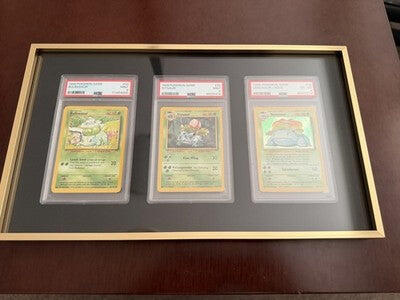
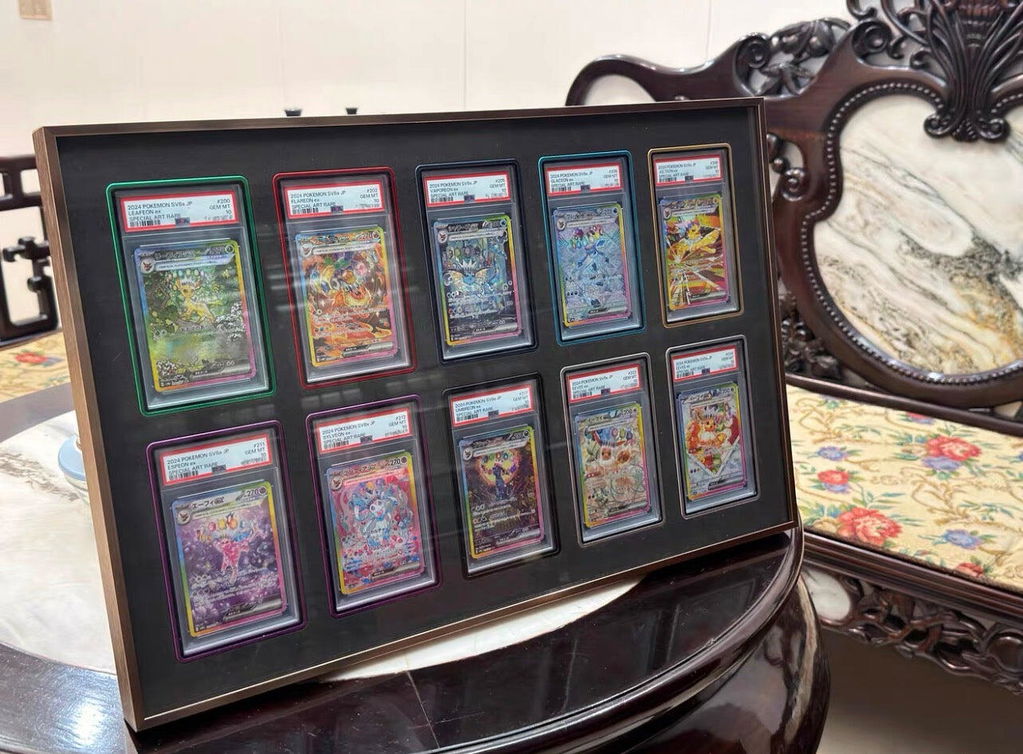


0 comments