


What Should You Do When Your Trading Card Collection Gets Too Big? Organising, Storing, Selling & Displaying Large Collections
A trading card collection does not need to contain thousands of cards before it starts becoming difficult to manage.
For some collectors, the problem begins when several binders, storage boxes, graded slabs, One Touch holders, duplicates and sealed products start competing for the same space.
For others, the collection can reach several thousand cards before organisation becomes a problem.
The issue is not necessarily the number of cards.
It is whether the collection is still easy to understand, locate, maintain and build.
A large trading card collection can remain highly organised.
A much smaller collection can become difficult to manage if cards are spread across different boxes, duplicates are mixed with permanent cards, grading submissions are not tracked and the collector no longer knows what they actually own.
This guide looks at what to do when a trading card collection starts becoming too large or difficult to manage.
It covers:
- How to tell when a trading card collection has become too large.
- How many trading cards is considered a large collection.
- How to organise hundreds or thousands of cards.
- How to separate a core collection from bulk and duplicates.
- What to do with cards you no longer want.
- How to organise raw cards, graded slabs and One Touch holders.
- How to catalogue a large trading card collection.
- How to avoid buying accidental duplicates.
- How to store cards when space becomes limited.
- How to decide which cards should remain in storage.
- How to choose which cards should be displayed.
- How many cards to display at once.
- When multiple smaller displays may make more sense than one very large frame.
- How large wall displays can work for collectors who genuinely want a substantial part of the collection visible.
The aim is not to convince collectors to reduce their collections.
A large collection is not automatically a problem.
The goal is to make sure the collection remains manageable as it grows.
When Is a Trading Card Collection Too Big?
There is no fixed number.
A collection containing 500 cards may feel perfectly manageable to one collector and completely disorganised to another.
The better question is whether the collection still works as a system.
A trading card collection may need reorganising when:
- You no longer know exactly what you own.
- You repeatedly buy cards you already have.
- Important cards are difficult to locate.
- Duplicates are mixed with the permanent collection.
- Cards intended for sale or trade are scattered throughout storage.
- Raw cards, slabs and sealed products no longer have clear storage locations.
- You are running out of suitable storage space.
- The collection has no clear grouping or structure.
- You keep buying cards without knowing where they fit.
- The collection takes significantly longer to maintain than you want.
None of these automatically means the collection should be reduced.
It may simply mean the collection has outgrown its original organisation system.
How Many Trading Cards Is Considered a Large Collection?
There is no official definition.
A collection can be large because of card count, physical size, value, holder format or the number of separate collecting categories involved.
100 Cards
One hundred cards is still relatively easy to manage if they belong to one or two clear groups.
A 100-card collection can fit comfortably into a binder, deck box or dedicated storage system depending on the card format.
500 Cards
At around 500 cards, organisation starts mattering more.
If the cards are split across multiple sets, games, players or storage methods, a collector may benefit from a simple inventory system.
1,000 Cards
A collection of 1,000 cards is large enough that memory alone becomes unreliable.
Collectors may start buying duplicates unintentionally, losing track of cards in storage or forgetting which cards were purchased for specific sets.
5,000 Cards and Above
Collections in the thousands can remain organised, but they usually need clear categories.
Bulk, permanent collection, duplicates, trade stock, graded cards and higher-value cards should generally not all live in the same physical system.
Large Graded Card Collections
Graded cards take up considerably more physical space than raw cards.
A collection of 200 PSA, CGC or BGS slabs may require more storage and wall space than several thousand raw cards.
This is why card count alone does not tell the whole story.
A Large Trading Card Collection Does Not Need to Be Reduced
Collectors often assume that once the collection becomes difficult to manage, they need to start selling cards.
That is one option.
It is not the only one.
A collection can often become much easier to manage simply by separating it into clearer categories.
For example:
- Core collection.
- Secondary collections.
- Complete sets.
- Incomplete sets.
- Duplicates.
- Trade stock.
- Cards intended for sale.
- Bulk.
- Graded cards.
- Cards waiting for grading.
- Cards selected for display.
Once those categories exist, the collection can remain large without feeling chaotic.
Start by Separating the Core Collection From Everything Else
The core collection is the part of the collection the collector is actively building.
It does not need to contain the most expensive cards.
It simply contains the cards that fit the current collecting goals.
Examples might include:
- Every card of one Pokémon.
- A complete vintage set.
- A collection of one athlete.
- PSA 10 graded cards.
- Autograph cards.
- Illustration rares.
- Cards from one artist.
- One sports team.
- One card from every set release.
Once the core collection is identified, everything else becomes easier to categorise.
A card outside the core collection may still be worth keeping.
It simply does not need to occupy the same organisational priority.
Create a Secondary Collection Category
Many collectors have cards they still like but are no longer actively pursuing.
Those cards do not necessarily need to be sold.
A secondary collection gives them a defined place.
For example, a collector may actively build a graded Pokémon collection while also keeping older Yu-Gi-Oh! cards, sports cards or sealed products from previous interests.
These categories can remain part of the overall collection without being mixed into the main collecting objective.
This reduces clutter in the core collection while allowing the collector to keep cards they still want.
Separate Bulk Cards Early
Bulk can overwhelm a collection faster than almost anything else.
Opening packs, booster boxes and collection products can generate hundreds of common and uncommon cards very quickly.
Those cards may still have value or use.
But if they are stored alongside higher-priority cards, they can make the collection difficult to navigate.
Bulk can be organised by:
- Set.
- Card game.
- Year.
- Colour or type.
- Player or team.
- Rarity.
- Alphabetical order.
- Card number.
The exact method matters less than consistency.
The main goal is to prevent bulk from hiding the part of the collection the collector actually wants to work with.
What Should You Do With Duplicate Trading Cards?
Duplicates are one of the biggest contributors to collection growth.
They can come from packs, complete-set building, trades, bulk purchases and forgotten previous purchases.
Keep the Better Condition Copy
If two cards serve exactly the same purpose, condition can be used to choose which copy remains in the main collection.
Inspect:
- Corners.
- Edges.
- Surface.
- Centring.
- Print quality.
Keep Duplicates When They Serve a Purpose
Duplicates are not automatically unnecessary.
A collector may intentionally keep:
- Multiple grades of the same card.
- A raw copy and a graded copy.
- Different language versions.
- Different printings.
- Multiple copies for decks.
- A personal copy and a trade copy.
Trade Duplicates
Duplicates can be useful trade stock.
Trading cards that no longer contribute to the collection can be exchanged for cards that fill actual gaps.
Sell Duplicates
Selling duplicates can redirect money toward higher-priority cards.
This can be more efficient than continually adding new money while unused cards accumulate in storage.
Create a Separate Sell and Trade Box
This is one of the simplest ways to keep a large collection organised.
Cards intended for sale or trade should have their own physical location.
That prevents them from slowly becoming mixed back into the permanent collection.
It also makes selling easier because cards do not need to be found again every time a marketplace listing is created or a trade opportunity appears.
A sell/trade group can contain:
- Duplicates.
- Cards that no longer fit the collection.
- Set leftovers.
- Cards upgraded to better-condition copies.
- Lower-priority graded slabs.
- Bulk with resale value.
How to Organise 1,000 or More Trading Cards
Large collections work best when the collector stops treating every card as an individual storage decision.
Use broad categories first.
Then organise within those categories.
For example:
- Separate Pokémon, sports, MTG, Yu-Gi-Oh! or other card categories.
- Separate raw cards from graded cards.
- Separate permanent collection from sale/trade stock.
- Separate complete sets from loose cards.
- Sort bulk using one consistent system.
- Catalogue higher-priority cards.
- Identify cards selected for display.
This creates layers.
The collector does not need to remember where every individual card is.
They only need to know which category contains it.
How to Organise a Large Pokémon Card Collection
Pokémon collections often grow across several different collecting styles at once.
A collector might simultaneously own:
- Complete sets.
- Loose modern cards.
- Vintage cards.
- PSA slabs.
- Character collections.
- Promotional cards.
- Sealed products.
- Bulk from pack openings.
Trying to organise all of those by one system can become difficult.
Instead, separate them into collection types first.
For example:
- Complete sets.
- Character collections.
- Graded collection.
- Sealed collection.
- Modern singles.
- Vintage singles.
- Bulk.
- Sale/trade cards.
Each group can then use the storage method that suits it best.
How to Organise a Large Sports Card Collection
Sports collections can become particularly complex because one collector may follow several sports, leagues, teams, players and card manufacturers.
Possible categories include:
- Sport.
- League.
- Team.
- Player.
- Year.
- Set.
- Autographs.
- Patch cards.
- Rookies.
- Graded cards.
- Parallels.
- Sale/trade stock.
A player collector may organise everything around individual athletes.
A set collector may organise by release year and set number.
The correct system depends on how the collector actually searches for cards within their own collection.
How to Organise Graded Trading Cards
Graded slabs require a different storage approach from raw cards because they are larger, thicker and more rigid.
Graded cards can be organised by:
- Grading company.
- Set.
- Character or player.
- Grade.
- Year.
- Value.
- Display group.
Collectors using PSA, CGC and BGS should remember that different slab formats have different physical dimensions.
This matters for storage boxes and becomes even more important when selecting a purpose-built wall display.
A PSA-compatible frame should not automatically be assumed to fit BGS or One Touch holders.
How to Organise One Touch Magnetic Holders
One Touch magnetic holders are useful for protected raw cards that a collector does not necessarily want professionally graded.
They can be stored separately from graded slabs because the physical dimensions and thickness differ.
One Touch collections can be organised by:
- Set.
- Character.
- Player.
- Team.
- Card value.
- Display group.
If cards in One Touch holders are selected for wall display, use a display designed around the actual One Touch format rather than assuming slab compatibility.
Catalogue the Cards That Matter Most
It is not always necessary to catalogue every bulk common card.
For a large collection, a more practical approach may be to catalogue the cards that are important enough to track individually.
A useful inventory can include:
- Card name.
- Set.
- Card number.
- Year.
- Condition.
- Grade.
- Grading company.
- Purchase price.
- Current storage location.
- Whether the card is for sale or trade.
- Whether the card is currently displayed.
The inventory can be maintained in a spreadsheet, collection app or another system that the collector will actually keep updated.
A simple system that is consistently maintained is usually more useful than an extremely complex system that is abandoned after a week.
How to Stop Buying Duplicate Trading Cards Accidentally
Accidental duplicates become more common as the collection grows.
A collector may remember owning a particular card but forget the set, printing, language or exact variant.
To reduce accidental duplicates:
- Maintain a wishlist.
- Maintain an owned-card inventory.
- Photograph higher-priority collection groups.
- Check the collection before purchasing expensive cards.
- Record cards currently at grading companies.
- Separate ordered-but-not-yet-arrived cards in the inventory.
This becomes particularly useful for long-term set completion projects where purchases may happen months apart.
Create a Wishlist Instead of Browsing Without a Plan
A large collection can continue growing very quickly when every purchase decision is made independently.
A wishlist creates a clearer relationship between new purchases and existing collecting goals.
The wishlist can include:
- Missing set cards.
- Target grades.
- Specific players or characters.
- Condition upgrades.
- Cards intended to complete a display group.
- Cards required to complete a visual sequence.
This does not mean collectors cannot buy something unexpected.
It simply creates a reference point before another card is added to an already large collection.
Should You Stop Buying Cards When Your Collection Gets Too Big?
Not necessarily.
The better question is whether new cards still serve a collecting goal.
If the collection is well organised and there is still a clear direction, there is no reason that a large collection cannot continue growing.
However, it may be worth slowing purchases when:
- You no longer know what you own.
- You are regularly buying accidental duplicates.
- Storage has become inadequate.
- Cards remain unopened or unsorted for long periods.
- Purchases no longer fit any collecting goal.
- The collection is creating more work than enjoyment.
In those situations, reorganising the existing collection may be more useful than immediately adding more.
How to Store a Large Trading Card Collection
Storage should reflect the physical format and priority of the cards.
Not every card needs the same storage method.
Bulk Cards
Bulk cards can usually be organised efficiently in dedicated card-storage boxes.
The important part is maintaining consistent categories so cards remain easy to locate.
Binder Collections
Binders can work well for complete sets, character collections and groups that benefit from being viewed sequentially.
Toploaders
Toploaders can provide additional rigidity for individual raw cards that need more protection than a soft sleeve alone.
Graded Slabs
Graded slabs require larger dedicated storage because of their rigid cases.
One Touch Holders
One Touch magnetic holders should be stored with enough space to prevent unnecessary surface scratching or impact between cases.
Whatever system is used, avoid forcing more cards into a storage container than it was designed to hold.
Do Not Store Every Part of the Collection in the Same Place
A large collection becomes easier to manage when storage location reflects purpose.
For example:
- Bulk cards in labelled boxes.
- Complete sets in binders.
- Higher-priority raw cards in protective holders.
- Graded cards in dedicated slab storage.
- Sale/trade stock in a separate container.
- Cards selected for display in wall frames.
This is more practical than expecting one box or cabinet to serve every part of the collection equally well.
What If You Are Running Out of Storage Space?
Running out of storage space does not automatically mean the collection is too large.
It may mean the current storage method is inefficient.
Before selling cards purely to save space, review:
- Whether bulk is being stored efficiently.
- Whether empty packaging is taking up unnecessary room.
- Whether duplicates are being kept deliberately.
- Whether sale/trade cards can be moved out of permanent storage.
- Whether sealed products should be stored separately.
- Whether wall display can move selected cards out of drawers or boxes.
The goal is not to maximise the number of cards that can be physically packed into one room.
It is to create a system that remains practical to use.
Storage and Display Solve Different Problems
Storage is primarily about keeping the larger collection organised and protected.
Display is about deciding which part of the collection should remain visible.
A collector does not need to choose between the two.
A collection of 5,000 cards might keep 4,964 cards in organised storage and display 36.
Another collector might own 500 graded slabs and display 72 of them.
The displayed group does not need to represent the entire collection.
It only needs to represent the group the collector currently wants visible.
Should You Display Your Entire Trading Card Collection?
Usually, no.
For small collections it may be practical.
For large collections, displaying everything can create several problems.
- Wall space becomes limited.
- The display can become visually crowded.
- Cards may become difficult to group clearly.
- Future additions become harder to accommodate.
- Lower-priority cards compete with the strongest part of the collection.
A selective display often creates a clearer result.
The rest of the collection can remain stored and organised.
How to Choose Which Cards to Display From a Large Collection
The displayed group should have a reason for being together.
That reason does not need to be monetary value.
Possible display groups include:
- One Pokémon.
- One athlete.
- One team.
- A complete set.
- A subset.
- One card artist.
- Cards from one era.
- PSA 10 slabs.
- Autographs.
- Illustration rares.
- Matching parallels.
- One current collecting project.
Once the group has been chosen, display capacity becomes much easier to determine.
How Many Trading Cards Should You Display at Once?
There is no correct number.
The right capacity depends on the group being displayed and the available wall space.
1 to 4 Cards
This works well for individual feature cards and very focused groups.
6 to 16 Cards
Useful for character collections, small sets, player groups and compact graded displays.
18 to 36 Cards
This range is large enough to represent a substantial collecting category while still fitting on many walls.
45 to 72 Cards
Large-capacity displays suit collectors who genuinely want a significant portion of the collection visible at once.
At these sizes, wall dimensions and display orientation become much more important.
72 Cards and Above
Very large displays become significant physical objects.
The collector should confirm the exact external dimensions, mounting location, holder format and Grid formation before ordering.
These displays can work well for completed sets, extensive graded collections or large themed groups where the size is intentional.
One Large Display or Several Smaller Displays?
A large collection does not automatically require one enormous frame.
Sometimes several smaller displays provide more flexibility.
Advantages of One Large Display
- One continuous collection group.
- Consistent alignment across the entire display.
- Fewer individual wall-mounting positions.
- Strong visual impact for complete sets or large groups.
Advantages of Several Smaller Displays
- Easier to move.
- Easier to rearrange.
- Different collection groups can remain separate.
- Future cards can be added by introducing another frame.
- Different holder types can be kept in separate compatible displays.
Neither approach is universally better.
The correct choice depends on the collection structure and available wall space.
When a Modular Trading Card Display Makes Sense
Modular display can work well when a collection is expected to continue growing.
Instead of reserving a large number of empty positions in one frame, collectors can display the cards they currently own and add another frame later.
This can be particularly useful for:
- Ongoing character collections.
- Players who are still active.
- Modern sets with regular new releases.
- Graded collections that grow gradually.
- Collectors using several holder types.
Keeping the same frame colour, EVA Foam Colour and mounting spacing can create consistency across multiple displays.
How to Display a Large PSA Collection
A large PSA collection should first be organised into meaningful groups.
Examples include:
- Set.
- Pokémon.
- Player.
- Team.
- Grade.
- Era.
- Artist.
Once the displayed group is selected, choose a PSA-compatible display with the required capacity and Grid formation.
The physical slab format determines fit.
The franchise inside the slab does not.
After compatibility and capacity are confirmed, aluminium finish and Black or White EVA Foam can be selected around the collection and room.
How to Display a Large CGC Collection
The same principles apply to CGC slabs.
Choose the cards first.
Confirm the exact CGC-compatible product.
Select the required Grid count and formation.
Then configure the visual presentation.
Do not assume every slab from every grading company uses identical dimensions.
How to Display a Large BGS / Beckett Collection
BGS slabs require the relevant BGS-compatible display configuration.
This becomes increasingly important as the display grows because small dimensional differences are repeated across every holder position.
A 36-card BGS display cannot simply be treated as a 36-card PSA display with different labels.
Compatibility needs to be confirmed at the product level.
How to Display a Large One Touch Collection
One Touch magnetic holders provide a different presentation from graded slabs because there is no grading label occupying the top of each holder.
This can create a cleaner repeated Grid where most of the visible information comes from the cards themselves.
As with graded slabs, select the actual displayed cards first and then choose the correct One Touch-compatible capacity.
Black or White EVA Foam can then be used to determine whether the internal field feels darker and more restrained or brighter and more defined.
How to Decide Which Cards Stay in Storage
Cards that remain in storage are not less important.
Storage is often the most practical place for the majority of a large collection.
Cards may remain stored because they are:
- Part of complete sets.
- Bulk.
- Duplicates.
- Trade stock.
- Lower-priority cards.
- Not part of the current display group.
- Awaiting grading.
- Too sensitive or valuable for the collector's preferred display environment.
The objective is not to rank every card as display-worthy or unworthy.
It is simply to give each part of the collection an appropriate place.
Should You Rotate the Cards You Display?
You can.
A display does not need to remain unchanged permanently.
Rotation can work particularly well for collectors with several defined groups.
For example:
- One season may feature one sports team.
- A new completed Pokémon subset may replace an older display.
- A grading submission may return and change the selected cards.
- A new player or character collection may become the current focus.
Rotating cards allows a relatively small display capacity to represent a much larger stored collection over time.
What If You Want Most of the Collection Visible?
Some collectors genuinely prefer having a large percentage of their collection on display.
That is completely valid.
The important difference is that the display should still be organised.
A large collector wall can be divided by:
- Set.
- Character.
- Player.
- Team.
- Era.
- Grade.
- Card game.
- Holder type.
Large aluminium displays or multiple coordinated frames can make this easier because each group retains its own defined structure.
The wall becomes easier to understand when the cards are presented in deliberate groups rather than simply filling every available position.
Do Large Collections Need Matching Frames?
No.
Collectors can use the same frame finish across every display or intentionally vary the colours.
Consistency can also come from:
- Using the same EVA Foam Colour.
- Maintaining consistent spacing between frames.
- Using the same mounting height.
- Grouping holder types together.
- Keeping Grid formations visually aligned.
The wall does not need to be identical to feel organised.
Black or White EVA Foam for a Large Collection?
EVA Foam Colour becomes increasingly noticeable as the display grows.
Black EVA Foam
Black EVA creates a darker internal field and can allow varied card artwork to carry most of the colour.
This can work particularly well for large mixed collections.
White EVA Foam
White EVA creates a brighter internal field and makes individual holder positions more clearly separated.
This can make the Grid itself more visible across a large display.
Neither option is universally better.
The choice is primarily visual.
Choosing Aluminium Frame Colour for a Large Display
Frame colour becomes more consequential as the physical size of the display increases.
A small Sapphire Blue frame introduces a small amount of colour to the wall.
A very large Sapphire Blue frame becomes a major visual element.
Collectors choosing large displays should therefore consider:
- Wall colour.
- Room lighting.
- EVA Foam Colour.
- Other frames nearby.
- The amount of colour already present in the cards.
Neutral finishes can keep the cards dominant.
Stronger finishes can make the frame itself more visible.
The correct choice depends on the intended result.
How to Avoid Making a Large Trading Card Wall Look Busy
More cards do not automatically create a better display.
Large walls benefit from clear structure.
Useful approaches include:
- Keeping related cards together.
- Using consistent holder formats.
- Maintaining even spacing.
- Using one EVA Foam Colour across multiple frames.
- Limiting the number of competing frame colours.
- Using defined Grid formations.
- Leaving enough space around the overall display.
The cards should still be easy to distinguish as individual objects.
If the display becomes visually difficult to read, breaking the collection into several smaller groups may work better.
Should You Sell Part of a Large Trading Card Collection?
Only if that makes sense for the collector.
A large collection does not need to be reduced simply because it is large.
Selling may be useful when:
- Cards no longer fit any collecting goal.
- Duplicates have accumulated.
- The collector wants to fund more important cards.
- Storage space is genuinely limited.
- A previous collection focus has been abandoned.
- The collector wants to simplify the collection.
Selling should solve a real problem.
It does not need to become an automatic response to collection growth.
How to Reduce a Trading Card Collection Without Regretting It
If a collector decides to reduce the collection, start with the easiest categories.
Duplicates
These often require the least difficult decision.
Cards You Would Not Buy Again
If you would not actively choose the card today and it serves no other collecting purpose, it may be a candidate for sale or trade.
Abandoned Projects
Incomplete sets and old collection goals can consume significant space.
Decide whether they are still likely to be completed.
Lower-Priority Cards
Several lower-priority cards can sometimes fund one higher-priority addition.
That can reduce physical collection size without necessarily reducing the quality of the collection.
Do Not Make Large Collection Decisions Too Quickly
A large collection may have taken years to build.
There is rarely a reason to reorganise or sell everything in one weekend.
Work through the collection in sections.
This reduces the chance of selling cards that later turn out to belong to another collecting goal.
A practical process might be:
- Separate obvious bulk.
- Separate obvious duplicates.
- Identify the core collection.
- Create secondary collection groups.
- Create a sale/trade group.
- Catalogue higher-priority cards.
- Choose cards for display.
- Review the remaining cards later.
Common Mistakes When Managing a Large Trading Card Collection
Trying to Remember Everything
Memory becomes unreliable as the collection grows.
A simple inventory prevents unnecessary mistakes.
Mixing Trade Stock With the Permanent Collection
This creates confusion and makes it difficult to know which cards are actually part of the collection.
Keeping Bulk Everywhere
Bulk should have a defined location.
Buying More Before Sorting Existing Cards
New purchases can make an existing organisation problem worse.
Displaying Everything
Storage and display serve different purposes.
Choosing Storage Based Only on Maximum Capacity
The cheapest way to fit the most cards into one box is not always the easiest system to maintain.
Using One Organisation System for Every Type of Card
Raw cards, complete sets, graded slabs, One Touch holders, bulk and sealed products may require different systems.
A Simple System for Managing a Large Trading Card Collection
If the collection feels overwhelming, reduce the problem to a few categories.
- Identify the core collection.
- Separate secondary collections.
- Separate bulk.
- Separate duplicates.
- Create a sell/trade group.
- Catalogue the cards that matter most.
- Store each card type appropriately.
- Create a wishlist for future purchases.
- Select a smaller group for display.
- Review the organisation again when the collection materially changes.
The system can remain simple.
The important part is that every major group has a clear purpose.
Using Trading Card Display Frames With a Large Collection
Display frames can become useful once the collection has been divided into meaningful groups.
Rather than trying to display every card, a collector can select one group and choose a display around it.
For example:
- A 9 Grid display for one focused character collection.
- An 18 Grid display for one player or small set.
- A 24 Grid display for a larger themed group.
- A 36 Grid display for a substantial graded collection.
- A 54 Grid display for a large collection category.
- A 72 Grid or larger display for extensive sets or collector walls where the scale is intentional.
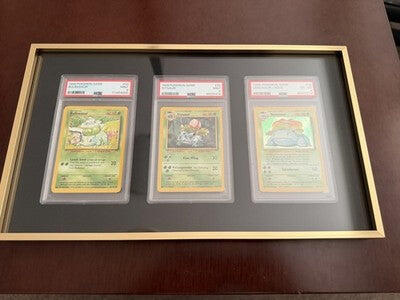
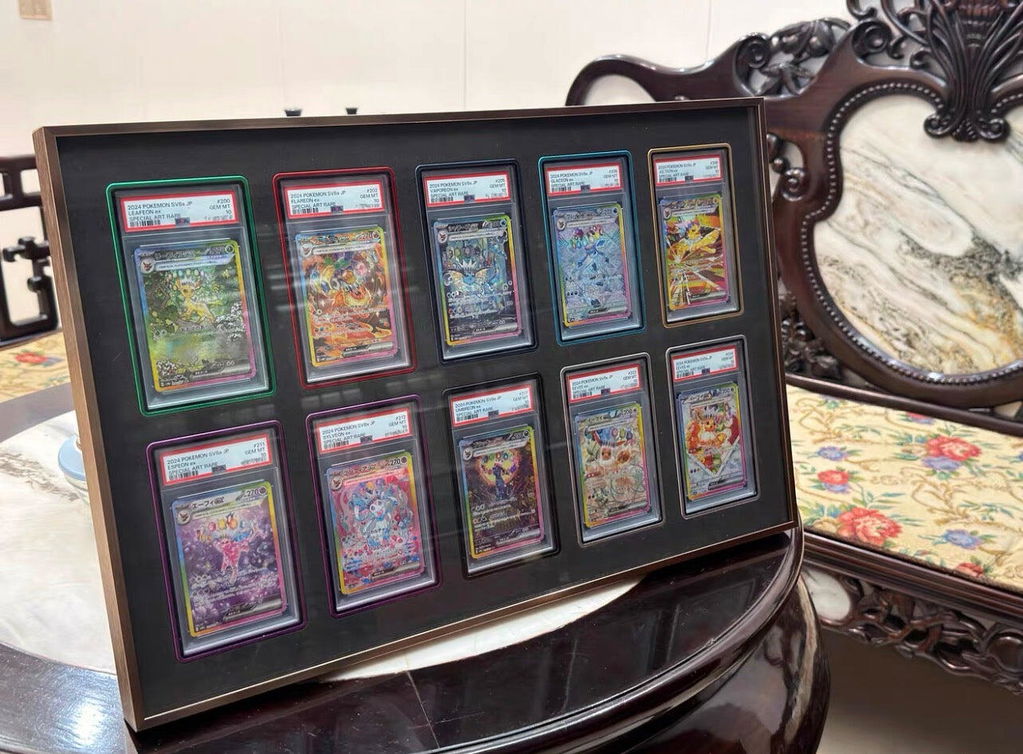
The Card Collective® aluminium display range includes purpose-built holder-specific configurations across supported PSA, CGC, BGS and One Touch formats.
Once the holder type, card count and Grid formation are established, the collector can then choose the aluminium finish and supported Black or White EVA Foam configuration.
This keeps the display built around the collection rather than forcing the collection into an arbitrary frame.
Frequently Asked Questions About Large Trading Card Collections
How many trading cards is considered a large collection?
There is no official number. A collection can feel large because of card count, physical storage requirements, the number of different collection groups or the amount of graded and protected cards involved.
Is 1,000 trading cards a lot?
One thousand cards is enough that most collectors will benefit from a consistent organisation system. It is still very manageable when cards are grouped clearly.
Is 5,000 trading cards a large collection?
Yes, 5,000 cards would generally be considered a substantial collection. Organisation becomes especially important because memory alone is unlikely to track every card reliably.
What should I do with thousands of trading cards?
Separate the permanent collection from bulk, duplicates and cards intended for sale or trade. Then organise each group using a system that reflects how you actually collect.
How do I organise 1,000 trading cards?
Start with broad categories such as card game, set, character, player, team or card type. Separate graded cards, trade stock and bulk before organising individual cards in detail.
How do I organise a huge Pokémon card collection?
Separate complete sets, character collections, graded cards, vintage cards, modern singles, sealed products, bulk and sale/trade cards. Each category can then use its own organisation method.
How do I organise a large sports card collection?
Common approaches include organising by sport, league, team, player, year, set or card type. The best method is the one that makes cards easy to find later.
Should I catalogue every trading card I own?
Not necessarily. Many collectors catalogue the higher-priority collection while managing bulk in broader categories.
What information should I track in a trading card inventory?
Useful fields include card name, set, number, condition, grade, grading company, purchase price, storage location and whether the card is for sale, trade or display.
How do I stop buying duplicate trading cards?
Maintain an owned-card inventory and wishlist. Check both before purchasing higher-value or harder-to-remember cards.
What should I do with duplicate trading cards?
Keep duplicates that serve a purpose, trade them, sell them or retain the better-condition copy and move the other into sale/trade stock.
Should I sell duplicate Pokémon cards?
If the duplicates are not needed for another collection, deck or trade purpose, selling them can be a practical way to fund missing cards.
Should I keep trading card bulk?
That depends on the collector. Bulk can have set-completion, trading or resale value, but it should be stored separately so it does not overwhelm the permanent collection.
When should I stop buying trading cards?
There is no universal point. It may be worth slowing down if you no longer know what you own, storage has become inadequate or new purchases no longer fit any collecting goal.
How do I reduce a trading card collection?
Start with duplicates, cards you would not buy again, abandoned collection projects and lower-priority cards. Work gradually rather than selling everything at once.
Should I sell cards that no longer fit my collection?
If you no longer want them, selling or trading can free space and money for higher-priority cards. There is no requirement to sell them if you still want to keep them.
How do I store a large trading card collection?
Use different storage methods for different card types. Bulk, binders, graded slabs, One Touch holders, complete sets and sale/trade stock do not all need the same storage solution.
How should I store graded cards?
Use dedicated slab storage with enough room to prevent unnecessary impact and scratching. Different grading companies may use different slab dimensions.
How should I organise PSA slabs?
PSA slabs can be organised by set, character, player, grade, era or another collection goal. If displayed, use a PSA-compatible frame rather than assuming other holder formats fit.
Can I organise PSA, CGC and BGS slabs together?
Yes, as part of one collection. However, different slab formats may require separate physical storage and separate holder-compatible display systems.
How should I organise One Touch holders?
Organise them using the same collecting categories that make sense for the cards inside, but remember that One Touch holders have different dimensions from graded slabs.
Should I display my entire trading card collection?
Usually not if the collection is large. Many collectors keep the majority stored and display a selected group.
How many trading cards should I display?
There is no correct number. Choose a capacity that suits the specific group and available wall space.
Is a 36-card trading card display too large?
Not necessarily. A 36-card display can suit substantial graded collections, complete groups and larger themed collections. Check the exact external dimensions before ordering.
Is a 72-card trading card display too large?
It is a very large display, but it can make sense for extensive sets or graded collections where the collector deliberately wants a substantial number of cards visible at once.
Should I use one big frame or several smaller frames?
One large frame creates one continuous display, while smaller frames provide more flexibility and easier future expansion. The better option depends on the collection.
Can I use multiple trading card frames together?
Yes. Multiple frames can be coordinated through consistent aluminium colours, EVA Foam Colours, mounting heights and spacing.
How do I make a large card wall look organised?
Use clear collection groups, consistent Grid alignment, controlled spacing and a limited number of competing visual elements.
Should different trading card games have separate displays?
They can. Separate displays can make collection groups easier to understand, although mixed collections can also work when all cards use the same compatible holder format.
Can Pokémon and sports cards go in the same display?
Yes, where they use the same supported physical holder format. The franchise does not determine fit. The holder does.
Should I display only expensive cards?
No. Display selection can be based on set, character, player, artwork, grade or another collecting goal rather than market value alone.
Should I display my most valuable cards?
Only if you are comfortable with the security and environmental conditions of the display location. Value should be considered alongside risk tolerance.
Can I rotate cards in and out of a display?
Yes. Rotation can allow a smaller display to represent different parts of a large stored collection over time.
How often should I reorganise a large trading card collection?
Only when the existing system stops working or the collecting focus changes materially. Constant restructuring is unnecessary if the collection remains easy to manage.
Should I separate cards for sale from cards I collect?
Yes. A dedicated sale/trade group makes it easier to manage inventory and prevents temporary cards from becoming mixed into the permanent collection.
Should I keep old collecting projects?
If you still want them, yes. If an old project no longer has any relevance, it may be worth storing separately, selling or trading rather than allowing it to clutter the core collection.
How do I know what my core collection is?
Look at which cards you are actively searching for, upgrading, grading or adding to. Those cards usually reveal the collection you are currently building.
Can a large collection still be curated?
Yes. Curation is about deliberate organisation and selection, not necessarily reducing the number of cards.
Do I need expensive storage for a large card collection?
No. Consistent organisation is often more important than using expensive storage for every card. Higher-priority cards may justify different protection from bulk.
How can I save space with a large trading card collection?
Separate bulk efficiently, remove unnecessary packaging, move sale/trade cards out of the permanent collection and use wall display selectively where appropriate.
What should I do when my trading card collection becomes overwhelming?
Stop trying to solve the entire collection at once. Separate bulk, duplicates, permanent cards and sale/trade stock first. Then organise each group individually.
Should I keep buying cards while reorganising my collection?
You can, but slowing new purchases temporarily may make the organisation process easier and reduce the chance of adding more duplicates or unplanned cards.
What is the best way to display a large graded card collection?
Choose the cards first, confirm the slab format, then select a holder-compatible Grid capacity and formation. Frame finish and EVA Foam Colour can be chosen after physical compatibility is established.
Can I display a complete set of graded cards?
Yes, if a compatible Grid capacity and layout suits the set. Very large sets may work better across several coordinated frames.
Should I choose a bigger frame for future cards?
Only if you are comfortable with empty positions until the collection grows. Modular multiple-frame systems can provide another way to expand later.
What is the best way to organise trading cards by set?
Card-number order is usually the simplest approach for complete sets. Incomplete sets can use placeholders or an inventory to track missing cards.
What is the best way to organise trading cards by player?
Player collections can be ordered chronologically, by team, set, manufacturer, rarity, grade or another structure that reflects the collector's goal.
Can different frame colours be used on one collector wall?
Yes. Consistent spacing, EVA Foam Colour or Grid alignment can provide continuity even when the aluminium colours differ.
Does a large collection need a dedicated card room?
No. A large collection can be managed within normal storage areas if the system is organised and space is used efficiently.
How do I decide what part of my collection should be on the wall?
Choose one meaningful group that works as a unit. It can be based on set, character, player, team, grade, artwork or the collection you are currently focused on.
Final Thoughts: A Large Collection Needs Structure, Not Necessarily Fewer Cards
A trading card collection does not become a problem simply because it gets large.
The problem begins when the collector can no longer manage it efficiently.
Bulk becomes mixed with permanent cards.
Duplicates become difficult to track.
Cards intended for sale remain scattered through storage.
Important cards become difficult to find.
New purchases no longer have a clear place.
At that point, the solution is usually structure.
Identify the core collection.
Separate secondary collections.
Move bulk into dedicated storage.
Create a sell and trade group.
Catalogue the cards that matter most.
Use a wishlist to guide future purchases.
Keep most of the collection organised in storage where appropriate.
Then decide which part of the collection you actually want visible.
That displayed group might contain nine cards.
It might contain 36.
It might contain 72 or more.
The important point is that the number should come from the collection rather than the collection being forced into an arbitrary capacity.
For collectors who want part of a large collection on the wall, The Card Collective® aluminium display range provides purpose-built configurations across supported PSA, CGC, BGS and One Touch holder formats, with multiple Grid capacities and formations available.
The remainder of the collection can remain organised in storage and ready for future rotation, expansion or another display.
A large collection can keep growing.
It simply needs a system that grows with it.
Continue Exploring
If you are organising, protecting or displaying a larger trading card collection, these guides and collections can help with the next step.
📚 Collector Guides
-
How to Curate a Trading Card Collection: Choosing What to Keep, Grade, Store & Display
Learn how to separate the core collection from duplicates, bulk, trade stock and cards selected for display. -
How to Choose the Right Trading Card Display Frame Size: The Complete Collector Guide
Compare Grid capacities and formations once you know which section of the collection you want to display. -
The Ultimate Trading Card Display Guide: Ideas, Frames, Shelves & Display Solutions for Every Collector
Compare wall frames, shelves, stands, cabinets and other ways to display selected parts of a collection. -
Why Premium Aluminium Trading Card Display Frames Are Worth It: The Complete Collector Guide
Explore the materials, construction and display options used across purpose-built aluminium trading card wall displays.
🛒 Shop Display Collections
-
Aluminium Trading Card Wall Display Frames
Explore aluminium displays across multiple Grid capacities, holder formats, frame colours and supported Black or White EVA Foam options. -
PSA, CGC & BGS Graded Slab Wall Display Frames
Purpose-built wall displays for supported professionally graded slab formats across small and large Grid configurations. -
One Touch Wall Display Frames
Wall display frames designed around compatible One Touch magnetic trading card holders.


0 comments